Article

Design and Performance Assessment of a Small-Scale Ferrite-PM Flux Reversal Wind Generator


by
Bharathi Manne
1,*,
Malligunta Kiran Kumar
1 and
Udochukwu B. Akuru
2,3,*
1
Electrical and Electronic Engineering, Koneru Lakshmaiah Educational Foundation, Guntur 522502, India
2
Department of Electrical Engineering, Tshwane University of Technology, Pretoria 0183, South Africa
3
Department of Electrical Engineering, University of Nigeria, Nsukka, Enugu State 410001, Nigeria
*
Authors to whom correspondence should be addressed.
Energies 2020, 13(21), 5565; https://doi.org/10.3390/en13215565
Submission received: 4 September 2020 / Revised: 27 September 2020 / Accepted: 29 September 2020 / Published: 23 October 2020

Abstract

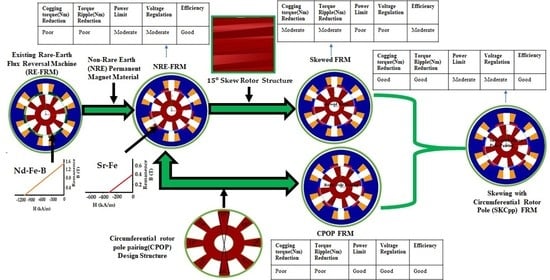
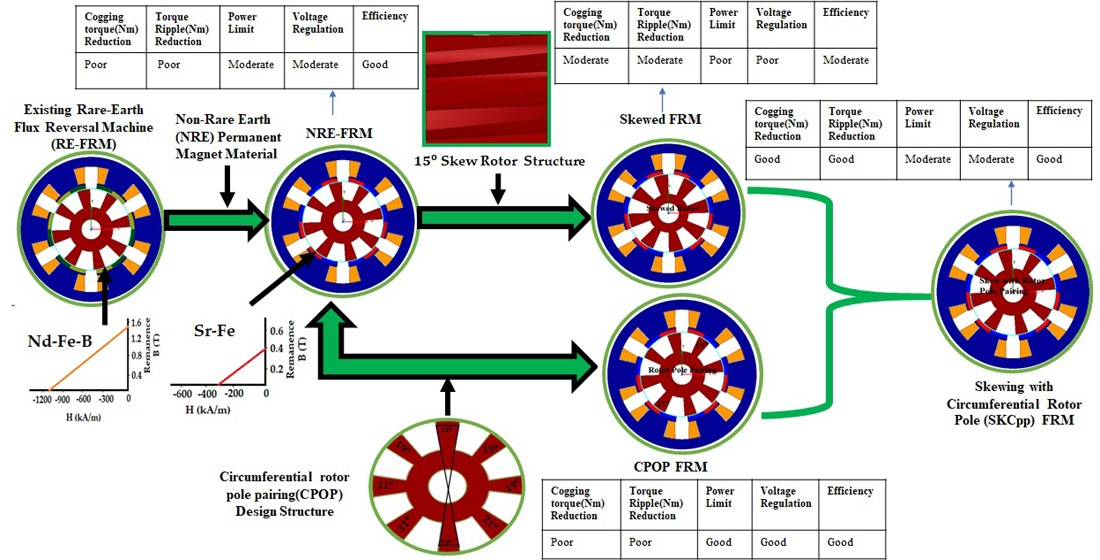
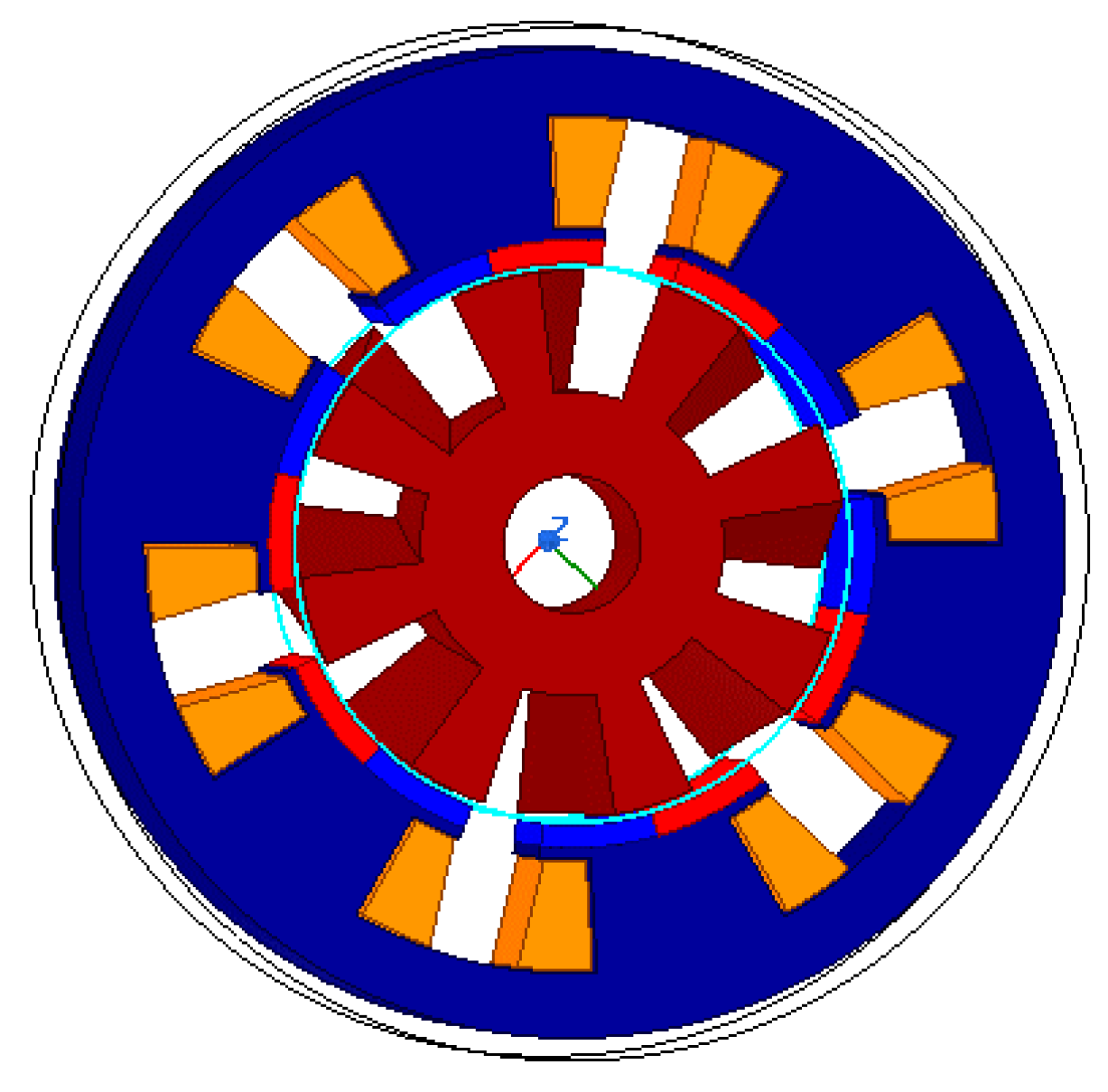
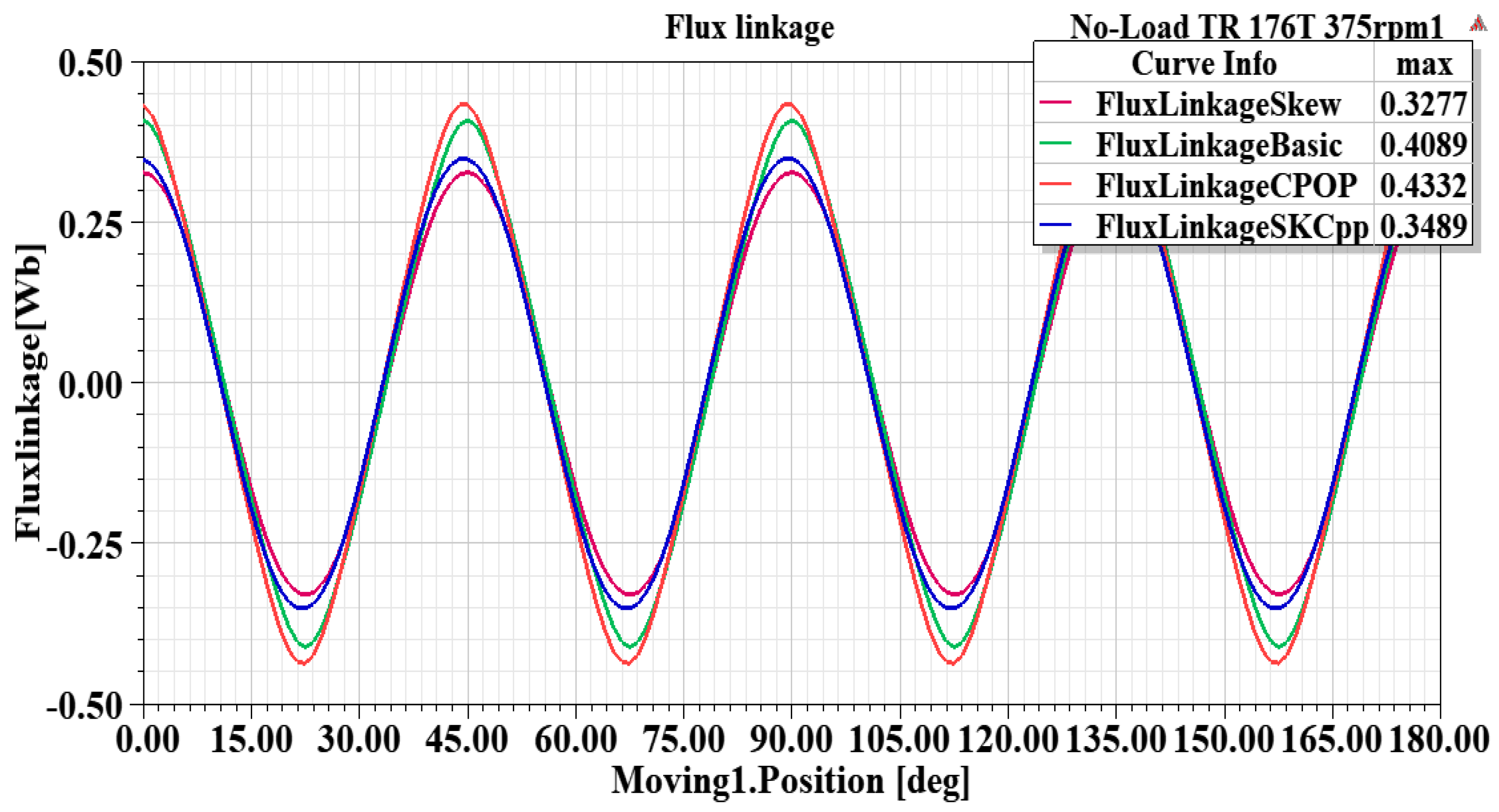
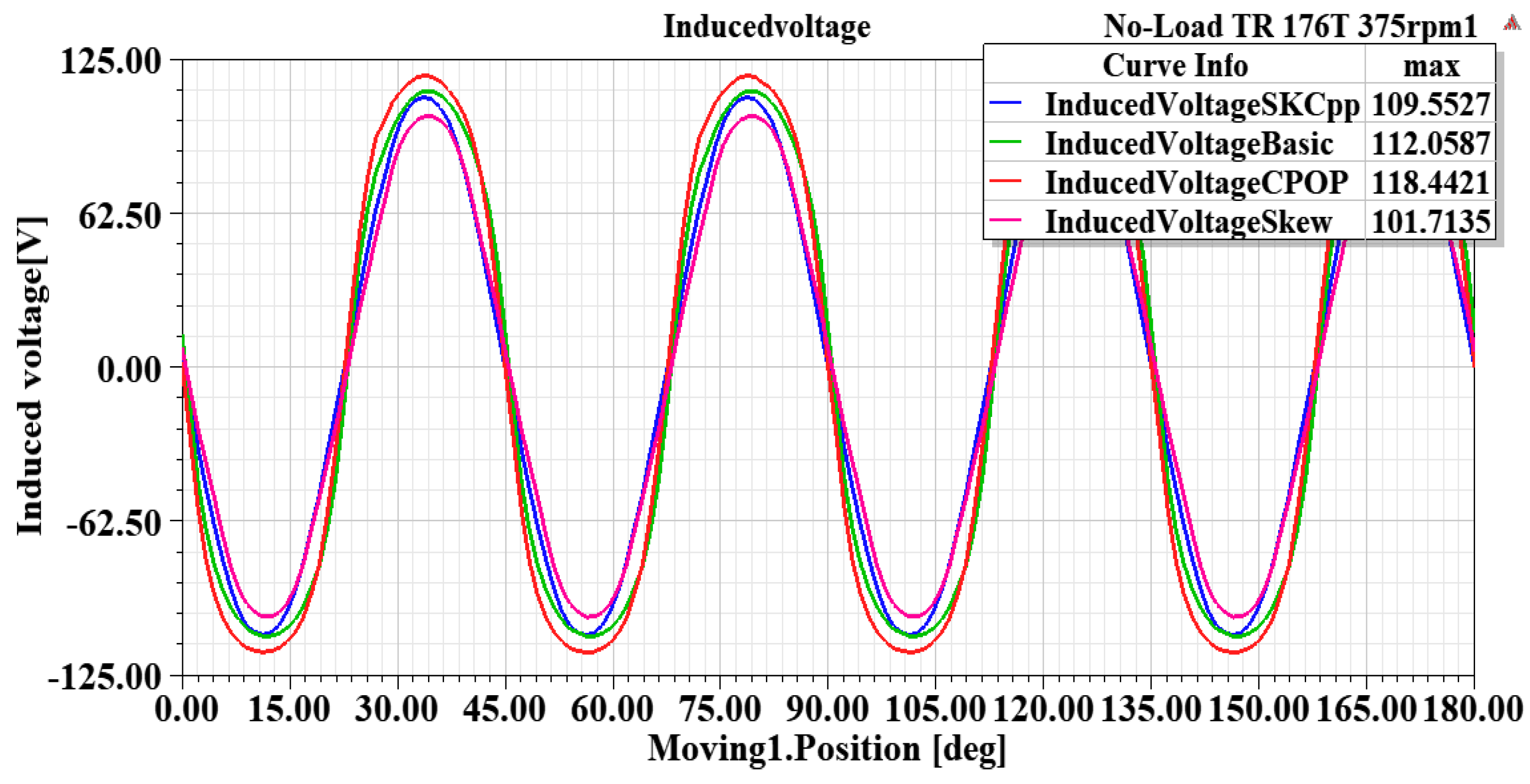
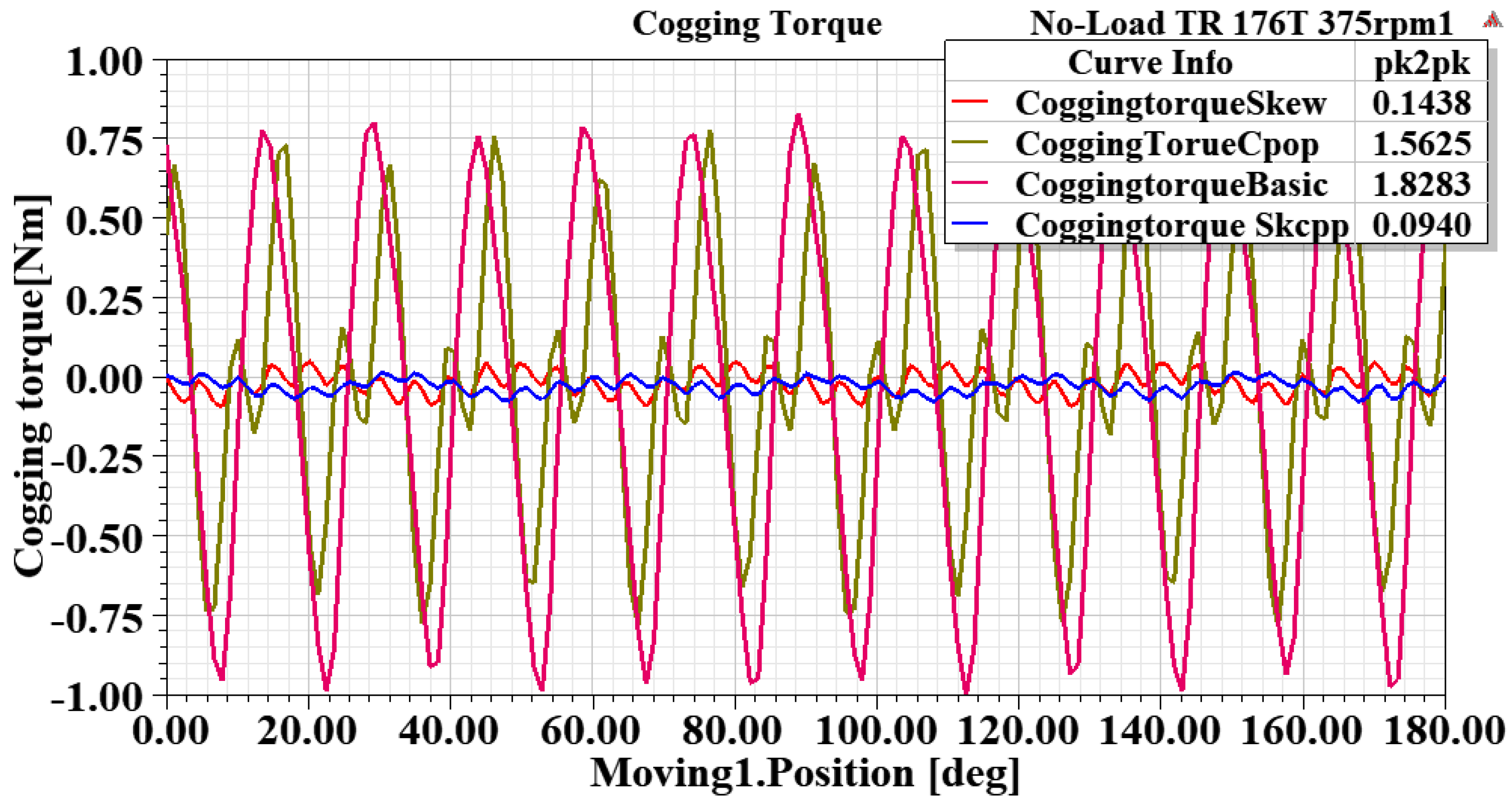
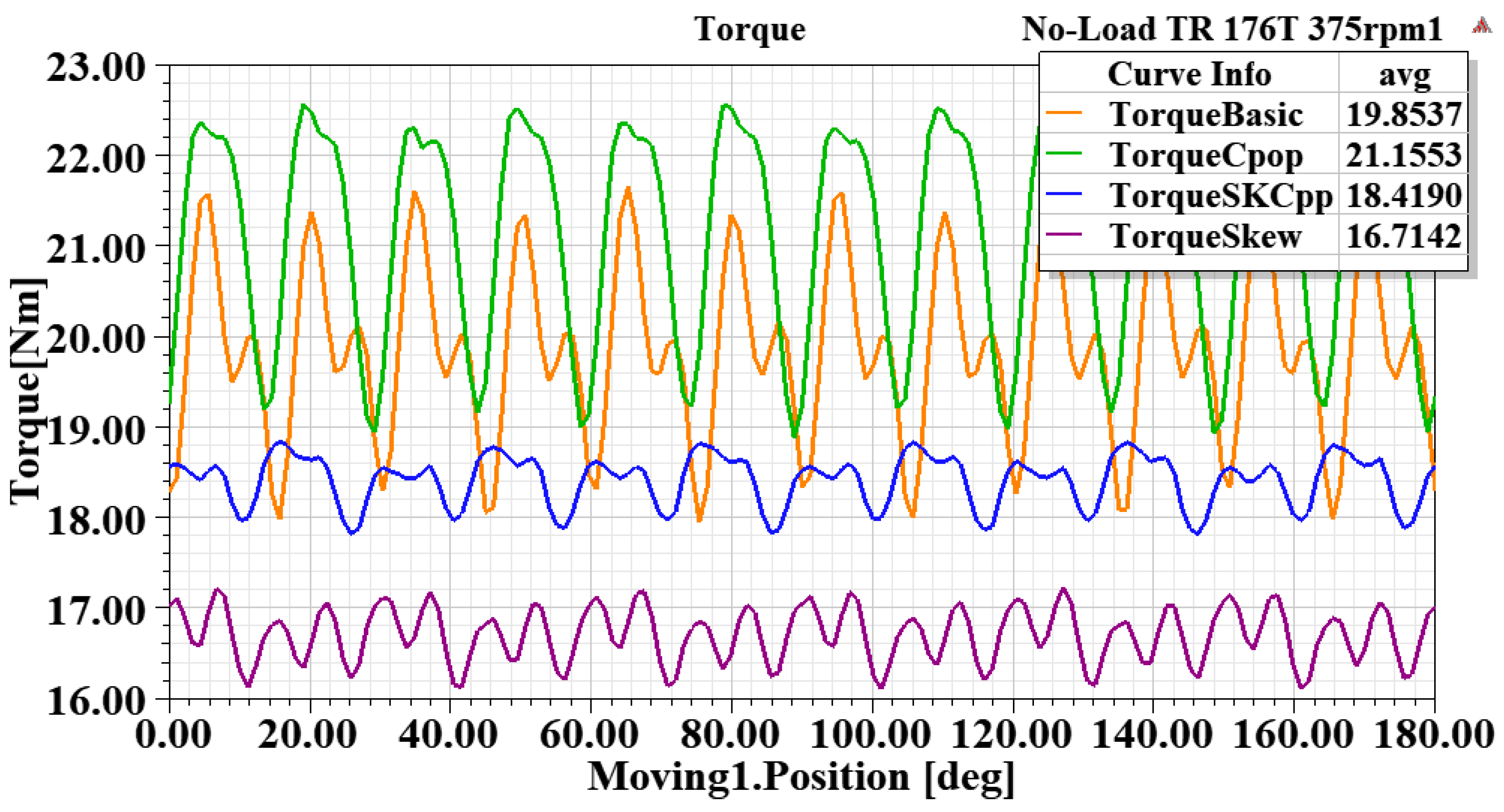
Currently, there is increasing research interest in harnessing wind energy for power generation by means of non-conventional electrical machines e.g., flux-reversal machines. The flux reversal machine is usually designed using scarce rare–earth permanent magnet material which may be unattractive in terms of machine cost. In this study, an attempt is made to re-design the flux reversal machine with non-rare-earth ferrite permanent magnet for wind energy applications. Because these machines possess high cogging torque, which results in vibration and noise, that are detrimental to the machine performance, especially at low speeds, a novel combined skewed and circumferential rotor pole pairing method is developed. The proposed cogging torque reduction method is implemented in 2-dimensional finite element analysis modeling and comparatively analyzed with other existing stand-alone methods viz., skewing, and rotor pole pairing. The results show that the proposed method led to 94.8% and 71% reduction in the cogging torque and torque ripple compared to the reference generator, respectively. However, the calculated torque density is reduced by 13%. Overall, the electromagnetic performance of the proposed ferrite PM machine exhibits desirable qualities as an alternative design for the direct drive wind generator.
Keywords: cogging torque; ferrite PM; finite element analysis; flux reversal machine; non-rare earth; wind energy cogging torque; ferrite PM; finite element analysis; flux reversal machine; non-rare earth; wind energy
Graphical Abstract