Article

Fault Current Limiting and Breaking Characteristics of SFCLB Using Flux Coupling with Tap Changer

1
Department of Electrical Engineering, Soongsil University, 369, Sangdo-ro, Dongjak-gu, Seoul 156-743, Korea
2
Department of Mechanical Engineering, Soongsil University, 369, Sangdo-ro, Dongjak-gu, Seoul 156-743, Korea
3
Department of Organic Material and Fiber Engineering, Soongsil University, 369, Sangdo-ro, Dongjak-gu, Seoul 156-743, Korea
*
Author to whom correspondence should be addressed.
Energies 2020, 13(19), 5138; https://doi.org/10.3390/en13195138
Submission received: 17 August 2020 / Revised: 24 September 2020 / Accepted: 27 September 2020 / Published: 2 October 2020
(This article belongs to the Section F: Electrical Engineering)

Abstract

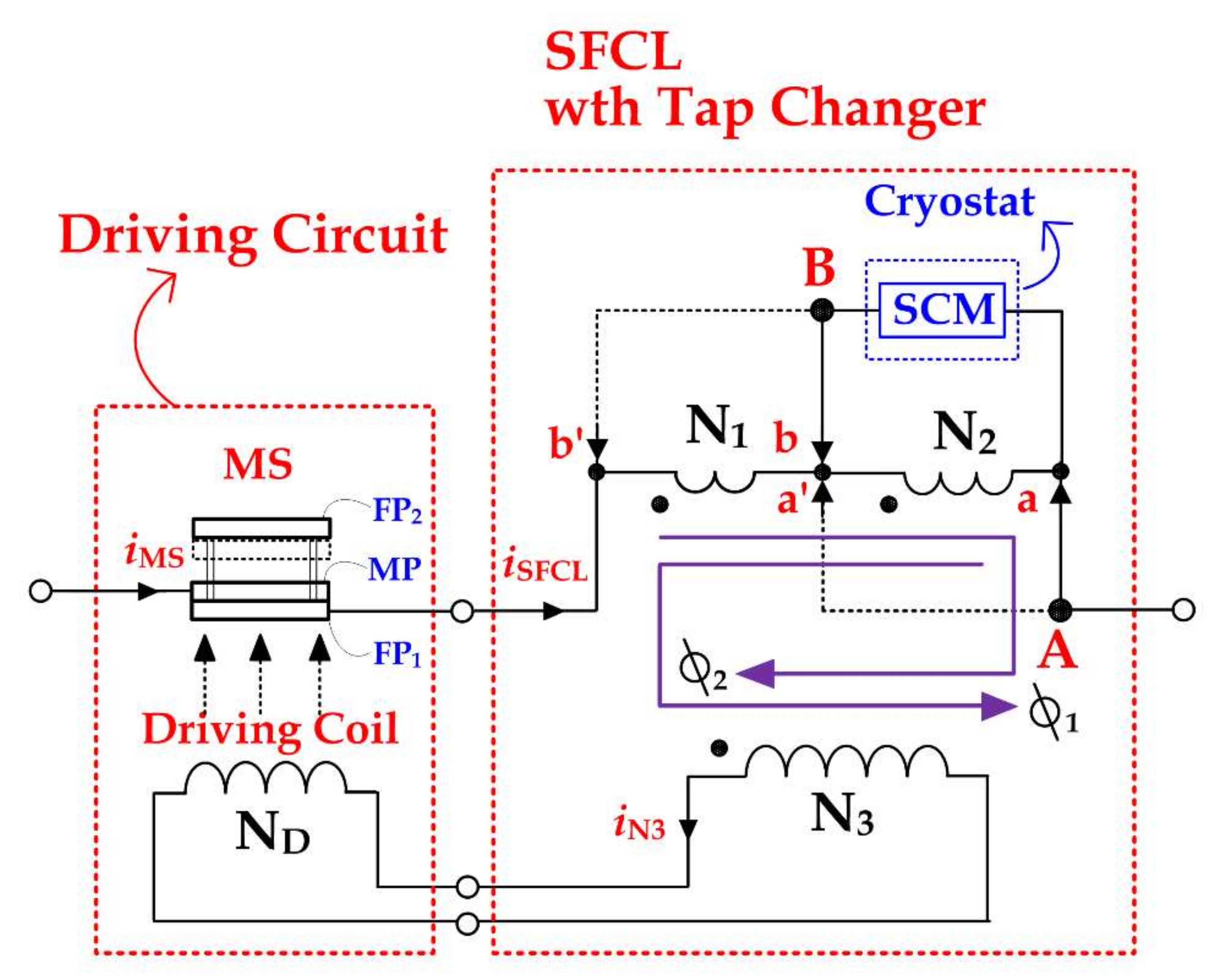
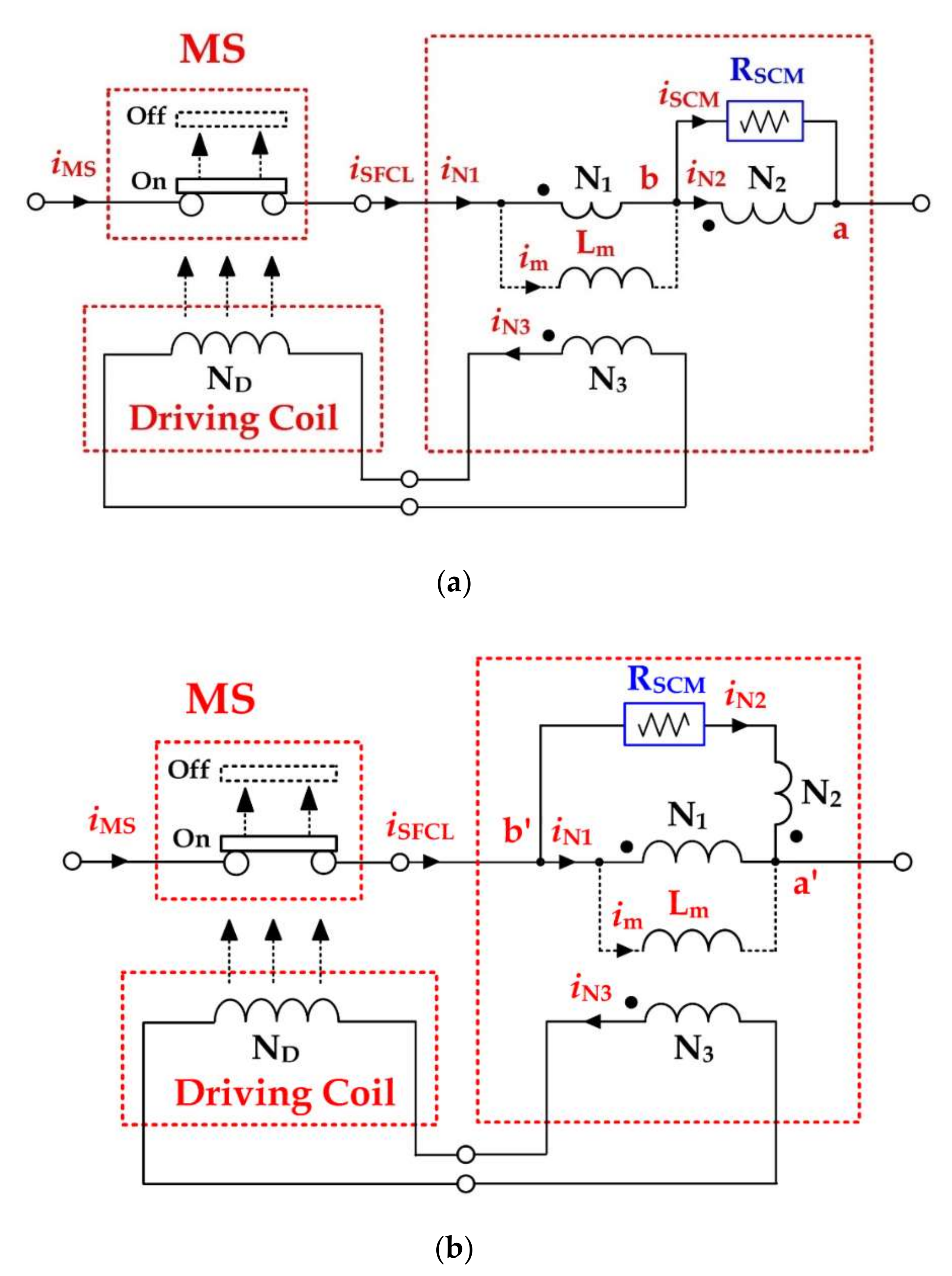
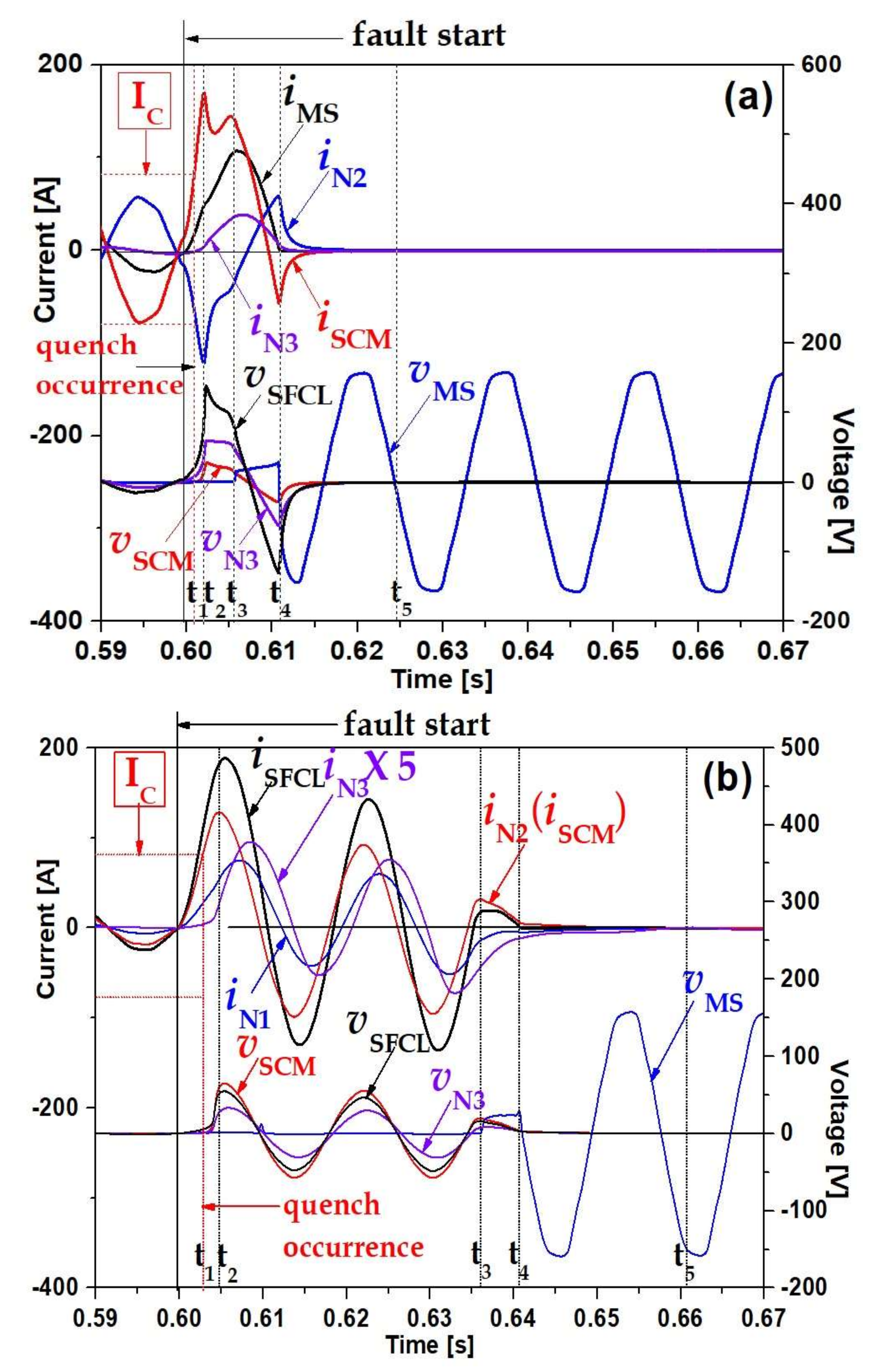
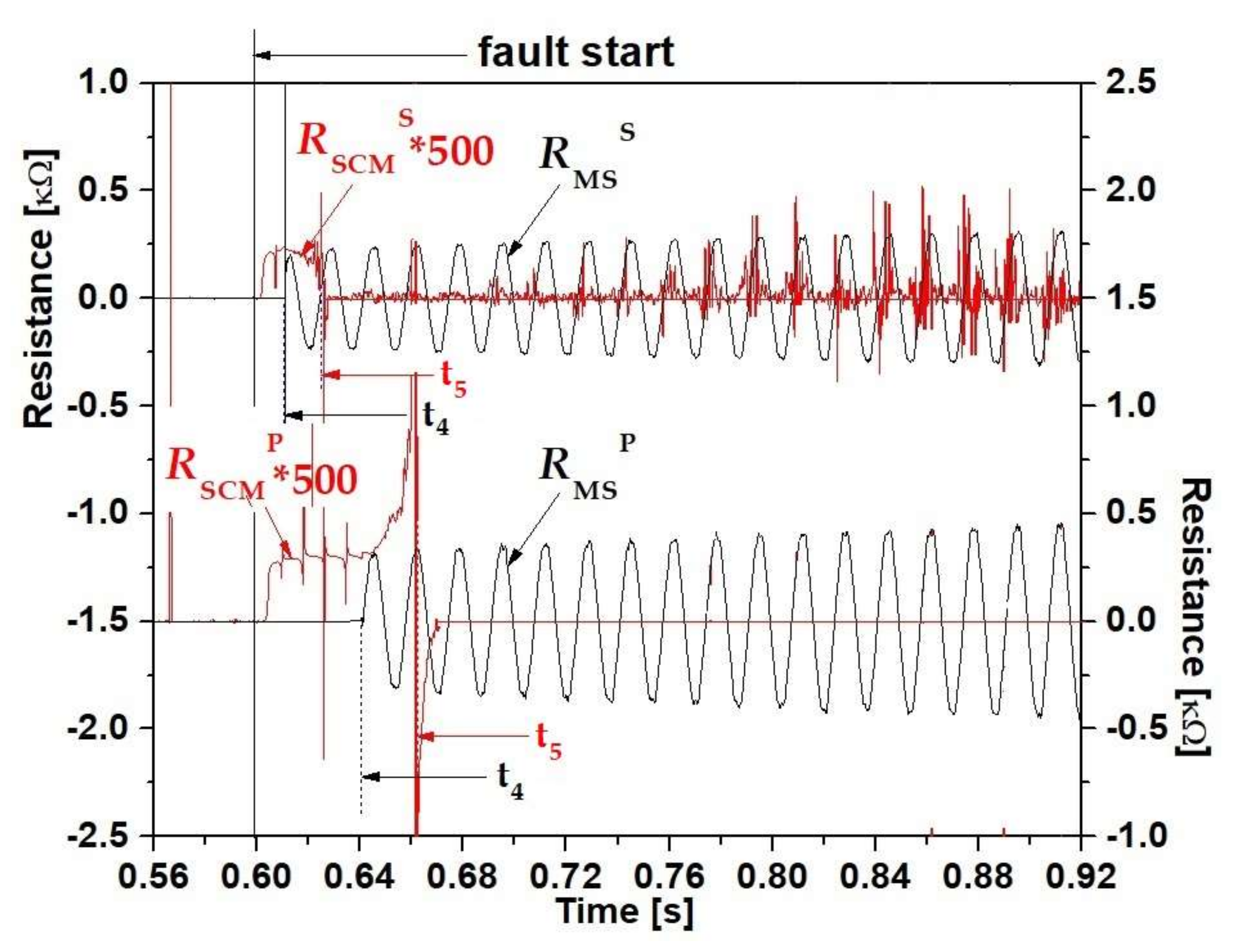
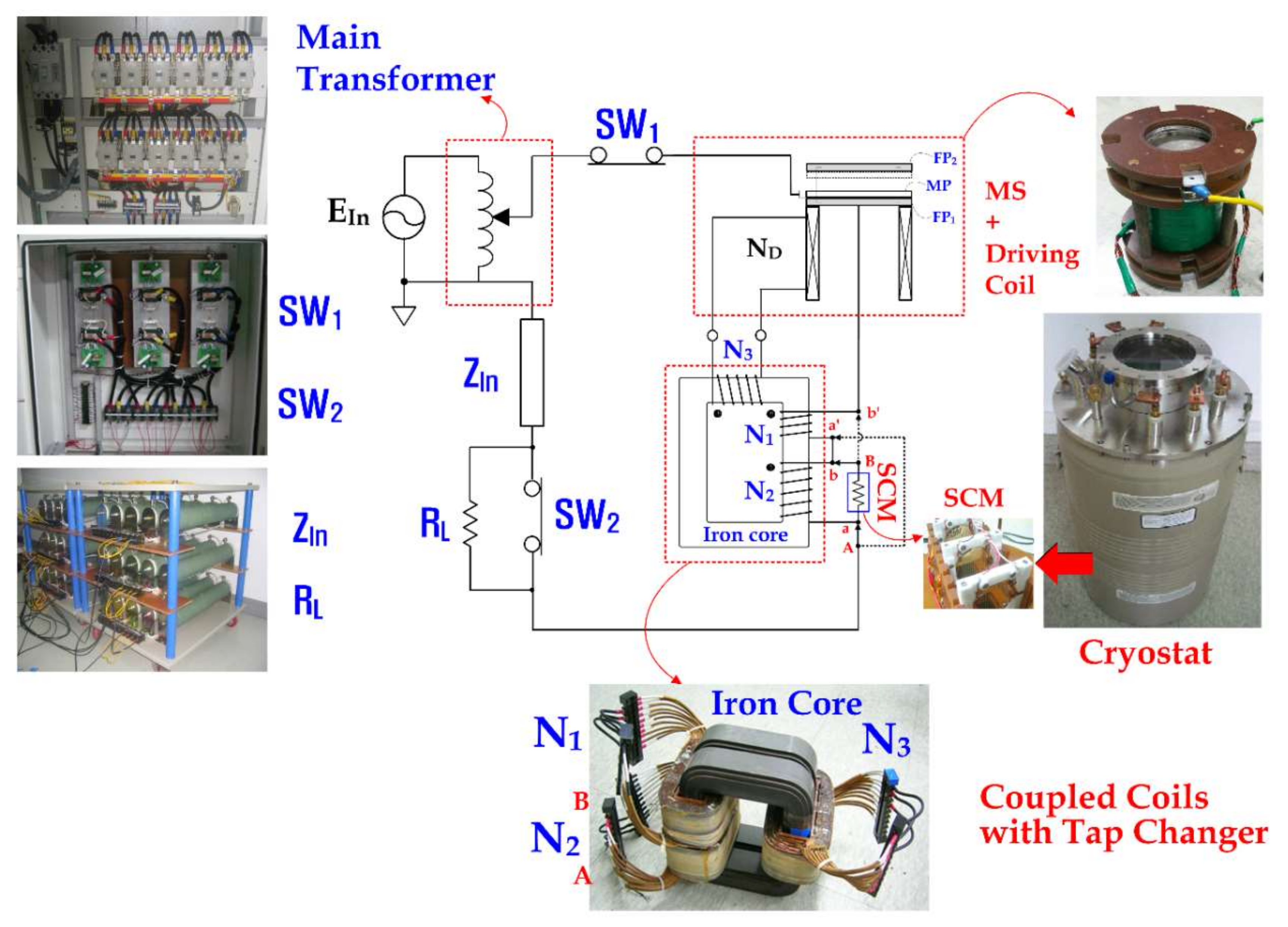
In this paper, a superconducting fault current limiting breaker (SFCLB) using flux coupling with a tap changer is suggested and its effective fault current limiting and breaking characteristics due to the winding method using its tap changer are analyzed. The suggested SFCLB using flux coupling, which consists of the SFCLB using flux coupling with a tap changer, mechanical switch and driving coil, can perform the circuit-breaking function without external driving power after the fault current limiting operation. To examine the suggested SFCLB’s operation, the small scale SFCLB using flux coupling was fabricated and alternative current (AC) short-circuit experiments due to the winding method using the tap changer of the SFCLB were executed. From the experimental results, a lower fault current limiting rate and faster breaking time in the case of a SFCLB with a series connection could be obtained compared to one with a parallel connection.
Keywords: superconducting fault current limiting breaker (SFCLB); flux coupling; tap changer; mechanical switch; winding method; breaking time superconducting fault current limiting breaker (SFCLB); flux coupling; tap changer; mechanical switch; winding method; breaking time