Article

Compressed Machine Learning Models for the Uncertainty Quantification of Power Distribution Networks


Department of Electronics and Telecommunications, Politecnico di Torino, 10129 Torino, Italy
*
Author to whom correspondence should be addressed.
Energies 2020, 13(18), 4881; https://doi.org/10.3390/en13184881
Submission received: 22 August 2020 / Revised: 11 September 2020 / Accepted: 14 September 2020 / Published: 17 September 2020
(This article belongs to the Section F: Electrical Engineering)

Abstract

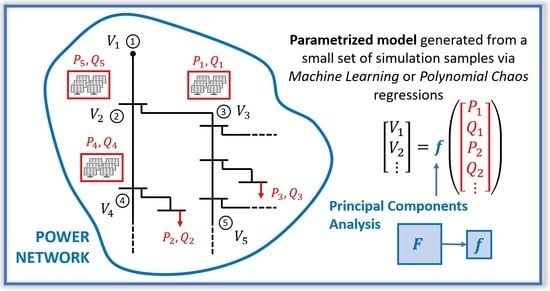
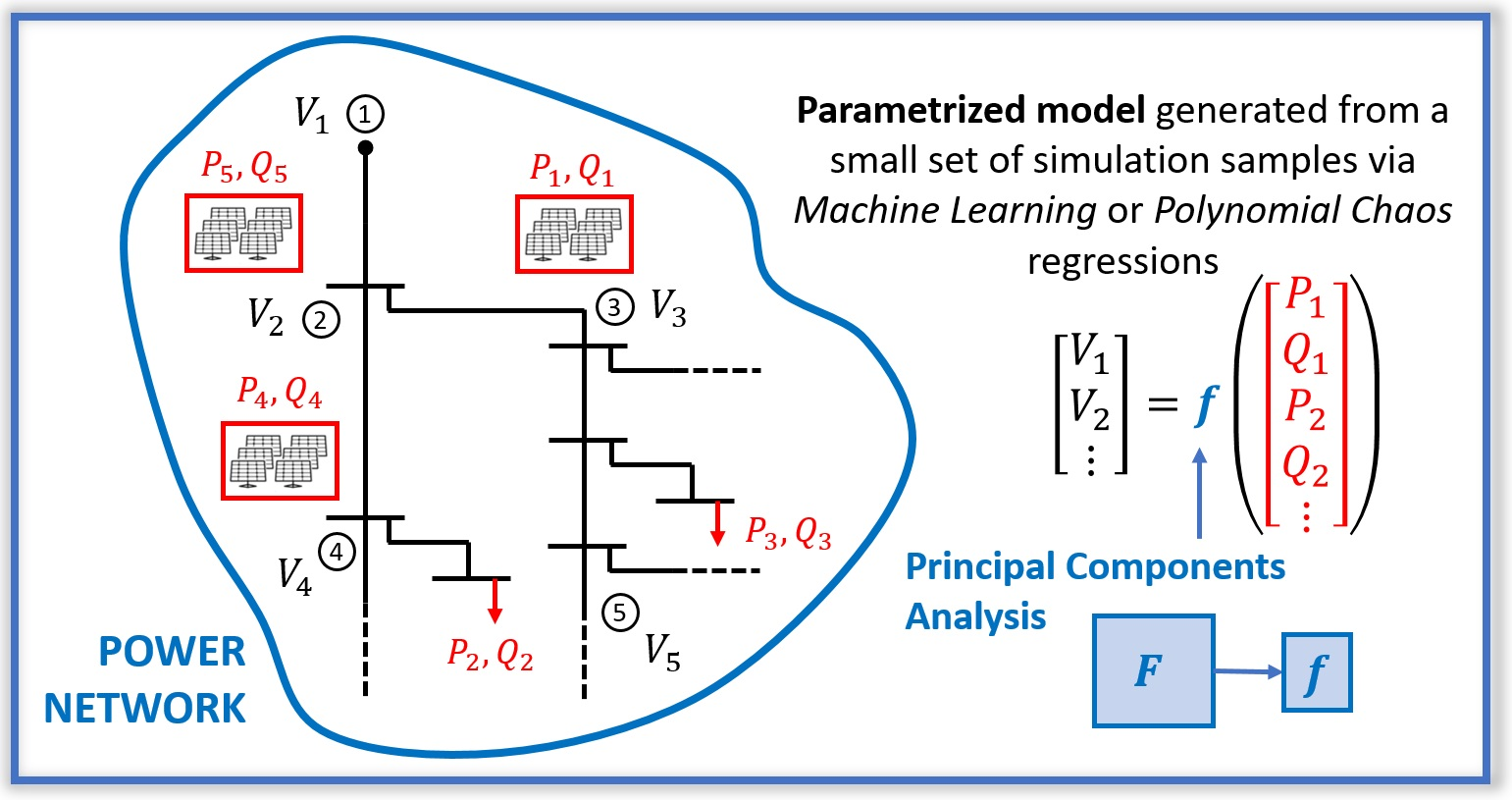
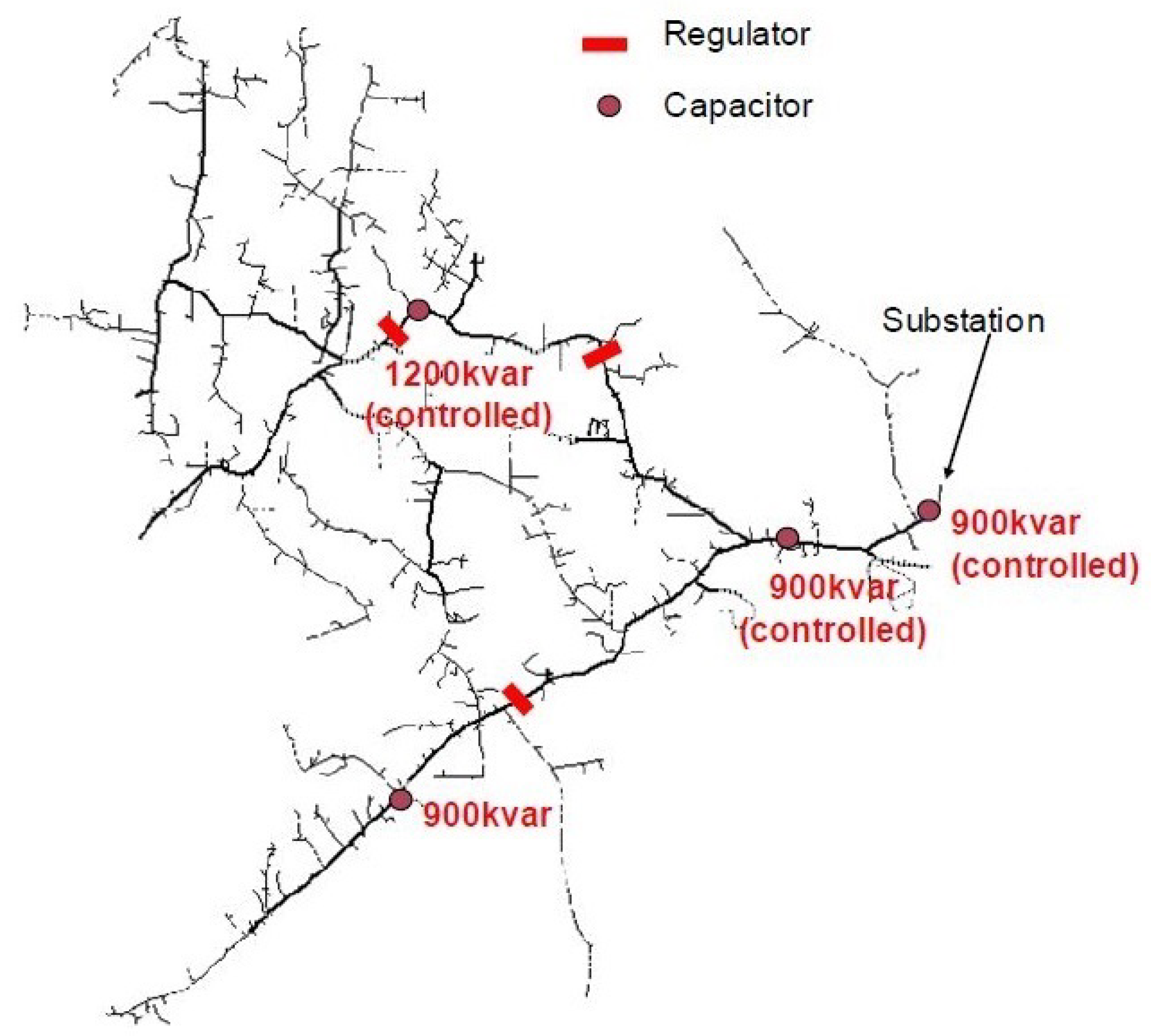
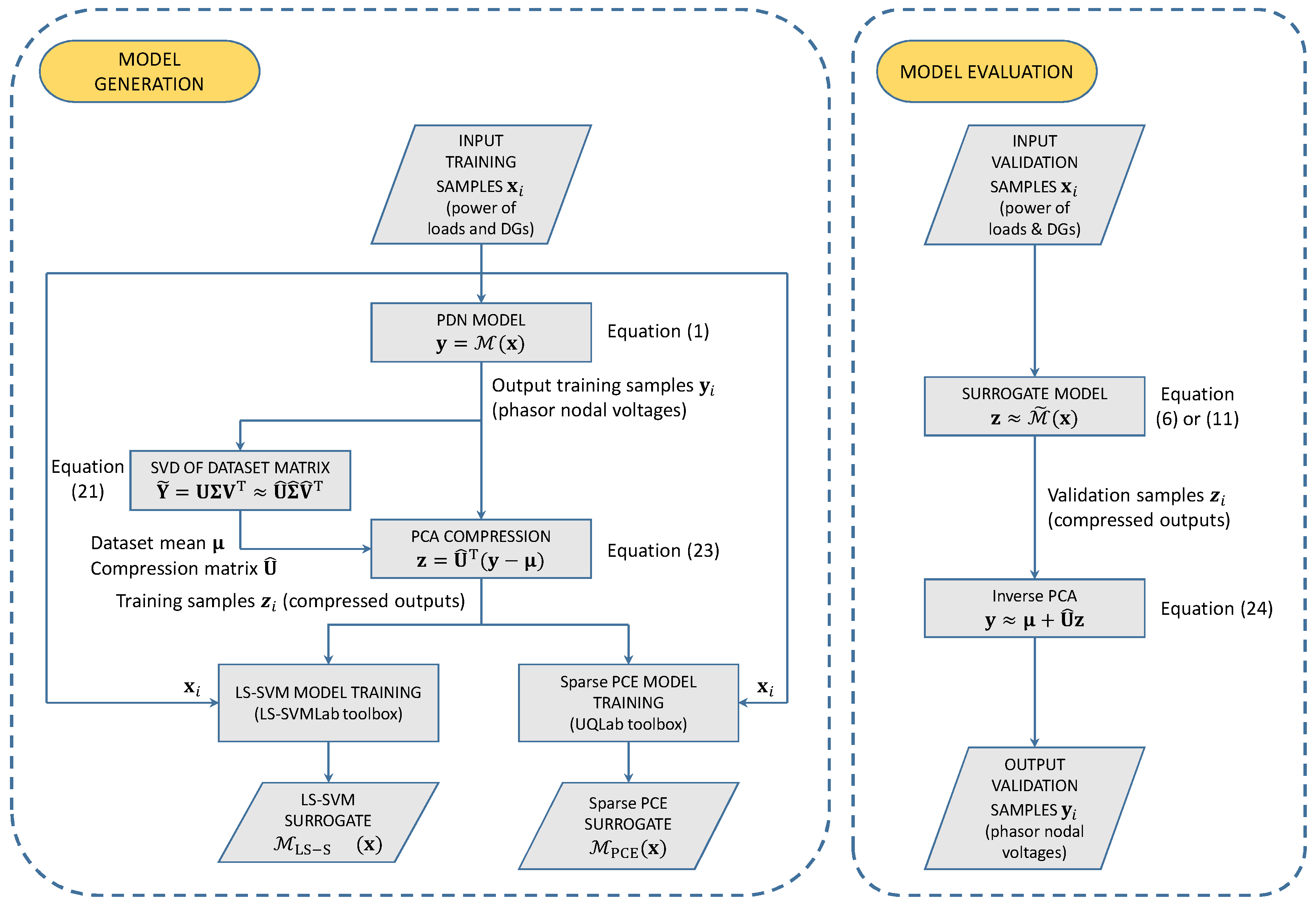
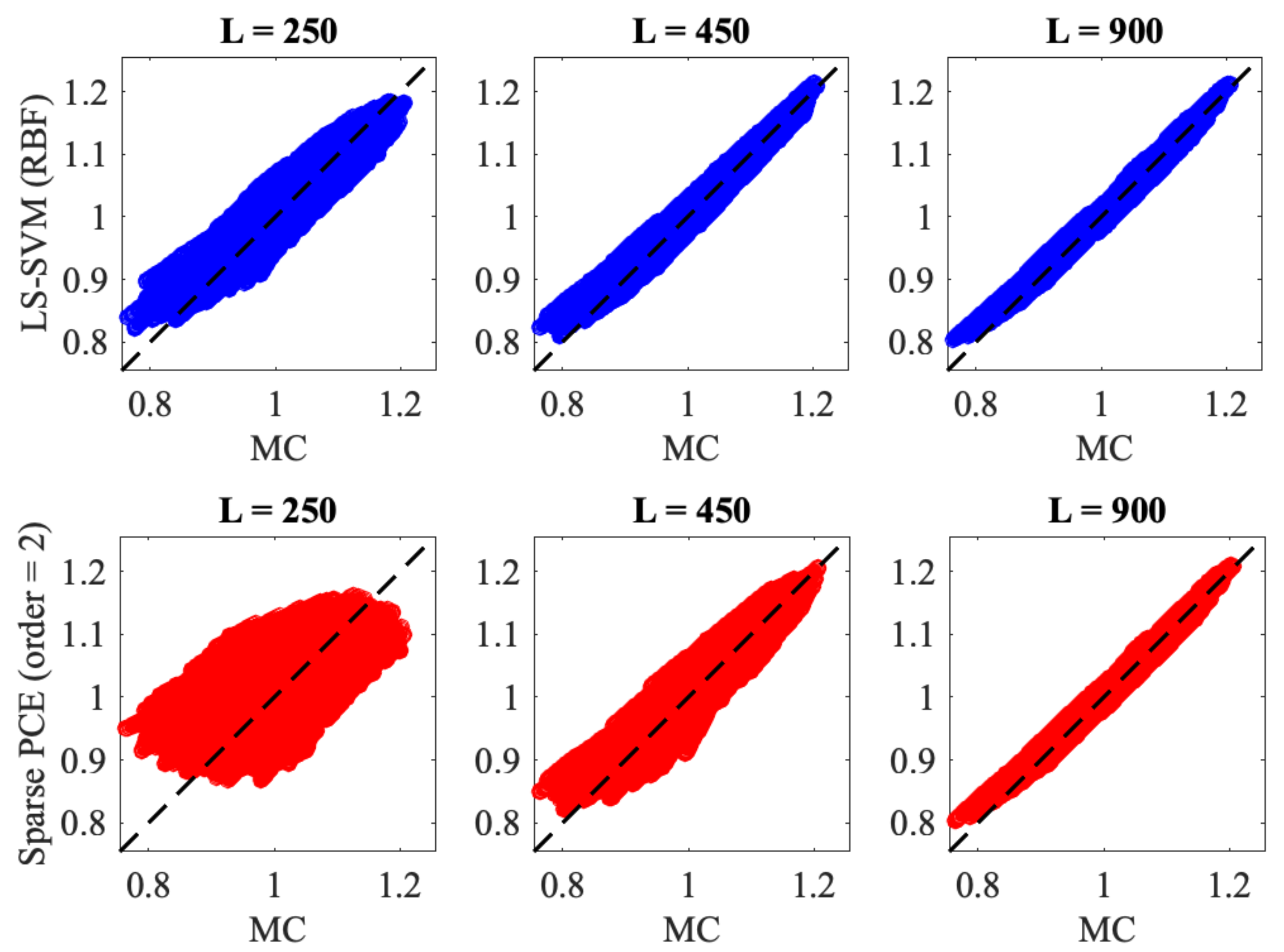
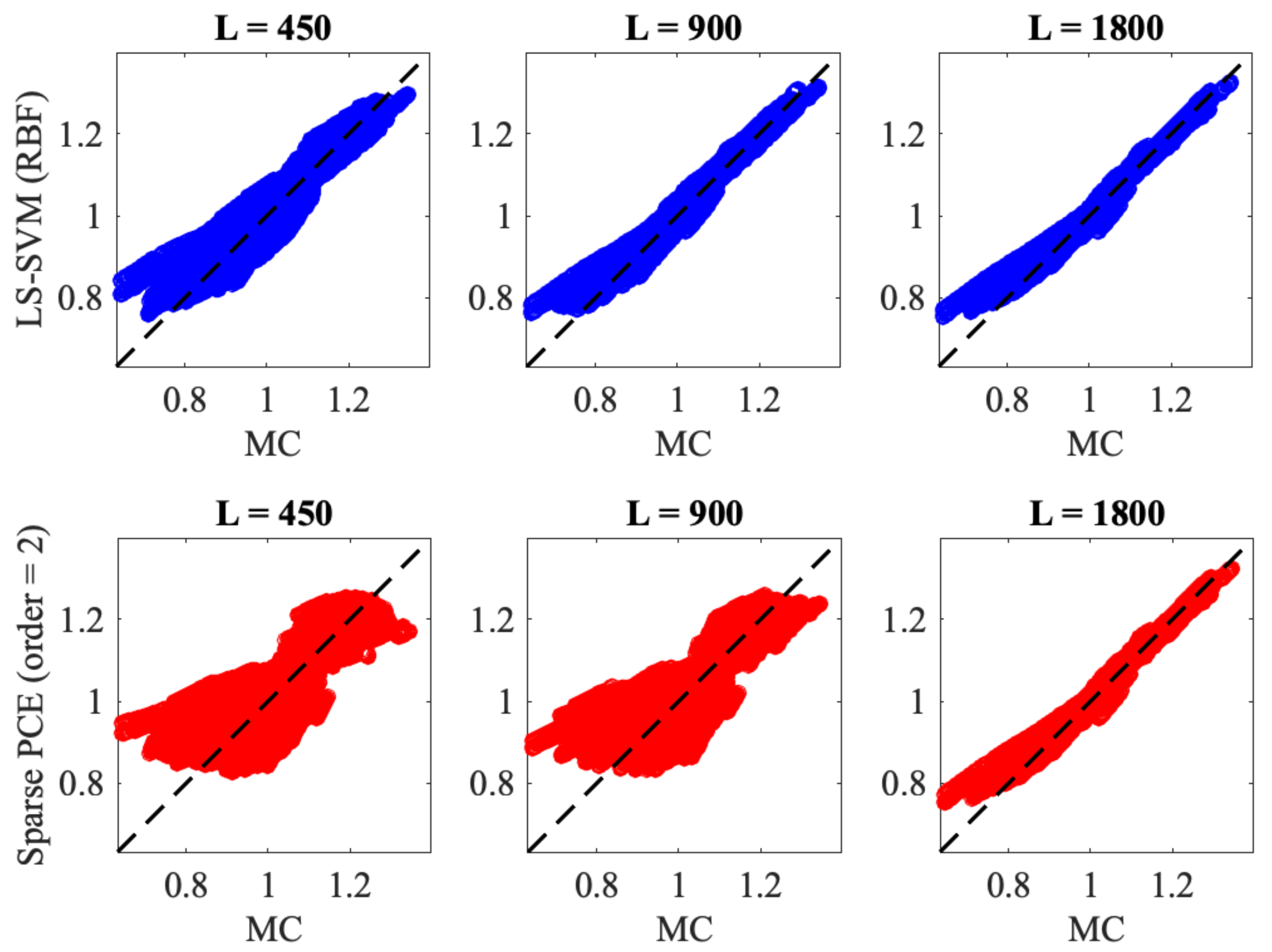
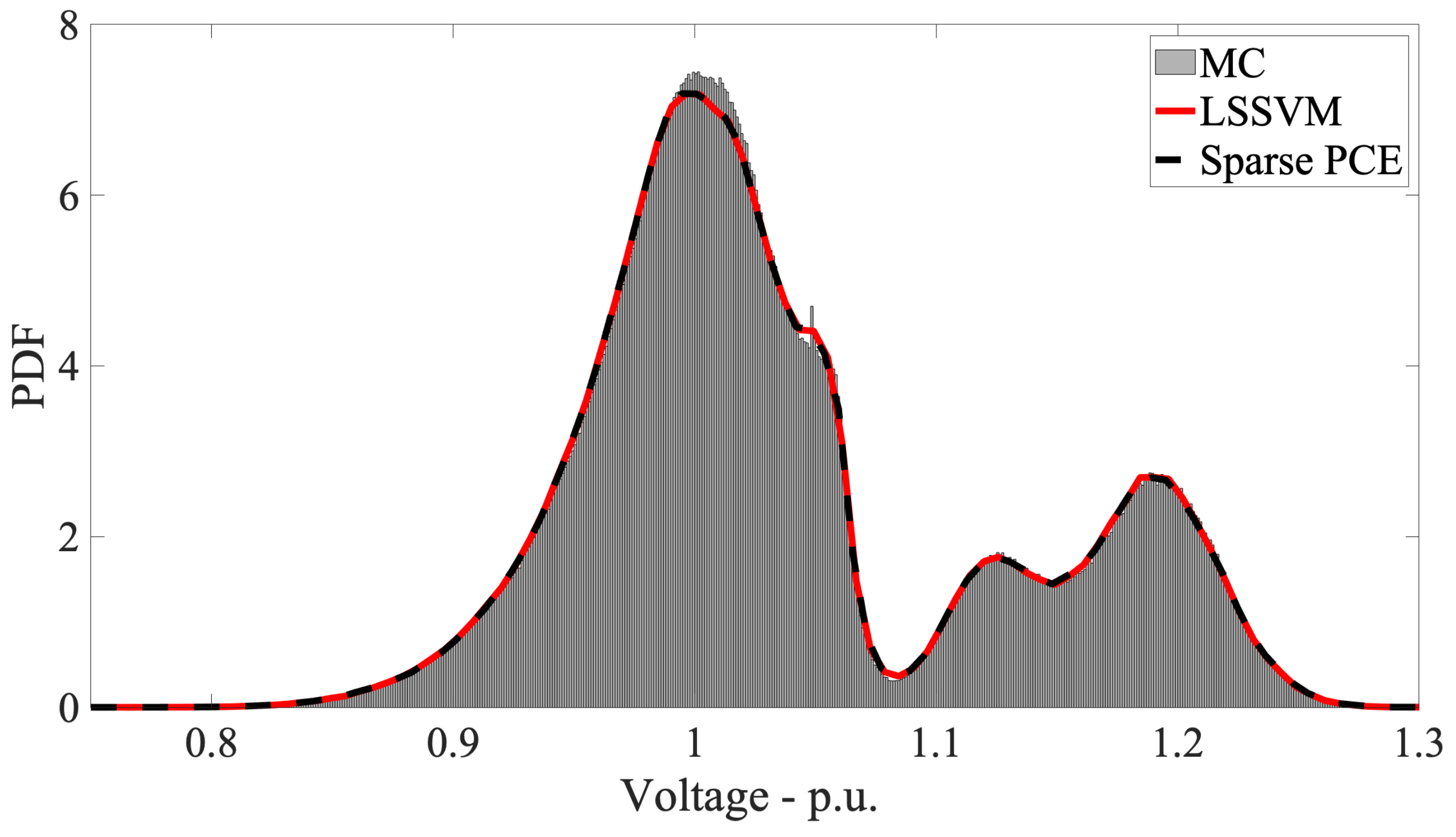
Today’s spread of power distribution networks, with the installation of a significant number of renewable generators that depend on environmental conditions and on users’ consumption profiles, requires sophisticated models for monitoring the power flow, regulating the electricity market, and assessing the reliability of power grids. Such models cannot avoid taking into account the variability that is inherent to the electrical system and users’ behavior. In this paper, we present a solution for the generation of a compressed surrogate model of the electrical state of a realistic power network that is subject to a large number (on the order of a few hundreds) of uncertain parameters representing the power injected by distributed renewable sources or absorbed by users with different consumption profiles. Specifically, principal component analysis is combined with two state-of-the-art surrogate modeling strategies for uncertainty quantification, namely, the least-squares support vector machine, which is a nonparametric regression belonging to the class of machine learning methods, and the widely adopted polynomial chaos expansion. Such methods allow providing compact and efficient surrogate models capable of predicting the statistical behavior of all nodal voltages within the network as functions of its stochastic parameters. The IEEE 8500-node test feeder benchmark with 450 and 900 uncertain parameters is considered as a validation example in this study. The feasibility and strength of the proposed method are verified through a systematic assessment of its performance in terms of accuracy, efficiency, and convergence, based on reference simulations obtained via classical Monte Carlo analysis.
Keywords: high-dimensional problems; least-squares support vector machine; polynomial chaos expansion; power distribution network; power-flow analysis; principal component analysis; uncertainty quantification; surrogate models high-dimensional problems; least-squares support vector machine; polynomial chaos expansion; power distribution network; power-flow analysis; principal component analysis; uncertainty quantification; surrogate models
Graphical Abstract