Article

Detailed Recognition of Seismogenic Structures Activated during Underground Coal Mining: A Case Study from Bobrek Mine, Poland


Department of Geoinformatics and Applied Computer Science, Faculty of Geology, Geophysics and Environmental Protection, AGH University of Science and Technology, 30-065 Kraków, Poland
*
Author to whom correspondence should be addressed.
Energies 2020, 13(18), 4622; https://doi.org/10.3390/en13184622
Submission received: 13 July 2020 / Revised: 28 August 2020 / Accepted: 2 September 2020 / Published: 5 September 2020
(This article belongs to the Section B: Energy and Environment)

Abstract

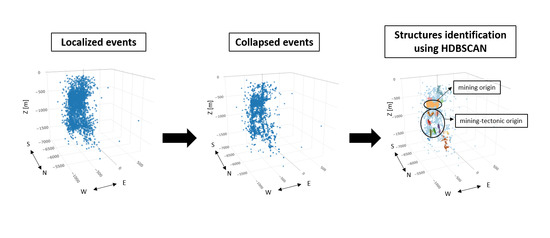
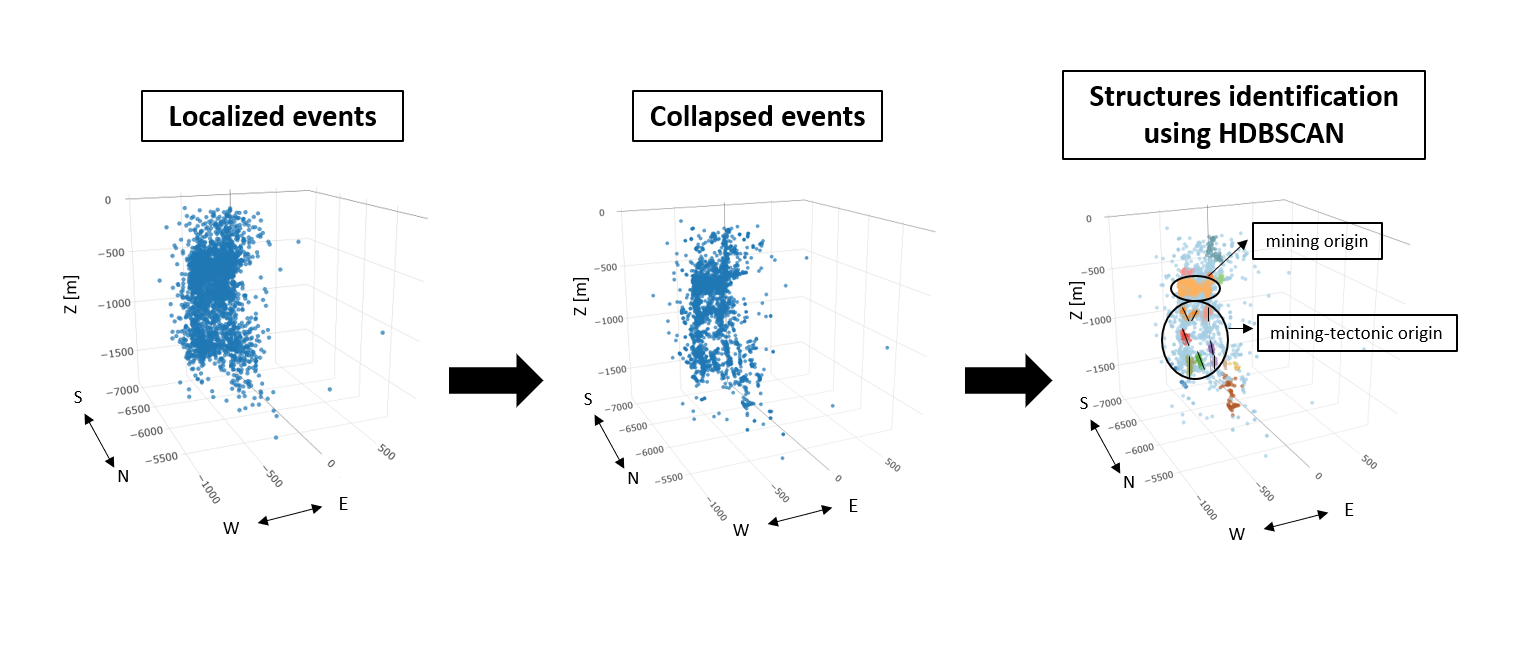
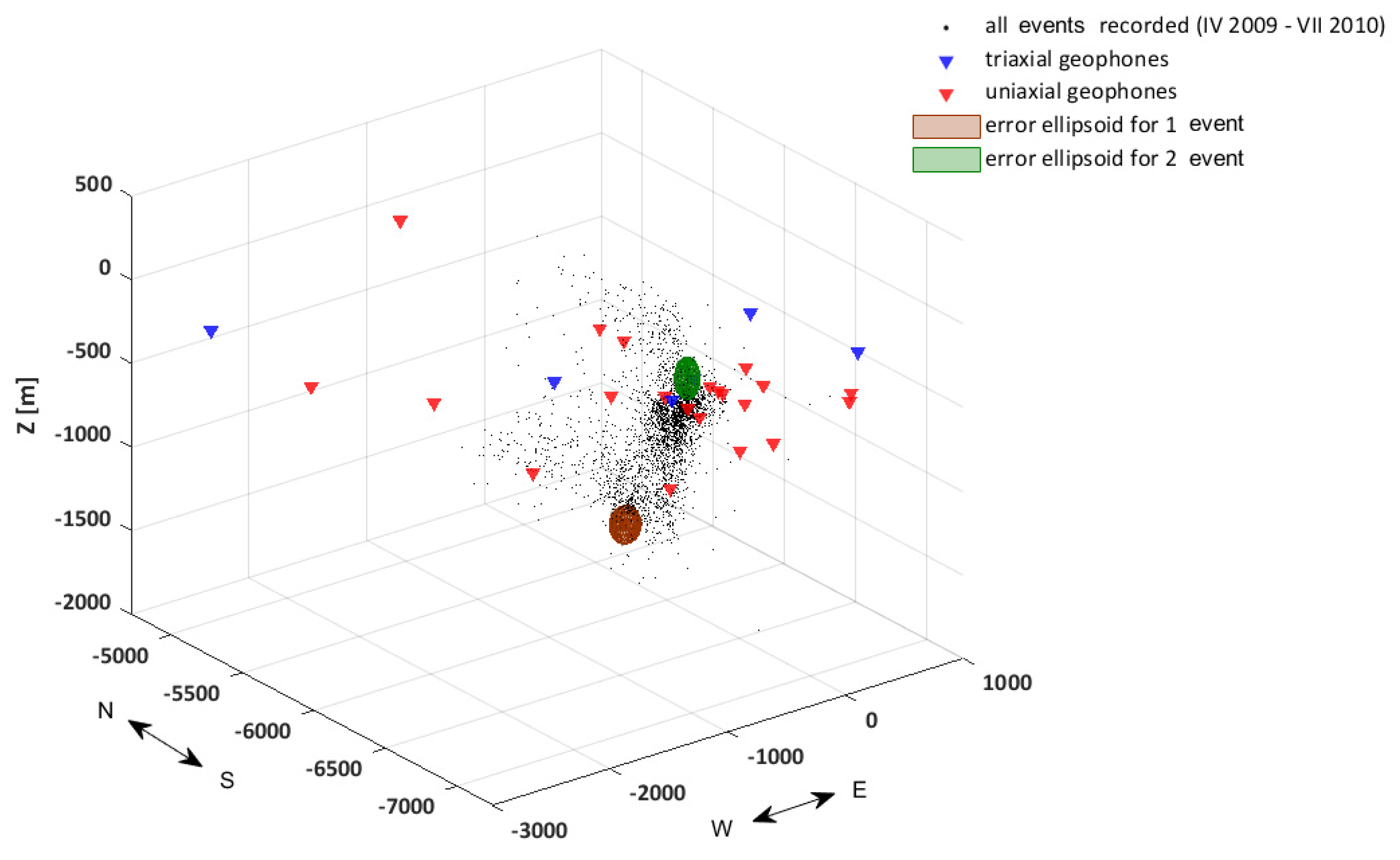
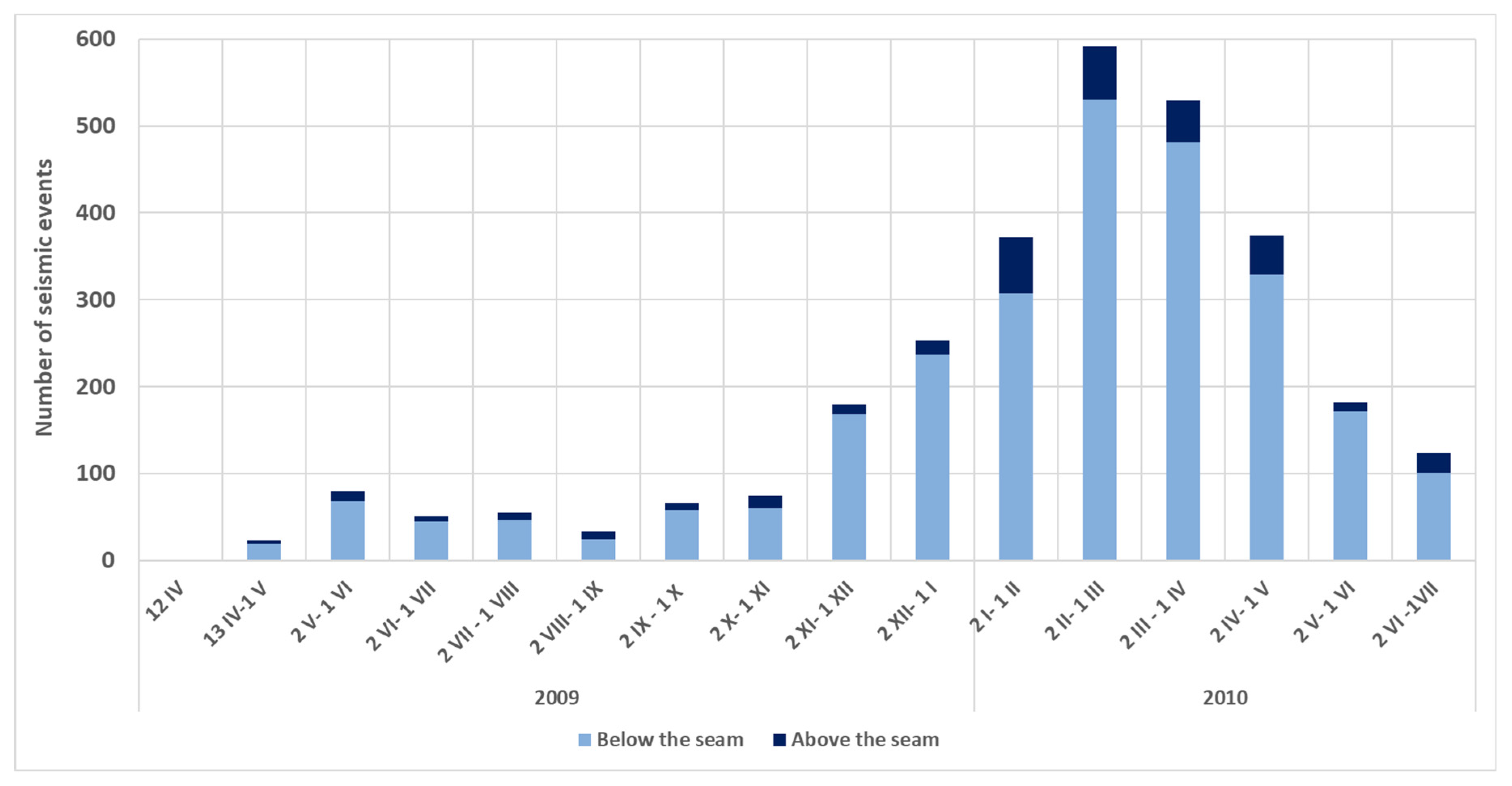
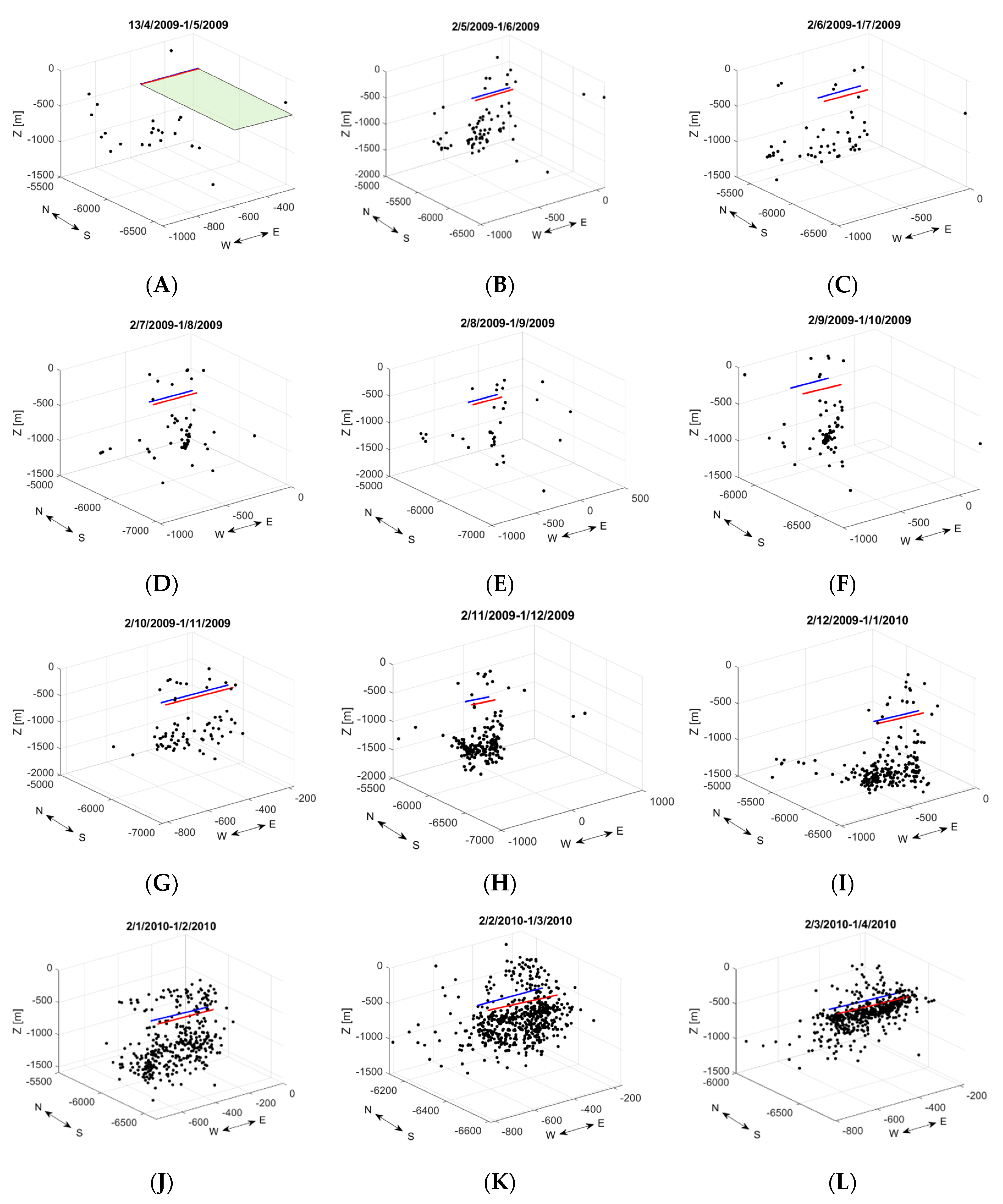
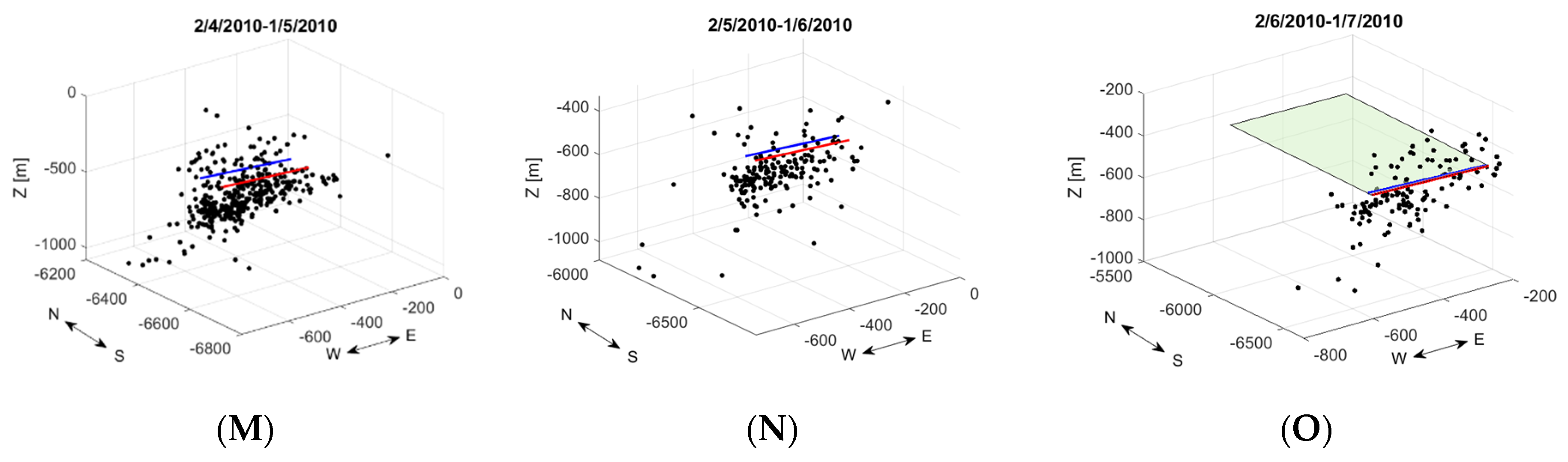
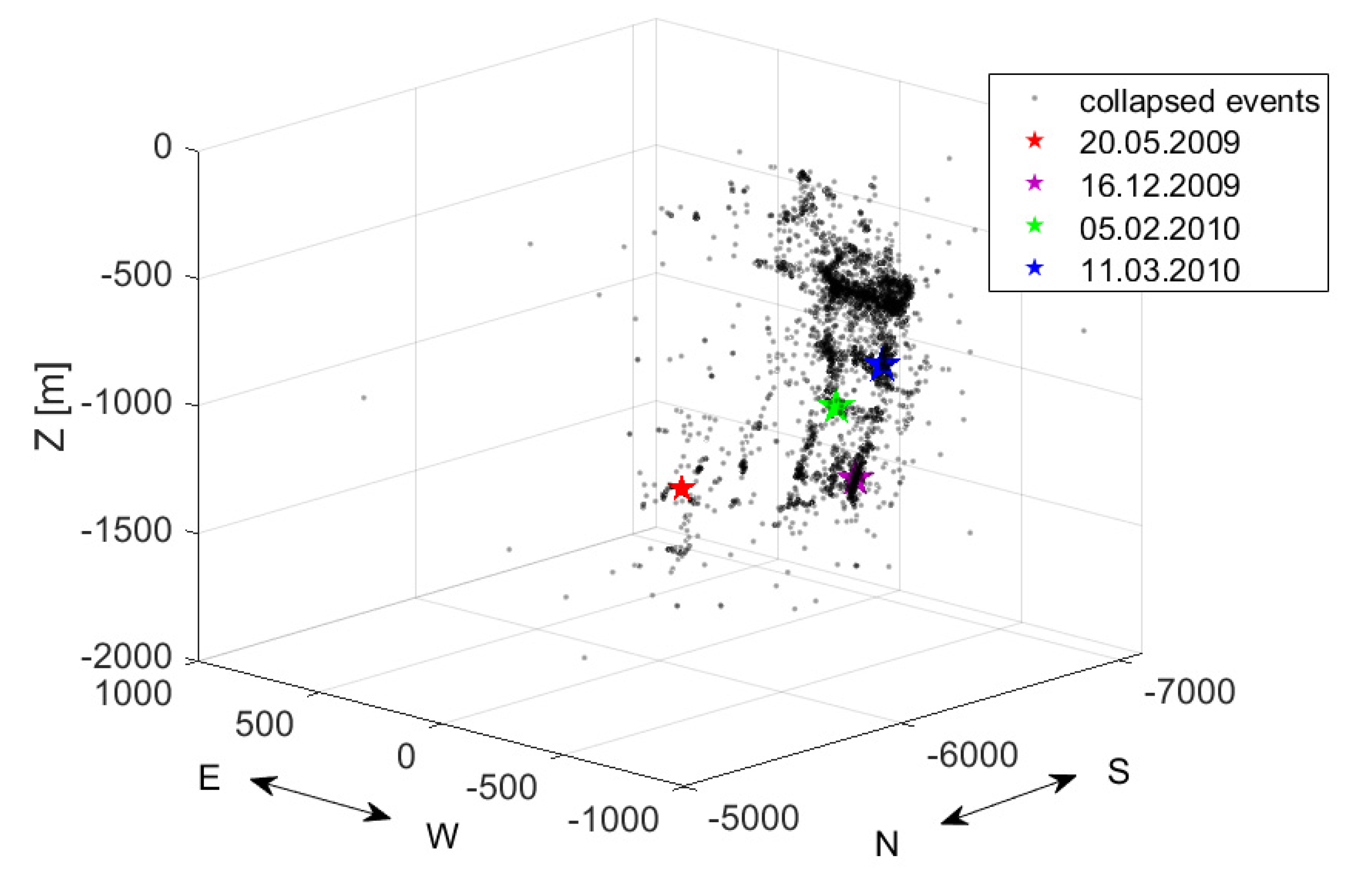
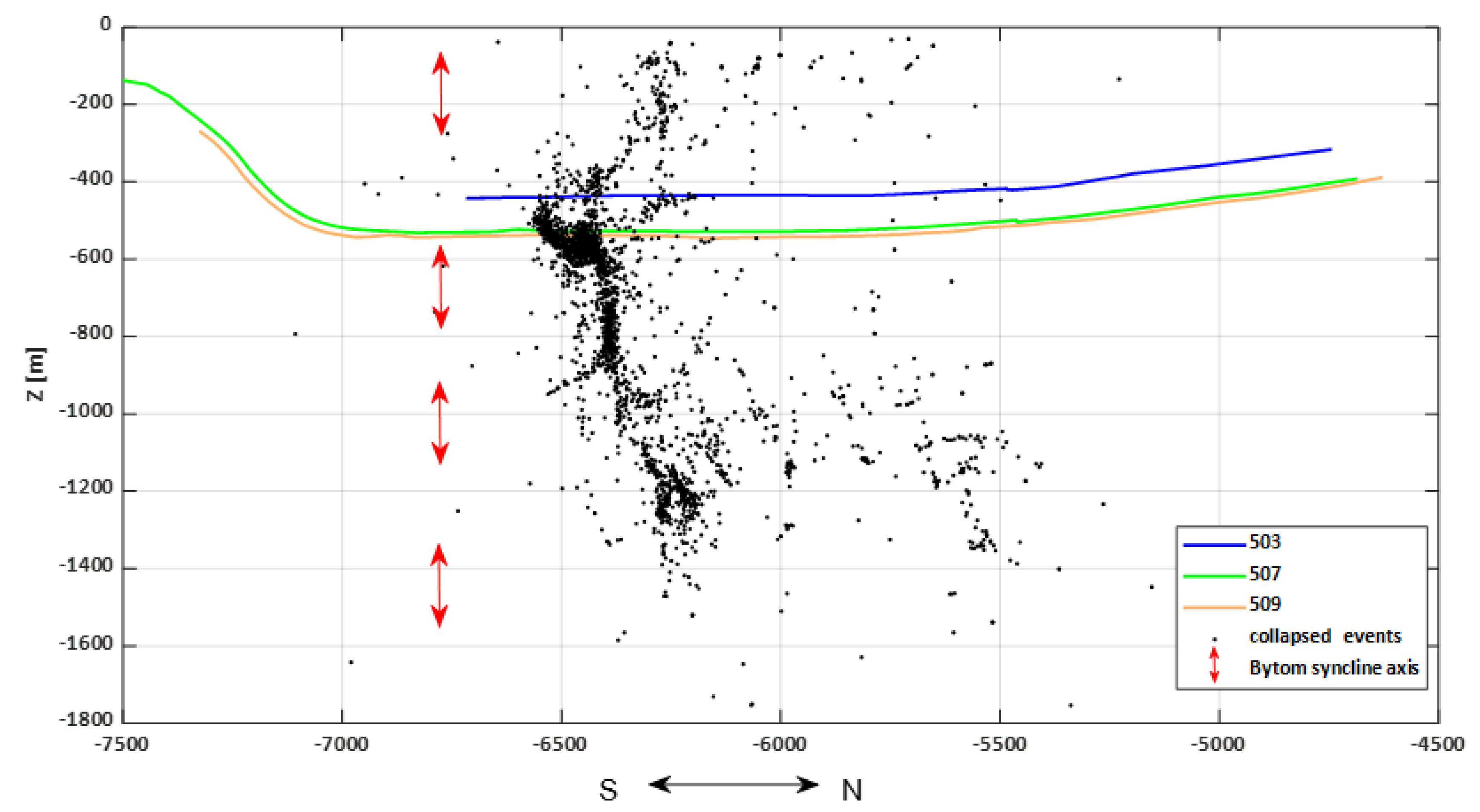
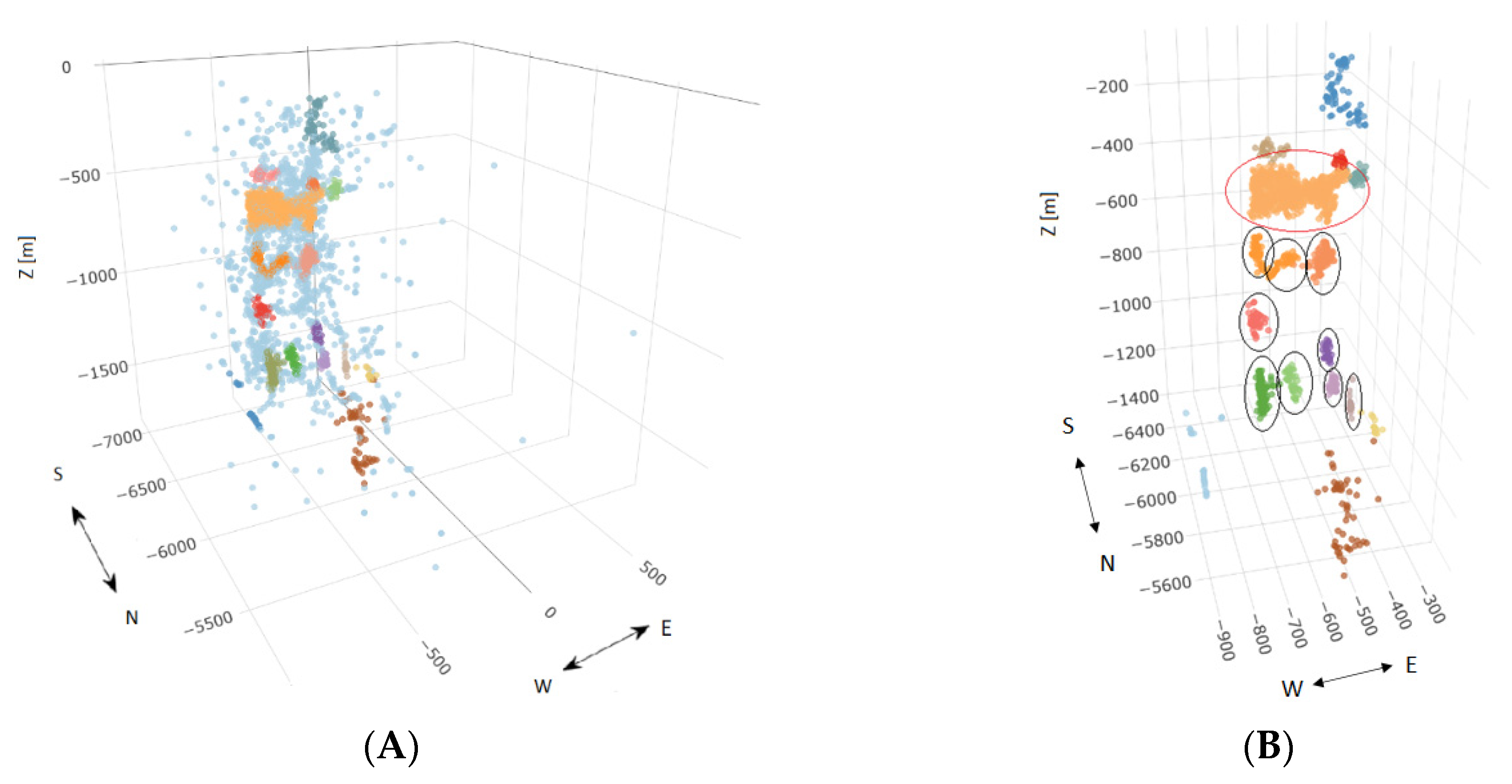
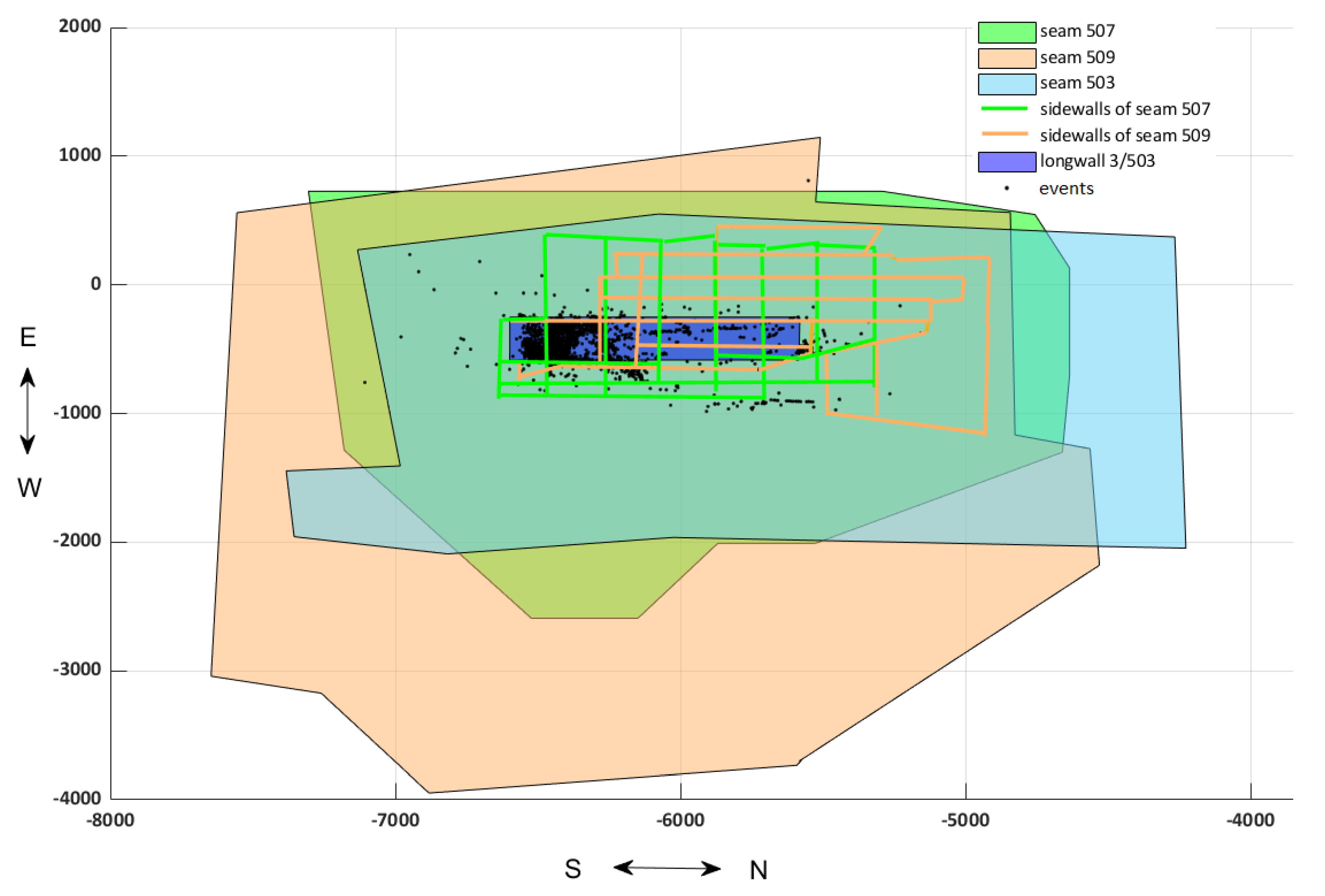
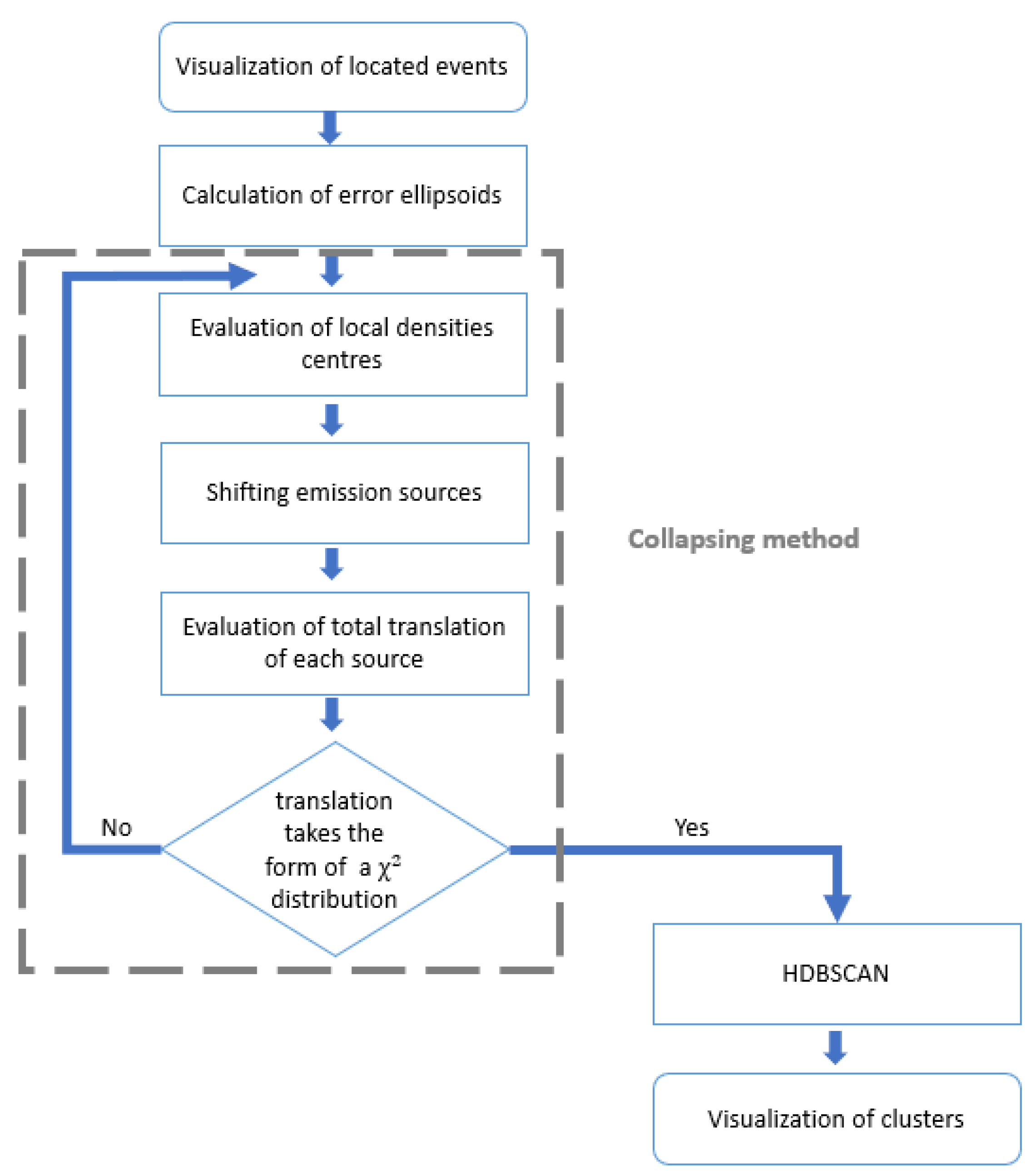
In rock mass disturbed by mining activity, distortions in the stress balance may lead to seismic energy being emitted in reactivated seismogenic structures. One way of increasing the imaging resolution of these seismically active structures is through relocation, which itself can be achieved using the cloud collapsing method. This method partially eliminates perturbations in the location of seismic energy sources concerning the actual positions of these sources. It enables events to be grouped into spatially ordered structures that may correspond to actual tectonic structures, such as fractures, fissures, or faults. We present the results of applying the collapsing method in mining seismology using a cloud of located events recorded during mining activity at one of the coalfaces in the Bobrek hard coal mine. The relocation procedure was applied to all the foci of events recorded during mining activity on face 3/503 between April 2009 and July 2010. In the relocated point cloud, two types of the linear structure responsible for generating events are automatically distinguished using the HDBSCAN algorithm: structures directly related to mining activity and structures associated with local tectonics. The location of the separated structures of the first type corresponds to the range of coalface 3/503 and the shafts delimiting earlier mined seams 507 and 509 located below. The isolated structures of the second type, with almost vertical orientation, are associated with existing zones of discontinuity that become seismically active as a result of mining activity. The identified structures lie near the biggest events recorded, which is evidence that these structures may correspond to real discontinuity zones.
Keywords: mining seismicity; collapsing method; reactivated faults mining seismicity; collapsing method; reactivated faults
Graphical Abstract