Article

Pyrolysis of Rapeseed Oil Press Cake and Steam Gasification of Solid Residues


1
Faculty of Process and Environmental Engineering, Lodz University of Technology, Wolczanska 213, 90-924 Lodz, Poland
2
EKO-SERWIS S.C., Wierzbowa 48, 90-133 Lodz, Poland
*
Author to whom correspondence should be addressed.
Energies 2020, 13(17), 4472; https://doi.org/10.3390/en13174472
Submission received: 23 July 2020 / Revised: 23 August 2020 / Accepted: 25 August 2020 / Published: 31 August 2020
(This article belongs to the Special Issue Thermochemical Conversion of Biomass and Waste)

Abstract

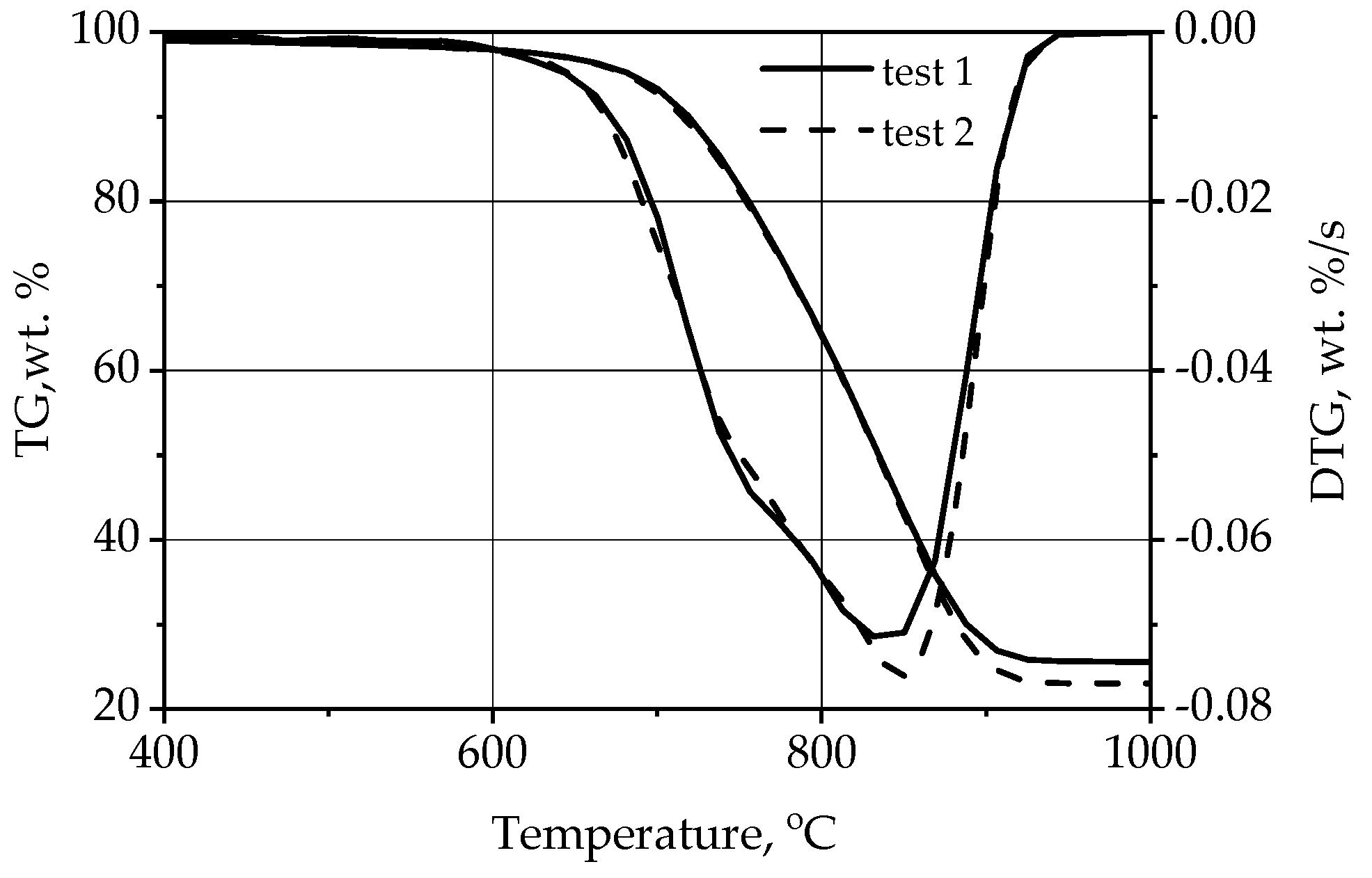
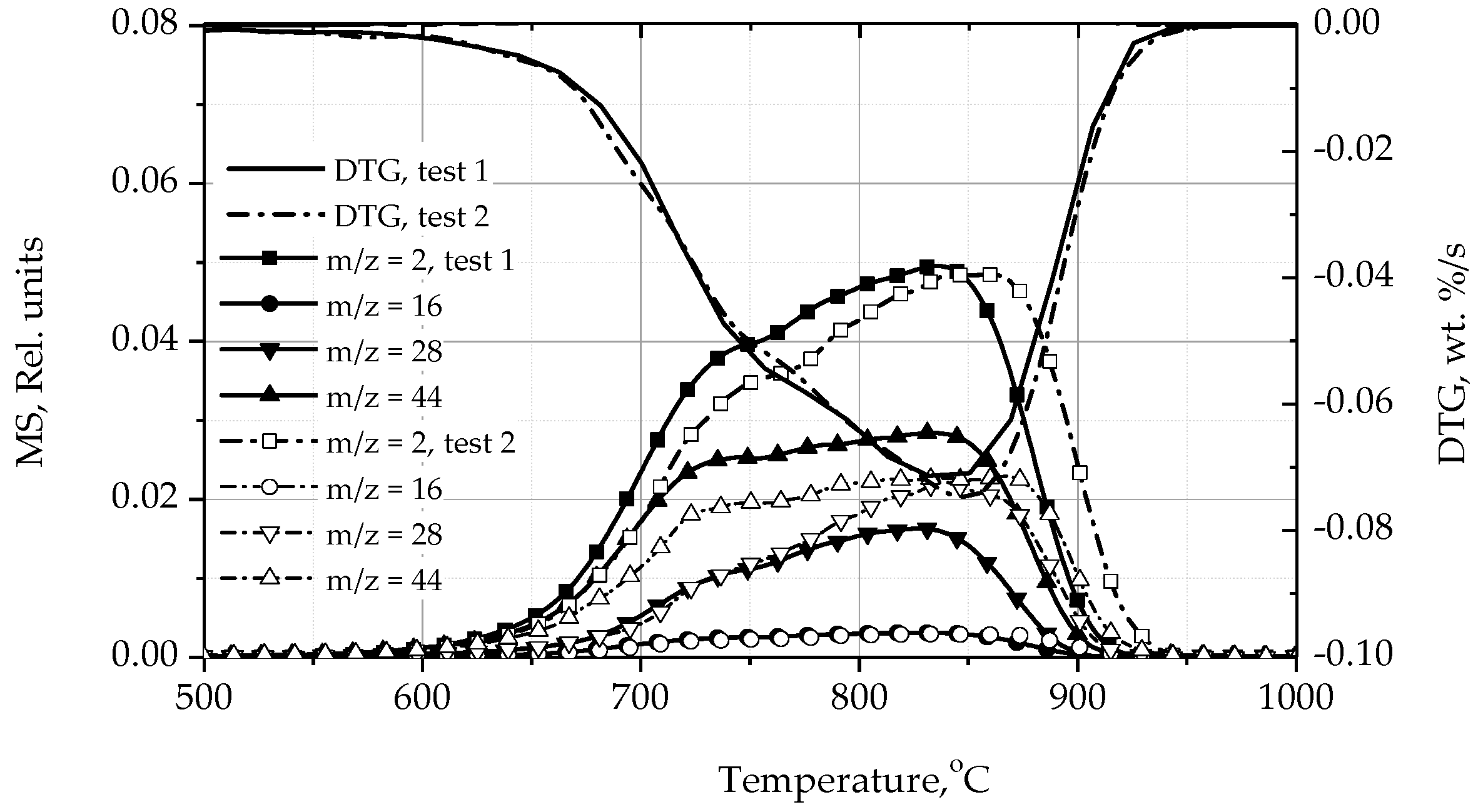
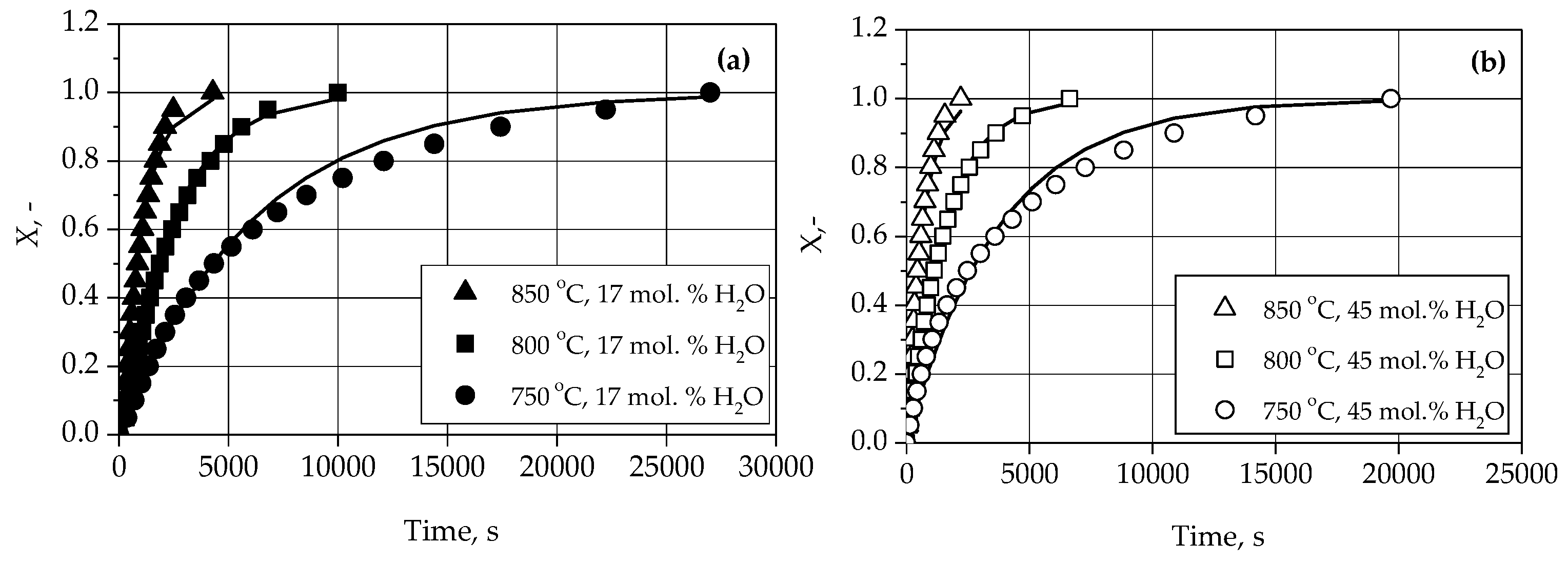
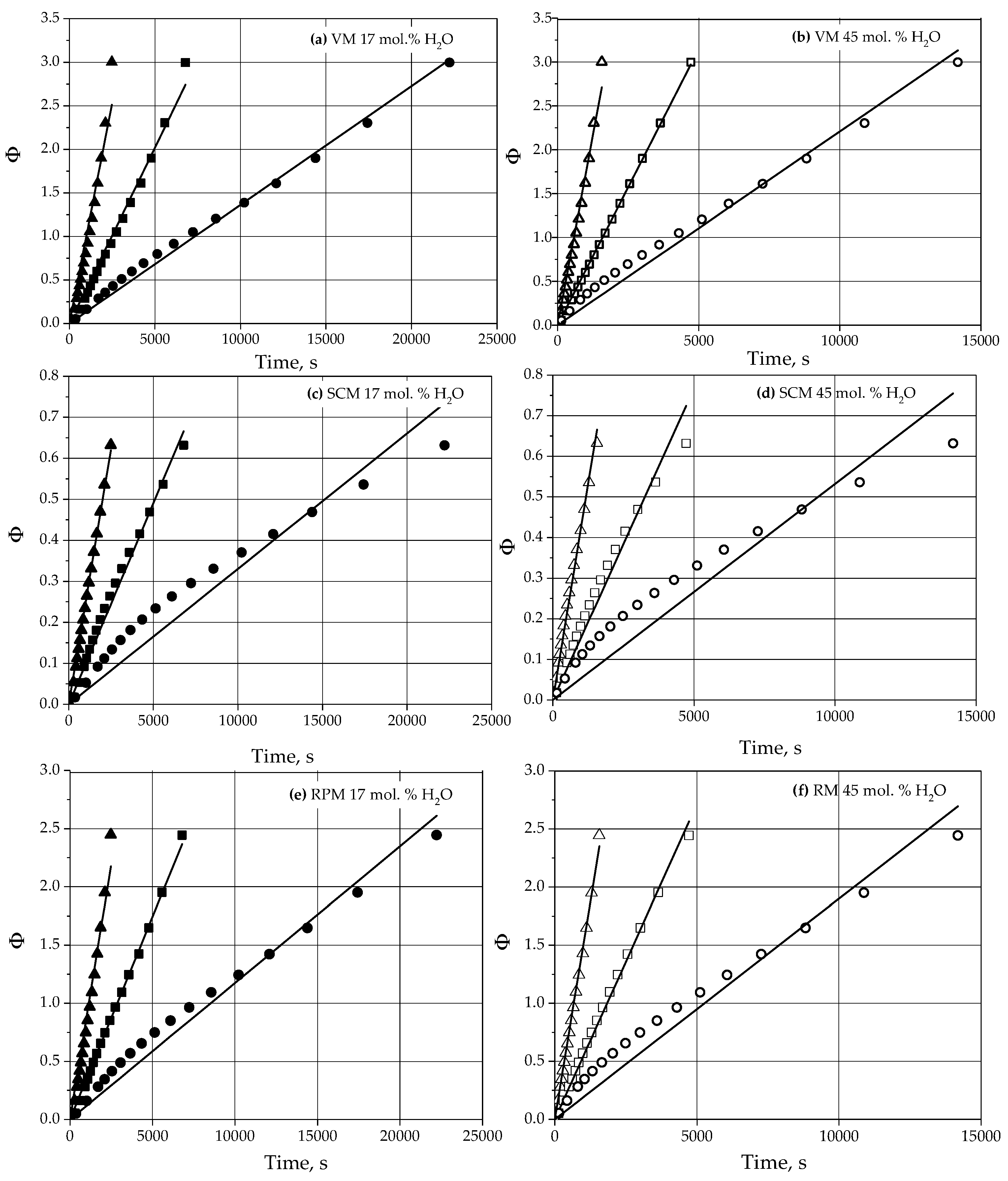
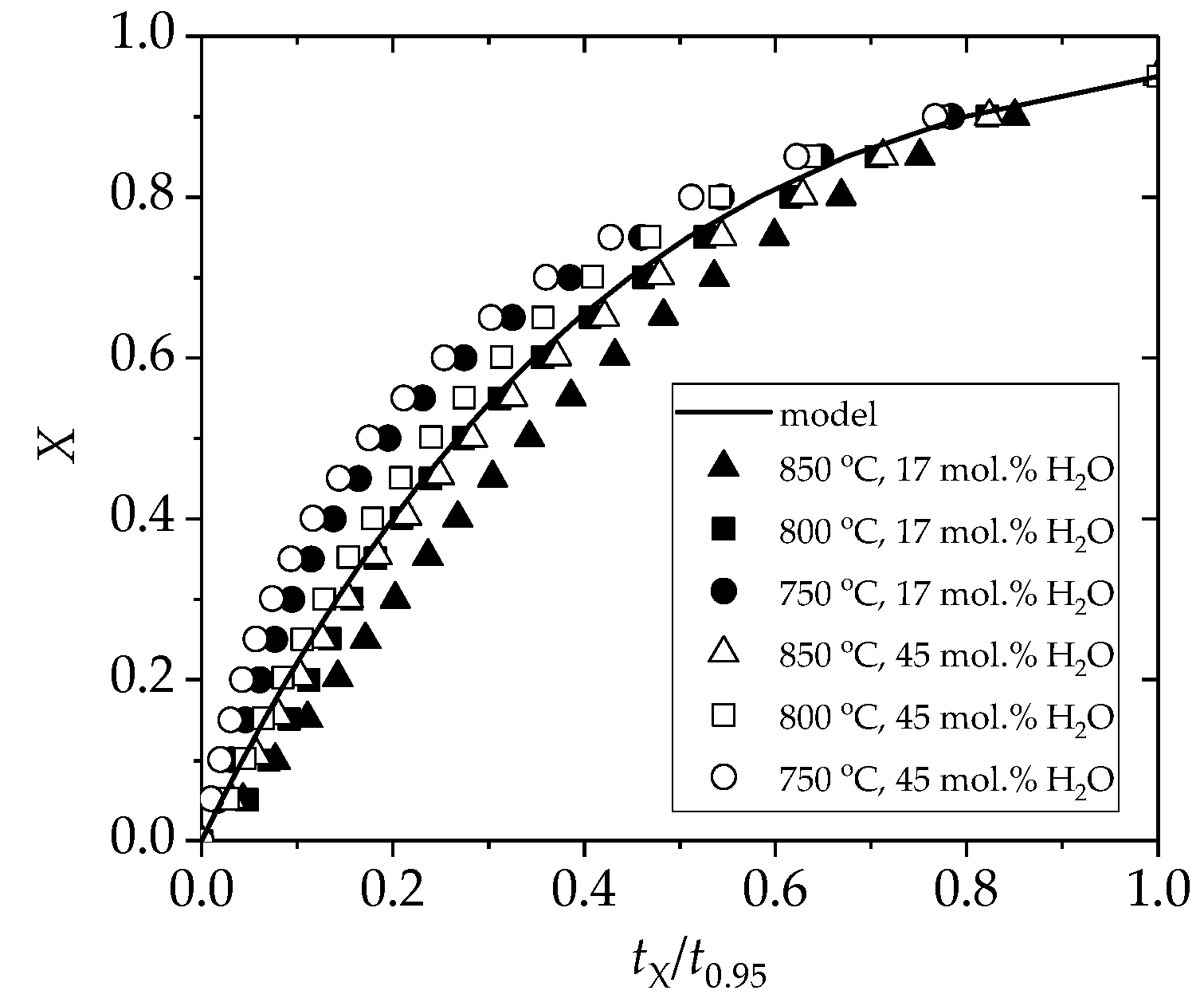
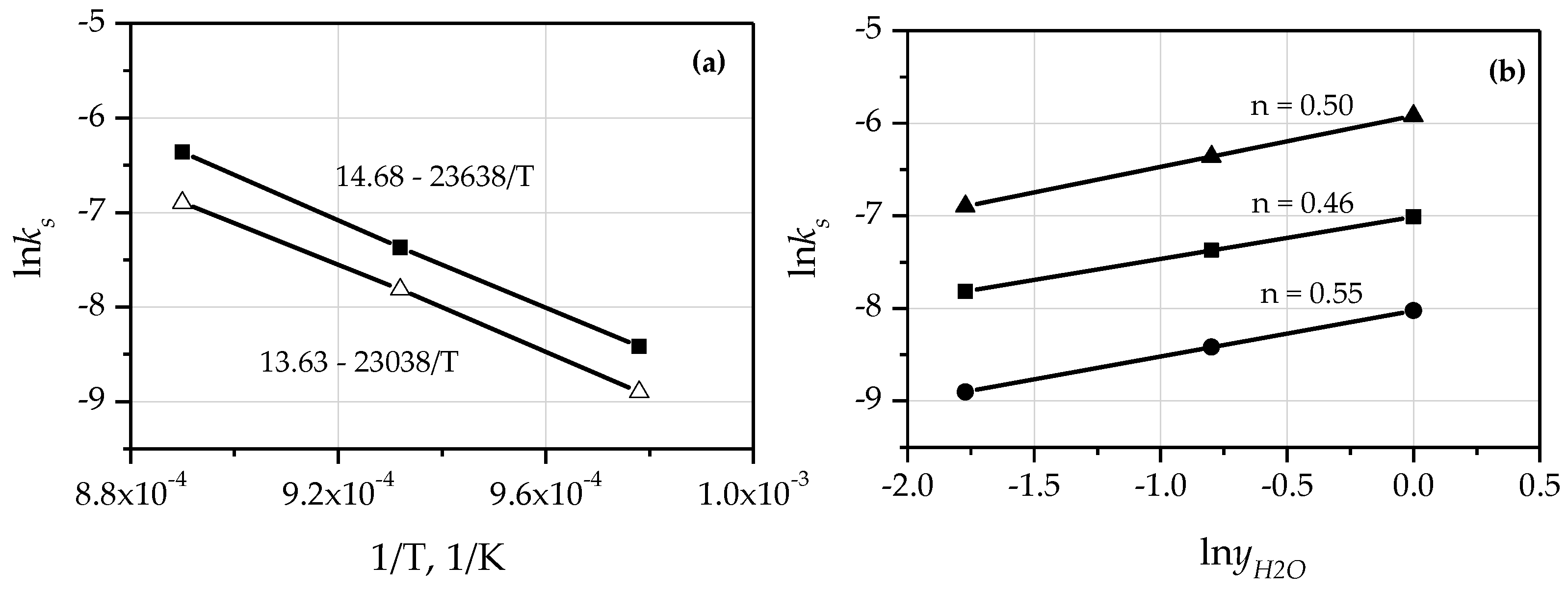
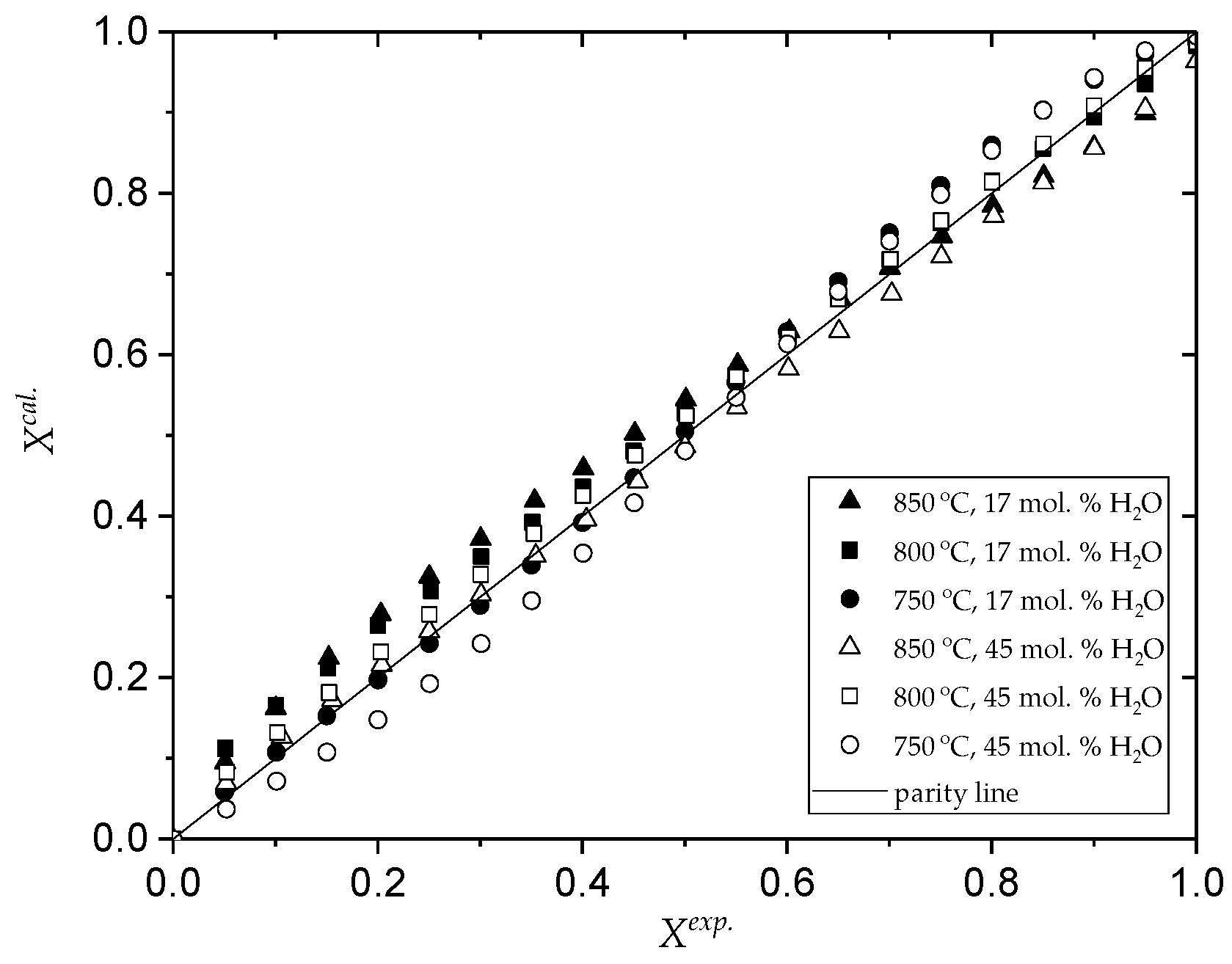
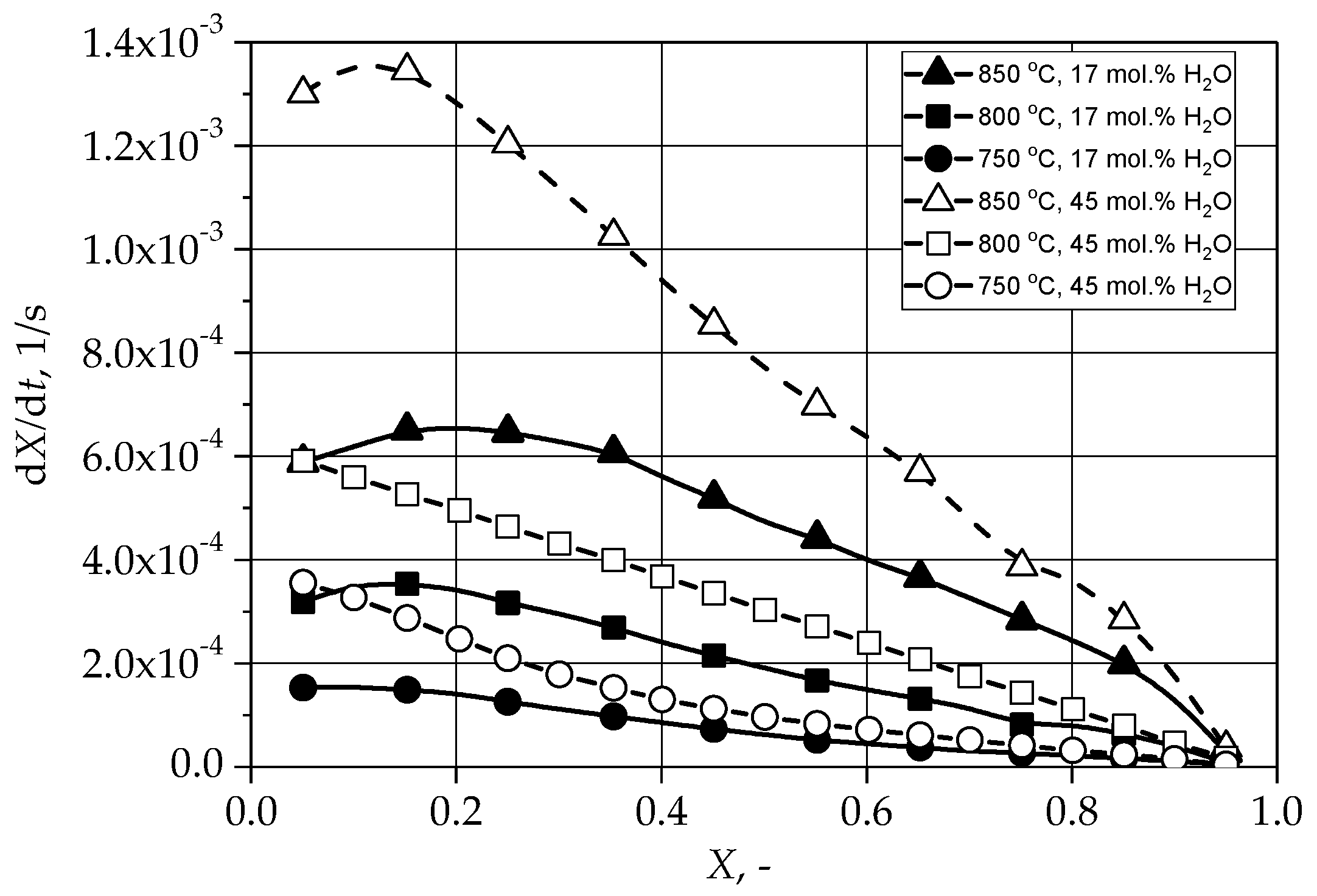
A deoiled rapeseed press cake (RPC) was pyrolyzed by heating at a slow heating rate to 1000 °C in a fixed bed reactor, and the produced char was then gasified to obtain data for the kinetic modeling of the process. The gasification experiments were performed in a thermogravimetric analyzer (TGA) under steam/argon mixtures at different temperatures (750, 800 and 850 °C) and steam mole fractions (0.17 and 0.45). The three most commonly used gas-solid kinetic models, the random pore model, the volumetric model and the shrinking core model were used to describe the conversion of char during steam gasification. The objective of the kinetic study was to determine the kinetic parameters and to assess the ability of the models to predict the RPC conversion during steam gasification. A TGA-MS analysis was applied to assess the composition of the product gas. The main steam gasification product of the RPC was hydrogen (approximately 60 mol % of the total product). The volumetric model was able to accurately predict the behavior of the RPC char gasification with steam at temperatures of 750–850 °C and steam concentrations less than 0.45 mole fraction. The activation energy and the reaction order with respect to steam were equal to 166 kJ/mol and 0.5, respectively, and were typical values for the gasification of biomass chars with steam
Keywords: steam gasification; kinetics; rapeseed oil press cake; synthesis gas; TGA-MS analysis; pyrolysis steam gasification; kinetics; rapeseed oil press cake; synthesis gas; TGA-MS analysis; pyrolysis