Article

Is the Fischer-Tropsch Conversion of Biogas-Derived Syngas to Liquid Fuels Feasible at Atmospheric Pressure?

1
School of Chemistry and Chemical Engineering, Queen’s University Belfast, Belfast BT9 5AG, UK
2
School of Mechanical and Aerospace Engineering, Queen’s University Belfast, Belfast BT9 5AH, UK
*
Author to whom correspondence should be addressed.
Current address: School of Chemical Engineering and Analytical Sciences, University of Manchester, Manchester M13 9PL, UK.
Energies 2019, 12(6), 1031; https://doi.org/10.3390/en12061031
Submission received: 11 January 2019 / Revised: 8 March 2019 / Accepted: 11 March 2019 / Published: 16 March 2019
(This article belongs to the Special Issue Production and Utilization of Biogas)

Abstract

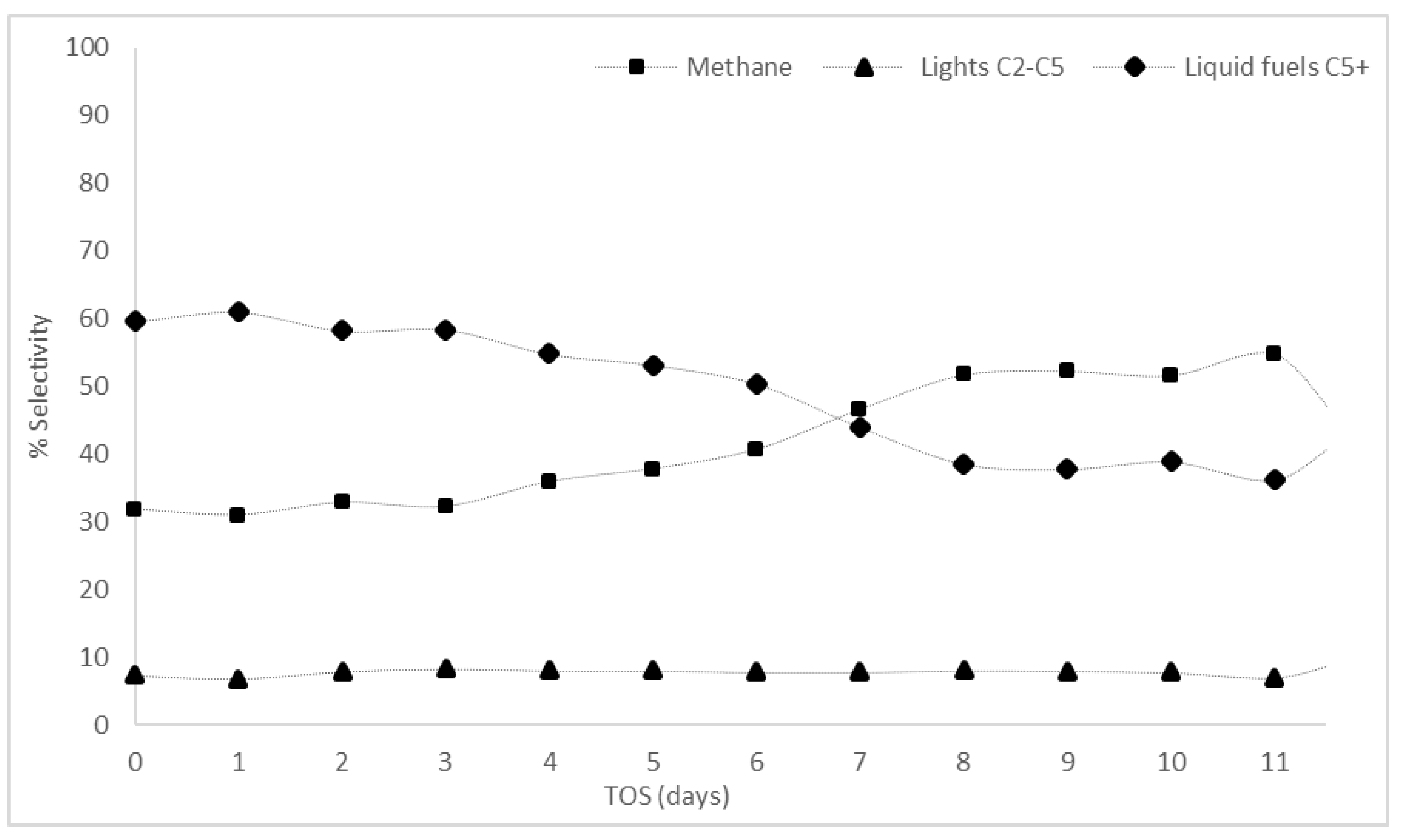
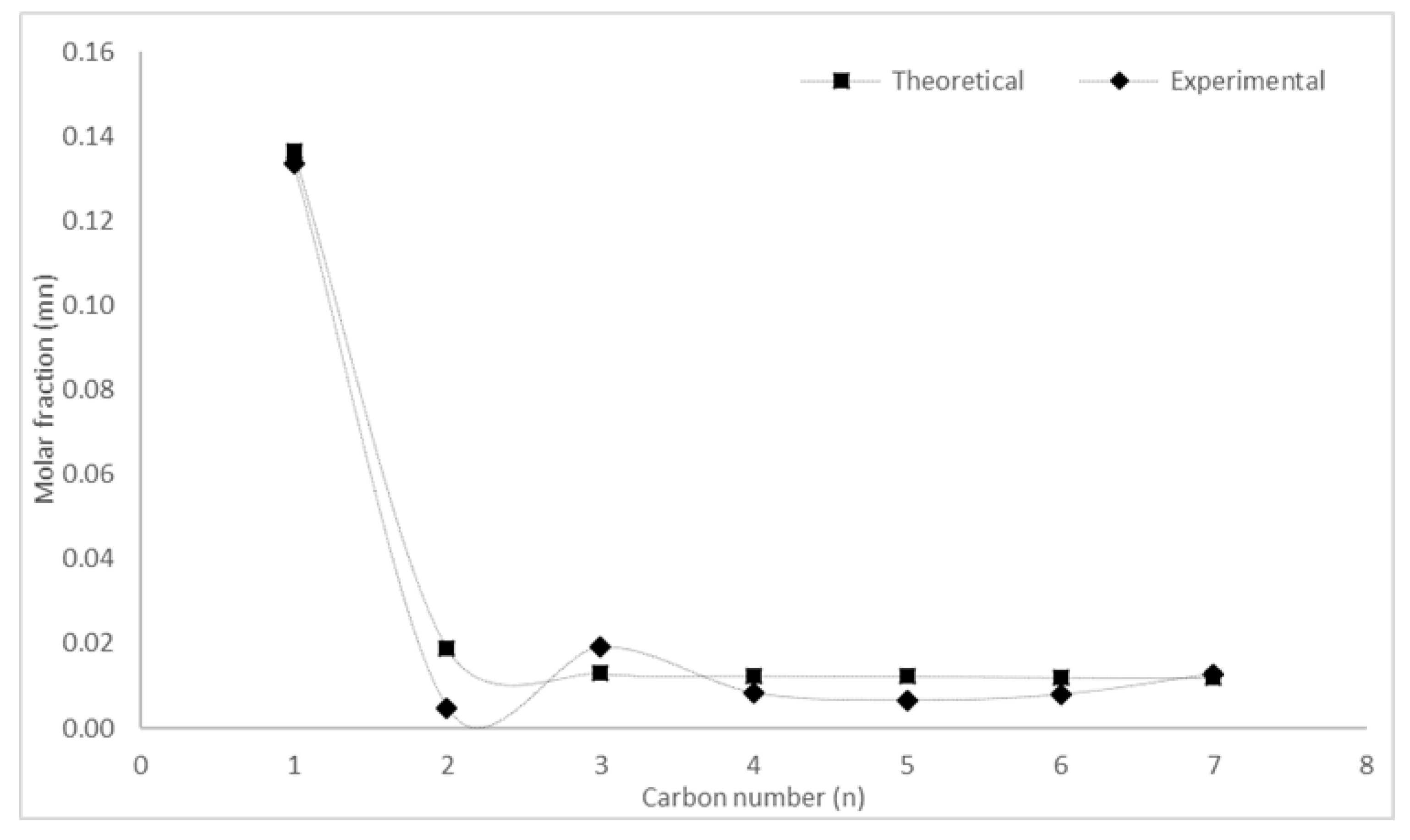
Biogas resulting from anaerobic digestion can be utilized for the production of liquid fuels via reforming to syngas followed by the Fischer-Tropsch reaction. Renewable liquid fuels are highly desirable due to their potential for use in existing infrastructure, but current Fischer-Tropsch processes, which require operating pressures of 2–4 MPa (20–40 bar), are unsuitable for the relatively small scale of typical biogas production facilities in the EU, which are agriculture-based. This paper investigates the feasibility of producing liquid fuels from biogas-derived syngas at atmospheric pressure, with a focus on the system’s response to various interruption factors, such as total loss of feed gas, variations to feed ratio, and technical problems in the furnace. Results of laboratory testing showed that the liquid fuel selectivity could reach 60% under the studied conditions of 488 K (215 °C), H2/CO = 2 and 0.1 MPa (1 bar) over a commercial Fischer–Tropsch catalyst. Analysis indicated that the catalyst had two active sites for propagation, one site for the generation of methane and another for the production of liquid fuels and wax products. However, although the production of liquid fuels was verified at atmospheric pressure with high liquid fuel selectivity, the control of such a system to maintain activity is crucial. From an economic perspective, the system would require subsidies to achieve financial viability.
Keywords: biogas; anaerobic digestion; liquid fuels; biofuels; Fischer–Tropsch; ambient pressure; atmospheric pressure; farm-scale biogas; anaerobic digestion; liquid fuels; biofuels; Fischer–Tropsch; ambient pressure; atmospheric pressure; farm-scale