Article

The Influence of Apple Orchard Management on Energy Performance and Pruned Biomass Harvesting for Energetic Applications


by
Arkadiusz Dyjakon
Institute of Agricultural Engineering, Wroclaw University of Environmental and Life Sciences, 51-630 Wroclaw, Poland
Energies 2019, 12(4), 632; https://doi.org/10.3390/en12040632
Submission received: 9 December 2018 / Revised: 11 February 2019 / Accepted: 13 February 2019 / Published: 16 February 2019
(This article belongs to the Section L: Energy Sources)

Abstract

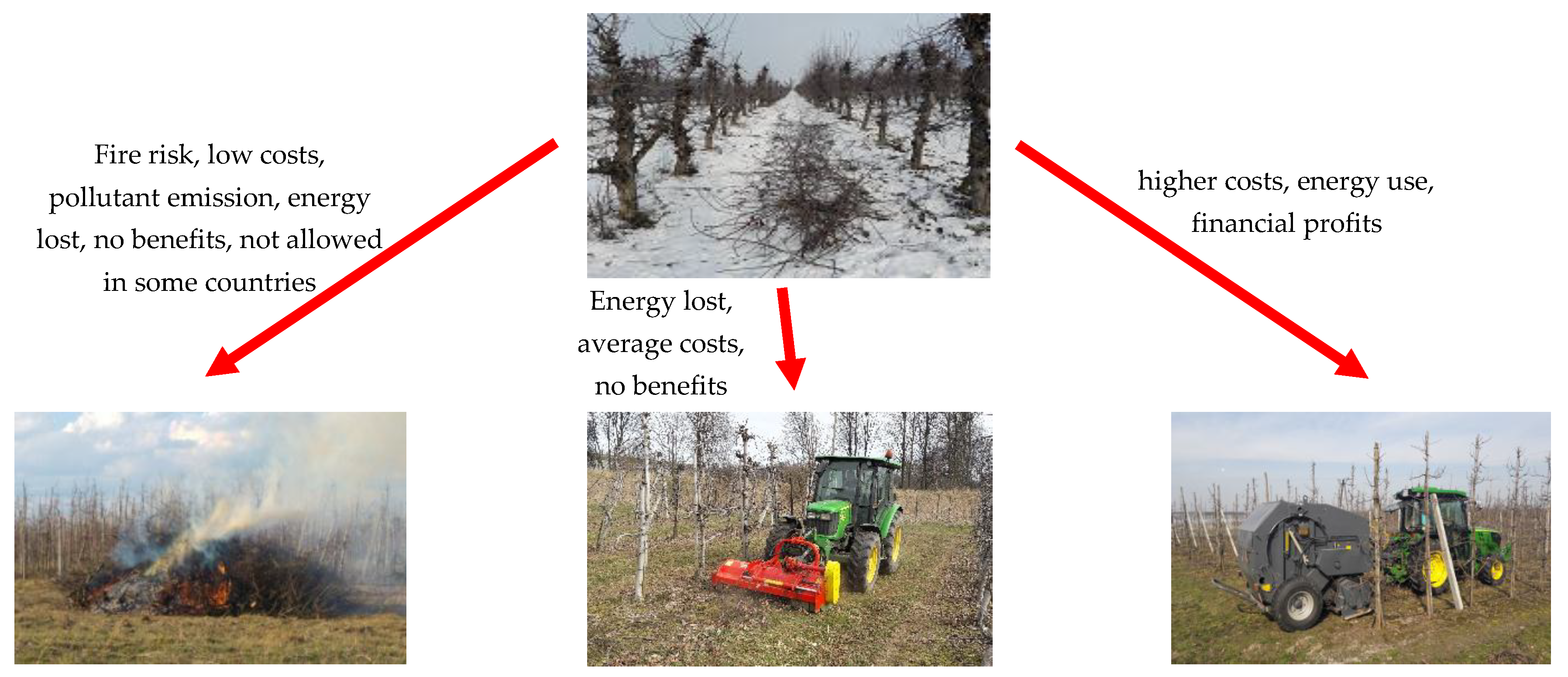
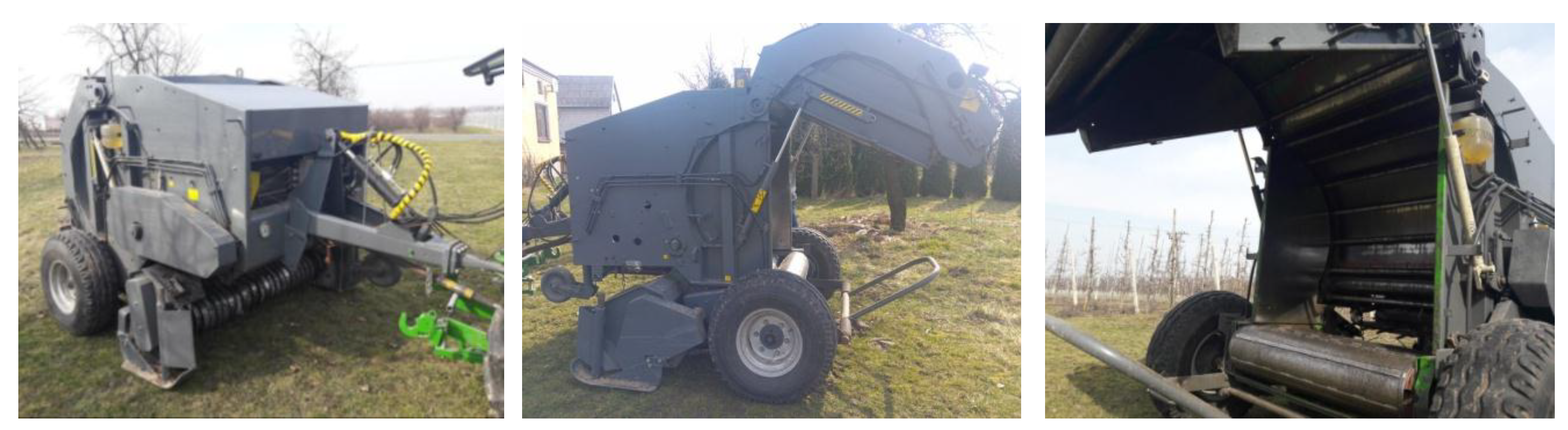
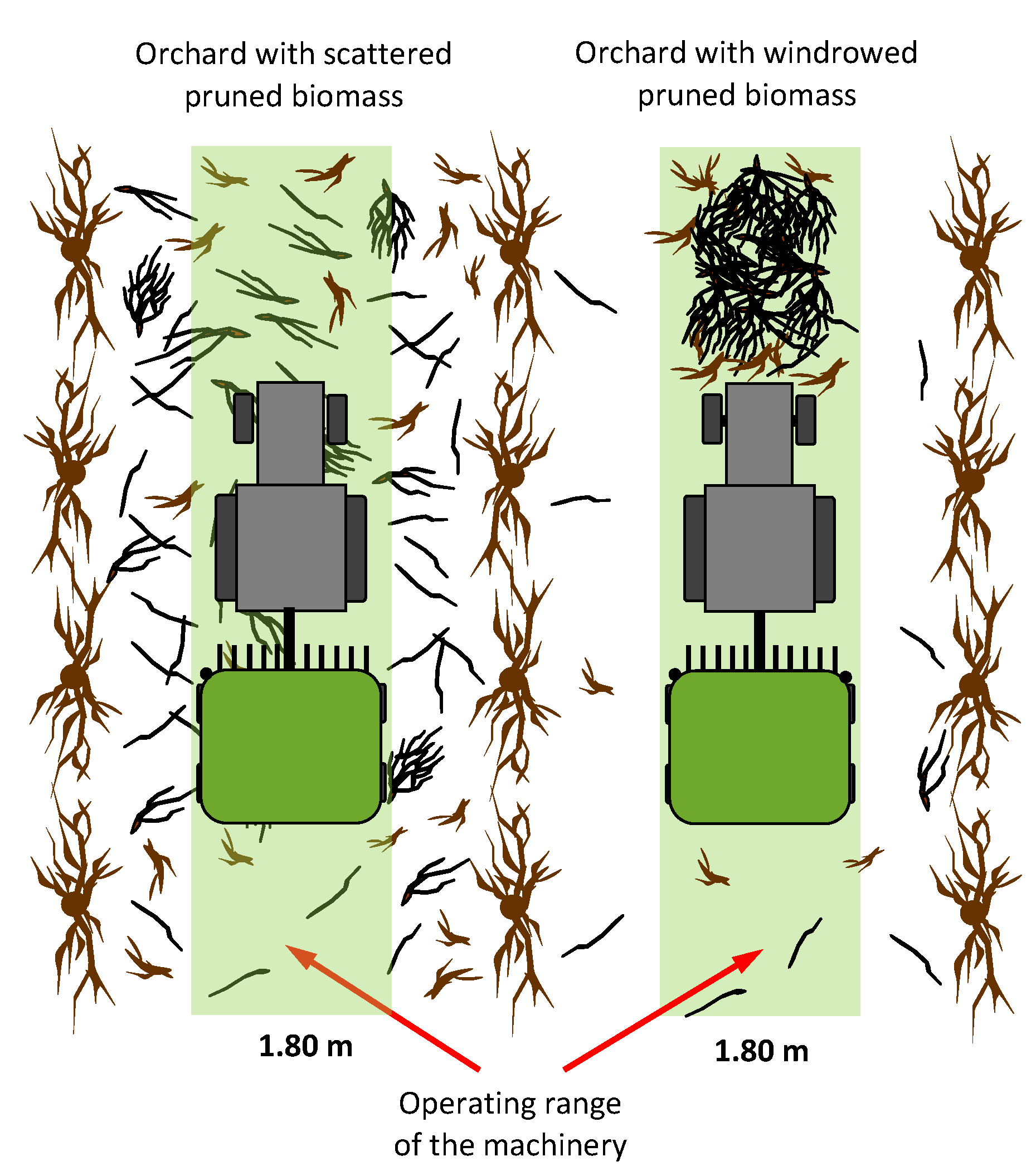
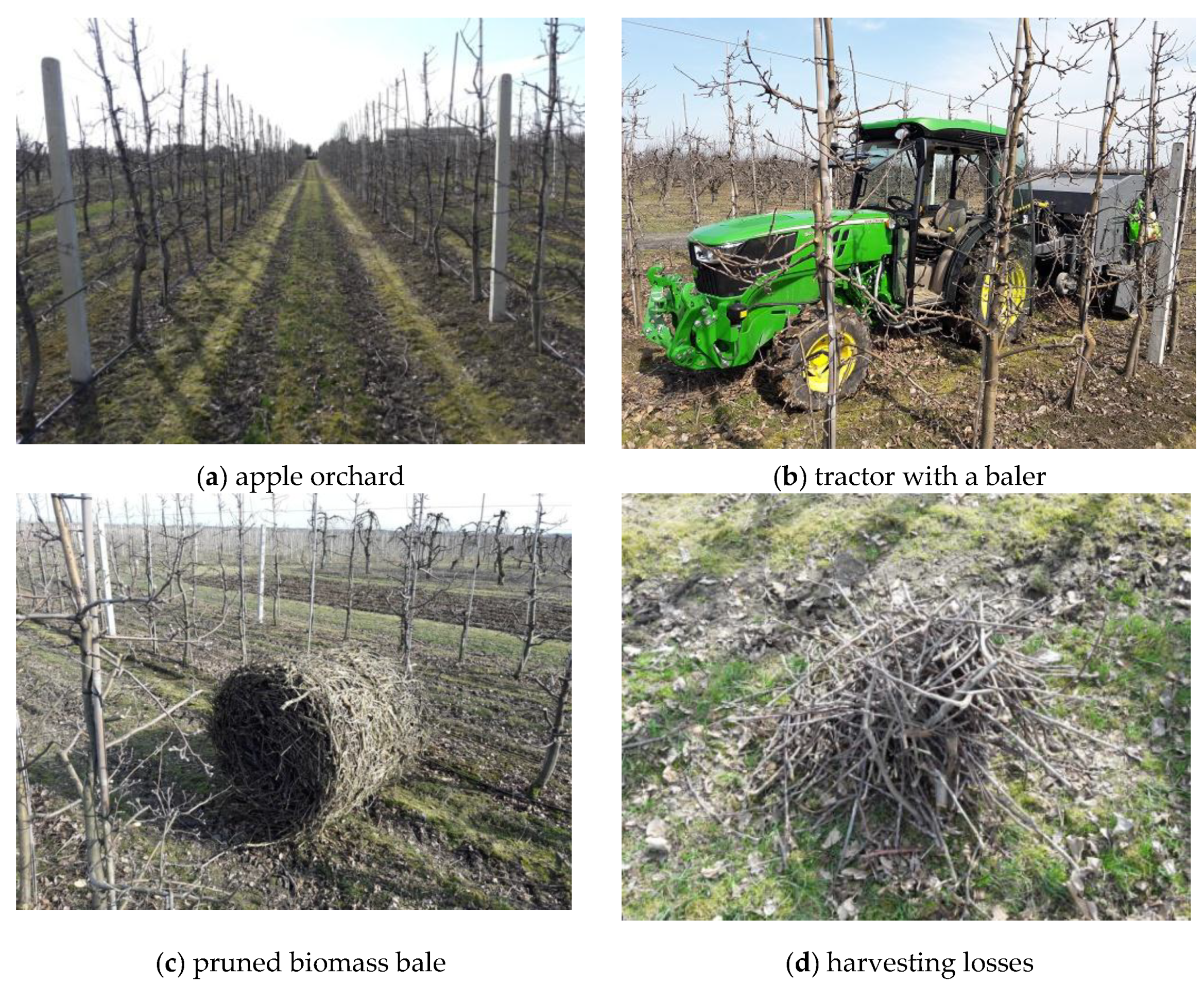
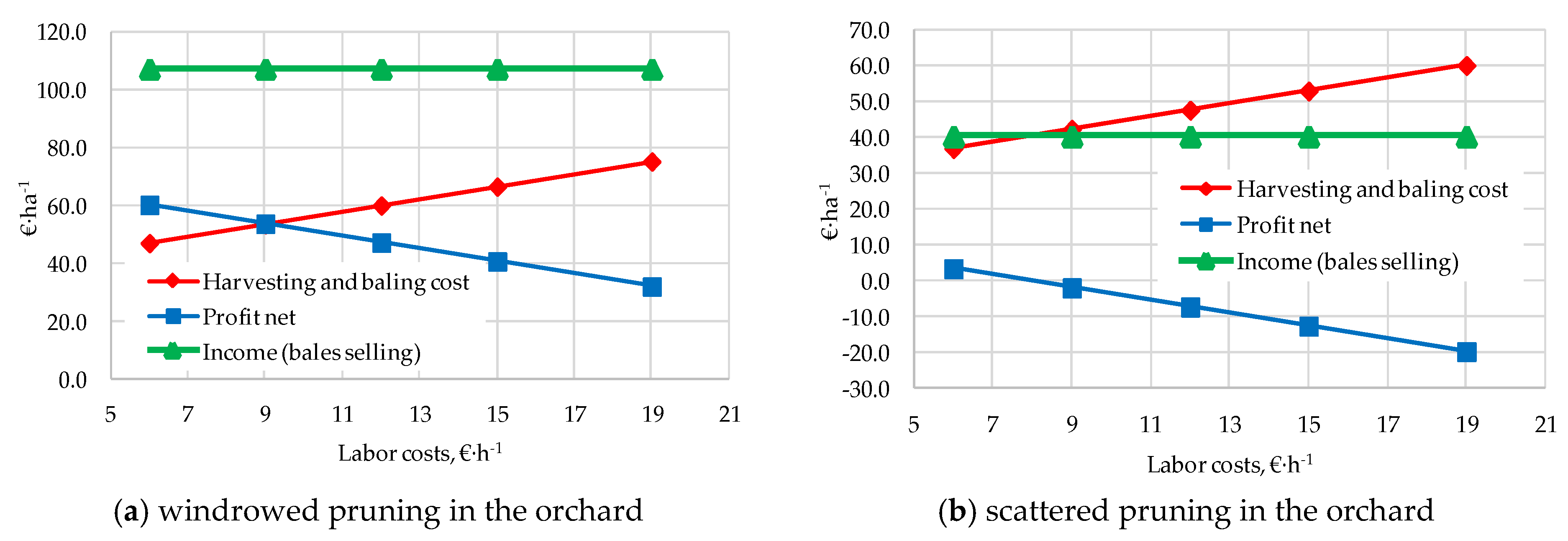
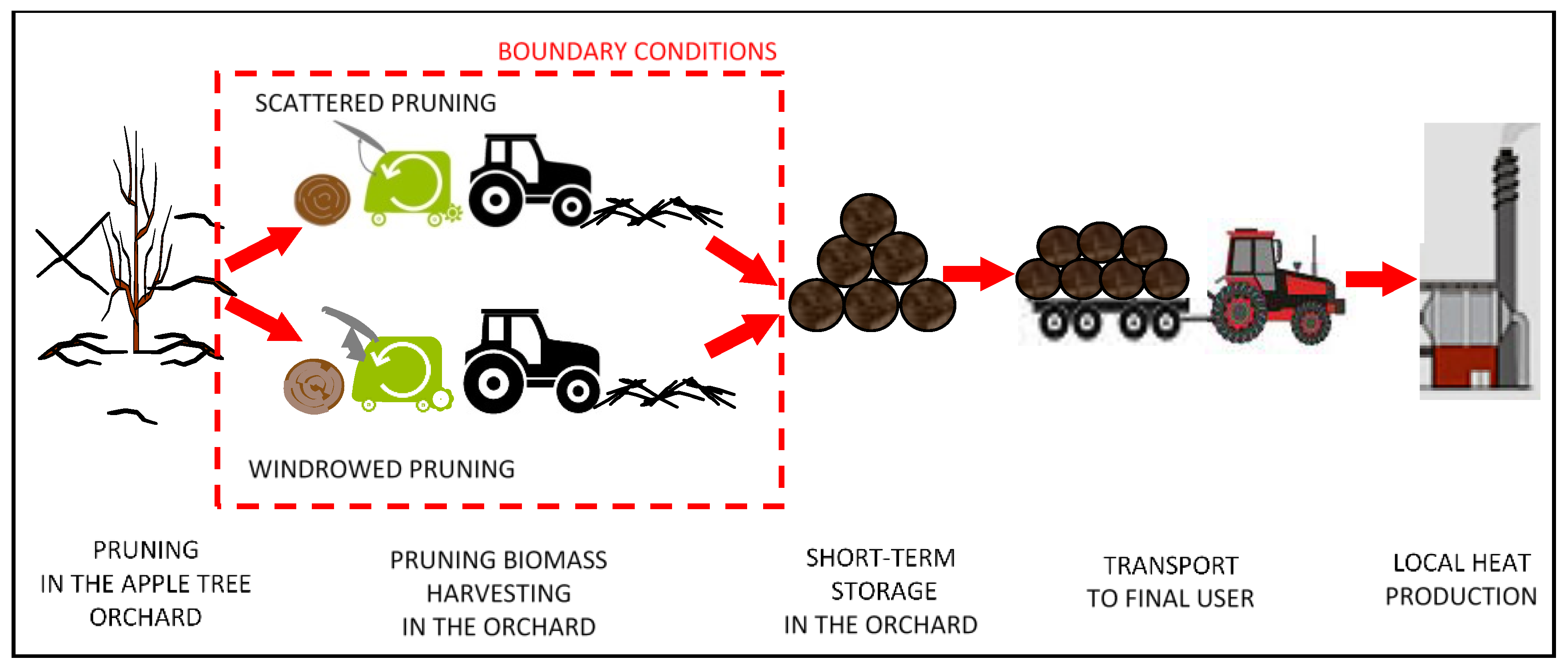
A further increase of biomass share in energy production in the European Union (EU) causes an interest in new sources of this renewable fuel. Agricultural residues coming from permanent crops, such as apple orchards, can support local actions to combat climate change. However, the amount of pruned biomass possible to be harvested from apple orchards and, thus, the energy output, depend mainly on their proper preparation and management. The managing actions are important because they influence the energy balance, the productivity, and the economy of the harvesting process and the potential benefits from the biomass marketing. In this study, two different variants of pruning management in an apple orchard during biomass harvesting applying baling technology were analyzed. The first variant considered the biomass collection in the orchard with scattered prunings. In the second one, the prunings were windrowed in the middle of the inter-rows. The theoretical potential amounted to 2.5 t (fresh mass) FM·ha−1. In the case of scattered pruning in the orchard, the harvesting losses were 69.3% and the energy balance was only 0.76 GJ·ha−1. It resulted in a low biomass yield and a negative economic balance. In turn, for the orchard with windrowed pruning, the harvesting losses were 19.1% and the energy balance was 20.74 GJ·ha−1. Assuming a biomass price of €90 t−1 dry mass (DM), the net benefit excluding transportation of pruned bales was €32.1 ha−1. Other calculated energetic factors, such as energy input share, energy return on the investment, productivity, and pruning intensity, confirmed additionally that proper management of the apple orchard increases its energetic potential to be used in the local market. Baling technology can be also competitive with mulching and chipping processes if a market analysis is carried out and the pruned bale sales are guaranteed.
Keywords: pruning; agricultural residues; biomass harvesting; bales; energy; production cost pruning; agricultural residues; biomass harvesting; bales; energy; production cost