Article

A Comparative Study on Primary Bearing Rating Life of a 5-MW Two-Blade Wind Turbine System Based on Two Different Control Domains


School of Mechanical Convergence System Engineering, Kunsan National University, Gunsan 54150, Korea
*
Author to whom correspondence should be addressed.
Energies 2019, 12(13), 2607; https://doi.org/10.3390/en12132607
Submission received: 8 May 2019 / Revised: 25 June 2019 / Accepted: 4 July 2019 / Published: 6 July 2019

Abstract

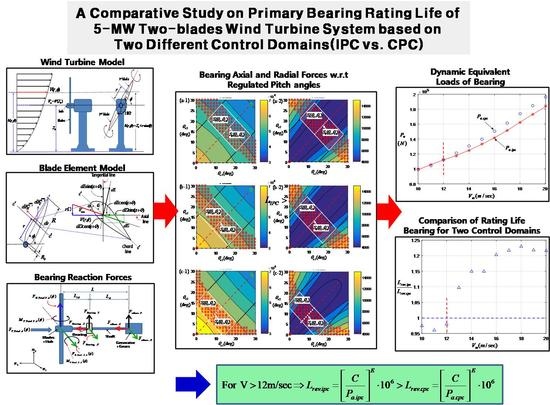
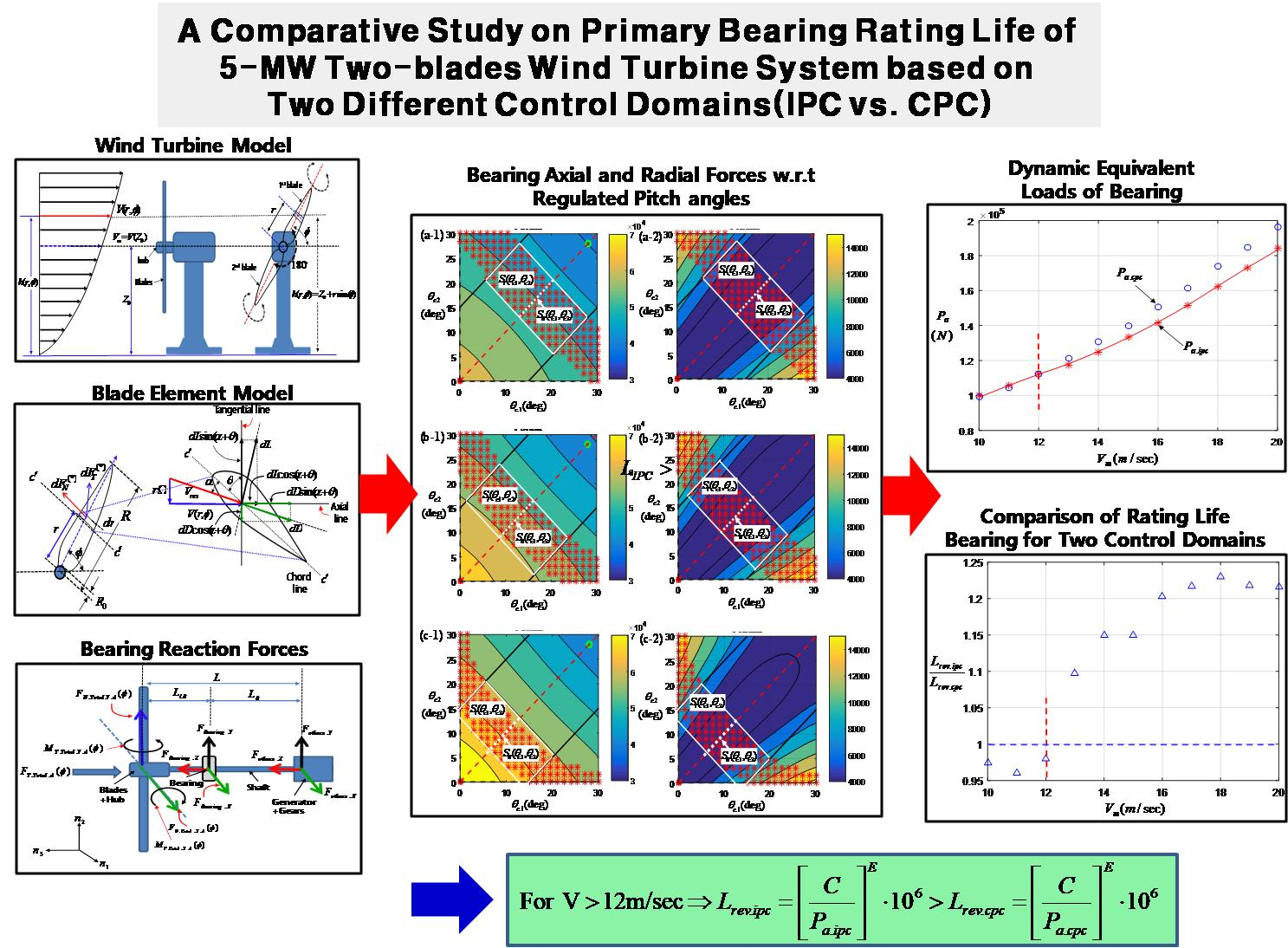
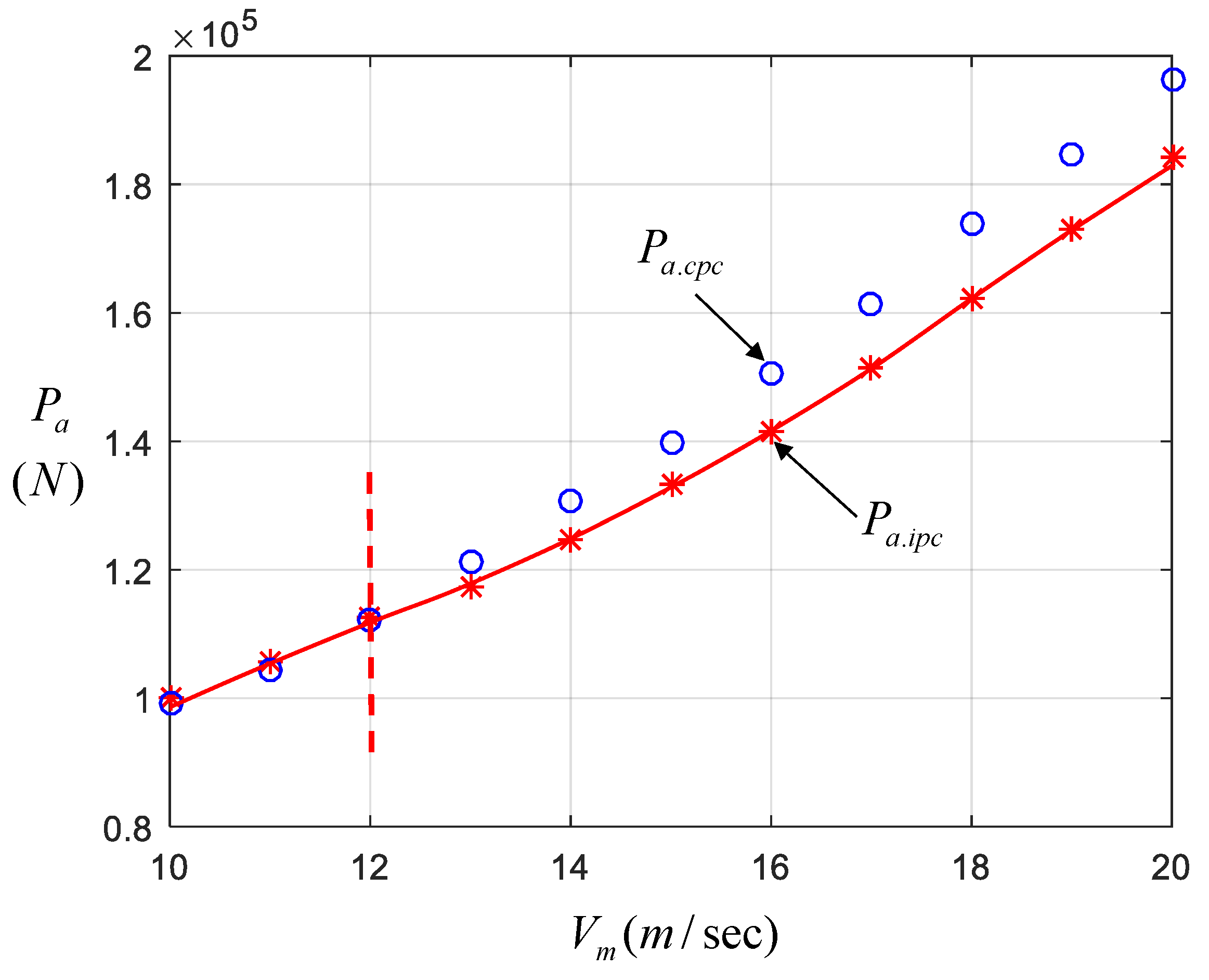
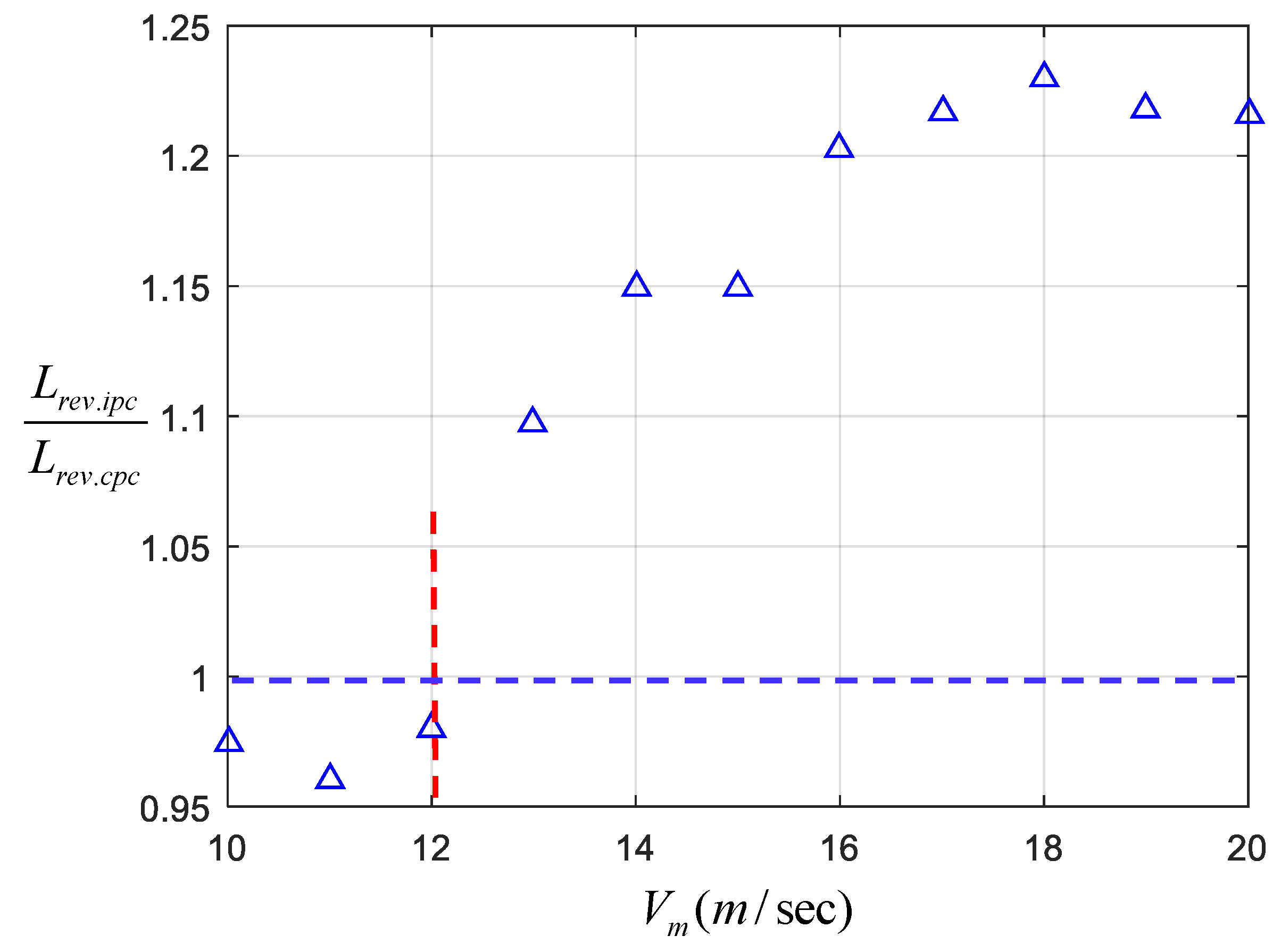
Recently, the importance of individual pitch control (IPC) capability in wind turbine systems has been emphasized to achieve the desired power performance and mitigate the aerodynamic imbalance load for the mechanical integrity. Compared to collective pitch control (CPC), which assigns identical pitch angles for all employed blades, IPC is capable of generating other various sets of pitch angles to manipulate the aerodynamic load. Thus, the mechanical elements of wind turbine systems may take advantages from this variation, which allows wind turbines to have lighter designs and longer lifetimes. One of the essential mechanical components in the wind turbine is a primary bearing supporting the blades–rotor–shaft unit, which has not been fully investigated yet among the structural elements in the wind turbine system. In this regard, this research focuses on predicting the bearing life span of a NACA64-A17 two-blade 5-MW wind turbine system for the domains of allowable individual pitch angles by IPC. In particular, under the effect of various wind speeds, a bearing life span was determined based on the average value of load cases—satisfying both appropriate power level and the allowable domain of pitch control angles, which were possibly conveyed by IPC—and the result was compared with the bearing life predicted based on the domain of pitch angles, as generated by the CPC strategy. Consequently, in the ranges of high wind speeds, it was found that the average applied load to the bearing is reduced under the domain of the IPC-based pitch angle, resulting in possibly increasing the life span of the bearing. With the presented results, it is hoped that this work will provide important insights for those that majorly concern designing the primary bearing of the IPC-based wind turbine system.
Keywords: wind turbine system; bearing rating life; collective pitch control (CPC); individual pitch control (IPC) wind turbine system; bearing rating life; collective pitch control (CPC); individual pitch control (IPC)
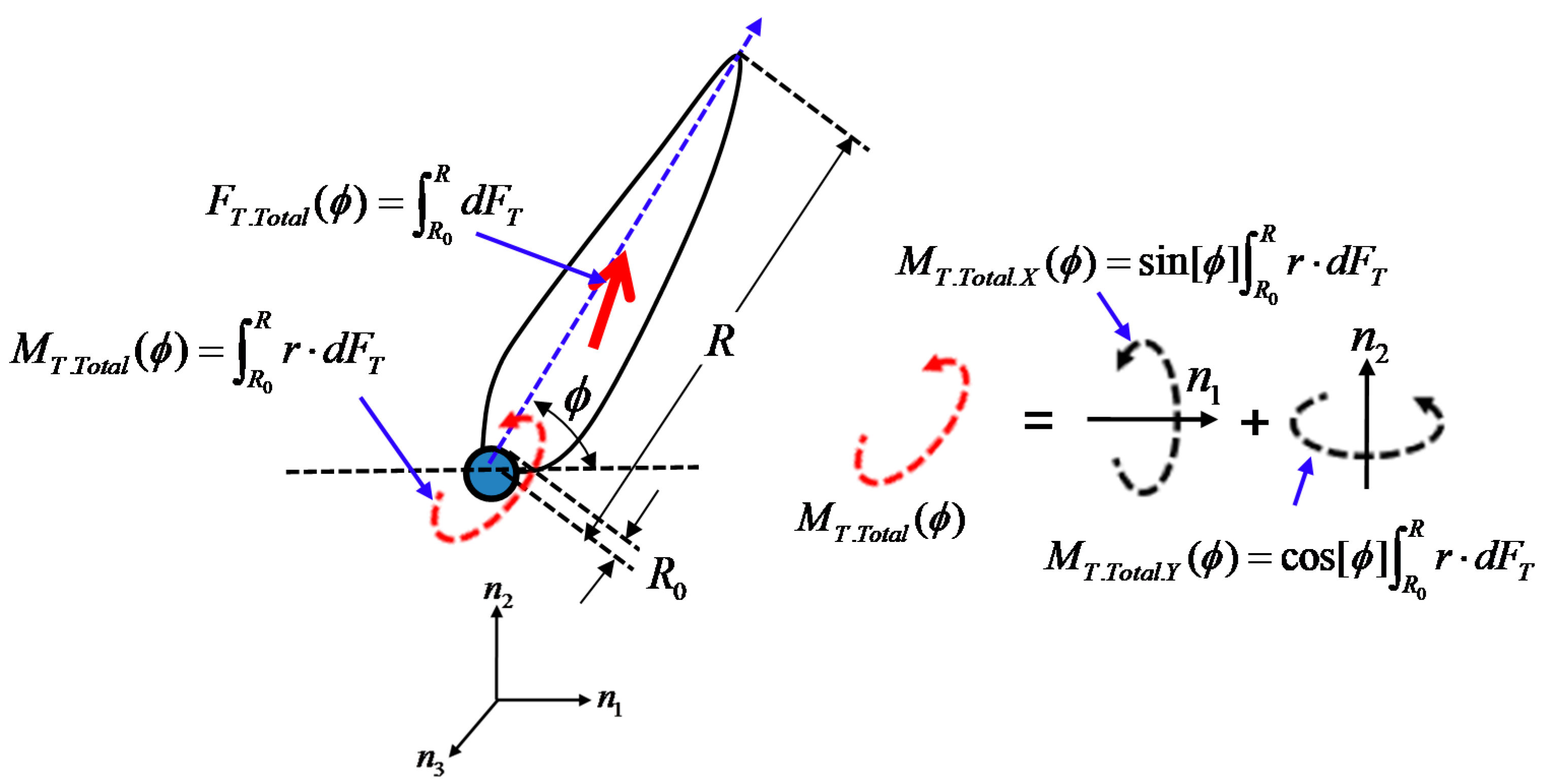
Graphical Abstract