Article

Solar Still Efficiency Enhancement by Using Graphene Oxide/Paraffin Nano-PCM


by
Mohammad Reza Safaei
1,2,
Hamid Reza Goshayeshi
3,* and
Issa Chaer
4
1
Division of Computational Physics, Institute for Computational Science, Ton Duc Thang University, Ho Chi Minh City 758307, Vietnam
2
Faculty of Electrical and Electronics Engineering, Ton Duc Thang University, Ho Chi Minh City 758307, Vietnam
3
Department of Mechanical Engineering, Mashhad Branch, Islamic Azad University, Mashhad 918714757, Iran
4
Centre for Civil and Building Service Engineering, School of the Built Environment and Architecture, London South Bank University, London SE1 0AA, UK
*
Author to whom correspondence should be addressed.
Energies 2019, 12(10), 2002; https://doi.org/10.3390/en12102002
Submission received: 26 April 2019 / Revised: 19 May 2019 / Accepted: 21 May 2019 / Published: 25 May 2019
(This article belongs to the Special Issue Solar Thermal Energy Storage and Conversion)

Abstract

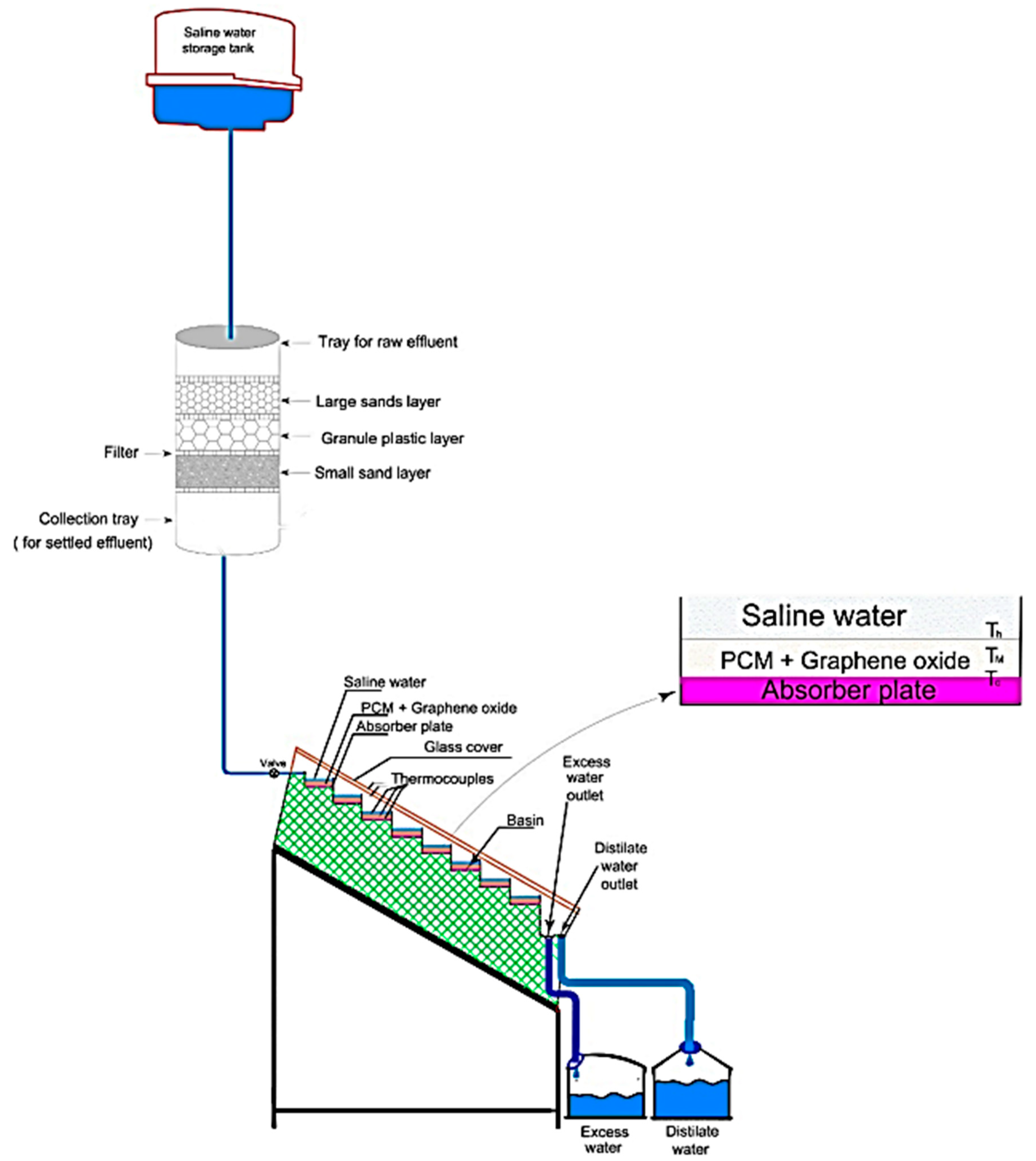
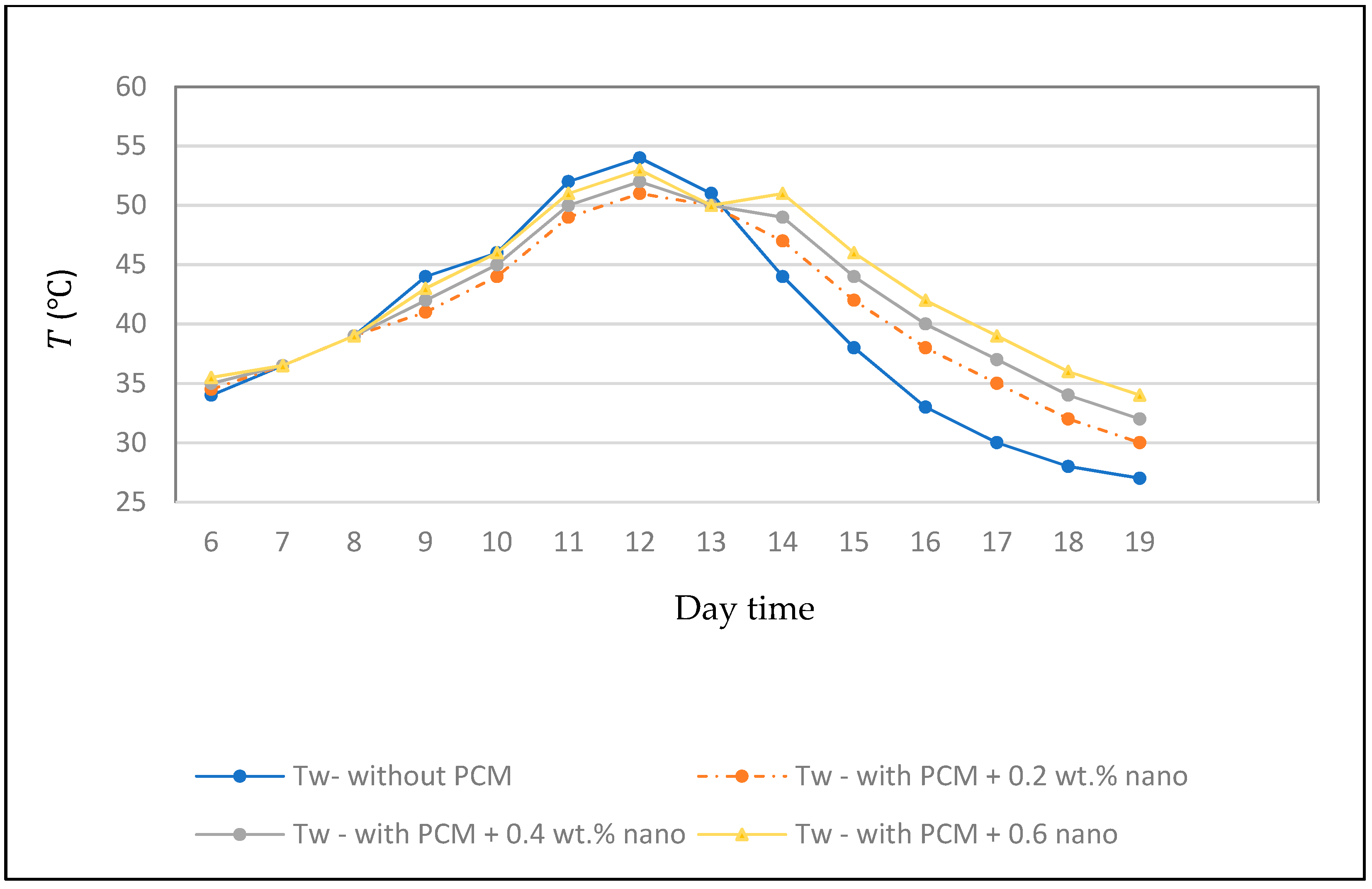
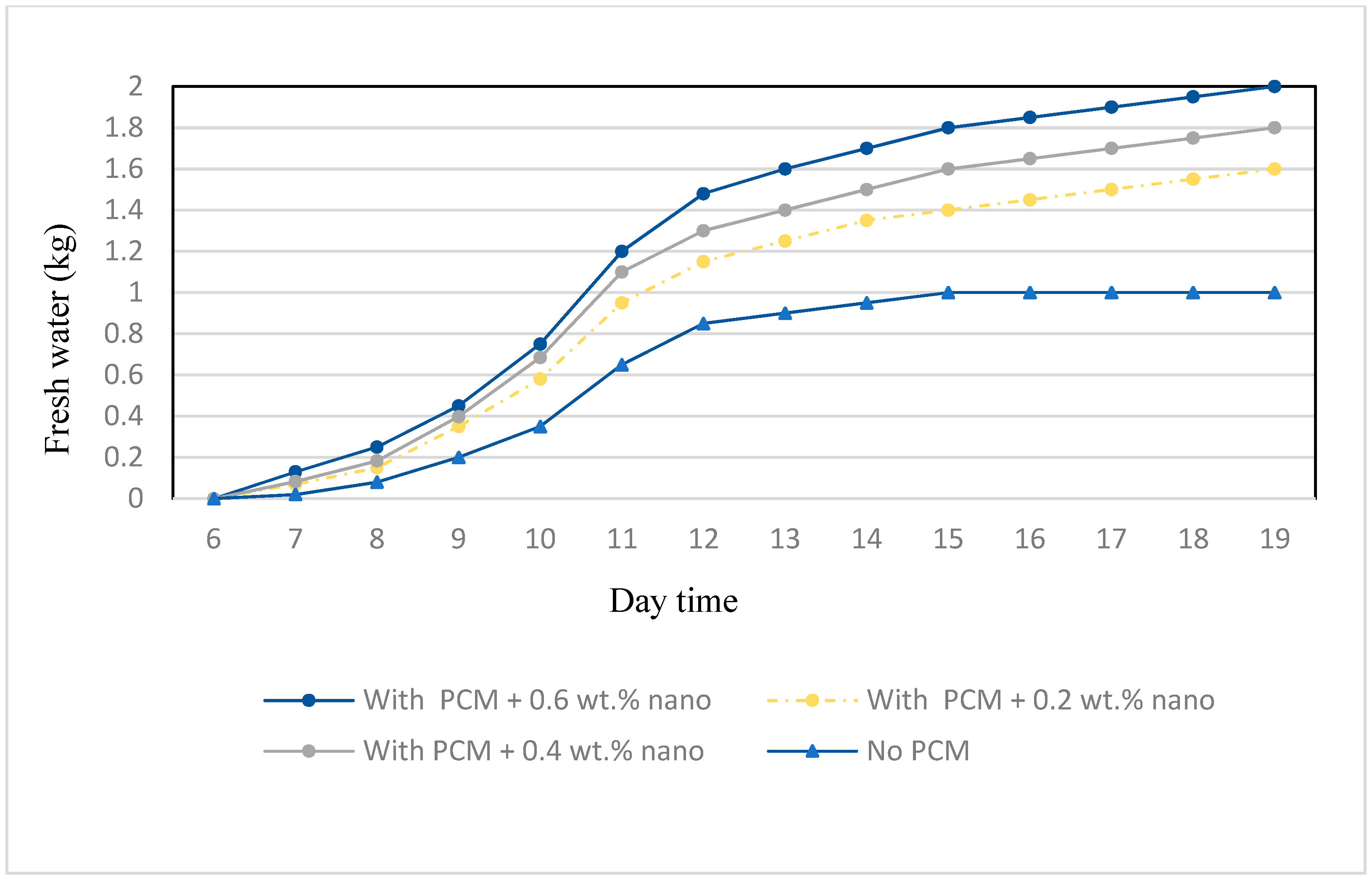
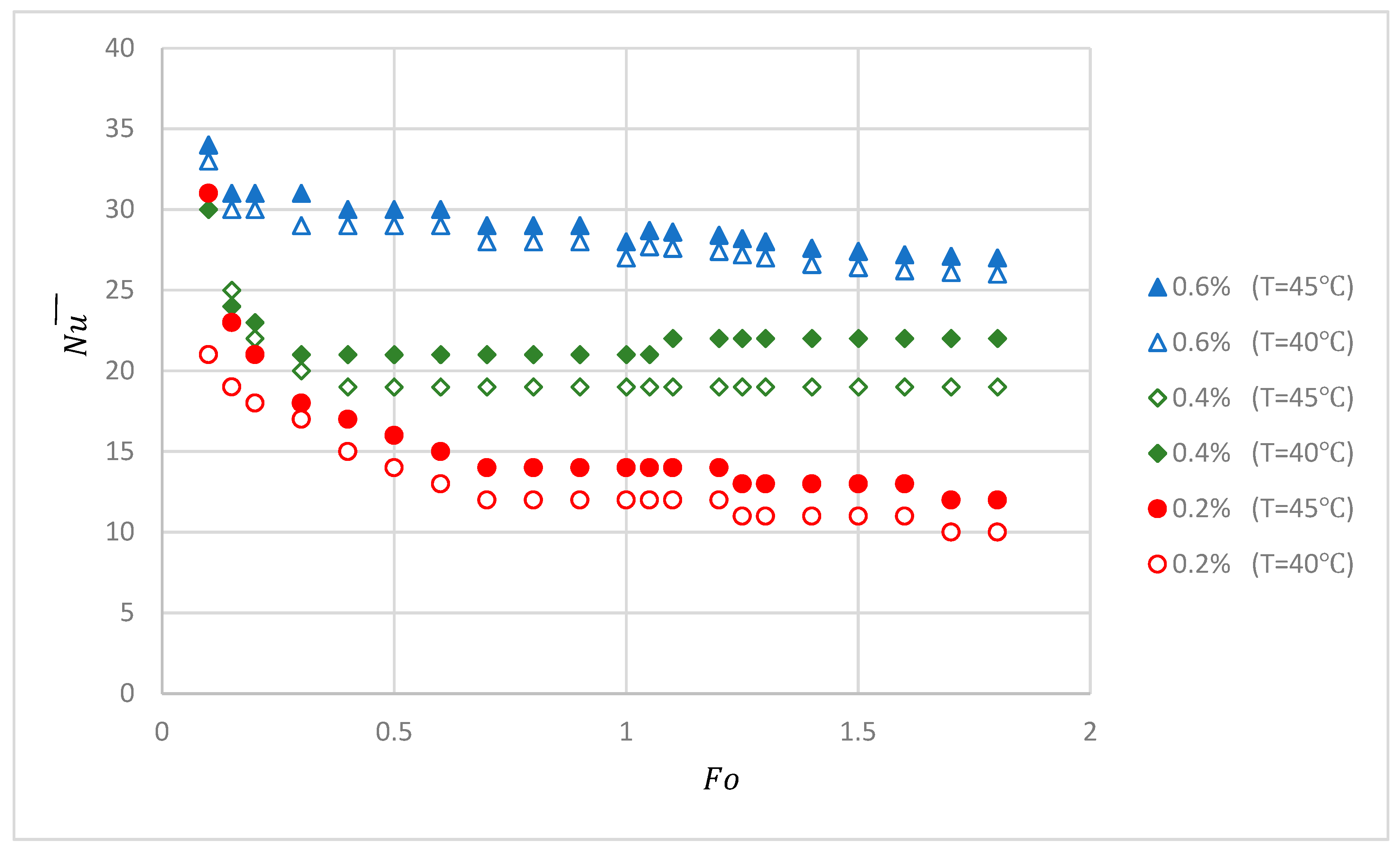
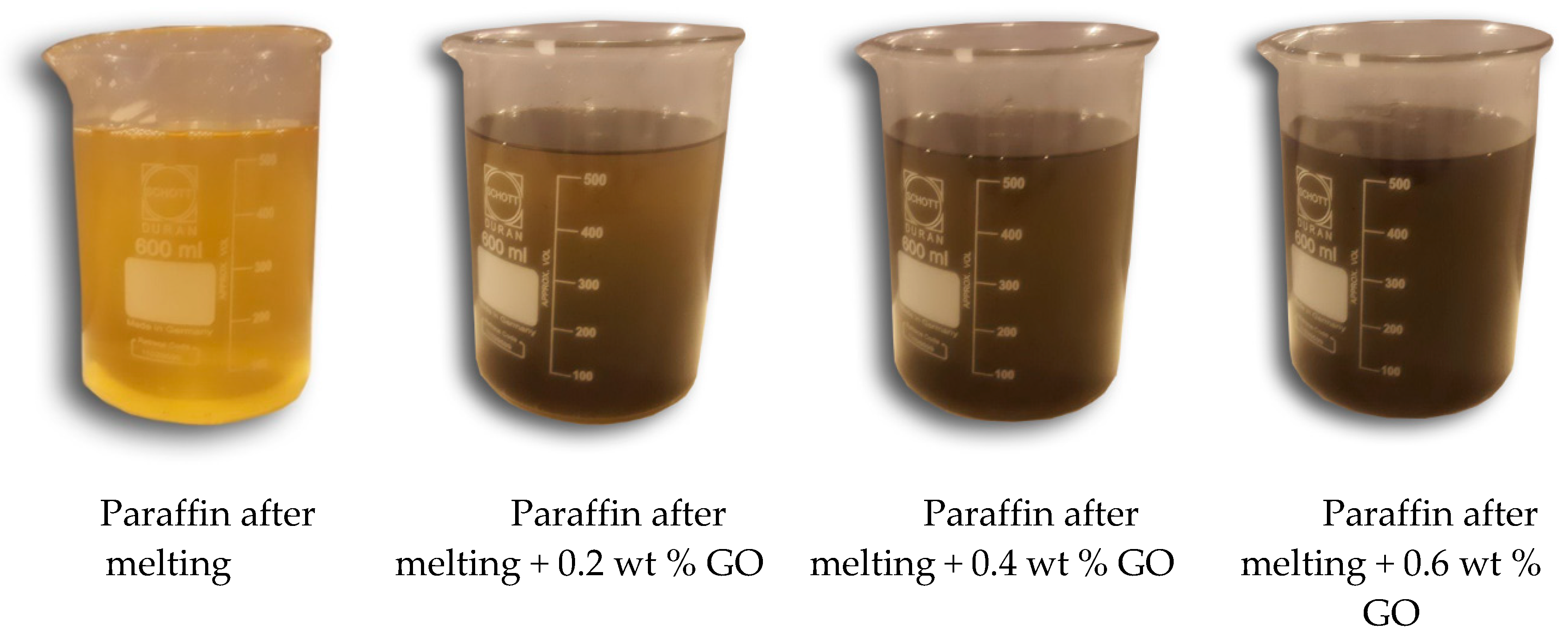
Solar-driven water desalination technologies are rapidly developing with various links to other renewable sources. However, the efficiency of such systems severely depends on the design parameters. The present study focused on using graphene oxide (GO) with the Φ = 0.2, 0.4 and 0.6 wt.% dispersed in paraffin, as phase-change materials (PCMs), to improve the productivity of a solar still for desalination applications. The outcomes showed that by adding more graphene oxide to paraffin, the melting temperature got reduced. Solar still with GO/paraffin showed 25% productivity improvement in comparison with the solar still with only PCM. The obtained Nusselt number during the melting time also represented that free convection heat transfer into the melted region of the solar still has been enhanced by adding dispersed GO to the PCM, compared to the base paraffin. Also, increasing the hot wall temperature augments the Nusselt number. Finally, an empirical equation was derived to correlate the average Nusselt number as a function of Rayleigh number (Ra), the Stefan number (Ste), the subcooling factor (Sb), and the Fourier number (Fo). The obtained correlation depicted that Nusselt number enhancement has a reverse relation with Fourier number.
Keywords: solar still; phase-change material; experimental study; graphene oxide solar still; phase-change material; experimental study; graphene oxide