An osteoid osteoma is a bone-producing, benign bone tumor that typically occurs in the second and third decades of life.[
1–
7] The term
osteoid osteoma is credited to Jaffe,[
8] who first described the bone tumor in 1935. Males are affected up to three times as often as females.[
2] The tumor has a predilection for the appendicular skeleton, with most of these tumors occurring in the femur, tibia, and humerus.[
1–
3] The only bone tumors that occur more frequently are osteochondroma and nonossifying fibroma.[
9]
The occurrence of an osteoid osteoma in the forefoot is rare. Jackson and colleagues[
10] conducted a literature review of 860 cases of osteoid osteoma and found that the tumor occurred in the foot less than 4% of the time; specifically, 3.4% were found in the talus, 2.7% in the calcaneus, 2.0% in the phalanges, and 1.7% in the metatarsals.
Clinically, the hallmark symptom is pain that is much worse at night. In addition, the pain is extremely responsive to salicylates.[
1–
7] Most patients have no history of trauma, yet there are reports of traumatic etiologies in the literature.[
11] Gait disturbances,[
3] muscle atrophy from disuse,[
2,
3] and soft-tissue swelling are also common presenting features.
Osteoid osteomas in a metatarsal often present with soft-tissue swelling, pain, and erythema,[
1] closely resembling gout or cellulitis. These tumors frequently masquerade as other, more common etiologies of foot pain, such as Charcot’s osteoarthropathy, gout, cellulitis, or even a retained foreign body. This often leads to a delay in diagnosis[
1–
3] ranging from a few months to several years.[
2] In fact, a delay in diagnosis of 35 years has been reported.[
12]
Several key features of osteoid osteoma may explain why such a small tumor causes so much pain and discomfort. First, angiographic studies have confirmed that this tumor is extremely vascular.[
13] The large quantity of blood vessels is thought to contribute to the soft-tissue swelling that occurs.[
1] In addition, osteoid osteomas produce prostaglandins[
14] and contain an extremely high volume of nerve fibers.[
15] The fact that nonsteroidal anti-inflammatory drugs are often very effective at relieving the pain may be due to the production of prostaglandins.
The classic radiographic picture is a small area of radiolucency, a nidus, which is encircled by sclerotic bone.[
1,
3] The nidus is usually less than 1 cm in diameter,[
4] smooth, oval, and found in the cortex of a long bone.[
1,
3] The tumor nidus, which is osteolytic, may become too osteopenic to be seen amid the sclerotic bone and will not be evident on radiographs, making diagnosis difficult. The sclerotic bone, when located intracortically, is usually fusiform.[
2] On gross examination, an osteoid osteoma ranges from reddish brown to chalky white or gray. The lesion also has a gritty, granular appearance.[
1,
2]
Treatment of an osteoid osteoma consists of surgical excision of the nidus.[
4] Owing to the progressive nature of the pain, by the time the bone tumor is diagnosed, most patients are more than ready to have the lesion removed surgically. Curettage of the lesion and removal of any reactive adjacent soft tissue is curative.[
1] The surgeon must be careful not to leave any portion of the nidus. Otherwise, recurrence of the tumor, along with the severe nocturnal pain, is possible.
Case Report
A 42-year-old man presented to the Des Moines University Foot and Ankle Clinic, Des Moines, Iowa, with the chief complaint of intense redness, swelling, and pain in his left forefoot. He did not report any trauma or injury. The foot had been painful and swollen for several days before the patient sought medical care. Physical examination revealed that vascular and neurologic systems were intact. Muscle strength and range of motion of all of the joints were within normal limits. No skin openings or signs of bacterial infection were present. Pain was elicited on palpation of the left second metatarsal. In addition, there was +2 pitting edema of the left forefoot.
Radiographs were taken and laboratory tests (complete blood cell count, erythrocyte sedimentation rate, and uric acid measurement) were performed to confirm the diagnosis of cellulitis. All of the laboratory test results were within normal limits. Three views of the left foot were taken, but they were not read or interpreted until the next day. The patient was treated for cellulitis, was given oral antibiotics, and began taking hydrocodone for pain. In addition, the patient was instructed to ice and elevate his foot and was given a protective boot to wear.
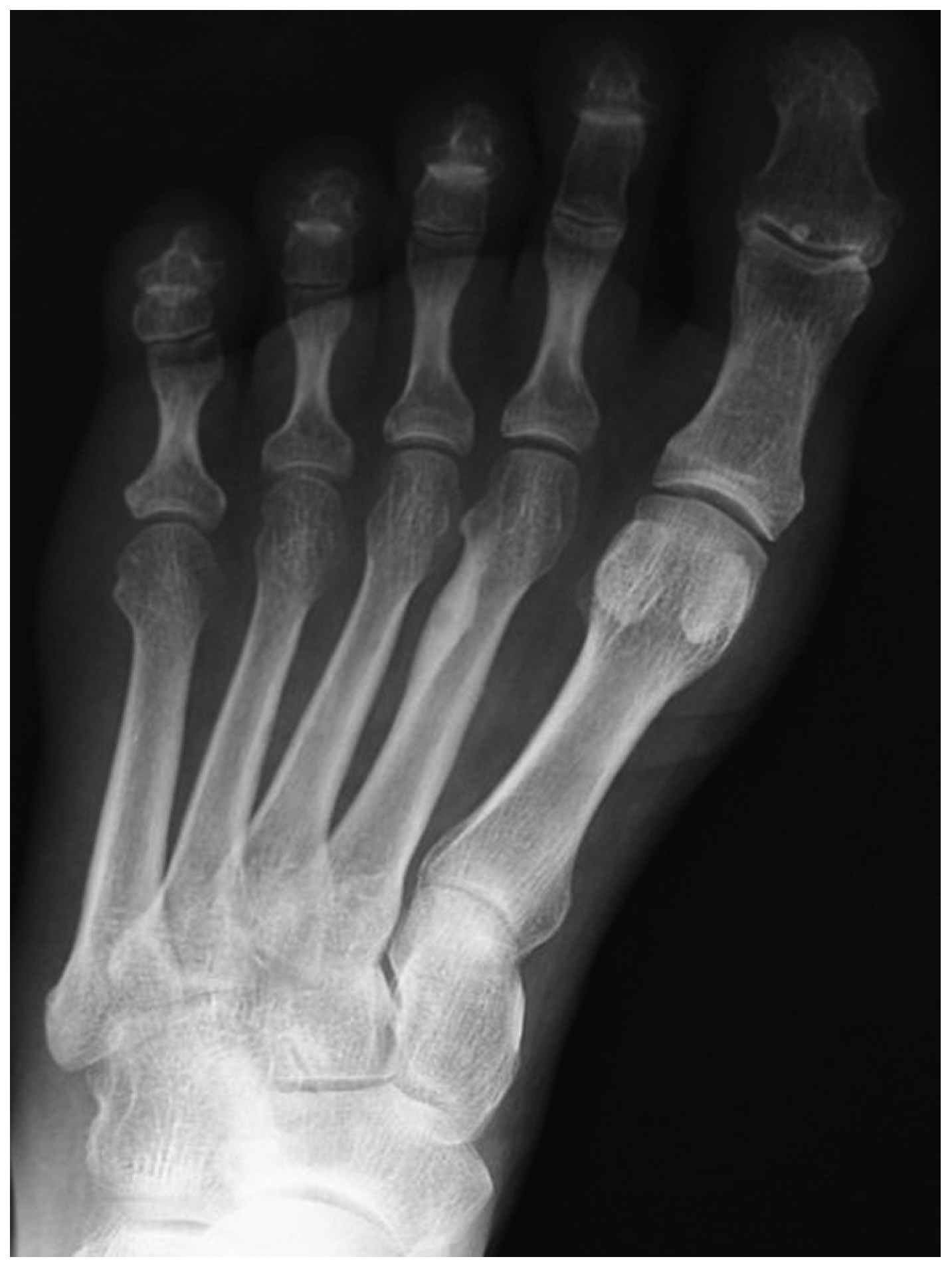
No relief was obtained from these modalities, and the patient returned to the clinic 4 days later. He stated that he had experienced a severe pain and had heard an audible snap in his left foot while at work. He rated his pain as 7 on a 10-point scale. The radiographs revealed the presence of a bone tumor in the diaphysis of the left second metatarsal. The radiographs demonstrated the classic appearance of an osteoid osteoma, with fusiform cortical thickening surrounding an osteopenic nidus (
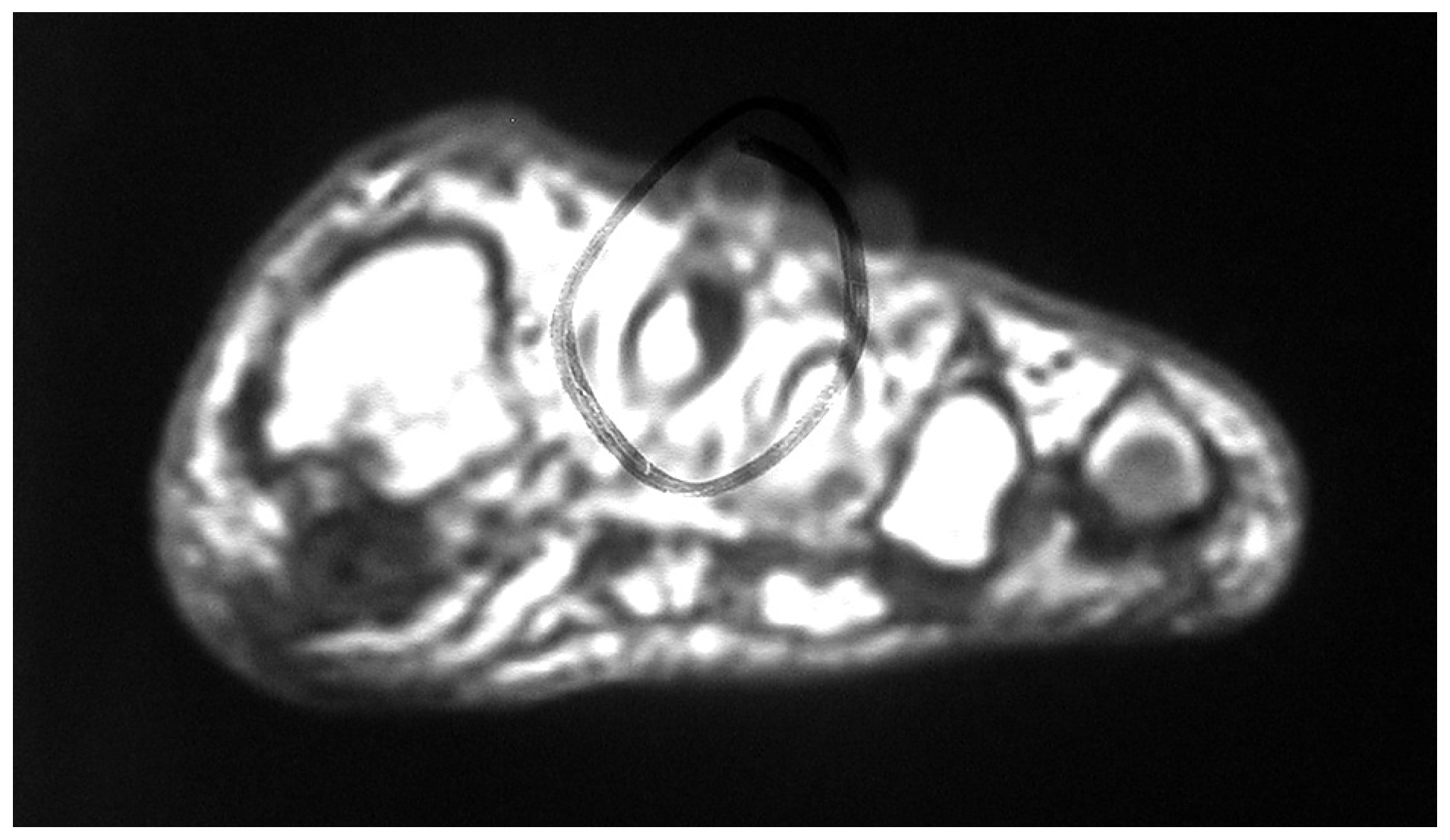
Fig. 1). Magnetic resonance imaging (MRI) revealed the tumor in the lateral cortex of the left second metatarsal (
Fig. 2). Surgical and conservative therapies were discussed in detail with the patient, and he elected to attempt conservative therapy one last time.
The patient continued to experience significant pain, rated 6 on a 10-point scale, and reported that he could no longer fulfill his job duties as a construction worker. The patient stated that his pain was somewhat relieved by nonsteroidal anti-inflammatory drugs and that the pain persisted at night despite rest and elevation of the extremity. After several weeks, the patient decided that he could no longer tolerate the pain, and he returned to discuss surgery.
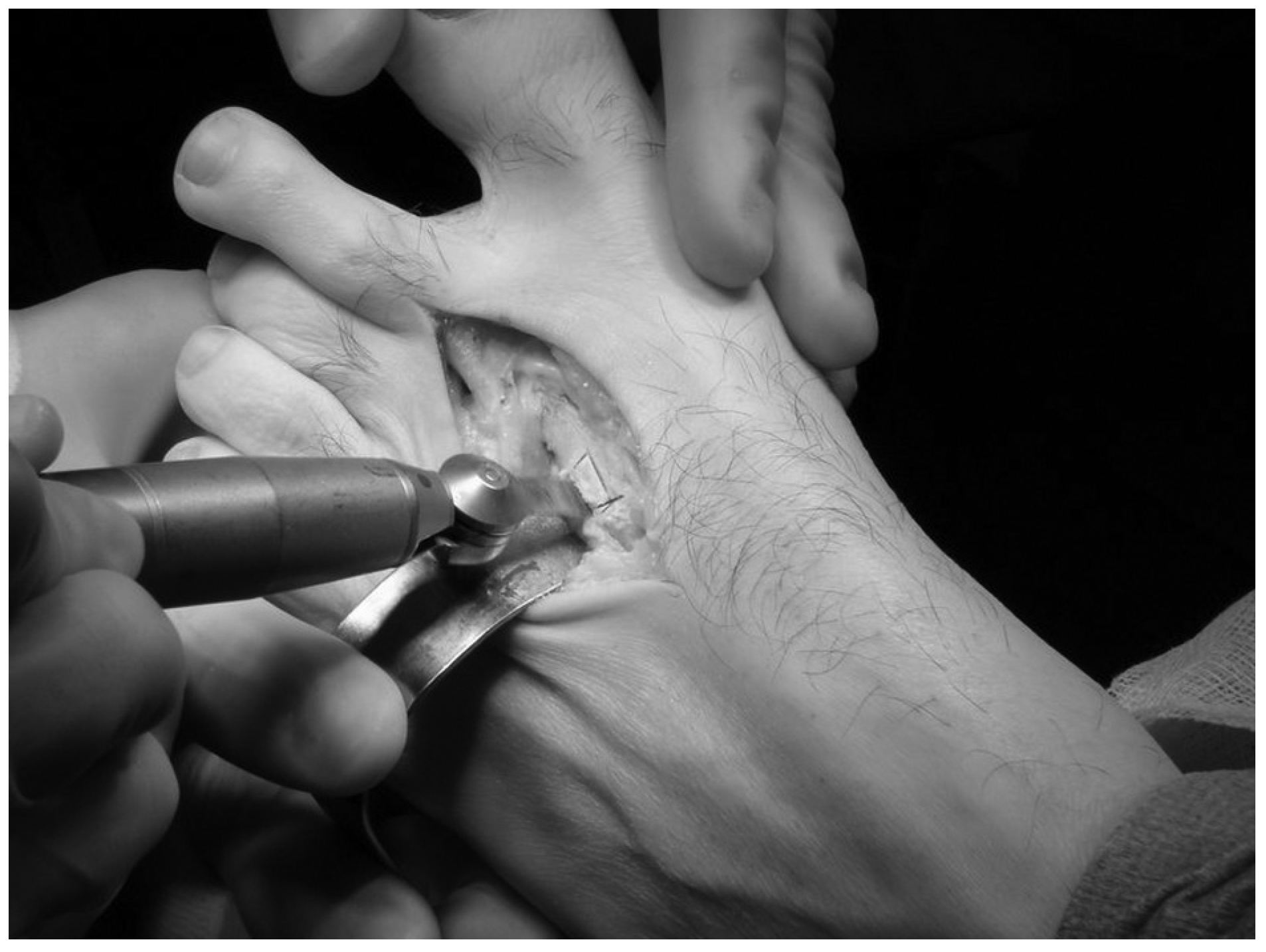
Surgical excision of the tumor was performed under general anesthesia. A longitudinal incision was placed over the second metatarsal shaft to allow for maximum exposure. Using a sagittal saw, the lateral cortex was windowed out to expose the lesion (
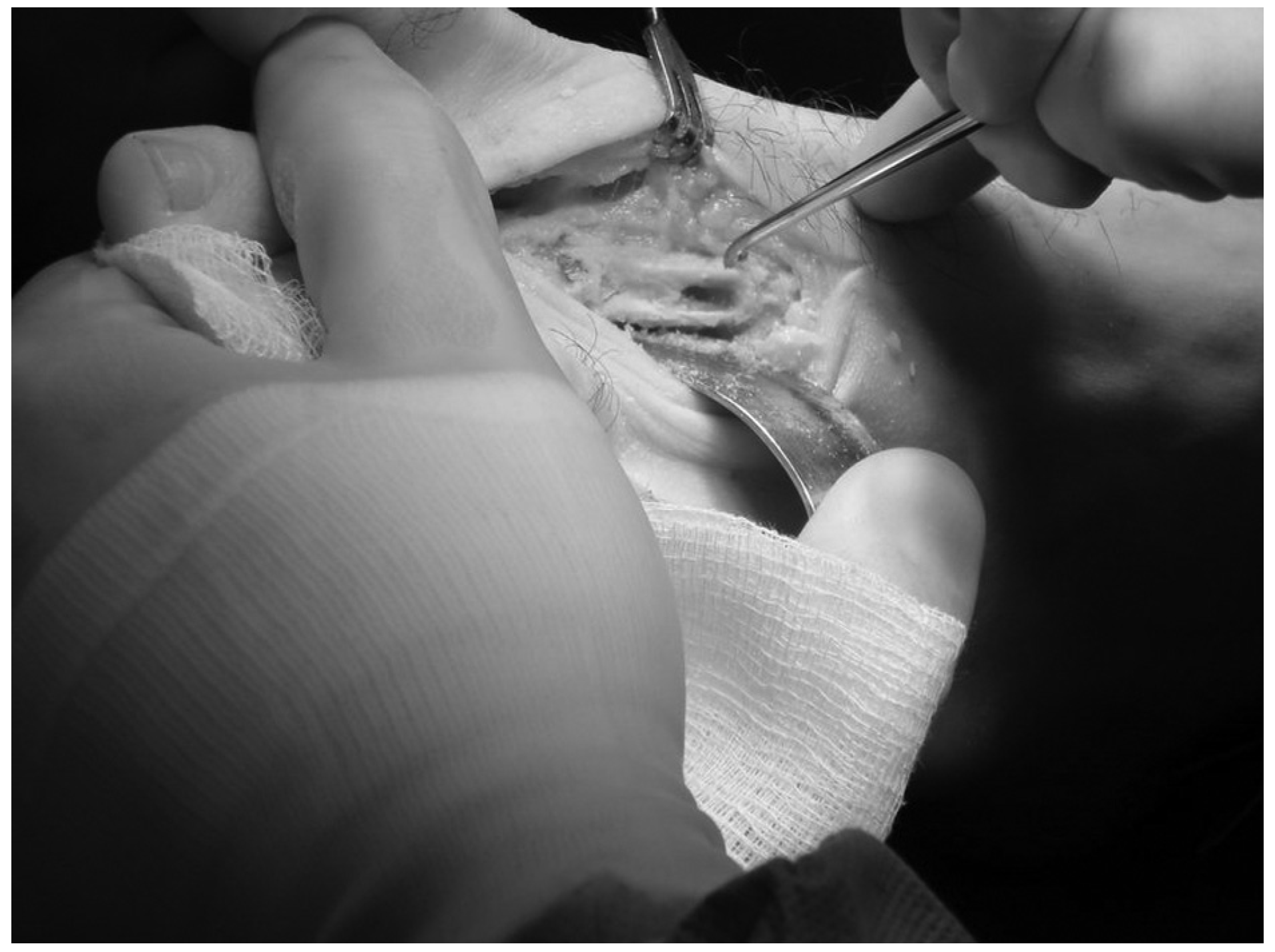
Fig. 3). Once visualized, the osteoid osteoma was excised using a curette to remove all traces of the nidus and sclerotic bone. The lesion was reddish brown and had the characteristic gritty, granular consistency (
Fig. 4).
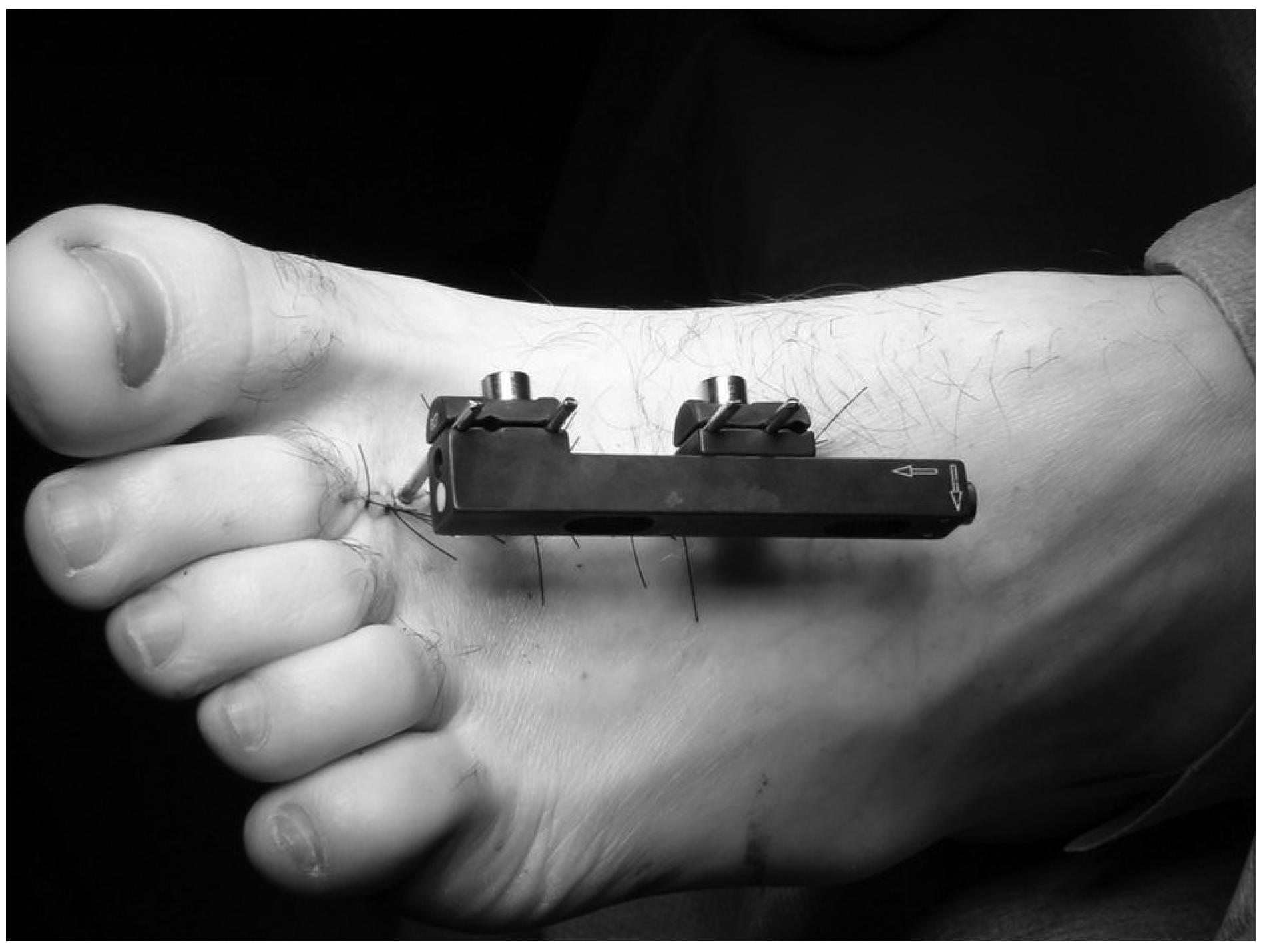
To address the surgically induced cortical weakness, a synthetic bone graft (OsteoMax; Orthofix Inc, McKinney, Texas) was packed into the cavity to stimulate bone regeneration, provide optimal osteoconduction, and minimize the time needed for the metatarsal shaft to regain its structural integrity. An external fixator (MiniRail; Orthofix Inc) was applied while carefully avoiding the bone graft to provide stability and strength to the metatarsal (
Fig. 5). Using this method, the patient could bear weight earlier, which enhanced bone production. Last, a bone stimulator was applied around the postoperative dressing to further enhance osteogenesis.
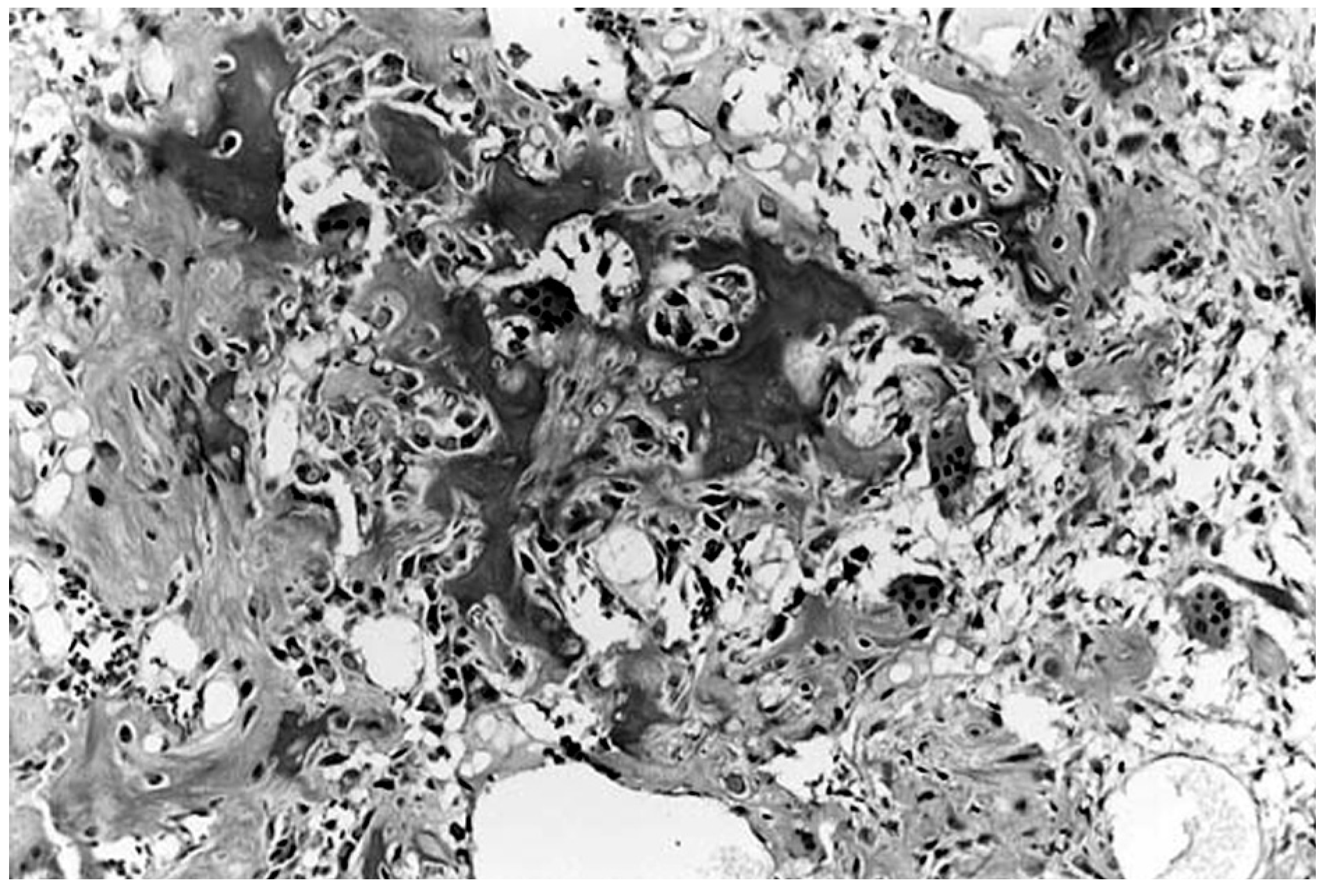
Postoperatively, the pathology report stated that the specimen demonstrated fragments of cortical and trabecular bone with a central nidus of vascular woven bone with closely opposed osteoid trabeculae. The diagnosis of osteoid osteoma was confirmed. A photomicrograph of the specimen demonstrated a large quantity of blood vessels in the tumor (
Fig. 6). The patient returned to the clinic 4 days after surgery. Despite having postoperative pain, the patient reported relief of the tumor-related pain.
Discussion
Osteoid osteomas rarely occur in the metatarsal bones. Owing to the progressive nature of these tumors, cure is possible only with surgical excision involving complete removal of the nidus. Once the nidus has been completely excised, patients frequently describe a sense of relief, despite the expected postoperative pain. The patient stated that he felt better very quickly after surgery. This finding is consistent with the literature, which states that pain relief from removal of the tumor is almost instantaneous.[
1,
4]
Surgical excision of the tumor, however, creates a stress riser and results in a significantly weakened cortex. There are numerous ways to address this problem, including external fixation, bone grafting, and application of a bone stimulator. We chose to use all three methods in this patient. To our knowledge, this combination has never been reported after removal of an osteoid osteoma.
Preoperative planning is a vital part of the treatment process. Magnetic resonance imaging allows the surgeon to visualize the size and extent of the tumor and the amount of bone that will have to be resected to fully excise the nidus. Using MRI, we anticipated that a significant portion of the lateral cortex of the second metatarsal would have to be resected to completely remove the nidus. Thus the surgery was designed around three factors. The first factor was the possibility that by removing the tumor the metatarsal would be weakened so significantly that there would not be enough bone remaining to support even mild weightbearing. Second, we acknowledged the possibility that the metatarsal would be significantly shortened after surgery. Third, given the patient’s occupation and active lifestyle, we wanted to provide him with an early return to weightbearing. Taking all of these factors into account, we decided to use an external fixator (MiniRail), a synthetic bone graft, and a bone stimulator to accomplish the preoperative surgical goals.
If the involved cortex is significantly weakened, a corticotomy or osteotomy through the weakened area of the bone is an option. This will shorten the bone to some extent. However, an external fixator can be placed over the corticotomy site to allow for callus distraction. The bone will eventually regain its original length while simultaneously gaining strength at the excision site. This technique is commonly used to treat brachymetatarsia.[
16] If this technique is chosen, we prefer to use a corticotomy, as opposed to an osteotomy, owing to the preservation of the surrounding periosteum and accompanying blood vessels.
Despite being prepared for a corticotomy in this patient, we chose to apply an external fixator without a corticotomy. This method was chosen because the metatarsal was weakened during excision of the tumor, yet there was still adequate bone remaining to provide a moderate amount of strength and structural integrity. To allow for faster healing and early return to daily activities, a MiniRail was applied to provide stability and strength to the metatarsal shaft. The Mini-Rail also prevented pathologic fracture of the metatarsal.
OsteoMax synthetic bone graft was packed into the excision site after removal of the tumor. Osteo-Max synthetic bone filler sets quickly and is composed of a triphasic microstructure with three different calcium salts. The different salts allow for staged resorption of bone and full integration into the excision site. We believe that using a bone graft with the simultaneous application of a bone stimulator is a viable surgical option. Evidence exists in the literature that demonstrates that using a bone stimulator combined with a bone graft has a synergistic effect on osteogenesis.[
17,
18] We believe that using a synthetic bone graft in addition to the bone stimulator provides optimal healing and a quick recovery.
Surgical excision allows the surgeon to address the weakening of the involved bone before the patient leaves the operating room. Surgical excision is an open technique, however, and there will be a period of relative nonweightbearing for the patient. Other methods of treatment, such as radiofrequency ablation, exist and are less invasive. Yet these techniques are not specific for removal of the tumor nidus and carry the risk of not completely removing the tumor. Furthermore, radiofrequency ablation is technically difficult to perform in the metatarsals, and subsequent fracture is a concern.
Conclusion
This case was an unusual presentation of forefoot pain caused by an osteoid osteoma in the diaphysis of the second metatarsal. Although this tumor is a rare finding in a metatarsal, osteoid osteoma should be included in the differential diagnosis of atraumatic forefoot pain, especially when the pain persists at night and is somewhat relieved by nonsteroidal anti-inflammatory drugs. After a diagnosis of osteoid osteoma has been made, the surgeon must plan to address the surgically induced stress riser that follows excision of the tumor. We presented a case report and review of osteoid osteoma, along with a viable treatment plan for this benign bone tumor.