O’Conner[
1] first described sinus tarsi syndrome in 1958. Since then, although the clinical confirmation of its existence has increased,[
2,
3,
4,
5] its etiology has remained obscure. Clinical situations in which sinus tarsi syndrome has been reported include inversion ankle sprains, calcaneal fractures, tarsal coalitions, subluxated cuboid bones, osteoarthritis, rheumatoid arthritis, and subtalar joint arthroereisis implants. When traditional nonoperative treatment for sinus tarsi syndrome fails and pain becomes recalcitrant, surgical options usually involve evacuation of the contents of the sinus tarsi (sometimes referred to as a “clean out”), subtalar joint arthrodesis, or subtalar joint arthroscopy.[
6,
7,
8,
9] Only recently has it been appreciated that the underlying mechanism of pain in this syndrome may be of neural origin, ie, the existence of painful neuromas in the ligaments that surround the sinus tarsi.[
10,
11] Indeed, it may be that the success of the clean-out procedures and arthrodeses is related to the destruction of these painful intraligamentous neuromas.
A direct approach to denervation of the sinus tarsi follows from the upper-extremity experience with the treatment of painful cutaneous neuromas.[
12,
13,
14,
15,
16,
17,
18,
19,
20] The basic principles that emerged from that experience were 1) to remove the terminal neuroma from its connection to the central nervous system because the terminal neuroma was a generator of spontaneous pain signals, 2) to identify the correct nerve using local anesthetic nerve blocks, and 3) to relocate the proximal end of the identified nerve into an environment away from joint movement, preferably into an intramuscular environment. During the past decade, these principles have been applied increasingly and successfully to the lower extremity.[
21,
22,
23,
24,
25,
26,
27] With the observation that sinus tarsi innervation is usually from one of the terminal branches of the deep peroneal nerve10 and the realization that the deep peroneal nerve just proximal to the ankle lies in a muscular environment, it was appropriate to attempt to treat sinus tarsi pain by using a denervation procedure.[
11] This article describes our experience with our first series of patients with recalcitrant sinus tarsi pain.
Methods
The 13 patients included in this study consisted of 11 patients who had an inversion-type ankle sprain with continued pain in the sinus tarsi region, 1 patient who experienced a supination–external rotation– type ankle fracture, and 1 patient with continued pain in the sinus tarsi after implantation of a Maxwell- Brancheau arthroereisis implant (MBA; KMI Inc, San Diego, California) to correct a severe hypermobile flatfoot deformity. These patients ranged in age from 20 to 78 years. Ten patients were women and three were men.
This study consisted of a consecutive series of patients with chronic pain in the sinus tarsi. Because sinus tarsi syndrome is an ill-defined condition, patients in this study were determined to have chronic pain in the anterolateral aspect of the ankle joint and sinus tarsi that worsened with activity and weightbearing. Prospectively, in the preoperative phase, there was pain with palpation of the lateral aspect of the sinus tarsi, and this same clinical examination was subsequently performed in the postoperative phase. None of these cases presented with abnormal radiographic findings. All of these cases were chronic, and there had been a course of robust conservative care, including injections of corticosteroids into the sinus tarsi, anti-inflammatory medication use, and immobilization. Several of these patients also had extensive pain-management consultation and treatment.
Each patient underwent an isolated peripheral nerve block of the deep peroneal nerve proximal to the ankle joint with 1 to 2 mL of 2% lidocaine. Patients were then asked to report the amount of pain relief from the block after 10 min. The efficacy of the deep peroneal nerve block was ascertained when patients became anesthetic in the dorsal aspect of the first web space, between the first and second metatarsals. Patients were then subjected to full weightbearing and deep palpation of the sinus tarsi. Each patient included in this study had complete relief of pain after the isolated deep peroneal nerve block. Patients were also evaluated for sensorium in the distributions of the branches of the superficial peroneal nerve and the sural nerve to make sure that they still had normal cutaneous sensation in those nerve distributions. By using careful, isolated infiltration of the local anesthetic deep to the deep fascia of the anterior compartment of the leg, in the area of the deep peroneal nerve, we determined that no other nerve contribution could be involved in the etiology of their painful sinus tarsi. Patients with continued pain, usually from a contribution of the sural nerve, were not included in this study.
Surgical Technique
The surgery is performed while the patient is under general anesthesia, with the use of a thigh tourniquet. Appropriate preoperative antibiosis is encouraged. The surgery is performed under 3.5- to 4-power loupe magnification or with an operating microscope. Bipolar cautery is used for hemostasis after exsanguination of the extremity and inflation of the tourniquet.
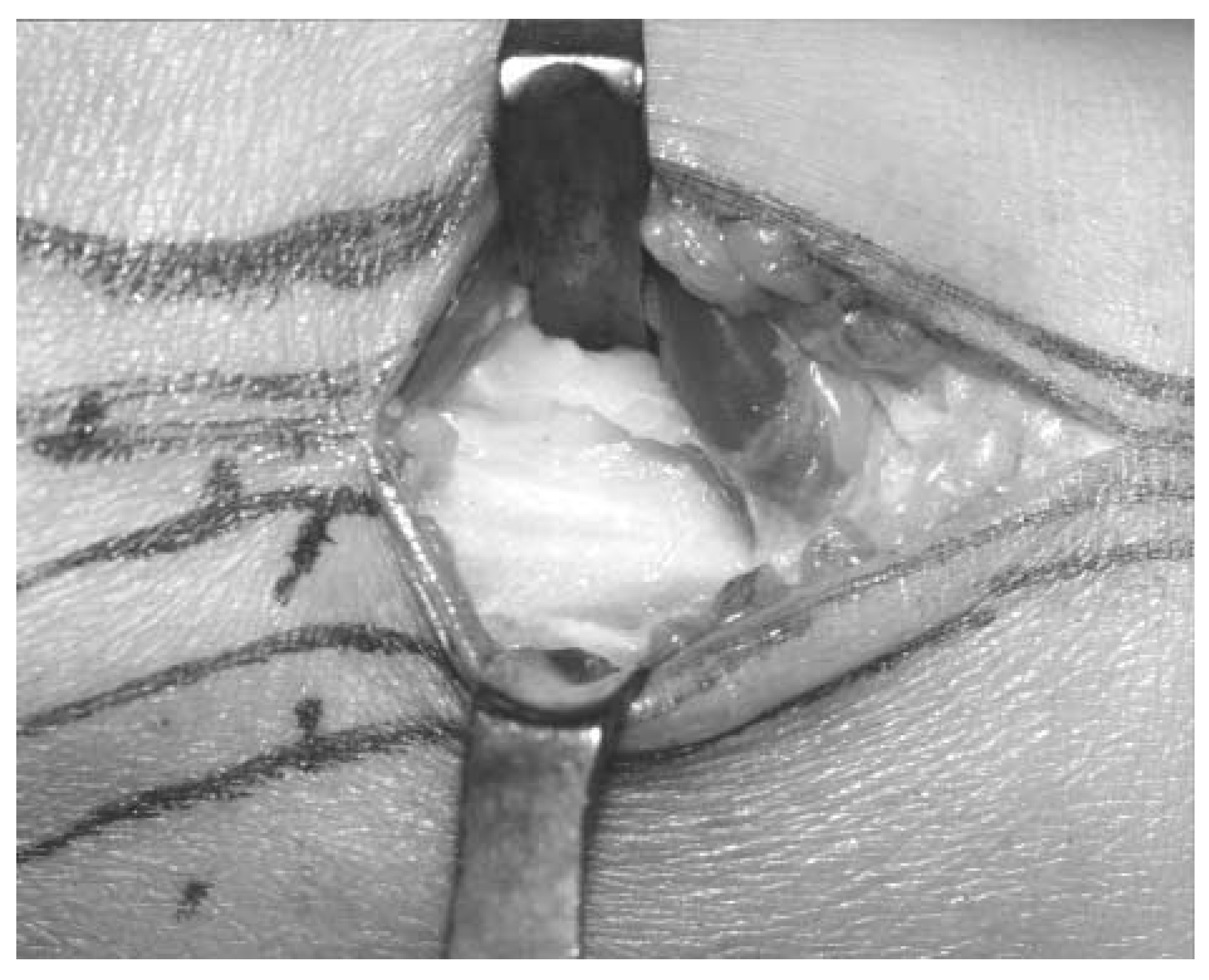
After standard surgical preparation, a longitudinal incision is made approximately 4 cm proximal to the ankle, over the anterolateral compartment. At this location, the deep peroneal nerve contains all three fascicles to the ankle and foot (
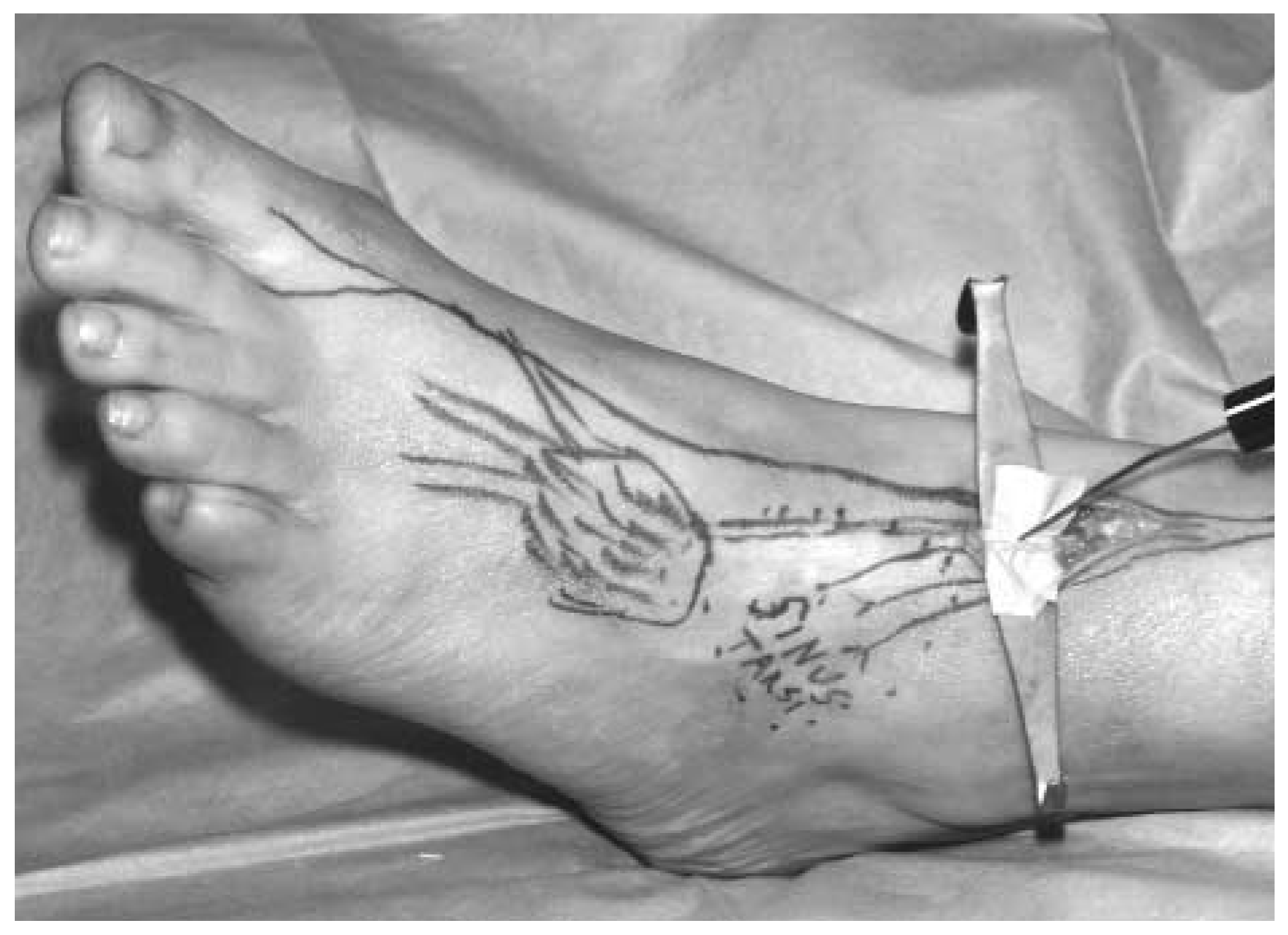
Figure 1). This orientation of incision is best because it allows for proximal or distal extension along the usual course of the nerve, which is sometimes needed for adequate exposure and delineation of sometimes-variant neuroanatomy. The deep fascia is incised longitudinally, and the extensor hallucis longus tendon or muscle is identified. The deep peroneal nerve is identified just deep to this muscle (
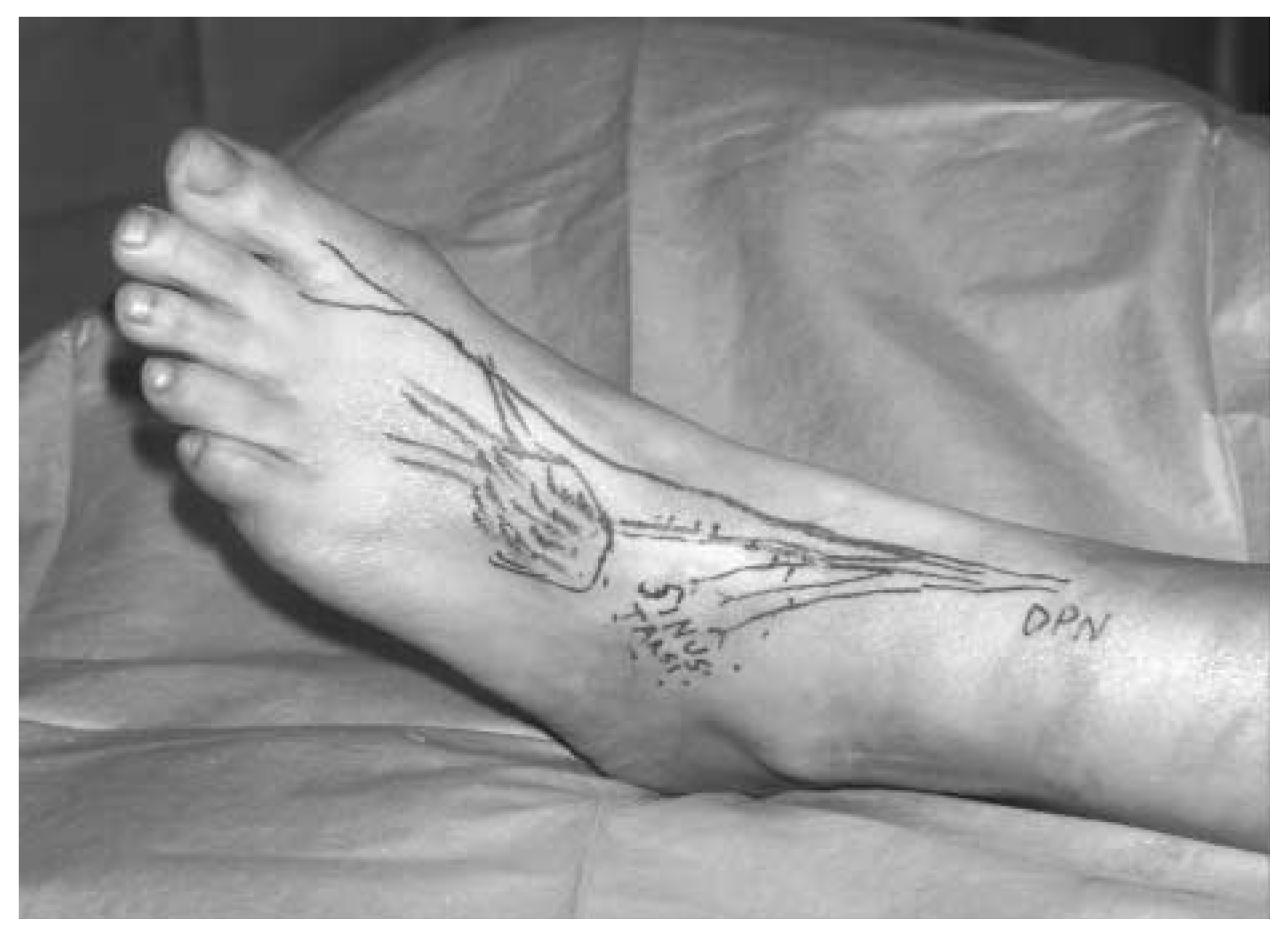
Figure 2). Using meticulous dissection, care is taken to identify and protect the anterior tibial vessels. The deep peroneal nerve is isolated, and then, by means of epineurotomy, it is dissected to demonstrate its three intraneural fascicles. Intraoperative electric stimulation documents the motor
versus sensory nature of the fascicles (
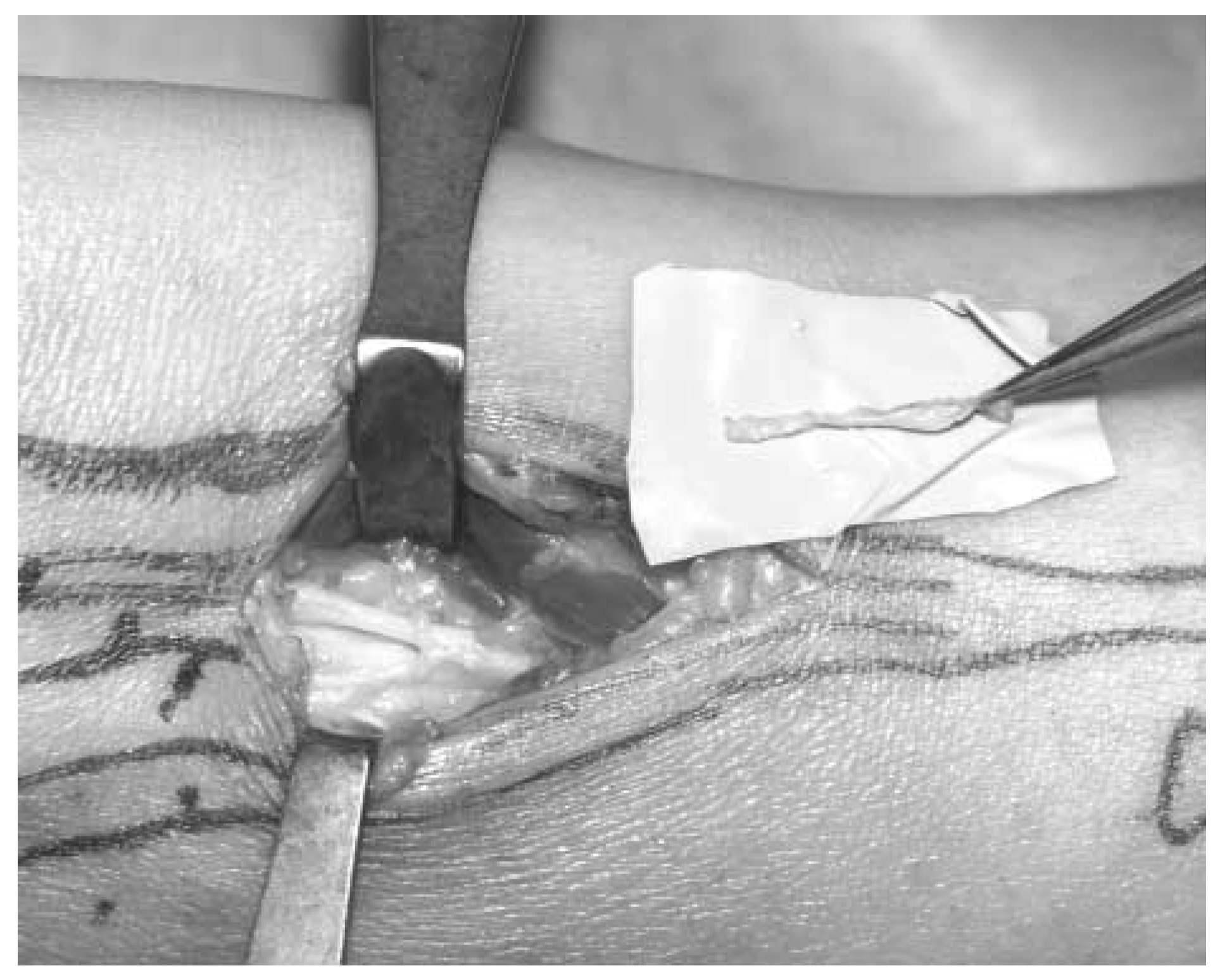
Figure 3). A preoperative decision should be made regarding whether a complete deep peroneal nerve resection or a partial fascicular resection is to be performed. Certain clinical situations warrant a total resection. In the case in which a partial denervation is planned, the most lateral fascicle is resected, and the proximal end of the deep peroneal nerve is left to lie in this ideally suited intermuscular environment (
Figure 4).
In patients in whom there is motor response when the central and lateral fascicles are stimulated, the central and lateral fascicles are divided to ensure that the sinus tarsi is completely denervated. One patient’s most medial fascicle (to the dorsal first web space) also gave a motor response when stimulated, and it was divided as well to ensure sinus tarsi denervation. Sacrifice of the sensation in the dorsal web space was considered minor compared with the overall benefit to the patient.
Because of the proximal location of the denervation of the deep peroneal nerve, normal pathologic test results were reported. Evidence for a true neuroma on a histologic basis would be possible only if the contents of the sinus tarsi were evacuated and sent as a specimen for analysis. Therefore, histologic confirmation of neuromatous changes involving the more distal branches of the deep peroneal nerve was only speculative.
Results
Ten (83%) of the 12 patients who had recalcitrant pain after an inversion ankle sprain or a fracture in the region of the sinus tarsi were rendered asymptomatic. One patient with an ankle sprain had only partial improvement. The remaining patient with an ankle sprain, who had complex regional pain syndrome in the preoperative period, remained symptomatic in the region of the sinus tarsi even after denervation and was declared a treatment failure. The presence of complex regional pain syndrome in this patient was well established before the sinus tarsi denervation procedure, as was localized pain in the sinus tarsi. This patient had diminished pain with palpation of the sinus tarsi but subjectively stated that she had no improvement.
The patient who underwent sinus tarsi denervation for the treatment of continued pain after insertion of an MBA implant had diminished pain in the sinus tarsi as well as diminished pain associated with the implant. Despite early partial pain relief, however, this same patient underwent a second, more extensive denervation procedure and later returned for surgical removal of the implant. This patient was categorized as having only partial improvement from the denervation procedure because it was not until after removal of the implant that all of the pain was alleviated. Before the first surgery, all pain in the sinus tarsi was relieved with an infiltration of 2 mL of 2% lidocaine around the deep peroneal nerve, on the anterior aspect of the ankle joint. There seemed to be no sural or superficial peroneal nerve contribution during this trial of local anesthetic blockade. However, after the first denervation procedure, at which time it was noted that all three fascicles demonstrated a motor response with intraoperative nerve stimulation, she developed pain again in the sinus tarsi region. Further investigation and trials of local anesthetic blockade indicated that she had some sural and superficial peroneal nerve involvement. She underwent a second surgery. It was demonstrated intraoperatively that she had variant neuroanatomy, with the presence of three separately identifiable deep peroneal nerves surrounding the anterior tibial artery proximal to the first incision. This would account for the fact that after the first denervation procedure she still had sensation in the dorsal first web space.
Except for the previously mentioned patient who underwent arthroereisis, this group demonstrated a short postoperative recovery period, with minimal pain and discomfort and a rapid return to regular activity. Two of the patients who were ultimately classified as having a good or excellent result required an additional procedure to resect the remaining fascicles of the deep peroneal nerve. None of these patients developed a painful amputation neuroma or were downgraded after this surgical denervation.
Discussion
Resection of a peripheral nerve always has the potential for complications. In addition to the risks of any surgery, such as the development of a painful scar, bleeding, and infection, there can be simply the failure to reach the desired outcome for the patient. The proximal end of the resected nerve can cause a painful stump neuroma; however, this did not occur in our patients. We believe that this is because of the minimized potential for the formation of a painful neuroma when the resected end of a peripheral nerve is left deep in an intramuscular plane. The complication of loss of sensation in the dorsal aspect of the first web space and the loss of motor function of the extensor digitorum brevis muscle is a small cost for the patient with this type of chronic pain. Any potential biomechanical sequela from the loss of motor function of the extensor digitorum brevis is, in our opinion, an acceptable price to pay for the patient who cannot bear weight on the foot or walk normally. Moreover, extensor digitorum longus function remains fully intact. Meticulous intraoperative dissection performed with optical magnification decreases the risk of inadvertant injury to the branches of the superficial peroneal nerve and neighboring vital structures during surgical isolation of the deep peroneal nerve just proximal to the ankle. One must be sure not to damage the vascular structures, including the anterior tibial artery.
Our results demonstrate that sinus tarsi pain, regardless of its clinical etiology, is related to trauma to the terminal branches of the deep peroneal nerve, or, at the least, the sensation of pain is transmitted by these branches. Innervation of the sinus tarsi has been reported to occur in some patients (18% to 24%) also from a medial branch of the sural nerve, arising just at the lateral malleolus, and traveling to the opening of the sinus tarsi.[
10,
23] In our patients, damage to this sural nerve branch was not apparent because patients were relieved of their pain just by resection of the appropriate part of the deep peroneal nerve. However, in time, with increasing numbers of patients being treated for this problem, it may be anticipated that a sural nerve contribution to the sinus tarsi pain will become evident. If the sural nerve does contribute to the pain mechanism, a strategy for its treatment remains to be demonstrated. Interruption of the neural pathway for pain has worked for selective joint denervation because the proximal end of the nerve, after resecting an intercalated segment, lies in an intermuscular plane.[
24,
25,
26] There is no intermuscular plane for the sural nerve at the lateral malleolus. Furthermore, at the ankle, the sural nerve is actually the common sural nerve, with origins from the posterior tibial and common peroneal nerves.[
27] It is probable, therefore, that if a block of the sural nerve at the lateral malleolus is required to relieve sinus tarsi pain completely, the entire sural nerve may require resection. The best place for this would be in the popliteal fossa.
Finally, the sural nerve may become a component of lateral ankle pain due to a true neuroma of the cutaneous portion of the sural nerve itself. We have observed this in patients who have undergone a lateral ankle stabilization procedure, such as the Evan or Chrisman-Snook technique. This component of the pain will be clear owing to pain when the scar itself is palpated, with an associated area of sensory numbness or dysesthesia distal to the scar. This pain should remain after anesthetic blockade of the deep branch of the peroneal nerve.
Sinus tarsi denervation may become an integral method for management of the patient who has continued pain with any type of subtalar arthroereisis procedure. Although implantation is a totally reversible procedure, it is a difficult surgical decision to remove this implant in a case in which an objectively good correction of the osseous structure of the hypermobile flatfoot has been attained but subjectively the patient has continued pain. Denervation of the sinus tarsi may obviate this conundrum, achieving a pain-free, corrected flatfoot. More investigation into this method of treating a painful arthroereisis implant is warranted given the minimal postoperative morbidity associated with denervation of the sinus tarsi.
Last, the surgeon must also make a preoperative decision regarding complete denervation of the deep peroneal nerve versus a technique in which only one or two fascicles are resected and the ends undergo transposition. In our experience, the complete denervation technique may be a more efficacious method for denervation of the sinus tarsi. However, patients must be informed that they will lose the function of the extensor digitorum brevis muscle and will lose sensation in the dorsal first interspace. Diagnostic lidocaine injections can reassure the surgeon and the patient about what is to be expected after the denervation surgery.
Conclusion
Denervation of the sinus tarsi can relieve recalcitrant pain of the sinus tarsi in a wide range of clinical conditions. Further investigation of this surgical procedure, in a randomized and controlled manner, is needed.