Next Article in Journal
Sinus Tarsi Denervation. Clinical Results
Previous Article in Journal
Is There Integrity in the CME Process?
 
 
Journal of the American Podiatric Medical Association is published by MDPI from Volume 116 Issue 1 (2026). Previous articles were published by another publisher in Open Access under a CC-BY (or CC-BY-NC-ND) licence, and they are hosted by MDPI on mdpi.com as a courtesy and upon agreement with American Podiatric Medical Association.
Article

Cooling the Foot to Prevent Diabetic Foot Wounds. A Proof-of-Concept Trial

by
David G. Armstrong
1,2,3,*,
Melinda B. Sangalang
1,
David Jolley
1,
Frank Maben
1,
Heather R. Kimbriel
1,
Brent P. Nixon
1,4 and
I. Kelman Cohen
5
1
Department of Surgery, Southern Arizona Veterans Affairs Medical Center, Tucson
2
Department of Medicine, Manchester Royal Infirmary, University of Manchester, Manchester, England
3
Dr. William M. Scholl College of Podiatric Medicine at Rosalind Franklin University of Medicine and Science, 3333 Green Bay Rd, North Chicago, IL 60064
4
University of Arizona, Tucson
5
Department of Surgery, Section of Plastic and Reconstructive Surgery, Medical College of Virginia, Richmond
*
Author to whom correspondence should be addressed.
J. Am. Podiatr. Med. Assoc. 2005, 95(2), 103-107; https://doi.org/10.7547/0950103
Published: 1 March 2005

Abstract

The etiology of neuropathic diabetic foot wounds can be summarized by the following formula: pressure × cycles of repetitive stress = ulceration. The final pathway to ulceration consists of an inflammatory response, leading to tissue breakdown. Mitigation of this response might reduce the risk of ulceration. This proof-of-concept trial evaluates whether simple cooling of the foot can safely reduce the time to thermal equilibrium after activity. After a 15-min brisk walk, the six nondiabetic volunteers enrolled were randomly assigned to receive either air cooling or a 10-min 55°F cool water bath followed by air cooling. The process was then repeated with the intervention reversed, allowing subjects to serve as their own controls. There was a rise in mean ± SD skin temperature after 15 min of activity versus preactivity levels (87.8° ± 3.9° versus 79° ± 2.2° F; P = .0001). Water cooling immediately brought the foot to a point cooler than preactivity levels for all subjects, whereas air cooling required an average of nearly 17 min to do so. Ten minutes of cooling required a mean ± SD of 26.2 ± 5.9 min to warm to preactivity levels. No adverse effects resulted from the intervention. We conclude that cooling the foot may be a safe and effective method of reducing inflammation and may serve as a prophylactic or interventional tool to reduce skin breakdown risk.

The prevalence of diabetes mellitus worldwide is 2.9%, with at least 16 million people affected in the United States alone. An additional 1 million people are diagnosed annually in America, with an estimated health-care expenditure and lost productivity of approximately $130 billion per year.[1]
A major complication of this disease is lower-limb amputation, with its associated mortality and morbidity. Although people with diabetes mellitus make up only 3% of the US population, this group accounts for up to eight in ten of these procedures, making diabetes mellitus the leading cause of nontraumatic amputations.[2,3] Epidemiologic studies[4,5,6] have identified foot ulcers as a precursor in 85% of amputation cases, and a lifetime risk as high as 15% has been estimated for ulcer development at least once during the course of the disease.
Neuropathic diabetic foot wounds are caused by pressure and repetitive stress, which frequently lead to inflammation and subsequent tissue breakdown. Theoretically, identifying areas of injury by the presence of inflammation (and the presence of dolor, rubor, and calor) would allow patients or health-care providers to take action to reduce the inflammation before a wound develops. The most consistent objective surrogate clinical measure of inflammation has been thermometry, which has been well known in the literature since the groundbreaking work of Brand[7,8,9] and Manley and Darby.[10] Recent pilot work conducted by our group has suggested that personal dermal thermometers, used to identify areas of increased inflammation (and temperature), may reduce the incidence of ulceration in patients with diabetes mellitus who are at high risk of ulceration and amputation.[11,12,13,14,15] It would stand to reason that if the wound “heats up before it breaks down,” then perhaps prophylactically cooling a focal area would reduce the risk of skin breakdown.
Therapeutic hypothermia, or cryotherapy, has been used for centuries as a treatment modality for various inflammatory conditions. In acute injury, tissue swelling can occur and subsequent hypoxia can develop.[16,17] Ice is especially useful to reduce swelling and bleeding by causing local vasoconstriction, thereby reducing vessel permeability and fluid extravasation into tissues.[17] Ice has also been shown to decrease cell metabolism, interleukin-1β levels, neutrophil accumulation, and production of prostaglandins,[18] which helps limit posthypoxia damage and confine the inflammatory response to injured tissues. Reduction of mean skin temperatures sufficiently to induce localized skin analgesia, reduce nerve conduction velocity, and reduce metabolic enzyme activity to clinically relevant levels is achieved through various means, including wet ice, dry ice, flexible frozen gel packs, and even bags of frozen peas.[19,20]
Although a simple cooling intervention might, on the surface, make therapeutic sense, we are unaware of any studies in the literature that have discussed this issue. The purpose of this proof-of-concept trial was to determine whether simple cooling of the foot can safely reduce the time to thermal equilibrium after activity.

Research Design and Methods

Six healthy, ambulatory people without diabetes mellitus, neuropathy, or a history of peripheral vascular disease were enrolled in this initial proof-of-concept trial. Using a computerized random number generator (Arcus, London, England), the subjects were divided into groups that either soaked their feet in a cool water bath or rested their feet at room temperature.
Maximum skin temperature was assessed plantar to the first metatarsophalangeal joint on both feet using a noninvasive, noncontact, infrared dermal thermometer (ProScan; Salix Medical, San Antonio, Texas). Subjects were then asked to walk at a self-selected pace for 15 min in their own comfortable athletic shoes. After this 15-min walk, subjects removed their shoes and socks, and their skin temperatures were measured. Half of these subjects soaked their feet in a cool water bath (at 55°F). Skin and water temperatures were taken every minute for 10 min. Patients were then removed from the water bath, and their skin temperatures were taken each minute until they reached prewalking levels. The other half of the subjects enrolled rested their bare feet in room air until prewalking skin temperatures were reached. Air and skin temperatures were taken every minute from both groups. After this series of measurements, subjects were asked to return at the same time the following day, when the cool water and room air groups were reversed and reassessed using methods identical to those previously described.
Because subjects served as their own controls, we used a paired t-test to analyze differences in time to equilibrium between bath and room air treatments.[21] For all analyses, we used an α of .05. The null hypothesis was that there would be no difference in time to equilibrium between the two groups.

Results

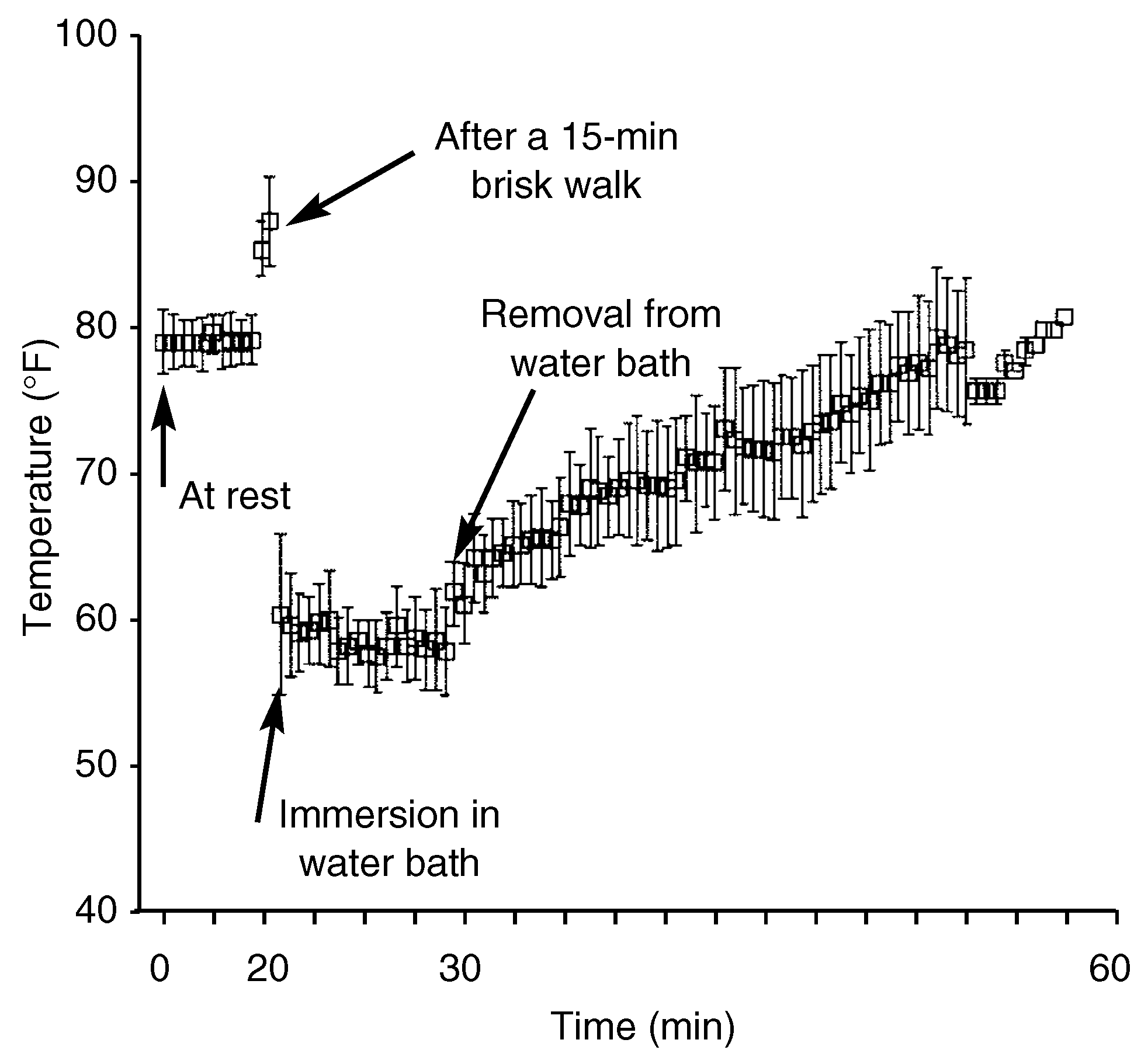
We enrolled six healthy, nondiabetic volunteers (4 women and 2 men; mean ± SD age, 32.2 ± 6.6 years). The mean ± SD ambient room temperature was 72.1° ± 1.0° F. There was a dramatic rise in skin temperature after 15 min of activity versus preactivity levels (87.8° ± 3.9° versus 79° ± 2.2° F; P = .0001). Water cooling immediately brought the foot to a point cooler than preactivity levels for all subjects, whereas air cooling required an average of nearly 17 min to do so (mean ± SD, 1.0 ± 0.0 versus 16.8 ± 2.8 min; P = .0001). Ten minutes of cooling required a mean ± SD of 26.2 ± 5.9 min to warm to preactivity levels. There were no adverse effects from the intervention. These data are illustrated in Figure 1 and Figure 2.

Discussion

In diabetes mellitus, as in other chronic diseases, self-care is necessary to identify early warning signs to reduce the incidence of complications and prevent morbidity. Most diabetic lower-extremity complications involve sensory neuropathy as a pivotal component of the etiologic pathway for the development of ulcers. Pain is the primary natural warning system that alerts us to take action and seek medical care. This system is faulty in people with a prolonged duration of diabetes mellitus. People with diabetes mellitus and neuropathy often sustain injuries that are not recognized until full-thickness ulcerations occur requiring surgical intervention, resulting in poor quality of life and unnecessary utilization of medical services and associated costs. The precursor to many of these injuries is inflammation. Identifying this inflammation and intervening may prove helpful in this high-risk population. The results of this preliminary study suggest that in healthy people, cooling the foot rapidly reduces focal inflammation sustained by brisk activity. This finding may be applicable to a high-risk population as well.
The physiology of total-body cooling was studied more than six decades ago[22] and recently has received renewed interest. Several investigations have shown promising results using cryotherapy to reduce the deleterious effects of local tissue injury. Morsi,[23] in a study involving cryotherapy after total-knee arthroplasty, demonstrated a decrease in closed suction drainage volume, analgesic consumption, and wound healing. A study[24] of cooling the body with a liquid microclimate system during exercise heat-stress conditions revealed that cooling the arms during upperbody exercise provides no thermoregulatory advantage, although cooling the thigh surfaces during lower-body exercise does provide an advantage. Sawada et al[25] suggested that in a cool work environment where the body core temperature is likely to decrease, repeated finger cooling may weaken cold-induced vasodilatation reactivity and delay the recovery of finger temperature during rest periods after immersion. An entire field of study seems to be emerging in the area of therapeutic hypothermia for stroke[18,26,27,28,29,30,31,32] and in potentially limiting infarct size after acute myocardial infarction.[29,33,34,35]
The use of hypothermia in the diabetic population may prove useful in the prevention of common injuries. Most wounds in the neuropathic foot are incited by minor, preventable initiating events. Moderate repetitive stress has been reported as a frequent cause of wounds in the insensate foot.[36,37,38,39,40] Trivial actions, such as walking, can cause breakdown of tissues and subsequent ulceration. Many preventive treatments have been proposed to reduce stress and shear forces. Padding and accommodative devices are considered appropriate modalities. However, there has been little investigation of the use of therapeutic cooling as a preventive tool in the neuropathic foot. A regular regimen of cooling may be a prophylactic for the well-perfused patient against imminent activities; alternatively, it may prove useful as immediate aftercare following activity.
Today, therapeutic hypothermia is recognized as an invaluable modality in the medical professional’s armamentarium. It seems that simple local application of a cool water bath effectively cools healthy patients after a period of repetitive stress to the lower extremities. This treatment modality may have relevance in the prevention of diabetic foot ulcers by reducing mechanical stresses and friction known to be a major factor in tissue damage and ulceration.

Conclusion

The results of this proof-of-concept trial show that therapeutic cooling of the foot may be a safe and effective method of reducing inflammation. In particular, it may serve as a prophylactic or interventional tool to reduce the risk of skin breakdown in high-risk patients with diabetes mellitus. We look forward to further trials in progressively higher-risk patients to determine the practicality and efficacy of this simple intervention.

References

  1. WORLD HEALTH ORGANIZATION: Diabetes estimates and projections [World Health Organization Web site]. Available online: http://www.who.int/ncd/dia/database4.htm (accessed on 14 October 2003).
  2. HUSE, D.M.; OSTER, G.; KILLEN, A.R.; et al. The economic costs of non-insulin-dependent diabetes mellitus. JAMA 1989, 262, 2708. [Google Scholar] [CrossRef]
  3. ARMSTRONG, D.G.; LAVERY, L.A.; QUEBEDEAUX, T.L.; et al. Surgical morbidity and the risk of amputation due to infected puncture wounds in diabetic versus nondiabetic adults. South Med J 1997, 90, 384. [Google Scholar] [CrossRef] [PubMed]
  4. PECORARO, R.E.; REIBER, G.E.; BURGESS, E.M. Pathways to diabetic limb amputation: basis for prevention. Diabetes Care 1990, 13, 513. [Google Scholar] [CrossRef]
  5. REIBER, G.E.; PECORARO, R.E.; KOEPSELL, T.D. Risk factors for amputation in patients with diabetes mellitus: a case control study. Ann Intern Med 1992, 117, 97. [Google Scholar] [CrossRef]
  6. PALUMBO, P.J.; MELTON, L.J. “Peripheral Vascular Disease and Diabetes,” in Diabetes in America,; Harris, M.I., Hamman, R.F., Eds.; National Institutes of Health: Bethesda, MD, 1985. [Google Scholar]
  7. BRAND PW: “The Diabetic Foot,” in Diabetes Mellitus: Theory and Practice,, 3rd Ed; Ellenberg, M., Rifkin, H., Eds.; Medical Examination Publishing: New York, 1983; p. 803. [Google Scholar]
  8. BRAND PW: “The Insensitive Foot (Including Leprosy),” in Disorders of the Foot and Ankle,, 2nd Ed; Jahss, M., Ed.; WB Saunders: Philadelphia, 1991; p. 2170. [Google Scholar]
  9. BRAND PW: “Other Insensitive Foot Types Similar to Diabetes,” in Management of the Diabetic Foot; Ma, B., Ed.; Williams & Wilkins: Baltimore, 1987. [Google Scholar]
  10. MANLEY, M.T.; DARBY, T. Repetitive mechanical stress and denervation in plantar ulcer pathogenesis in rats. Arch Phys Med Rehabil 1980, 51, 171. [Google Scholar]
  11. ARMSTRONG DG: Infrared dermal thermometry: the foot and ankle stethoscope. J Foot Ankle Surg 1998, 37, 75. [CrossRef]
  12. ARMSTRONG, D.G.; LAVERY, L.A.; LISWOOD, P.J. ET AL: Infrared dermal thermometry for the high-risk diabetic foot. Phys Ther 1997, 77, 169. [Google Scholar] [CrossRef] [PubMed]
  13. ARMSTRONG, D.G.; LAVERY, L.A. Monitoring neuropathic ulcer healing with infrared dermal thermometry. J Foot Ankle Surg 1996, 35, 335. [Google Scholar] [CrossRef] [PubMed]
  14. ARMSTRONG, D.G.; LAVERY, L.A. Monitoring healing of acute Charcot’s arthropathy with infrared dermal thermometry. J Rehabil Res Dev 1997, 34, 317. [Google Scholar]
  15. LAVERY, L.A.; HIGGINS, K.R.; HOLGUIN, D.; et al. Home skin temperature monitoring reduces the incidence of diabetic foot complications. Diabetes 2002, 51 (suppl 1), 1039–P. [Google Scholar]
  16. GABAY C, KUSHNER I: Acute-phase proteins and other systemic responses to inflammation. N Engl J Med 1999, 340, 448. [CrossRef]
  17. JURKOVICH, G.J.; PITT, R.M.; CURRERI, P.W. ET AL: Hypothermia prevents increased capillary permeability following ischemia-reperfusion injury. J Surg Res 1988, 44, 514. [Google Scholar] [CrossRef] [PubMed]
  18. TISHERMAN, S.A.; RODRIGUEZ, A.; SAFAR, P. Therapeutic hypothermia in traumatology. Surg Clin North Am 1999, 79, 1269. [Google Scholar] [CrossRef] [PubMed]
  19. BELITSKY, R.B.; ODAM, S.J. HUBLEY-KOZEY C: Evaluation of the effectiveness of wet ice, dry ice, and cryogenic packs in reducing skin temperature. Phys Ther 1987, 67, 1080. [Google Scholar] [CrossRef]
  20. CHESTERTON, L.S.; FOSTER, N.E.; ROSS, L. Skin temperature response to cryotherapy. Arch Phys Med Rehabil 2002, 83, 543. [Google Scholar] [CrossRef] [PubMed]
  21. KIRKWOOD BR: Essentials of Medical Statistics; Blackwell, Oxford, 1988.
  22. BAZZETT HC: The effect of heat and cold on the blood volume and circulation. JAMA 1938, 111, 1841. [CrossRef]
  23. MORSI E: Continuous-flow cold therapy after total knee arthroplasty. J Arthroplasty 2002, 17, 718. [CrossRef]
  24. YOUNG, A.J.; SAWKA, M.N.; EPSTEIN, Y. ET AL: Cooling different body surfaces during upper and lower body exercise. J Appl Physiol 1987, 63, 1218. [Google Scholar] [CrossRef]
  25. SAWADA, S.; ARAKI, S.; YOKOYAMA, K. Changes in cold-induced vasodilatation, pain and cold sensation in fingers caused by repeated finger cooling in a cool environment. Ind Health 2000, 38, 79. [Google Scholar] [CrossRef][Green Version]
  26. FEIGIN, V.; ANDERSON, N.; GUNN, A. ET AL: The emerging role of therapeutic hypothermia in acute stroke. Lancet Neurol 2003, 2, 529. [Google Scholar] [CrossRef]
  27. DALTON DIETRICH, W.; KULUZ, J.W. New research in the field of stroke: therapeutic hypothermia after cardiac arrest. Stroke 2003, 34, 1051. [Google Scholar] [CrossRef] [PubMed][Green Version]
  28. MONTANER J: Editorial comment: cooling matrix metalloproteinases to improve thrombolysis in acute ischemic stroke. Stroke 2003, 34, 2171. [CrossRef][Green Version]
  29. KABON, B.; BACHER, A. SPISS CK: Therapeutic hypothermia. Best Pract Res Clin Anaesthesiol 2003, 17, 551. [Google Scholar]
  30. JIAN, S.; YONGMING, Q.; ZHIHUA, C. ET AL: Feasibility and safety of moderate hypothermia after acute ischemic stroke. Int J Dev Neurosci 2003, 21, 353. [Google Scholar] [CrossRef]
  31. YENARI, M.A.; ZHAO, H.; GIFFARD, R.G. ET AL: Gene therapy and hypothermia for stroke treatment. Ann N Y Acad Sci 2003, 993, 54. [Google Scholar] [CrossRef]
  32. Krieger, D.W.; De Georgia, M.A.; Abou-Chebl, A.; et al. Cooling for acute ischemic brain damage (cool aid): an open pilot study of induced hypothermia in acute ischemic stroke. Stroke 2001, 32, 1847. [Google Scholar] [CrossRef] [PubMed]
  33. HALE, S.L.; KLONER, R.A. Myocardial hypothermia: a potential therapeutic technique for acute regional myocardial ischemia. J Cardiovasc Electrophysiol 1999, 10, 405. [Google Scholar] [CrossRef] [PubMed]
  34. FELBERG, R.A.; KRIEGER, D.W.; CHUANG, R. ET AL: Hypothermia after cardiac arrest: feasibility and safety of an external cooling protocol. Circulation 2001, 104, 1799. [Google Scholar] [CrossRef]
  35. DIXON, S.R.; WHITBOURN, R.J.; DAE, M.W.; et al. Induction of mild systemic hypothermia with endovascular cooling during primary percutaneous coronary intervention for acute myocardial infarction. J Am Coll Cardiol 2002, 40, 1928. [Google Scholar] [CrossRef]
  36. FRYKBERG, R.G.; LAVERY, L.A.; PHAM, H. ET AL: Role of neuropathy and high foot pressures in diabetic foot ulceration. Diabetes Care 1998, 21, 1714. [Google Scholar] [CrossRef]
  37. ARMSTRONG, D.G.; BOULTON, A.J. Continuous Internet-based activity monitoring provides a surrogate marker for nocturnal polyuria in persons with diabetes mellitus at high risk for foot ulceration. Diabet Med 2002, 19, 1034. [Google Scholar] [CrossRef] [PubMed]
  38. ARMSTRONG, D.G.; LAVERY, L.A.; KIMBRIEL, H.R.; et al. Activity patterns of patients with diabetic foot ulceration: patients with active ulceration may not adhere to a standard pressure off-loading regimen. Diabetes Care 2003, 26, 2595. [Google Scholar] [CrossRef]
  39. ARMSTRONG, D.G.; NGUYEN, H.C.; LAVERY, L.A. ET AL: Offloading the diabetic foot wound: a randomized clinical trial. Diabetes Care 2001, 24, 1019. [Google Scholar] [CrossRef] [PubMed]
  40. ARMSTRONG, D.G.; LAVERY, L.A.; VAZQUEZ, J.R.; et al. Clinical efficacy of the first metatarsophalangeal joint arthroplasty as a curative procedure for hallux interphalangeal joint wounds in persons with diabetes. Diabetes Care 2003, 26, 3284. [Google Scholar] [CrossRef] [PubMed]
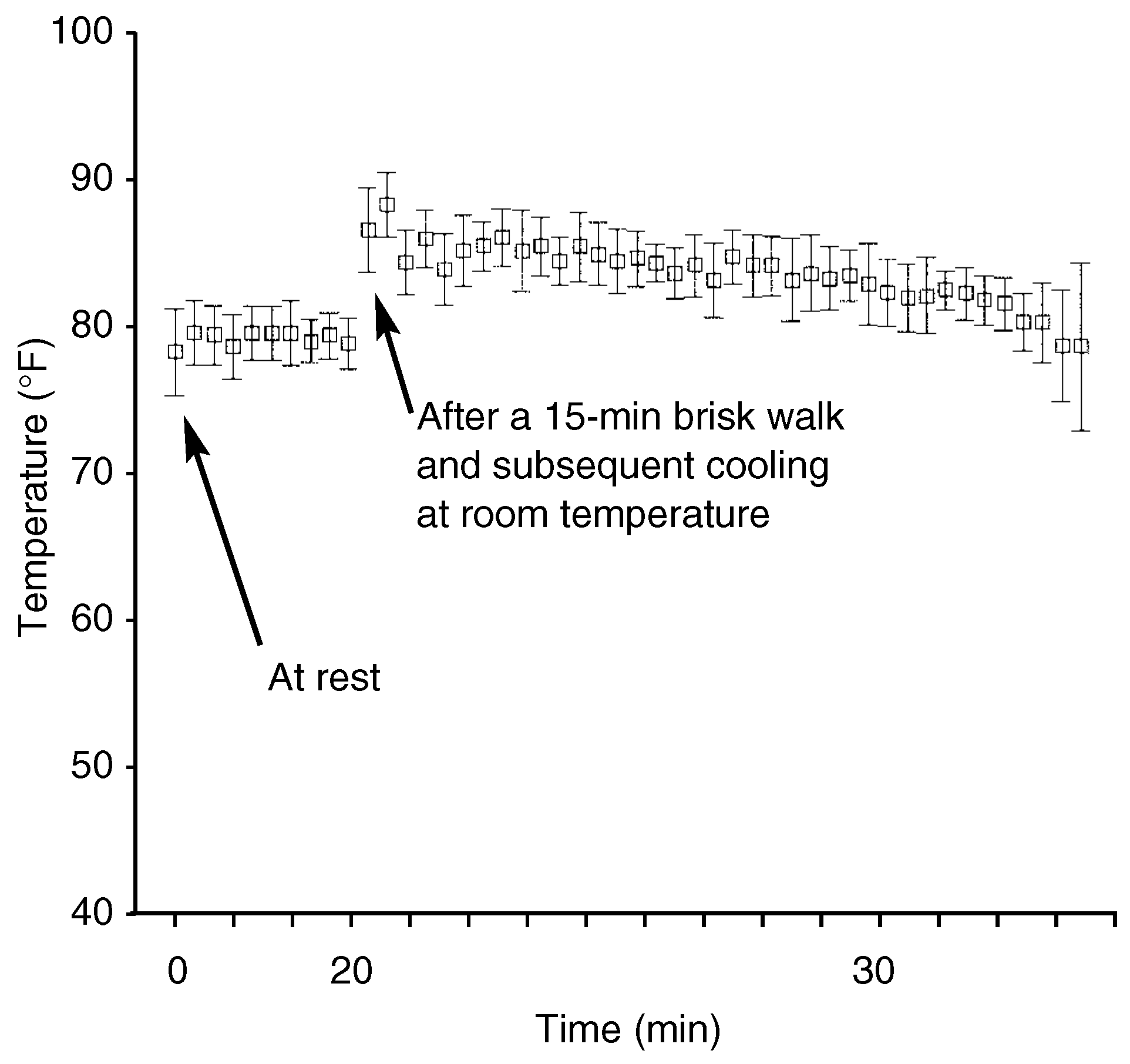
Figure 1. Effect of air cooling on mean skin temperature. Error bars represent SD.
Japma 95 00103 g001
Figure 2. Effect of water cooling on mean skin temperature. Error bars represent SD.
Japma 95 00103 g002