Measurement of ankle joint dorsiflexion is important to the healthcare practitioner, as an adequate range of dorsiflexion is necessary for normal ambulation, [
1] and limitation of ankle joint dorsiflexion has been implicated as a predisposing factor in ankle injuries [
2] and calcaneal apophysitis [
3] in children. Ankle joint dorsiflexion comprises components of talocrural, subtalar, and midfoot movements, [
4] and restriction at any of these joints may limit ankle joint dorsiflexion; thus this movement could be more accurately described as dorsiflexion of the foot on the leg. However the movement is described, it is important to realize that the factor most likely to limit this movement is not restriction in mobility of the participating joints but rather tightness of the triceps surae muscle, in particular in the gastrocnemius component. [
5] Therefore, measurement of the range of dorsiflexion of the foot on the leg, particularly when the knee is extended, can, in most cases, be considered an indicator of tightness of the triceps surae muscle, although it is necessary to differentiate between actual limitations in the ankle joint itself and the muscles crossing the joint as a source of restricted movement. This differentiation is usually done by comparing the amount of foot dorsiflexion with the knee flexed
versus with the knee extended.
There are various approaches to measuring foot dorsiflexion on the leg. [
6,
7] One of the more recent methods is that of Moseley and Adams, [
8] who developed the Lidcombe template as a reliable method of assessing nonweightbearing dorsiflexion. [
8,
9] However, we have several concerns regarding the design and use of the original Lidcombe template that may affect the appropriateness of the measurements. First is that the contact point of the template is only a small bar under the metatarsal heads. With this design, it is likely that forefoot motion on the rearfoot would contribute disproportionately to the total range recorded, as well as causing the torque generated to differ depending on foot size (torque = force × radius). In the original method, it was recommended that the knee be in a flexed position, reducing the influence of the gastrocnemius muscle. When measuring ankle joint motion, this position will not truly capture the functional foot dorsiflexion range on the leg, which is a primary concern of practitioners. The use of a photographic apparatus to record the ankle position is necessary with the original design, which increases technical complexity. In addition, the measured angle, calculated between the fibular axis and the fifth metatarsal with the apex at the lateral malleolus, differs considerably from that of other methods, [
6] making comparison with findings from other studies difficult.
Therefore, the aims of this study were 1) to amend the Lidcombe template to a design that would overcome the limitations described and improve ease of use and 2) to test the reliability of foot dorsiflexion measurements using this apparatus and establish preliminary measures of a foot dorsiflexion range at a particular force in a healthy sample of children. As tightness in the gastrocnemius component of the triceps surae muscle is likely to be a major factor restricting dorsiflexion, the amendments include measurement of dorsiflexion with the knee extended. The contribution of forefoot movement on the rear-foot was taken into account by the use of a rigid standard-length foot plate, and the application of a consistent dorsiflexion torque from a constant axis point ensured similar conditions irrespective of foot size.
Apparatus
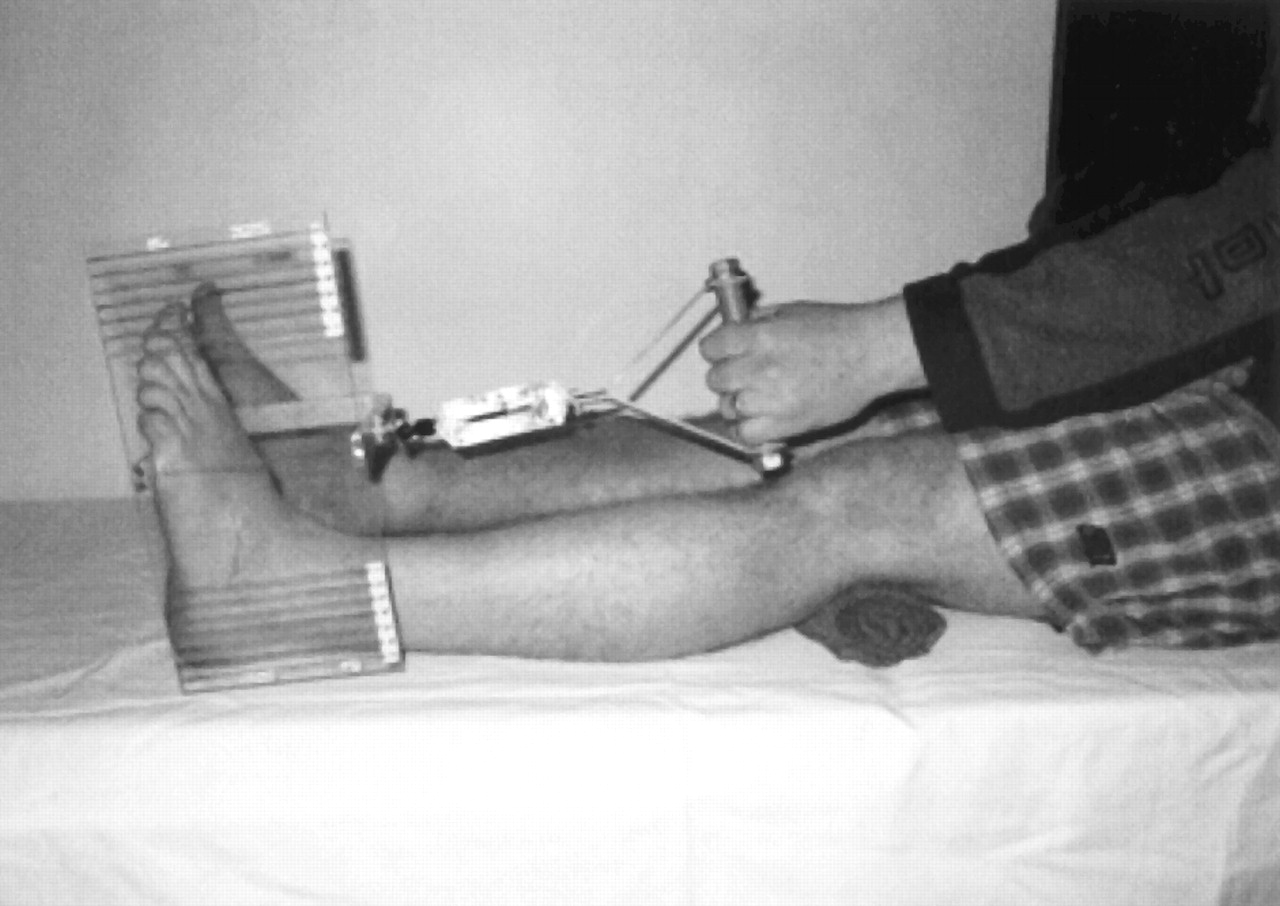
The original Lidcombe template (
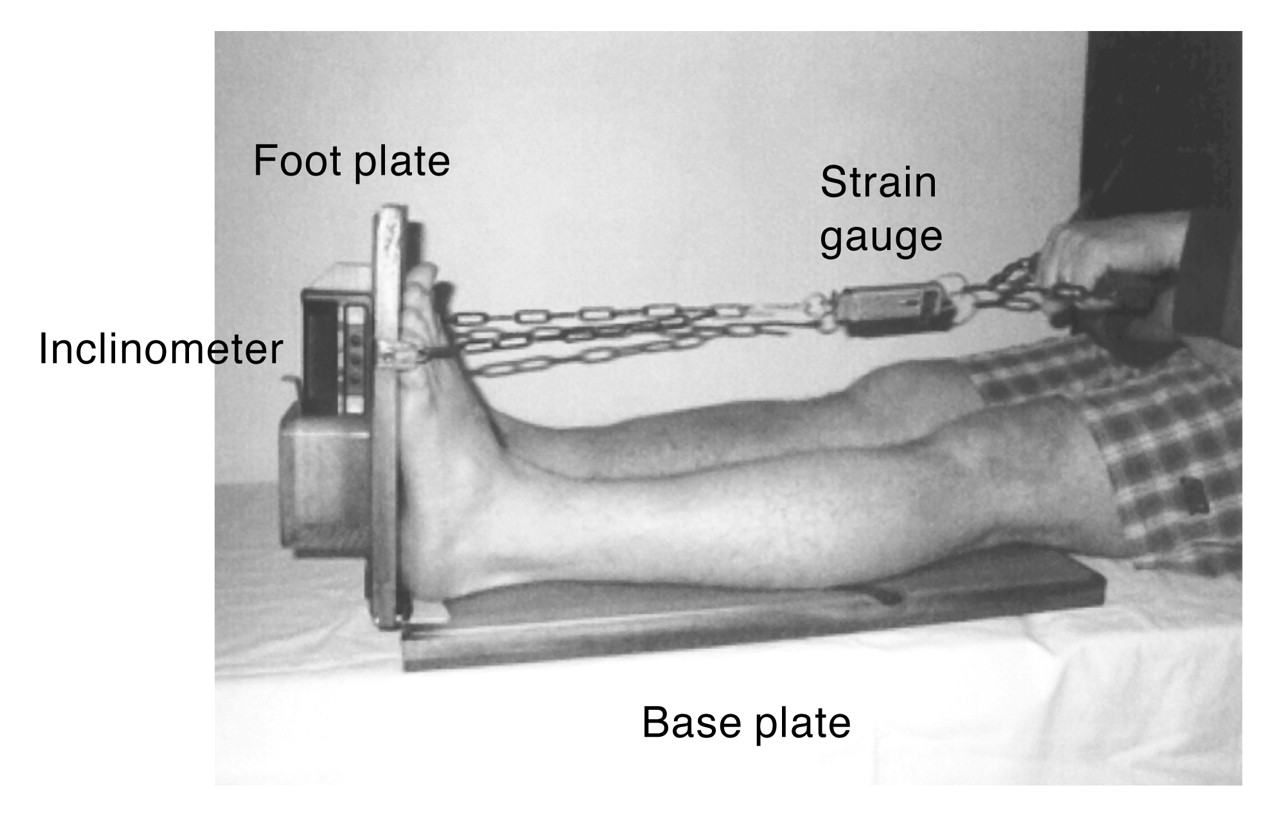
Fig. 1) was modified for this study (Fig. 2
). To allow application of a consistent dorsiflexory torque regardless of foot length, and to reduce forefoot-on-rearfoot movement, a strain gauge was attached to a 300-mm rigid foot plate at a distance of 200 mm from the hinge attaching it to the base board, placed beneath the participant’s leg. The selection of foot plate length was based on the need to accommodate up to a US size 15 foot. An electronic inclinometer was attached to the foot plate and was used to measure the angulation of the foot from 90°. The inclinometer was calibrated with a set square between the foot and the base board before the measurements. This method removed parallax errors and the need for photography. The angle measurement undertaken was similar to that of many other methods, thus allowing comparison of accuracy and efficacy. The hinge was situated between the most distal and proximal points of the base board and the foot plate, respectively, to simulate the attachment of the Achilles tendon to the calcaneum and to provide a constant axis from which force on the foot was applied. All measurements were recorded with the knee in an extended position so that the influence of the gastrocnemius muscle on the range of dorsiflexion could be incorporated. After adaptation of the apparatus, the intrarater and interrater reliability of its measures of foot dorsiflexion on the leg in an adolescent sample were investigated.
Figure 1.
The original Lidcombe template.
Figure 1.
The original Lidcombe template.
Figure 2.
The modified Lidcombe template.
Figure 2.
The modified Lidcombe template.
Methods
The study was a repeated-measures design using a sample of convenience. Two experienced podiatric physicians took all of the measurements, with an independent recorder used to allow blinding of the examiners. Fourteen healthy children (7 girls and 7 boys) aged 7 to 14 years were invited to participate in this study, which was approved by the Human Research Ethics Committee, University of South Australia.
Participants were allocated a subject identity code and were asked to expose their lower limbs to the knees and sit with their knees fully extended on a noncushioned plinth. After placement of the apparatus under the leg, the knee was maintained in extension, and the heel was held on the foot plate by manual pressure. The foot was placed in a nonpronated and nonsupinated position, ie, the “neutral position,” as defined by Root et al, [
10] by means of talar head palpation. The subject was instructed not to actively dorsiflex the foot so as to decrease the possibility of “unlocking” these joints, [
10] which may unpredictably influence the amount of foot dorsiflexion. The handle attached to the strain gauge was then pulled by Examiner 1 until 8.2 kg (80.4 N) of force was transmitted to the foot plate—the force used in previous studies with the Lidcombe template and representative of normal forces used by examiners. [
11] Thus the dorsiflexing torque applied was 16.1 nm at 90°. The apparatus was held at this point long enough for the independent recorder to press the hold button on the inclinometer (<1 sec) and was then relaxed while recording of the reading from the inclinometer occurred. This process was performed three times. Examiner 2 then duplicated this procedure for the determination of interrater reliability. This measurement procedure was then repeated in the same order by each examiner to allow determination of intrarater reliability. The subject’s other leg was then tested in the same manner.
Analysis
Data were entered into Microsoft Excel (Microsoft Corp, Redmond, Washington) and analyzed using SPSS software, version 10.0 (SPSS Science, Chicago, Illinois). Homogeneity of the sample from left and right sides was tested by comparing the average measurements of both testers from both trials of the left side against the right side. A two-tailed
t-test showed no significant difference, and it was deemed appropriate to pool left and right side data (N = 28). Intraclass correlation coefficient (ICC) model (1,1) was used for intrarater and interrater reliability of these measures, as it is regarded as the most conservative of the ICC models. [
12] Standard error of measurement [
13] was also calculated to provide a more clinical picture of the reliability, ie, how many degrees of difference would be expected between repeated measures. Data from each examiner’s six measurements for each subject were compared to determine intrarater reliability, and all 12 measurements for each subject were compared for the determination of interrater reliability.
Results
Excellent reliability was returned for both intrarater and interrater reliability (Table 1
). Range of motion measured with the apparatus ranged from −8.1° to 30.7° for dorsiflexion of the foot on the leg from 90°. The average of the three measures for each subject for both testing sessions and their respective SDs for each examiner are given in Table 2
.
Table 1.
Intrarater and Interrater Reliability of Measurement of Foot Dorsiflexion on the Leg Using the Measuring Apparatus
Table 1.
Intrarater and Interrater Reliability of Measurement of Foot Dorsiflexion on the Leg Using the Measuring Apparatus
Table 2.
Measurement of Dorsiflexion of the Foot on the Leg
Table 2.
Measurement of Dorsiflexion of the Foot on the Leg
Discussion
The measurements of foot dorsiflexion on the leg using the modified Lidcombe template in the present study are comparable to the results of previous studies of other age groups. [
6] The reliability testing of this apparatus produced interrater and intrarater results as good as those of the original Lidcombe template study (ICC [1,1], 0.97), involving a sample of adults with cerebrovascular accidents and head injuries, without brain damage. [
8] A study by Keating et al [
9] of unimpaired adults and patients with stroke also showed excellent reliability for the Lidcombe template (
r > 0.92). It should be noted, however, that owing to the large amount of variation within the study group, the ICC statistic would not necessarily sensitively pick up small variations in the intrasubject measures. However, as this is the statistic of choice in these types of studies, and to allow for easy comparison with other studies, [
6] the use of this statistic was maintained.
How Appropriate Is the Term Ankle Joint Dorsiflexion?
The term
ankle joint dorsiflexion has been widely used in the literature. [
1,
6] Taken literally, this term implies a measure of the ankle joint in isolation; however, several factors are likely to restrict dorsiflexion of the foot on the leg, especially when the knee is extended. The structure most likely to restrict dorsiflexion of the foot on the leg in this situation is the gastrocnemius component of the triceps surae muscle. [
5] Treatment of the restriction of foot dorsiflexion, also termed
ankle equinus, [
14] involves stretching exercises for these muscles rather than a mobilizing of the joint as such.
Validity Issues in the Measurement of Ankle Joint Dorsiflexion
The criterion validity of ankle joint dorsiflexion, comparing goniometric measures with radiographic measures, has been investigated in two studies [
15,
16] and has returned results leading to the conclusion of poor predictability and correlation between the two measures. The face validity of ankle joint dorsiflexion is high, but dorsiflexion of the foot on the leg, as measured by a goniometer, is most likely not only ankle motion, ie, talocrural motion, but also subtalar motion, which also has components of dorsiflexion in its motion, is intimately associated with the talocrural joint, and is traversed by the Achilles tendon. This finding was also supported by the results of Lundberg et al, [
4] who looked at the motion of the ankle and subtalar joints using stereophotogrammetry and found that for 10° of dorsiflexion of the foot on the leg, only a mean ± SD of 5.9° ± 2.3° actually occurred at the talocrural joint.
Thus measurements of only one of these joints will most likely return a low correlation. This phenomenon has been found in previous studies [
17,
18] comparing lower-leg and foot measures with radiographic measures, and it is thought to be due to the small distance between articulations in these areas and complex axes of motion of these articulations. It follows, therefore, that validity at a criterion level cannot be readily assessed, as the relationship between these two joints regarding the amount of motion in each joint 1) cannot be readily determined without stereophotogrammatic methods and 2) shows considerable variation between individuals.
4] Concurrent validity also becomes a meaningless exercise, as no one tool or method can serve as a proxy for a gold standard when individual variation will prevent generalization. Thus face validity is the highest level of validity that can be assessed for this measurement at this time.
Measurement Methods of Ankle Joint Dorsiflexion
A large amount of procedural variability has been evident in the literature, with measurements taken in a nonweightbearing or a weightbearing position, with passive or active intervention, and in a variety of positions, including seated, supine, prone, and standing. Many different tools have also been used to measure the range of dorsiflexion, including goniometers (electric and manual), rulers, skin markers, stereophotogrammetry, jigs measuring 6
df, inclinometers, and visual estimation. [
6,
7] What is measured has also varied, with some authors measuring the motion of the leg, as assessed from the tibia (or, more commonly, fibula head to lateral malleolus line), relative to a stationary foot, which is assessed from the plantar surface of the foot or the fifth metatarsal. The opposite situation has also been used, with measurement of the motion of the foot relative to a stationary leg. The location of the fulcrum point also varies, with the American Academy of Orthopaedic Surgeons suggesting that the lateral malleolus be the fulcrum point, meaning any measurement must be a rough approximation of foot motion.
6]
Some previous studies attempted to address variability issues by suggesting jigs and photography of positions to reduce parallax, [
8] without going to the extremes of Allinger and Engsberg, [
19] who captured 6
df by means of potentiometer data examination.
Another clinically feasible method was that of Bennell et al,
7] who used a weightbearing lunge approach of the knee to the wall, with measurement of the angulation of the tibial crest using an inclinometer and distance of the distal point of the hallux to the wall as approximations of ankle dorsiflexion. However, owing to the bent knee position of the measured leg, which would remove the influence of the more proximal attached gastrocnemius muscle and the possible complications of weightbearing measures having influences from more distal foot structures, [
20] this method is viewed as somewhat unrepresentative of tightness of the triceps surae muscle as a whole.
We contend that the changes made to the Lidcombe template resulted in a highly reliable and ultimately more appropriate and user-friendly method of measurement of foot dorsiflexion on the leg, which can be used as an indicator of tightness of the triceps surae muscle in a clinical or research setting.
Conclusion
The modifications to the structure and application of the Lidcombe template described in this article provide a tool that is appropriate, allowing for the influence of gastrocnemius muscle length, and reliable in measuring foot dorsiflexion.