Sickle cell disease is a major cause of morbidity and mortality among the black population. One of every 600 black people in the United States has sickle cell anemia [
1]. The median age of death in males and females with this disease is 42 and 48 years, respectively [
2]. Approximately 8% of blacks are heterozygous for hemoglobin S (otherwise known as sickle cell trait), whose gene frequency is highest in central Africa and areas where malaria is endemic.
Sickle cell anemia may predispose a patient to a variety of clinical manifestations affecting multiple organ systems. Signs and symptoms usually do not appear until after 6 months of age, when a majority of the hemoglobin F is replaced by hemoglobin S. Patients may present with chronic skin ulcers occurring in the distal lower extremities, particularly in the lateral ankle region or the medial aspect of the lower one-third of the leg, which may persist for months to years. The healing rate of these ulcers is typically 3 to 16 times slower than for other forms of leg ulcers, and the ulcers tend to recur.
For ankle ulcers of the lower extremities, proposed treatments in the past have included leg elevation, application of chemical debriding agents, hypertransfusion therapy (transfusion of red blood cells), and skin grafting when all else fails. Intravenous pentoxifylline may also be used to resolve acute vaso-occlusive crises in 75% to 100% of patients with sickle cell anemia by increasing erythrocyte flexibility and decreasing blood viscosity [
3].
Blood transfusions play only a minute role in the management of sickle cell anemia, and hypertransfusion may be reasonable during a limited period of risk, such as surgery. Owing to the vaso-occlusive nature of the disease and the tendency for ulcers to occur in the malleolar regions, any surgeries per- formed on the lower extremities should be per- formed without a tourniquet to prevent vascular compromise or ulcer formation due to tourniquet trauma. The authors are not aware of any studies documenting the use of the human skin equivalent Apligraf (Novartis Pharmaceuticals Corp, East Hanover, New Jersey) in treating sickle cell–related wounds. Apligraf, a tissue-engineered product, has the appearance and handling characteristics of human skin with both an epidermis and a dermis including living keratinocytes and fibroblasts derived from human neonatal foreskin. It also has the capacity to produce a variety of growth factors that are critical to wound healing and should be considered as an additional treatment option for patients with chronic sickle cell wounds.
Case Presentation
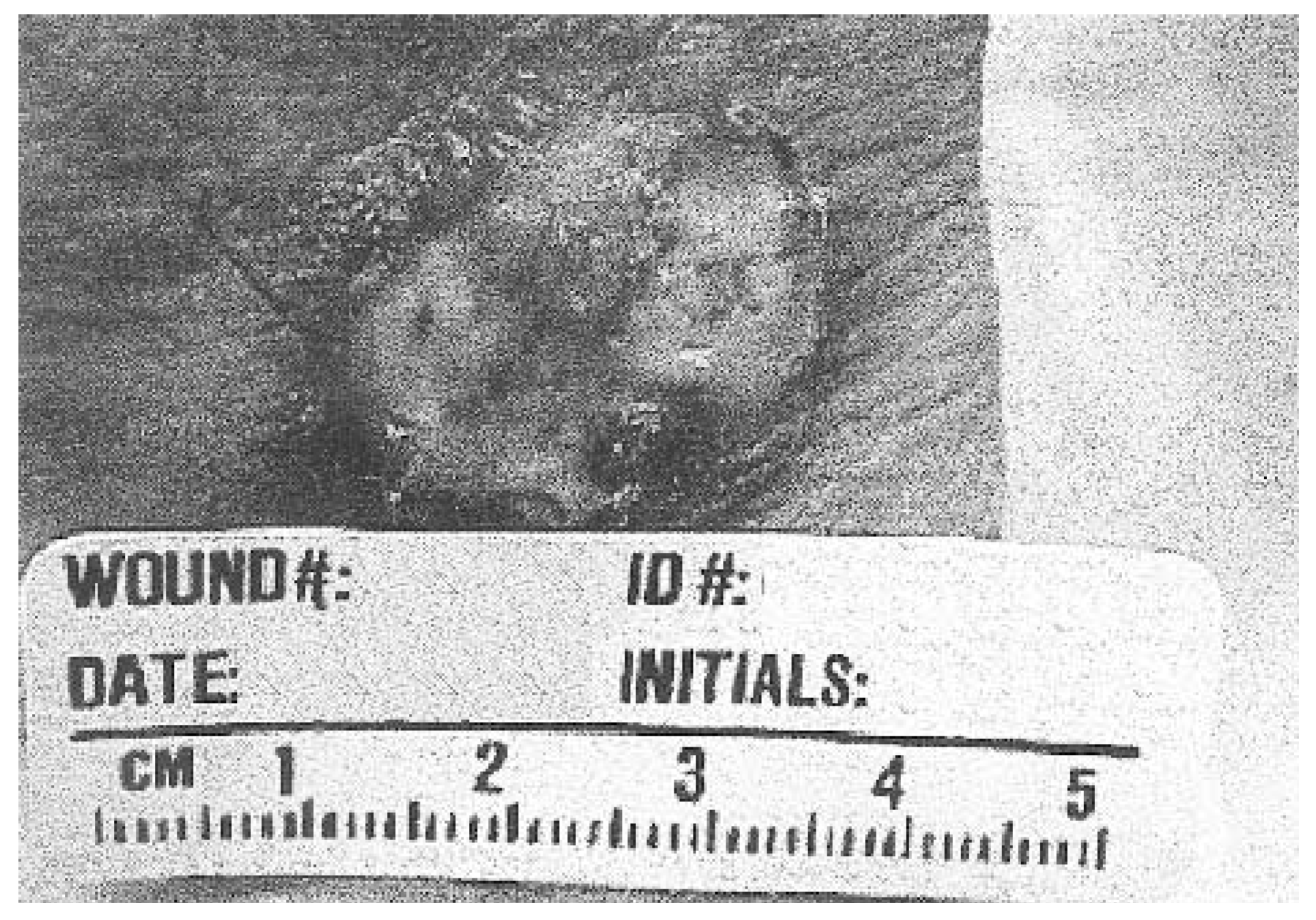
A 32-year-old black man presented to Foot Care As- sociates in Houston, Texas, with the chief complaint of a draining wound measuring approximately 2 × 2 cm posterior to the left lateral malleolus. The patient stated that the wound originated from an ant bite several years previously that had healed by the following year but reopened 8 months later. The patient’s medical history was significant for sickle cell anemia and gallstone surgery. On initial presentation, the wound was assessed, debrided, and dressed with a hydrogel dressing (
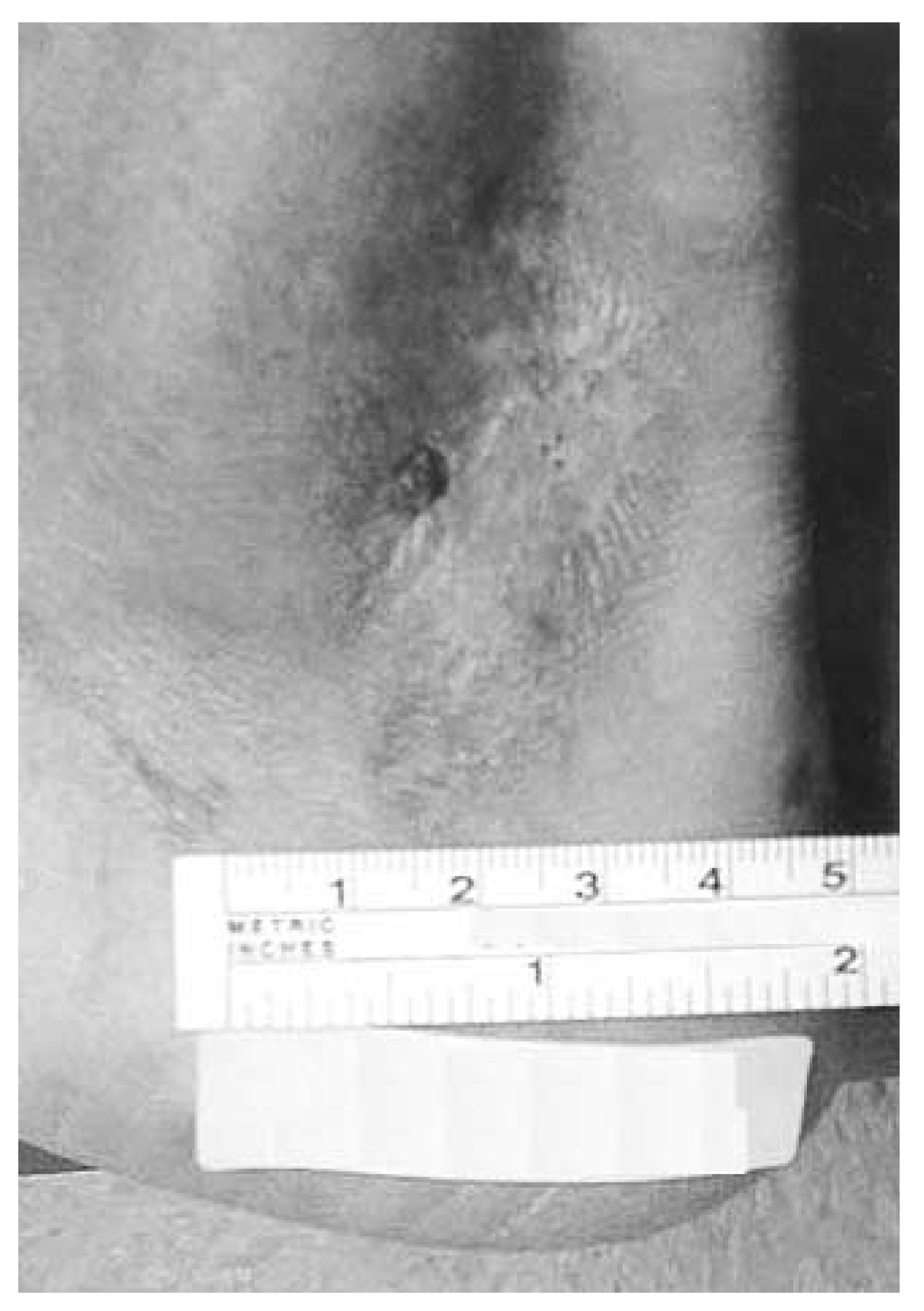
Figure 1). The cultures taken from the wound at the initial visit yielded negative results. Appropriate vascular studies were also ordered, which showed all values to be within normal limits. At week 4 of treatment, the hydrogel dressing was changed to a saline wet-to-dry dressing. At week 5, papain-urea debriding ointment (Accuzyme; Healthpoint, Fort Worth, Texas) was added to the saline wet-to-dry dressings. By week 6, the wound had de- creased in size by 35%. An electromyographic and nerve conduction velocity examination was performed to rule out any nerve entrapment pathology; the results were normal. At week 12, Apligraf was ap- plied to the wound, and by week 18 the wound had healed and the patient was discharged from the clinic. At the 33-month follow-up examination, the wound remained closed (
Figure 2).
Discussion
Apligraf is indicated mainly for use on noninfected chronic ulcerations of more than 1 month’s duration due to venous insufficiency. The US Food and Drug Administration recently approved Apligraf for the treatment of diabetic foot ulcers, and investigations are under way for its use in other areas such as pressure ulcers, skin cancer, and thermal injuries. Wounds in the ankle region may be misdiagnosed as venous stasis ulcers without an adequate and thorough history and physical examination. This report documented the use of Apligraf on a chronic ulceration of the left lateral malleolus in a patient with sickle cell disease. The wound progressed to closure 6 weeks after Apligraf application with no complications. Apligraf should be considered a viable and safe alternative treatment option for patients with chronic wounds related to sickle cell disease.