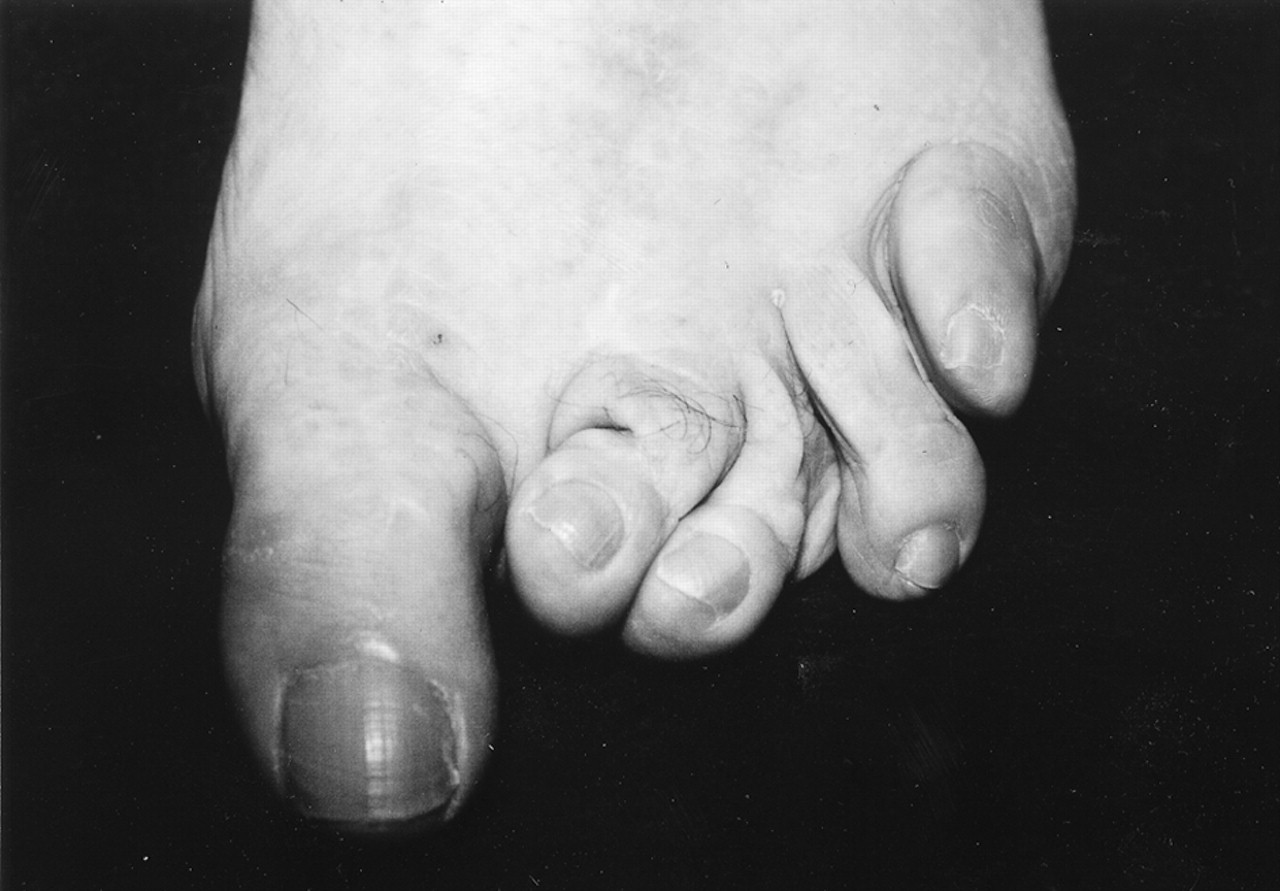
Flail toe is a condition in which one or more toes lack stability and structural integrity. The etiology of flail toe has been described as either excessive bone resection or overlengthening of the extensors and flexors of the toe (
Fig. 1). [
1] During aggressive resection arthroplasty of the proximal interphalangeal joint, a lesser toe may become deformed, contracted, or flail because of the loss of osseous structural integrity and unopposed soft-tissue contracture. The patient with a flail toe may present with burning pain, irritation caused by shoes or stockings, instability with lack of toe purchase, metatarsalgia, and cosmetic concerns.
The flail toe syndrome should be differentiated from the floating toe syndrome or deformity. McGlamry [
2] defined the floating toe syndrome in 1982 as a condition in which one or more toes fail to purchase the weightbearing surface in stance or walking. The floating toe may be structurally intact, with the deformity being positional. Possible causes of floating toe include congenitally short metatarsals, iatrogenically short or excessively elevated metatarsals, disruption of the flexor plate, and loss of internal osseous cubic content of the lesser toes. [
3] The syndrome is related to functional instability in the flexor mechanism caused by the inability to load the plantar fascia during weightbearing.
Specific procedures can be used to correct the flail toe syndrome, with the primary goal being to restore the length and stability of the toe. To accomplish this, the primary alternatives are implant arthroplasty, [
4] syndactylization to an adjacent toe, [
5,
6] and graft-enhanced arthrodesis. [
7] Amputation may be considered in patients with persistent pain [
8] or in those who are not good candidates for these types of procedures.
Implant arthroplasty may be difficult to perform in the flail toe because of a lack of bone substance, inadequate soft-tissue coverage, or inability of the implant to provide adequate stability. Some authors [
5,
6,
8-
10] have described syndactylization techniques to treat digital deformities, including flail toe. Syndactylization may provide some stability by joining the flail toe to an adjacent toe. However, it does not provide complete stability, requires an adjacent stable toe, and does not address the cosmetic concerns of the patient.
Koshima et al [
11] described a technique for an osteocutaneous flap of the big toe for repair of osteomyelitis of the second toe. The technique relies on a hemipulp flap with the lateral one-third of the distal phalanx to create simultaneous skin and bone reconstruction. The flap relies on the lateral plantar neurovascular bundle. It is raised from distal to proximal and then brought to the prepared site on the second toe as an island flap. The bone is fixed with a pin. The primary advantage of this technique is the transfer of the blood supply with the bone and soft tissues. The primary disadvantage is the alteration of a normal hallux to treat the second toe. The procedure is also limited to the second toe because of the limited movement of the osteocutaneous island flap.
In 1992, Mahan [
1] described a technique for creating stability using an autogenous calcaneal graft. The technique consists of the following: 1) debridement of digital bone ends back to bleeding flush surfaces, 2) determination of the graft size needed to restore the desired length and stability, 3) procurement of the bone graft from the ipsilateral superior body of the calcaneus, 4) interposition of the graft between digital bone ends, and 5) fixation with a retrograde Kirschner wire.
Despite the extensive literature available on the different types of bone grafts, [
12,
13] it is evident that the best graft for digital graft fusion is autogenous bone because of its superior biologic and immunologic properties. [
14] The recipient site, which often has had multiple surgeries, may have questionable vascular perfusion, tenuous soft-tissue coverage, and a narrow graft–host junction. An autogenous source will incorporate better at the digital graft fusion site because of the presence of viable osteogenic cells. [
15,
16] The disadvantages of autogenous grafts are the additional surgical site, a weakened donor site, and a longer postoperative recovery period.
The digital bone graft arthrodesis technique has certain advantages over other options. It may enhance the functional capacity of the digit through stabilization, allow increased length to establish an effective digital parabola, and improve cosmesis. Possible complications of bone graft toe lengthening are graft failure and compromised circulation to the digit caused by overlengthening of the toe or poor vascularity and soft-tissue coverage in feet that have undergone multiple operations.
No large published series of outcomes after interpositional arthrodesis of the lesser toes to correct the flail toe syndrome are available, to the authors’ knowledge. In 1980, Mladick [
17] described Z-plasty for skin lengthening, extensor tendon resection, and a small phalanx-shaped iliac bone graft for the correction of a flail toe caused by excessive resection of bone. The graft was procured from the patient’s hip, aligned in the toe, and fixated with a Kirschner wire. The amount of defect and the exact size of the graft were not described. The patient was pleased with the results and eventually had the same procedure done on the other foot. No complications were reported. Some authors [
18-
20] have reported complications associated with iliac crest donor sites, including nerve entrapment, fractures, infection, hematoma, bowel perforation, and residual pain.
More recently, Mahan [
1] described flail toes resulting from multiple arthroplasty procedures. He described a patient who underwent extensor tendon lengthening, soft-tissue release, bone remodeling, and a corticocancellous graft procured from the posterosuperior aspect of the ipsilateral calcaneus. The graft was remodeled to a length of 18 mm and a width of 5 mm. A 0.045 Kirschner wire was used to stabilize the digit. No complications were reported, and the graft healed successfully.
The purpose of this article is to retrospectively review the outcomes of 22 reconstructive bone graft stabilization procedures for the correction of flail toe syndrome secondary to aggressive resection arthroplasty of the proximal interphalangeal joint of the lesser toes.
Materials and Methods
Between January 1, 1992, and December 31, 1997, 22 toes of 13 patients with flail toe were operated on at the Foot and Ankle Institute of the Temple University School of Podiatric Medicine, Philadelphia, Pennsylvania. Each medical record was reviewed to identify the following: age at presentation, sex, etiology, chief complaint, clinical findings, graft source and size, donor site placement, previous surgery, nonweightbearing time, postoperative complications, and radiographic and functional outcomes. To be included in the study, a patient had to have a complete medical record and meet the radiographic criteria described below.
Retrospective radiographic analysis was conducted for each patient and consisted of a complete set of weightbearing anteroposterior, oblique, and lateral foot radiographs in the angle and base of gait. A complete set was considered to be one that included preoperative, postoperative, and follow-up serial films performed approximately every 4 weeks until fusion. Parameters that were evaluated included time to consolidation and stability of the proximal and distal graft–host junction. Consolidation was determined to have occurred when viable bone was seen as trabecular union at each graft–host junction on the radiographs. Follow-up time was a minimum of 4 months.
Postoperative care included cast immobilization of the involved extremity for 7 to 15 weeks, depending on the other surgical procedures performed simultaneously. This immobilization was accomplished with a short-leg fiberglass cast. Kirschner wire removal was at a mean of 9.3 weeks (range, 5 to 14 weeks). After Kirschner wire removal, a new short-leg cast was applied and the patient was allowed partial weightbearing for an additional 2 weeks. On final removal of the cast, all patients were instructed to wear a surgical shoe for 2 weeks and then a sneaker as tolerated.
Results
All 13 patients were women, with a mean age of 49.6 years (range, 22 to 68 years). The presenting complaints included pain and irritation with shoes in all patients, with cosmetic issues being a secondary concern in most patients. Mean follow-up time was 27 months (range, 4 to 48 months). A successful result was based on reduction of pain, correction of toe length, correction of deformity, improvement in toe stability, and consolidation of the graft with at least one graft–host junction union at either the proximal or distal site. Using this definition, 82% of procedures (n = 18) were successful initially and 91% (n = 20) were successful after one additional surgery.
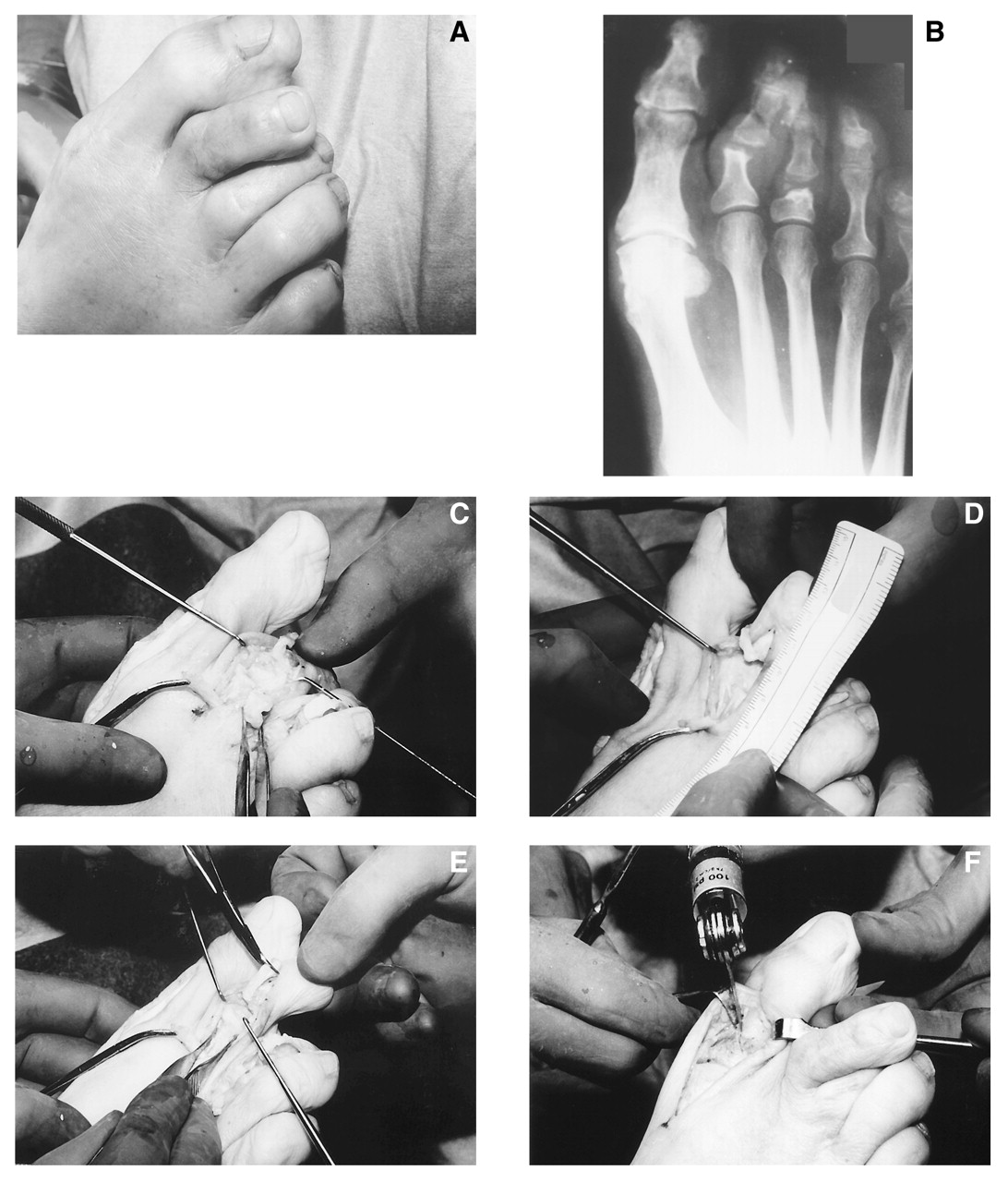
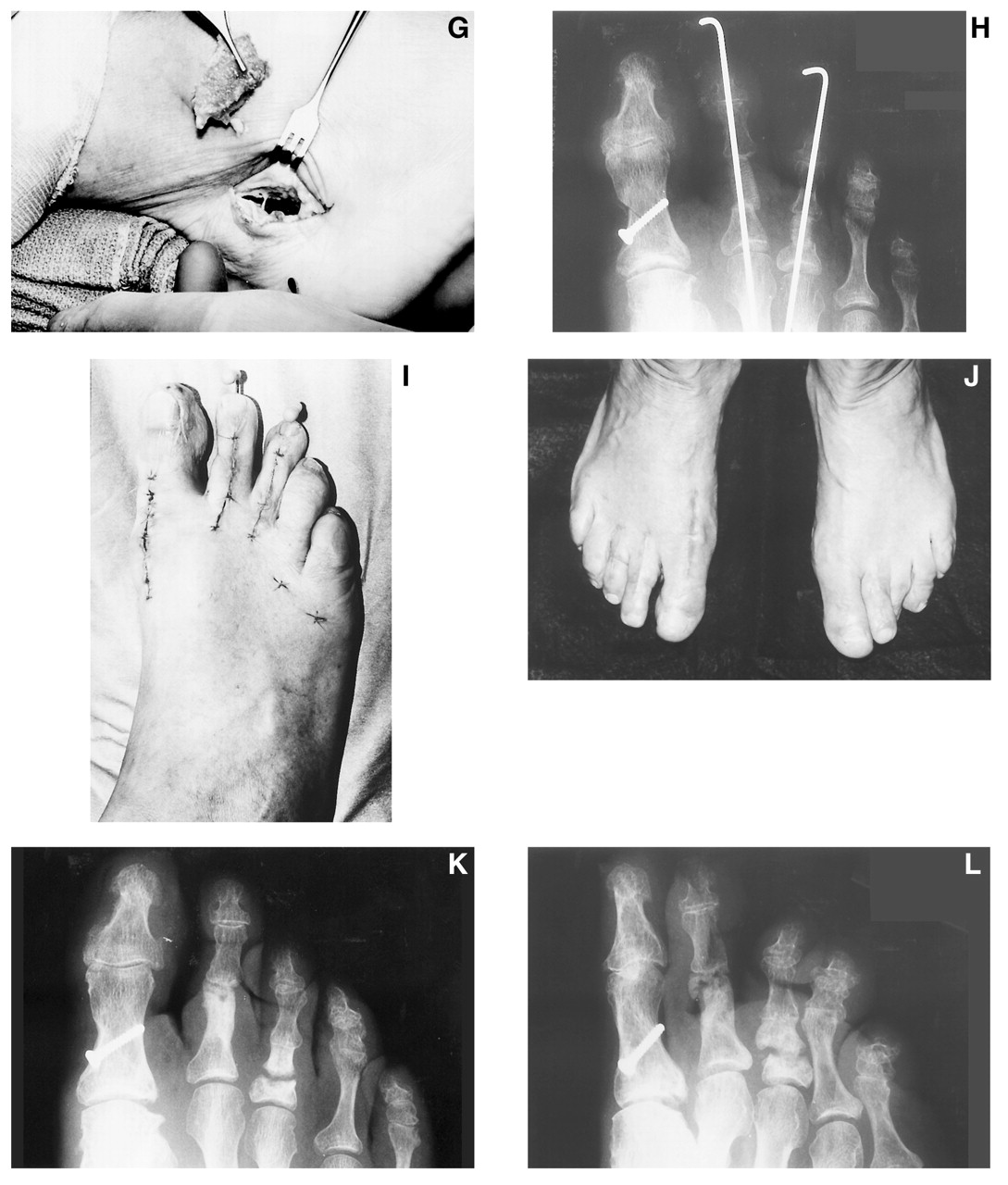
Eighteen procedures were performed using corticocancellous grafts procured from the ipsilateral calcaneus, one from the medial aspect of the first metatarsal head, one from the head of the fifth metatarsal, one from the third metatarsal neck, and one from the fourth metatarsal neck. Graft size ranged from 4 × 4 mm to 20 × 10 mm. When procuring the corticocancellous graft from the calcaneus, the approach was through a lateral, slightly curved incision, with careful attention to identify anatomical structures, including the short saphenous vein, lateral calcaneal artery, and sural nerve, following the technique described by Mahan. [
21] Each graft was predrilled with a 0.035 Kirschner wire and trimmed to the appropriate size for the defect in the toe. A 0.045 or 0.062 Kirschner wire was then retrograded out through the end of the toe and drilled from distal to proximal through the distal and middle phalanges, through the bone graft, and through the remaining portion of the proximal phalanx into the corresponding metatarsal (
Fig. 2).
Preoperative and postoperative radiographs were reviewed for 22 bone grafts in 13 patients. After a thorough review of the radiographs, time to consolidation at the proximal and distal graft–host junctions was evaluated. The mean consolidation time at the proximal graft–host junction was 15.9 weeks (range, 8.5 to 37.0 weeks), at the distal graft–host junction was 14.5 weeks (range, 8.5 to 24.0 weeks), and at both the proximal and distal graft–host junctions was 15.56 weeks. The radiographs of one patient demonstrate union at the proximal and distal sites; however, the exact time of consolidation is unknown.
At the proximal graft–host junction, 2 (9%) of 22 grafts had a nonunion, and 1 (5%) of 22 grafts resorbed. At the distal graft–host junction, 1 (5%) of 22 grafts had a nonunion, and 1 (5%) of 22 grafts resorbed. Thus three nonunions (two proximal and one distal) (7%) occurred at the 44 graft–host sites, and one graft (5%) showed complete resorption.
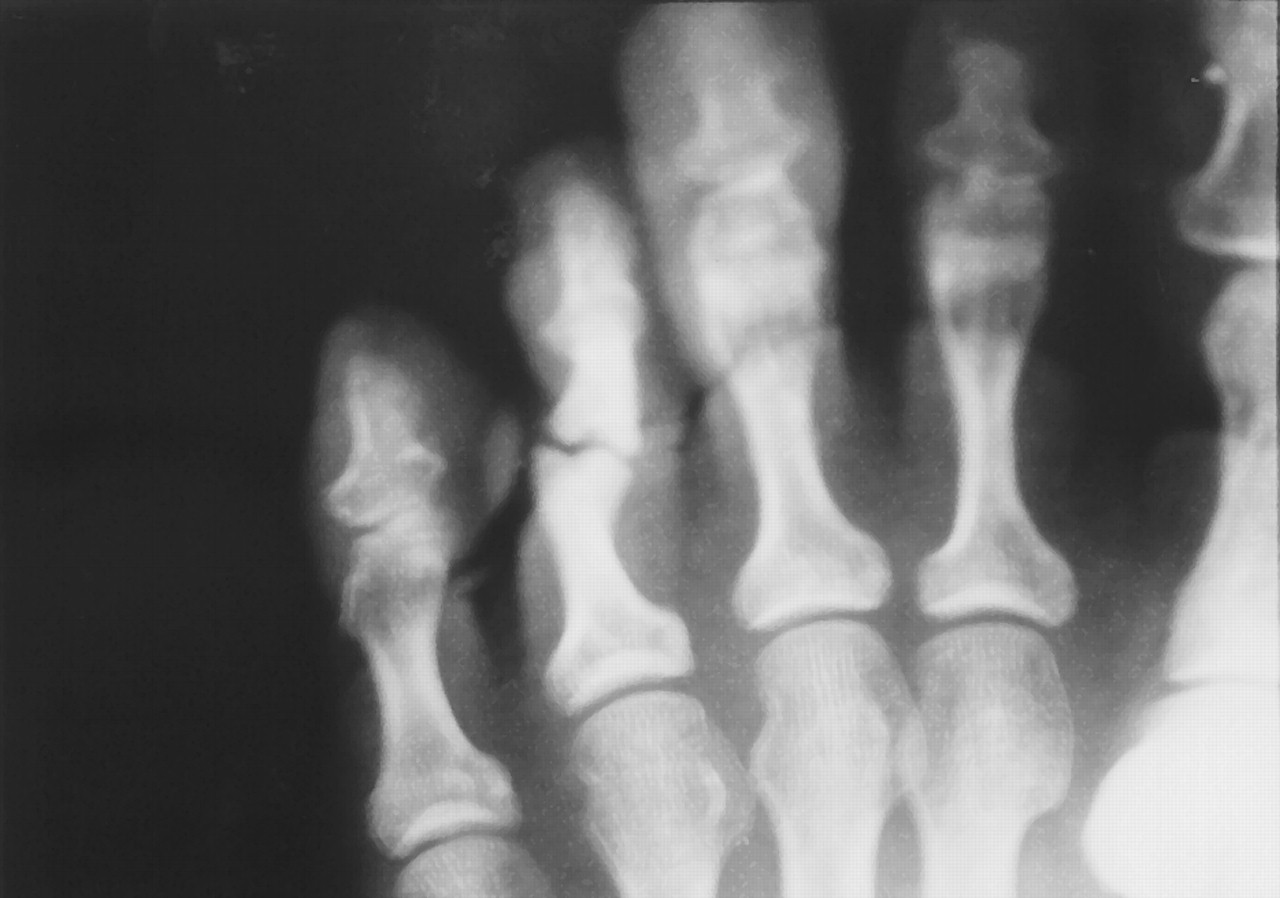
Objective review of the donor sites from which the bone grafts were harvested revealed no complications such as hematomas, residual pain, nerve injuries, stress fractures, infections, or wound problems. Digital complications included the following: 1) one patient healed in abduction and subsequently underwent arthroplasty to correct the toe; 2) three graft–host junctions resulted in nonunion: a) one patient had a nonunion of the distal graft–host junction; however, she was completely asymptomatic and she was pleased with the stability and cosmetic appearance of the toe; b) one patient had a symptomatic nonunion of the proximal graft–host junction, which was surgically corrected with revisional arthrodesis and Kirschner wire fixation; and c) one patient had a nonunion and currently has a recurrent corn on the lateral aspect of her fourth toe; and 3) one graft completely resorbed (
Fig. 3). Objectively, the remaining repaired toes were stable, with improved digital parabola. Flexor power was also restored, as measured by clinical examination or the paper pullout test. Eighteen procedures (82%) were initially successful, and after an additional surgery, two more procedures were successful, for a final success rate of 91%.
Discussion
The major goal of the reconstructive bone graft stabilization procedure is to restore stability, digital length parabola, and function to the toe. This reconstructive procedure may be difficult and complex, often because the patient has already undergone one or more failed arthroplasty procedures. The patient may have inadequate skin coverage and poor bone quality. The key to success is careful preoperative planning, careful patient selection, application of a systematic surgical sequence, and strict postoperative care.
Although this article does not compare the use of autogenous versus allogeneic bone grafts for this procedure, the authors believe that autogenous bone is the better choice. The more length that needs to be added to the toe, the greater the length–width ratio of the graft. The greater the length–width ratio of the graft, the longer the healing time. Under these circumstances, the autogenous graft is the better choice.
The technique requires good bleeding bone surfaces for the graft to buttress, which may require additional debridement (shortening) of the in situ bone if the bone is sclerotic or covered with fibrous scar tissue. The length of the required graft, therefore, usually exceeds the size of the defect visible on preoperative radiographs.
The potential complication of nonunion deserves special attention. As with any bone grafting procedure involving a previous joint site, there are two potential sites for nonunion. This may increase the overall potential for nonunion. Nonetheless, as with primary digital arthrodesis procedures, the stability of the toe is more important than full radiologic union. As long as the graft does not significantly resorb, union of one of the two graft–host junctions is compatible with a good result.
Limitations of this study are that it is retrospective and that the patient group was small. Other possible limitations include short follow-up time and lack of a structured patient questionnaire to measure subjective results. Also, although flexor power was clearly restored, it was not quantifiably measured before and after surgery.
Conclusion
Flail toe deformities secondary to previous failed arthroplasty procedures present a challenging problem. The technique presented here is an effective method for correcting flail toes and yields good functional and cosmetic results. Despite the prolonged postoperative course, this procedure can be useful for salvage of the symptomatic flail toe.