Diagnosis
The diagnosis of neurogenic positional pedal neuritis is usually made by recognition of symptoms consistent with the diagnosis combined with magnetic resonance imaging (MRI) or computed tomography (CT) showing nerve compression in the area corresponding to extremity symptoms. An article explaining many of the conditions that could result in spinal nerve compression has been previously published. [
5] An MR image with contrast is ordered if the patient has had previous surgery in the involved area, to identify potential scarring. A CT scan is ordered for patients with a pacemaker or other metallic device precluding MRI. Elimination of all pedal symptoms with an epidural injection is believed to confirm the diagnosis. Partial improvement of symptoms with epidural injection may be seen with a concomitant lower-extremity condition (including diabetic neuropathy) that was perceived as more painful in the presence of stenosis, indicating a synergistic or hyperalgesic condition. Failure to improve with an accurate epidural injection does not negate the diagnosis, as some patients have such a severe pathologic condition that only surgical decompression may relieve symptoms.
The diagnosis is also supported by identifying the listed symptoms, with elimination of the painful symptom by behavioral changes such as sleeping in a recliner, walking with a walker, or walking with a negative-heel shoe causing lumbosacral flexion (often used in patients unable to undergo epidural injections and who chose not to undergo MRI or CT).
The MRI report does not always exactly correspond to the expected level of compression because of anatomical inconsistency and variations in myotomal and dermatomal patterns that can result in symptoms being present in nonclassic patterns. It has been documented that eccentric compression can cause contralateral and ipsilateral symptoms. [
7] Proximal stenosis can affect and therefore cause symptoms involving distal nerves. [
8] As a result, it is strongly recommended that anatomical findings and symptoms be discussed in detail with an expert before ruling out spinal compression as the etiology if the clinical picture is strongly suggestive of it.
Clinical examination of the foot and leg in patients with spinal stenosis may or may not reveal a presentation consistent with peripheral neuropathy. Patients may have normal, diminished, or absent sensation to light touch, temperature, or vibratory stimulus [
3] or have symptoms that follow the course of one or many nerve roots. [
3,
9] A recent report [
10] indicated that 81% of patients with spinal stenosis studied had absent or decreased neurosensory responses (pinprick, vibration, or tendon reflexes).
Many patients with spinal stenosis cared for in the author’s practice have had normal tactile sensitivity identified with Semmes-Weinstein monofilaments. Other patients have diminished or absent sensation to 5.07 or 6.45 Semmes-Weinstein monofilament that may involve a single dermatomal area or, in the case of multiple nerve or nerve root involvement, present as a stocking distribution, as would be seen with diabetic peripheral neuropathy. Patients with spinal stenosis are more likely to have severe absence of protective sensation in the entire foot and at times the ankle and leg, even in cases of recent onset, than patients with diabetic peripheral neuropathy. Asymmetry of loss of protective sensation (medial
versus lateral, right
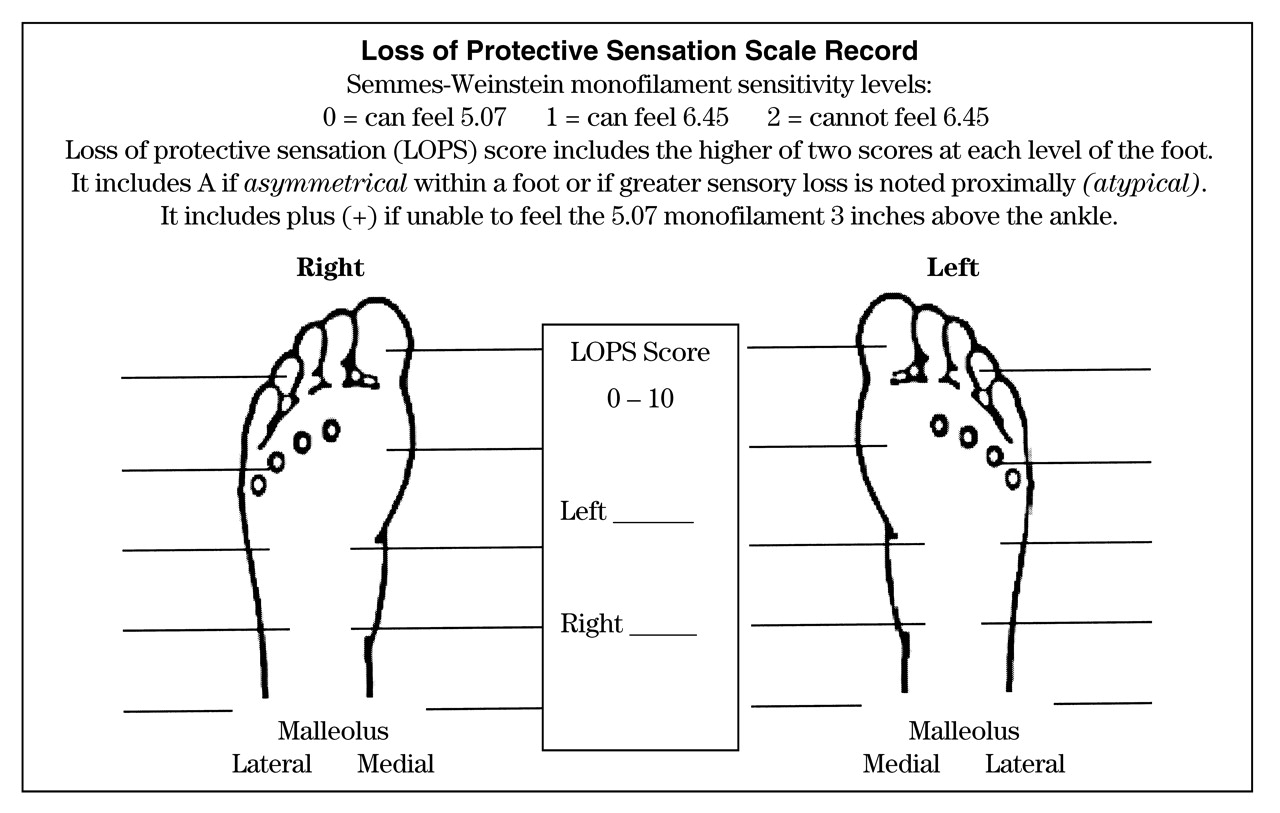
versus left) or an atypical pattern (with greater sensory loss at proximal tested sites than distally) that would not be consistent with a distal symmetrical polyneuropathy has frequently been observed. However, these patterns also have been seen, although much less frequently, in patients with diabetic peripheral neuropathy. The author uses a loss of protective sensation (LOPS) scale to clarify the presentation of hypoesthesia in patients (
Fig. 1).
Some patients with stenosis have a significant discrepancy between the amount of numbness reported (on a linear scale from 0 [normal] to 10 [severe]) and the actual loss of protective sensation measured with Semmes-Weinstein monofilaments, claiming significant loss of sensation when none is documented by Semmes-Weinstein monofilament testing. In addition, some patients have demonstrated a hyperpathic condition involving hyperalgesia (perception of a painful stimulus as more painful than it would usually be perceived as), with elimination of this severe pain either by treating the foot condition (such as trimming a corn or injecting a painful joint) or by successful epidural injection.
Patients with spinal stenosis are reported to have increased sensitivity on palpation of the sciatic nerve in the area of the sciatic notch, and they may have more pain on increased extension (lordosis) of the lumbosacral spine. [
3] The author observes that patients with spinal stenosis are likely to have extremity nerve sensitivity to palpation, not a pattern observed frequently with peripheral neuropathy alone. Just as tenderness on palpation of one or more intermetatarsal spaces can be seen with Morton’s neuroma and the proximal nerve compression syndrome of tarsal tunnel syndrome, so is it that tenderness on palpation of the intermetatarsal nerves, posterior tibial nerve, tibial nerve (medial approach, midcalf), or femoral nerve (medial approach, midthigh), which could be caused by a local nerve irritation or compression, can also be found in the proximal nerve compression syndrome of spinal stenosis. Also, patients with an asymmetrical presentation of pain are more likely to have symptoms caused by nerve compression rather than by neuropathy, although mononeuritis is a recognized pattern in diabetic peripheral neuropathy. [
9] Observations of the extent or symmetry of loss of protective sensation, the symmetry of neuritic symptoms, an augmented perception of pain from other pathologic findings, and patterns of nerve hypersensitivity to pressure are strongly suggestive but not necessarily diagnostic of nerve compression such as spinal stenosis rather than neuropathy being the cause of symptoms.
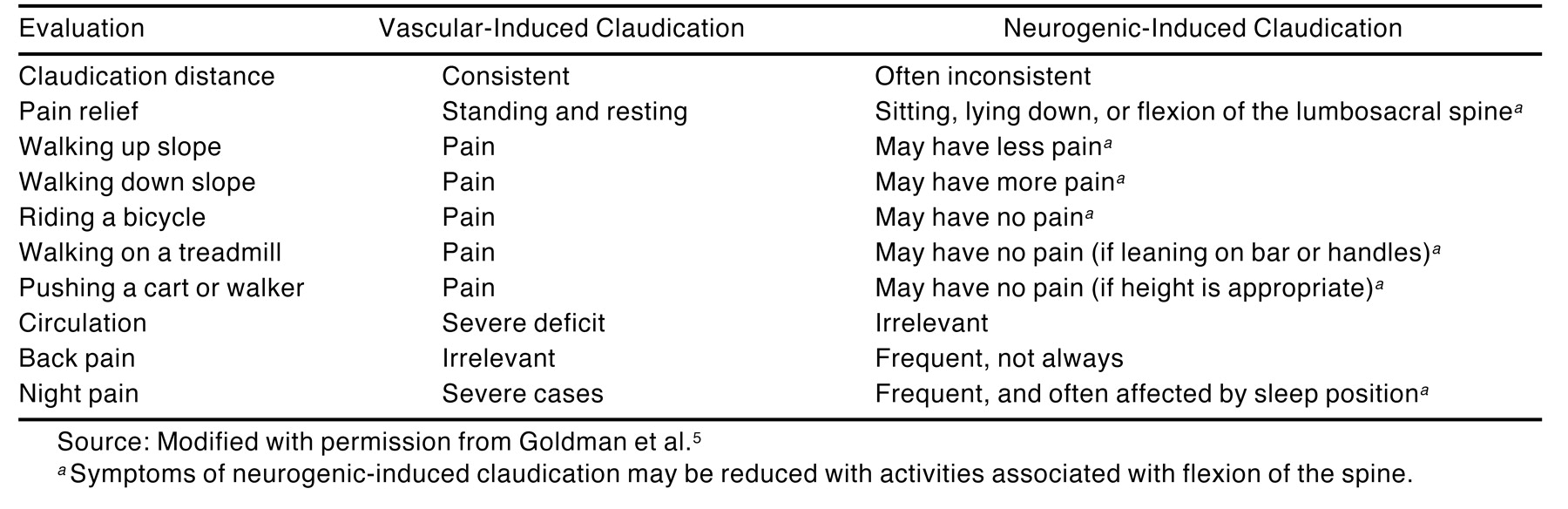
Identification of the symptoms of either neurogenic-induced claudication or neurogenic positional pedal neuritis has been facilitated by the development of a questionnaire for patients with neuropathy that includes the Grocery Cart Test (
Fig. 2) and the symptoms described in
Tables 1 and
2. Patients were asked to relate their symptoms to activity level or body position. A linear pain scale from 0 (no symptoms) to 10 (severe symptoms) was used to subjectively quantify numbness, paresthesia, and pain. Patients obtaining this questionnaire before their initial visit were asked to perform the Grocery Cart Test, and all patients with limitation of walking distance were asked to do so after the initial visit.
The Grocery Cart Test was developed as a screening tool for spinal stenosis. Patients are directed to test their walking distance in a controlled environment, ie, a grocery store. After resting for 5 min in the store to establish a baseline, the patients walk without stopping and note the duration and aisle number in which they notice increased symptoms in the feet or legs. They also note if and when the symptoms are severe enough to make them feel that they must stop walking or sit. The following day, the patients repeat the test while pushing a grocery cart.
The author observed that patients with vascular or nonspinal orthopedic pathologic conditions received inconsistent help from pushing a grocery cart, with most increasing walking time by a few minutes or not at all. Patients with spinal stenosis usually increased walking time and distance dramatically (>75%) and in many cases could walk without any limitation. Patients shorter than approximately 5 feet 2 inches to 5 feet 5 inches with spinal stenosis did not benefit as consistently from using the grocery cart, as they did not necessarily have to bend over to push it. For patients shorter than 5 feet 5 inches who do not benefit from the grocery cart, or for those who did not do the Grocery Cart Test, an adjustable wheeled walker is provided to allow patients to test themselves. The author could not locate a three-wheeled walker (standard minimum height 34 inches) with handles low enough to facilitate lumbosacral flexion for patients shorter than approximately 5 feet 2 inches, so one was cut down 4 inches to accommodate shorter patients.
The author had several patients who initially reported that they could walk much better while pushing a grocery cart but who after doing the test as described reported little improvement, no improvement, or worsening while pushing a cart. Those with arterial-induced claudication seemed to have a false impression of walking better with a cart because the normal pattern of grocery shopping involves periods of stopping. Pushing the cart without stopping, as the test directs, did not give the legs a chance to rest and recover, so there was no significant increase in walking time or distance. A few patients with arteriosclerosis obliterans could not walk as far in this manner, probably because of the increased strain of pushing the cart. It seemed clear from these test results that these patients would not get worthwhile improvement by using the wheeled walker.
The Grocery Cart Test became a successful guide to convince appropriate patients to accept the use of a walker as part of their lifestyle. Identification of neurogenic-induced claudication or neurogenic positional pedal neuritis with relief of symptoms by using a grocery cart enabled many patients to recognize the effect of spinal mechanics on their ability to be active. Many patients who had previously been severely limited in walking distance then became willing to use a wheeled walker, thus increasing their exercise and freedom of movement. Many could then also walk for exercise using a treadmill, especially if an elevation was used that induced leaning forward on the rail, flexing the spine.
Choice of the walker is important. The traditional walker, with two small fixed wheels, is often harder to use on uneven ground. It requires lifting to allow the patient to turn, and thus may require the patient to extend, negating the goal of lumbosacral flexion. This may also exacerbate local symptoms in patients with lumbosacral pathology. The author orders a three- or four-wheeled walker, with large wheels that are freely moveable in the front, allowing the patient to turn without lifting. Patients able to walk a few blocks with this type of wheeled support are usually prescribed a three-wheeled walker. Those whose walking duration is improved but still significantly limited are prescribed a four-wheeled walker with a drop-down seat that allows them to sit wherever necessary.
The author had four patients with diabetes, loss of protective sensation, and neither neurogenic-induced claudication nor neurogenic positional pedal neuritis who did not respond to monochromatic infrared therapy and were subsequently identified by MRI as having moderate or severe spinal stenosis. Although the presence of either neurogenic-induced claudication or neurogenic positional pedal neuritis is strongly suggestive of spinal stenosis, their absence does not preclude spinal stenosis as a diagnosis. In addition, as the constriction causing spinal stenosis can worsen with time, noting a past history of symptoms affected by spinal position should also be a stimulus to consider spinal stenosis as a cause of symptoms.
Shoe heel height has been documented as having an effect on spine position, [
11,
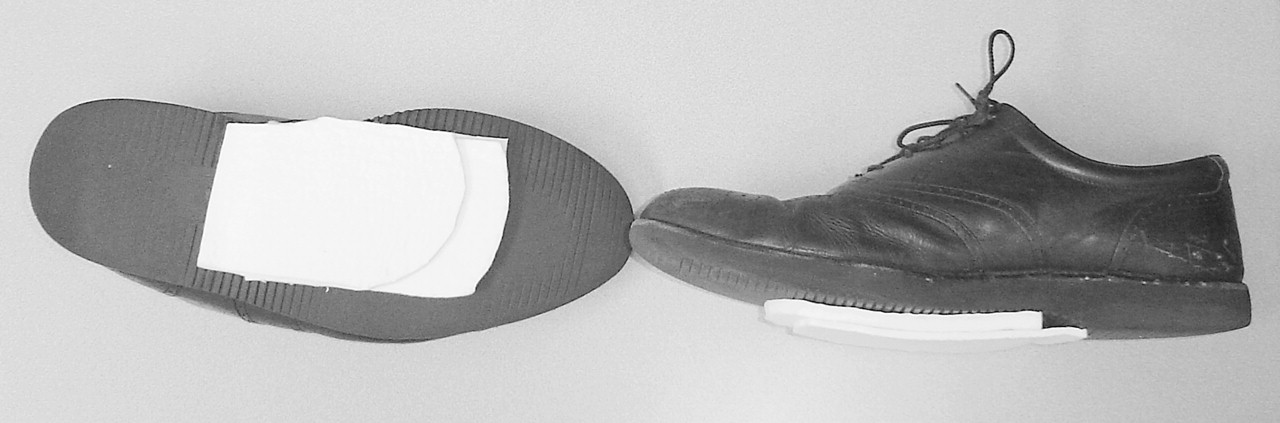
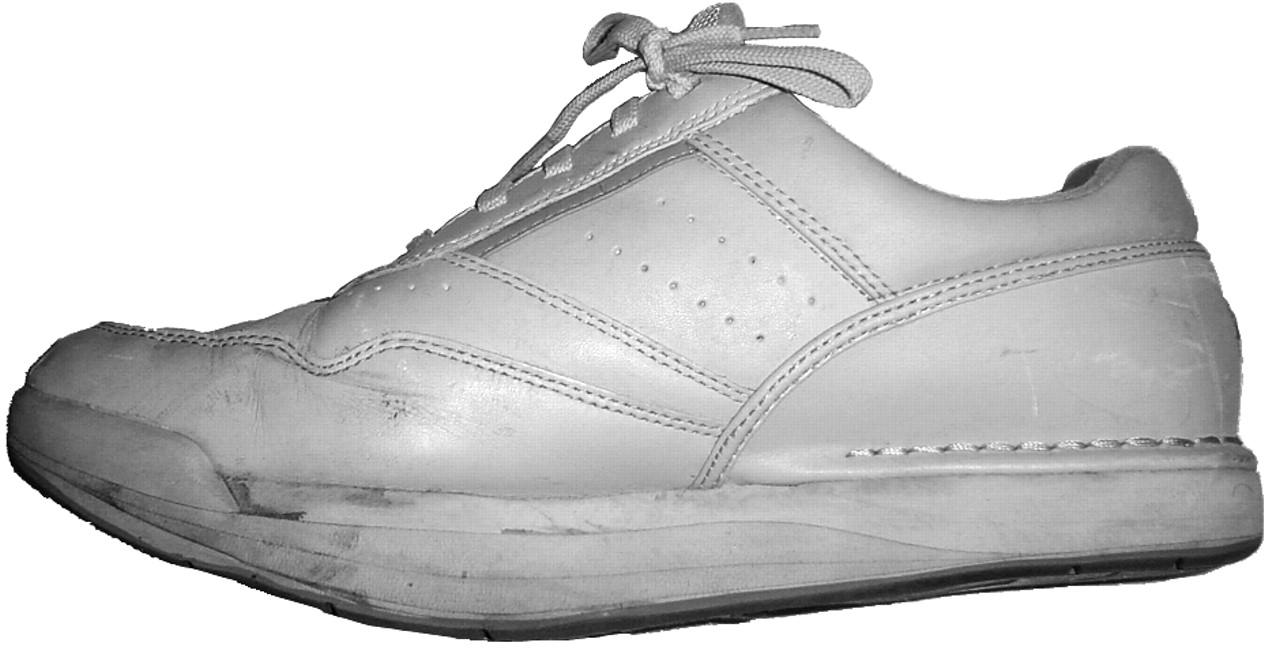
12] which the author postulates could affect nerve compression. On questioning, many patients with neurogenic positional pedal neuritis or neurogenic-induced claudication report being very sensitive to heel height, often feeling more comfortable barefoot or in flat shoes than in high-heeled or even walking shoes, blaming the shoes for being too tight, too heavy, or poorly fitted. (Less frequently, patients with spinal stenosis noted less discomfort in high-heeled shoes.) The author experimented with eliminating the heel height (or creating a negative heel) by adding ¼ to ¾ inch of adhesive felt to the distal two-thirds of a walking shoe or sneaker (the Felt Test) and found that some patients noted immediate improvement in the ability to tolerate standard shoes, stand, or walk (
Fig. 3). Patients are warned that the felt can make the shoes slippery and to exercise caution. The negative heel, which in some patients results in a conscious backward tilt of the legs and pelvis, seems to induce flexion of the lumbosacral spine in order for the patient not to lean or fall backward. (The change in stance can be experienced by standing on a board or magazine.) Patients noting clinical relief with this temporary modification over a few days, including reduced burning or pain or improved ability to stand or walk, had a neutral or ⅛- to ⅜-inch negative-heel modification done by a pedorthist (
Fig. 4). The midfoot elevation above the height of the heel ends with a thruster sole modification at the level of the ball of the foot to facilitate rectus gait. Experimenting with different felt thicknesses during the test and close follow-up after shoe modification are recommended. Stretching exercises should be done first in patients with significant equinus. This condition may account for the preference of some patients for negative-heel earth shoes to standard shoes. About 20% of patients tested in this manner noted significant improvement in standing or walking capability. Further investigation is necessary.
Recognition of the effect of sleeping position on symptoms can suggest spinal involvement. Some patients with neurogenic positional pedal neuritis note exacerbation of symptoms in bed at night. This can confuse the diagnosis because it is reported that peripheral neuropathy symptoms are often worse at night. However, the author finds that with neurogenic positional pedal neuritis, it is the sleeping position that causes the symptoms, not the time of day, and these patients may note significant (up to 100%) relief of nocturnal symptoms by sleeping in a recliner or with a pillow under the knees, causing flexion of the lumbosacral spine. In addition, it is reported that paraspinal venous congestion in the presence of spinal stenosis can cause neuritic symptoms in the feet and legs (Vesper’s curse) while sleeping, and this can be relieved by changes in sleep position, such as sleeping in a more vertical position. [
13] For many years, obtaining relief from foot or leg pain at night by sitting up in bed and dangling the feet was believed to suggest arterial insufficiency. According to these observations, it may be caused by spinal stenosis.
Neurologic testing may be inconclusive in these patients. Changes seen with diabetic peripheral neuropathy [
9] and lumbosacral radiculopathy [
3] are not always clear and may be seen in patients without symptoms. Many patients seen in the author’s practice had diabetic peripheral neuropathy and spinal stenosis and have nerve testing changes suggestive of one or both problems. The author has also seen many patients with neurogenic positional pedal neuritis misdiagnosed as having peripheral neuropathy despite a lack of nerve conduction velocity or electromyographic changes supporting that diagnosis. The author believes that a combination of approaches including a thorough history and physical examination, therapeutic approaches as described previously, and confirmatory spinal images is usually adequate for recognition of this condition. In unclear cases, neurology or physiatry consultation, including nerve testing, may clarify the cause of symptoms.
Differential Diagnosis
Some of the signs and symptoms of neurogenic positional pedal neuritis are similar to those observed in peripheral neuropathy such as diabetic peripheral neuropathy, and the aching feeling can be mistaken for biomechanically induced discomfort. Burning or aching pain of the foot without an apparent mechanical or vascular etiology is often recognized to be neurologic in origin. Patients with such pain, even without significant evidence on nerve testing, are often classified as having neuropathy.
Neurogenic positional pedal neuritis is common and is frequently misdiagnosed, especially in diabetic patients, who the author believes are frequently labeled as having neuropathy without full evaluation for other possible disorders. It is also documented that many more diabetic patients have neurologic changes on nerve conduction studies indicative of neuropathy than have clinical symptoms of neuropathy. [
9] The author has cared for many patients previously diagnosed firmly as having either hypoesthetic or painful diabetic neuropathy that improved dramatically after identification and treatment of spinal stenosis. Some patients had elimination of all neuropathic symptoms, suggesting that diabetic peripheral neuropathy was not clinically present, and many had both neurogenic positional pedal neuritis and diabetic peripheral neuropathy. The author has also cared for many patients misdiagnosed as having painful idiopathic peripheral neuropathy who had classic neurogenic positional pedal neuritis that responded to the approaches described. The author, therefore, believes that patients with painful peripheral neuropathy, with or without diabetes, should be evaluated for neurogenic positional pedal neuritis using the simple techniques described here.
The author has also had several patients who believed the problem was mechanical and who were seeking yet another pair of orthoses. Some patients reported that all shoes were uncomfortable or too heavy, despite the good-quality shoes and orthoses that they had used in the past. Some were diabetic patients who found that none of the shoes or inserts that they had received through the Diabetic Shoe Bill were as comfortable as their flat, inexpensive shoes. The Felt Test and subsequent neutral- or negative-heel modification has allowed several patients to wear the good-quality shoes they could not have otherwise worn. The author, therefore, believes that this pattern—of lack of tolerance for apparently appropriate shoes or inserts—should also stimulate evaluation for neurogenic positional pedal neuritis.
Differential diagnosis also includes common podiatric conditions such as tarsal tunnel syndrome, Morton’s neuroma, plantar fasciitis, arthritis, metatarsalgia, tendinitis, and many other conditions that could cause foot pain. Appropriate evaluation for this condition must also include expert evaluation for these and other causes of foot pain.
The presence of other pathologic findings should not eliminate consideration of neurogenic positional pedal neuritis caused by spinal stenosis. Most of the author’s patients with neurogenic positional pedal neuritis have had mechanical or systemic conditions that led to previous misdiagnosis. Patients with pain out of proportion to the physical presentation, those who do not respond as expected to treatment, and those with an unknown cause of foot pain should be considered for a diagnosis of neurogenic positional pedal neuritis.
Monochromatic infrared therapy [
14] has recently been reported to be helpful in restoring sensation in patients with diabetic peripheral neuropathy. The suggested mechanism of therapy is the induced release of nitric oxide from red blood cells, resulting in increased local circulation, tissue perfusion, and nutrition of the nerve, improving the function of the nerve. The author has used this therapy for 16 months in diabetic patients with classic distal symmetrical polyneuropathy with a high frequency of success in improving tactile sensitivity and reducing the pain and paresthesia associated with this form of neuropathy. This therapy has not proved at all helpful in patients with spinal stenosis or neurogenic positional pedal neuritis in the absence of diabetic peripheral neuropathy, although it has proved helpful in many patients with both diabetic peripheral neuropathy and neurogenic positional pedal neuritis. Failure of monochromatic infrared therapy to provide relief of symptoms of diabetic peripheral neuropathy should be stimulus to investigate the possibility of other diagnoses, with the most likely cause being neurogenic positional pedal neuritis, in the author’s experience. Further research and documentation on this subject is needed.
Clinicians should be aware that competence at reading spinal CT scans and MR images is not uniform. A recent study [
15] concluded that the inconsistency of evaluation of CT scans by spinal surgeons was enough to render it an unreliable test. Thus a positive CT report can confirm the physical findings consistent with the diagnosis, but a negative report does not negate the diagnosis. The author has had several patients whose symptoms were classic but who had negative findings reported on either CT or MRI. Review of the images was done by a musculoskeletal radiologist specializing in spine imaging, who then identified moderate or even severe deformity that had been missed by a general radiologist. If the referring physician is confident of the possibility of neurogenic positional pedal neuritis being the cause of symptoms, it is recommended that an expert either read the images or review tests read as negative.
Case Studies
Case 1
A 75-year-old man presented with chronic aching in his right foot, diagnosed as plantar fasciitis, that had bothered him for many years. Bilateral pes planus was present, and he had had several pairs of custom-made and over-the-counter orthotic devices over the years, all of which were uncomfortable and provided no help. A vague ache and tired feeling when standing or walking was present in the right foot with all shoes, but no discomfort was present when standing or walking barefoot. Podiatric examination showed an absence of pain on palpation or range of motion of the structures of the foot. There was a bilaterally symmetrical moderate pes planus, with no metatarsus adductus or equinus. A low-Dye strap provided minimal improvement. At a subsequent visit, recognizing the possibility of neurogenic positional pedal neuritis, the author added ¼ inch of felt to the front of his shoe to eliminate the effect of the heel. This eliminated all pain when standing and walking. A previously ordered MR image revealed arthritis and a bulging disk combining to cause right-sided L5-S1 foraminal stenosis. The patient began wearing only flat boat shoes, and all foot pain was eliminated. He was referred to a physiatrist for overall management.
Case 2
A 67-year-old man was referred by his endocrinologist for treatment of painful feet diagnosed as diabetic peripheral neuropathy. He had a 5-year history of diabetes mellitus controlled with insulin therapy. Pain was present constantly but was much worse when standing or walking. He could walk only 1 to 2 blocks before sitting to get relief of foot and leg pain. Lying down worsened the foot symptoms. He could walk much better in a grocery store while pushing a cart.
Physical examination showed palpable pulses, warm feet, and normal hair growth. The patient had significant pain on palpation of the posterior tibial, tibial, and femoral nerves. Semmes-Weinstein monofilament testing showed a loss of protective sensation score of 8 bilaterally, with an inability to feel the 6.45 Semmes-Weinstein monofilament in the toes, ball of the foot, and distal arch bilaterally; an inability to feel the 5.07 Semmes-Weinstein monofilament in the proximal arch and malleoli; and the ability to feel the 5.07 Semmes-Weinstein monofilament above the ankle. The initial diagnosis included spinal stenosis and diabetic peripheral neuropathy. Magnetic resonance imaging showed L5-S1 bilateral foraminal stenosis and L4-5 central canal and foraminal stenosis. A medical condition precluded the use of epidural injections.
The patient was treated with 12 monochromatic infrared therapy sessions, and he reported elimination of 80% of his pain. He had good restoration of protective sensation (loss of protective sensation score of 2 bilaterally) and was able to feel the 6.45 Semmes-Weinstein monofilament in the toes and ball of the foot and the 5.07 Semmes-Weinstein monofilament throughout the remainder of the foot. Persistent symptoms included a tired and achy feeling in his feet and legs when standing or walking longer than 5 min. He could not wear his diabetic shoes because they felt too heavy. A ¼-inch lift added to the sole of his diabetic shoes did not help; a ½-inch lift added to the sole of his shoes resulted in elimination of the heavy, tired feeling of his feet and reduced his neurogenic-induced claudication. Professional shoe modification to create a ¼-inch negative heel was done to the previously uncomfortable diabetic shoes, which made them quite comfortable. Two months later, the patient still had no foot pain and had improved his walking distance from 1 to 2 blocks to 5 to 10 blocks.
Case 3
An 80-year-old man presented with a chief complaint of severe pain on the bottom of his feet of 5 years’ duration. Non-insulin-dependent diabetes had been present for 10 years. Mild pain was constantly present, with either standing or walking making it severe within a few minutes. The patient had severe limitation of activity because of the foot pain. He reported being able to walk much better while pushing a grocery cart. He had obtained a monochromatic infrared therapy home unit (Anodyne Therapy System, Medassist, Tampa, Florida) and had used it daily on each foot for 2 months with no improvement. He reported moderate numbness of his feet, but Semmes-Weinstein monofilament testing revealed a loss of protective sensation score of 0 bilaterally, with sensitivity to the 5.07 Semmes-Weinstein monofilament throughout all tested areas in the foot. The initial diagnosis was neurogenic positional pedal neuritis caused by spinal stenosis. A negative-heel shoe modification was tried in the office. An MRI scan demonstrated L4-5 central canal stenosis and L4-5 and L5-S1 foraminal stenosis. The patient returned to the office and reported that the negative heel eliminated about 75% of the burning pain, now involving only the ball of the foot. He performed the Grocery Cart Test (in other shoes) and increased his walking time from 5 min to more than 30 min by pushing a cart. He was advised to use a walker to allow increased activity, to have his shoes professionally modified, and to see a physiatrist for further management.
Case 4
A 72-year-old woman was referred by her internist for evaluation. She had been diagnosed years before as having peripheral neuropathy despite negative nuclear venographic or electromyographic testing. Administration of amitriptyline and gabapentin had been attempted without improvement. Pain was localized to the feet, dorsally more than plantarly, and was constantly present at a low level, but it was much worse when standing or walking for just 1 to 2 min. She could walk much better while pushing a grocery cart. Symptoms were worse in bed at night but were much better when she slept in a recliner. Semmes-Weinstein monofilament testing revealed a loss of protective sensation score of 4, with an inability to feel the 6.45 Semmes-Weinstein monofilament in the toes or ball of the foot but sensitivity to the 5.07 Semmes-Weinstein monofilament in the proximal and distal arch. Pain was present on palpation of the femoral, tibial, and posterior tibial nerves bilaterally and in all intermetatarsal spaces. The initial diagnosis was neurogenic positional pedal neuritis. With the felt shoe modification, she could stand and walk in the office for several minutes with only mild exacerbation of pain. An MRI scan showed L4-5 and L5-S1 stenosis. By using a four-wheeled walker with a seat and the modified shoes, she had moderate improvement in symptoms and the ability to walk. She was referred to a spine surgeon who performed three transforaminal injections under fluoroscopy, which she reported as relieving 80% of residual symptoms. She then had minimal discomfort and could walk extensively with the modified shoe and walker without significant pain. Recurrence developed slowly over 2 months. Spinal decompression surgery was then performed; 6 months after surgery she had good relief of all foot pain and limitation of walking.
Case 5
A 67-year-old woman presented for evaluation of peripheral neuropathy, which she had been diagnosed as having for many years despite negative findings on nuclear venographic and electromyographic testing. She could stand or walk for only 5 to 10 min before burning in her feet and aching in her legs forced her to sit. She also felt a burning pain in her feet at night in bed. She had a history of back pain, with laminectomy performed three times between 1967 and 1984. Her medical history was otherwise noncontributory. Semmes-Weinstein monofilament testing showed a loss of protective sensation score of 2 bilaterally, with loss of sensitivity to the 5.07 Semmes-Weinstein monofilament in the toes and balls of the feet bilaterally and sensitivity to the Semmes-Weinstein monofilament proximally. An MRI scan showed moderate L5-S1 foraminal stenosis. She was given a ⅜-inch felt addition to her sneakers, which resulted in dramatic improvement of symptoms. Professional modification of walking shoes with a ¼-inch negative heel with a thruster sole eliminated almost all symptoms. She could stand and walk for 4 to 6 hours each day before a mild, diffuse burning sensation developed in her feet. The burning sensation at night also resolved. She has refused any other treatment. Eight months after shoe modification she reported occasional burning with extensive walking only.
Case 6
A 78-year-old man presented for treatment of constant neuropathic pain of the dorsal and plantar aspects of both feet, with severe claudication symptoms in the legs with limited walking. He had been diagnosed as having diabetes 2 years earlier, and he had a history of two back surgeries that reduced his back pain but did not relieve his extremity symptoms, which had worsened over the previous 2 years. L4-5 and L5-S1 foraminal stenosis was still present. Epidural injections provided excellent but temporary relief of his foot and leg pain. He had a history of walking much better when pushing a grocery cart, but this was no longer the case, as extremity pain and congestive heart failure limited his activity level severely. He reported numbness as being moderately severe (8 of 10) and pain as severe (10 of 10). Semmes-Weinstein monofilament testing revealed a loss of protective sensation score of 1A on the right and 6A on the left, with asymmetrical loss of sensation, and greater sensory loss proximally in the foot than distally was noted bilaterally. The initial diagnosis was neurogenic positional pedal neuritis with a possible contribution of diabetic peripheral neuropathy to symptoms. Six monochromatic infrared therapy sessions provided no relief of symptoms or improvement of protective sensation of the left foot. A ⅜-inch negative-heel modification provided moderate relief of burning pain, but within 2 days symptoms returned to their initial level, and subsequent attempts at shoe modification did not help. The author loaned him a walker, but he reported that this improved his standing and walking capability by only a few minutes. He was prescribed a four-wheeled walker with a drop-down seat, but he instead chose to get a motorized wheelchair. He was referred for the epidural injections that had previously provided excellent but temporary help, understanding that this could destabilize blood glucose management.