The two-point discrimination test examines both the integrity of cutaneous sensation and its processing by the central nervous system through the recognition of an applied stimulus as a single or a double entity. The reduction of two-point discrimination ability can give an early indication of sensory pathology. However, the two-point discrimination distance—the least distance between two points that can be detected as separate entities—is not constant. It varies according to the skin site tested and the age of the subject. Frequently, clinical tests of two-point discrimination are made using an uncalibrated apparatus, such as hand-held pins or dividers, and yield highly subjective and variable results. The age-related change in two-point discrimination thresholds in plantar skin has not been documented; therefore, this sensory modality was investigated in a population of younger, middle-aged, and older subjects using a calibrated testing device.
The research presented in this article tested the following three hypotheses: 1) the accuracy of two-point discrimination of plantar skin decreases as subject age increases; 2) there is a direct inverse correlation between two-point plantar discrimination accuracy and the age of the subject; and 3) a model can be constructed to predict age-related accuracy of two-point discrimination in plantar skin.
Stereognosis is the faculty of perceiving and understanding the form and nature of objects by the sense of touch. It can be tested by the ability to identify objects when blindfolded, by the ability to identify an unseen shape drawn on the skin, and through tests of two-point discrimination. The latter measures the ability to discern as separate elements simultaneously delivered paired point stimuli. The two-point discrimination test relies on adequate function of the peripheral nervous system and involves a considerable degree of cortical processing in the decision of whether one or two stimuli have been applied to adjacent skin sites [
1]. Accuracy in the performance of this test varies with the age of the subject [
2], the linear distance between the stimuli, and the skin site tested. There is a very wide variation in two-point discrimination distances of normal subjects at different skin sites [
3]. For example, Braille dots (1 mm high and set 2.5 mm apart) are readily detected by the fingertips. In contrast, the two-point discrimination distance for the skin of the back is 42 mm (
Table 1). The reasons for these topographic differences are the high density of cutaneous mechanoreceptors with small receptive fields that are in the skin of the fingertip, compared with the skin of the back; the high proportion of brain tissue that is devoted to sensory input from the fingertip compared with that for other skin sites; and the special neural mechanisms that are devoted to high-resolution discrimination [
3,
7].
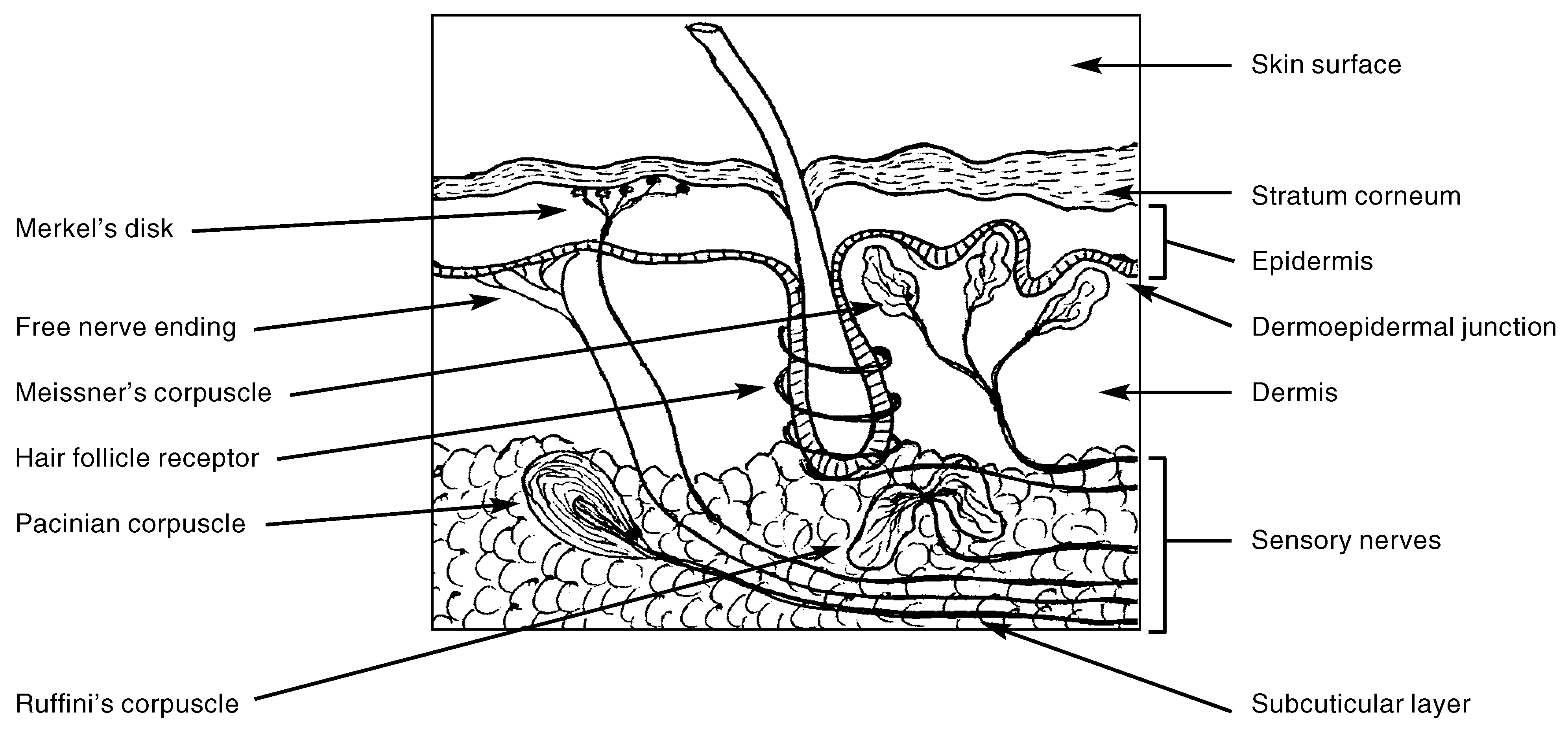
A number of the cutaneous nerve endings devoted to tactile sensation terminate within the dermis at specialized encapsulated structures known as receptors (
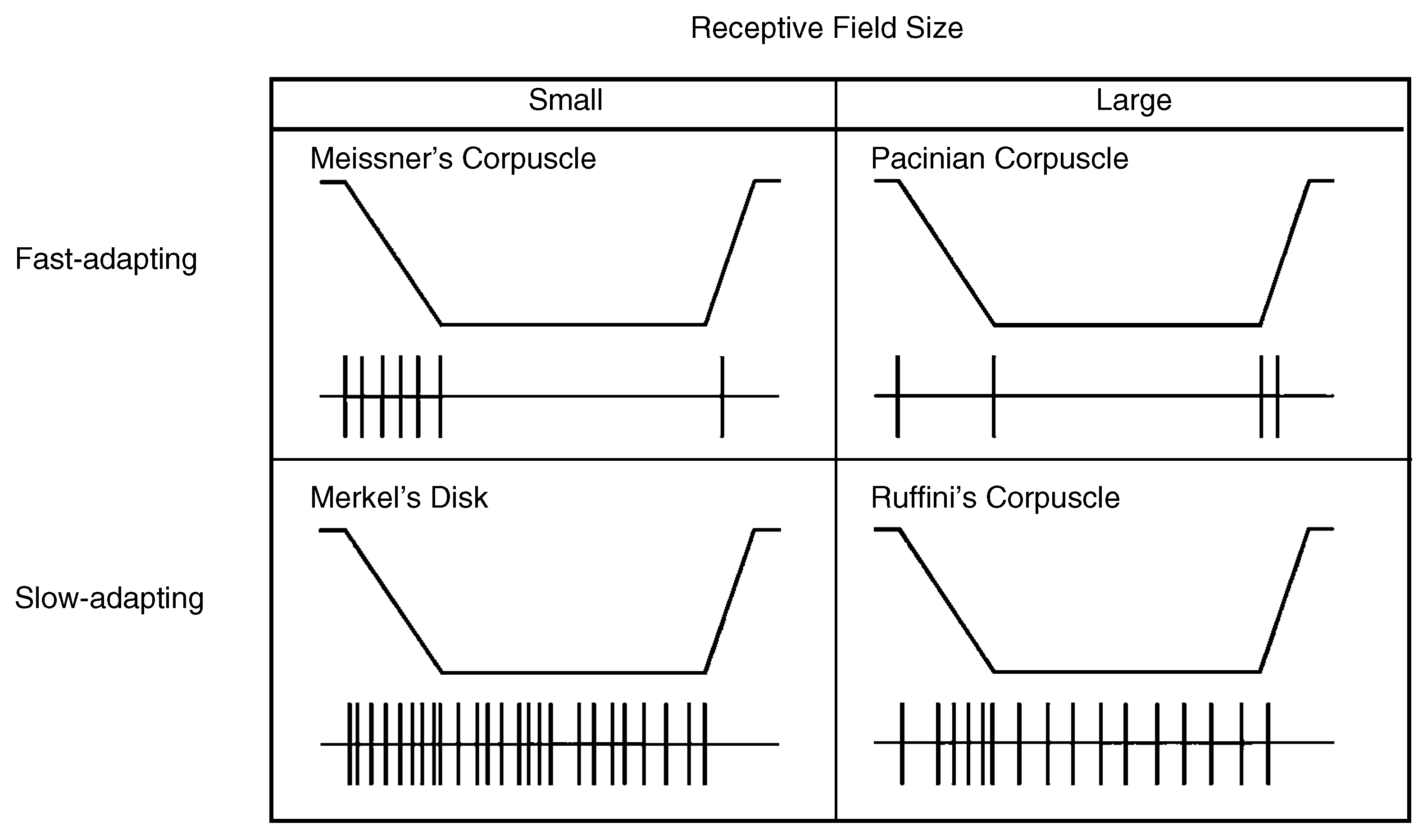
Fig. 1). Some receptors generate a sustained response during a prolonged stimulus and are therefore known as slow-adapting mechanoreceptors. Others, termed fast-adapting (or rapidly adapting) mechanoreceptors, make a rapid response to a stimulus but then stop firing even though the stimulus continues (
Fig. 2) [
8,
9]. The cutaneous mechanoreceptors that are particularly associated with two-point discrimination are Meissner’s corpuscles, which are rapidly adapting mechanoreceptors, and Merkel’s disks, which are slow-adapting mechanoreceptors. Both types of mechanoreceptors have characteristically small receptive fields at the skin surface [
1]. It is the difference in the relative densities of these types of receptors within different skin areas that accounts, in part, for the topographic variation of two-point discrimination [
10].
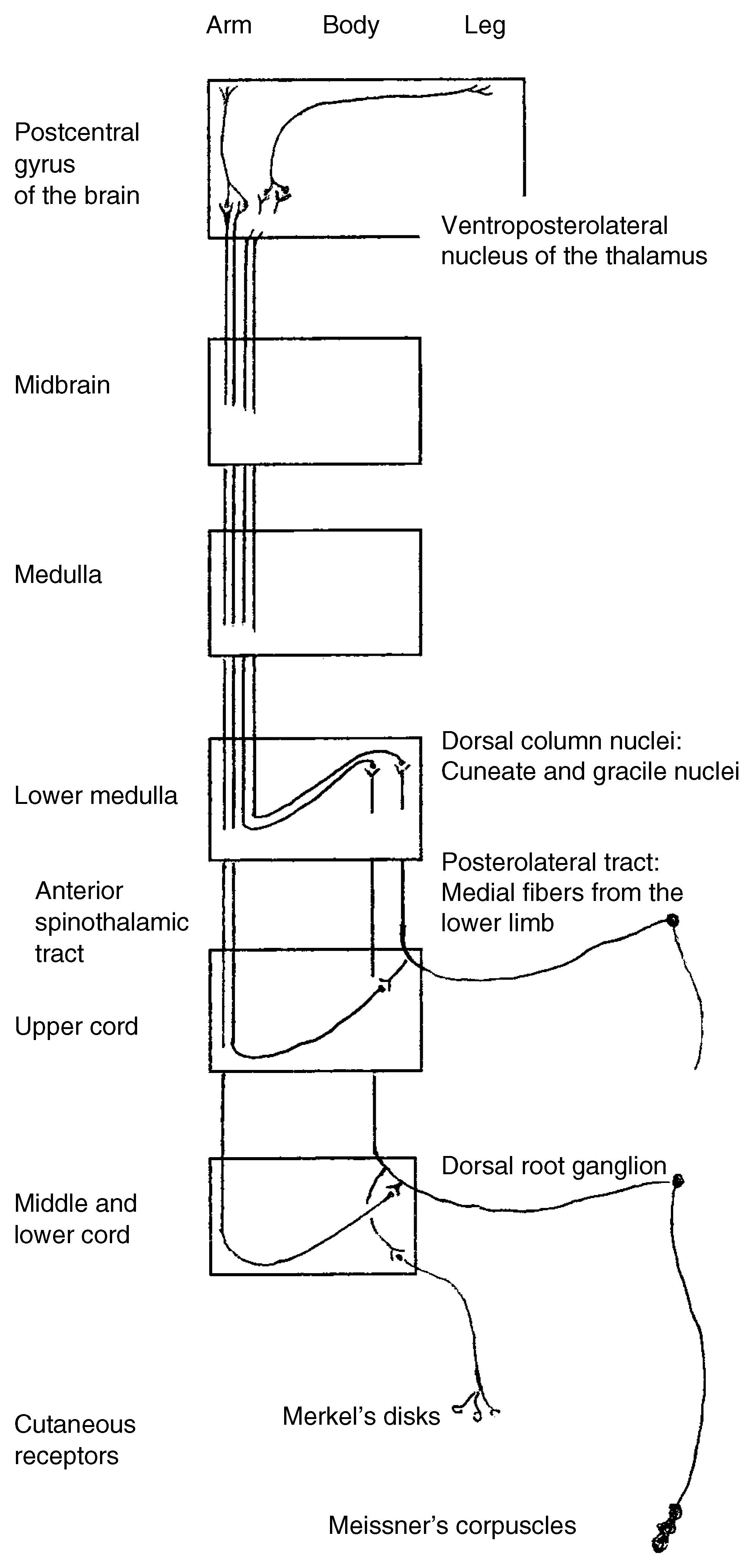
Cutaneous mechanoreceptors are located at the termini of small myelinated sensory nerve fibers [
11], which themselves form part of the mixture of spinal nerves. Afferent impulses pass to the spinal cord via the sensory nerve fibers. Within the spinal cord, impulses are transmitted centrally through the dorsal column–lemniscal pathway via the dorsal column nuclei to the diencephalon (the thalamus and hypothalamus). A number of tactile impulses may also travel centrally via what is traditionally known as the “pain pathway,” in the ventrolateral quadrant of the spinal cord (the spinothalamic tract), to the diencephalon (
Fig. 3) [
12,
13]. From the diencephalon, impulses pass to the somatosensory cortex; the pattern of overlap of the cortical receptive fields of slow- and fast-adapting mechanoreceptors [
14] is crucial to the detection of the stimulus as one or two points [
15]. Thus reduced or impaired stereognosis may be an early sign of reduced cerebral, spinal cord, peripheral nerve, or skin receptor function. A progressive reduction in the perception of two-point discrimination in the skin of the hand is normal with advancing age [
16], and may be due to the progressive change in the morphology of Meissner’s corpuscles [
17].
Sensory assessment in humans is not a simple process. It is inappropriate to assess cutaneous sensation by relying on the subject’s description alone, as that reflects the subject’s higher cognitive and language skills, such as the ability to use the appropriate words to describe the incoming sensation [
18]. Because of the variety of stimuli that can induce touch sensation, tactile tests must be, as far as possible, modality-specific. In addition, many sensory tests fail to acknowledge the contributing variables introduced by the tester through the use of noncalibrated and nonstandardized instruments [
19]. Many testing devices that are routinely used (such as the tip of a ballpoint pen, or a blunt pin) are not modality-specific because of the inherent variability in their method of application [
20]. Skin sensation testing also depends on patient cooperation, and generally assumes patient compliance [
4]. Patients must be constantly attentive and have an unwavering ability to perform to the same standard at multiple tests, although this is known not to be the case [
21,
22,
23]. Results are often not quantified and sensation is recorded simply as being present, impaired, or absent, in response to the delivery of hand-held, noncalibrated stimuli, and the majority of the test devices that are commonly used (such as pinprick and light touch) have not been evaluated scientifically. Clearly, a rigorous, scientific method of two-point discrimination sensation testing is essential. Skin sensation should be determined through a simple and easy-to-perform test using modality-specific, standardized stimuli if the results are to be reliable and quantifiable.
Two-point discrimination and spatial resolution are usually assessed by determining the distance between two points that can be detected as separate entities (
Table 1) [
7]. However, when two-point discrimination is tested with a hand-held pair of dividers, the two-point stimulus force will vary from application to application owing to operator error [
24]. Two-point discrimination is more rigorously defined as the rate of correct identification of standardized two-point stimuli. Using this definition, the abovementioned hypotheses were tested by delivering standardized forces with a calibrated instrument to assess two-point discrimination with a minimum of confounding variables. Also investigated was whether two-point discrimination in plantar skin, assessed by this method, showed a linear, age-related decrease in accuracy, as has been observed for the hand [
16].
Materials and Methods
Instrumentation
At the end of the 19th century, von Frey [
25] determined that the pressure exerted by the tip of a flexible rod relates to the bending force of the rod, and is independent of the manual force used to cause the rod to bend. This principle was adapted to produce the pressure esthesiometer [
26], and has been described for use on plantar skin [
27]. The forces delivered to the skin by the tips of the filaments are expressed as log units—that is, the log
10 of the tip force in milligrams multiplied by 10, which is equal to log millinewtons. Ninety-five percent of normal subjects can detect a force of 2.35 g (4.31 log units) applied to the plantar skin, including the skin of the heel [
27]. The 4.56–log unit filament (tip force equivalent to 3.63 g) was selected for this study, as it is sufficiently rigid to deliver a (nonpainful) point stimulus to the skin [
28].
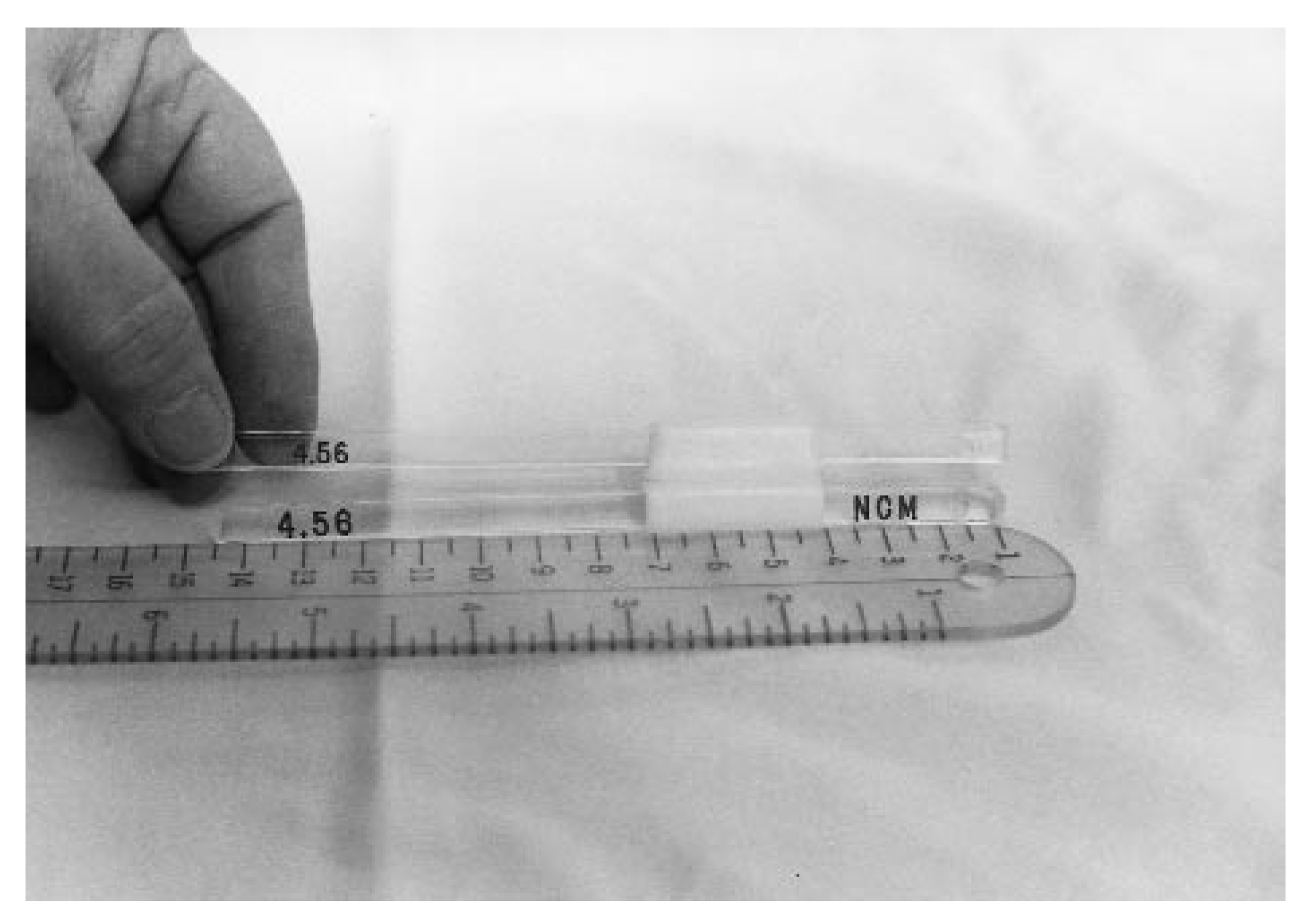
This study assessed the accuracy of stereognosis in plantar skin using a calibrated device to measure two-point discrimination. The device was constructed by securing together the handles of two identical Semmes-Weinstein monofilaments (North Coast Medical, Inc, San Jose, California), each of a force of 4.56 log units, in such a manner that they were held parallel to each other and 2 cm apart (
Fig. 4). This device was used to administer calibrated and repeatable two-point stimuli to the plantar skin of the subject under test conditions and is an adaptation of the technique used by Costas et al. [
29].
Subjects
The subjects who took part in this study were recruited as volunteers through advertisement, and met the following inclusion criteria. Subjects could be of either sex. They had to exhibit no evidence of sensory neuropathy; there had to be no history of use of medication that might have an effect on the nervous system. Their feet had to be normal—that is, with no overt deformation or evidence of skin lesions or epidermal proliferation, no history of injury or surgery, and no signs of vascular compromise or edema. Subjects had to be nonsmokers. If a subject was discovered at the time of recruitment or during testing to have symptoms of sensory neuropathy, the subject would have been referred to his or her physician, with a letter reporting this finding. Subjects were required to attend one test session only.
There were 45 subjects recruited for this study (34 women and 11 men). Three age groups were established within the study population: younger subjects, aged 20 to 29 years (15 subjects); middle-aged subjects, aged 30 to 49 years (17 subjects); and older subjects, aged 50 to 69 years (13 subjects).
Methodology
Subjects were assessed in their homes. All tests took place between 10:00 and 11:00 AM [
23], even though some researchers do not consider two-point discrimination to show time-of-day variation [
30]. To ensure consistency, all sensory assessments were made by the same tester (W.L.) in accordance with the recommendations of Moberg [
31] and Bell [
32].
Tests were performed with the subject reclining on a bed or sofa, with the legs supported on a pillow, so that the blood and nerve supply to the feet was not impeded in any way [
27]. The soles of the feet were accessible to the tester but were obscured from the view of the subject. The skin sites to be tested were not prepared by swabbing with alcohol or any other preoperative antiseptic prior to the two-point discrimination tests, and the tester did not touch the foot before or during the test. This was to ensure that subjects received only the test stimuli rather than an array of potentially confusing stimuli. Noise and interruptions were kept to a minimum during the test, and the assessment was performed in a calm and unhurried manner. The room was draft-free and was maintained at a temperature of 68° to 70° F [
33]. A prepared text was read aloud to each subject before the start of each test session (
Appendix 1). All subject data were recorded on individual data sheets (
Appendix 2).
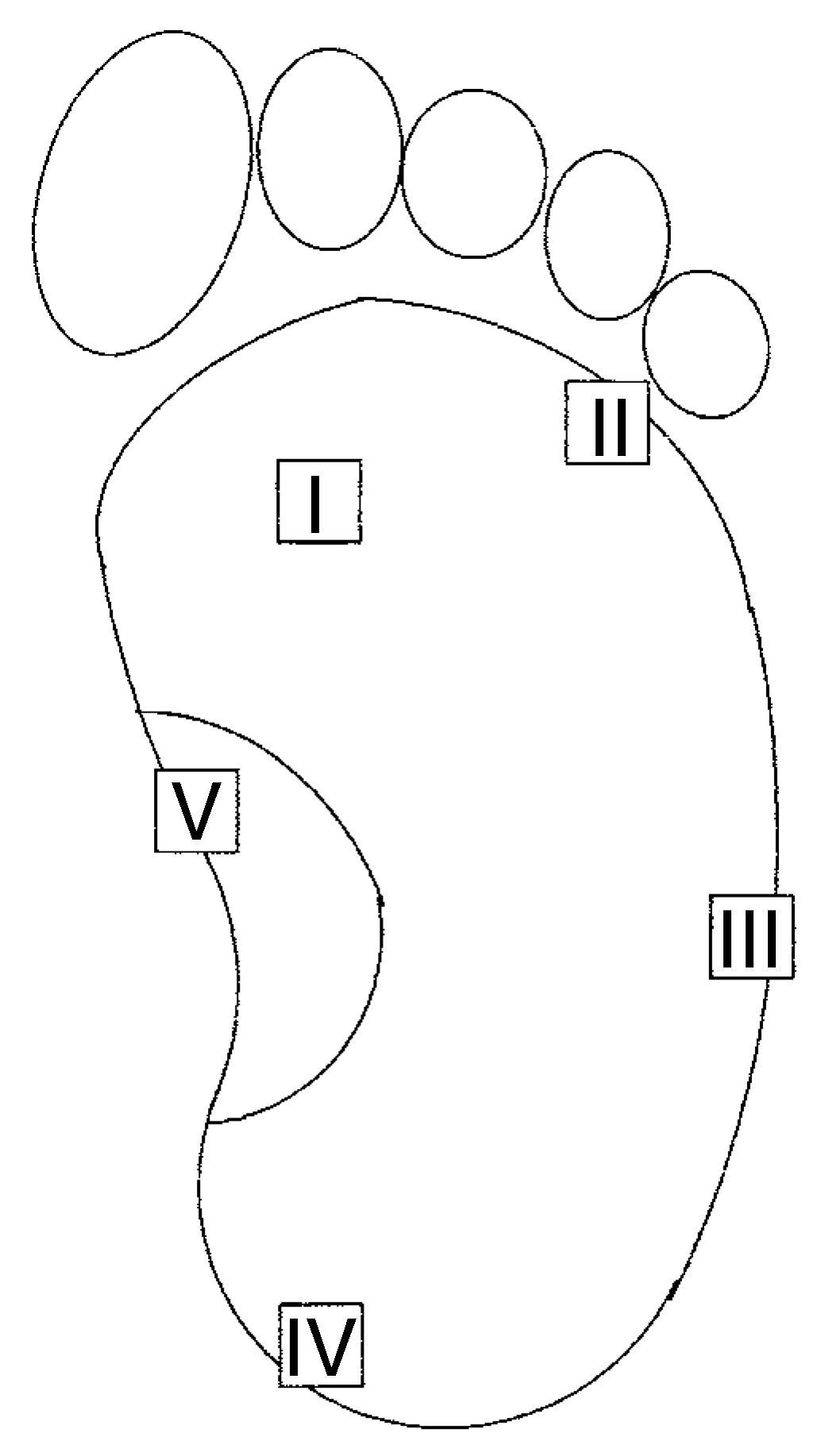
The skin sites selected for assessment reflected the dermatomic pattern of the nerve supply of the plantar skin [
34]. The test sites were located at readily identifiable subcuticular anatomic landmarks within the plantar dermatomes, namely, the skin overlying the second metatarsal head (served by the medial plantar nerve), the plantar webbing between digits 4 and 5 (the lateral plantar nerve), the styloid process (the sural nerve), the medial/posterior/plantar perimeter of the heel pad (the calcaneal branch of the tibial nerve), and the point midway between the first metatarsal head and the navicular eminence (the saphenous nerve) (
Fig. 5). Test sites were assessed in the same order in all subjects.
In each testing session, the device for measuring two-point discrimination was applied once, and held in contact with the skin for a maximum of 5 sec, to each of the five test sites at the plantar skin surface of both feet, giving a total of ten readings per subject per test session. The apparatus was applied so that the tips of the twin filaments were oriented along the longitudinal axis of the foot [
4], and the stimulus was delivered in a manner that ensured that the shafts of the filaments on the device were always perpendicular to the skin, regardless of any natural curvature of the skin surface. Nylon filaments display an increased lateral displacement at their critical buckling stress [
35], and this occurs when the paired handles are depressed by about 1 to 2 mm after the tips of the filaments have made contact with the skin [
11]. The filaments of a correctly applied device will begin to buckle when the lower ends are “pinned” to the skin surface by the effects of the method of application, the force applied to the handle, and the compliance of the skin surface (
Fig. 6) [
35]. To ensure that a consistent paired force is applied to the skin surface, the filaments should buckle in the manner depicted in
Figure 6A [
35].
Before each assessment session, subjects were shown the test device, and its use was demonstrated on each subject’s hand. Subjects were told that either one or both points would be used to stimulate the skin during the test. Each skin area was tested once with the device during the tests of plantar skin sites, in the order indicated. Subjects were alerted to the approach of each stimulus and were asked to state whether one or two points of stimuli were detected. They were not permitted to watch the test, and thus were unaware that both points were applied to all skin sites in all tests. A correct response to the two-point discrimination stimulus was awarded a score of 1, and an incorrect response was awarded a score of 0. A score of 0 was also awarded when the subject was unable to decide whether a one-point or a two-point stimulus had been applied. The total number of correct responses was calculated for each subject to arrive at an individual score. The age-related accuracy rate was then calculated as the mean of the scores achieved by the individuals in each age group.
Results
The two-point discrimination accuracy within the study population by age group is shown in
Table 2.
Chi-square analysis of the age-related scores showed a significant difference in the accuracy of two-point discrimination between younger subjects and middle-aged subjects and between younger subjects and older subjects. Younger subjects made significantly fewer errors than the middle-aged and older subjects (younger versus middle-aged subjects: χ2 = 3.963, P < .05; younger versus older subjects: χ2 = 6.713, P < .01). The hypothesis that the accuracy of two-point sensory discrimination decreases with increasing age was accepted (P < .05).
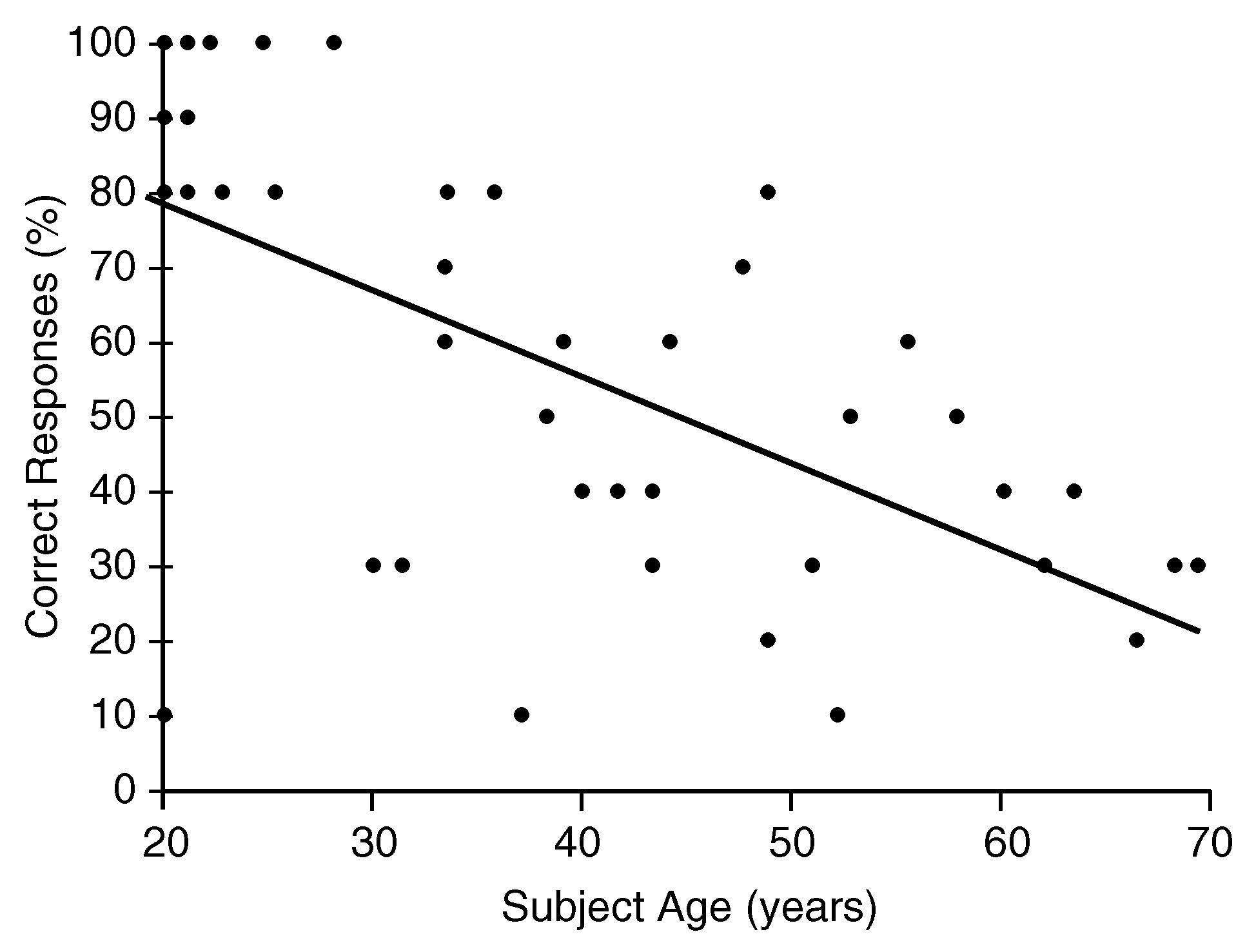
Linear regression analysis applied to the data showed a significant decrease in two-point discrimination accuracy with advancing subject age (F = 32.076,
P < .001) (
Fig. 7). The hypothesis that a negative correlation exists between subject age and two-point discriminative ability for plantar skin was accepted (
P < .001).
The age-related, two-point accuracy rate (
y) could be calculated from the linear regression equation
where α = 10.4077, β = −0.1186, and
x = subject age (
P < .05). The hypothesis that a model for age-related changes in the accuracy of plantar two-point discrimination could be constructed was accepted (
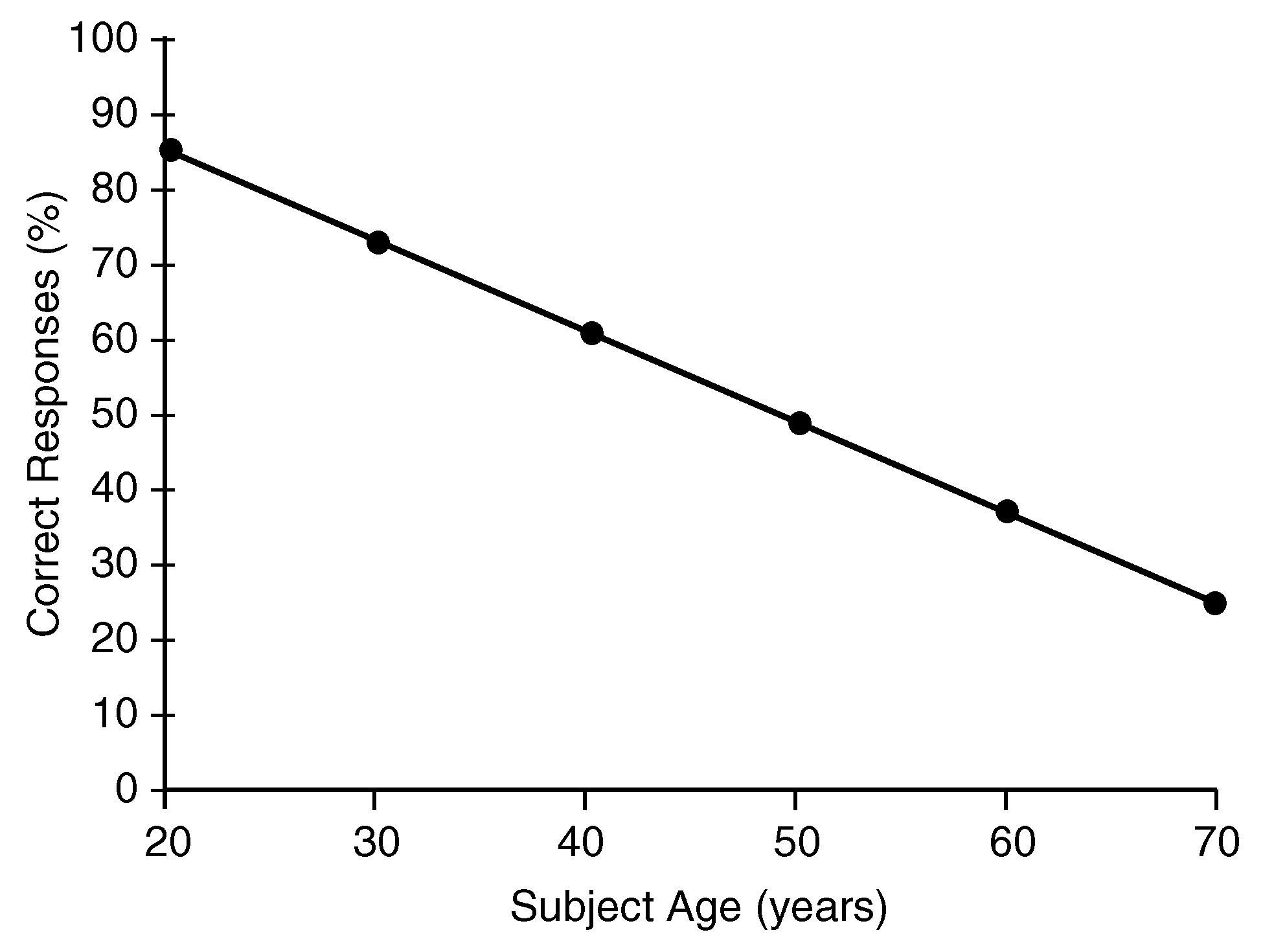
P < .05). Samples of calculated population values are presented as the Lynch-Mooney model of plantar two-point discrimination (
Table 3) or can be extrapolated from the graph shown in
Figure 8.
Discussion
Touch sensation in skin has been the subject of considerable research since the pioneering work of von Frey [
25] 100 years ago. The modern esthesiometer [
26] utilizes von Frey’s principle. It has been widely used to test the function of peripheral nerves [
36] and to establish normal values of touch-pressure sensitivity thresholds at different body sites [
27,
28,
37]. The filaments have the advantage of being simple to use, show 100% sensitivity and 78% specificity [
38], and are reliable throughout the range of normal room temperatures [
33]. Using paired 4.56–log unit filaments to form the two-point device, reliable and repeatable stimuli were delivered to plantar skin in a simple test to give quantified data from which statistical inferences could be drawn as to the accuracy of two-point discrimination in a normal population.
This study showed a direct relationship between the accuracy of two-point discrimination of plantar skin and subject age: as age increases, accuracy declines. This mirrors the age-related changes in two-point discrimination that have been observed in the hand [
16], even though the tests on the foot and the hand were conducted differently. Thus two-point discrimination of plantar skin follows the pattern of general decline in peripheral sensory performance noted with increasing age [
2,
17]. There was no control for variation in the thickness of the plantar skin in the study design. The thickness of the plantar skin was not constant at all test sites, and there is a general decrease in the thickness of the plantar skin with aging, especially in the elderly population. This factor enhances the reliability of the inference that the first and second study hypotheses can be accepted. However, as the relationship between increasing age and decreasing two-point discrimination accuracy may not prove to be linear if a correction for skin thickness is made, this factor should be controlled for in a future study.
The experiment allowed the inference that the second and third study hypotheses had been proven in that there is a direct and inverse correlation between subject age and the accuracy of discriminating between stimuli that are 2 cm apart and applied to the plantar skin; this can be described by the model presented (
Fig. 8). Normal subjects can be expected to correctly identify the two-point stimulus to the plantar skin in an age-related pattern (
Table 3;
Fig. 8). From
Table 3, it can be seen that a normal young subject can be expected to make an accurate response to four out of five test stimuli. In contrast, the healthy elderly subject can be expected to incorrectly identify up to four out of five paired point stimuli of 3.63 g (4.56 log units) at the plantar skin. What the experiment actually proved was the existence of a step-function relationship, not a true linear relationship. To prove the latter would require a far more complex method, taking into consideration a number of variables such as moving thresholds, repeat measures, and psychophysical implications of decreasing
versus increasing the two-point discrimination distances. The authors propose that the simple design of this research predicts a linear relationship between subject age and two-point discrimination threshold.
The two-point discrimination test is an essential part of the podiatric or general neurologic examination because cutaneous mechanoreceptors, such as Meissner’s corpuscles and Merkel’s disks, have proprioceptive as well as exteroceptive functions [
31]. Thus the two-point discrimination test assesses proprioception and exteroception as well as the integrity of the afferent nerve fibers, the normal functions of which are essential to foot health. As afferent impulses follow different centrally directed pathways [
12], elements of the status of spinal cord function and cortical processing of afferent information are also assessed [
39]. The observation that there is a significant age-related decline in two-point discrimination accuracy that follows a predictable pattern must be accounted for in the clinical examination, especially in the examination of elderly subjects. The use of the Lynch-Mooney model presented in this article will ensure age-related accuracy in the assessment of sensory function and therefore provides an objective diagnostic tool for use in the examination of the sensory status of plantar skin.