Arterial embolus has been recognized as one of the many possible causes of acute arterial occlusion. In about 90% of patients with lower-extremity emboli, the embolus originates in the heart as a result of one of three conditions: mitral stenosis, atrial fibrillation, or myocardial infarction [
1]. Most emboli ejected from the heart lodge in the arteries of the lower extremities. Emboli usually lodge at the bifurcations of major arteries where the artery diameter narrows abruptly [
2].
Acute major arterial occlusion may be caused by an embolus, thrombosis, or trauma. An embolus is essentially a clot or plug brought to a location by the blood flow from a distant vessel. The embolus commonly originates from vegetations on cardiac valves, from a thrombus usually located within the left atrium, or from atheromatous plaques detached from large vessels proximal to the site of the obstruction.
Thrombosis is the formation of a blood clot that may cause vascular obstruction at the point of its formation. Patients with thrombosis usually have preexisting atherosclerotic stenosis and low blood flow in the vessel.
Arterial occlusions secondary to trauma may be due to contusions, lacerations by a bone after a fracture or dislocation, penetrating injuries, or complications of arterial catheterizations.
Acute arterial occlusion is characterized by the “five Ps”: pain, pallor, paralysis, paresthesia, and pulselessness. Severe, sudden pain is present in 80% of patients, and the onset of pain usually indicates the time of vessel occlusion. Pallor is often the first sign of occlusion but is replaced by cyanosis after a few hours as deoxygenated blood gradually accumulates in the subcutaneous tissues. Cutaneous hypoesthesia eventually progresses to anesthesia. The onset of paralysis commonly precedes gangrene. If changes persist beyond 12 hours, limb salvage is unlikely.
Embolus must be differentiated from acute thrombosis. Arteriography can differentiate the two conditions. Patients with arterial occlusion secondary to embolus formation tend to have heart disease involving damaged valves with vegetations and a normal peripheral vascular system. In angiogram studies, embolism appears as smooth, rounded outlines similar in shape to a cigar butt, while acute thrombosis appears as irregular, merging, jagged outlines in locally diseased vessels. Patients with acute thrombosis are usually in older age groups and often have symptoms of chronic ischemia such as claudication. The involved extremity may exhibit loss of hair at the toes and atrophy of the skin and nails.
Treatment options for embolus and acute thrombosis include the use of anticoagulants, thrombolytic therapy with streptokinase or urokinase, arterial embolectomy, and arterial reconstruction.
Case Report
A 42-year-old man was admitted to Lakewood Regional Medical Center in Lakewood, California, because of cellulitis of the first and second left toes. The patient sustained a fall from a roof and landed on his left forefoot while at work 8 months before presentation. The patient did not have any discoloration or bruising at the lower extremity and did not suspect any fractures because he was able to walk with little or no pain immediately after the accident. The patient did not seek medical attention at that time and continued to be pain-free.
Seven months later, the patient developed severe pain, redness, and swelling in the first and second left toes. The patient visited his primary-care physician, who prescribed oral cephalexin monohydrate, 500 mg four times daily for 10 days, and topical neomycin sulfate applied to the left first and second toes each day. The redness and swelling decreased; however, the pain remained constant. The patient was referred to an infectious disease specialist and had a triple-phase technetium bone scan performed of the lower extremity. The bone scan revealed increased uptake at the left first metatarsophalangeal joint. The patient was advised to be admitted to the hospital and was scheduled for a bone biopsy because of suspected osteomyelitis. The podiatry department was consulted to perform the bone biopsy.
The patient’s medical history was insignificant. The lower-extremity examination revealed +2/4 pulses on the right foot and +0/4 pulses on the left foot. Popliteal pulses were +3/4 on the right and +0/4 on the left. Femoral pulses were +3/4 bilaterally. Skin temperature was within normal limits at all toes of both feet. A black eschar with minor surrounding erythema measuring approximately 1 cm in diameter was noted at the distal dorsal left hallux and left second toe. There was no discharge or necrosis. The left first and second toes had a cyanotic appearance. The patient’s neurologic status was grossly intact. The patient experienced tenderness to palpation at the left first and second toes. Radiographs of the left foot were insignificant. The results of a complete blood count and blood chemistry profile were normal. The erythrocyte sedimentation rate was increased at 50 mm/h.
After a thorough podiatric examination, it was evident that the pain in the patient’s left lower extremity had a vascular etiology. The patient had developed cellulitis in the digits as a complication of the vascular insufficiency. The podiatric staff diagnosed the patient as having cellulitis of the left first and second toes and peripheral vascular disease of the left lower extremity. The podiatric staff requested a vascular surgery consultation. The vascular surgeon agreed with the diagnosis and recommended an angiogram of both lower extremities. An angiogram was performed the same day, and the bone biopsy was canceled. The patient was also prescribed cefazolin sodium, 1 g intravenously every 8 hours, and oral ciprofloxacin, 500 mg twice daily, for the cellulitis.
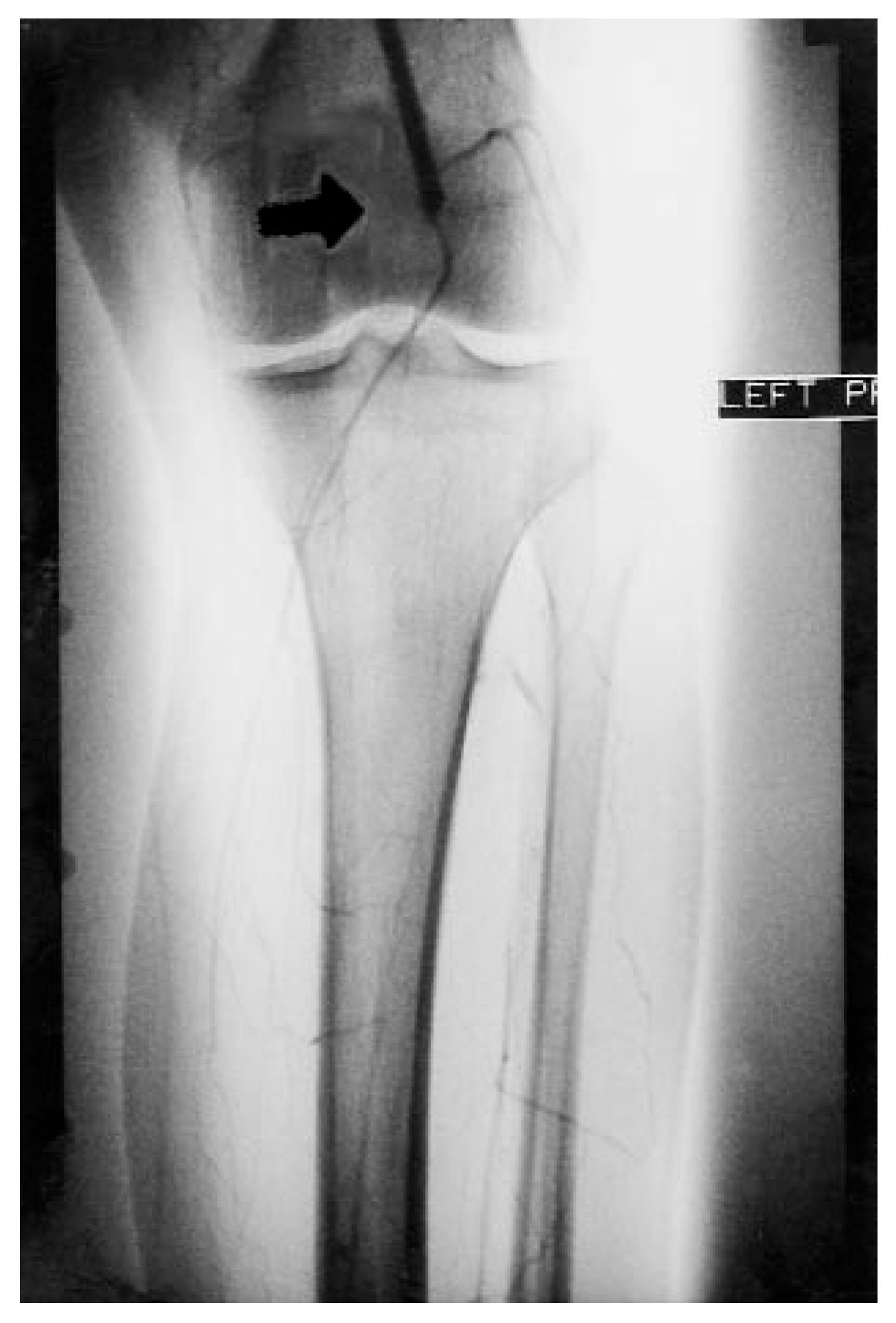
The abdominal and iliac angiograms were normal. Results of the right lower-extremity angiogram were normal as well. The left lower-extremity angiogram revealed a complete occlusion of the popliteal artery proximal to the knee joint, with faint filling of the anterior and posterior tibial collateral arteries with geniculate appearance (
Fig. 1).
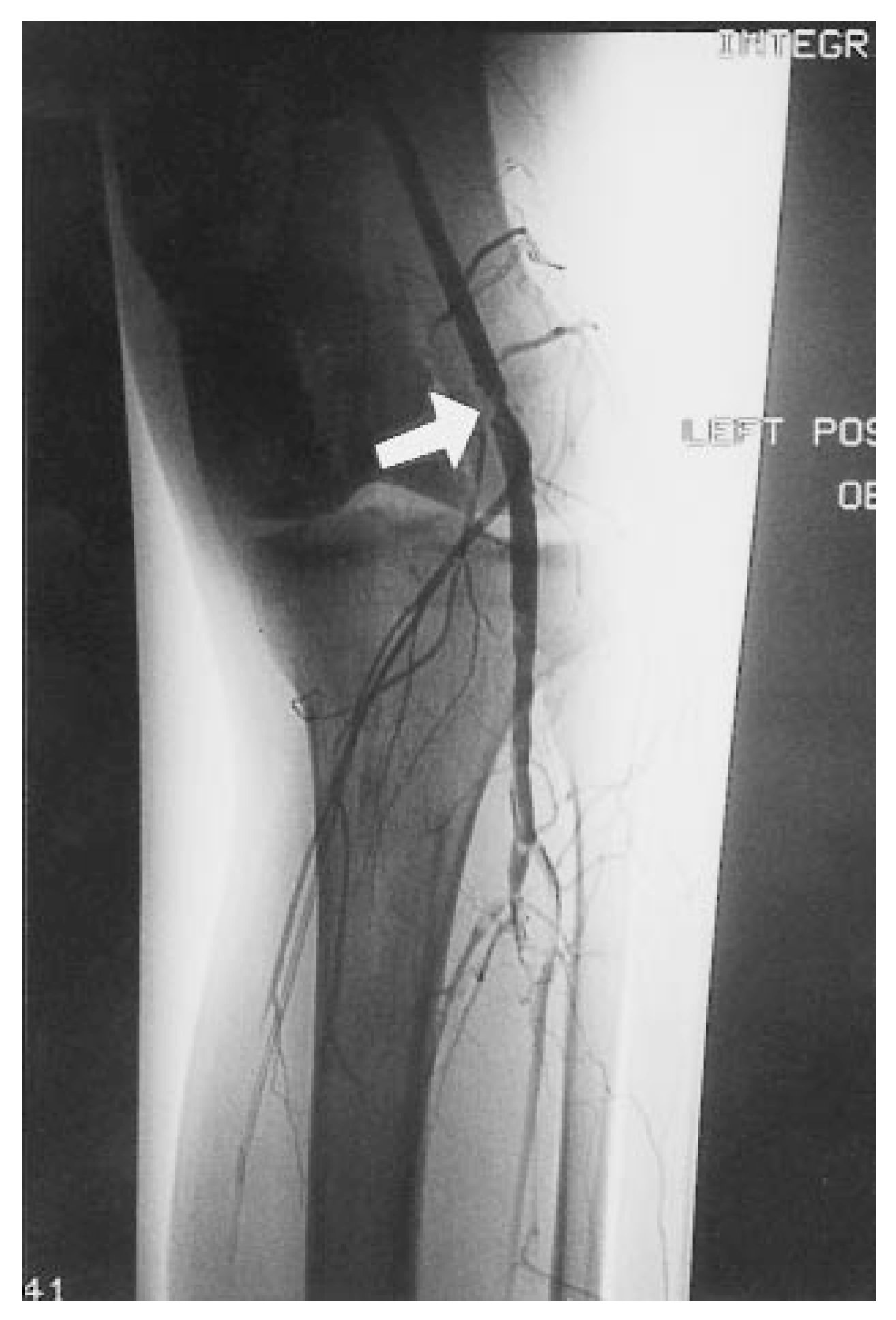
The radiologist and the vascular surgeon attempted anticoagulation and urokinase therapy with heparin, 4,000 U intravenously, and urokinase, 120,000 U/h. Angiograms taken 16 hours after the initial urokinase therapy revealed 80% stenosis in the midpopliteal artery proximal to the knee joint at the site of previous occlusion (
Fig. 2). The patient had decreased pain and erythema at the left first and second toes. Cyanosis of the toes also decreased, and a left popliteal pulse was present. Urokinase therapy was continued for another 24 hours.
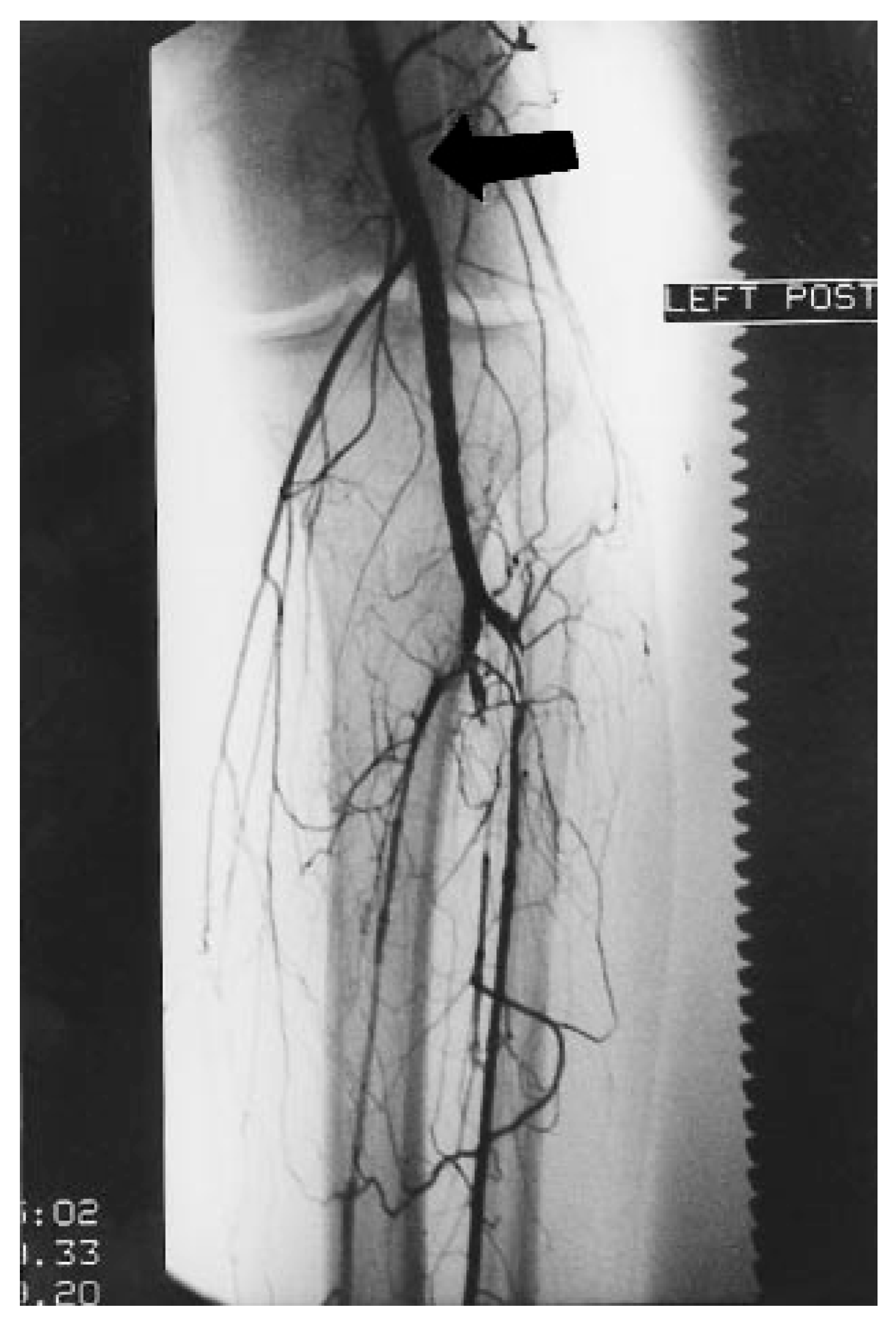
Forty hours after the initial urokinase treatment, angiograms of the left lower extremity revealed reduction of intraluminal defect in the midpopliteal artery to 40% stenosis (
Fig. 3). Urokinase therapy was continued for another 24 hours. An echocardiogram was performed to rule out cardiac pathologies (ie, diseased heart valves) that may be associated with embolus formation. The echocardiogram results were negative.
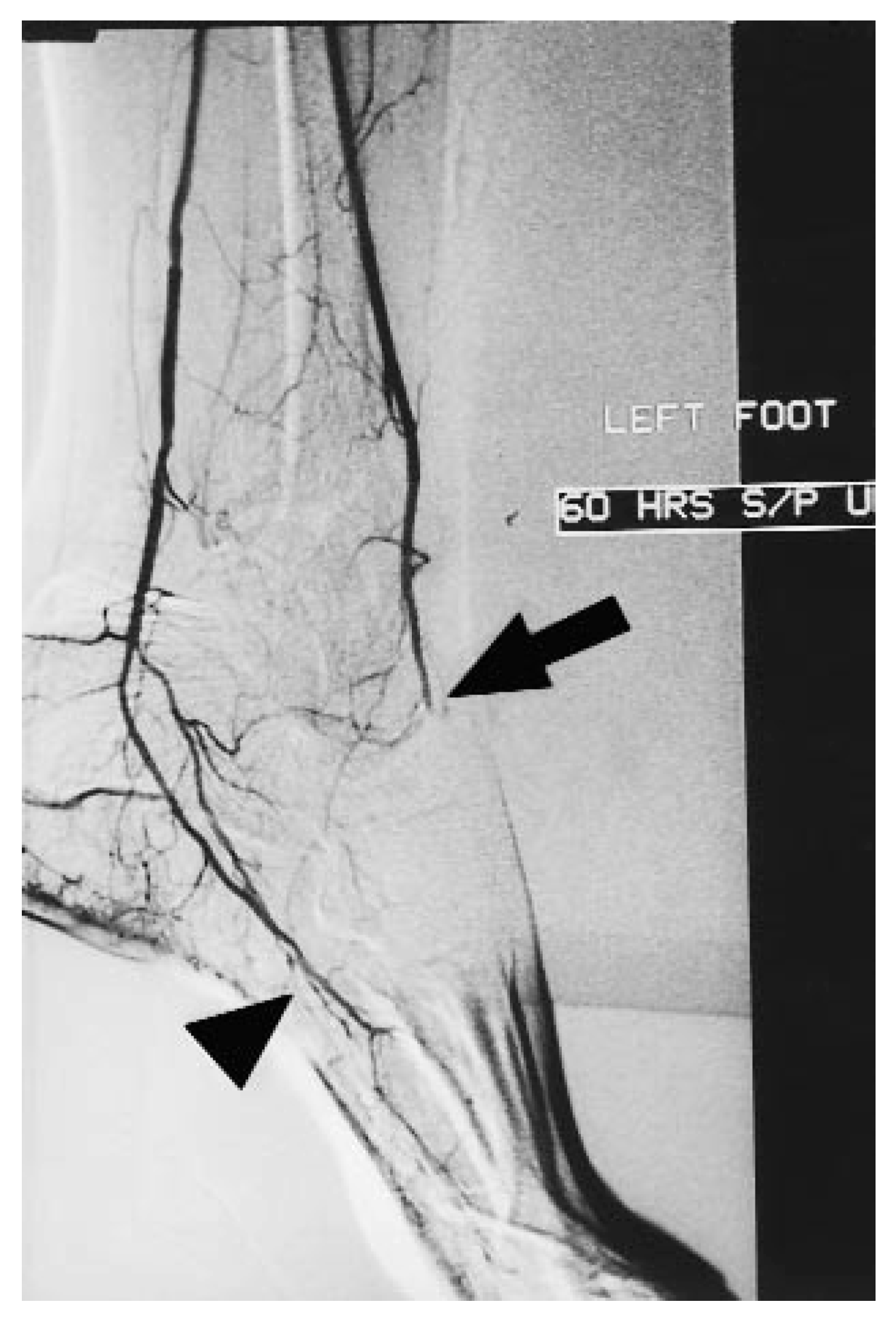
Sixty hours after the initial urokinase treatment, the patient continued to have decreased pain in the left foot, although angiograms revealed little change from the previous examinations. It was concluded that the residual clot in the popliteal artery might be adhering to the vessel owing to underlying intimal injury. The anterior tibial artery filled into the foot, but there appeared to be an occlusion in the proximal aspect of the dorsalis pedis artery (
Fig. 4). The posterior tibial artery provided good collateral circulation to the midfoot and minimized the concern of ischemia to the left medial arch (
Fig. 4). Urokinase therapy was discontinued and anticoagulation therapy was continued with heparin and coumadin.
The patient continued to do well and the pain in the left foot diminished over the following 2 weeks. The underlying etiology of the embolus was not determined, but the precipitating factor was most likely acute trauma.
Discussion
The case presented clearly demonstrates an atypical presentation of an embolus of the lower extremity. The etiology of the embolus was not determined. As discussed previously, an embolus usually develops from vegetations on cardiac valves, from a thrombus within the left atrium, or from atheromatous plaques detached from large vessels proximal to the site of the obstruction. The echocardiogram and abdominal/inguinal angiograms of this patient were normal, however, and showed no abnormalities that would lead to embolus formation.
The arterial occlusion was suspected to be precipitated by trauma. In arterial occlusions secondary to trauma, symptoms of the occlusion usually appear within hours to a few days. The patient presented here demonstrated a delayed acute arterial occlusion, with symptoms appearing 8 months after trauma.
The patient continued to experience pain after hospitalization and required oral narcotic medication to control the pain. It is important to realize that nerves and muscle are more susceptible to hypoxia than the surrounding soft tissue, and it is reasonable to believe that in such cases the nerves in the ischemic limb may have been permanently damaged, necessitating long-term pain management.
Conclusion
Acute arterial occlusions in the lower extremities can be debilitating and can have serious consequences if not diagnosed and treated early. Arterial embolus must be differentiated from acute thrombosis to render proper treatment as well as to avoid necrosis, gangrene, and limb loss.
It is not uncommon for the podiatric physician to encounter patients with vascular disease. Physicians must realize that vascular diseases can involve complications not limited to vascular-related areas and may require a multidisciplinary approach, with the assistance of a vascular surgeon and an interventional radiologist.