Coralline hydroxyapatite exhibits many characteristics that make it similar to normal bone [
1]. Bone is a highly vascular, living, constantly changing mineralized connective tissue. It is remarkable for its hardness, resilience, and regenerative capacity, as well as for its characteristic growth mechanisms [
2]. The unique mechanical properties of bone can be attributed to its components. Bone consists of cells (primarily osteocytes in mature bone) and intercellular matrix. The inorganic or mineral component is made of hydroxyapatite and gives bone its hardness and rigidity. The organic component consists of collagen and glycosaminoglycans and gives elasticity and resilience to the bone, allowing it to resist fracture when subjected to mechanical loading [
2].
Almost all of the adult osseous skeleton is made up of lamellar bone. Lamellar bone consists of mineralized matrix with collagen fibers arranged in layers, with osteocytes embedded within the matrix [
2]. The arrangement of the lamella defines bone as cortical or cancellous. Cortical bone is dense and compact. It is composed of haversian systems, called secondary osteons, which are formed by internal remodeling of preexisting bone. The system is cylindrical in shape, with its long axis parallel to the long axis of the bone. Cancellous or trabecular bone consists of a latticework of trabeculae enclosing large marrow spaces. The trabeculae are parallel to the adjacent bone surface [
2].
Bone grafts may be autografts, allografts, or xenografts. An autograft is taken from the same individual. An allograft is taken from the same species. A xenograft is taken from a different species. Coralline hydroxyapatite is an implant derived from xenogeneic material.
Autogenous bone is generally considered to be the ideal material for bone grafting. Autogenous grafting provides three primary elements for bone healing: 1) osteoconduction, the provision of a scaffold for vascular and bone ingrowth; 2) osteoinduction, the stimulation of new bone formation by the conversion of mesenchymal cells into osteoprogenitor cells; and 3) osteogenesis, the transfer of viable osteoprogenitor cells to the recipient site [
3].
There are, however, disadvantages to autogenous bone grafting. In 1989, Younger and Chapman [
4] documented the morbidity of harvesting an autogenous bone graft. In some cases, this morbidity outweighs the benefits. Harvesting the graft requires a second surgical site, which increases the risk of infection and the time spent in the operating room. Compromise of the graft site (usually the iliac crest) may result in fatigue fracture, pelvic instability, delayed ambulation, points of mechanical weakness, and increased pain [
3,
5]. Pain and blood loss are significant with iliac crest graft procurement procedures. Major complications have been reported in 5% to 10% of these graft procedures, and minor complications in 10% to 20% [
4].
Allografts have several advantages over autografts: they are relatively easy to handle, are easily contoured to the desired shape, may be stored for long periods, and do not require a second surgical procedure [
6]. However, one must consider the risk of disease transmission and immunologic incompatibility. These hazards are significantly reduced with the use of freeze-drying or lyophilization, and guidelines have been established by the American Association of Tissue Banks to minimize the risk of disease transmission [
7]. The indications for the use of allogeneic bone have increased with the availability of a consistent product, although autogenous bone is still superior when osteogenesis and vascularity are concerns [
6].
The need for bone substitutes is clear, and considerable research has been conducted in this area. The ideal bone substitute would have the osseous properties of autogenous bone and the convenience of allogeneic bone, while eliminating the problems associated with both. The material should be immunologically acceptable, have sufficient mechanical strength, permit osseous ingrowth, be bioresorbable, and be readily available in adequate volume. [
3,
8] For more than 20 years, researchers have been experimenting with certain types of sea coral that meet many of these criteria.
Coralline Hydroxyapatite
Microstructure
In the search for a suitable bone replacement material, considerable interest has been generated in a porous hydroxyapatite substratum that is obtained after hydrothermal conversion of the calcium carbonate exoskeletal microstructure of the scleractinian reef-building corals,
Porites and
Goniopora. [
9,
10] This hydrothermal exchange subjects the coral to high temperatures and pressures as it converts the carbonate exoskeleton into pure hydroxyapatite.1 Thus all organic material is removed without alteration of the coralline microstructure, which is the key to the material’s osteoconductive nature. [
11] This is an example of a replamineform process.
The replamineform process preserves the highly organized and permeable structure of the coralline hydroxyapatite. The difficulty in controlling pore size, particularly the size of the adjacent interconnecting pores, has been a major limitation in the production of porous ceramics. [
12] Klawitter and Hulbert [
13] proposed that a minimum pore size of approximately 100 μm was necessary for adequate bone ingrowth. The genus
Porites has a pore size of 230 μm in diameter in its parallel channels, and its interconnecting fenestrations between channels are 190 μm in diameter. [
8] The potential of this material was recognized by Holmes et al. [
8] who proposed that coralline hydroxyapatite from
Goniopora has a pore structure analogous to that of cancellous bone, with a pore size of 500 μm.
In 1994, Kuhne et al [
14] studied the effects of pore size on bone formation. They concluded that the material with a 500-μm pore size (
Goniopora) was superior to the material with a 200-μm pore size (
Porites) for cancellous bone ingrowth and noted that the size of pore interconnections was the decisive factor determining the extent of bone ingrowth.
These products are prepared commercially and are available in block form, which may be contoured to the desired shape, or granules, to fill voids and eventually interconnect to form a continuous matrix. [
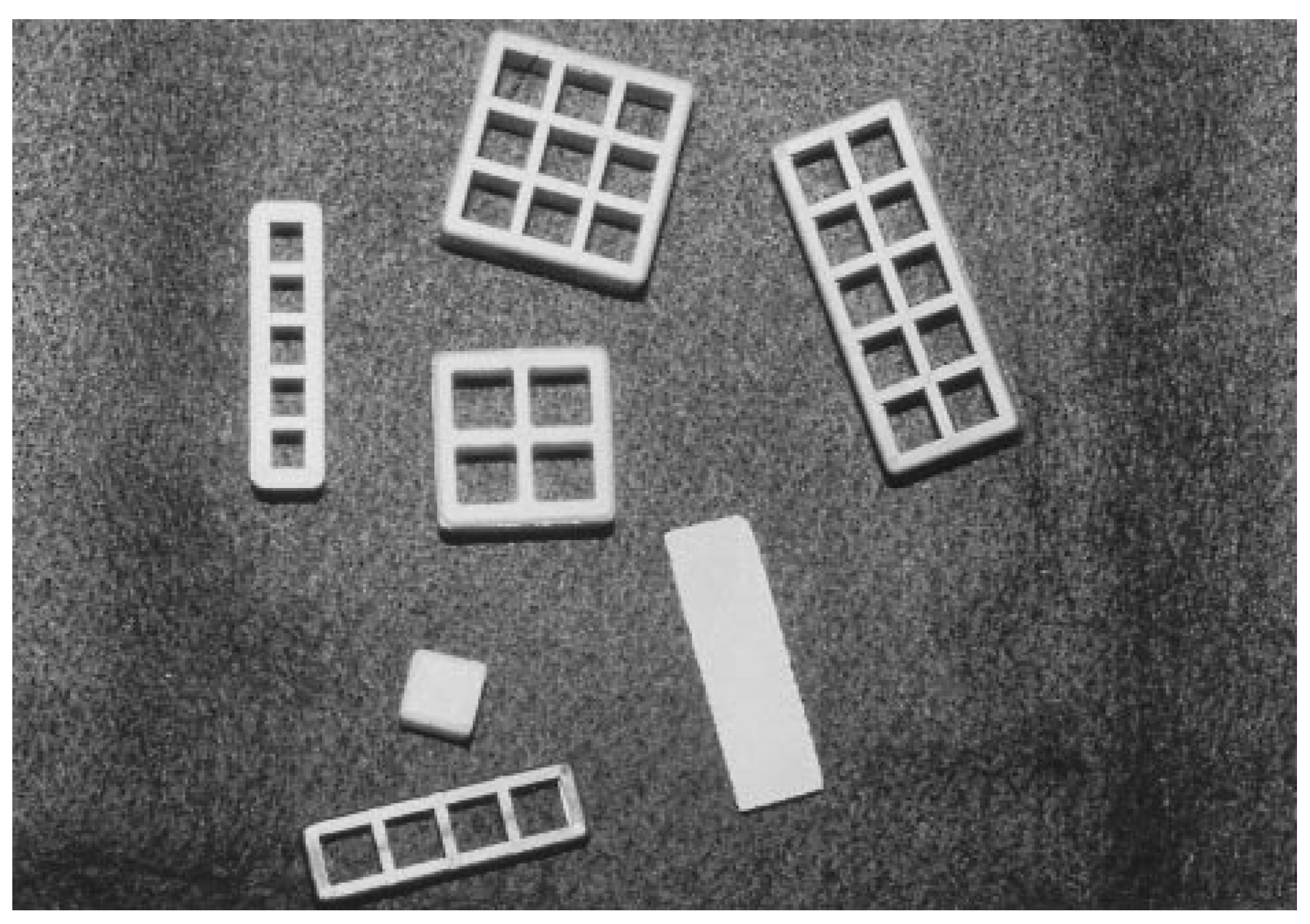
1] Blocks come in various sizes, from 5 × 12 × 40 mm up to 12 × 30 × 30 mm (Fig. 1).
Figure 1.
Various sizes of hydroxyapatite blocks (Interpore Orthopedics Inc, Irvine, California).
Figure 1.
Various sizes of hydroxyapatite blocks (Interpore Orthopedics Inc, Irvine, California).
Physical Properties
The mechanical properties of coralline hydroxyapatite have been analyzed by a number of authors. Several studies have concluded that the material lacks sufficient compressive and tensile strength to be used in high-load orthopedic situations. [
11,
12,
15] Upon processing, microcracks are produced, which tend to grow locally with increased stress and may result in complete, instantaneous fracture. [
12] The material may, however, be applicable where it is not required to bear a structural load. For example, the dental community has found that the material has adequate strength to augment defects in the alveolar ridge. [
16]
Another factor limiting the use of coralline hydroxyapatite in the orthopedic community is the brittle nature of the material. This brittleness may result in particle migration and subsequent extrusion from the graft bed. [
11] Owing to the osteoconductive nature of hydroxyapatite, this may lead to ectopic bone formation.
There are two theories about bioresorption of coralline hydroxyapatite. [
11] One theory is that dissolution occurs slowly over time; another theory is that there is a cell-mediated process involving phagocytosis. However, the material has proven to be resistant to dissolution, and a phagocytic bioresorption would, by definition, cause an undesirable inflammatory response. In fact, one of the earliest concerns about this material was its degradation-resistant character. [
8,
11,
17]
Clinical Studies
Preliminary reports concerning the use of coralline hydroxyapatite were encouraging. Holmes et al [
8] performed histologic and mechanical studies of coralline hydroxyapatite implanted into 52 dogs. Their results showed total bone ingrowth with no evidence of biologic rejection. The mechanical strength of the implant increased with the amount of bone ingrowth, with the implant eventually becoming stronger than normal bone.
In 1989, Bucholz et al [
18] reported on a study of 40 patients with tibial plateau fractures. Twenty patients received autogenous grafts; the other 20 received coralline hydroxyapatite implants. The results showed excellent bone ingrowth as assessed by biopsy at the time of hardware removal. Follow-up times were up to 3 years. No adverse effects were attributable to the hydroxyapatite implants; there was also no radiographic evidence of biodegradation. Referring to the lack of biodegradation, Bucholz et al stated that “the long term effect has yet to be determined.” [
18] (p62)
Several other clinical studies showed similar results. [
15,
16,
19] Osseous ingrowth was a consistent finding. The implants were found to be compatible both morphologically and biologically, although there was concern over initial mechanical strength and lack of biodegradation.
Materials and Methods
Twenty patients, ranging in age from 28 to 69, who had bone defects filled with coralline hydroxyapatite implants were reviewed retrospectively. The patients were followed up radiographically for 1 to 3 years, with a mean follow-up time of 1.6 years. The synthetic hydroxyapatite used in all cases was ProOsteon (Interpore Orthopedics Inc, Irvine, California). The hydroxyapatite was implanted in both block and granular forms.
The following factors were analyzed: pore size of the implant (200 or 500 μm), recipient site, radiographic evidence of extrusion past the graft bed, radiographic evidence of remodeling, graft replacement, graft site fracture, wound dehiscence, and postoperative infection. Extrusion was defined as the presence of coralline hydroxyapatite or bone formation outside the contour of the recipient site. Remodeling was defined as the dissolution of the margins of the graft. Graft replacement was defined as the change in density from the dense radiographic white coloration at the time of implantation to the radiographic coloration of surrounding lost bone.
Results
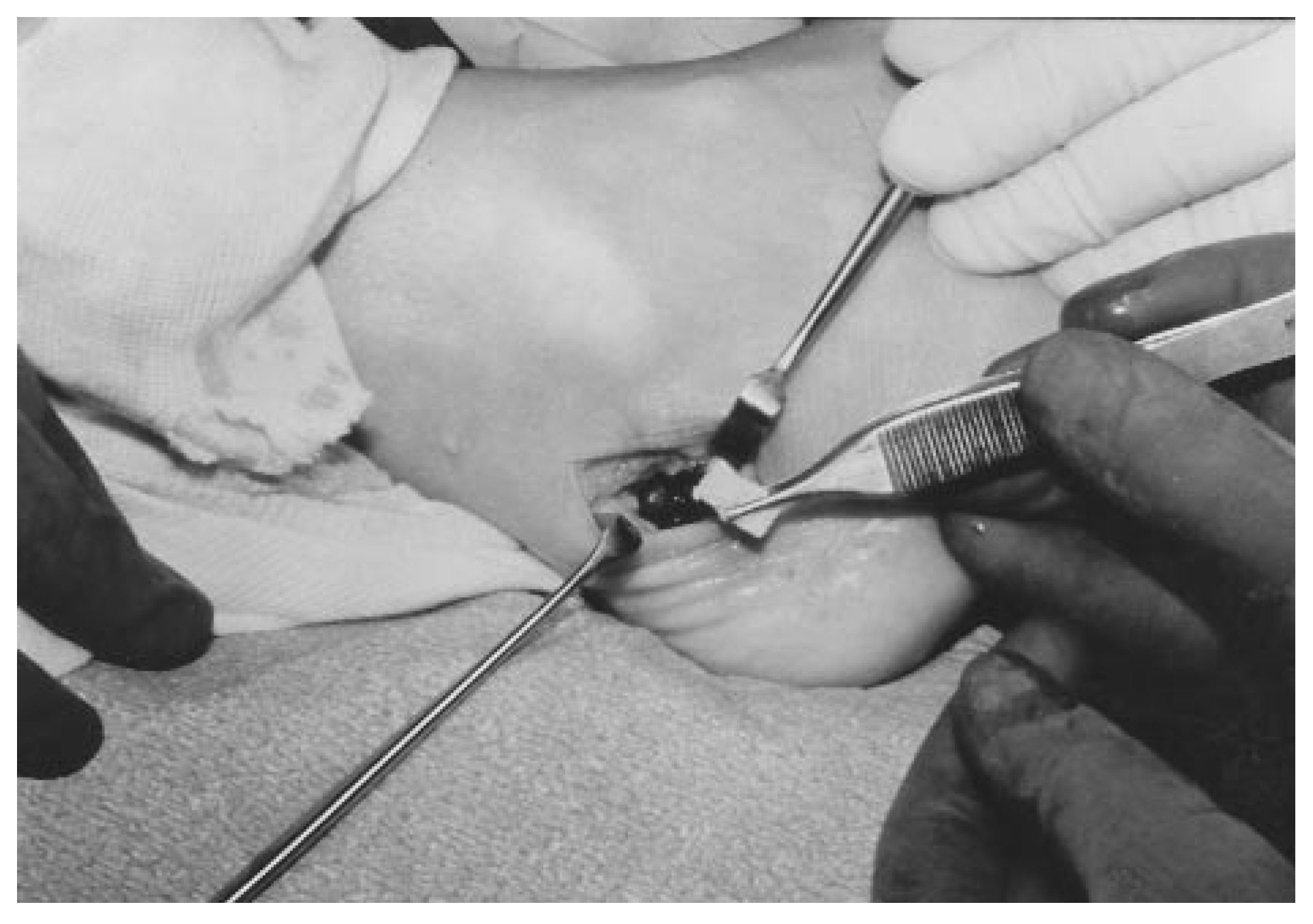
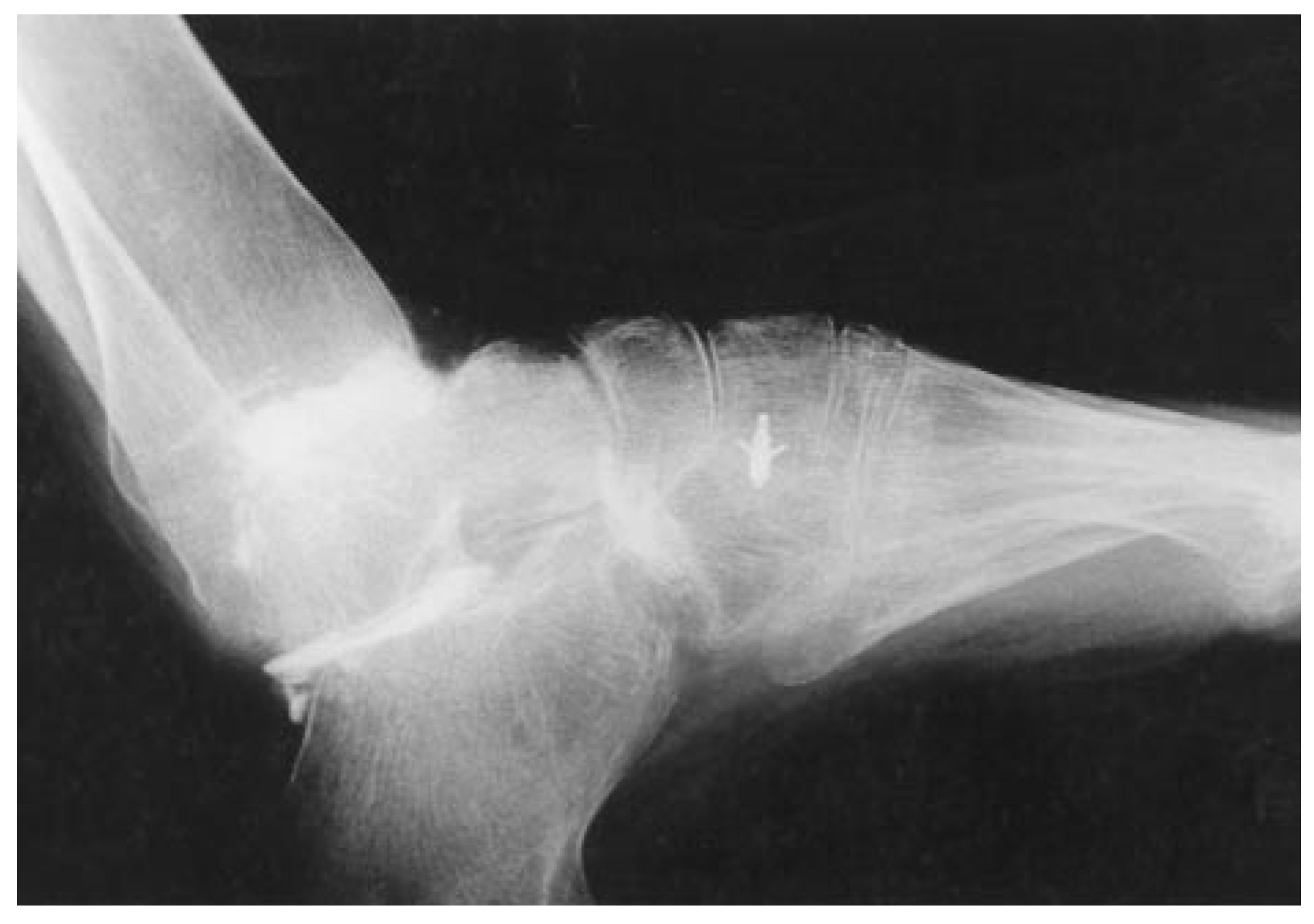
Of the 20 patients, 19 received the material with a 500-μm pore size and only 1 received the material with a 200-μm pore size. The material was used for the following indications: surgically created defects in the posterosuperior aspect of the calcaneus (12 patients) (Figs. 2 and 3), defects of the first metatarsal head (3 patients), ankle fusions (3 patients) (Fig. 4), and Lisfranc fusions (2 patients).
Figure 2.
Intraoperative photograph demonstrating packing of calcaneal bone graft donor site with hydroxyapatite.
Figure 2.
Intraoperative photograph demonstrating packing of calcaneal bone graft donor site with hydroxyapatite.
Figure 3.
Lateral postoperative radiograph (18 months) after packing of calcaneal bone graft donor site with hydroxyapatite. Note the superior extrusion.
Figure 3.
Lateral postoperative radiograph (18 months) after packing of calcaneal bone graft donor site with hydroxyapatite. Note the superior extrusion.
Figure 4.
Lateral postoperative radiograph demonstrating radiodensity in areas of hydroxyapatite packing as part of a pantalar fusion.
Figure 4.
Lateral postoperative radiograph demonstrating radiodensity in areas of hydroxyapatite packing as part of a pantalar fusion.
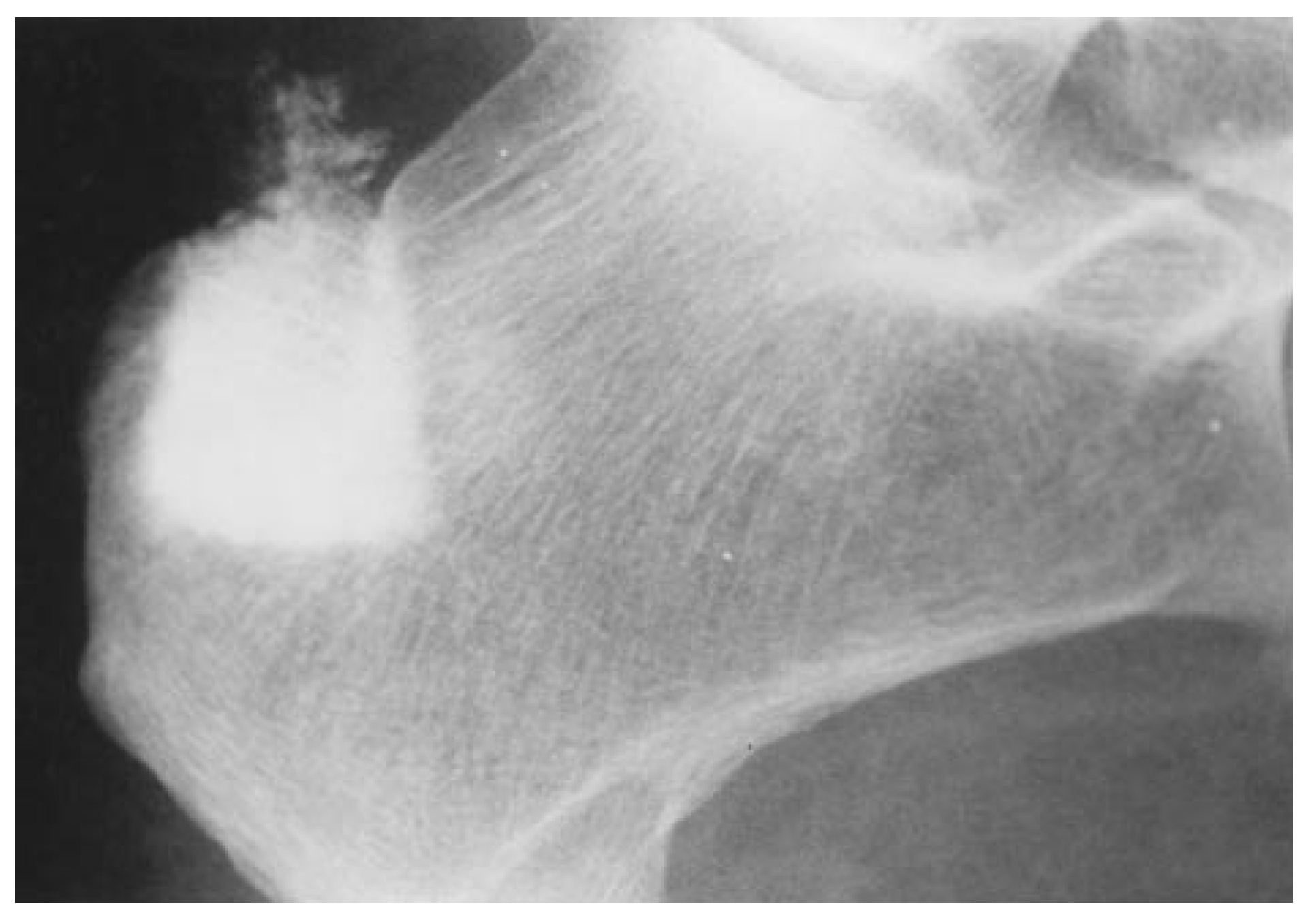
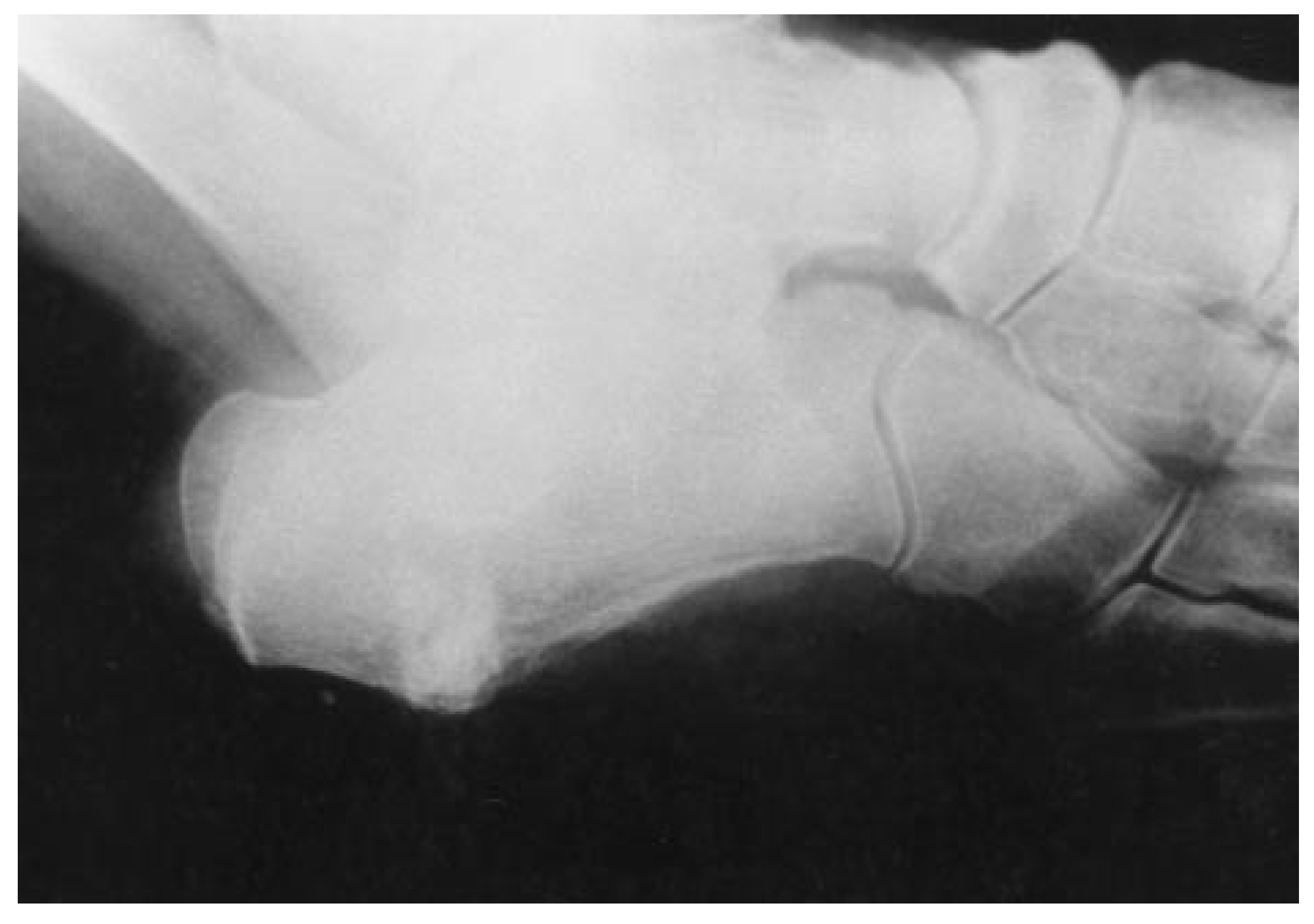
There were no cases of postoperative infection or rejection. There was one case of minor wound dehiscence; it appeared unrelated to the implant and healed uneventfully. There were no graft site fractures. Ten of the 20 patients (50%) showed evidence of extrusion past the graft site. In all cases, this extrusion was less than 1 cm from the bed site and involved less than 25% of the implanted material. One patient did have a palpable protrusion from the site that was mildly symptomatic (Fig. 5). There was no radiographic evidence of full replacement in this short-term evaluation of cases. All grafts maintained a significant radiodensity at the time of final evaluation.
Figure 5.
Oblique radiograph demonstrating extrusion with bone formation after hydroxyapatite packing of calcaneal bone graft trephine site.
Figure 5.
Oblique radiograph demonstrating extrusion with bone formation after hydroxyapatite packing of calcaneal bone graft trephine site.
Discussion
While the number of cases reviewed in this study was small, the results were consistent with those of previous studies. [
15,
16,
18,
19] There were no adverse reactions, there was no evidence of rejection, and there were no significant complications resulting from failure of the implant. The material appeared to have been well integrated into the surrounding bone.
The cases of graft material extrusion may have been due to the extensive use of granular material, the cutting of blocks to fit an area, or inexperience in dealing with the brittle nature of the material. Nevertheless, the ectopic bone formation did not result in poor outcomes or significant morbidity in the patients involved.
The lack of biodegradation of coralline hydroxyapatite remains a concern. Follow-up time for eight of these cases has exceeded 3 years, and there is no radiographic evidence of replacement. This limits the use of coralline hydroxyapatite in areas where radiographic evidence of healing is necessary. In podiatric indications for bone grafting such as fracture repair, nonunion repair, and fusions, the radiodensity of the implants makes accurate radiographic evaluation of osseous union difficult. Because the material remains incompletely resorbed, it will continue to bear mechanical stress, thus causing new bone ingrowth to remain unloaded. According to Wolfe’s law, the internal architecture of bone responds to and changes with environmental stresses. If the implant remains in place indefinitely, any initial bone ingrowth will eventually atrophy from disuse. Clinical studies spanning 10 years or more are needed to accurately assess the fate of these implants in clinical situations. [
18]
There were no mechanical failures in this study, primarily because of the location and application of the implant. Sixty percent of the implants were used to fill a small defect surgically created in the posterosuperior aspect of the calcaneus. This is a relatively benign site for stress forces and is not significantly involved in the weightbearing function of the foot. Coralline hydroxyapatite may have enough mechanical strength to support this area, in much the same way as it does in dental applications. [
16] Another option when dealing with such a small area of defect is simply allowing the area to fill in with new bone. Studies need to be done to assess the viability of this option.
While the present applications in podiatric surgery appear limited, the future of coralline hydroxyapatite is bright. The plasma spray method has been developed to coat metal implants and prostheses. [
20] The osteoconductive nature of this hydroxyapatite promotes the bone-implant binding to prevent loosening and fibrous encapsulation. The material may also have use as a graft extender, if it is combined with bone morphogenetic proteins or autologous marrow to stimulate osteoinduction. [
21,
22]
Summary
Coralline hydroxyapatite is a useful packing material. The principal problem seen in this small series was extrusion of the material to a small degree in some cases. This problem can be reduced by using less material and packing the block material less firmly.