In 1925, Akin [
1] proposed a hallux valgus correction that included resection of the medial eminence of the first metatarsal head and the adjoining base of the proximal phalanx, along with a medial closing wedge osteotomy of the hallux to straighten the great toe. Today, the Akin osteotomy is still used as an adjunctive procedure to hallux valgus repair, but, more importantly, it is used to correct a structural deviation of the hallux itself. Specifically, this lateral deviation of the hallux is the result of a high distal articular set angle or hallux interphalangeus.
During the past 70 years, many methods of fixation have been described for both the proximal and the distal Akin osteotomies [
2,
3]. Akin originally described a technique of external splinting rather than internal fixation. As surgical techniques advanced, so did the methods of fixation. The Akin osteotomy was initially fixated with either a single or double (crossed) Kirschner wire or stainless steel wire-loop fixation. Wire fixation typically uses a two-cortices technique at the dorsomedial aspect of the osteotomy, where drill holes are made on either side of the osteotomy. This method relies on an intact lateral hinge and minimal weightbearing to prevent dorsiflexion of the distal fragment and gapping on the plantar aspect of the osteotomy. Boberg [
3] describes a four-cortices technique that involves a vertical loop perpendicular to the plane of the osteotomy. This limits dorsiflexion of the distal segment but still relies on an intact lateral cortical hinge. None of the previously described fixation methods consistently provides rigid internal fixation; hence they have been associated with postoperative pain, swelling, and the chance of a delayed union or nonunion, especially if the lateral hinge fractured during closure.
The early 1980s, with the rise in the popularity of the Swiss internal fixation methodology, brought the oblique Akin osteotomy and the use of rigid internal screw fixation [
4,
5]. This technique provides rigid immobilization with shortened healing times and fewer complications. One screw can provide lateral plane stability provided the lateral cortex remains intact. This technique employs more advanced instrumentation than was previously used and requires more refined surgical skills.
In the mid- and late 1980s, staple fixation came into vogue. Both the Richards Mini Staple [
6] (Richards Manufacturing Co, Memphis, Tennessee) and the 3M Shapiro Staplizer [
7] (3M Co, St Paul, Minnesota) were advances over handmade staples fashioned from Kirschner wires. The Richards scaphoid stainless steel staple is typically inserted into predrilled holes, which must be parallel to each other. Again, care must be taken to maintain a lateral hinge. The 3M Staplizer uses a titanium staple, which is propelled into the bone by compressed air. Compression is applied as the staple is inserted. Again, maintaining the lateral hinge is critical to the outcome of the procedure. If the hinge is sacrificed, two staples are needed.
It is this author’s opinion that lateral cortical hinge fracture is the most common complication associated with the Akin osteotomy. Fracture of the hinge typically occurs either during osteotomy closure or as a result of stress applied to the bone during maneuvers involved in the fixation process. Fracture of the hinge can occur from bending forces of the Kirschner wire, inappropriate screw placement, force of the Staplizer, or manipulation of the monofilament wire through the drill holes.
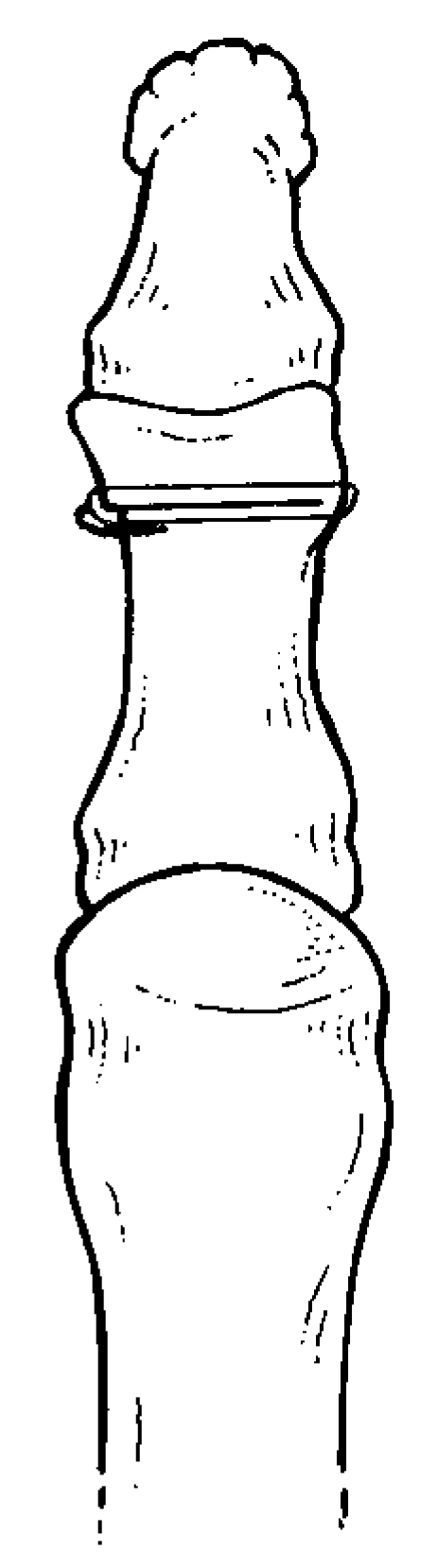
The key to horizontal interosseous wire-loop fixation is that the fixation is placed before the osteotomy is made. Therefore, placement of the fixation cannot disrupt the lateral cortical hinge. After the osteotomy is satisfactorily completed, the wire fixation is secured. There is no further manipulation. Furthermore, the fixation encompasses four cortices, medially and laterally on both sides of the osteotomy. Therefore, there is less chance for dorsiflexory forces to cause gapping on the plantar surface. Finally, the wire supports the lateral cortical hinge simply through its location.
The Procedure
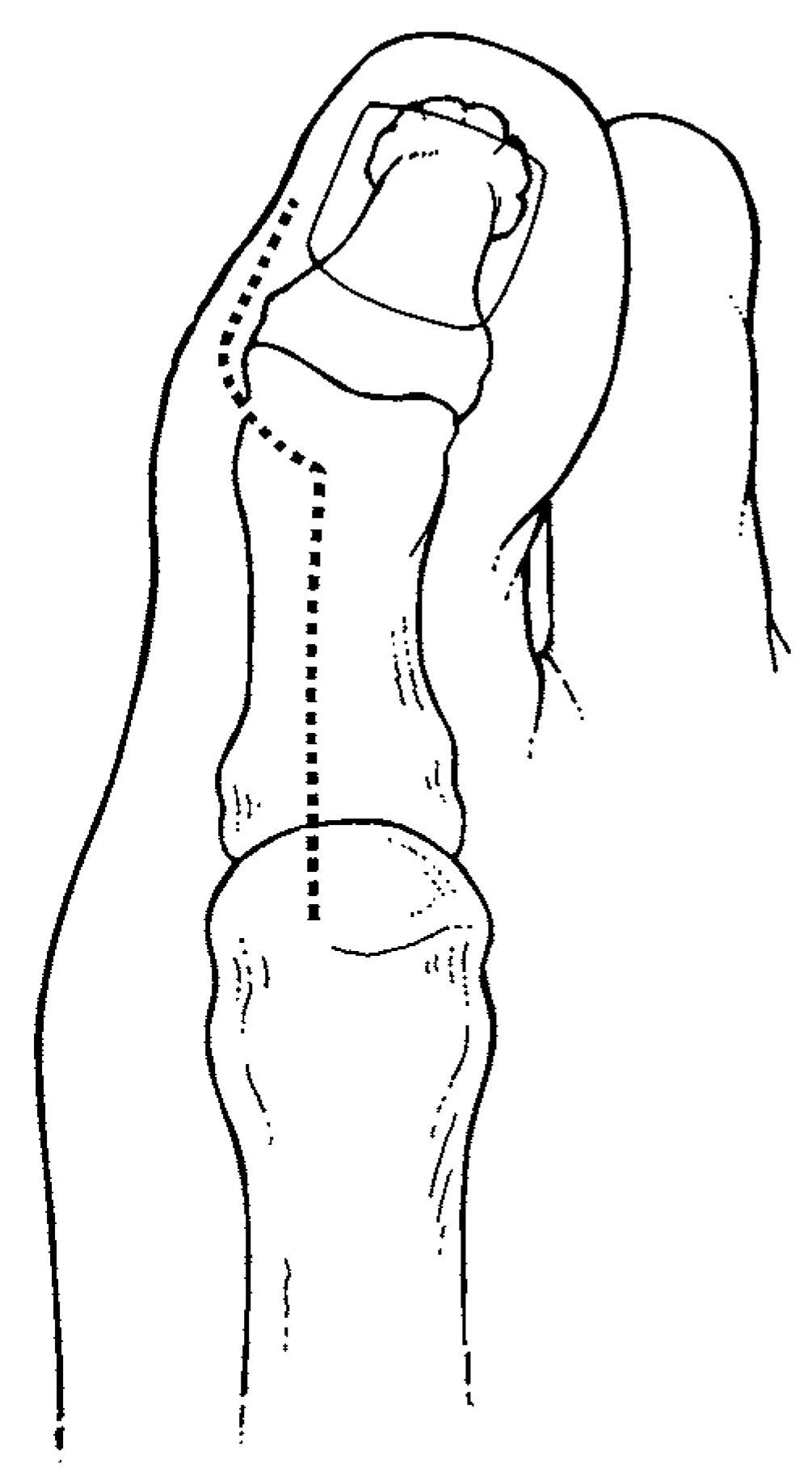
Attention is directed to the hallux, where a dorsally placed incision is made over the proximal phalanx. The incision is extended in a lazy S fashion to the medial aspect of the hallux interphalangeal joint for a distal Akin osteotomy (
Fig. 1). The incision is deepened through the subcutaneous tissue via sharp and blunt dissection, and hemostasis is acquired as needed. The deep fascial covering overlying the proximal phalanx is now identified. A longitudinal incision through the deep fascia and periosteum is made medial to the extensor hallucis longus tendon. All soft tissue is carefully removed from the osteotomy site.
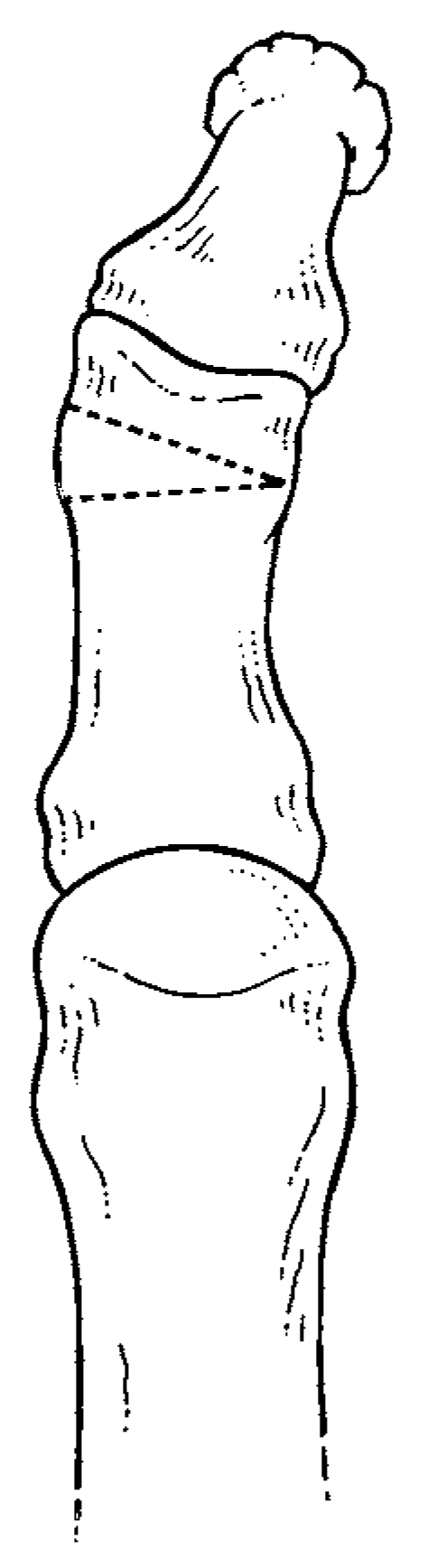
The site for osteotomy placement is now identified and marked with a marking pen or an osteotome (
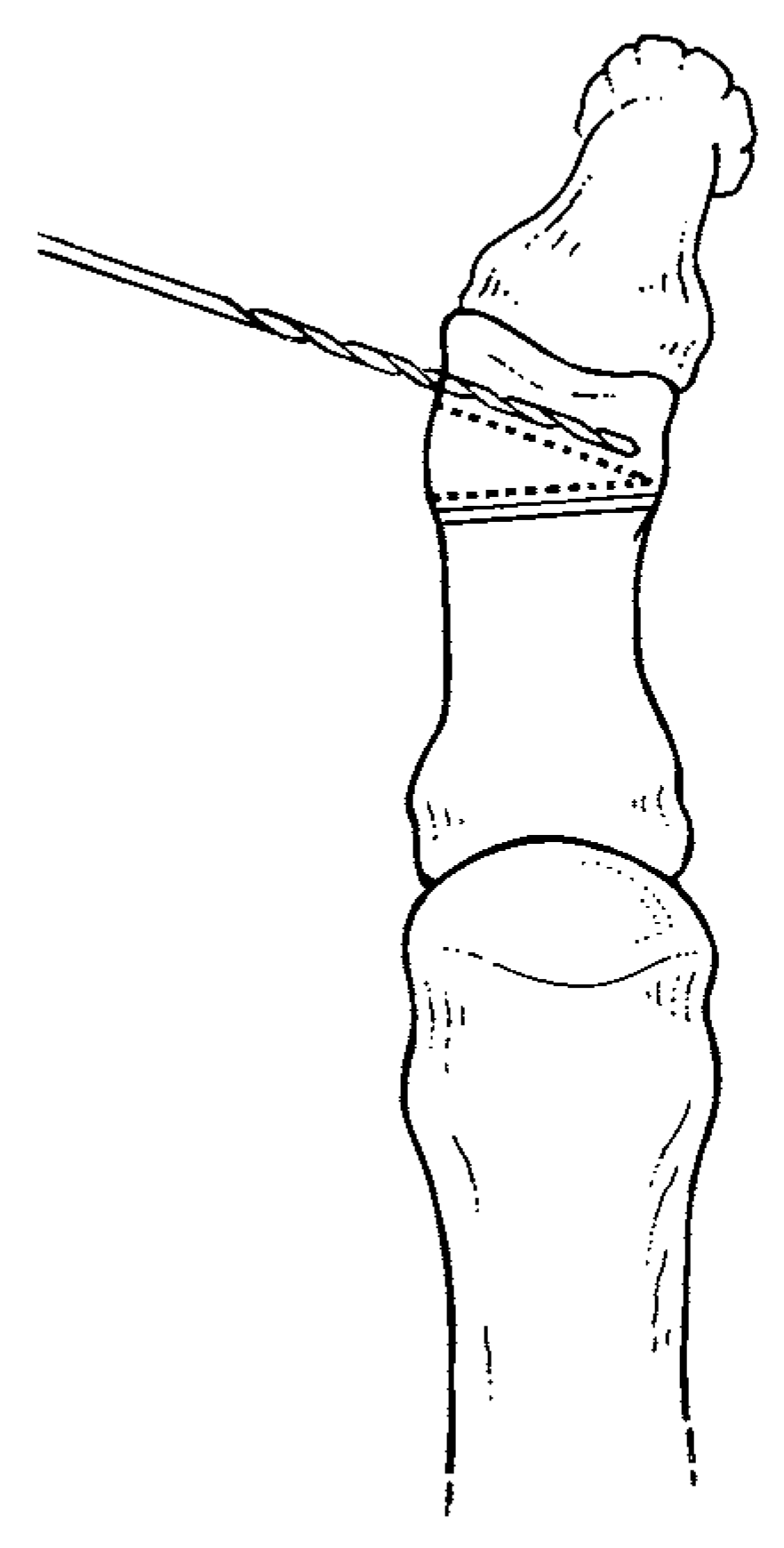
Fig. 2). Drill holes for passage of the monofilament wire are placed next. With either a 1.5-mm or a 2.0-mm drill bit or a 0.062 Kirschner wire, a drill hole is fashioned on each side of the planned osteotomy. The holes are placed approximately 1/8 inch (2 to 3 mm) from either side of the osteotomy site and are parallel to the planned osteotomy in the central aspect of the bone (
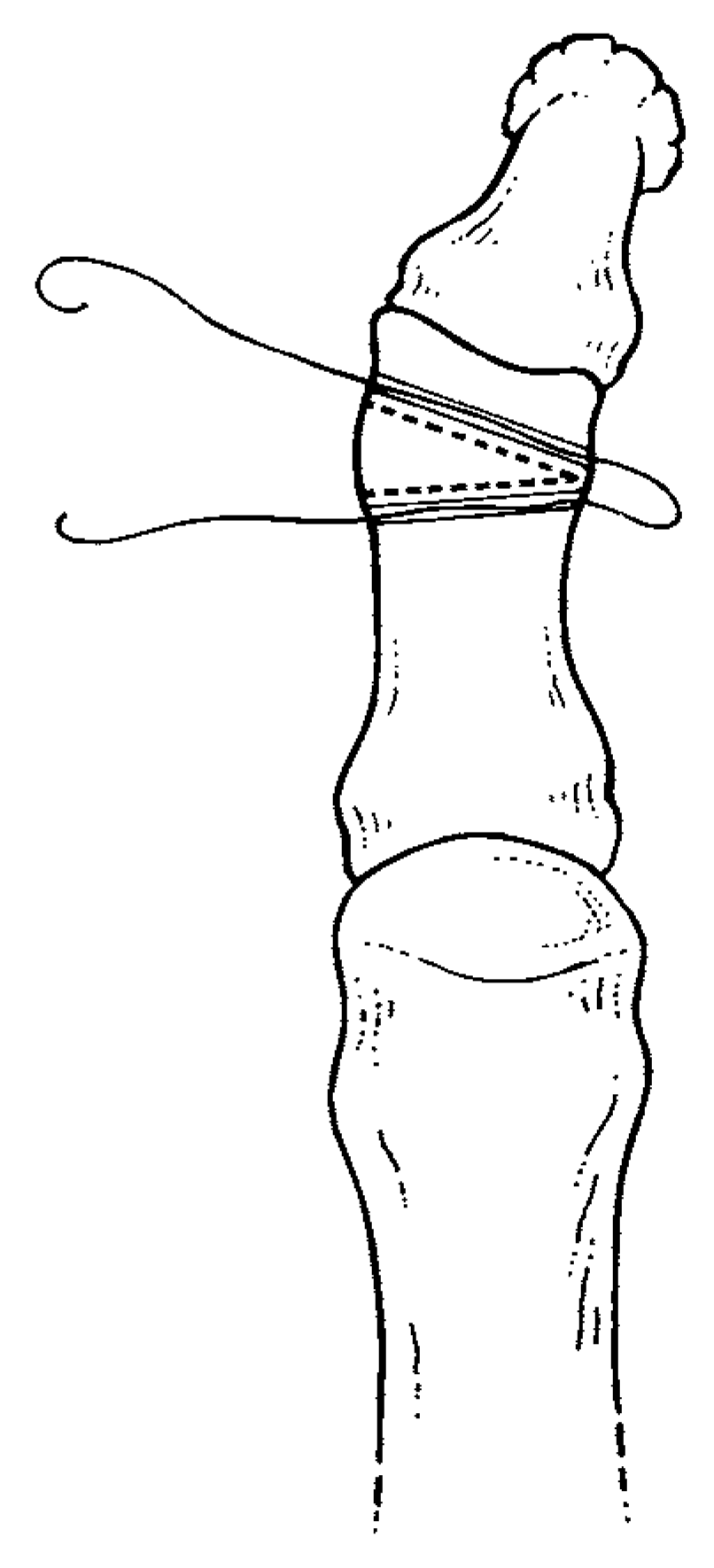
Fig. 3). A slight angulation from plantar medial to dorsolateral will aid insertion and retrieval of the wire on the lateral side. Double-stranded 28-gauge monofilament wire is then fed through the drill holes (
Fig. 4). The free ends of the wire exit medially. The wire should lie flush against the lateral aspect of the bone.
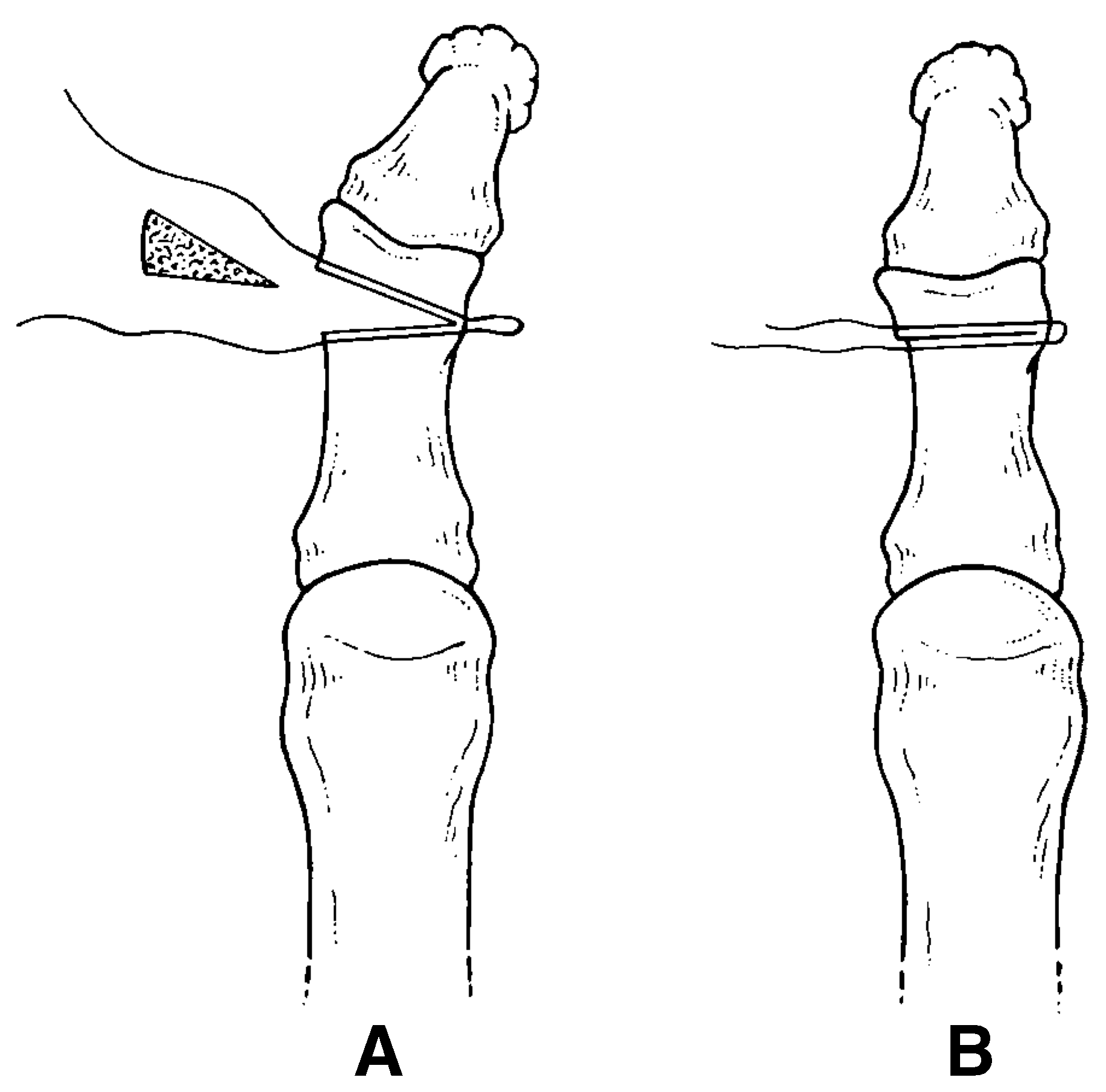
The osteotomy is then performed at the predetermined site (
Fig. 5). After the lateral cortical hinge is thinned, the osteotomy is closed. The two free ends of wire are now grasped and wrapped around each other and tightened down. The wire end is cut short and fed into one of the drill holes (
Fig. 6). The osteotomy is now secure, and no further manipulation at the site is needed.
Following irrigation, the periosteum and deep fascial layer are closed with an absorbable 3-0 suture in a continuous fashion. The subcutaneous layer is closed with an absorbable 4-0 suture, and the skin is closed with an absorbable 5-0 suture used in a subcuticular fashion.
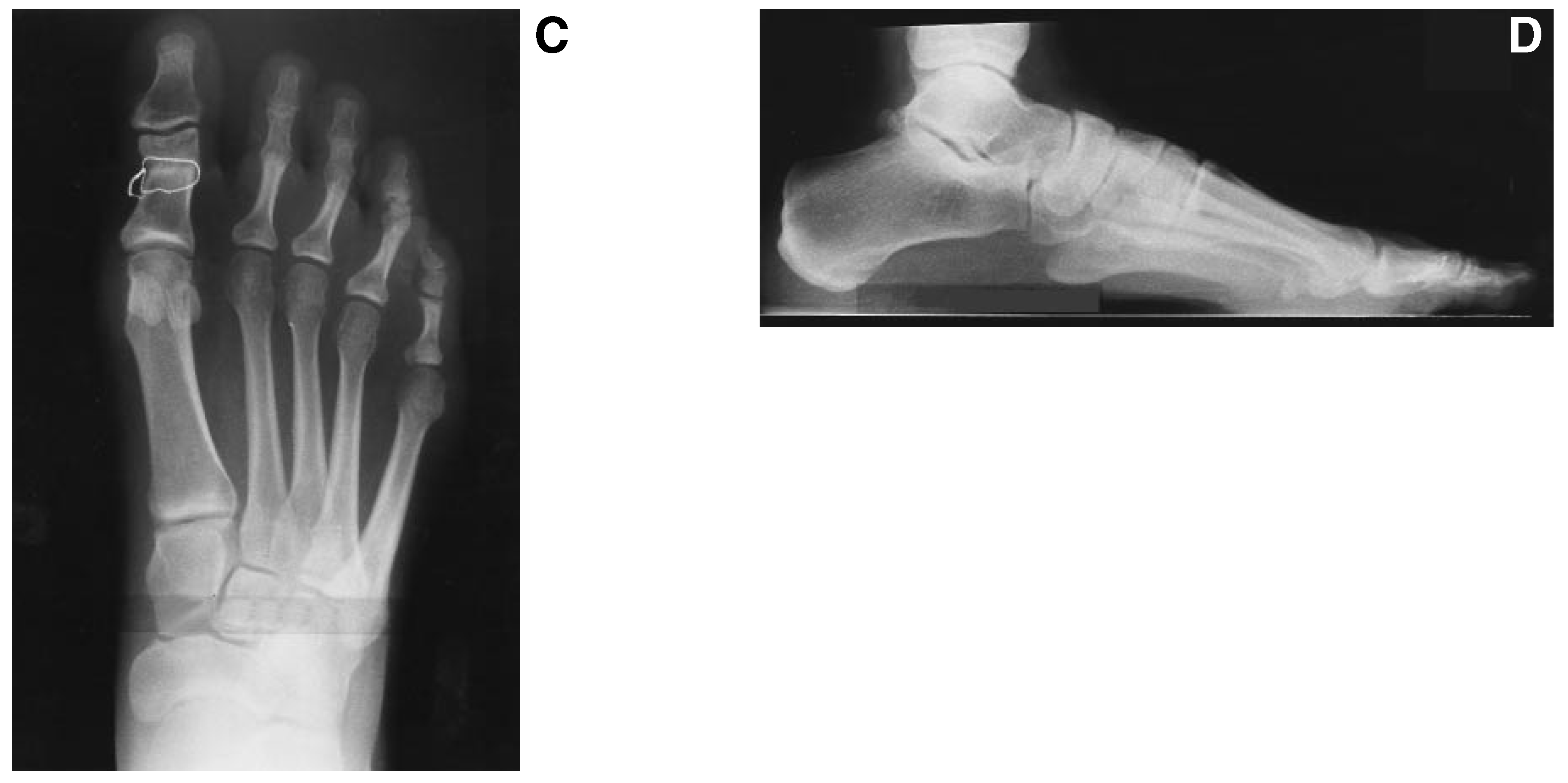
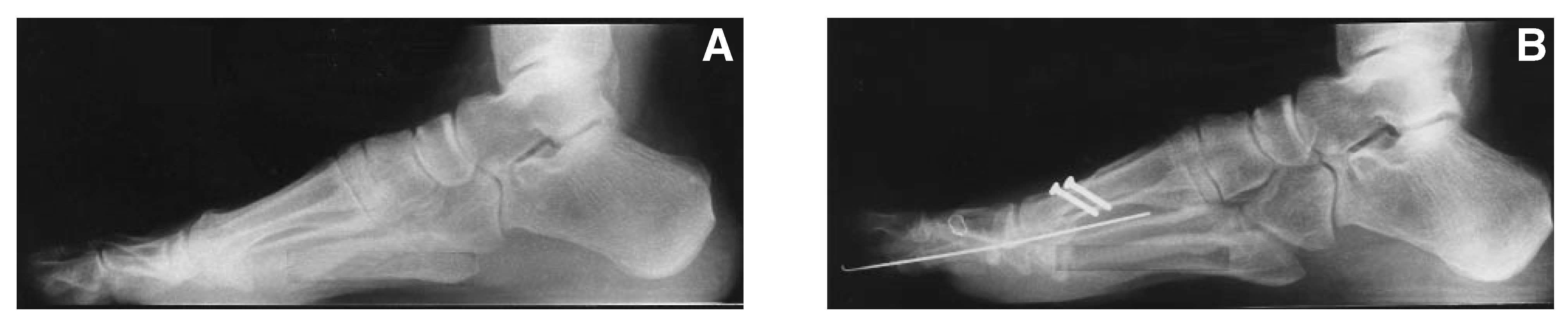
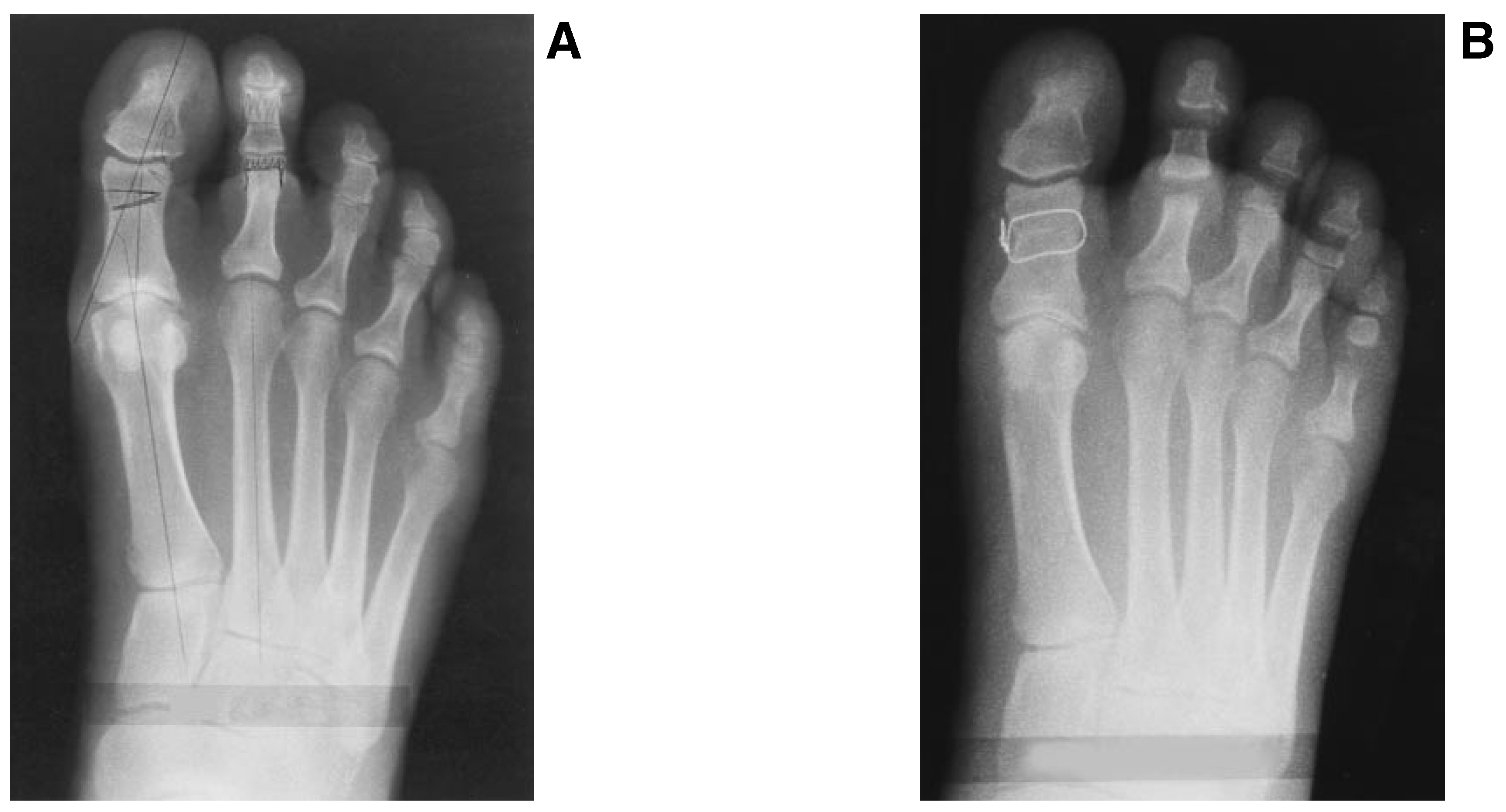
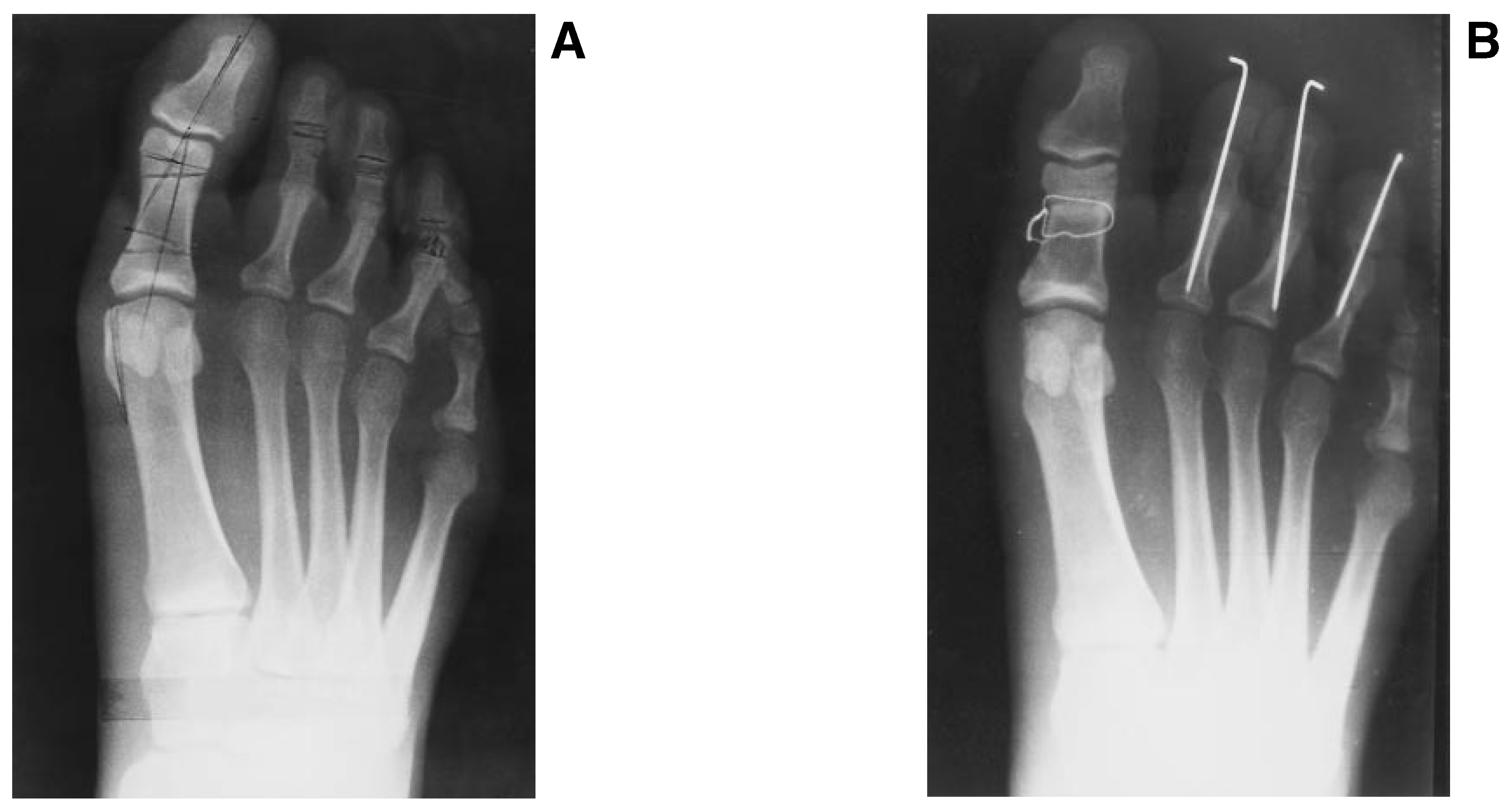
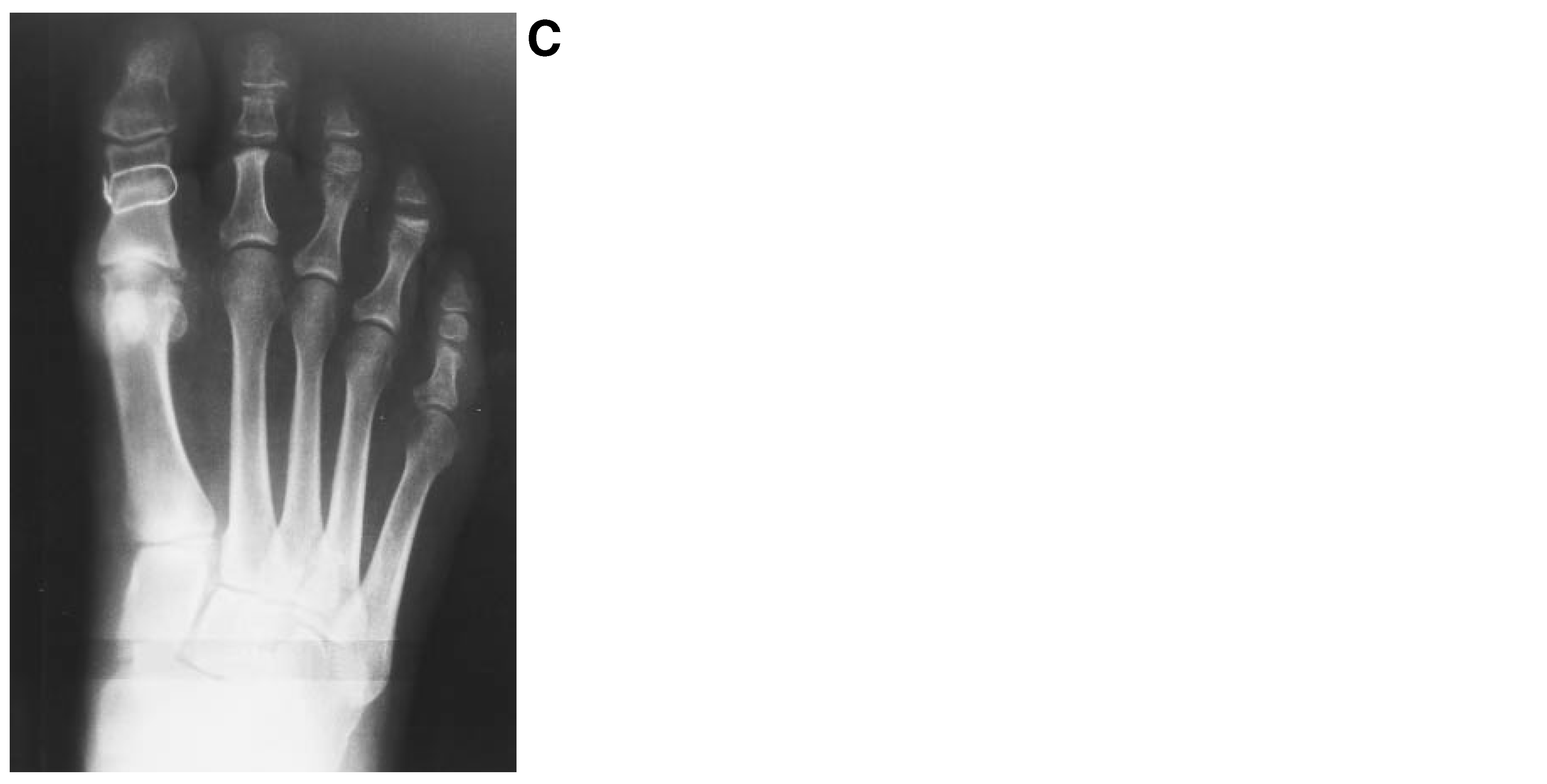
Immediate, guarded weightbearing in a surgical shoe is permitted. Postoperative radiographs should demonstrate a closely approximated osteotomy site surrounded by a horizontal stainless steel wire loop (Figs. 7–9).
In summary, the Akin osteotomy using horizontal interosseous wire-loop fixation has been found to be superior to previously used methods of fixation. The procedure is simple to perform, requires limited instrumentation, and has little margin for error. The fixation material is placed prior to osteotomy placement, thereby eliminating the possibility of lateral cortical hinge fracture during placement of the fixation material.
Figure 7.
Preoperative (A) and 6-week postoperative (B) radiographs. One-year postoperative dorsoplantar (C) and lateral (D) radiographs demonstrate that the osteotomy site is closed, the horizontal interosseous wire loop is intact, and there is satisfactory alignment of the hallux.
Figure 7.
Preoperative (A) and 6-week postoperative (B) radiographs. One-year postoperative dorsoplantar (C) and lateral (D) radiographs demonstrate that the osteotomy site is closed, the horizontal interosseous wire loop is intact, and there is satisfactory alignment of the hallux.
Figure 8.
A, Preoperative lateral radiograph. B, Postoperative lateral radiograph shows good alignment of the osteotomy and hallux.
Figure 8.
A, Preoperative lateral radiograph. B, Postoperative lateral radiograph shows good alignment of the osteotomy and hallux.
Figure 9.
Preoperative (A), 3-day postoperative (B), and 1-year follow-up (C) dorsoplantar radiographs demonstrate a satisfactory Akin osteotomy.
Figure 9.
Preoperative (A), 3-day postoperative (B), and 1-year follow-up (C) dorsoplantar radiographs demonstrate a satisfactory Akin osteotomy.