Next Article in Journal
The Effects of Increasing Heel Height on Forefoot Peak Pressure
Previous Article in Journal
Three-Dimensional Movement of the Foot During the Stance Phase of Walking
 
 
Journal of the American Podiatric Medical Association is published by MDPI from Volume 116 Issue 1 (2026). Previous articles were published by another publisher in Open Access under a CC-BY (or CC-BY-NC-ND) licence, and they are hosted by MDPI on mdpi.com as a courtesy and upon agreement with American Podiatric Medical Association.
Article

Heel Pain in Children Diagnosis and Treatment

by
Choll W. Kim
,
Kevin Shea
and
Henry G. Chambers
Department of Orthopaedic Surgery, University of California, San Diego, Medical Center 92103-8894, USA
J. Am. Podiatr. Med. Assoc. 1999, 89(2), 67-74; https://doi.org/10.7547/87507315-89-2-67 (registering DOI)
Published: 1 February 1999

Abstract

Heel pain in children is common, and its evaluation is challenging. Medical history and physical examination may be unrevealing owing to children’s limited communication skills. Often, advanced laboratory and imaging studies are required to make an accurate diagnosis. The most common causes of heel pain in children are apophysitis, enthesopathy, and overuse syndromes such as tendinitis. Juvenile rheumatoid arthritis is relatively uncommon. In very active children, occult fractures must also be evaluated. Pain unrelated to activity may indicate tumors, infection, or congenital problems. In general, heel pain in children is treated nonoperatively. For fractures in particular, children are less likely than adults to receive surgical treatment.

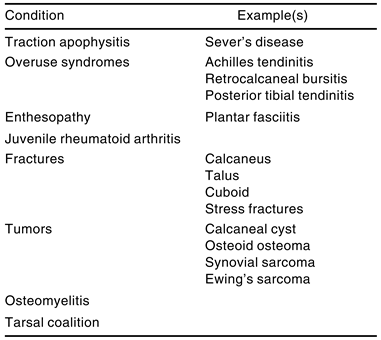
The evaluation of heel pain in children is often challenging. Unrevealing medical history and physical examination due to children’s limited communication skills, along with developmental changes, make the assessment and subsequent treatment of heel pain in children different from that in adults. This review summarizes the various causes of heel pain in children, discusses an approach to diagnosis, and makes suggestions for treatment. Table 1 shows several general categories of problems that may cause rearfoot pain in children.

Inflammatory Causes of Heel Pain

Traction Apophysitis: Sever’s Disease

Sever’s disease is a traction apophysitis of the Achilles tendon insertion at the calcaneus [1]. It is characterized by local tenderness and swelling and affects active children during the peak years of growth [2,3,4]. Originally thought to occur only in obese children, it is evident that active, nonobese children are equally susceptible to Sever’s disease [5]. The exact cause has not been elucidated. Multiple factors such as prolonged, repetitive activity, an imbalance between long-bone growth and soft-tissue growth, and limited dorsiflexion are thought to be contributors to the disease [6].
Patients with Sever’s disease usually complain of heel pain with weightbearing. The age at onset is usually 10 to 12 years in boys and 8 to 10 years in girls, a time of rapid growth; they have often begun participation in sports [5]. The traction apophysitis is bilateral in over half of the patients [5]. Physical examination reveals tenderness at the posterior and superior tip of the calcaneus. Subtle foot-alignment problems such as pronation, forefoot varus, and pes cavus are present in about one-fourth of patients [7]. There is usually mild equinus, with mild plantarflexion contracture (5° to 10°) and weak ankle dorsiflexor muscles [5,8].
Sever’s disease is not confirmed by radiographs. Fragmentation, sclerosis, and increased density of the apophysis are seen radiographically both in children with Sever’s disease and in children who have no pain [9]. Radiographs serve to rule out other causes of heel pain.
Treatment of Sever’s disease involves lower-extremity stretching, particularly of the tendo Achillis, ankle-dorsiflexion strengthening, and activity limitations. Heel cups or lifts in footwear are helpful in some cases. Symptoms resolve in 98% of patients treated conservatively, and nearly all patients who are athletes return to sports within 2 months [5]. Sever’s disease is not observed after age 15 years, around which time the apophysis fuses [6].

Overuse Syndromes

Children between 15 and 17 years of age generally are susceptible to many overuse syndromes similar to those found in adults. Achilles tendinitis is the most common of these overuse syndromes [10]. Retrocalcaneal bursitis, which is characterized by inflammation of the retrocalcaneal fat space anterior to the tendon, may also be present [11]. Tibialis posterior and peroneal tendinitis are also common among older, healthy children who are active in sports [10].
Treatment for overuse syndromes is usually palliative in both children and adults. A combination of activity restriction, anti-inflammatory drugs, and shoe modification is usually all that is necessary. In some cases, immobilization with a short-leg walking cast may be required.

Enthesopathy

Enthesopathy is inflammation of the cartilaginous attachment of ligaments and tendons to bone and is commonly associated with juvenile-onset seronegative spondyloarthropathy [12]. The term “spondyloarthritis” encompasses a group of interrelated syndromes that include ankylosing spondylitis, Reiter’s syndrome, and other forms of arthritis that are not associated with rheumatoid arthritis. These disorders often have similar clinical presentation and are commonly associated with the genetic marker HLA-B27 [13].
Many different sites may be affected, with the Achilles tendon and plantar fascia being common sites for enthesopathy [14,15]. As in adults, pain in children is often localized to the plantar medial surface of the heel in cases of plantar fasciitis. It is most severe during the first few steps after prolonged rest, especially after sleeping, when the foot is in an equinus position and the fascial tissue contracts. Radiographs of children with seronegative spondyloarthritis are marked by periostitis, severe osteopenia, calcaneal erosions, and heel spurs [14].
As with many chronic inflammatory conditions, the treatment for spondyloarthritis is nonoperative. Activity modification, nonsteroidal anti-inflammatory drugs, and heel-cord stretching are the primary forms of treatment. Orthotic devices and well-fitting footwear may be beneficial.

Juvenile Rheumatoid Arthritis

Juvenile rheumatoid arthritis in the rearfoot usually affects children between 6 and 14 years of age [16]. The juvenile form of arthritis typically affects large, rather than small, joints and is generally seronegative [17]. No genetic relationship is known for patients with this disease [18]. Three distinct forms of this type of arthritis exist, but any form may involve the tibiotalar and subtalar joints and cause heel pain [16]. The systemiconset form (Still’s disease) is found in 10% of patients and is marked by fever, rash, splenomegaly, tenosynovitis, myositis, and polyarticular arthritis. The polyarticular form involves more than the four major joints. The oligoarticular form is the most common form and involves four or fewer joints.
The primary criteria for diagnosis of juvenile rheumatoid arthritis are persistent arthritis of one or more joints for a period of more than 6 weeks and the exclusion of other forms of childhood arthritis. Small joints are more commonly involved in the polyarticular and systemic-onset forms of juvenile rheumatoid arthritis. Involvement tends to be bilateral, but not necessarily symmetrical [16]. Patients with these forms of this disease may present with involvement of the tibiotalar or subtalar joints.
Radiographs at the first stage of the disease show osteopenia at the metaphysis adjacent to the joint, soft-tissue swelling, and periosteal reaction. Cortical erosion becomes evident in the intermediate stage, along with joint-space narrowing. In the later stages, there is joint ankylosis and deformity. Laboratory evaluation is generally not helpful for diagnosis. Tests for rheumatoid factor are usually negative, except in the small subset of patients with the polyarticular form. Antinuclear antibodies may be present in the pauciarticular and polyarticular forms [17,18,19]. The erythrocyte sedimentation rate is usually elevated in patients with this disease. High white blood cell counts and anemia may be seen in patients with the systemic form.
Nonsteroidal anti-inflammatory drugs are the main form of treatment. Because there is no cure for this disease, treatment is aimed at suppressing the activity of the disease. Progressive therapy with more potent drugs such as gold salts, penicillamine, or steroids may be used. Selective intra-articular injections with steroid may be useful if done with fluoroscopic imaging [16]. Evaluation and management by a rheumatologist is essential for the care of patients with juvenile rheumatoid arthritis.

Trauma

Fractures of the Calcaneus

Fractures of the calcaneus occur most commonly between 6 and 15 years of age [20]. In children under 10 years, the fracture may result from jumping 2 or 3 feet from a couch or stairway [21]. In adolescent patients, the fracture usually results from a more serious fall—an average of 14 feet, according to one study [21]. Fracture types are varied, but they may be broadly divided into intra-articular and extra-articular fractures [22]. Extra-articular fractures are twice as common as intra-articular fractures [23], and often occur at the posterior subtalar joint [21]. The elasticity of the involved structures in the child and the subsequent remodeling of the bone make calcaneal fractures in children less severe than in adults.
Patients who have calcaneal fractures may present with a limp or they may refuse to walk. Calcaneal fractures are easily missed on initial radiographs. The fracture lines are often subtle, with little displacement [24]. The best radiographic projections for evaluating calcaneal fractures in children are the axial (Harris) view, the oblique anteroposterior view, and the lateral view. In children under 5 years of age, an occult calcaneal fracture is known as “another toddler’s fracture.” A radionuclide scan may be necessary to confirm the diagnosis of an occult calcaneal fracture [25,26]. In severe comminuted fractures of the calcaneus requiring open reduction and internal fixation, computed tomographic scans are useful for surgical planning [27].
Most patients with calcaneal fractures are treated nonoperatively with immobilization and no weightbearing for several weeks. The prognosis for these fractures, including those that are intra-articular, is good [21,28]. Severely displaced, comminuted fractures may require open reduction and internal fixation to prevent deformity and post-traumatic arthritis in the patient.

Fractures of the Talus

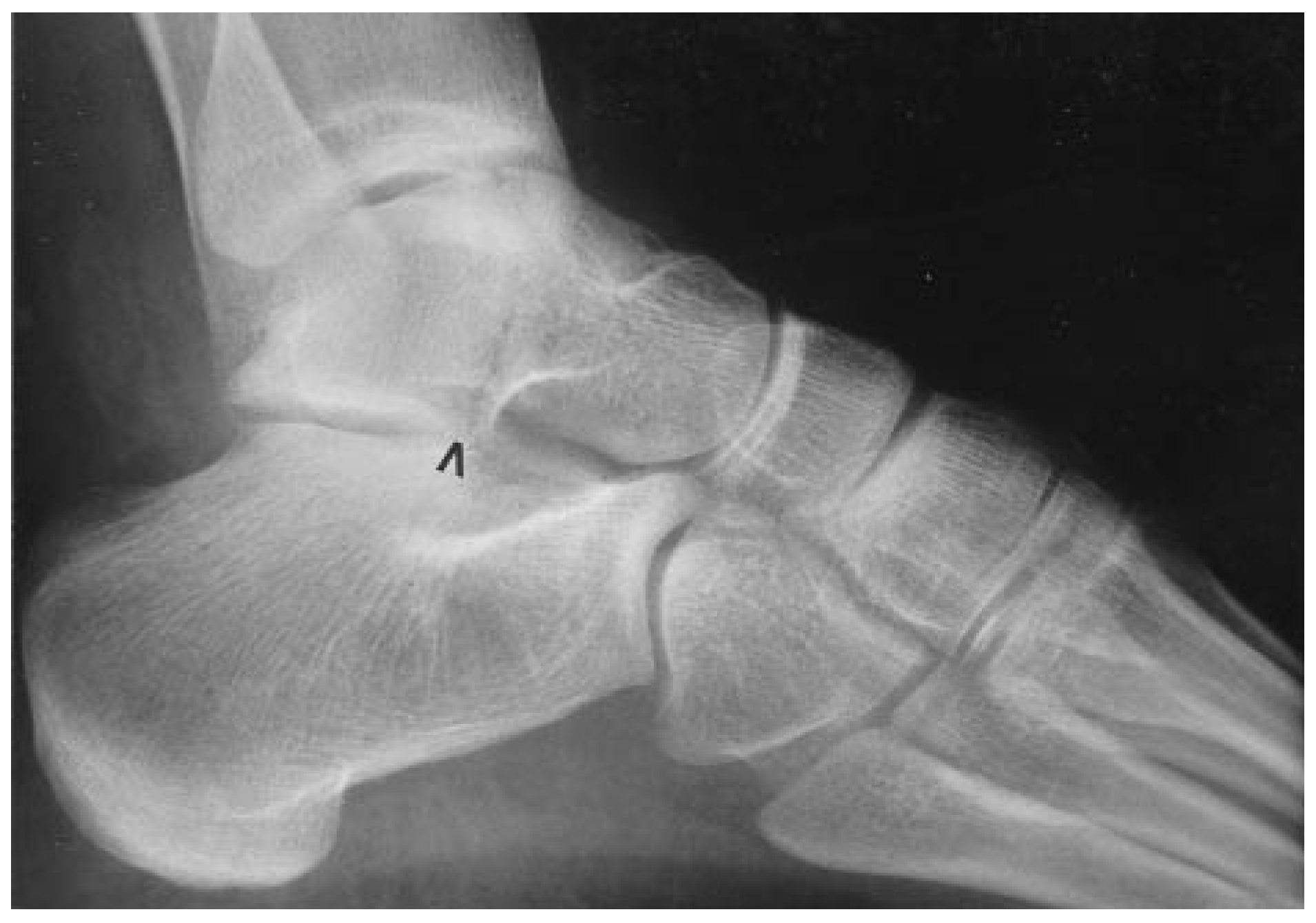
Fractures of the talus are rare in children [23]. When they are present, the injury most commonly is an undisplaced fracture through the neck of the talus [29]. The typical mechanism of injury is forced dorsiflexion [30]. The most important factor in the prognosis of talar neck fractures is the development of avascular necrosis. When the fracture is markedly displaced, the risk of avascular necrosis is high. In older children, fractures of the talar dome may occur, particularly on the lateral side of the talus (Figure 1). These must be distinguished from osteochondritis dissecans, which occurs more frequently on the medial side of the talar dome [31].
Treatment of talar neck fractures is usually nonoperative. Closed reduction, if necessary, is performed, followed by immobilization in a long-leg cast. Open reduction is indicated if reduction is unacceptable, with greater than 5 mm of displacement and greater than 5° of malalignment on the anteroposterior view [30,32].

Other Fractures of the Tarsus

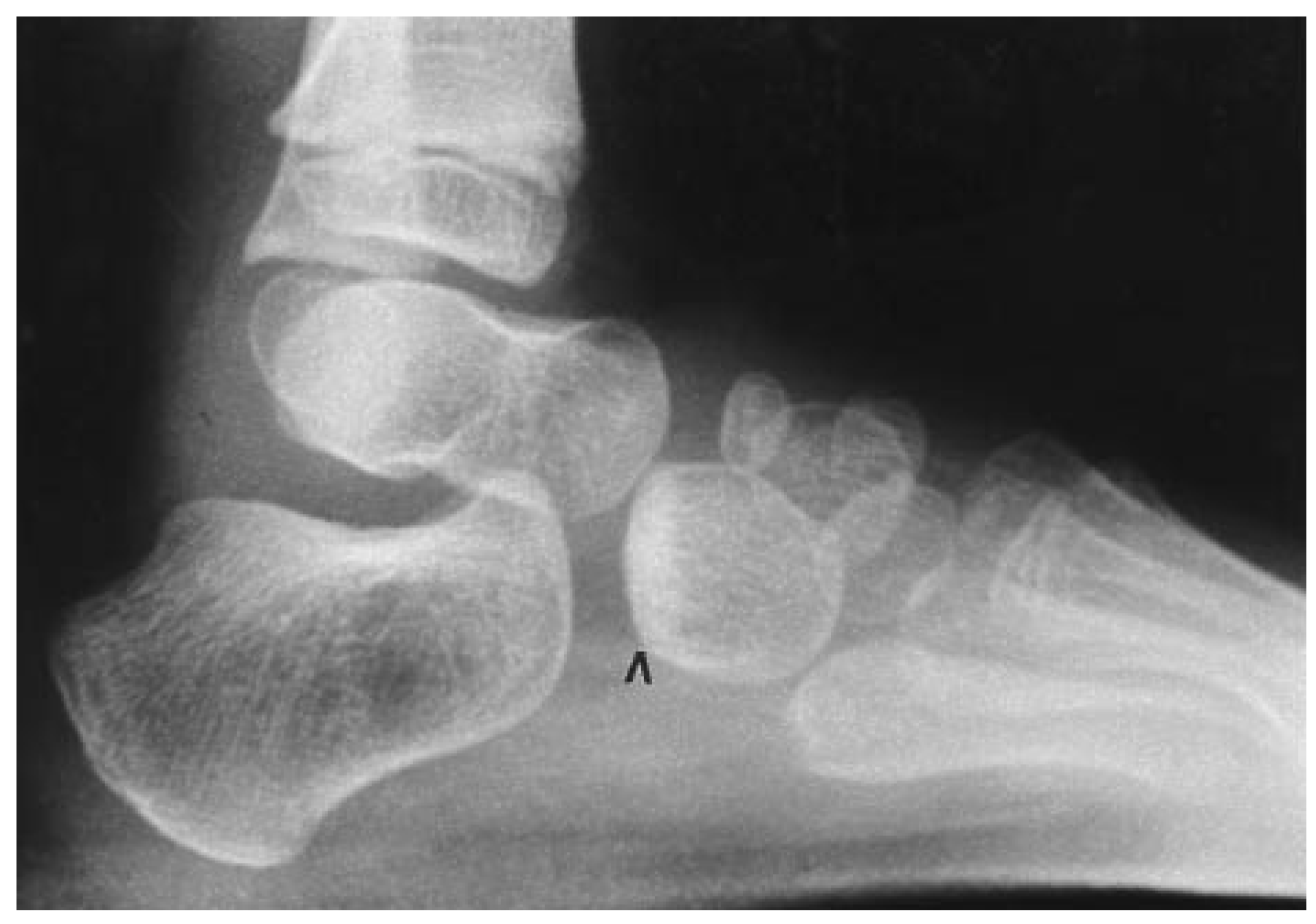
Although far less common than calcaneal and talar fractures, fractures of other bones in the tarsus may occur and cause heel pain (Figure 2). Occult fractures of the cuboid and navicular must be considered in addition to calcaneal and talar fractures as the possible cause of heel pain in children [24,33,34,35,36]. Treatment of these fractures is usually nonoperative.

Stress Fractures of the Tarsus and Calcaneus

Stress fractures of the foot are less common in children than in adults [37]. The pediatric population at risk is the skeletally maturing adolescent at the beginning of intensive training for sports. Tarsal stress fractures constitute about 2% of all stress fractures in children [38]. Symptoms of lower-extremity stress fractures include pain with weightbearing, but with less discomfort at rest than with a fracture resulting from trauma. Tenderness is marked, but swelling is minimal. Radiographs of stress fractures show periosteal new callus formation at approximately 2 weeks. Scintigraphy may be more sensitive than radiography, allowing earlier diagnosis. Treatment involves a short course (about 2 weeks) of protected weightbearing in a short-leg cast.

Tumorous Conditions

Calcaneal Cyst (Unicameral Bone Cyst)

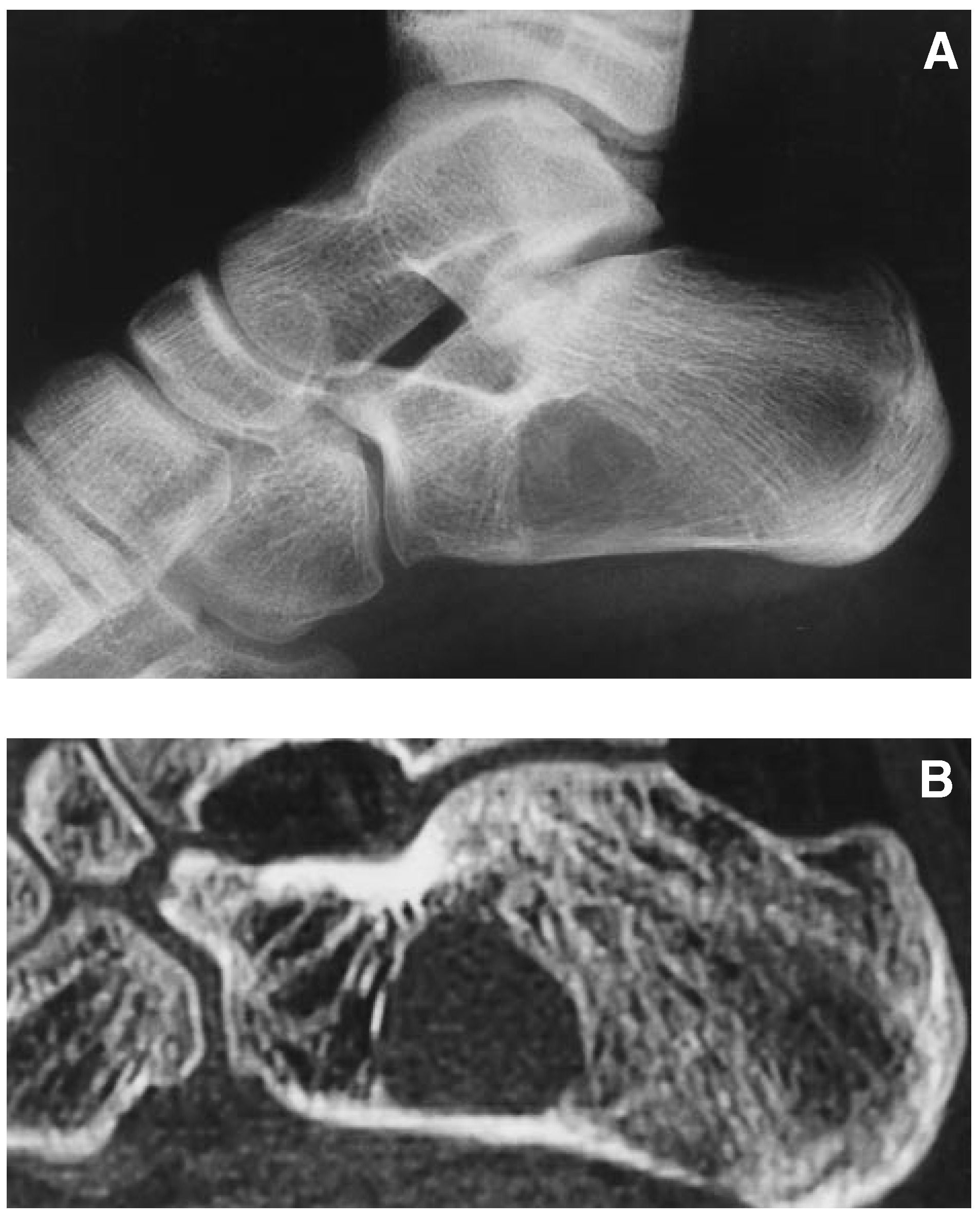
Cysts of the calcaneus are usually asymptomatic; however, microfractures of the cyst wall may cause pain [39,40]. Calcaneal cysts are usually located anteriorly and laterally, and contain little or no internal trabeculation. The cystic lucency may be expansile, and is usually circumscribed by a thin sclerotic margin (Figure 3) [41]. A normal variant of the calcaneus may mimic a similar lesion. However, the normal variant, termed a “pseudocyst,” contains trabeculations and is not circumscribed by a sclerotic border [40]. The most common tumor of the rearfoot in children is the unicameral bone cyst [39,40]. Enchondromas, aneurysmal bone cysts, eosinophilic granulomas, osteoid osteomas, and intraosseous lipomas are also seen in children, but they are uncommon [42,43,44,45,46,47,48].
The treatment of calcaneal cysts is usually nonoperative. If the cyst is painful, activity modification and application of a splint may be necessary. Although percutaneous steroid injection is 75% to 96% effective in treating unicameral bone cysts throughout the body, unicameral bone cysts of the calcaneus may not respond well to steroid injections [49,50]. In a study of six cases of unicameral bone cysts of the calcaneus, both conservative therapy and steroid injections had poor results, and all cases required curettage and bone grafting for ultimate relief of symptoms [51]. Enchondromas, aneurysmal bone cysts, eosinophilic granulomas, and intraosseous lipomas may require open curettage and bone grafting.

Osteoid Osteoma

Almost 4% of all bone lesions in the first decade are osteoid osteomas [52]. Most lesions occur in the long bones, but those in the foot tend to occur in the talar neck [53]. Patients typically present with night pain that is relieved by aspirin [43,44,46,47]. There may also be local tenderness and soft-tissue swelling.
Radiographic examination reveals a tumor that is round and usually less than 1 cm in diameter. When it exceeds 2 cm, the lesion is termed an osteoblastoma. Central calcification produces a characteristic nidus surrounded by a radiodense border. Technetium bone scans reveal characteristic features, with an intense central uptake region surrounded by a lesser degree of uptake. This double-density appearance on scintigraphy is characteristic of osteoid osteoma.
Treatment of osteoid osteoma is palliative with aspirin. There may be gastrointestinal upset, which can complicate this treatment option. For recalcitrant cases, surgical treatment may be warranted. Computed tomographic scans are useful for preoperative planning of the surgical approach. Curettage and bone grafting is curative.

Malignant Tumors of the Heel

Malignant bone tumors are extremely rare in the feet of children [54]. Synovial sarcoma is the most common malignant tumor of the foot [45,55]. It arises from the lining of joints, tendons, and bursae, affecting the foot in about 45% of cases. Ewing’s sarcoma is the most common primary bone tumor that affects the heel [42,56,57,58]. One-third to one-half of cases of Ewing’s sarcoma found in the foot occur in the heel [57,58]. Ewing’s sarcoma is highly malignant. Treatment is usually with wide surgical resection or amputation, combined with chemotherapy [59].

Infectious Causes of Heel Pain

Osteomyelitis

The early diagnosis of bone and joint infection in infancy and childhood is important because extensive growth plate and epiphyseal destruction may occur relatively quickly. In addition to the extensive vascular supply to the metaphysis, the growth plate contains venous channels that allow for extension of infection from one area to the other by direct or retrograde flow. The metaphyseal vessels are of low flow, allowing for the deposit of bacterial organisms during septic episodes. This makes the hematogenous mode of inoculation more common in infancy and childhood.
The most common cause of osteomyelitis of the foot in children, though, is a puncture wound [60]. The most common pathogens are Staphylococcus aureus in toddlers and children, group B hemolytic streptococci in newborns, and meningococcus in infants. In addition to Staphylococcus, Salmonella and pneumococcus should be considered in patients with sickle cell anemia. Pseudomonas is common in cases involving puncture wounds through sneakers [61].
The calcaneus and talus are common sites when hematogenous osteomyelitis occurs in the foot [62,63,64]. Osteomyelitis in the calcaneus tends to develop adjacent to the apophysis. As they heal, the lesions tend to develop sclerotic margins, gradually ossify, and disappear [65,66]. Staphylococcal osteomyelitis has also been reported in the calcaneus following needle pricks performed to obtain blood from newborns [67].
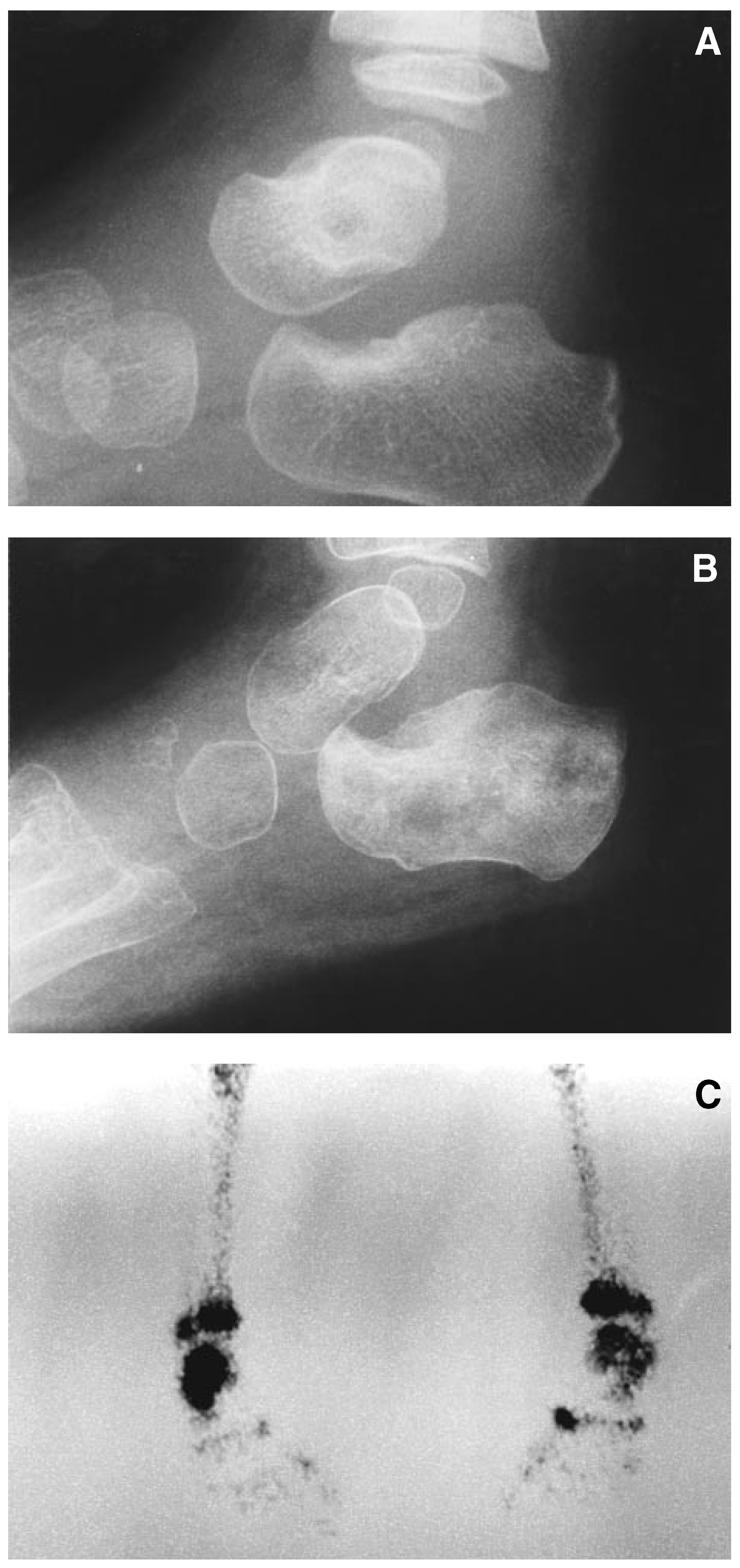
Radiographically, the lesion appears as a well-defined, round, lucent area that may be located either centrally or peripherally in the bone (Figure 4A,B). A radionuclide bone scan may be positive before radiologic abnormalities appear (Figure 4C). Blood and bone cultures are both important for diagnosis and for selection of antibiotics.
Treatment of osteomyelitis involves long-term intravenous antibiotics, usually for 6 weeks, and surgical drainage if necessary [63]. On rare occasions, antibiotic-impregnated polymethylmethacrylate implanted into the debrided site may be necessary to eradicate the offending organism [68]. The erythrocyte sedimentation rate and C-reactive protein are useful laboratory tests for following the progress of treatment [69]. Bacterial-sensitivity studies are helpful if an organism can be identified.

Congenital Causes of Heel Pain

Tarsal Coalition

Tarsal coalition, also known as peroneal spastic flatfoot, is an abnormal fusion of two or more independent bones. Pain, rigidity, rearfoot valgus, peroneal spasm, and loss of normal subtalar motion are common clinical findings associated with tarsal coalition [70]. The union between the tarsal bones may be fibrous, cartilaginous, or bony. The most common types of tarsal coalition are those that occur between the calcaneus and the navicular, and those that occur between the talus and the calcaneus. The cause of tarsal coalition is unknown, but it is probably related to a failure of normal segmentation.
Calcaneonavicular coalitions are the most common type of tarsal coalition and tend to occur at an earlier age than talocalcaneal coalitions, usually between the ages of 8 and 12 years [3,70]. In some cases, there may be an autosomal-dominant pattern, with an equal sex distribution. Patients may be prone to recurrent ankle sprains because of decreased subtalar motion. Calcaneonavicular coalitions are difficult to see on standard anteroposterior and lateral radiographs; a 45% oblique projection of the foot is usually necessary for seeing the coalition. The calcaneus and navicular do not normally articulate with each other. The coalition may appear as a continuous bridge of bone in which the edges of the bones approach each other but have a small, lucent cleft between them. Sclerosis of the edges of the these two facets is frequently seen. Computed tomographic scans confirm the diagnosis [71,72].
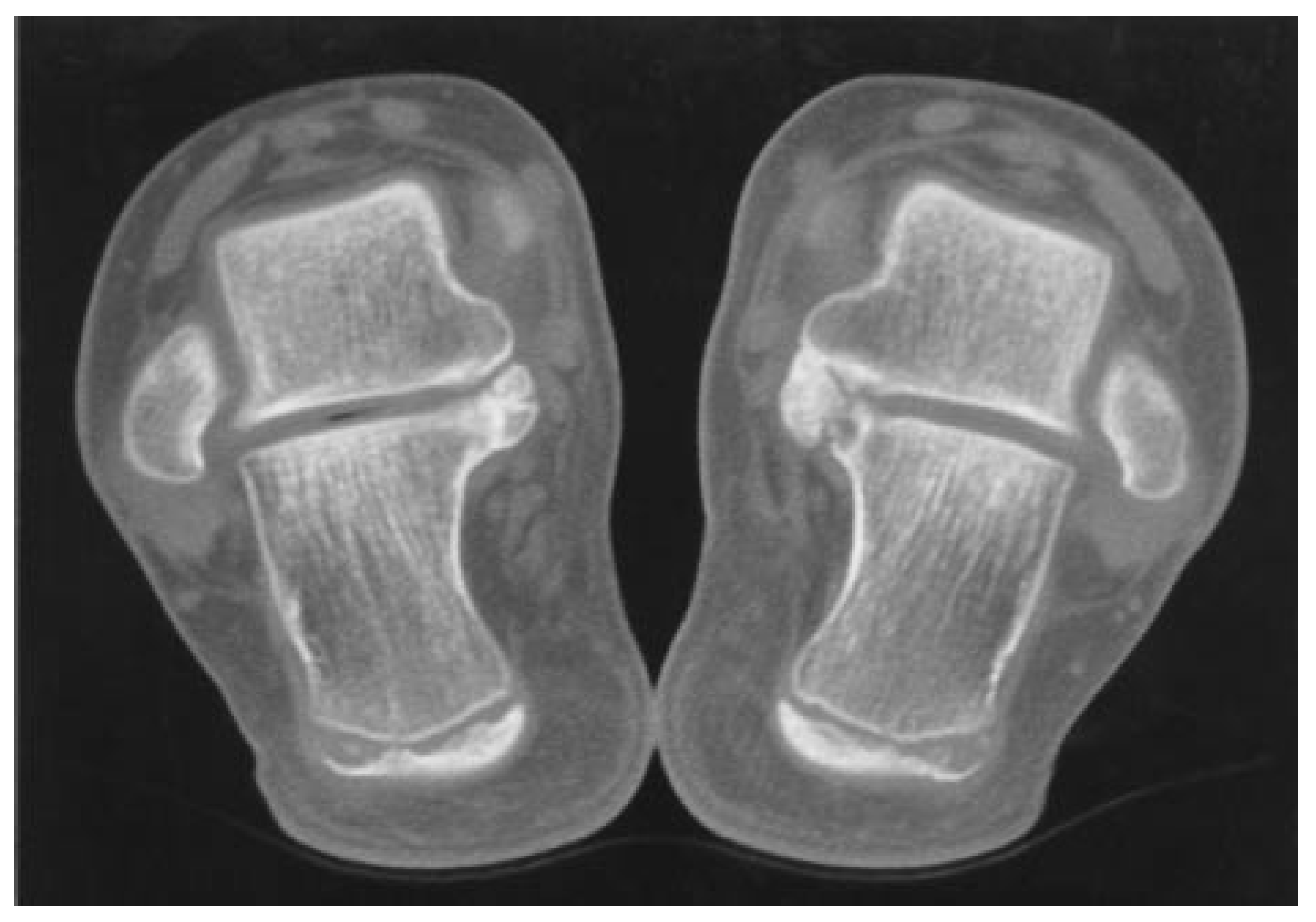
Talocalcaneal coalitions usually are seen in patients in the second decade of life, between the ages of 12 and 16 years. A few cases show a heritable tendency. Talocalcaneal coalition occurs more commonly in boys, with a ratio of 3:1 or 4:1. Up to half of these cases are bilateral. In this type of coalition there is a medial tethering of the talocalcaneal joint, which causes a loss of the normal subtalar motion. Standard anteroposterior and lateral radiographs do not show the coalition well, although secondary changes such as talar beaking may be present. A posterior axial-oblique projection, which shows the calcaneus in the anteroposterior view and brings into view the middle and posterior facets, provides a better view of the talocalcaneal coalition. Axial computed tomographic scans confirm the diagnosis and are important in defining the anatomy if surgery is considered (Figure 5).
Many patients with talocalcaneal coalition improve with activity modification or a period of cast immobilization. In cases that remain symptomatic, surgical resection of the bar with fat-graft interposition is a treatment option [71,73]. This produces symptomatic relief in two-thirds of patients. Subtalar fusion or triple arthrodesis may be performed in cases of failed resections [71]. Calcaneal osteotomy may be necessary, as the rearfoot is often fixed in valgus prior to surgery.

Summary

Heel pain in children is common. Unfortunately, accurate diagnosis of the cause of the pain is often challenging. Although the medical history continues to be the cornerstone of the diagnosis, children may complain of a limp or refuse to walk. A detailed physical examination provides further clues in reaching a diagnosis, but adjunctive testing is frequently necessary. The white blood cell count, erythrocyte sedimentation rate, and C-reactive protein laboratory tests provide indirect measures of infection. Plain radiographs help rule out obvious fractures and tumors. More often than in adults, a symptom of heel pain in children may require scintigraphy, computed tomographic scans, and magnetic resonance imaging to find the cause and make the diagnosis. Most cases of heel pain in children respond to nonoperative therapy. Fractures, in particular, are treated much more conservatively in children than in adults. Tumors may require surgical intervention. The wide variety of possible causes of heel pain in children makes this problem a challenging one.

References

  1. SEVER J: Apophysitis of the os calcis. N Y Med J 95, 1025, 1912.
  2. CLAIN, M; HERSHMAN, E. Overuse injuries in children and adolescents. Physician Sportsmed 1989, 17, 111. [Google Scholar] [CrossRef]
  3. GREGG, JR. DAS M: Foot and ankle problems in the preadolescent and adolescent athlete. Clin Sports Med 1982, 1, 131. [Google Scholar] [CrossRef]
  4. MADDEN, CC; MELLION, MB. Sever’s disease and other causes of heel pain in adolescents. Am Fam Physician 54, 1995, 1996.
  5. MICHELI, LJ; IRELAND, ML. Prevention and management of calcaneal apophysitis in children: an overuse syndrome. J Pediatr Orthop 1987, 7, 34. [Google Scholar] [CrossRef] [PubMed]
  6. SZAMES, SE; FORMAN, WM; OSTER, J. ET AL: Sever’s disease and its relationship to equinus: a statistical analysis. Clin Podiatr Med Surg 1990, 7, 377. [Google Scholar] [CrossRef]
  7. MICHELI LJ: The traction apophysitises. Clin Sports Med 1987, 6, 389. [CrossRef]
  8. STANITSKI C: Combating overuse injuries: a focus on children and adolescents. Physician Sportsmed 1993, 21, 87. [CrossRef]
  9. OZONOFF, M. Pediatric Orthopedic Radiology; WB Saunders: Philadelphia, 1992. [Google Scholar]
  10. MICHELI, LJ; FEHLANDT, AF, JR. Overuse injuries to tendons and apophyses in children and adolescents. Clin Sports Med 1992, 11, 713. [Google Scholar] [CrossRef] [PubMed]
  11. HENEGHAN, MA; WALLACE, T. Heel pain due to retrocalcaneal bursitis: radiographic diagnosis with an historical footnote on Sever’s disease. Pediatr Radiol 1985, 15, 119. [Google Scholar] [CrossRef]
  12. OLIVIERI, I; GEMIGNANI, G; BRACCINI, G. ET AL: Behecet’s syndrome and spondyloarthritis [letter]. Br J Rheumatol 1990, 29, 409. [Google Scholar] [CrossRef]
  13. BREWERTON D: HLA-B27 and the inheritance of susceptibility to rheumatic disease. Arthritis Rheum 1976, 19, 656. [CrossRef]
  14. JACOBS, JC; BERDON, WE; JOHNSTON, AD. HLA-B27–associated spondyloarthritis and enthesopathy in childhood: clinical, pathologic, and radiographic observations in 58 patients. J Pediatr 1982, 100, 521. [Google Scholar] [CrossRef]
  15. SCHERER, PR; GORDON, D; KASHANIAN, A; et al. Misdiagnosed recalcitrant heel pain associated with HLA-B27 antigen. JAPMA 1995, 85, 538. [Google Scholar] [CrossRef] [PubMed]
  16. REMEDIOS, D; MARTIN, K; KAPLAN, G; et al. Juvenile chronic arthritis: diagnosis and management of tibio-talar and sub-talar disease. Br J Rheumatol 1997, 36, 1214. [Google Scholar] [CrossRef] [PubMed][Green Version]
  17. CASSIDY, J. Juvenile Rheumatoid Arthritis; WB Saunders: Philadelphia, 1989. [Google Scholar]
  18. CASSIDY, J; LEVISON, J; BASS, J. ET AL: A study of classification criteria for a diagnosis of juvenile rheumatoid arthritis. Arthritis Rheum 1986, 29, 274. [Google Scholar] [CrossRef]
  19. SCHALLER J: Juvenile rheumatoid arthritis. Pediatr Rev 1980, 2, 163. [CrossRef]
  20. CANALE S: Operative Pediatric Orthopaedics. CV Mosby: St Louis, 1995.
  21. WILEY, JJ. PROFITT A: Fractures of the os calcis in children. Clin Orthop 1984, 188, 131. [Google Scholar] [CrossRef]
  22. SCHMIDT, TL; WEINER, DS. Calcaneal fractures in children: an evaluation of the nature of the injury in 56 children. Clin Orthop 1982, 171, 150. [Google Scholar] [CrossRef]
  23. SCHANTZ, K; RASMUSSEN, F. Calcaneus fracture in the child. Acta Orthop Scand 1987, 58, 507. [Google Scholar] [CrossRef]
  24. RASMUSSEN, F; SCHANTZ, K. Radiologic aspects of calcaneal fractures in childhood and adolescence. Acta Radiol Diagn (Stockh) 1986, 27, 575. [Google Scholar] [CrossRef]
  25. STARSHAK, R; SIMONS, G; STY, J. Occult fracture of the calcaneus: another toddler’s fracture. Pediatr Radiol 1984, 14, 37. [Google Scholar] [CrossRef]
  26. ENGLARO, EE; GELFAND, MJ; PALTIEL, HJ. Bone scintigraphy in preschool children with lower extremity pain of unknown origin. J Nucl Med 1992, 33, 351. [Google Scholar]
  27. PABLOT, S; DANEMAN, A; STRINGER, D; et al. The value of computed tomography in the early assessment of comminuted fractures of the calcaneus: a review of three patients. J Pediatr Orthop 1985, 5, 435. [Google Scholar] [CrossRef]
  28. SCHANTZ, K; RASMUSSEN, F. Good prognosis after calcaneus fracture in childhood. Acta Orthop Scand 1988, 59, 560. [Google Scholar] [CrossRef]
  29. OGDEN J: Skeletal Injury in the Child, 2nd ed; WB Saunders: Philadelphia, 1990.
  30. GROSS R: Fractures of the Talus. In Fractures in Children, 4th ed; Lippincott-Raven: Philadelphia, 1996; p. 1442.
  31. CANALE, ST. BELDING RH: Osteochondral lesions of the talus. J Bone Joint Surg Am 1980, 62, 97. [Google Scholar] [CrossRef] [PubMed]
  32. CANALE, S; KELLY, F. Fractures of the neck of the talus: long-term evaluation of 71 cases. J Bone Joint Surg Am 1978, 60, 143. [Google Scholar] [CrossRef] [PubMed]
  33. HERMEL M, GERSHON-COHEN J: The nutcracker fracture of the cuboid by indirect violence. Radiology 1953, 60, 850. [CrossRef] [PubMed]
  34. NICASTRO, J. HAUPT H: Probable stress fracture of the cuboid in an infant. J Bone Joint Surg Am 1984, 66, 1106. [Google Scholar] [CrossRef]
  35. BLUMBERG K, PATTERSON R: The toddler’s cuboid fracture. Radiology 1991, 179, 93. [CrossRef]
  36. JOHN, SD; MOORTHY, CS. SWISCHUK LE: Expanding the concept of the toddler’s fracture. Radiographics 1997, 17, 367. [Google Scholar] [CrossRef]
  37. GRIFFIN LY: Common sports injuries of the foot and ankle seen in children and adolescents. Orthop Clin North Am 1994, 25, 83. [CrossRef]
  38. GROSS R: “Stress Fractures,” in Fractures in Children, 4th ed; Lippincott-Raven: Philadelphia, 1996; p. 1479.
  39. SMITH, SB; SHANE, HS. Simple bone cyst of the calcaneus: a case report and literature review. JAPMA 1994, 84, 127. [Google Scholar] [CrossRef] [PubMed]
  40. BERLIN, SJ; MIRKIN, GS. TUBRIDY SP: Tumors of the heel. Clin Podiatr Med Surg 1990, 7, 307. [Google Scholar] [CrossRef]
  41. ABDELWAHAB, I; LEWIS, M; KLEIN, M. Case report 515: simple (solitary) bone cyst of the calcaneus. Skeletal Radiol 1989, 17, 607. [Google Scholar] [CrossRef]
  42. CAMPBELL, CJ. LEUPOLD RG: Tumors and tumor-like conditions of the os calcis. Orthop Clin North Am 1973, 4, 145. [Google Scholar] [CrossRef] [PubMed]
  43. GORANSON, K; JOHNSON, RP. Osteoid osteoma of os calcis: diagnosis is made by computerized tomography. Orthop Rev 1986, 15, 98. [Google Scholar]
  44. JACKSON, RP; RECKLING, FW; MANTS, FA. Osteoid osteoma and osteoblastoma: similar histologic lesions with different natural histories. Clin Orthop 1977, 128, 303. [Google Scholar] [CrossRef]
  45. KIRBY, EJ; SHEREFF, MJ; LEWIS, MM. Soft-tissue tumors and tumor-like lesions of the foot: an analysis of eightythree cases. J Bone Joint Surg Am 1989, 71, 621. [Google Scholar] [CrossRef]
  46. SHEREFF, MJ; CULLIVAN, WT; JOHNSON, KA. Osteoid-osteoma of the foot. J Bone Joint Surg Am 1983, 65, 638. [Google Scholar] [CrossRef]
  47. SWEE, RG; MCLEOD, RA; BEABOUT, JW. Osteoid osteoma: detection, diagnosis, and localization. Radiology 1979, 130, 117. [Google Scholar] [CrossRef] [PubMed]
  48. GUNTERBERG, B; KINDBLOM, LG. Intraosseous lipoma: a report of two cases. Acta Orthop Scand 1978, 49, 95. [Google Scholar] [CrossRef] [PubMed]
  49. SCAGLIETI, O; MARCHETTI, P; BARTOLOZZI, P. The effects of methylprednisolone acetate in the treatment of bone cysts. J Bone Joint Surg Br 1979, 61, 200. [Google Scholar] [CrossRef]
  50. OPPENHEIM W, GALLENO H: Operative treatment versus steroid injection in the management of unicameral bone cysts. J Pediatr Orthop 1984, 4, 1.
  51. MOREAU, G. LETTS M: Unicameral bone cyst of the calcaneus in children. J Pediatr Orthop 1994, 14, 101. [Google Scholar] [CrossRef]
  52. SENAC, M; ISAACS, H; GWINN, J. Primary lesion of bone in the first decade of life: retrospective survey of biopsy results. Radiology 1986, 160, 491. [Google Scholar] [CrossRef]
  53. CAPANNA, R; VAN HORN, J; AYALA, A. ET AL: Osteoid osteoma and osteoblastoma of the talus: a report of 40 cases. Skeletal Radiol 1986, 15, 360. [Google Scholar] [CrossRef] [PubMed]
  54. TACHDJIAN M: The Child’s Foot; WB Saunders: Philadelphia, 1985.
  55. 55. WU KK: Synovial sarcoma of the foot. J Foot Surg 1987, 26, 359.
  56. JAFFE, R; SANTAMARIA, M; YUNIS, EJ. ET AL: The neuroectodermal tumor of bone. Am J Surg Pathol 1984, 8, 885. [Google Scholar] [CrossRef]
  57. SHIRLEY, SK; ASKIN, FB; GILULA, LA. ET AL: Ewing’s sarcoma in bones of the hands and feet: a clinicopathologic study and review of the literture. J Clin Oncol 1985, 3, 686. [Google Scholar] [CrossRef]
  58. 58. WU KK: Ewing’s sarcoma of the foot. J Foot Surg 1989, 28, 166.
  59. SPRINGFIELD D: Pediatric Orthopaedics, 4th ed; Lippincott-Raven: Philadelphia, 1996.
  60. FITZGERALD, R; COWAN, J. Puncture wounds of the foot. Orthop Clin North Am 1975, 6, 965. [Google Scholar] [CrossRef] [PubMed]
  61. FISHER, M; GOLDSMITH, J; GILLIGAN, P. Sneakers as a source of Pseudomonas aeruginosa in children with osteomyelitis following puncture wounds. J Pediatr 1985, 106, 607. [Google Scholar] [CrossRef] [PubMed]
  62. ROGOFF, RS; TINKLE, JD; BARTIS, DG. Unusual presentation of calcaneal osteomyelitis: twentyfive years after inoculation. JAPMA 1997, 87, 125. [Google Scholar] [CrossRef] [PubMed]
  63. WINIKER, H; SCHEARLI, AF. Hematogenous calcaneal osteomyelitis in children. Eur J Pediatr Surg 1991, 1, 216. [Google Scholar] [CrossRef]
  64. SKEVIS XA: Primary subacute osteomyelitis of the talus. J Bone Joint Surg Br 1984, 66, 101.
  65. ACKERMAN T, REED M: Osteomyelitis of the tarsal bones in children. J Can Assoc Radiol 1990, 41, 69.
  66. FOX I, APONTE J: Hematogenous osteomyelitis of the calcaneus. JAPMA 1993, 83, 681. [CrossRef]
  67. PUCZYNSKI, M; DVONCH, V; MENENDEZ, C. ET AL: Osteomyelitis of the great toe secondary to phlebotomy. Clin Orthop 1984, 190, 239. [Google Scholar] [CrossRef]
  68. KELSEY, R; KOR, A; CORDANO, F. Hematogenous osteomyelitis of the calcaneus in children: surgical treatment and use of implanted antibiotic beads. J Foot Ankle Surg 1995, 34, 547. [Google Scholar] [CrossRef]
  69. UNKILA-KALLIO, L; KALLIO, MJ; PELTOLA, H. The usefulness of C-reactive protein levels in the identification of concurrent septic arthritis in children who have acute hematogenous osteomyelitis: a comparison with the usefulness of the erythrocyte sedimentation rate and the white blood-cell count. J Bone Joint Surg Am 1994, 76, 848. [Google Scholar] [CrossRef]
  70. TROTT AW: Children’s foot problems. Orthop Clin North Am 1982, 13, 641. [CrossRef]
  71. KULIK, SA, JR. CLANTON TO: Tarsal coalition. Foot Ankle Int 1996, 17, 286. [Google Scholar] [CrossRef] [PubMed]
  72. LEE, MS; HARCKE, HT; KUMAR, SJ. ET AL: Subtalar joint coalition in children: new observations. Radiology 1989, 172, 635. [Google Scholar] [CrossRef]
  73. FUSON, S; BARRETT, M. Resectional arthroplasty: treatment for calcaneonavicular coalition. J Foot Ankle Surg 1998, 37, 11. [Google Scholar] [CrossRef]
Figure 1. A talar fracture in a 15-year-old girl is nondisplaced (arrow).
Japma 89 00067 g001
Figure 2. A compression fracture of the cuboid in a 3-year-old boy. There is sclerosis with an impaction deformity of the proximal end of the cuboid (arrow).
Japma 89 00067 g002
Figure 3. A unicameral bone cyst of the calcaneus in a 13-year-old girl. Lateral radiograph (A) and computed tomographic scan (B) show a lucent lesion with little trabeculation.
Japma 89 00067 g003
Figure 4. Hematogenous osteomyelitis of the talus (A) and calcaneus (B) with lytic areas surrounded by a sclerotic margin. C, Bone scan of calcaneal osteomyelitis.
Japma 89 00067 g004
Figure 5. Talocalcaneal coalition in an 8-year-old boy. A coronal computed tomographic scan shows the bony union between the medial aspect of the talus and the calcaneus.
Japma 89 00067 g005
Table 1. Causes of Heel Pain in Children.
Japma 89 00067 i001