Subtalar joint dislocation is rare, accounting for only 1% of all traumatic dislocations. Eighty-five percent of the cases involve medial dislocation, and males are much more frequently affected than females, with a male-to-female ratio of 6:1 [
1]. Medial subtalar joint dislocations usually result from plantarflexion of the foot and forced inversion. They are usually associated with fracture of the talus, especially vertical-neck fracture. Lateral dislocations result from plantarflexion and eversion or forced pronation of the foot. In the case described in this article, an abnormal shape of the talus and talocalcaneal joints and a shortened fibula appear to have contributed to a gradual lateral, nontraumatic dislocation of the subtalar joint.
In addition to the joint dislocation, this patient presented with a progressive leg-length discrepancy. Leg-length discrepancies can be caused by congenital deformities, tumors, infections and trauma affecting the growth plate, slipped capital femoral epiphysis, neuromuscular diseases, and soft-tissue abnormalities [
2]. When the leg-length discrepancy increases over time and is associated with a progressive foot deformity, it is imperative to perform spinal magnetic resonance imaging (MRI). The possibility of a spinal abnormality (eg, spinal tumor, tethered cord syndrome, or diastematomyelia) must be ruled out.
Management options for leg-length inequality have been described as follows [
3]: For discrepancies of up to 0.5 inch, treatment with heel and sole shoe lifts or orthoses with lifts or a combination of the two is recommended. For discrepancies of 0.75 to 2.5 inches, treatment with epiphysiodesis of the long side is the procedure of choice. Recommended treatment for discrepancies of 3 to 6 inches is epiphysiodesis of the long side with lengthening of the short side. Discrepancies of greater than 6 inches are best treated with a lengthening prosthesis on the short side.
In this patient’s case, a decision was made to treat the limb-length discrepancy and the subtalar joint dislocation using the Ilizarov technique. The Ilizarov technique was first described in the 1950s as a procedure to permit bone lengthening without bone grafting. Ilizarov developed one of the world’s first tension-wire external fixators. He discovered that a cortical osteotomy (corticotomy) that preserved the periosteal and medullary bone supply, when combined with slow distraction in his apparatus, permitted bone lengthening [
4].
The Ilizarov technique has been described by Grant et al [
5] as simulating the normal axial bone growth found in a child. The technique attempts to increase length in a manner similar to that of a “growth spurt” in children, whereby “a given amount of elongation of bone occurs during a varied amount of time” [
6].
In addition to serving as a limb-lengthening procedure, the Ilizarov technique has been used to manage complex foot deformities with joint subluxation such as talipes equinovarus [
7,
8,
9,
10], to reduce soft-tissue deformities caused by skin contractures following severe burns, and to effect arthrodesis in the rearfoot and ankle.
Case Report
On April 26, 1993, a 13-year-old boy presented with a chief complaint of increasing pain of the left medial ankle. The pain was especially pronounced upon waking in the morning and following long periods of standing. The patient’s mother noted a “limp and turning out of the left foot” during ambulation. The patient had experienced intermittent pain for the past 3 years, but the pain had increased in frequency and severity.
The patient’s medical history included a diagnosis of congenital leg-length inequality, with the discrepancy primarily in the tibial segment. From birth, the left foot and leg were noted to be smaller than the right. At age 4, the left leg was 1.25 cm shorter than the right leg, and conservative management was instituted consisting of a unilateral foot orthosis with a 0.25-inch heel lift for the left side and removal of the inner sole of the right shoe. From the time the patient was first seen at 4 years of age until 11 years of age, during which time he used the orthosis with heel lift, he experienced no foot or leg complaints. Physical examination revealed normal range of motion of the subtalar and ankle joints. No clinical signs of any neurologic defect of the lower extremity were noted.
In May 1990, the patient began to experience left medial lower-leg and ankle pain after prolonged walking. Pain was especially marked after a recent hiking trip. During the physical examination, an enlarged, prominent left medial malleolus was noted. The subtalar joint range of motion was greater on the right side than on the left side. At this time, the left leg was still 1.25 cm shorter than the right.
Owing to the increase in symptomatology and the decreasing range of motion, a tarsal coalition or ankle deformity was suspected. Comparative radiographic views of the foot and ankle, including Harris-Beath views, were taken and revealed soft-tissue swelling along the left medial malleolus as well as a smaller left calcaneus. No evidence of tarsal coalition or ankle-joint deformity was found. To fully evaluate the progressive leg-length discrepancy and foot deformity, MRI of the spine was also performed, with normal results. A computed tomographic scan was also recommended to further investigate the progressive foot deformities, but was not performed.
Consultation with the neurology department suggested possible neonatal trauma as the cause of the short left limb and unilateral foot deformity. An MRI scan of the brain was also recommended but not performed. At this point the patient had some symptomatic relief with a new left orthosis, and the mother did not want to have additional tests performed.
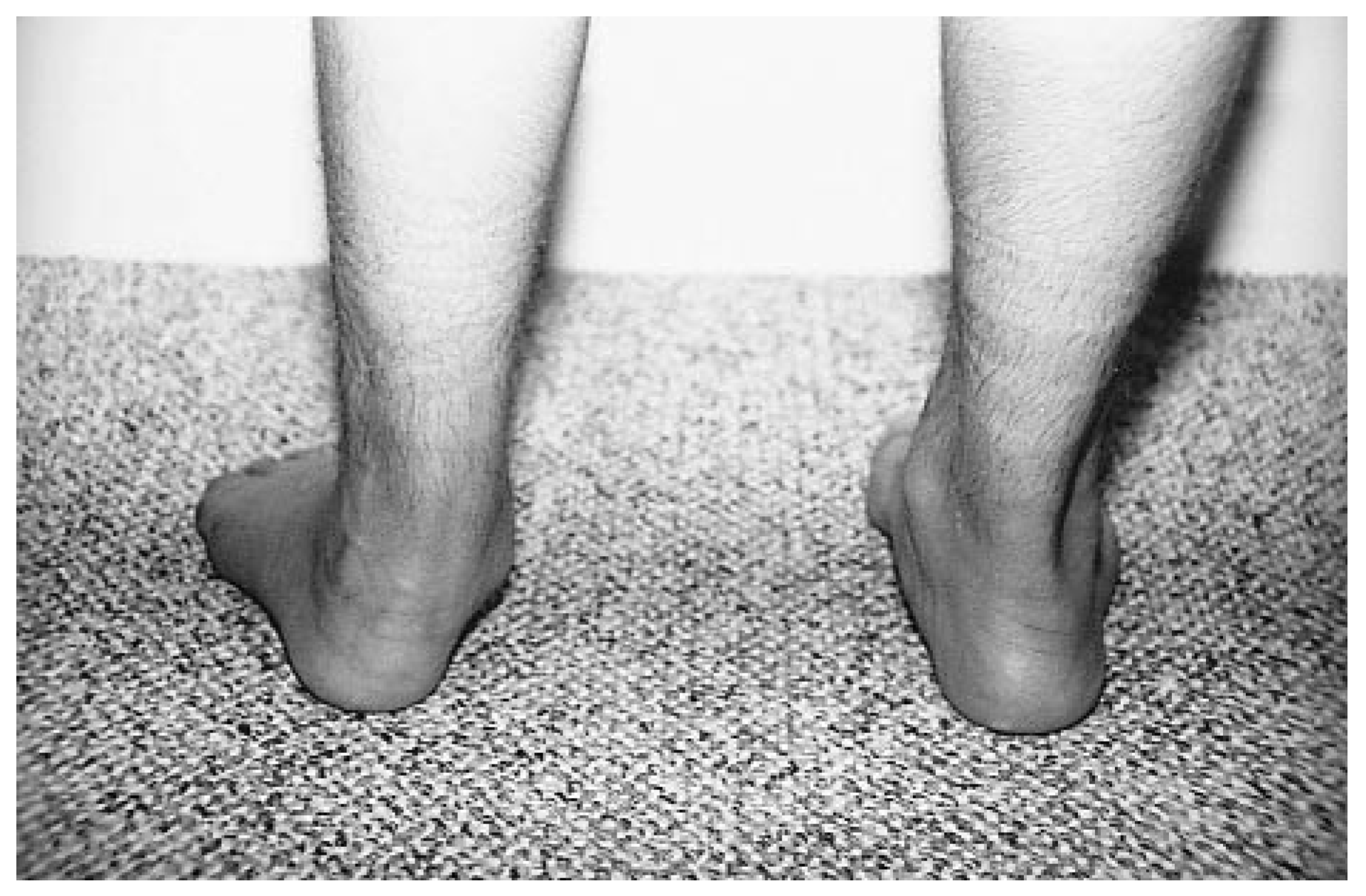
The patient was not seen again for 2 years. By April 1993, pain and stiffness of the left medial malleolus and left lower leg had become more frequent and acute. Physical examination revealed significantly reduced subtalar and midtarsal range of motion on the left side. A marked forefoot supinatus was evident. During stance, the left foot was markedly pronated and the forefoot was abducted (
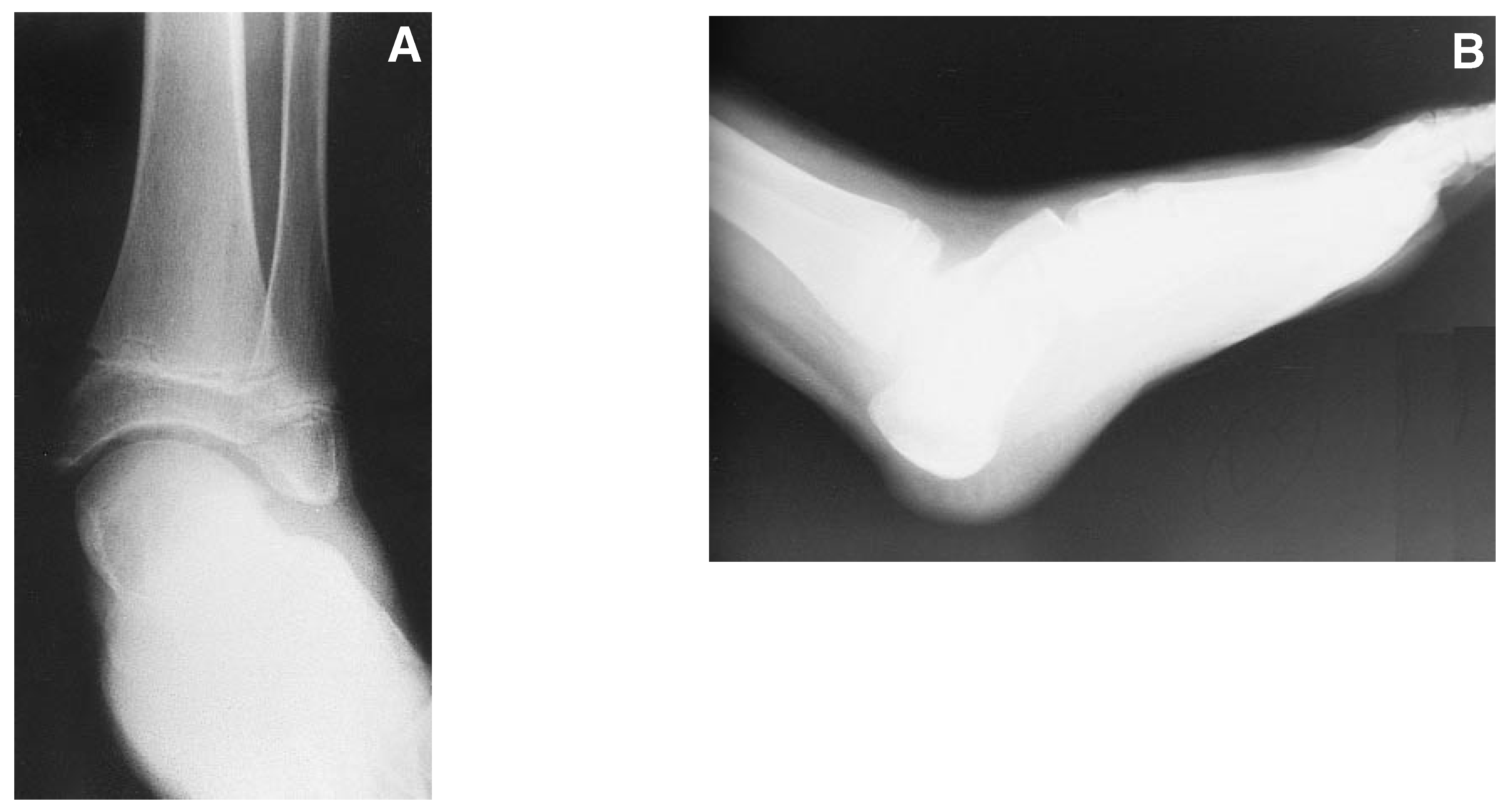
Fig. 1). The patient could not actively supinate the subtalar joint. The left medial malleolus appeared even more enlarged than it was 2 years previously, and there was a more severe valgus position of the foot during weightbearing. Clinical measurement from anterior superior iliac spine to medial malleolus revealed that the leglength discrepancy had increased to 2.4 cm. The patient was referred back to his orthopedist for the increasing leg-length discrepancy and foot deformity. Radiographic evaluation of the foot and lower leg revealed a dome-shaped talus with an associated concave distal end of the tibia. These findings are consistent with an acquired ball-and-socket deformity of the ankle. A short fibula and premature closure of the distal tibial epiphysis were also evident (
Fig. 2A). A lateral radiograph of the left foot showed a parallel rather than subtalar relationship of the calcaneus to the talus (
Fig. 2B). A scanogram revealed a 2.7-cm limb-length discrepancy centered in the tibia.
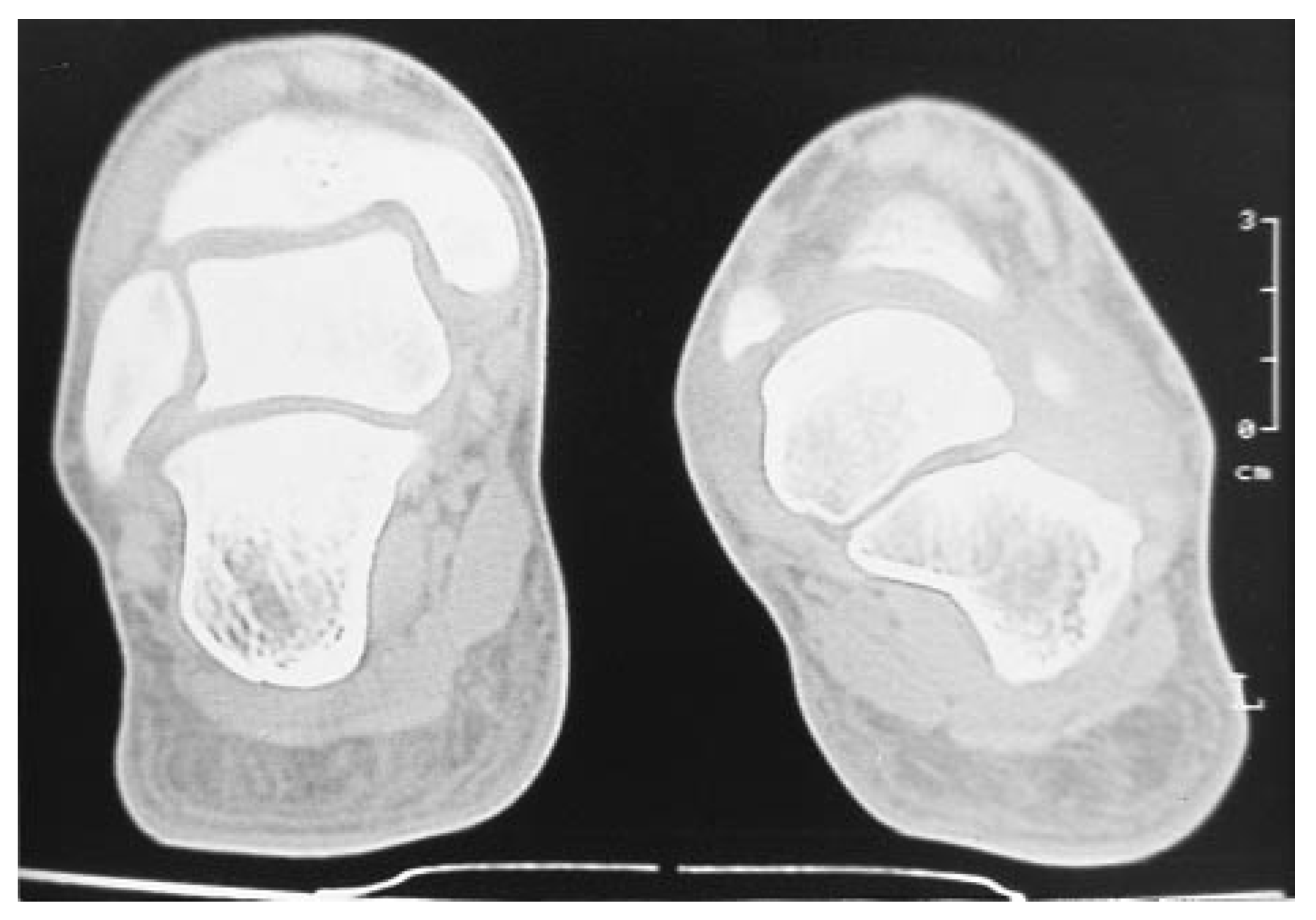
Computed tomographic examination of the left foot and ankle revealed lateral displacement of the calcaneus with medial angulation of the talocalcaneal joint. The subtalar joint was deformed, especially the medial facet, with a broad, angulated sustentaculum tali. The talus was noted to have a markedly abnormal shape, with a convex superior surface. There was a flattening of the anterior process of the talus with deformity of the talonavicular articulation (
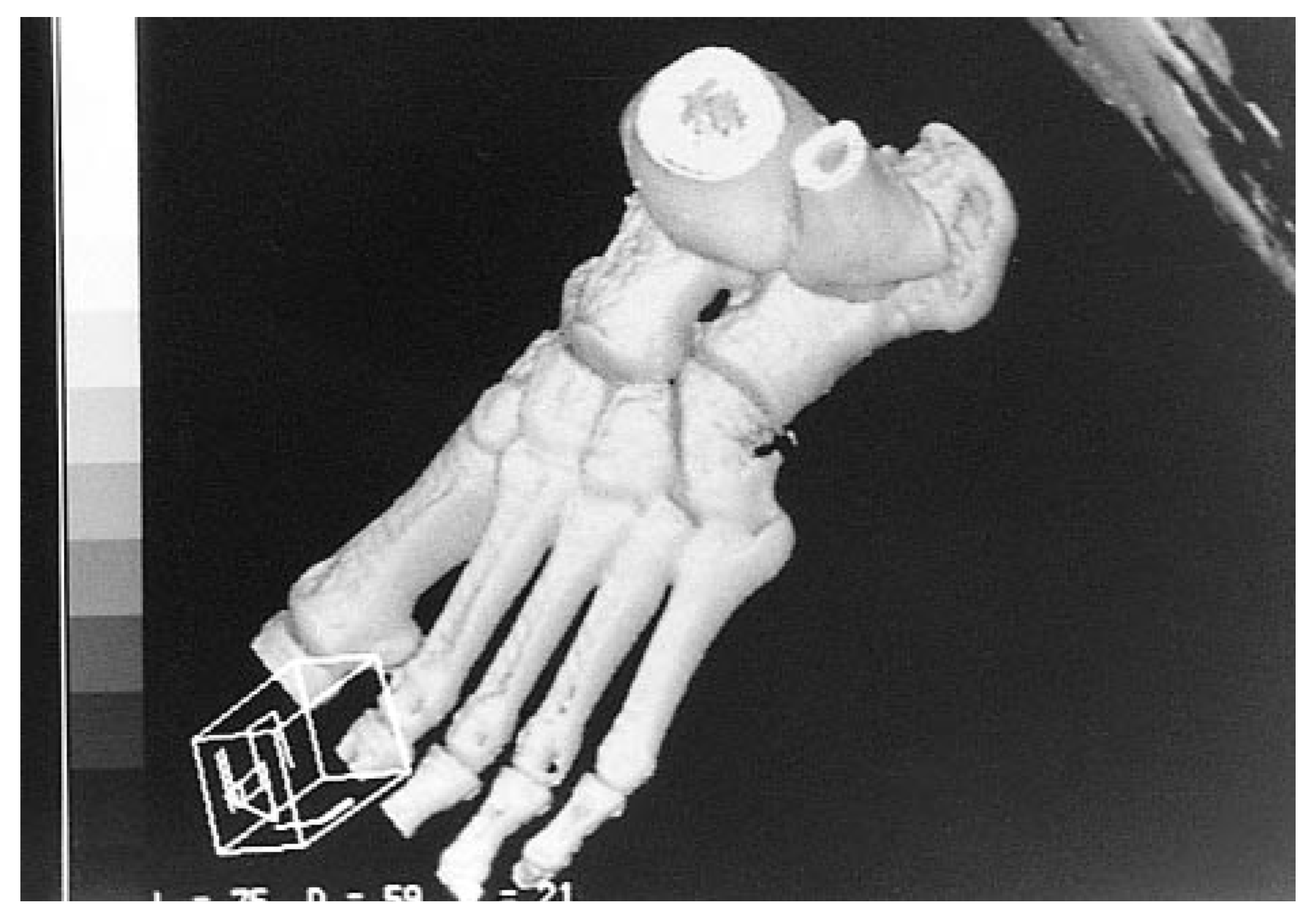
Fig. 3). The appearance of the right foot and ankle was normal. Three-dimensional imaging was also performed to aid in surgical planning: This procedure helped to visualize the virtually parallel relationship of the talus to the calcaneus and the degree of dislocation of the subtalar joint (
Fig. 4).
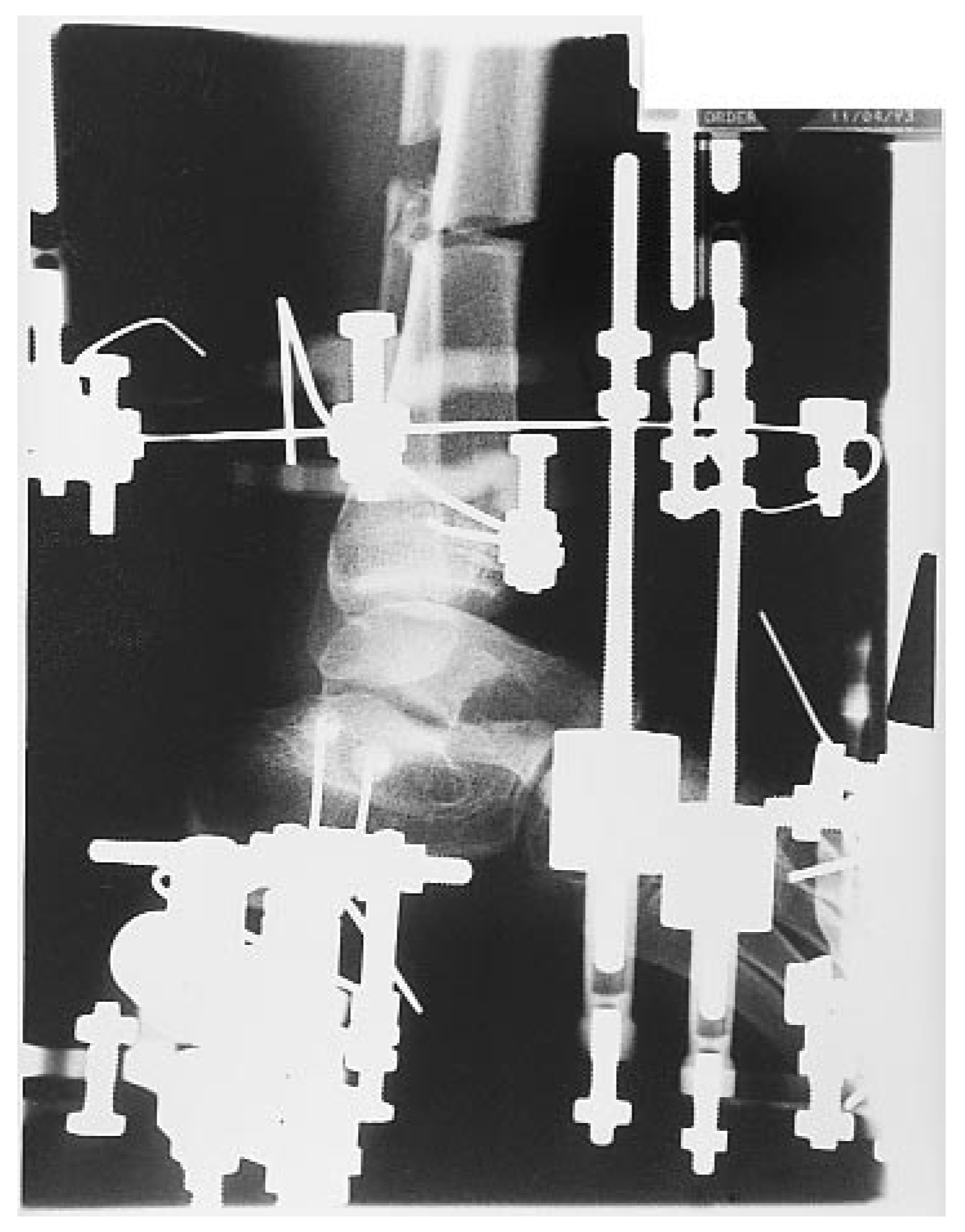
On October 29, 1993, an Ilizarov apparatus was applied to the left leg to realign the talocalcaneal joint and lengthen the left limb. Corticotomies of the left tibia and fibula were performed (
Fig. 5). On November 22, 1993, improved subtalar joint range of motion was noted and further movement of the calcaneus under the talus was discontinued. On January 20, 1994, radiographs revealed good bone formation at the tibial corticotomy site but not at the fibular site. The Ilizarov apparatus was removed and the patient was changed to a long leg cast. This was used to correct knee-flexion contracture, which had developed during the use of the Ilizarov apparatus, as the patient favored a knee-flexed position when in the below-the-knee cast. It was also used to provide stabilization for the limb as the corticotomy sites continued to heal. Between the time of the removal of the Ilizarov apparatus and the final cast removal for the knee-flexion contracture, the subtalar joint alignment achieved in the Ilizarov apparatus was lost. The foot was in a more severe valgus position than before the initial application of the Ilizarov apparatus.
On February 22, 1994, a triple arthrodesis of the left foot was performed. During this procedure, the severe valgus position of the subtalar joint could be directly visualized and corrected. Operative reports note that bone was markedly osteoporotic and removal of the cartilaginous surfaces was performed using only manual pressure, with minimal assistance from the mallet. The heel was brought back underneath the talus. No internal fixation was used. An image intensifier during the procedure and a postoperative x-ray revealed the calcaneus to be in a corrected position.
On July 14, 1994, casting was finally discontinued, as solid healing of the foot and the Ilizarov tibial lengthening site was noted. The patient was left with significant gastrocnemius weakness, for which physical therapy was recommended. By September 1994, the patient was able to walk with a minimal limp and occasional pain at the end of the day. In January 1995, the patient returned complaining of a recurrence of pain in the left medial ankle. In stance and gait, the foot was noted to have slipped back into a severe valgus position, with resultant tremendous stress on the medial ankle joint. The patient stated that the pain was 30% better than before the initial surgery but that he could not walk barefoot or perform any sports activities without marked pain. A lateral modified supramalleolar ankle orthosis was fabricated. This modification was made because the patient had difficulty tolerating pressure against the medial ankle. A medial buttress was also fabricated for his left shoe to reduce the valgus stresses to the ankle joint during ambulation. For the same reasons, he had some difficulty tolerating the buttress. The orthosis provided approximately 75% relief when worn, but marked pain still occurred without the splint. A third surgery was recommended to realign the lateral position of the calcaneus. On April 18, 1995, a calcaneal osteotomy was performed beneath the triple arthrodesis joint-fusion site. The calcaneus was moved 1.9 cm medially. One year after the calcaneal osteotomy, the patient was 90% improved. He had only minimal foot and leg fatigue after extensive physical activity. Use of the supramalleolar orthosis was discontinued, and use of an athletic ankle strap for sports activities was recommended.
Discussion
Subtalar joint dislocation is exceedingly rare. The case presented above showed gradual lateral subluxation of an anatomically abnormal subtalar joint with no history of trauma. The abnormally shaped talus and calcaneus appear to be congenital anomalies associated with a congenitally shortened limb, a short fibula, and premature closure of the tibial epiphysis. Earlier comparative radiographs of the foot and ankle were normal with the exception of the finding of a smaller left calcaneus. The ball-and-socket ankle joint seen 2 years later suggests that this was an acquired deformity as a compensation for the loss of range of motion of the subtalar joint as it gradually subluxated. It is also noteworthy that the relatively rapid onset of the ball-and-socket ankle joint over a few years is atypical. This is customarily a deformity acquired over many years after prolonged limitation of adjacent joint function. Further, ball-and-socket ankle joints have often been reported in association with limb-length discrepancy, tarsal coalitions, and shortened fibulas [
1]. They have also been reported as a complication following subtalar joint arthrodesis performed at an early age.
The authors question the choice of the Ilizarov technique for lengthening the leg and attempting to relocate the subtalar joint. Complications encountered included failure of the fibular corticotomy site to fuse, a hamstring contracture that resulted in additional weeks of above-the-knee casting, anterior bowing deformity of the tibia that required further casting, and redislocation of the subtalar joint. Adjacent joint subluxations and recurrence of the original foot deformity are known complications associated with this technique [
11]. The patient’s main complaint was medial ankle pain associated with the severe subtalar joint valgus deformity and not the leg-length discrepancy. In retrospect, instead of the Ilizarov technique, a triple arthrodesis might have been used to correct the talocalcaneal relationship. Internal fixation could have been used to prevent recurrence of the deformity. (In the case of this patient there was a resubluxation following the triple arthrodesis, which was not pinned.) An epiphysiodesis of the longer right side could have been performed at a later date: This would have avoided the subluxatory influence of the Ilizarov apparatus on the dislocated subtalar joint. It is obvious that there are no easy answers in a difficult and rare case such as this one. In spite of numerous complications, this young man’s symptoms are 90% improved and he is quite active in sports. Although the course of treatment was long and difficult, the final result should be viewed as a success.
Conclusion
A case of a rare, nontraumatic lateral dislocation of the subtalar joint of the foot has been presented. The dislocation appears to be secondary to the patient’s multiple congenital anomalies of the left lower extremity, including an abnormally shaped talus and calcaneus, an abnormal talocalcaneal articulation, and a shortened fibula. The secondary ball-and-socket ankle deformity that the patient developed between approximately 10 and 13 years of age is associated with the gradual loss of subtalar joint range of motion during that same period. Multiple complications arose in the management of this difficult case. The major obstacle was the repeated redislocation of the subtalar joint following attempts at joint realignment through the use of the Ilizarov apparatus as well as triple arthrodesis.