The brown recluse spider (
Loxosceles reclusa) is the most prevalent of the
Loxosceles species in the US. All of the
Loxosceles species have the potential to inflict injury to varying degrees. Seen predominantly in the south-central part of the US, the brown recluse spider has been discovered as far north as Illinois and on both coasts [
1]. Incidents involving the brown recluse spider usually occur between March and October as a consequence of the spider’s hibernation patterns [
1,
2]. This spider prefers dry, sheltered, undisturbed sites and is often found in woodpiles, under porches, and in boxes and old clothing [
3].
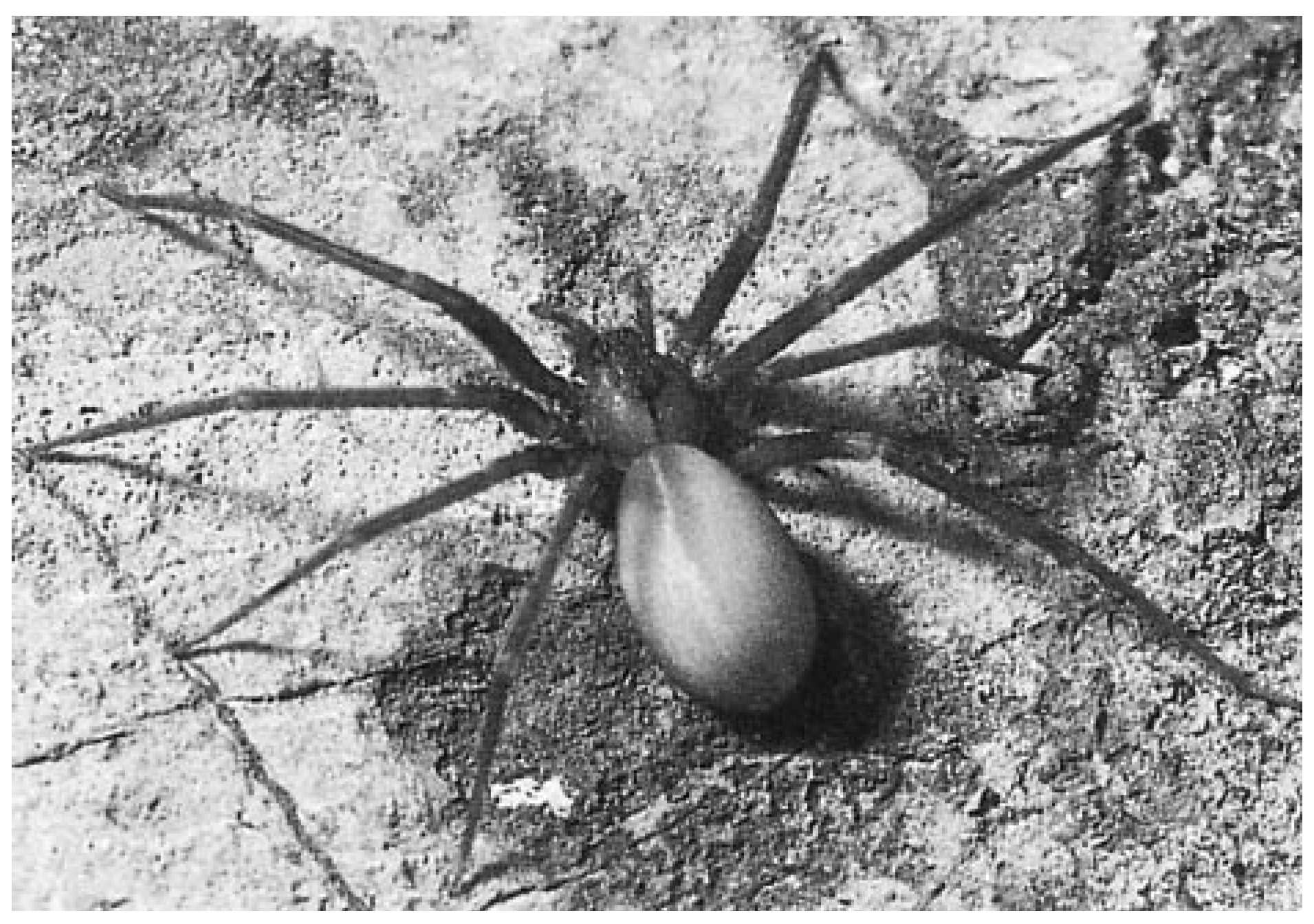
Loxosceles reclusa is not a large spider, with body size of up to 15 mm in length and a leg span of just over 25 mm. It does possess body hair; however, it is not readily appreciable by the human eye. Body color varies from dull yellow to brown, and classically the cephalothorax features a violin-shaped marking (
Fig. 1). Because of this marking, the brown recluse is commonly known as the fiddle-back or violin spider.
Like all spiders, the brown recluse is eight-legged; however, it has only six eyes, unlike most spiders, which possess eight [
3]. Both males and females are capable of venomous bites, but the spiders are generally not aggressive and attack only when provoked [
1,
2].
The bite of the brown recluse spider can initiate a severe, destructive soft-tissue process with a relatively insidious onset. The authors present two cases of brown recluse spider bites in order to illustrate this unusual illness. A review of typical presentation, diagnosis, and treatment is given.
Case 1
On July 12, 1994, a 60-year-old white woman presented to her physician complaining of severe pain and swelling on the dorsal aspect of her right foot. The patient stated that her condition began 2 days previously, at which time she noted minor swelling, erythema, and pain in the dorsolateral region of her fourth metatarsocuboid joint. When questioned about the possibility of trauma involving her foot, the patient denied any such event. The patient did, however, comment that she frequently wore open-toed sandals and had recently been gardening. Further inquiry revealed that she had been compressing yard clippings into a trash container with her sandal-shod feet. The patient had attempted self-treatment by applying a local salve to the tender area, with no resultant benefit. The patient denied any fever or chills.
The patient’s physician, suspecting cellulitis, prescribed a course of penicillin V potassium and sent the patient home, with follow-up in 2 to 3 days. That same evening, the patient was unable to sleep owing to excruciating pain. The following morning, she noted a darkened area in the region of the previous erythema. Subsequently, she contacted her physician, who advised her to seek evaluation in the hospital emergency department. She presented there and was again diagnosed with cellulitis of the right foot. Blood and wound cultures were taken and a 1.5-g dose of ampicillin-sulbactam was administered. The patient was subsequently admitted for further evaluation and therapy.
The patient’s medical history was also significant for hypothyroidism (with subsequent thyroidectomy), melanoma on the left leg (excised in 1982), possible osteomyelitis of the left foot (10 years previously), and a herniated disc at the level of L4. Medications on admission consisted of levothyroxine sodium, 0.2 mg taken orally every day, and penicillin V potassium, 500 mg taken orally four times daily for the past 2 days. The patient related no known allergies and had felt entirely well prior to the onset of this condition.
Figure 1.
Brown recluse spider (magnified); actual leg span is about 25 mm. Photograph by B. J. Kaston. Courtesy of the Department of Library Services, American Museum of Natural History, New York.
Figure 1.
Brown recluse spider (magnified); actual leg span is about 25 mm. Photograph by B. J. Kaston. Courtesy of the Department of Library Services, American Museum of Natural History, New York.
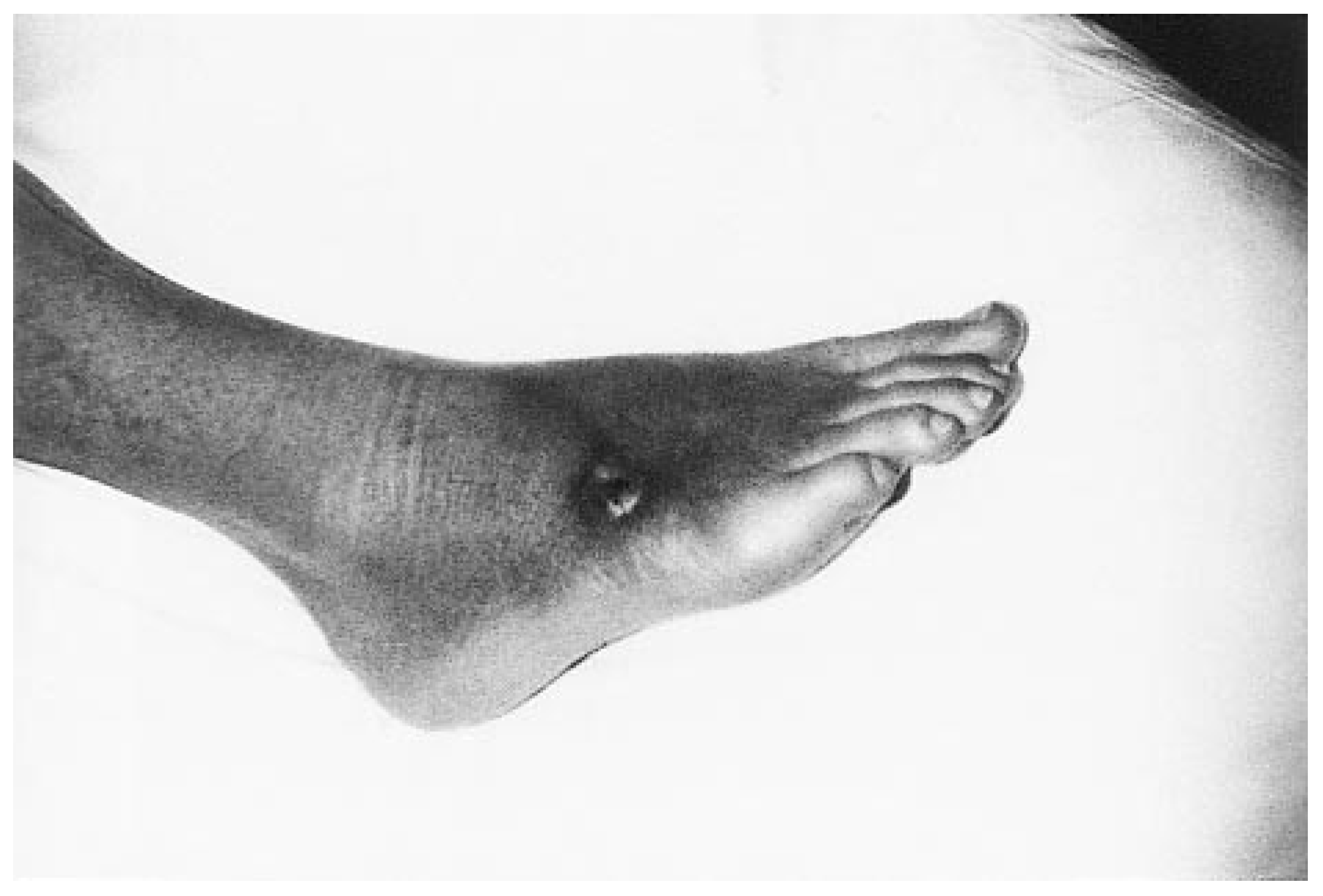
Physical examination revealed the patient to be afebrile at 98.8°F, with normal respiration and heart rate and a blood pressure of 130/78 mm Hg. The patient appeared to be a well-nourished woman with well-compensated hypothyroidism and residual radicular hyperesthesia of her left lower extremity secondary to past lumbar spine surgery. Examination of the lower extremities found posterior tibial and dorsalis pedis pulses palpable within normal limits. Dermatologic examination revealed a 2.5-cm darkened, necrotic lesion over the dorsolateral aspect of the right foot with surrounding swelling and erythema (
Fig. 2). There was marked tenderness to palpation along the entire dorsum of the right foot. Erythema extended to the distal third of the anterior shin. No frank pus was evident, nor was there any foul odor. No neurologic deficit was noted. On musculoskeletal examination there was pain with dorsiflexion, plantarflexion, inversion, and eversion of the right foot. There was no pain on palpation of popliteal or inguinal lymph nodes. Plain film radiographs showed no osseous involvement. Basic laboratory tests, including complete blood count, Chem-20 (glucose, creatinine, blood urea nitrogen–creatinine ratio, blood urea nitrogen, total bilirubin, uric acid, calcium, total protein, alkaline phosphatase, globulin, albumin-globulin ratio, cholesterol, albumin, lactate dehydrogenase, aspartate aminotransferase, potassium, sodium, carbon dioxide [bicarbonate], complete blood count with differential, chloride), and erythrocyte sedimentation rate, were within normal limits. Aerobic and anaerobic wound cultures all remained negative. On the basis of the classic appearance of the lesion and the patient’s history, a diagnosis of brown recluse spider bite was made.
Figure 2.
Right foot of a 60-year-old woman 4 days after brown recluse spider bite. Note focal area of necrosis with surrounding erythema.
Figure 2.
Right foot of a 60-year-old woman 4 days after brown recluse spider bite. Note focal area of necrosis with surrounding erythema.
Treatment for the patient was essentially supportive. The right foot was elevated and the wound was stripped of its blister and dressed with normal saline wet-to-dry dressings. The patient was given ampicillin-sulbactam, 1.5 g intravenous piggyback four times a day, to combat any possible component of bacterial superinfection.
Over the course of the next week, the wound demarcated itself with an eschar border. The wound ultimately reached 5 cm in diameter. It was decided that surgical debridement would not be necessary because of the minimal extent of tissue damage. The patient was discharged home on the fifth day of her hospital stay. The wound eventually healed without further medical intervention.
Case 2
On October 20, 1995, a 32-year-old white man presented to the emergency department complaining of a painful lesion on the anterior aspect of his left shin. The patient stated that he first noticed the wound 2 days earlier and that it had grown in size since then. There was localized edema and erythema surrounding a central portion of eschar and necrosis. The patient related no history of disease, trauma, or illness, nor had he ever experienced a similar lesion before.
Pain was described as initially mild and later progressing to more severe burning. The pain had peaked upon the patient’s arrival at the hospital, and the lesion had demarcated borders and had grown to roughly 3 cm in diameter. The patient was afebrile, and he denied fever or chills.
When questioned about his past daily activities, the patient explained that he was very actively employed as a landscaper and had been trimming hedges and packing yard refuse hours before the initial onset of symptoms. He had attempted self-treatment with warm-water soaks but decided to seek medical counsel when the blister continued to grow. The patient’s medical history was unremarkable. He had no known allergies and was taking no prescribed medications.
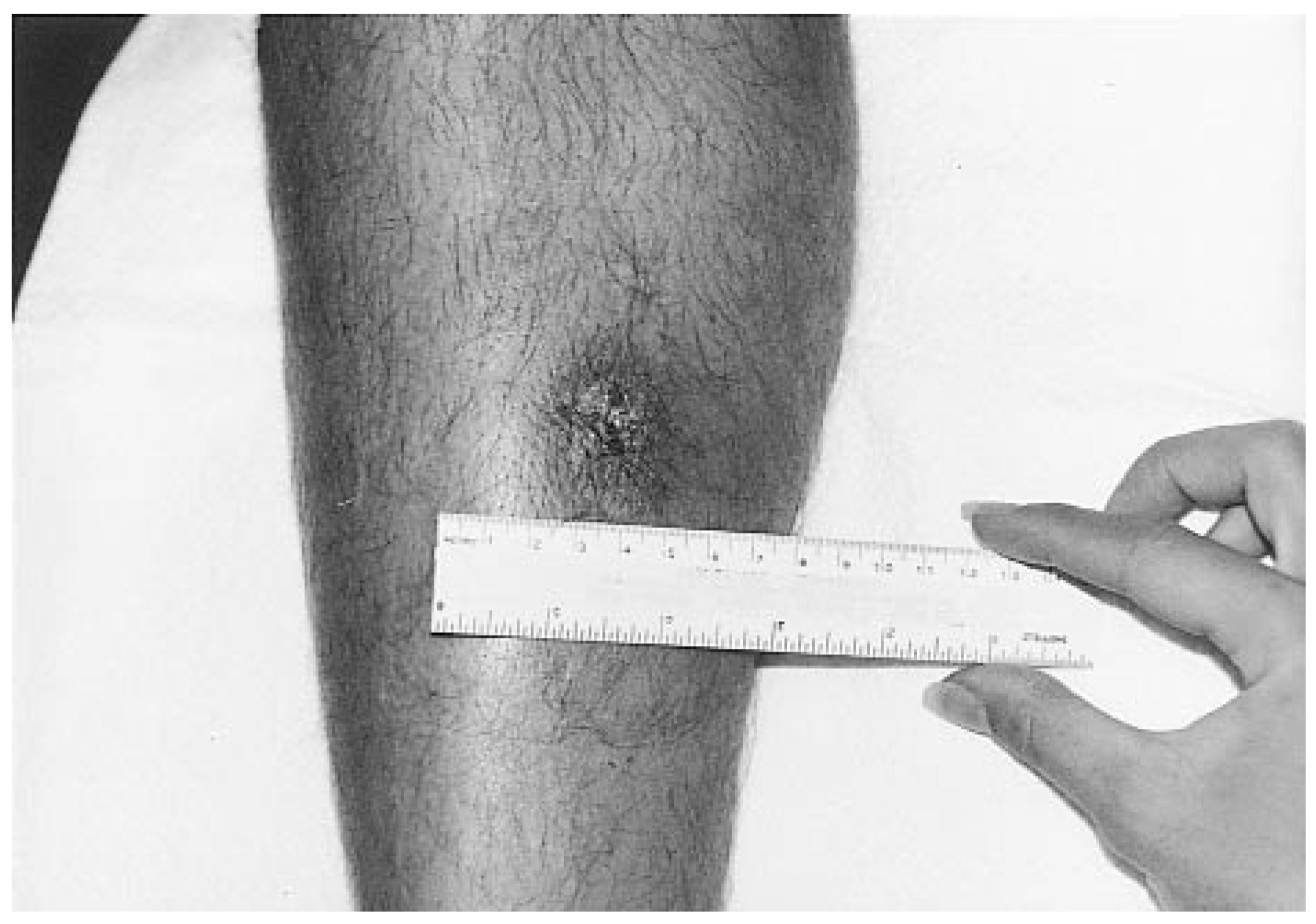
Physical examination revealed the patient to be afrebrile at 98.6°F, with normal respiration and heart rate and a blood pressure of 122/76 mm Hg. The patient appeared to be a well-nourished man in excellent health. Examination of the lower extremity showed a 3-cm lesion on the anterior aspect of the patient’s left shin. Within this lesion was a wet central necrotic core with a surrounding region of eschar and erythema (
Fig. 3). The area adjacent to the lesion was mildly edematous. The region was very sensitive to palpation. No pus or drainage was present. The lesion had no effect on motor strength or function of the lower extremity, nor was there any sensory involvement. The diagnosis of brown recluse spider bite was made, again on the basis of the classic presentation and the patient’s history.
Figure 3.
Right leg of a 32-year-old man after brown recluse spider bite. Note central ulceration with surrounding erythema.
Figure 3.
Right leg of a 32-year-old man after brown recluse spider bite. Note central ulceration with surrounding erythema.
Treatment consisted of local wound care with antibiotic ointment and dry dressings. The application of ice to the involved area was considered but determined to be unwarranted, as the wound was no longer increasing in size. The patient was discharged from the emergency department and henceforth treated as an outpatient with instructions to keep the area clean with daily hydrogen peroxide rinses, antibiotic ointment applications, and dressing changes.
Wound healing followed satisfactorily with no infectious sequelae or other complications. The patient was ultimately left with a small scar at the site.
Discussion
The venom injected by
Loxosceles reclusa consists of a mixture of proteins, enzymes, and nonenzymatic polypeptides. The apparent purpose of this combination is to promote rapid propagation of lytic agents through body tissues. Recently a passive hemagglutination inhibition test for brown recluse venom has been developed. Lesion exudate combined with venom antibody results in a positive test when red blood cells are found to precipitate to the bottom of the microtiter well. Primarily bloody exudate may yield a false-positive result. It is a sensitive and specific test that has been capable of identifying envenomation 2 weeks after the incident. Unfortunately, the passive hemagglutination inhibition test is cumbersome to prepare and results are not available for 6 to 24 hours, by which time some regimen of treatment should have been initiated. Also discouraging in the use of the passive hemagglutination inhibition test are reports of false-negative results when the specimen contains exudate that is primarily bloody [
4].
The actual bite of
Loxosceles reclusa is not usually painful; often it is a mild sting or completely unnoticed, making the diagnosis difficult. Two to eight hours after being bitten, the victim may notice mild pruritus or mild-to-moderate tenderness: This is thought to be due to local tissue ischemia. Next, a blanched, “halo-like” discoloration of the bite area may appear. This reaction is followed by erythema, with the region eventually reaching a violaceous hue [
1,
3,
5].
A focal abscess may be evident at this point. The size of the affected area is related to the amount of venom introduced; however, the degree of tissue necrosis is not [
1]. Bites to fatty-tissue areas such as the abdomen or buttocks are more prone to necrosis than bites to other areas [
6]. By 72 hours an ulcer ranging in size from 1 to 30 cm is often seen [
5,
7]. If no changes are present by the fourth day, the patient will probably not suffer any tissue necrosis. Early local wound symptoms are varied and can include pruritus, pain, induration, erythema, swelling, and blistering [
3,
8].
A systemic response may also occur as a result of this spider’s bite, with or without local manifestations. Systemic symptoms may include headache, fever, malaise, arthralgia, maculopapular rash, and anorexia. A systemic response alone is termed toxic loxoscelism and is more likely to occur in children than in adults. The most common presentation is massive hemolysis with acute renal failure, but other findings may include leukocytosis, leukopenia, thrombocytopenia, disseminated intravascular coagulation, coma, and even death [
1,
3,
9,
10,
11].
The diagnosis of brown recluse spider bite is difficult to make definitively. Rarely is the spider seen or the bite noticed; the victim is often unaware of the problem until several hours later. This diagnosis is frequently made on the basis of symptoms and history of activity. Unfortunately, the passive hemagglutination inhibition test is not currently a viable tool in achieving a definitive diagnosis. If the passive hemagglutination inhibition test were to become standard protocol, then proper treatment could be implemented according to the results. Tests that are currently available and should be performed include complete blood count, platelet count, urinalysis, and C-reactive protein. The differential diagnosis for local involvement is large but can be narrowed to disease states involving pyoderma, skin or tissue necrosis, and focal blistering. With systemic involvement the differential diagnosis includes other causes of disseminated intravascular coagulation or hemolysis.
The current treatment regimen is controversial. Large ulcers heal slowly, sometimes requiring several months even for an identifiable eschar to form. This is in addition to the time needed for the skin to heal [
3]. Initial application of ice is sometimes advised as a means of slowing the chemical activity and the destructive process of the venom, thus limiting tissue necrosis. This method is supported by clinical observation [
3,
12]. Surgical debridement has not been shown to expedite healing and should be performed only after tissue necrosis has ceased, an eschar has formed, and nonviable tissue is demarcated [
13].
More recently the use of dapsone (4,4′-diaminodiphenylsulfone), a neutrophil function inhibitor, has been advocated by some [
3,
14,
15]. It has been found to limit tissue necrosis in laboratory study bite wounds [
12]. Dapsone should not be used in patients deficient in glucose-6-phosphate dehydrogenase, and testing for this deficiency is imperative prior to administering this drug [
3]. The exact efficacy of dapsone therapy, if any, has not been established. The use of hyperbaric oxygen in the treatment of these wounds has also been studied. Tests conducted on rabbits found no benefit superficially but did note an improvement on a histologic level when there was diminished tissue damage [
16]. Some have suggested that the topical application of nitroglycerine patches may reverse vessel spasm and limit ischemic damage [
17]. This has not, however, been subject to scientific study. Steroid use in local loxoscelism has shown little or no benefit [
18,
19]. Steroid use in systemic loxoscelism is reported to have been somewhat effective in children [
13]. An antivenin exists, but it remains unavailable for clinical use [
3].
Conclusion
The diagnosis of brown recluse spider bite is a difficult but crucial one to make. Treatment is generally supportive. Research is under way to clarify the efficacy of various treatment modalities. Rarely do patients recall contact with the spider, and since the brown recluse is seldom identified, clinicians need to be aware of the typical presentations of this condition. When the clinician encounters an erythematous lesion with halo-like discoloration, this entity must be considered. The manifestations and clinical course of this unusual disease process must be recognized to ensure optimal patient outcome.