Avascular necrosis of the navicular is a painful, disabling condition that may appear spontaneously or secondary to other conditions. While the disorder is usually recognizable through the use of plain film radiography, the authors present a bilateral case with multiple imaging techniques.
Pathology of the Adult Navicular
Changes in the adult navicular can have several causes, including chronic stress, obesity, traumatic injury, and avascular necrosis. It is important to distinguish these changes from those of Köhler’s bone disease, which is an osteochondrosis of the navicular seen in children. Even so, Viladot et al [
1] suggested that asymptomatic forms of Köhler’s bone disease can result in talonavicular joint incongruence, osteoarthritis, and/or fracture in adulthood. They claimed that these cases, which were usually untreated owing to an absence of symptoms, involved alterations in stress transmission through the navicular, which had matured in a somewhat deformed state. [
1]
Navicular pathology may also be attributed to healing of traumatic fractures. Inappropriate or complete lack of treatment of navicular fractures can lead to poor resolution, such as deformity in the shape of the bone, altered joint congruency, or musculotendinous dysfunction.
Tarsal coalitions can lead to changes in the navicular and its articulations. Talocalcaneal coalitions increase distal joint motion and, subsequently, the incidence of pain and arthritis. In addition to the often-seen talonavicular beaking, joint-space narrowing and subchondral sclerosis may also become evident in long-standing coalitions. If severe, these can eventually progress to cystic bone changes and even fracture.
Avascular necrosis in the navicular is known as Mueller-Weiss syndrome. [
1,
2] It is defined as death of a bone secondary to loss of blood supply and can be the result of underlying disease, trauma, or even long-term steroid use. Idiopathic spontaneous necrosis is diagnosed when secondary causes are ruled out. In the adult, this disorder is characterized by a chronic clinical course, severe and sometimes devastating pain and disability, and progressive deformity. [
2] Generally, avascular necrosis of the navicular in the adult results in some permanent deformity. [
3] These patients usually present with any combination of flat feet, marked prominence of the navicular tuberosity, and valgus deformity of the ankle. [
1,
2]
Radiographically, the lateral aspect of the navicular becomes compressed and often sclerotic. Dorsal protrusion and fragmentation of the bone may also become evident. Haller et al [
2] described these findings in their study of five patients with spontaneous osteonecrosis. They noted that changes in these patients were indistinguishable, radiographically, from cases of secondary osteonecrosis. [
2]
Case Report
A 61-year-old Haitian man presented for evaluation of painful feet and ankles. The patient related a 4year history of intermittent pain that had recently become more severe. There was no history of trauma to either extremity. His medical history was significant for hypertension, glaucoma, and periodic episodes of gout. Questioning of the patient regarding his childhood history of disease or injury revealed nothing.
Physical examination revealed a bilateral pes planus deformity. Range of motion of the ankle and subtalar joints was restricted in both feet. During movement of the midtarsal joint, the patient experienced pain in the region of the talonavicular articulation. With active ankle flexion, the patient also reported pain along the course of the tibialis posterior tendon, posterior to the medial malleolus. Palpation of the navicular tuberosities elicited pain as well.
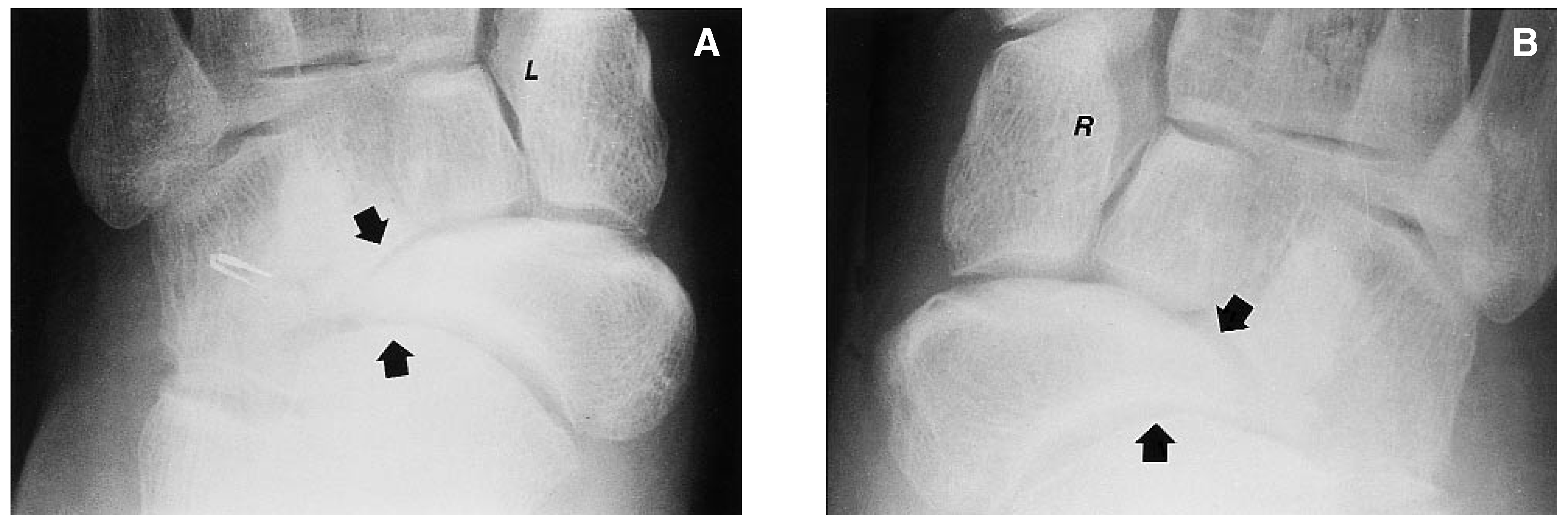
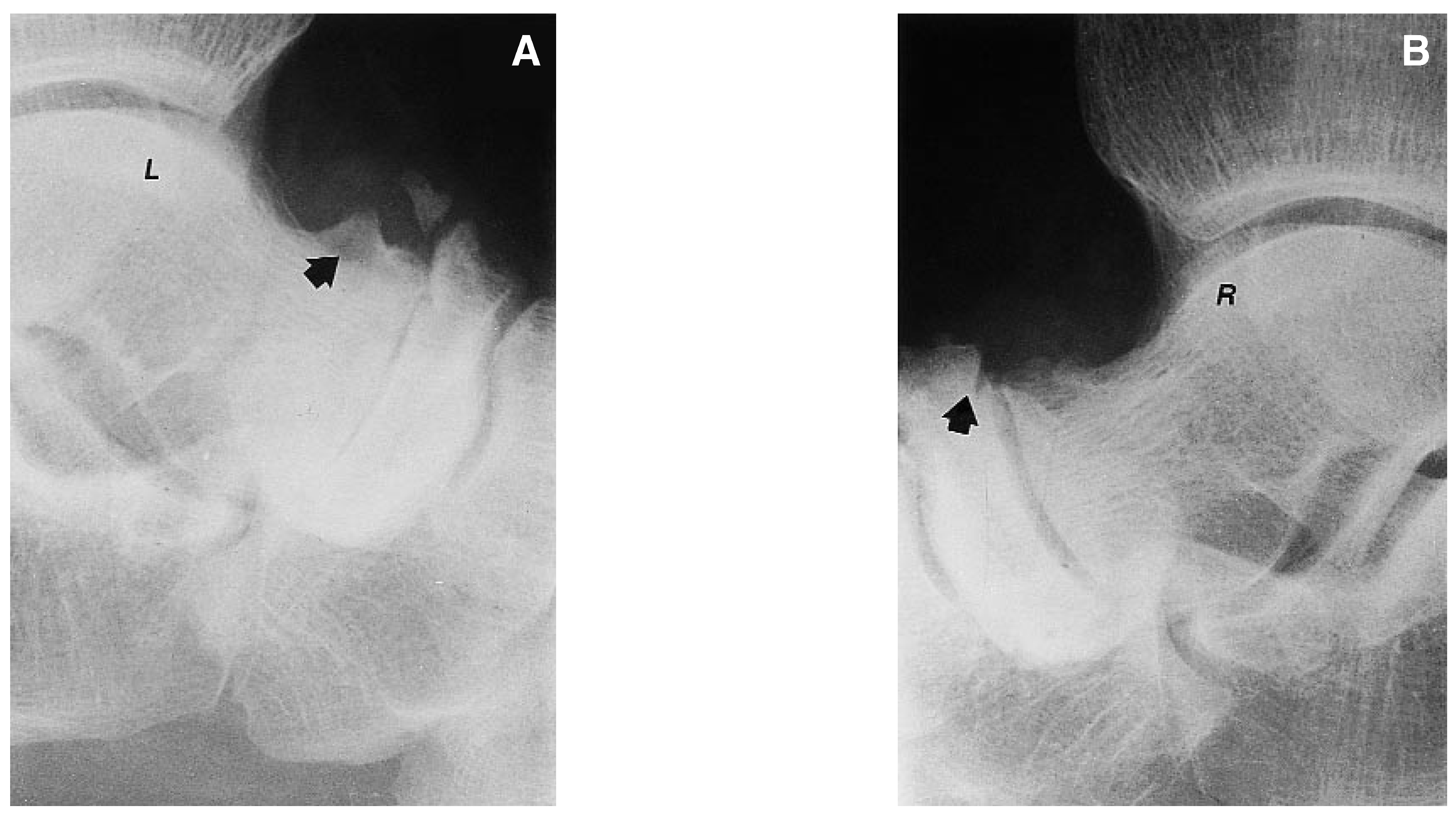
On gait examination an apropulsive, shuffling pattern was noted with more weight being placed on the left extremity. The patient was unable to stand without shoes for an extended period of time. The patient had crutches in his possession but denied using them. Radiographs of both feet showed extensive deformity of the navicular bilaterally. Collapse of the lateral wall, increased radiographic density, and dorsal fragmentation were evident (
Fig. 1 A and B). Navicular wedging as well as arthritic changes in the talonavicular joint and the navicular–lateral cuneiform articulation can also be seen (
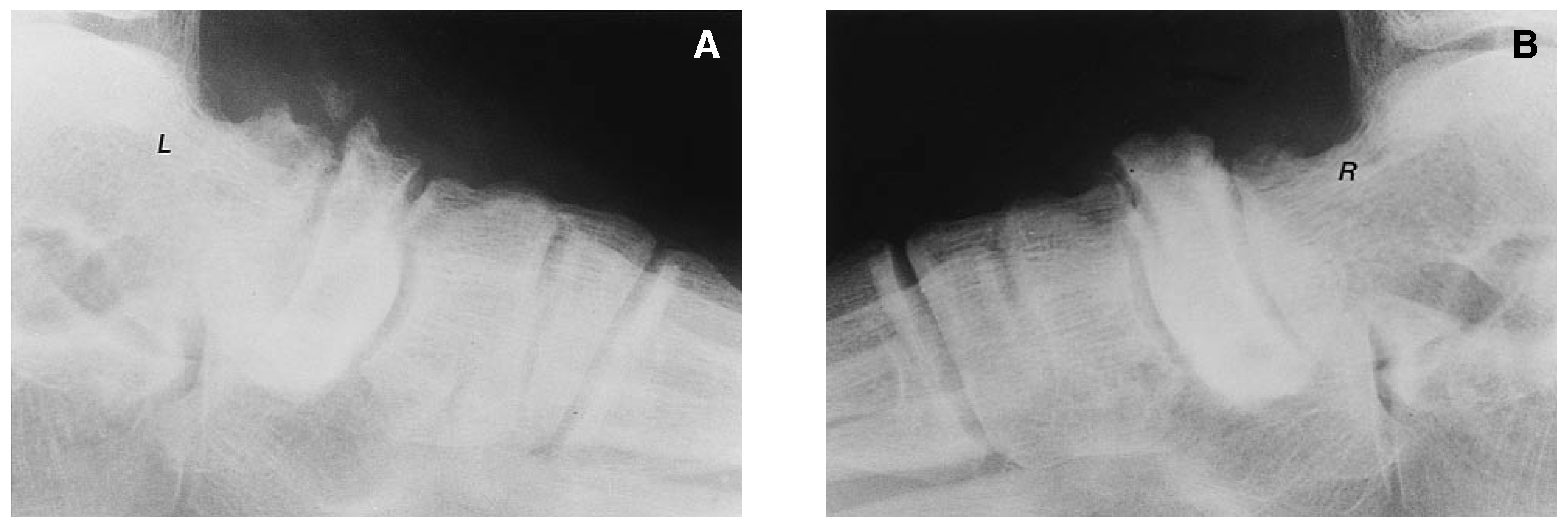
Fig. 2 A and B). These arthritic changes suggest the possibility of previous fracture or a rare coalition between these two bones. Thinning of the navicular and talonavicular joint beaking were also noted on lateral views (
Fig. 3 A and B).
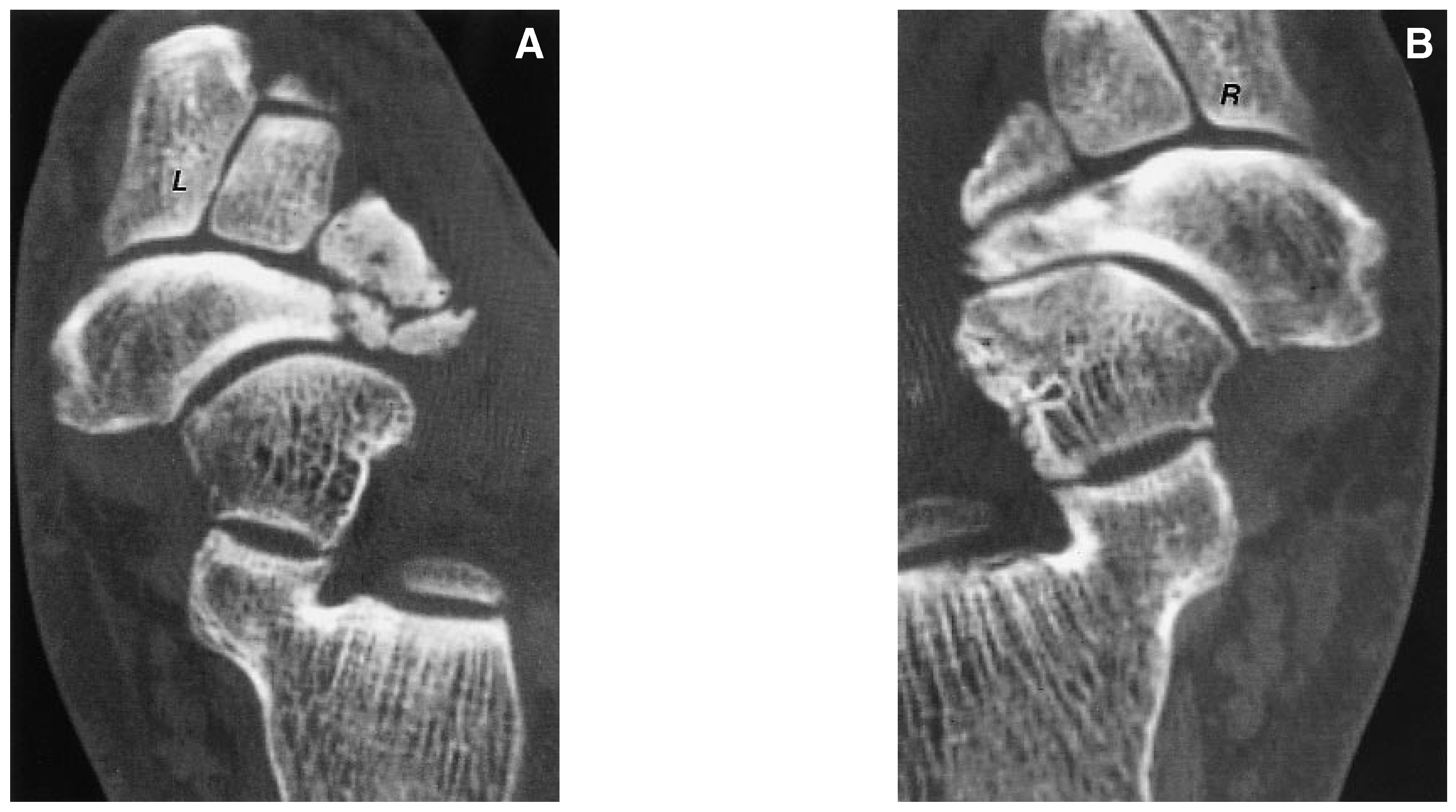
Computed tomographic scanning was then performed to view the extent of deformity and to rule out the possibility of a tarsal coalition, which was not found. Talonavicular joint changes with fragmentation were seen bilaterally. Bone collapse was also noted, as evidenced by a finding of increased radiographic density, bilaterally (
Fig. 4 A and B).
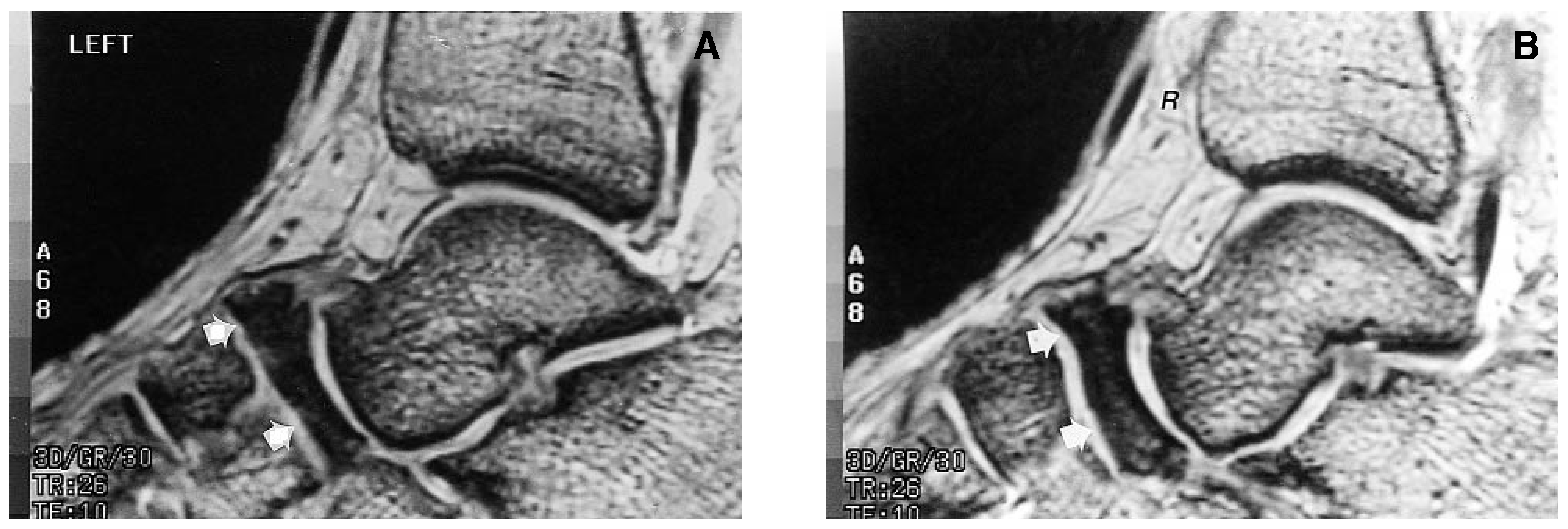
Magnetic resonance imaging is the noninvasive technique of choice for helping to establish the early diagnosis of avascular necrosis. [
4] On T1-weighted images, findings included a decrease in signal intensity, inhomogeneity in the medullary cavity, and loss of the normally sharp cortical margin (
Fig. 5 A and B). This description is consistent with the specific changes seen on magnetic resonance imaging scans when avascular necrosis is suspected. [
5] Although not seen in this condition alone, these observations most likely represent death of fat and hematopoietic cells within the marrow. [
4] Other images of alternate pulse sequence revealed few additional changes.
The patient was repeatedly immobilized in belowthe-knee casts, Unna boot wraps, and posterior splints. Despite instructions to remain nonweightbearing, the patient continued with normal activity. At 8 weeks, owing to the lack of change in the patient’s symptoms, medial column fusion of both feet was discussed. The patient has refused any surgical intervention.
Summary
It is unusual to find such extensive deformity of the navicular in a bilateral and symmetrical fashion. The apparent lack of significant trauma coupled with the patient’s unremarkable medical history led the authors to an exclusionary diagnosis of spontaneous osteonecrosis. While changes are clearly evident on plain film radiography, computed tomography and magnetic resonance imaging provide the clinician with a more detailed picture of the extent of destruction.