Incidence
Primary bone tumors in the lower extremity represent less than 1% of all tumors diagnosed in the US each year and it is estimated that only 1% to 2% of these tumors occur in the foot and ankle area. Of the 1% to 2% of neoplasms that arise in the foot and ankle region, aneurysmal bone cysts represent only 6% to 8% of these [
3,
4,
5,
6,
7]. Hence, the incidence in the foot and ankle bones is extremely low. A thorough literature search revealed fewer than 1,200 documented cases of aneurysmal bone cysts.
Aneurysmal bone cysts have been documented in all parts of the skeleton, with the metaphyseal region of long bones being the most frequently involved. Two other areas of common involvement are the pelvis and the spinal column. The majority of aneurysmal bone cysts occur in patients younger than 20 years of age and are rarely seen in patients younger than 5 years of age [
3]. Approximately 75% of the lesions are found during the first two decades and almost 95% in the first three decades of life [
2]. Contrary to the majority of osseous tumors, which have a relatively equal sex distribution, aneurysmal bone cyst has a slight predilection for the female sex. Four major studies on aneurysmal bone cysts have documented the incidence in females to be approximately 2:1 when compared with that in males [
2,
6,
8,
9].
Aneurysmal bone cysts are classified as aggressive, benign fibrogenic tumors. Cysts share the common pathologic characteristics of fibroblastic cells in a collagenous intracellular matrix. On gross examination, the cyst reveals blood-filled spaces with areas of hemosiderin deposition, scattered giant cells, and occasional bone trabeculae. Aneurysmal bone cysts do not produce fatal metastases and usually respond to local surgical ablation [
10]. Lesions do occasionally recur. Recurrence rates after surgical resection have been reported to be approximately 25% to 30% [
6,
11,
12].
Pathogenesis
Aneurysmal bone cyst pathogenesis still remains unclear, but there have been numerous postulations and theories about its occurrence throughout the literature. Lichtenstein[
13].proposed the first theory that aneurysmal bone cysts were related to local circulatory disturbances causing increased venous pressure caused by thrombosis of a sizable vein [
13]. He later hypothesized about a possible arteriovenous communication leading to a dilated and engorged vascular bed within the affected area of bone that caused the lesion [
1]. In 1962, Jaffe was the first to propose that aneurysmal bone cyst constituted a secondary lesion rather than a primary one [
14]. Buraczewski and Dabska [
15], following on Jaffe’s theory, considered aneurysmal bone cyst a non-neoplastic lesion secondary to a preexisting bone lesion. Van Arsdale et al. [
16] suggested that the lesion is a subperiosteal hematoma caused by trauma.
The secondary nature is supported by incidental reports of the association of aneurysmal bone cyst with hemangioma, fibrous dysplasia, chondromyxoid fibroma, and nonossifying fibroma [
6,
14,
15]. Blood in the spaces within the lesion is unclotted and significant bleeding occurs, which has lead many other authors to agree that aneurysmal bone cysts are the result of localized hemodynamic vascular changes.?? Localized hemodynamic vascular disturbance is the most commonly believed etiology to date and has been supported by angiographic findings [
10]. Even though the exact etiology still remains speculative, most authors conclude that there must exist the presence of two types of aneurysmal bone cyst: 1) a primary type without preexisting or coexisting lesion, and 2) a secondary form associated with some other lesion [
2,
6,
13,
14,
15,
16].
Differential Diagnosis
Aneurysmal bone cysts can resemble both benign and malignant lesions. Because of its aggressive and expansile “blown-out” area of radiolucency, aneurysmal bone cyst can mimic many lesions, which often makes the diagnosis difficult. Aneurysmal bone cysts have been mistaken for malignant tumors in the past, based on their radiographic appearance only [
2,
17]. This stresses the importance of an accurate diagnosis by definitive biopsy of the lesion.
Benign differential causes should include the following: unicameral bone cyst, giant cell tumor, chondroblastoma, chondromyxoid fibroma, fibrous dysplasia, Brown’s tumor of hyperparathyroidism, eosinophilic granuloma, cavernous hemangioma, nonossifying fibroma and, rarely, hydatid disease of bone [
2,
3,
6,
8]. Possible malignant causes should include osteolytic osteosarcoma, telangiectatic osteosarcoma, and Ewing’s sarcoma [
6,
18,
19].
Radiographic Findings
Radiographically, there are five classical findings to the diagnosis of an aneurysmal bone cyst. First, the neoplasm typically presents as an expansile lytic lesion with numerous fine trabeculation patterns coursing throughout the cyst to produce the characteristic “soap-bubble appearance.” [
9,
11,
18]. Second, the lesion extends beyond the normal confines of the bone, being outlined by a thin layer of subperiosteal new bone [
6,
11,
18]. Third, the lesion quickly enlarges to occupy the entire circumference of the affected bone, after an initial eccentric onset [
2,
5,
19]. Fourth, the cyst is almost exclusively limited to the metaphysis in long bones [
1,
10,
18]. Finally, aneurysmal bone cysts frequently display an interior radiolucency [
8,
14,
20].
Aneurysmal bone cysts rarely cross the growth plate, unless the epiphysis and diaphysis have fused,in which event, the barrier is no longer present to prevent epiphyseal extension. Cysts are usually ovoid-shaped and well circumscribed in appearance, but are markedly distended in nature. Within the lesion, multiple loculations or septae formation can be appreciated. Trabeculations usually appear more numerous toward the edges of the lesion. Pathologic fractures are an infrequent finding, but should be a prime concern if the lesion grows to extend the entire cortex of bone [
2,
7,
8].
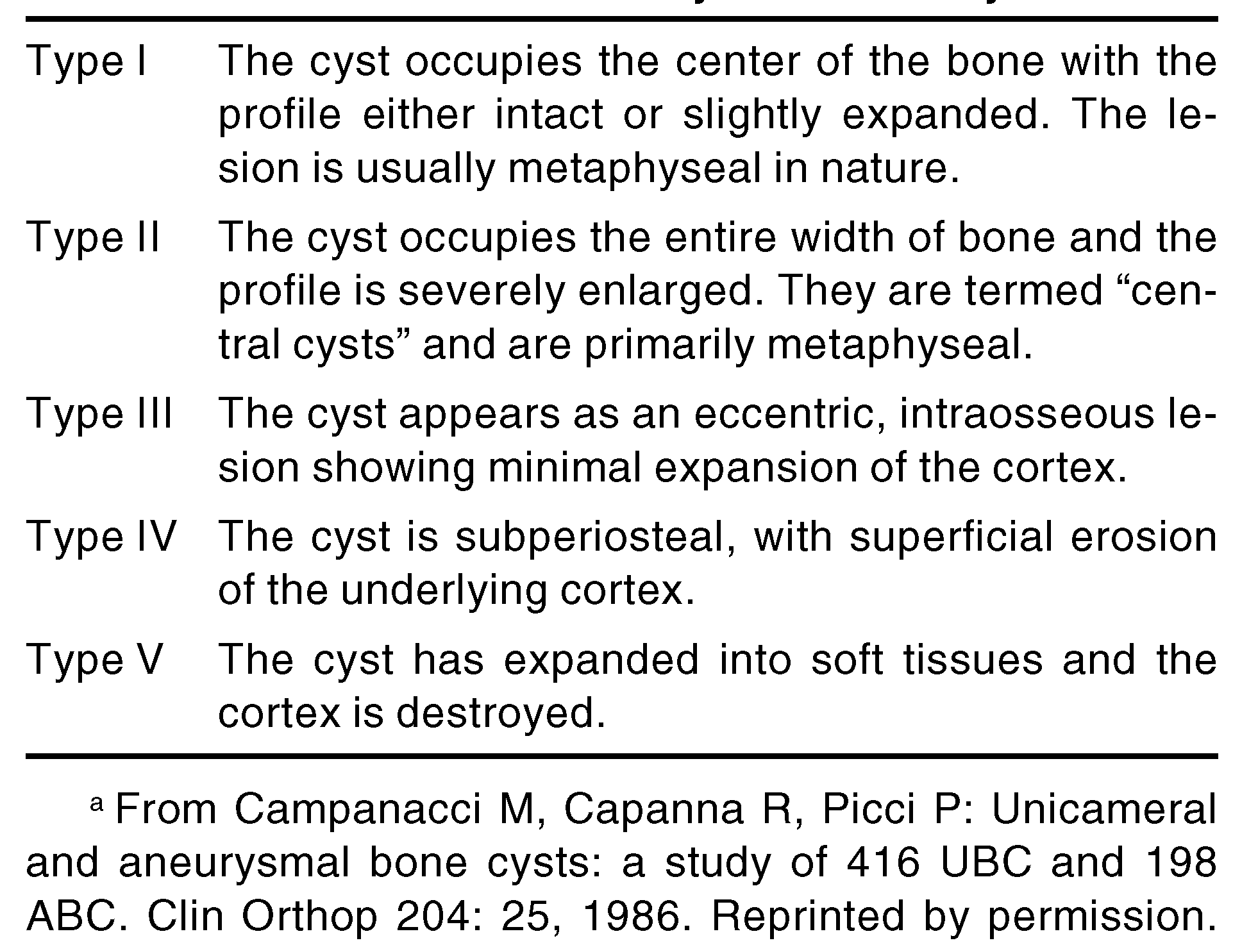
In 1986, Campanacci et al. [
8] devised a classification system of aneurysmal bone cysts based on five distinct morphologic classes according to their radiographic appearance (
Table 1).
Buraczewski and Dabska [
15]. described four radiographic phases of the aneurysmal bone cyst: 1) an initial phase shows osteolysis at the margins of the bone with a discrete elevation of the periosteum; 2) the growth phase shows progressive bone destruction and poor demarcation of the lesion; 3) a stabilization phase reveals the classical radiographic appearance of the aneurysmal bone cyst, as previously described; and 4) eventually, the cyst undergoes a healing phase that shows progressive ossification of the lesion.
Magnetic Resonance Imaging Findings
Aneurysmal bone cyst was first reported based on magnetic resonance imaging appearance in 1984 by Zimmer [
21]. Magnetic resonance imaging provides great soft tissue contrast discrimination and accuracy in the evaluation of the bone marrow of the lesion. The extent of both bone and soft tissue involvement of the neoplastic process can be visualized easily.
Magnetic resonance imaging examination of an aneurysmal bone cyst typically shows a multiloculated lesion with material of a high- and low-signal intensity appreciated within each loculation. T1-weighted images reveal a well defined lesion that produces a low-signal intensity sclerotic rim that denotes the limits of the lesion. T1-weighted images also show an inhomogeneous pattern within the lesion of low-signal intensity.
Using T2-weighted images, an aneurysmal bone cyst appears as a mass of primarily high-signal intensity. A thin rim outlining the cyst still remains of lowsignal intensity on T2-weighted images. Numerous trabeculae formations that separate each loculation and cavernous spaces are well appreciated by the thin, low-signal intensity. T2-weighted images also show the classic and pathognomonic pattern of multiple fluid-fluid levels within the lesion [
22]. These fluidfluid levels arise secondarily from the sedimentation effect of the lesion’s heterogeneous contents. With T2-weighted pulse sequences, the lower signal intensity corresponds to hemosiderin deposition, while the higher signal intensity corresponds to the supernatant or plasma-type fluid. Another way to view the fluid-fluid levels on T2-weighted images is that the low-signal intensity represents dependent sediments that contain hemorrhagic materials and the high-signal intensity represents nondependent sediments that contain serous-type fluid [
22].
Case Report
A 4-year-old female initially presented with her mother and grandmother. The mother complained of the child’s unilateral flatfoot deformity and an early heeloff of the left foot. There was no known previous history of trauma. Birth and developmental milestones were normal and no other pertinent findings were noted on review of medical history. The child had no allergies to any medications and was currently taking no medications. She presented with no other joint pain or abnormal laboratory studies.
Physical examination revealed a unilateral flatfoot deformity of the left foot. Gait analysis showed an antalgic gait and early heel-off on the affected side. No significant signs of overt swelling or ecchymosis were present. Ankle joint range of motion was full and smooth. There was no decrease in muscle strength bilaterally. Neurovascular status was intact. Slight tenderness was elicited above the ankle joint dorsally on direct compression, with this area slightly warmer than the surrounding tissues. The remainder of the physical examination was unremarkable.
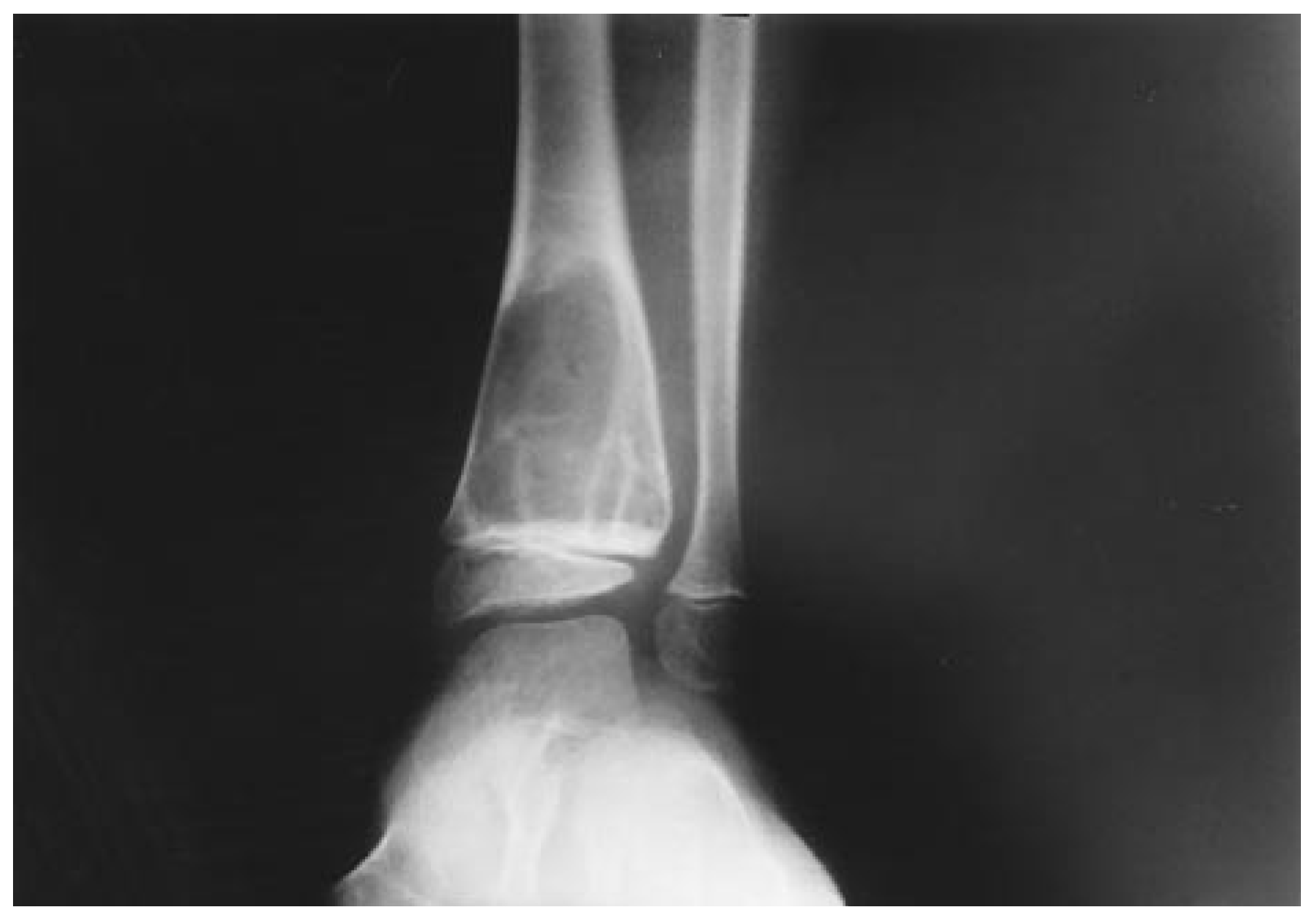
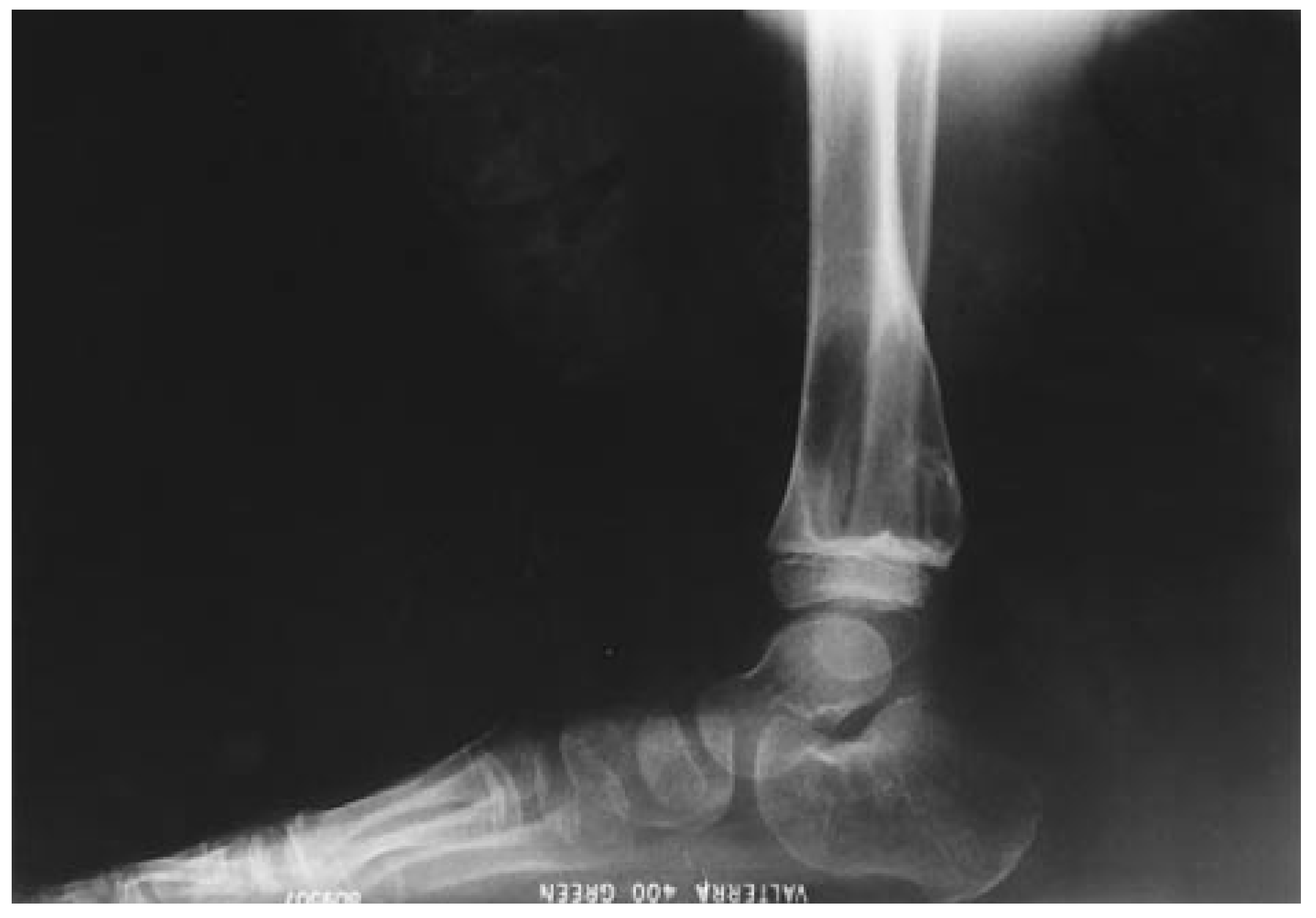
Radiographically, a massive fusiform dilation with well circumscribed borders of the entire distal tibia was observed (
Figure 1 and
Figure 2). The lesion exhibited the classic expansile lytic nature with numerous fine trabeculations coursing the interior aspect of the lesion. Anteroposterior and lateral views showed cortical expansion and a thin lining. Multiple septal formation was noted with a large lucent center. The lesion did not appear to cross the growth plate, although it was in close proximity to it. A pathologic fracture was not present based on the standard films. The lesion measured 38 mm in length and 32 mm in width on the anteroposterior view.
The neoplasm was believed to be an aneurysmal bone cyst, but the previously mentioned differential diagnoses were considered. Because of the possibility of other osseous tumors that mimic aneurysmal bone cysts, a magnetic resonance imaging scan was ordered. The magnetic resonance imaging examination was also used to further delineate the lesion.
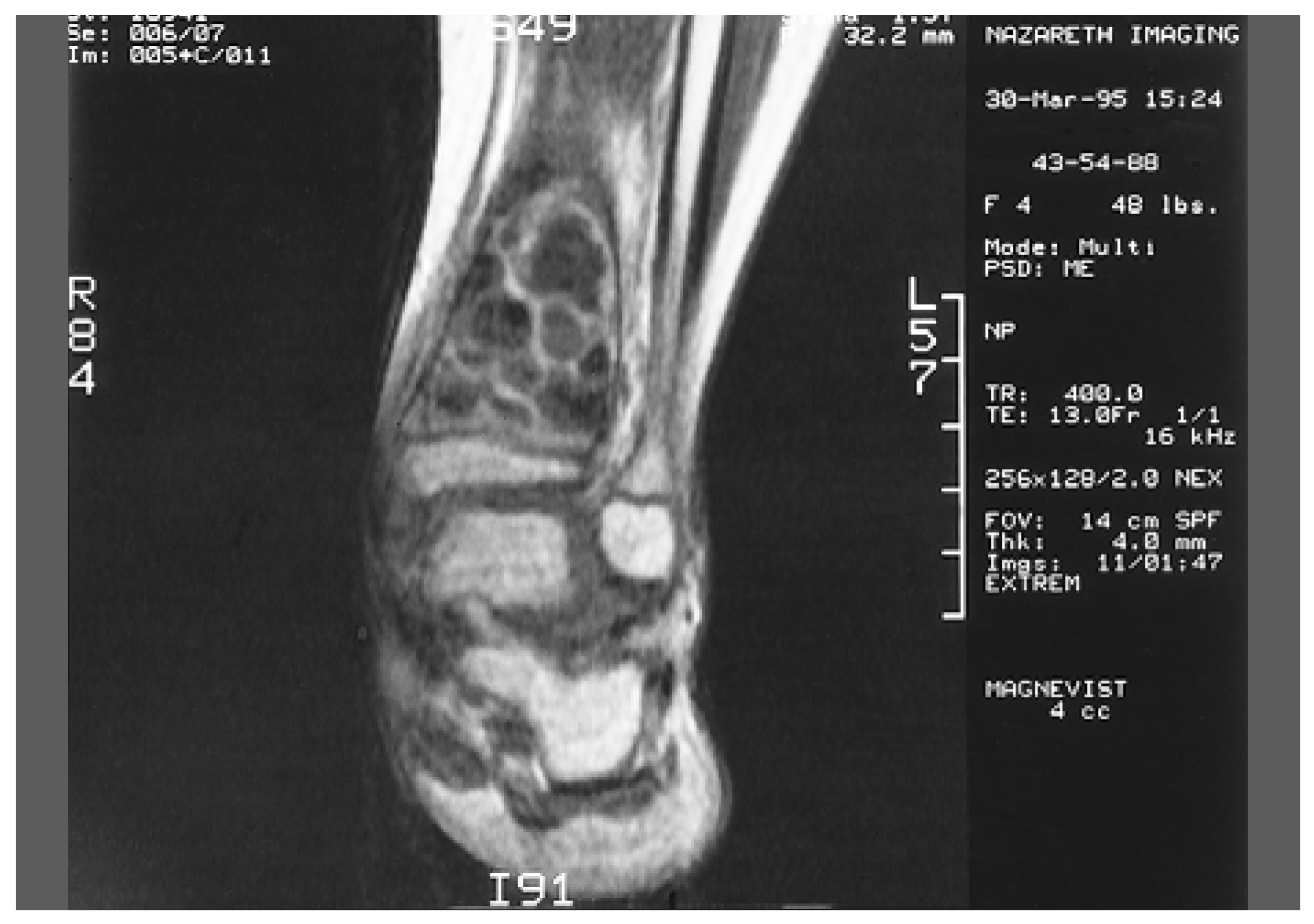
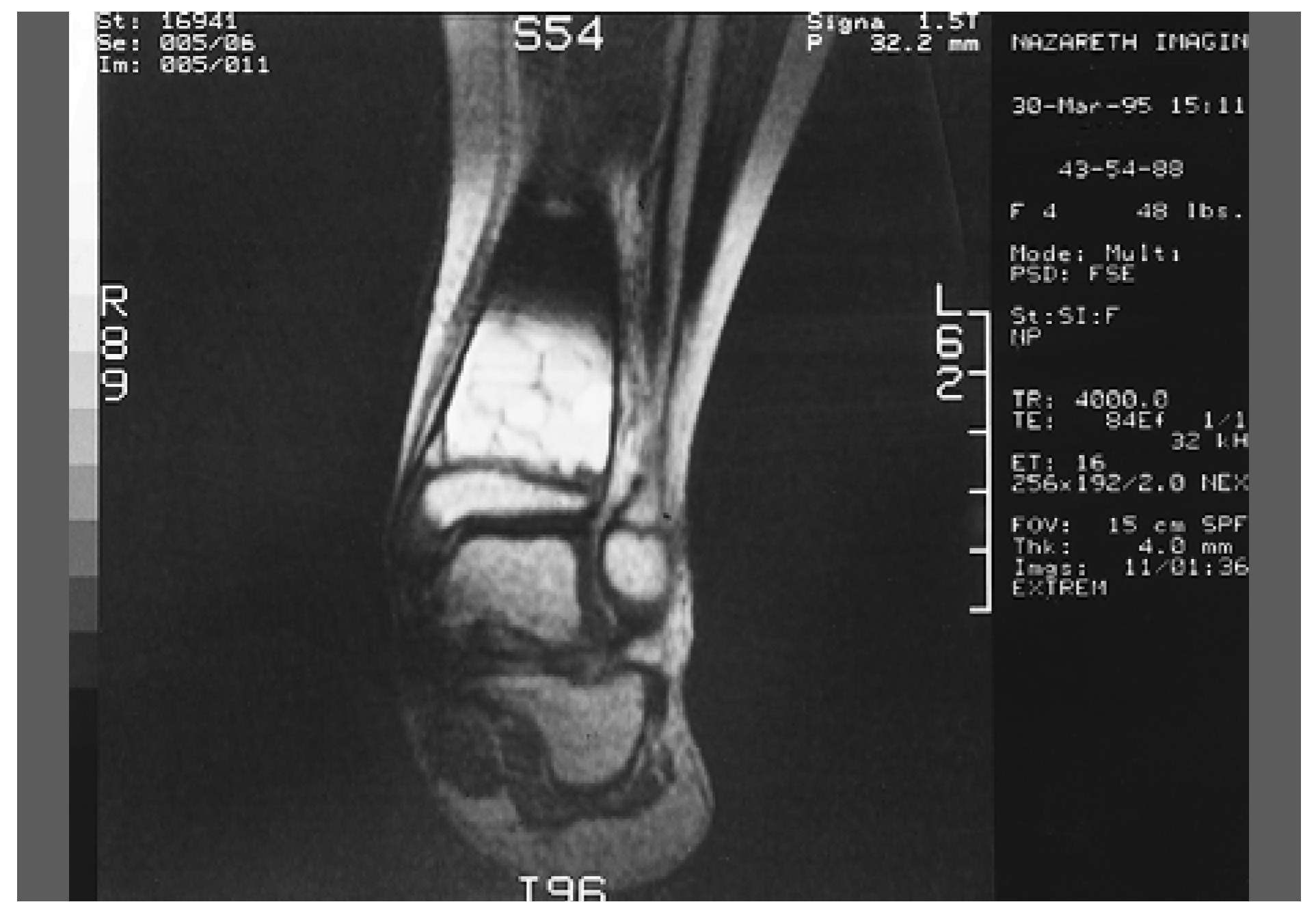
The magnetic resonance imaging scans clearly showed a large, multiloculated lesion with materials of high- and low-signal intensity occupying the distal tibia (
Figure 3 and
Figure 4). T1-weighted images revealed an inhomogeneous lesion of low-signal intensity. On T2weighted images, the cyst appeared as a mass of primarily high-signal intensity. Numerous trabeculae formations that separated each loculation within the lesion were well appreciated by the thin, low-signal intensity. T2-weighted pulse sequences clearly showed the pathognomonic pattern of multiple fluidfluid levels within the lesion. A low-signal intensity sclerotic rim that denoted the limits of the lesion was evident on both T1- and T2-weighted images. The inferomedial aspect of the distal cortex also displayed a pathologic fracture, which was not evident on the plain films.
In the authors’ case report, the magnetic resonance imaging scans clearly depicted the classical findings of a multilocular blood-filled lesion with a pathologic fracture. The pathologic fracture would have been missed if a magnetic resonance imaging scan had not been done, stressing the importance of obtaining a magnetic resonance imaging scan to clearly delineate the extent of a neoplastic lesion. Radiographic and magnetic resonance imaging findings were then correlated to strongly suggest the correct diagnosis of an aneurysmal bone cyst.
After evaluating the patient’s age and size of the lesion, various surgical options were entertained. The surgical plan was for total excision and curettage of the lesion with incorpation of an autogenous bone graft by a pediatric oncologist. Communication between the pediatric oncologist and the authors confirmed the diagnosis of an aneurysmal bone cyst, based on the histologic examination after the resection was performed.
Summary
A rare, large pediatric aneurysmal bone cyst with pathologic fracture of the distal tibia of a 4-year-old female was presented. Classic radiographic and magnetic resonance imaging findings have been discussed. In a comprehensive review of the literature, aneurysmal bone cysts are an infrequently reported neoplasm of the foot and ankle bones. Lesions are characteristically seen in patients younger than 20 years of age, but rarely younger than 5 years. The benign cyst has a 2:1 female-to-male predilection. In long bones, the lesion is typically metaphyseal in nature. Although the pathogenesis is still unknown, there exists the possibility of two types of aneurysmal bone cysts: a primary type without preexisting lesion and a secondary form associated with some other lesion. The diagnosis of aneurysmal bone cyst can be strongly suspected by correlating the radiographic and magnetic resonance imaging findings. For definitive diagnosis, accurate histologic evaluation is imperative to rule out any confusion or possibility with a malignant tumor.