Next Article in Journal
Sarcoid Tenosynovitis in the Foot. A Case Report
Previous Article in Journal
Nonoperative Management of Multiple Displaced Metatarsal Fractures in a Diabetic Neuropathic Patient. A Case Study
 
 
Journal of the American Podiatric Medical Association is published by MDPI from Volume 116 Issue 1 (2026). Previous articles were published by another publisher in Open Access under a CC-BY (or CC-BY-NC-ND) licence, and they are hosted by MDPI on mdpi.com as a courtesy and upon agreement with American Podiatric Medical Association.
Article

Contact Characteristics of Metatarsophalangeal Joint Osteochondral Defect Repairs Following a Novel Hybrid Procedure With a Subchondral Implant and Dermal Allograft

by
Aaron T. Hui
1,
Derek T. Dee
2,
Michelle H. McGarry
1 and
Thay Q. Lee
1,*
1
Orthopaedic Biomechanics Laboratory, Congress Medical Foundation, Pasadena, CA
2
Dee Sports Orthopaedics, Huntington Beach, CA
*
Author to whom correspondence should be addressed.
J. Am. Podiatr. Med. Assoc. 2025, 115(2), 23218; https://doi.org/10.7547/23-218
Published: 1 March 2025

Abstract

Background: The purpose of this study was to quantify metatarsophalangeal (MTP) joint contact characteristics before and after reconstruction of osteochondral defects using a novel hybrid procedure. Methods: The MTP joint contact areas, mean contact pressures, and peak contact pressures were measured using Tekscan pressure sensors with 50, 100, and 150-N compressive loads. Five conditions were tested: intact, 8-mm osteochondral defect, 8-mm repair, 10-mm defect, and 10-mm repair. Defects were created at the center and perpendicular to the metatarsal head by drilling. Defects were repaired with titanium fenestrated threaded implants countersunk in the subchondral bone. An acellular dermal allograft was placed and made flush with the surface of the metatarsal head. Results: Repair of the 8-mm defect significantly increased MTP joint contact area by 24.1 6 3.2 mm2 and significantly decreased contact pressure at all compressive loads by 97.9 6 12.1 kPa compared with the defect condition. Repair of the 8-mm defect also significantly decreased peak contact pressure compared with the intact condition at 100 and 150 N an average of 510.6 6 215.5 kPa (P< .041). Repair of the 10-mm defect significantly increased contact area at 100 and 150 N by 42.0 6 8.3 mm2 (P< .001) and significantly decreased contact pressures at all compressive loadsby214.5 6 30.7 kPa compared with the defect (P< .003). Conclusions: The MTP joint contact areas, contact pressures, and peak pressures were restored to intact conditions and contact pressures decreased following reconstruction of both 8- and 10-mm osteochondral defects using subchondral implants with dermal allografts. (J Am Podiatr Med Assoc 115(2), 2025; doi:10.7547/23-218)

Osteoarthritis of the first metatarsophalangeal (MTP) joint commonly affects the great toe and often leads to hallux rigidus.[1] With an incidence of 2.5% in people over the age of 50 and females being twice as likely as males to develop this condition, it is the second most common disorder after hallux valgus.[2,3] The MTP joint plays a pivotal role in the gait cycle and can bear loads of approximately 90% to 120% of a person’s total body weight in each step.[4,5] Hallux rigidus often leads to both pain and stiffness along with restricted dorsiflexion at the MTP joint, leading to limitations in functional activities. A previous study found that acute or chronic trauma is a cause of hallux rigidus, in which hallux rigidus is secondary to osteochondritis dissecans of the first metatarsal head.[6]
Current treatment options for hallux rigidus include both nonsurgical and surgical methods. Nonsurgical methods include anti-inflammatory medication, shoe modifications, and activity modifications, whereas surgical techniques include cheilectomies, arthrodesis, and osteotomies.[2] However, none of these treatment options adequatelyaddress thedamage tothesubchondral bone of the metatarsal head. As such, a repair technique that 1) addresses the mechanical deficiencies of thesubchondralbone,2)preserves andstimulates marrow communication, and 3) serves as a foundation upon which the cartilage surface can be restored is needed in the treatment of hallux rigidus.
The purpose of this study was to analyze the MTP joint contact characteristics before and after reconstruction of osteochondral defects using a novel hybrid procedure. We hypothesized that reconstruction of osteochondral defects on the metatarsal head would restore the contact characteristics to the intact condition.

Materials and Methods

Specimen Preparation

The investigation was performed at the Orthopaedic Biomechanics Laboratory. Institutional review board approval was waived by our institution, as this was a cadaveric basic science study. Ten fresh frozen cadaveric feet were used. Donors consisted of five males and five females with a mean age of 60.4 6 3.0 years (range, 46–78). None of the donor metatarsals or proximal phalanges demonstrated any evidence of gross abnormalities. The MTP joints were dissected out of the feet from the tarsometatarsal joint, keeping all ligaments and the MTP capsule intact while dissecting off all soft tissue and the distal phalanx.
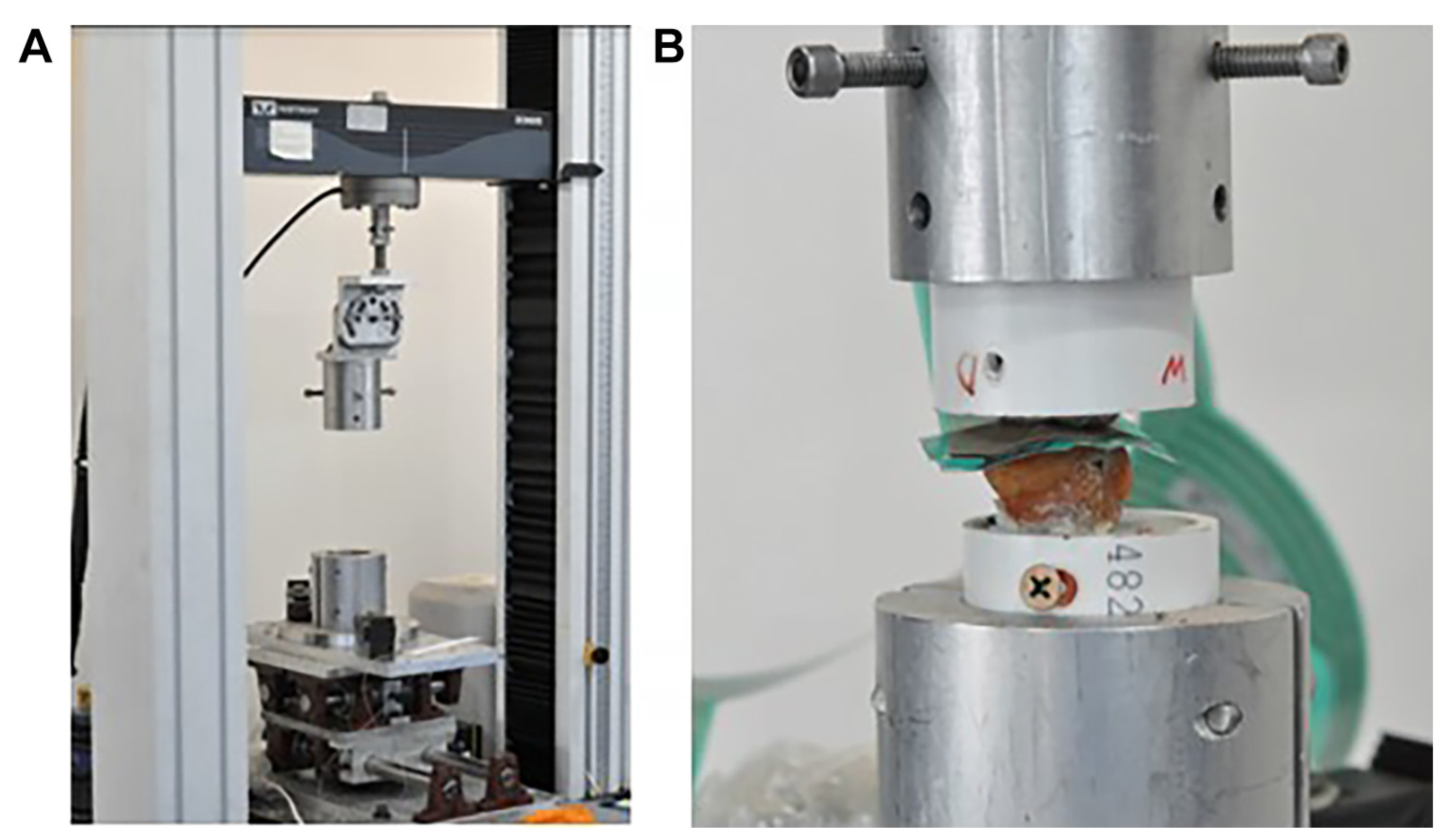
Prior to disarticulation of the MTP joint, small holes were drilled into the medial and lateral aspects of the metatarsal and proximal phalanx, dorsal to the main collateral ligaments, to align the MTP after mounting. Following disarticulation, the articular slope angle of the proximal phalanx was measured to simulate the natural dorsiflexion angle of the MTP joint during testing. The disarticulated proximal phalanx and metatarsal were fixed in polyvinyl chloride pipes with plaster of paris and wood screws. The proximal phalanx and metatarsal were then mounted to a custom testing fixture on an Instron machine (Instron, Norwood, Massachusetts) (Fig. 1). The metatarsal was mounted to the X-Y translator of the fixture with the dorsal aspect facing forward and the medial and lateral aspects of the metatarsal head parallel to the crosshead. The proximal phalanx was mounted to the crosshead above the metatarsal. It was then lowered until it articulated with the metatarsal head, aligning the predrilled holes, and locked in neutral MTP positioning as defined by a uniform contact pattern by the Tekscan pressure sensor (model 4000; Tekscan, South Boston, Massachusetts) at 150 N of compressive loading. At this point, only the proximal phalanx could be moved (distracted) with the crosshead to allow for metatarsal head defect creation and repair. This position was maintained throughout testing.

Biomechanical Testing

The Tekscan pressure sensor was placed between the proximal phalanx and metatarsal to measure contact area, contact pressure, and peak contact pressure. The Tekscan sensor’s sensitivity was set to 25 and calibrated using a two-point calibration protocol with an applied force of 50 and 150 N using an Instron load cell. Specimens were preloaded in compression to 10 N followed by cyclic loading to 50, 100, and 150 N for five cycles each. Two trials were performed and contact characteristics recorded for each trial.
Figure 1. A, Instron material testing system. B, Metatarsophalangeal joint specimen mounted on the Instron material testing system.
Japma 115 23218 g001
Five conditions were tested for each specimen: intact, 8-mm osteochondral defect, 8-mm repair, 10mm defect, and 10-mm repair. The sizes of the defects were chosen to simulate clinically relevant osteochondral defects in the MTP joint. The defects were created centrally on the metatarsal head using an 8- and 10-mm planing reamer to maintain consistency in testing owing to variability in metatarsal morphologies. To create the defect in the center of the contact point between the metatarsal head and the proximal phalanx, acrylic paint was applied to the proximal phalanx articular surface and compressed to the metatarsal head at 150 N of compressive load. The center was then defined as the center of the paint outline on the metatarsal head, and a 1.1-mm Kirschner wire guide pin was drilled at the center. Using the Kirschner wire as a guide, the metatarsal head was reamed with an 8-mm reamer to create an 8-mm defect.
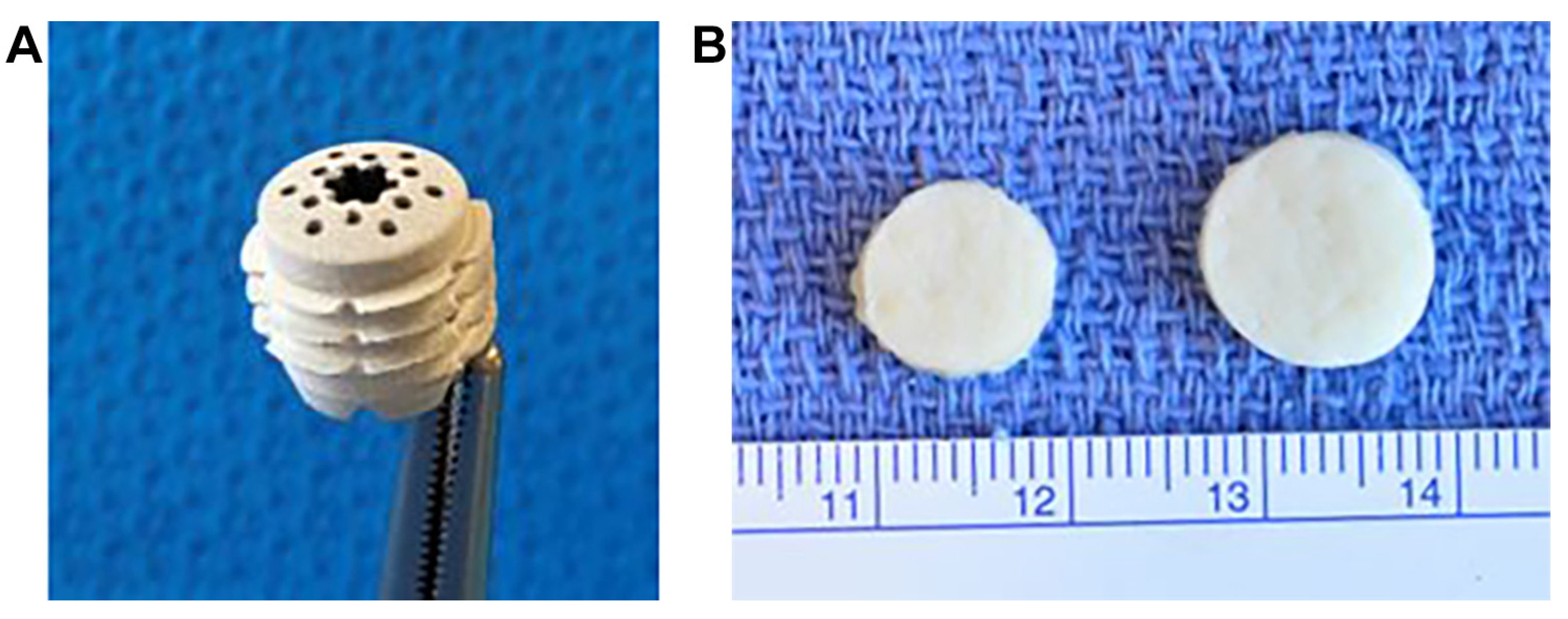
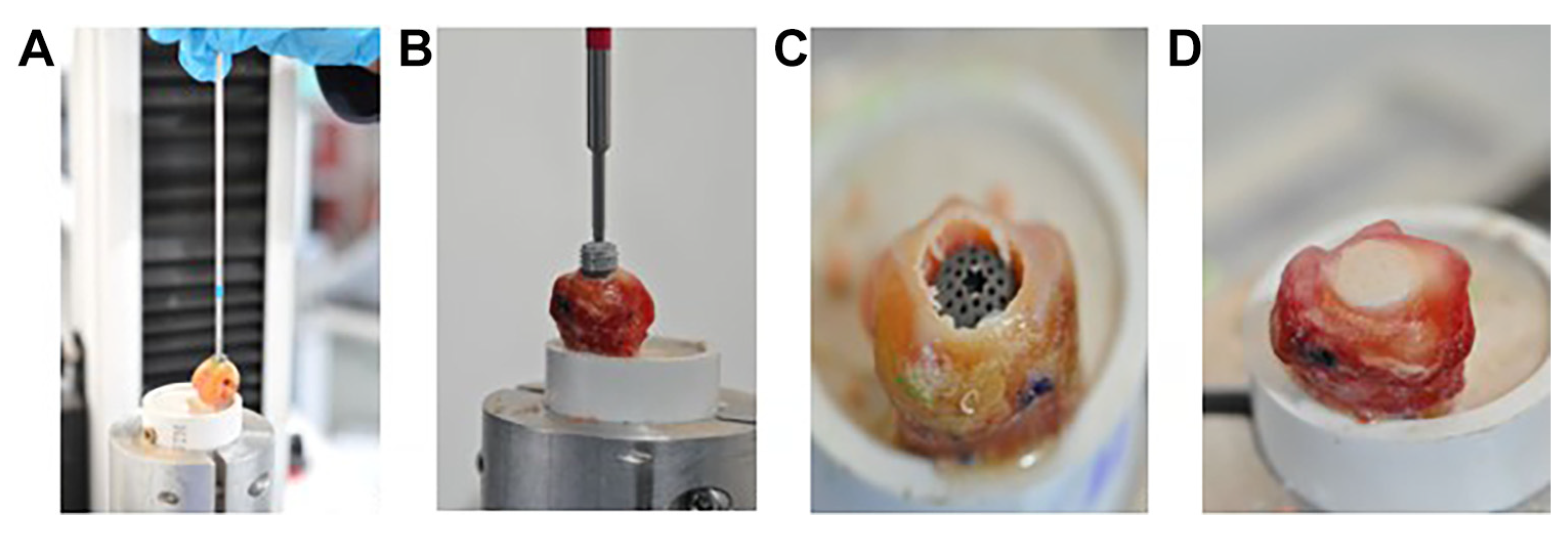
The 8-mm defect condition was then tested in the exact same manner as the intact condition. Defects were reconstructed with the S-Core hydroxyapatite-coated implant (Subchondral Solutions, Inc, Huntington Beach, California) (sizes 7 and 9 mm) (Fig. 2A); a titanium, hydroxyapatite-coated, fenestrated, cannulated fracture screw implant, countersunk in the subchondral bone; and a 2 2-cm 3-mm acellular dermal matrix allograft (Royal Biologics, Hackensack, New Jersey) sized to the defect (Fig. 2B). Once the 8-mm defect was tested, it was reconstructed with a 7-mm implant and an 8-mm human dermal allograft (Fig. 3). The human dermal allografts were soaked in 0.9% saline and prepared at room temperature with an appropriately sized biopsy punch. The implant was secured into the subchondral bone defect and the human dermal allograft was then laid atop the implant flush with the articular surface of the metatarsal head. The reconstructed 8mm defect was then tested.
After testing the 8-mm repair, a 10-mm defect was created. First, the 8-mm implant and graft were removed. The 8-mm reamer was reinserted into the 8-mm defect and the Kirschner wire was reinserted through the reamer to find the original alignment of the Kirschner wire in the articular surface. Removing the 8-mm reamer, a 10-mm reamer was then inserted and used to ream a 10-mm defect. The 10-mm defect condition was then tested. Next, the 10-mm defect was repaired and tested with a 9-mm S-Core implant and allograft using the same method as the 8-mm defect repair.
Figure 2. A, S-Core hydroxyapatite-coated titanium fenestrated threaded implant. B, Acellular dermal matrix allograft sized for each defect tested.
Japma 115 23218 g002
Figure 3. Reconstruction of the created defect after A, reaming and coring with B, a titanium fenestrated threaded implant countersunk in C, the subchondral bone and D, an acellular dermal matrix allograft.
Japma 115 23218 g003
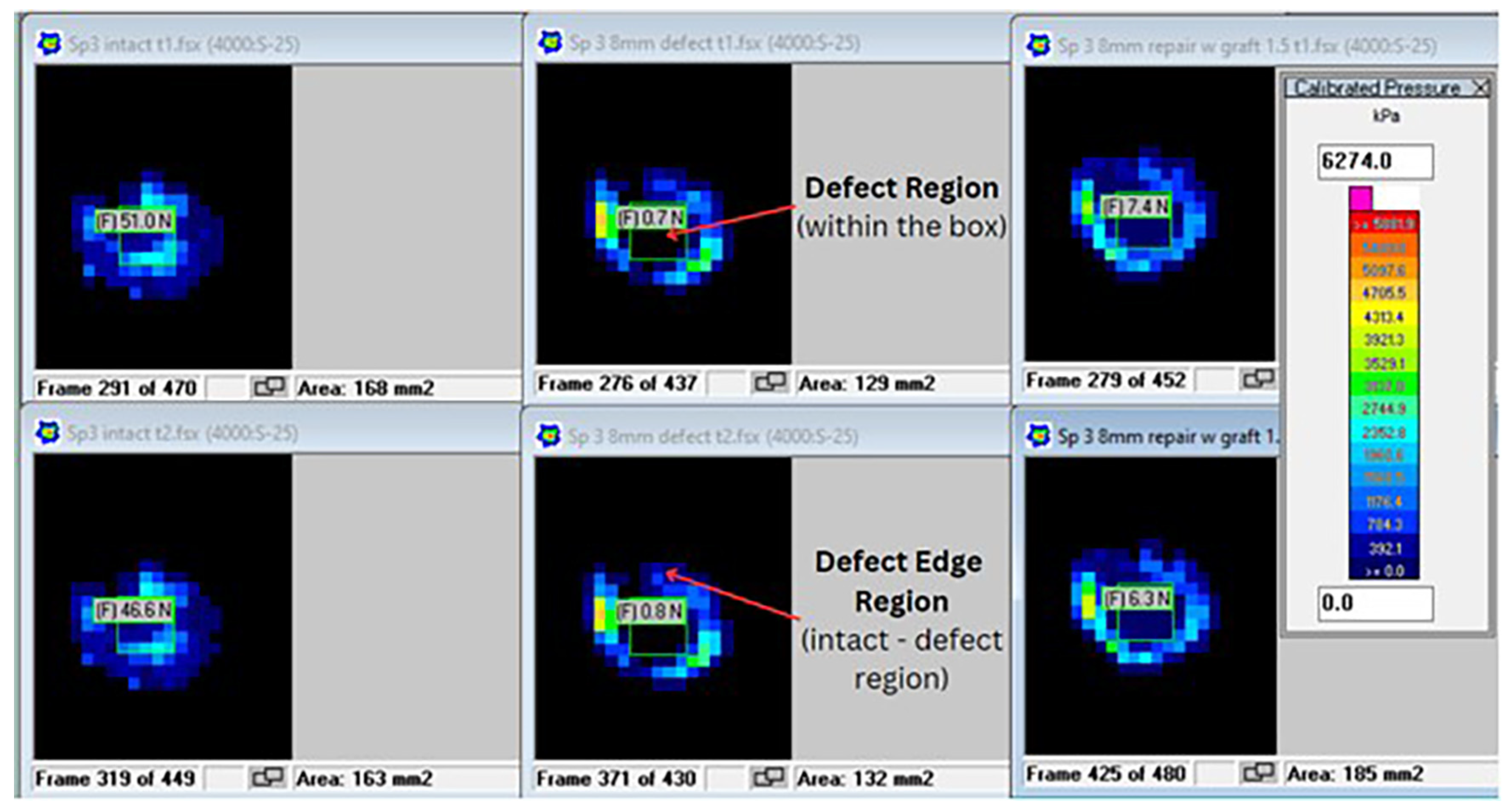
Two sets of data were analyzed for statistical analysis, overall contact characteristics, and defect edge region contact characteristics. First, using the Tekscan software, the overall contact area, pressure, and peak pressure at the peak force of the cyclic loading were averaged across the five cycles for the first and second trials of testing. The two trials were then averaged together for analysis. A second set of data was analyzed by taking the remaining edge loading around the defect area. This defect edge region was calculated by taking the contact area, pressure, and peak pressure at the peak force from the first and second trials of testing and subtracting the defect region at the exact same peak forces across the five cycles (Fig. 4).

Statistical Analysis

Data from the two trials were collected and averaged. All statistical analyses were performed using RStudio (RStudio Team, Boston, Massachusetts). Repeated measures analysis of variance was used, with statistical significance set at P< .05.
Mean values for the testing conditions were compared using two-way repeated measures analysis of variance followed by a post hoc test with Bonferroni correction for multiple comparisons (SPSS Statistics 25.0; IBM, Armonk, New York). Statistical significance was defined as P< .05.

Results

Overall Contact Characteristics

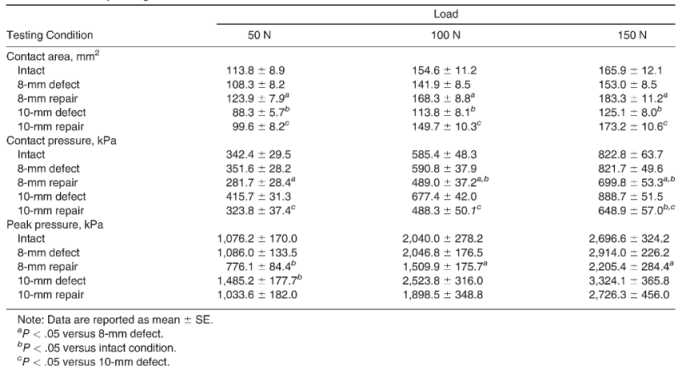
8-mm Defect. The repair of the 8-mm defect significantly increased the overall MTP contact area by 24.1 6 3.2 mm2 (P < .001) and significantly decreased contact pressure by 97.9 6 12.1 kPa (P< .001) at all compressive loads compared with the defect condition (Table 1). The repair of the 8-mm defect also significantly increased overall contact area at 150 N by 17.4 6 5.9 mm2 (P< .047) and decreased peak contact pressure compared with the intact condition at 100 and 150 N an average of 510.6 6 215.5 kPa (P< .041).
10-mm Defect. The 10-mm defect significantly decreased MTP contact area at all compressive loads compared with the intact condition by an average of 35.7 6 7.8 mm2 (P< .007) (Table 1). Repair of the 10-mm defect significantly increased contact area at 100 and 150 N by 42.0 6 8.3 mm2 (P< .001) and significantly decreased contact pressure at all compressive loads by 214.5 6 30.7 kPa compared with the defect condition (P< .003). At 50 N, peak pressure significantly increased with the 10-mm defect compared with the intact condition by 409 6 120.2 kPa (P < .024).
Figure 4. Representative Tekscan contact patterns for the 8-mm metatarsophalangeal joint osteochondral defect and repair defect region and defect edge region
Japma 115 23218 g004
Table 1. Metatarsophalangeal Joint Contact Characteristics
Japma 115 23218 i001
Defect Edge Region Contact Characteristics
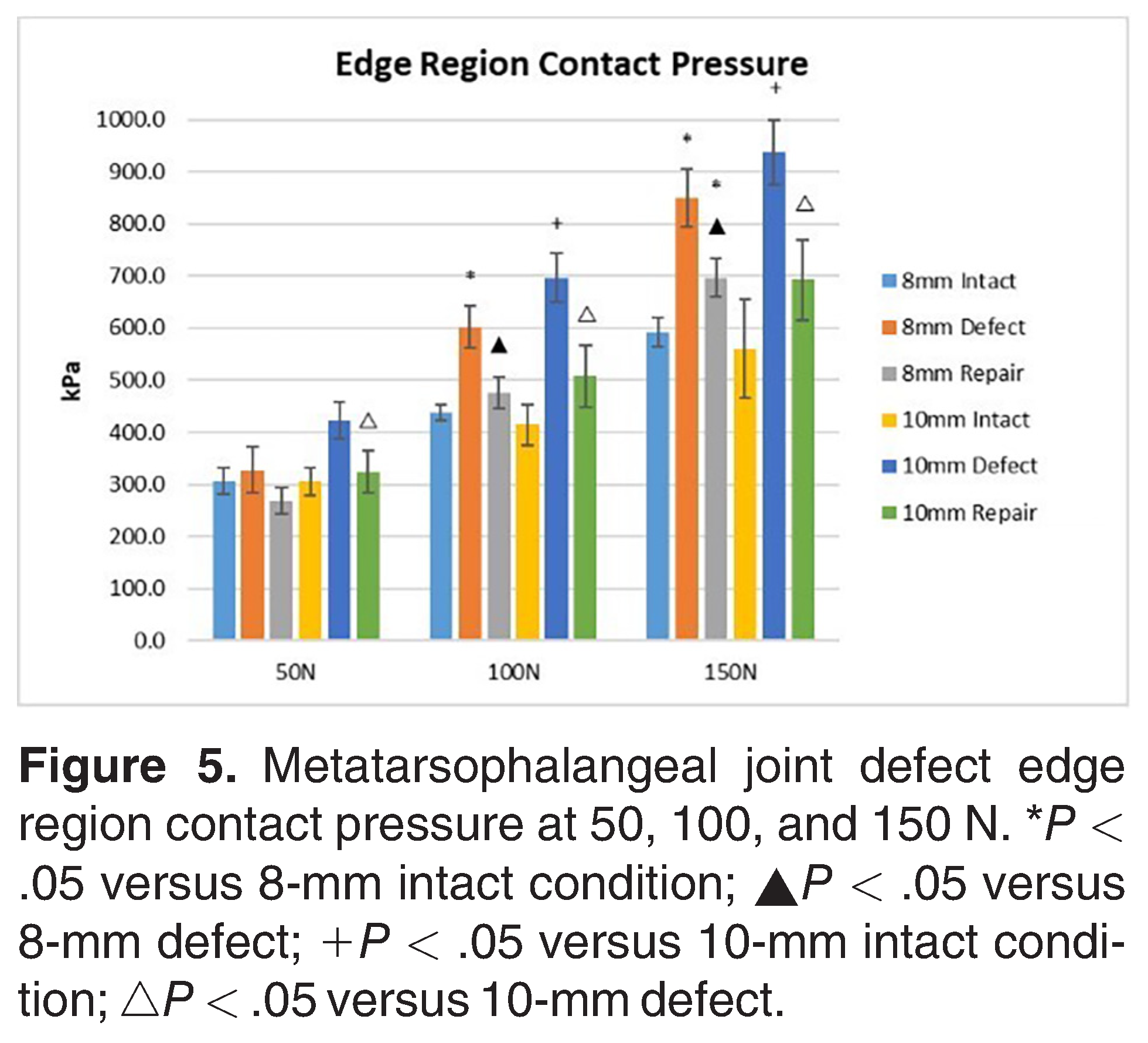
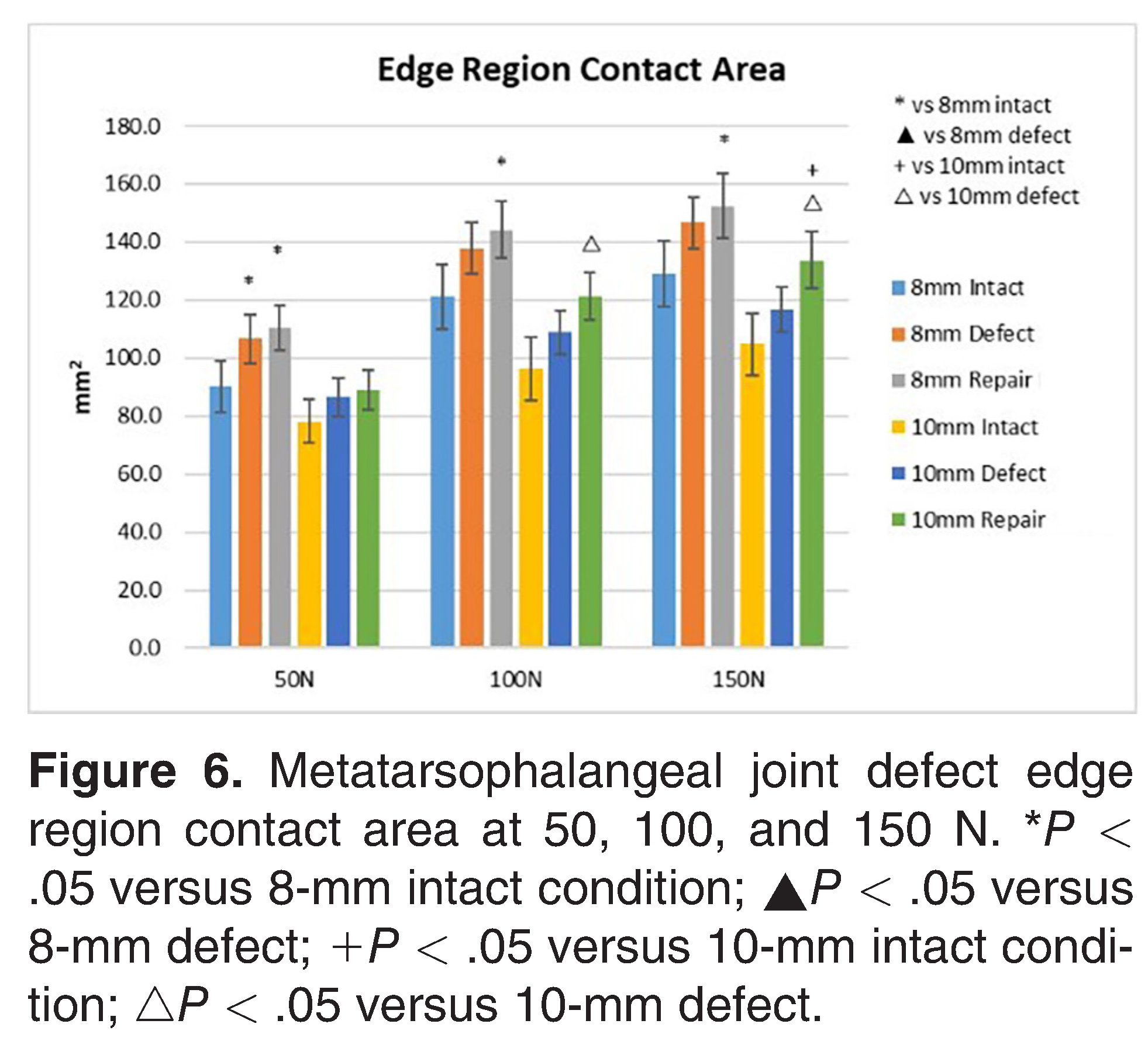
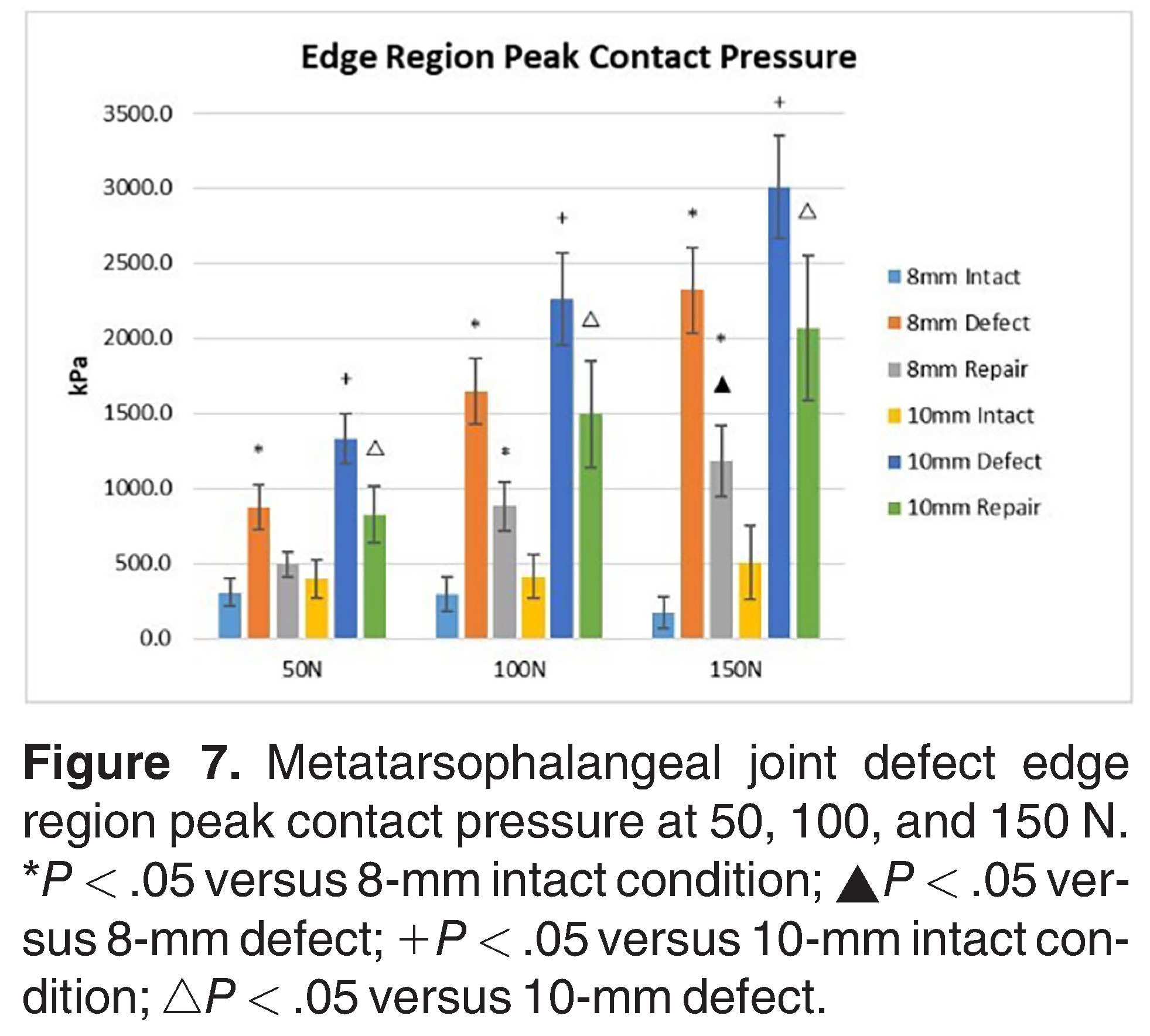
8-mm Defect. There was a significant increase in edge region contact pressure for the 8-mm defect at 100- and 150-N loads by an average of 210.2 6 45.8 kPa (P < .005) (Fig. 5) compared with the intact condition. The repair of the 8-mm defect significantly decreased edge region contact pressure at 100 and 150 N by an average of 138.7 6 41.7 kPa (P< .038) compared with the defect condition and significantly increased edge region contact area at all loads compared with the intact condition by an average of 22.3 6 5.2 mm2 (P< .014) (Fig. 6). The defect condition caused peak pressure in the edge region to significantly increase compared with the intact condition at all loads by an average of 1,356.3 6 232.0 kPa (P< .041). Repair of the 8-mm defect significantly decreased edge peak pressure at 150 N compared with the defect condition by 1,140.8 6 376.3 kPa (P5 .043) (Fig. 7); however, the peak pressure was significantly higher than the intact condition at 100 and 150 N by an average of 794.6 6 176.2 kPa (P< .008).
10-mm defect. At 100 and 150 N, the 10-mm defect saw a significant increase in edge region contact pressure by an average of 330.3 6 90.0 kPa (P< .04) (Fig. 5) compared with the intact condition. The repair of the 10-mm defect significantly decreased edge region contact pressure at all loads by an average of 177.6 6 28.1 kPa (P< .002) and significantly increased edge region contact area at 100- and 150-N loads compared with the defect condition by an average of 14.6 6 2.8 mm2 (P< .008) (Fig. 6). The defect condition significantly increased peak pressure in the edge region compared with the intact condition at all loads by an average of 1,762.4 6 324.7 kPa (P< .013). However, the repair significantly decreased the peak pressure compared with the defect condition at all loads by an average of 736.4 6 187.5 kPa (P< .013) (Fig. 7).
Japma 115 23218 g005Japma 115 23218 g006

Discussion

The most important findings of this study were that overall MTP joint contact areas were restored to intact conditions after reconstruction of the osteochondral defects using the subchondral implant with dermal allograft for 8-mm defects at all loads and for 10-mm defects at 100- and 150-N loads. Additionally, the 8- and 10-mm repairs resulted in significant decreases in peak contact pressure compared with the defect condition at all loads.
A critical but often overlooked component in the etiology of hallux rigidus is that the subchondral bone also demonstrates increased sclerosis and eburnation.[7] The subchondral bone is the layer of bone immediately beneath the articular cartilage and serves an integral role within the osteochondral complex with regard to the structure and function of the articular cartilage.[8,9 The osteochondral complex consists of hyaline cartilage connecting through a region of calcified cartilage to the subchondral bone followed by the trabecular bone beneath.[10] Joint force attenuation in healthy bone requires the entire osteochondral complex to convert shear and tangential stresses into compressive forces from one layer to the next.[11] As such, proper support of the subchondral bone is necessary for repairing osteochondral defects in the MTP joint.
With limited studies in the field of MTP joint osteochondral restoration, it is difficult to make direct comparisons with our results. Current treatment options for osteochondral defects in the MTP joint include sesamoid excision, synovectomy, debridement, partial cheilectomy, microfracture, and osteochondral autograft transfer.[12] However, these current treatment methods do not adequately support the subchondral bone, which can lead to further joint deterioration and eventual failure.[13] Even cheilectomies done in conjunction with microfracture techniques, to stimulate the subchondral bone beneath the cartilage injury for fibrocartilage regeneration, lack effective support for the damaged subchondral bone itself. In fact, Mithoefer et al[14] and Kreuz et al[15] have demonstrated a 27% to 33% incidence of thickening of the subchondral plate after microfracture. Although the overall osteochondral unit remains the same thickness, a thinner layer of viscoelastic cartilage overlying a thickened and stiffened subchondral plate results in increased susceptibility to damage from shear forces.[16]
Japma 115 23218 g007
For severe hallux rigidus, the gold standard treatment option is arthrodesis, owing to its safety and efficacy, but this severely limits range of motion because of the fusing of the joint. To address this, newer techniques using synthetic cartilage implants, such as the method introduced by Baumhauer et al,[17] have been devised in recent years, yet they do not appropriately account for the subchondral bone deficiency. It is becoming increasingly apparent that failure to support the subchondral bone can lead to poor healing outcomes and long-term joint dysfunction.[13] In one study that did investigate the contact area and pressures of the MTP joint with a cadaveric model, Schneider et al[18] compared the kinematics and contact characteristics of four different first metatarsal head designs of an MTP joint total arthroplasty implant. Instead of a single implant within the metatarsal defect fitted with an allograft like in our study, the authors used a polyethylene insert in the phalanx and a threaded intramedullary metatarsal component. They found that regardless of the metatarsal head design tested, each resulted in contact areas that were approximately 50% smaller than the intact condition. By contrast, we found that both the overall MTP contact area and the contact pressure were restored with the repair of the 8- and 10-mm defects using the subchondral implant with dermal allograft. This may be due to the remaining edge region that is kept intact when repairing the defect.
Schneider et al[18] also found that varying the metatarsal head component could result in significantly greater increases in pressure. We noticed a similar trend while testing in which the unique surface morphology of each MTP specimen could result in localized increases in contact and peak pressures, which could be a limitation. It is for this reason that we performed a subgroup analysis, breaking each specimen down into its defect and edge regions rather than just analyzing the overall characteristics of the joint. Nevertheless, the trend of contact characteristics in this study was clear and persistent across all specimens, with both mean and peak contact pressures reduced following repair compared with the defect condition and overall area restored compared with the intact condition. This could be the result of the malleable and flexible nature of the dermal allograft allowing it to flatten and shape itself to the articular surface once a compressive load is applied.
The limitations of this study include the lack of soft tissue in the testing conditions, as this affects the distribution of contact stresses at the first MTP joint and can affect joint contact characteristics.[19,20] Another limitation is that only a unidirectional loading of compressive force was applied to the first MTP joint; other directions of loading were not applied. Furthermore, the cadaveric model cannot account for the healing biology and represents only contact characteristics at time zero, requiring further clinical evaluation and long-term studies. Additionally, a comparison with other techniques for osteochondral repair was not performed in this study.

Conclusions

The MTP joint contact areas, contact pressures, and peak pressures were restored to intact conditions and contact pressures decreased following reconstruction of both 8- and 10-mm osteochondral defects using subchondral implants with dermal allografts.
Financial Disclosure: Partial funding, implants, and grafts were provided by Subchondral Solutions, Inc.

Conflict of Interest

Dr. Dee has patents and stock option with Subchondral Solutions, Inc. Ms. McGarry and Dr. Lee have stock options with Subchondral Solutions, Inc.

References

  1. MUEHLEMAN, C.; BAREITHER, D.; HUCH, K. ET AL: Prevalence of degenerative morphological changes in the joints of the lower extremity. Osteoarthritis Cartilage 1997, 5, 23. [Google Scholar] [CrossRef] [PubMed]
  2. DELAND, J.T.; WILLIAMS, B.R. Surgical management of hallux rigidus. J Am Acad Orthop Surg 2012, 20, 347. [Google Scholar] [CrossRef] [PubMed]
  3. KUNNASEGARAN, R.; THEVENDRAN, G. Hallux rigidus: nonoperative treatment and orthotics. Foot Ankle Clin 2015, 20, 401. [Google Scholar] [CrossRef] [PubMed]
  4. JACOB HA: Forces acting in the forefoot during normal gait—an estimate. Clin Biomech (Bristol) 2001, 16, 783. [CrossRef]
  5. POLITI, J.; JOHN, H.; NJUS, G. ET AL: First metatarsal-phalangeal joint arthrodesis: a biomechanical assessment of stability. Foot Ankle Int 2003, 24, 332. [Google Scholar] [CrossRef] [PubMed]
  6. SCHMID, T.; YOUNGER, A. First metatarsophalangeal joint degeneration: arthroscopic treatment. Foot Ankle Clin 2015, 20, 413. [Google Scholar] [CrossRef] [PubMed]
  7. GOULD N: Hallux rigidus: cheilotomy or implant? Foot Ankle 1981, 1, 315. [CrossRef] [PubMed]
  8. SHARMA, A.R.; JAGGA, S.; LEE, S.S. ET AL: Interplay between cartilage and subchondral bone contributing to pathogenesis of osteoarthritis. Int J Mol Sci 2013, 14, 19805. [Google Scholar] [CrossRef] [PubMed]
  9. DAY, J.S.; DING, M.; VAN DER LINDEN, J.C. ET AL: A decreased subchondral trabecular bone tissue elastic modulus is associated with pre-arthritic cartilage damage. J Orthop Res 2001, 19, 914. [Google Scholar] [CrossRef] [PubMed]
  10. LEPAGE, S.I.M.; ROBSON, N.; GILMORE, H. ET AL: Beyond cartilage repair: the role of the osteochondral unit in joint health and disease. Tissue Eng Part B Rev 2019, 25, 114. [Google Scholar] [CrossRef] [PubMed]
  11. PATHRIA, M.N.; CHUNG, C.B.; RESNICK, D.L. Acute and stressrelated injuries of bone and cartilage: pertinent anatomy, basic biomechanics, and imaging perspective. Radiology 2016, 280, 21. [Google Scholar] [CrossRef] [PubMed]
  12. LICHTLAJ; VITTETOEKL; FRIEDMANCP. ETAL:Metatarsophalangeal joint reconstruction using talar osteochondral allograft following a failed dorsal cheilectomy. Case Rep Orthop 2022, 2022, 6359108. [Google Scholar]
  13. GOMOLL, A.H.; MADRY, H.; KNUTSEN, G.; ET, A.L. The subchondral bone in articular cartilage repair: current problems in the surgical management. Knee Surg Sports Traumatol Arthrosc 2010, 18, 434. [Google Scholar] [CrossRef] [PubMed]
  14. MITHOEFER, K.; WILLIAMS, R.J.; WARREN, R.F.; et al. The microfracture technique for the treatment of articular cartilage lesions in the knee. A prospective cohort study. J Bone JointSurgAm 2005, 87, 1911. [Google Scholar] [CrossRef]
  15. KREUZ, P.C.; STEINWACHS, M.R.; ERGGELET, C. ET AL: Results after microfracture of full-thickness chondral defects in different compartments in the knee. Osteoarthritis Cartilage 2006, 14, 1119. [Google Scholar] [CrossRef] [PubMed]
  16. ARMSTRONG CG: An analysis of the stresses in a thin layer of articular cartilage in a synovial joint. Eng Med 1986, 15, 55. [CrossRef]
  17. BAUMHAUER, J.F.; DANIELS, T.; GLAZEBROOK, M. New technology in the treatment of hallux rigidus with a synthetic cartilage implant hemiarthroplasty. Orthop Clin North Am 2019, 50, 109. [Google Scholar] [CrossRef] [PubMed]
  18. SCHNEIDER, T.; DABIRRAHMANI, D.; GILLIES, R.M. ET AL: Biomechanical comparison of metatarsal head designs in first metatarsophalangeal joint arthroplasty. Foot Ankle Int 2013, 34, 881. [Google Scholar] [CrossRef]
  19. MOAYEDI, M.; ARSHI, A.R.; SALEHI, M.; et al. Associations between changes in loading pattern, deformity, and internal stresses at the foot with hammer toe during walking; a finite element approach. Comput Biol Med 2021, 135, 104598. [Google Scholar] [CrossRef] [PubMed]
  20. ZHANG, Y.; AWREJCEWICZ, J.; SZYMANOWSKA, O.; et al. Effects of severe hallux valgus on metatarsal stress and the metatarsophalangeal loading during balanced standing: a finite element analysis. Comput Biol Med 2018, 97, 1. [Google Scholar] [CrossRef] [PubMed]