Sarcoid tenosynovitis is a rare form of tenosynovitis and is often underdiagnosed. Complications with sarcoidosis in the musculoskeletal system were described by Besnier et al in 1889.[
1] They described symptoms affecting multiple systems. Since then, several cases of sarcoid tenosynovitis have been reported in the literature, mostly involving the hand and wrist flexor tendons.
Sarcoid tenosynovitis affecting the foot is rare, and only a few cases have been reported in the literature. In 1996, Mana et al[
2] reported a case of sarcoid tenosynovitis involving the flexor tendons of the ankle in a patient with systemic sarcoidosis. In 2009, Gupta et al[
3] reported a case of sarcoid tenosynovitis involving the flexor tendons of the toe in a patient with sarcoidosis.
The pathogenesis of sarcoid tenosynovitis has yet to be fully understood. It is thought to result from the formation of noncaseating granulomas in the synovial tissue.[
4] These granulomas can cause inflammation and thickening of the synovial sheath surrounding the tendons, leading to tenosynovitis. The diagnosis of sarcoid tenosynovitis requires a high index of suspicion, and it can only be confirmed by histopathologic examination of the synovial tissue.[
4] Therefore, it is crucial to consider sarcoid tenosynovitis in the differential diagnosis of patients with tenosynovitis, particularly those with a known history of sarcoidosis.
The diagnosis of sarcoid tenosynovitis can only be confirmed by histopathological examination of the synovial tissue.[
4,
5] Other imaging modalities, such as magnetic resonance imaging (MRI), can be helpful in the diagnosis of tenosynovitis, but they are not specific for sarcoidosis.[
6]
The treatment of sarcoid tenosynovitis is primarily based on corticosteroids, which effectively reduce inflammation and improve symptoms.[
4,
7] Other immunosuppressive agents, such as methotrexate and azathioprine, have also been used in refractory cases.[
7] In our patient, treatment was directed at controlling concurrent infection (incision/debridement along with antibiotic therapy) and getting wound coverage.
Case Report
A 49-year-old white female with a significant past medical history, including a history of breast cancer, peripheral neuropathy secondary to prior schwannoma removed from spine, right foot drop and right foot numbness, and sarcoidosis on methotrexate, presented to our clinic with 2 weeks of right leg pain and swelling. She initially presented to urgent care, and was started on prednisone taper, out of concern for acute gout flare, rather than sarcoidosis arthritis. Uric acid, complete blood count, and foot radiographs were obtained, and were normal at that time.
She later presented to the acute care clinic with worsening symptoms, was found to have a warm, erythematous foot, and was started on cephalexin out of concern for cellulitis. When she returned to the clinic for follow-up, there was some improvement in the appearance of her foot, and the course of cephalexin was extended from 7 days to 10 days. The patient did not take methotrexate during this time in order to avoid worsening any possible infection. She denied any systemic symptoms, including fever, chills, and so forth.
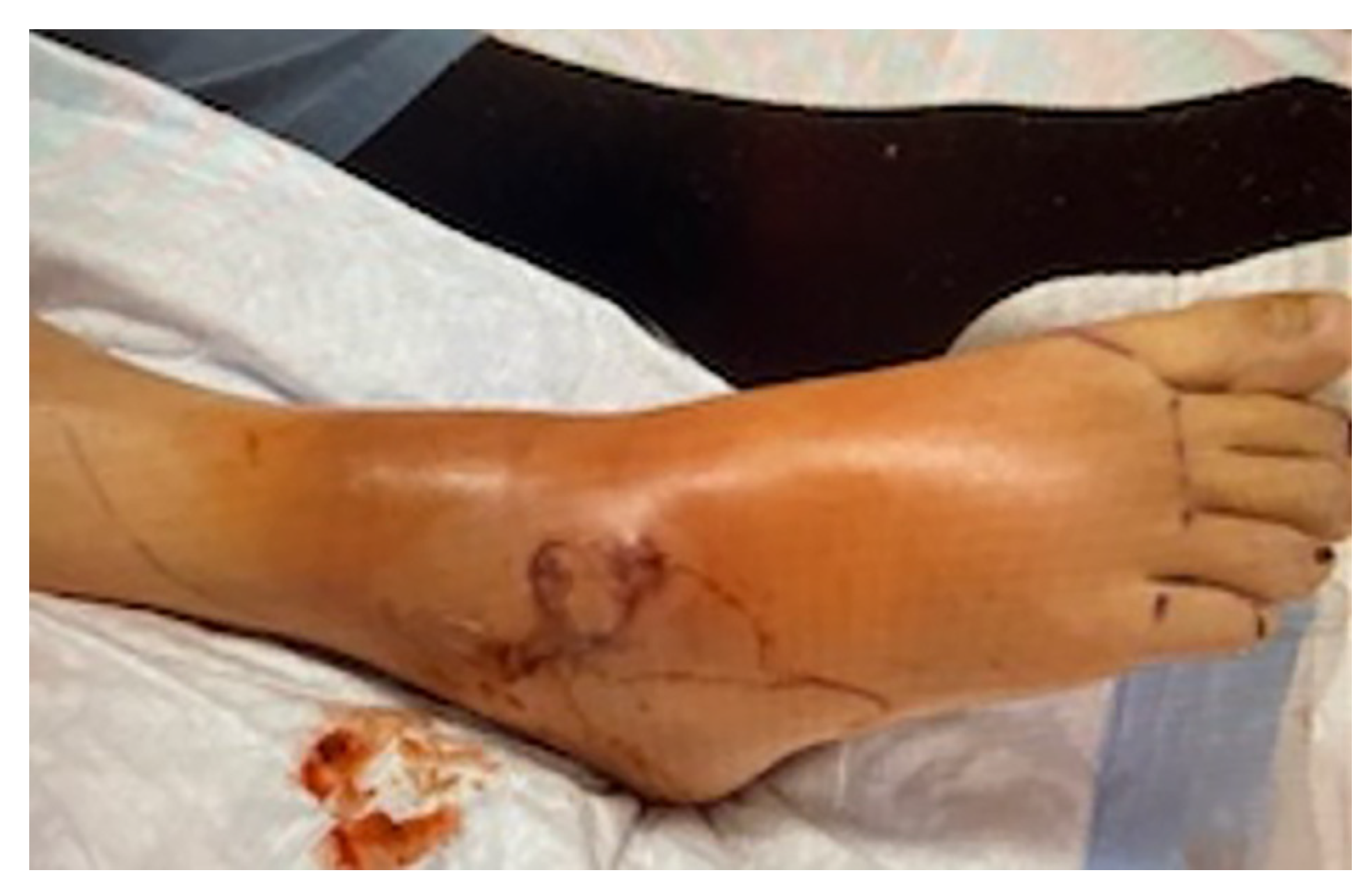
She then presented to the emergency department a week later for worsening pain associated with the erythematous and edematous right lower leg and foot. She was found to have a large, tense, fluid-filled bulla to the lateral aspect of the right proximal foot/ankle (
Figure 1). She had an uncomplicated bed-side incision and drainage performed in the emergency department and then was transferred to a Level I trauma center. The fluid collected was sent off for culture and grew
Nocardia vulneris.
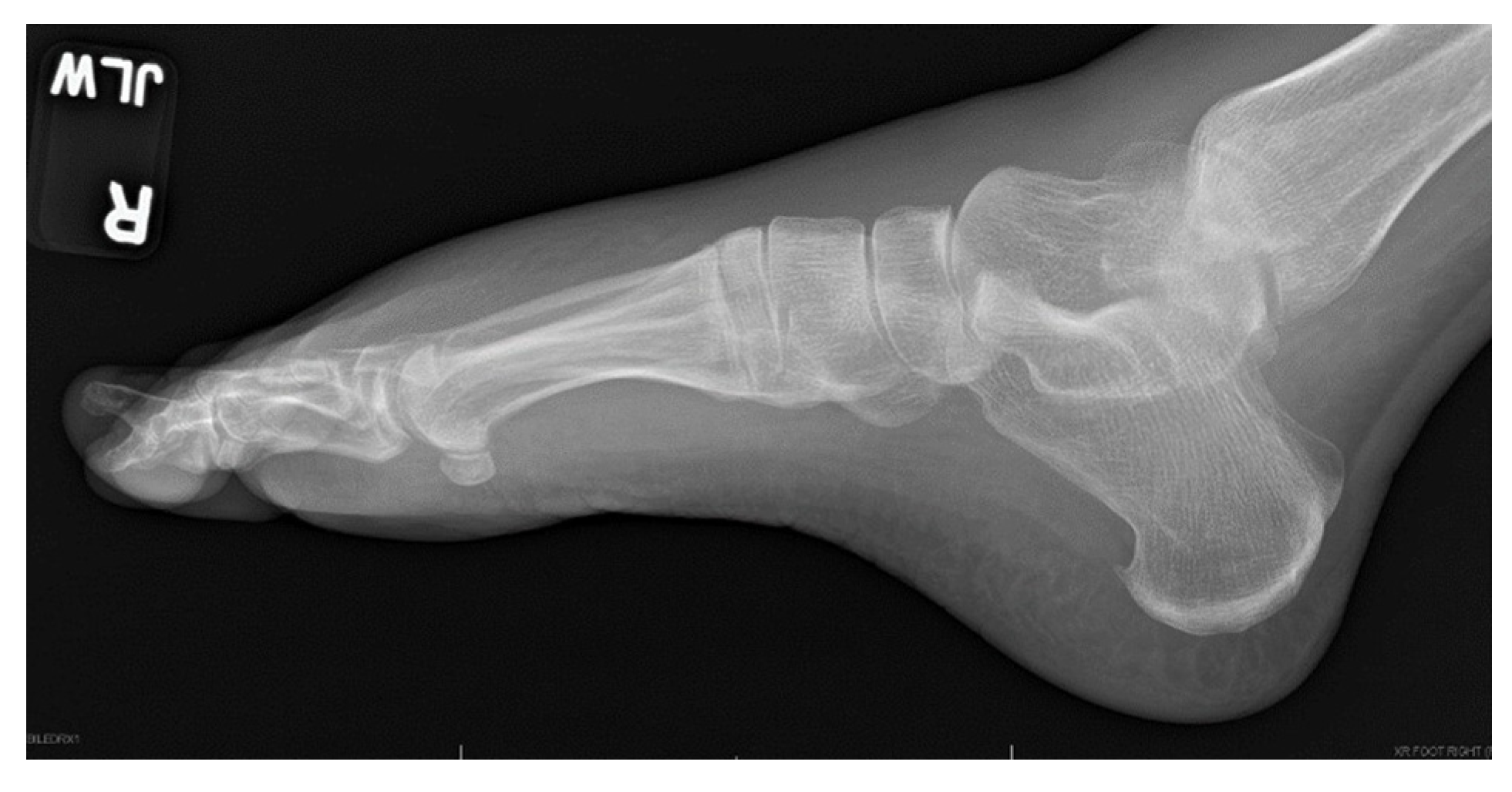
A radiograph of the foot showed no significant abnormality (
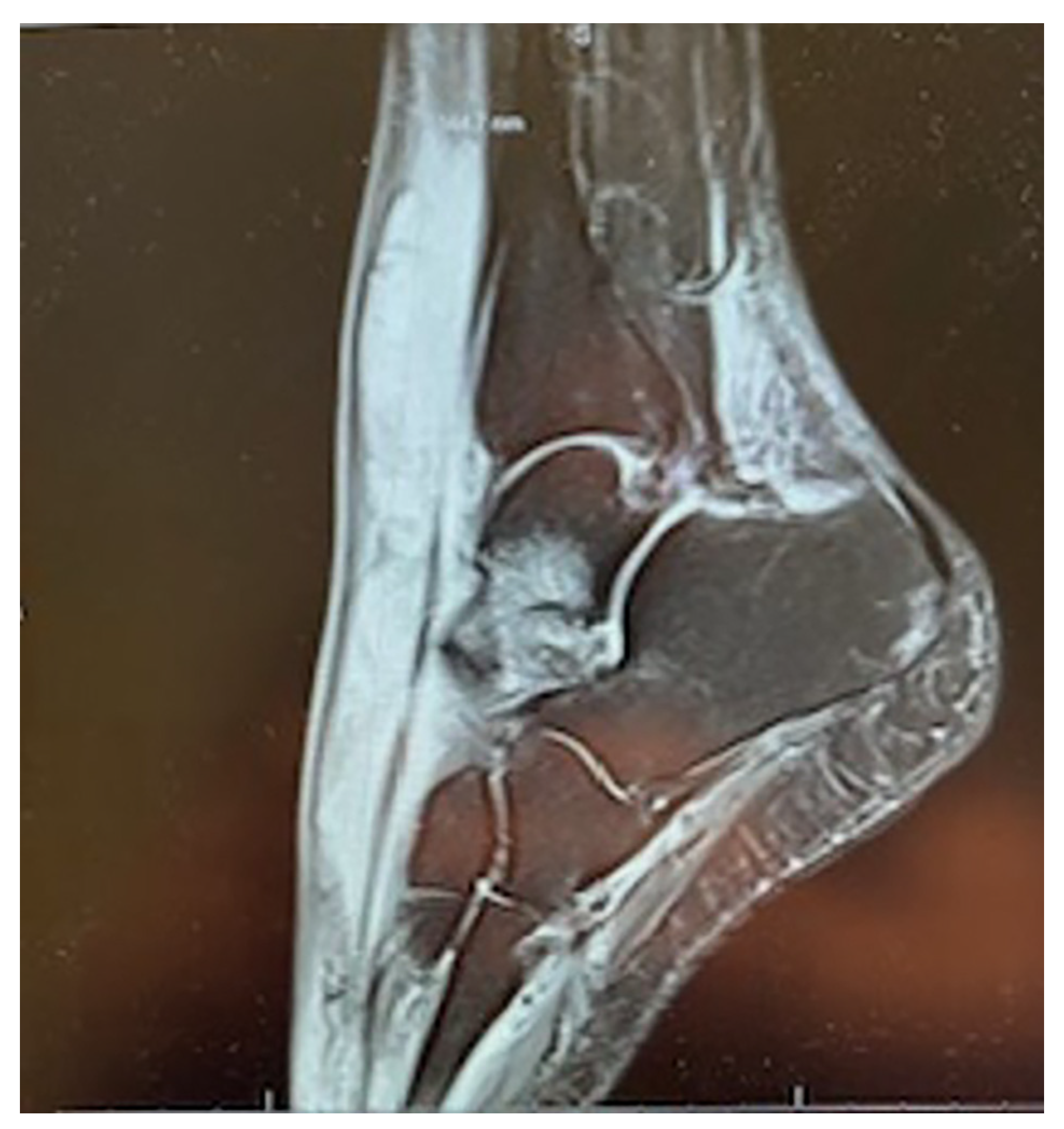
Figure 2). The MRI performed upon admission to the trauma center showed a sterility indeterminate fluid collection surrounding the anterior extensor tendons. These findings may represent the sequela of sarcoid tenosynovitis with possible superimposed granulomatous changes and/or superimposed infectious tenosynovitis (
Figure 3). The MRI also showed scattered enhancing foci throughout the bone marrow of the ankle and foot, which is favored to represent bony sarcoid lesions.
The patient underwent surgical incision and debridement of fluid collection. Wound culture from the initial operating room incision and debridement grew
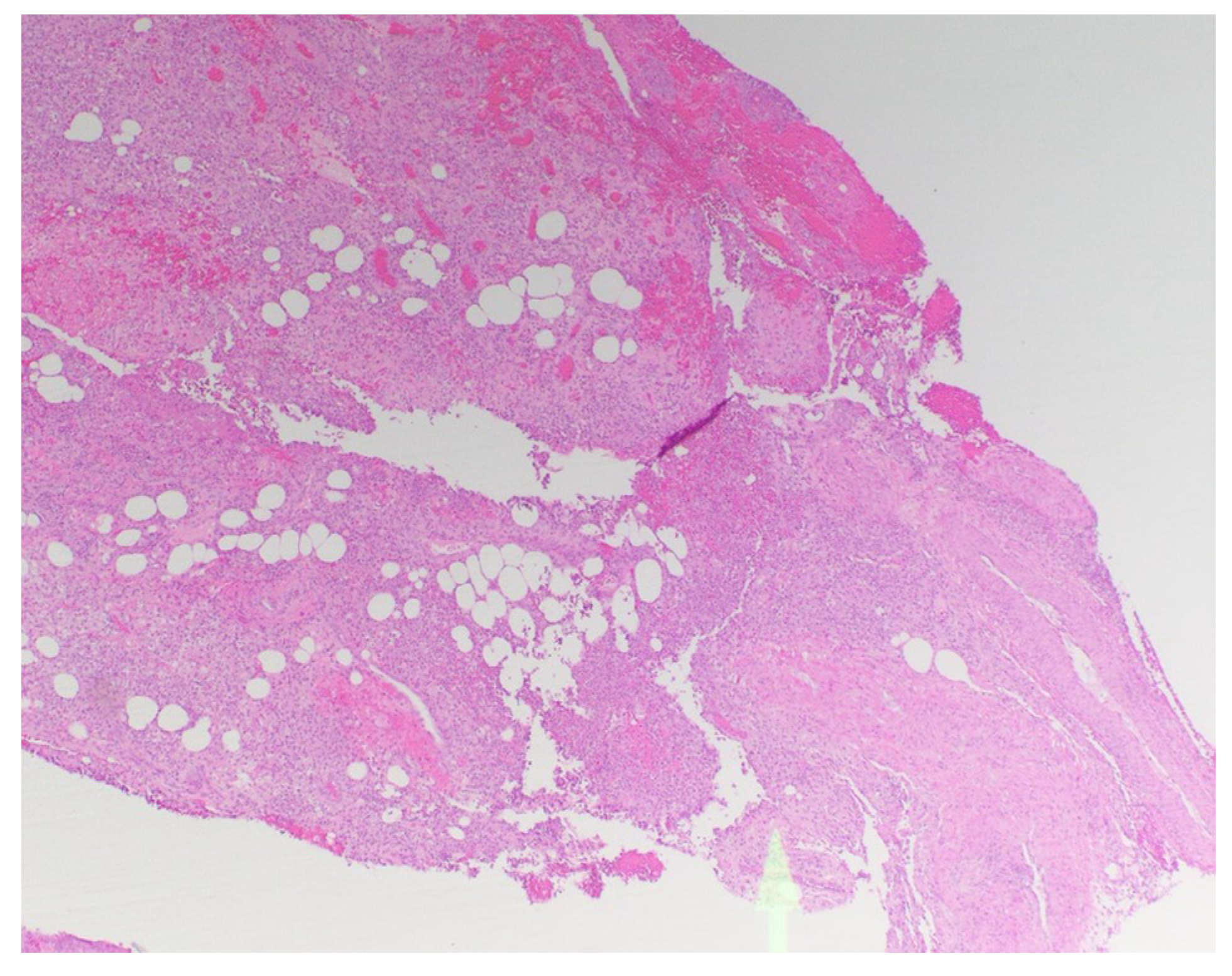
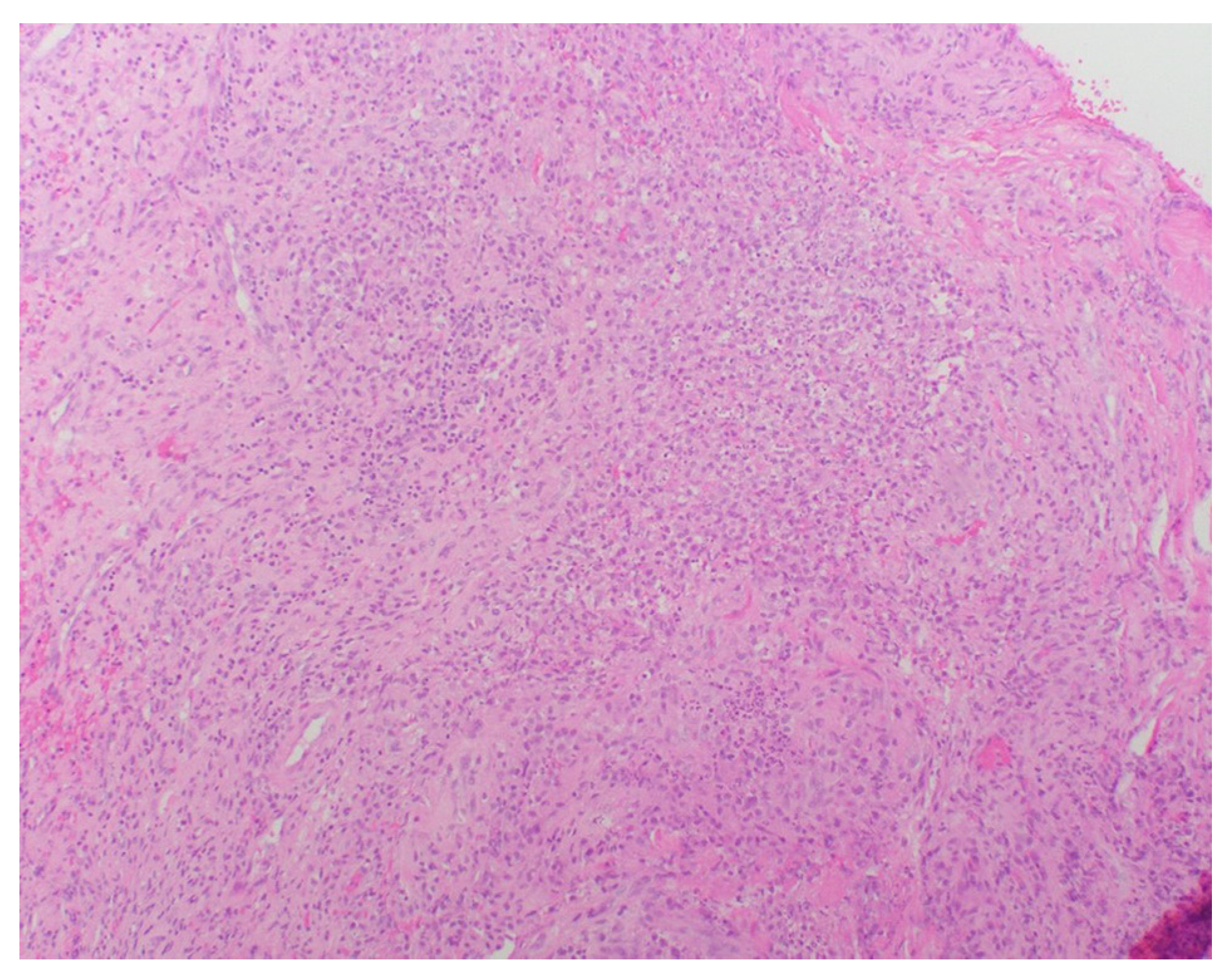
Nocardia brasiliensis. Tissue samples from the affected area were sent to pathology, where histopathologic examination of the debrided tissue revealed reactive granulation tissue (
Figure 4 and
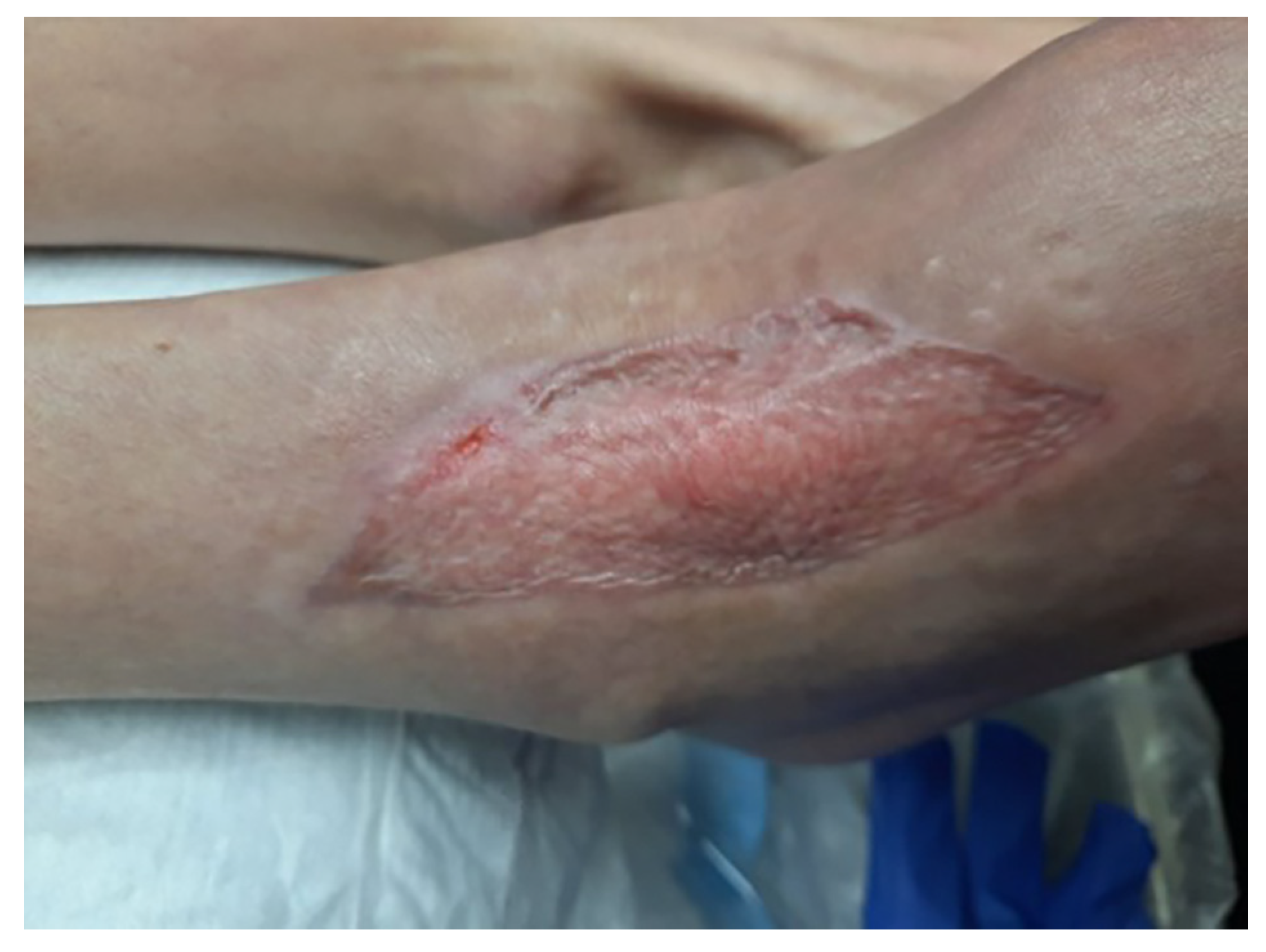
Figure 5). The patient returned to the operating room several days later for repeat incision and debridement, including tendons in the affected area. A negative pressure wound therapy (NPWT) device was then placed over the debrided area to assist in wound closure. A week later, the NPWT device was changed in the operating room with skin substitute graft application over the exposed wound. After surgical intervention, the patient was started on antibiotic therapy by the infectious diseases (ID) team. The patient’s history included an allergy to trimethoprim/sulfamethoxazole, which the ID team wanted to use for definitive treatment. The patient, therefore, went through an antibiotic desensitization protocol in the ICU before being discharged. The patient was brought back for the application of a split-thickness skin graft with the plastic surgery team a month after discharge from the hospital. The patient responded excellently to surgical, wound care, and medical therapy. The graft was well healed with no residual infectious process after 12 months (
Figure 6). The patient continues to have issues with foot drop of the right lower extremity, but this has been managed with bracing as the patient would like to avoid any additional surgical interventions.
Discussion
The presented case shows how complicated sarcoidosis tenosynovitis is to treat and the devastation that can accompany treatment for this condition. Our patient was seen by multiple physicians who missed the diagnosis before ultimately needing to undergo surgical intervention. The patient’s road to eventual recovery is a testament to a multi-specialty approach to treatment. Surgical intervention was performed with podiatry and plastic surgery, and medical management was per-formed with rheumatology and internal medicine.
A literature review of the topic covers the difficulty in diagnosing and treating sarcoid tenosynovitis, and we also saw that in our patient’s case. The patient’s close relationship with rheumatology was very beneficial in our case. Rheumatology managed the patient pre- and postoperatively so that the other manifestations of sarcoidosis did not become an issue and complicate the treatment course. Surgical management and histopathology helped visualize the inflammatory tissue that was present.
The case study and discussion on management can benefit the podiatric community for the treatment of similar presentations. Seeing how our patient presented, and how the initial diagnosis was missed, can be helpful for other clinicians to keep in mind as a potential differential.
Conclusions
Sarcoid tenosynovitis is a rare manifestation of sarcoidosis, and it can involve various locations, including the foot. Diagnosing sarcoid tenosynovitis can be challenging and requires a high suspicion index.[
8] The confirmation of the diagnosis requires a histopathologic examination of the synovial tissue.
In our case, the diagnosis of sarcoid tenosynovitis was confirmed by the histopathologic examination of the tissue obtained from the wound. The patient responded well to surgical intervention and antibiotics. Her symptoms and surgical site healed uneventfully in the following months.
In conclusion, sarcoid tenosynovitis should be considered in the differential diagnosis of patients with tenosynovitis, particularly those with a known history of sarcoidosis. Early diagnosis and corticosteroid treatment can lead to suitable outcomes and prevent long-term complications. Surgical intervention is warranted in patient populations with concurrent infectious processes. However, further studies are needed to improve our understanding of this rare manifestation of sarcoidosis and develop more effective treatment strategies.