


Abstract
The management of fractures in diabetic patients poses unique challenges, particularly due to complications such as neuropathy, poor bone quality, and impaired healing. This case study explores the nonoperative management of multiple displaced metatarsal fractures in a 61-year-old male with type 2 diabetes and neuropathy. The patient presented with swelling and minimal pain in the right foot without a clear history of acute injury. Despite radiographic evidence of displaced fractures, the patient opted for conservative treatment due to high surgical risks, including comorbidities and concerns about compliance with postoperative care. He was treated with a controlled ankle motion walker and partial weightbearing for 4 months, ultimately achieving healing at all fracture sites except for a malunion in the second metatarsal. Over 28 months, the patient-maintained functionality with diabetic shoes and custom inserts, despite developing a mild metatarsus adductus deformity and evidence of osteoarthritis. This case highlights the potential for conservative treatment of complex metatarsal fractures in diabetic neuropathic patients, emphasizing the importance of individualized management plans and consideration of the patient’s overall health status and preferences. As the prevalence of diabetes rises, this approach could serve as a viable option for similar cases, minimizing the risks associated with surgical intervention.
Increased fracture risk and bone fragility have recently become established complications in the diabetic patient.[1] People with type 2 diabetes have a 32% increased relative risk of total fractures and a 37% increased risk of foot fractures compared with those without diabetes.[2],[3] As the incidence of diabetes continues to rise, the prevalence of foot and ankle fractures in this population will increase, as will the associated complications. The risk of an amputation after an ankle fracture is increased sevenfold in the diabetic patient compared with the nondiabetic patient.[4]
Metatarsal fractures represent one of the most common types of fractures in the foot.[5] Treatment and management of foot fractures, and more specifically metatarsal fractures, have not received the same attention as ankle fractures in the diabetic population. Some of the goals in the treatment of metatarsal fractures are to maintain the metatarsal parabola in both the horizontal and sagittal planes to prevent equinovarus deformities, metatarsus adductus, midfoot osteoarthritis, and subsequent increased plantar pressure points on the foot. This becomes more crucial in the prevention of chronic wounds in the diabetic population. In general, nondisplaced fractures of metatarsals two through four can be treated conservatively in a weightbearing cast and cast shoe for 4 to 6 weeks. Fifth metatarsal treatment falls under the same regimen unless there is a Jones or avulsion fracture. Treatment is tailored to the patient’s individual activity level and comorbidities. Most displaced, unstable fractures require surgical intervention to restore alignment and reduce the long-term rate of complication. As a general rule, reduction of any metatarsal fracture with displacement of more than 3 to 4 mm and angulation of more than 10˚ is recommended.[6] The concern of neuropathy impeding surgical healing is often documented in cases in which it leads to inadvertent early weightbearing, disruption of repair, or increased risk of pressure ulcers from inactivity.
The presence of comorbidities such as neuropathy, peripheral artery disease, and nephropathy increases the complication rate associated with surgical management of fractures. There are real challenges with bone healing in diabetic patients, with limited research on the benefits of ultrasound, lasers, hyperbaric oxygen, biochemical cues, and drug therapy.[7] Diabetes mellitus, both type 1 and type 2, compromises bone healing in patients as a result of metabolic changes in the microenvironment of the bone. This makes it easier to sustain a fracture and harder to heal it once it occurs, making the decision to surgically treat more difficult.
In diabetic patients, impaired blood flow, neuropathy, reduced immune response, and poor glycemic control often lead to impaired skin healing. This can affect what incisions are made and how large they are; percutaneous pinning or minimally invasive surgery may be the preferred option for uncontrolled patients with unstable fractures for this reason. More incisions may contribute to delayed wound healing, poor scar formation, and increased risk of infection. These issues may also make the decision to perform any adjunct procedures more difficult.[8]
Charcot’s arthropathy can occur as a sequela or complication of metatarsal fractures. Continued weightbearing due to neuropathy usually results in additional stress to the bones and joints, leading to an even more unstable foot structure. Fixation of such fractures and deformities may lessen this risk, especially when done percutaneously.[9] This is important to consider in fractures that are left unstable in diabetic patients, as it can increase the chance of additional structural damage.
When considering conservative management of fractures, overall medical management of the patient is considered. Vitamin D levels are known to affect fracture healing at the time of the fracture, but supplementation does not always lead to increased healing capability when used after injury.[10] Testosterone also plays an important role in maintaining bone mineral density (but not as the sole treatment).[11] Other modalities, such as bone stimulators, are seen to lower rates of nonunion and reduce pain but do not make a difference in functional outcomes.[12] Managing patient expectations as well as educating the patient on risks is important in making the decision to treat the injury conservatively or surgically.
A review of the literature yielded fewer than four cases of displaced foot fractures treated conservatively, and none involved multiple displaced metatarsal fractures in a neuropathic diabetic patient.[13,14,15] This report presents the case for conservatively treating multiple metatarsal fractures in the diabetic neuropathic patient.
Case Report
A 61-year-old male presented with a chief complaint of right foot swelling for more than 6 weeks. The patient denied any acute injury to the foot and reported only minimal pain. He had not initiated any treatment on his own prior to his visit. His medical history was significant for type 2 diabetes with neuropathy, morbid obesity, coronary artery disease, hypertension, hepatitis C, and gastroesophageal reflux. Surgical history included a coronary artery bypass graft and right ankle fracture with open reduction and internal fixation (8 years prior), and he had no known allergies.
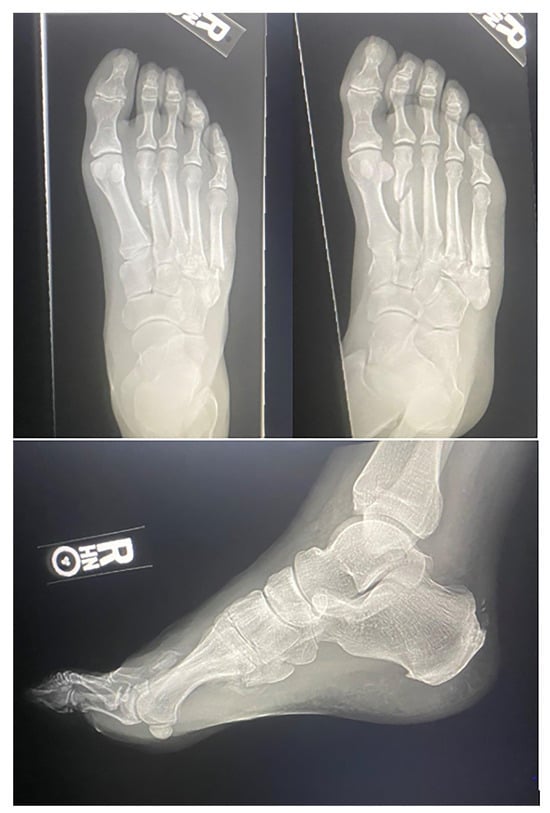
He had 11/4 dorsalis pedis and posterior tibial pulses with 1-sec capillary refill time and moderate nonpitting edema to the left foot. Neurologic examination showed diminished sharp/dull/vibratory sensation. Semmes-Weinstein 5.07 monofilament test was significantly diminished at 2/10. The patient demonstrated 15/5 muscle strength of the anterior, lateral, and posterior compartments, bilateral and symmetrical. The patient’s recent hemoglobin A1c at time of visit was 9.8. Radiographically, the patient had displaced midshaft fractures at the second metatarsal with dorsal and lateral angulation, a nondisplaced fracture of the fourth metatarsal base, and a displaced fifth metatarsal Jones fracture with dorsolateral angulation.
There was evidence of bone callus formation at all three fracture sites (Figure 1).
Figure 1.
Dorsoplantar (top left), oblique (top right), and lateral (bottom) nonweightbearing radiographs of the right foot of a patient with a displaced midshaft fracture of the second metatarsal, nondisplaced fracture of the fourth metatarsal base, and a displaced fifth metatarsal Jones fracture.
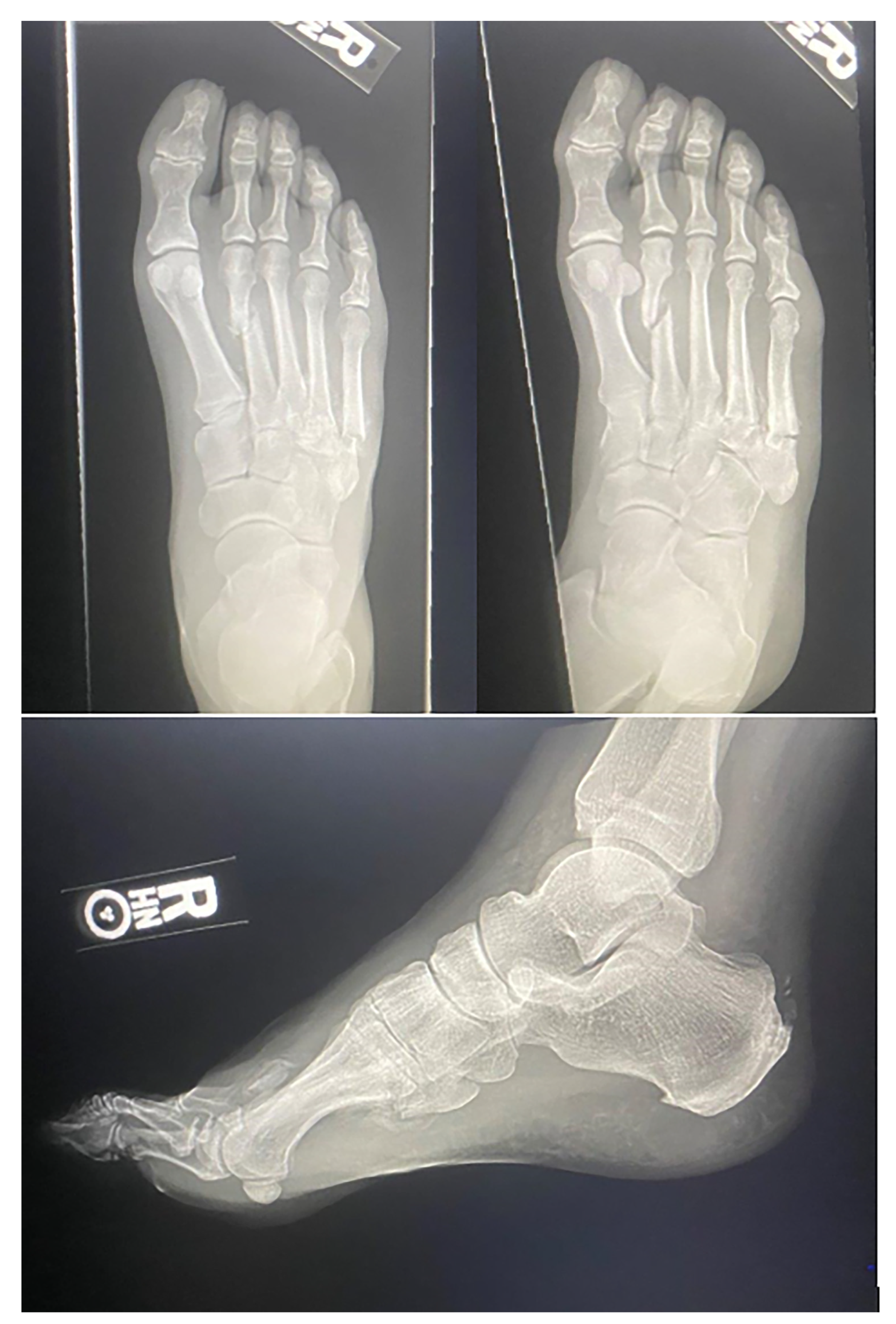
Considering the risk factors for surgical treatment as well as his own unwillingness to stay off the affected foot, the patient opted for conservative treatment. Factors that made him a higher-risk patient for surgery included the age of the injury, patient’s habits, blood glucose control, neuropathy, and questionable compliance in the past with weightbearing instructions. The possibility and risk of needing future reconstructive surgery if healing was inadequate were discussed with the patient. This discussion also included his expectations for activity level in the future. He was subsequently treated in a controlled ankle motion walker with partial weightbearing to the heel for 4 months. The patient went on to heal all fracture sites with the exception of malunion of the second metatarsal (Figure 2). At 4 months, the patient was transitioned to extra-depth shoes with custom accommodative inserts.
Figure 2.
Dorsoplantar (top left), oblique (top right), and lateral (bottom) nonweightbearing radiographs showing callus formation at previous fracture sites.
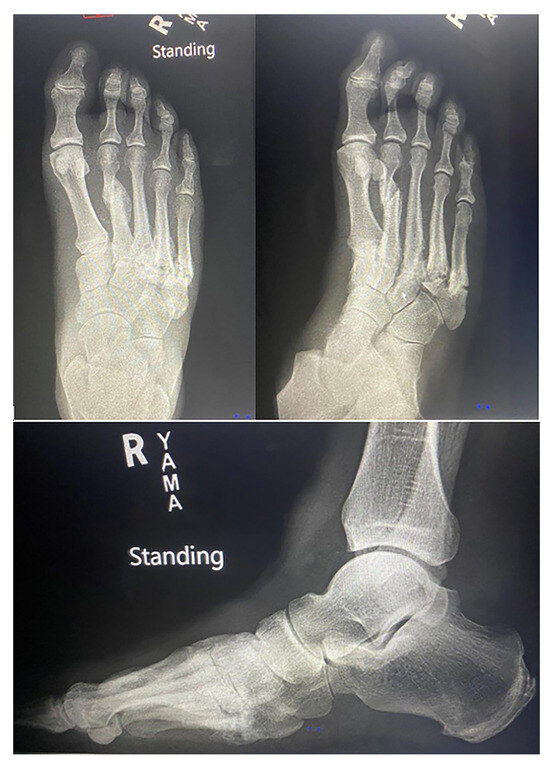
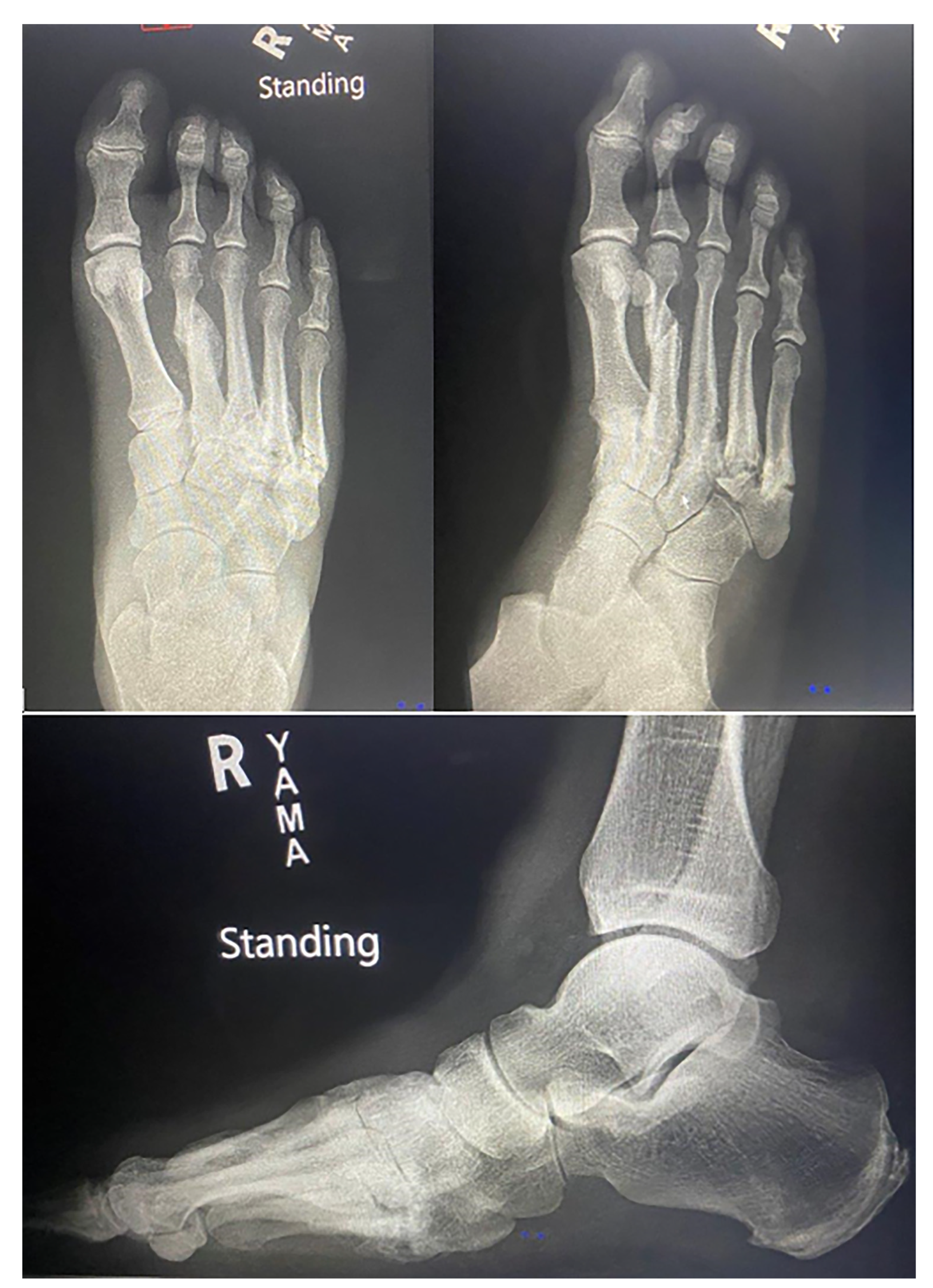
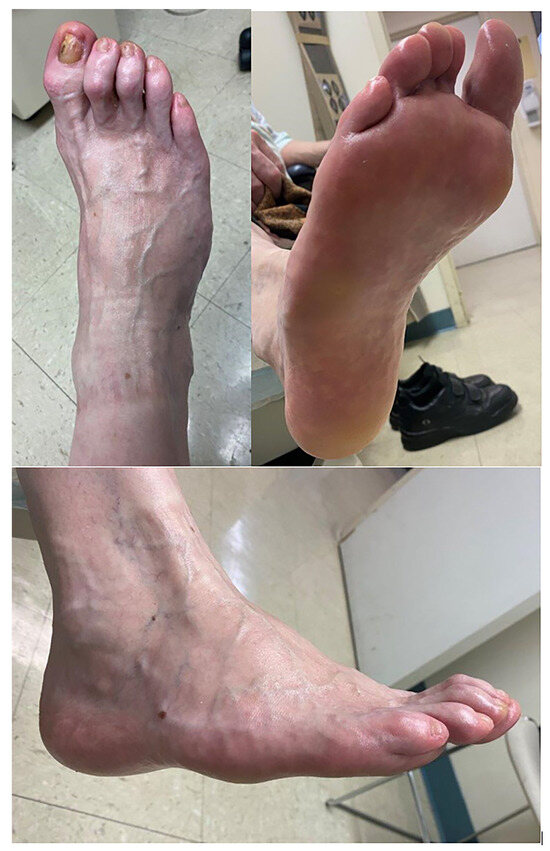
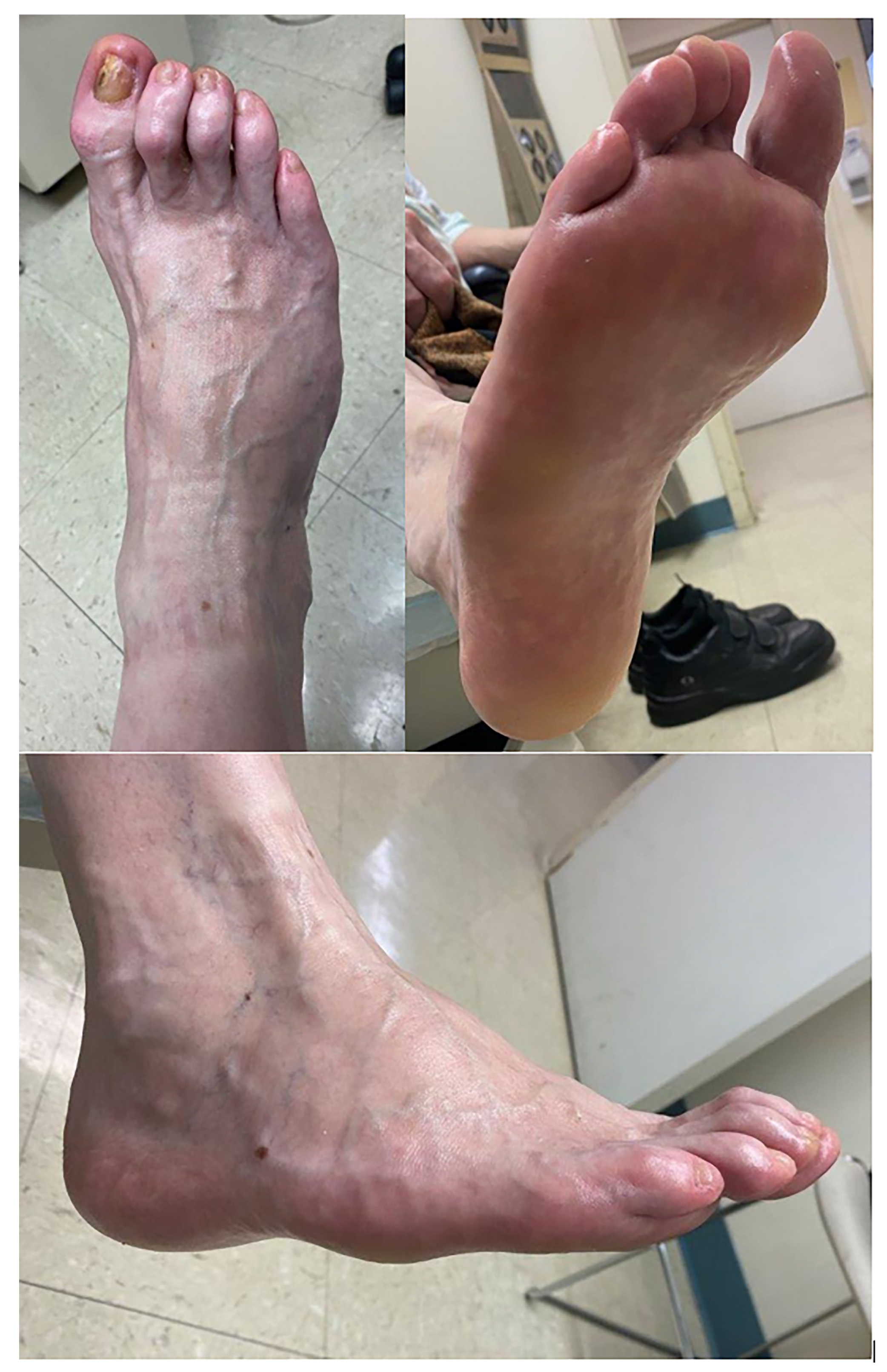
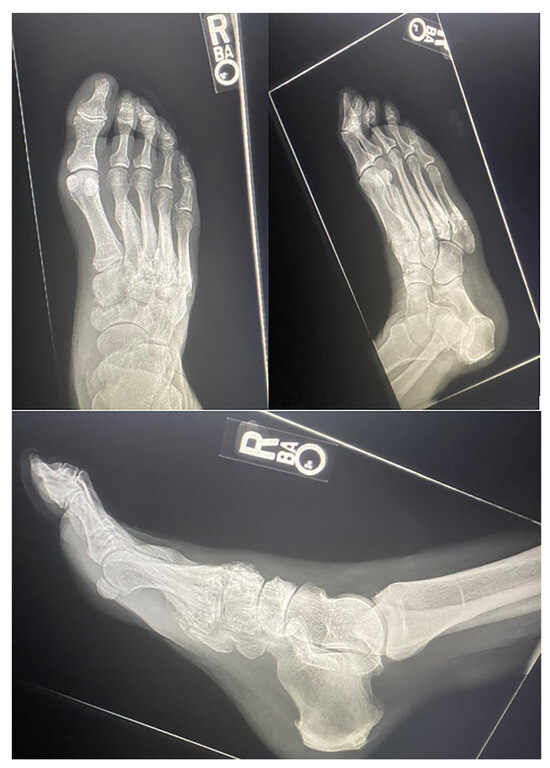
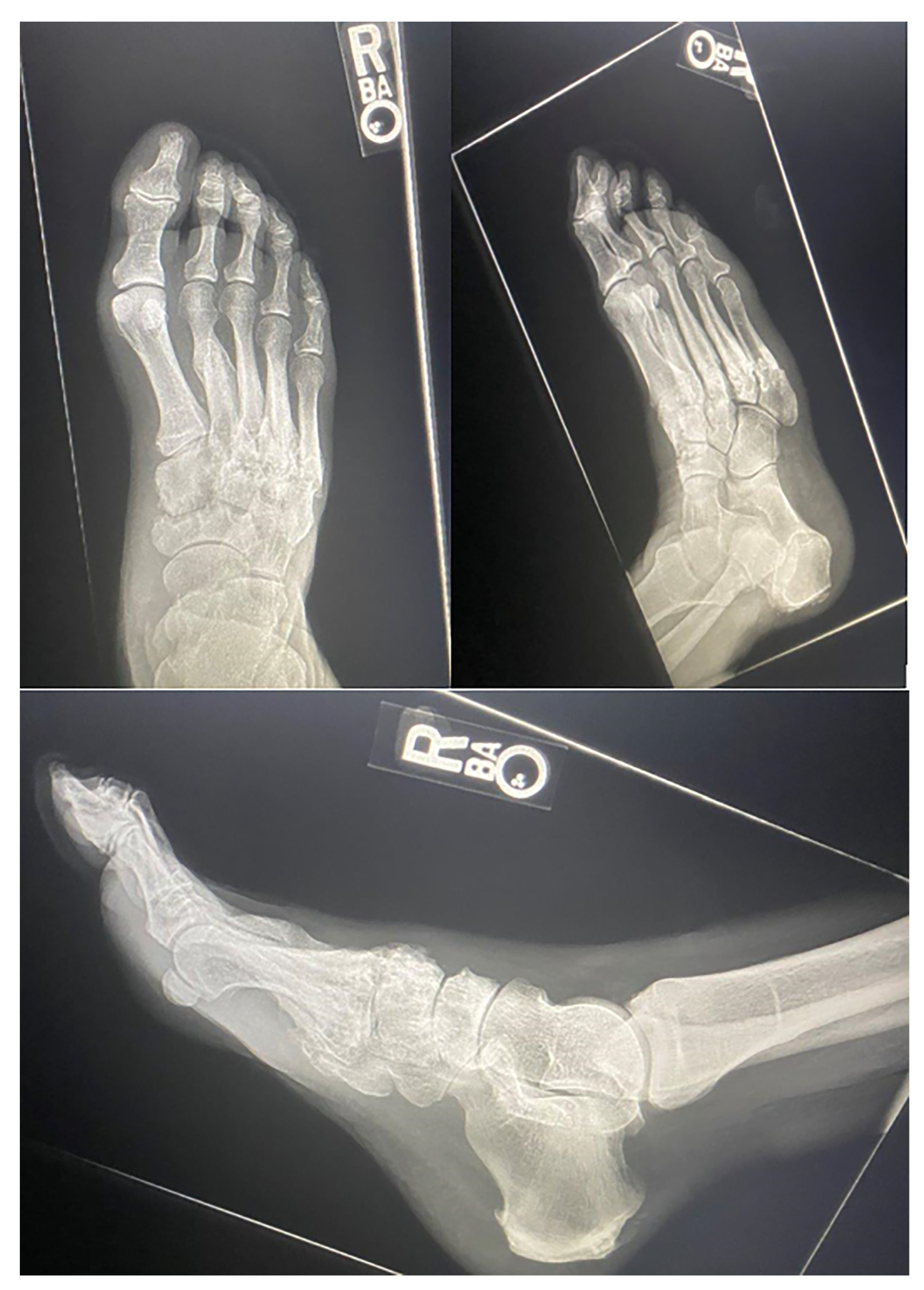
The patient developed mild metatarsus adductus deformity after 28 months of conservative treatment. Despite this, he has been able to walk in diabetic shoes and inserts without edema, preulcerative lesions, or wounds (Figure 3). Radiographs from 28 months post-treatment showed some evidence of tarsometatarsal and naviculocuneiform osteoarthritis changes with fully healed fracture sites and no recurrent fractures (Figure 4). Gastrocnemius recession was not offered, as the patient preferred conservative treatment only, but it could be considered to decrease further deterioration to the midfoot.
Figure 3.
Clinical photographs of the right foot after 28 months of conservative treatment following fractures to the second, fourth, and fifth metatarsals.
Figure 4.
Dorsoplantar (top left), oblique (top right), and lateral (bottom) nonweightbearing radiographs after 28 months after conservative treatment of second, fourth, and fifth metatarsal fractures.
Discussion
Increased susceptibility to fractures due to poor bone quality in the diabetic population can lead to significant complications in the diabetic patient. Despite metatarsal fractures being one of the most common types of foot fractures with a high risk of long-term complications, little attention is given to their treatment and management in the diabetic population. The main goal of treatment is to prevent deformities that can lead to wounds and afford the patient the ability to maintain functionality. Despite having multiple fractures that would otherwise warrant surgical correction, the decision was made to conservatively treat the patient’s metatarsal fractures in consideration of his comorbidities and wish to avoid surgery. This case illustrates the ability to conservatively heal multiple displaced metatarsal fractures without recurrent fractures or wound development and to avoid reconstructive surgery and the complications associated with it. The patient in this case was able to continue walking without any chronic issues from the conservative management of his metatarsal fractures, although this is often not the case and the decision is made to perform surgical reduction and fixation.
Conclusions
With the rise of diabetes globally, the health-care practitioner may encounter increased incidence of foot fractures. In these cases, the clinician may carefully consider nonoperative management as an option for treating foot fractures in the diabetic neuropathic patient.
Tailoring the treatment on a case-by-case basis, with consideration of the patient’s expected activity level, is the best approach in this subpopulation. There are individual instances in which, despite indications, surgery may not be possible or in the best interests of the patient. The treatment of foot fractures, and more specifically metatarsal fractures, in the diabetic population has not been widely reported. This is a unique case of nonoperative management of multiple displaced metatarsal fractures in a diabetic neuropathic patient with a positive outcome of continued functionality despite development of osteoarthritis and metatarsus adductus deformity.
Funding
None reported.
Conflicts of Interest
None reported.
References
- Napoli, N.; Incalzi Ra; De Gennaro, G.; et al. Bone fragility in patients with diabetes mellitus: a consensus statement from the working group of the Italian Diabetes Society (SID), Italian Society of Endocrinology (SIE), Italian Society of Gerontology and Geriatrics (SIGG), Italian Society of Orthopaedics and Traumatology (SIOT). Nutr Metab Cardiovasc Dis 2021, 31, 1375. [Google Scholar] [PubMed]
- Moayeri, A.; Mohamadpour, M.; Mousavi, S.F.; et al. Fracture risk in patients with type 2 diabetes mellitus and possible risk factors: a systematic review and meta-analysis. Ther Clin Risk Manag 2017, 13, 455. [Google Scholar] [CrossRef] [Scilit] [PubMed]
- Wang, H.; Ba, Y.; Xing, Q.; et al. Diabetes mellitus and the risk of fractures at specific sites: a meta-analysis. BMJ Open 2019, 9, e024067. [Google Scholar] [CrossRef] [Scilit] [PubMed]
- Pincus, D.; Veljkovic, A.; Zochowski, T.; et al. Rate of and risk factors for intermediate-term reoperation after ankle fracture fixation: a population-based cohort study. J Orthop Trauma 2017, 31, e315. [Google Scholar] [CrossRef] [Scilit]
- Eiff, Mp; Saultz, J.W. Fracture care by family physicians. J Am Board Fam Pract 1993, 6, 179. [Google Scholar]
- Shereff MJ: Complex fractures of the metatarsals. Orthopedics 1990, 13, 875. [CrossRef] [Scilit] [PubMed]
- Chen, Y.; Zhou, Y.; Lin, J.; et al. Challenges to improve bone healing under diabetic conditions. Front Endocrinol (Lausanne) 2022, 13, 861878. [Google Scholar] [CrossRef] [Scilit]
- Sf, Spampinato; Gi, Caruso; De Pasquale, R.; et al. The treatment of impaired wound healing in diabetes: looking among old drugs. Pharmaceuticals (Basel) 2020, 13, 60. [Google Scholar]
- Sinacore, Dr; Smith, Ke; Bohnert, K.L.; et al. Accelerated cortical osteolysis of metatarsals in Charcot neuroarthropathy: a cross-sectional observational study. JBMR Plus 2019, 3, e10243. [Google Scholar] [CrossRef] [Scilit] [PubMed]
- Gatt, T.; Grech, A.; Arshad, H. The effect of vitamin D supplementation for bone healing in fracture patients: a systematic review. Adv Orthop 2023, 2023, 6236045. [Google Scholar] [CrossRef] [Scilit] [PubMed]
- Shigehara, K.; Izumi, K.; Kadono, Y.; et al. Testosterone and bone health in men: a narrative review. J Clin Med 2021, 10, 530. [Google Scholar] [CrossRef] [Scilit] [PubMed]
- Is, Aleem; Aleem, I.; Evaniew, N.; et al. Efficacy of electrical stimulators for bone healing: a meta-analysis of randomized sham-controlled trials. Sci Rep 2016, 6, 31724. [Google Scholar]
- Buddecke De, Polk Ma, Barp EA: Metatarsal fractures. Clin Podiatr Med Surg 2010, 27, 601. [CrossRef] [Scilit] [PubMed]
- Facaros, Z.; Ramanujam, Cl; Zgonis, T. Primary subtalar joint arthrodesis with internal and external fixation for the repair of a diabetic comminuted calcaneal fracture. Clin Podiatr Med Surg 2011, 28, 203. [Google Scholar] [CrossRef] [Scilit] [PubMed]
- Jj, Yue; Marcus, RE. The role of internal fixation in the treatment of Jones fractures in diabetics. Foot Ankle Int 1996, 17, 559. [Google Scholar]
© 2025 American Podiatric Medical Association