Despite the recent breakthroughs in total ankle arthroplasty, ankle arthrodesis remains the reference standard treatment to relieve end-stage osteoarthritis secondary pain irrespective of etiology [
1]. Historically, a multitude of fixation techniques have been defined in the literature consisting of bone grafting, external fixation, internal fixation, or combinations of these [
2]. Recently, however, compression arthrodesis using cancellous screws [
3,
4,
5] has gained popularity because of higher fusion rates and lower morbidity compared with procedures using external fixators or plates [
6,
7].
To date, most studies assessing the biomechanical properties of screw fixation in ankle arthrodesis have focused on the ideal location and number of screws to optimize stability and thus promote fusion [
5,
8,
9,
10,
11]. However, from a biomechanical standpoint, optimal initial stability (stable fixation) depends not only on the position and number of screws but also on the geometry of the screws, such as the diameter, length, thread length, and thread pitch [
12,
13].
This study aimed to compare the initial stability at the tibiotalar fusion site of ankle arthrodesis fixed by cannulated screws with different thread designs. We hypothesized that (1) different screw combinations would have different fixation strengths under cyclic loading and (2) the addition of a fully threaded cancellous or a headless compression screw after achieving compression across the tibiotalar fusion site using a partially threaded cannulated screw would increase the rigidity of the fixation.
Methods
Biomechanical properties of different combinations of three cannulated screws with distinctly different thread designs under cyclic loading and failure loads were compared on a synthetic model of ankle arthrodesis. A total of 28 identical synthetic models of the right ankle including tibia and talus bones were used in the study (
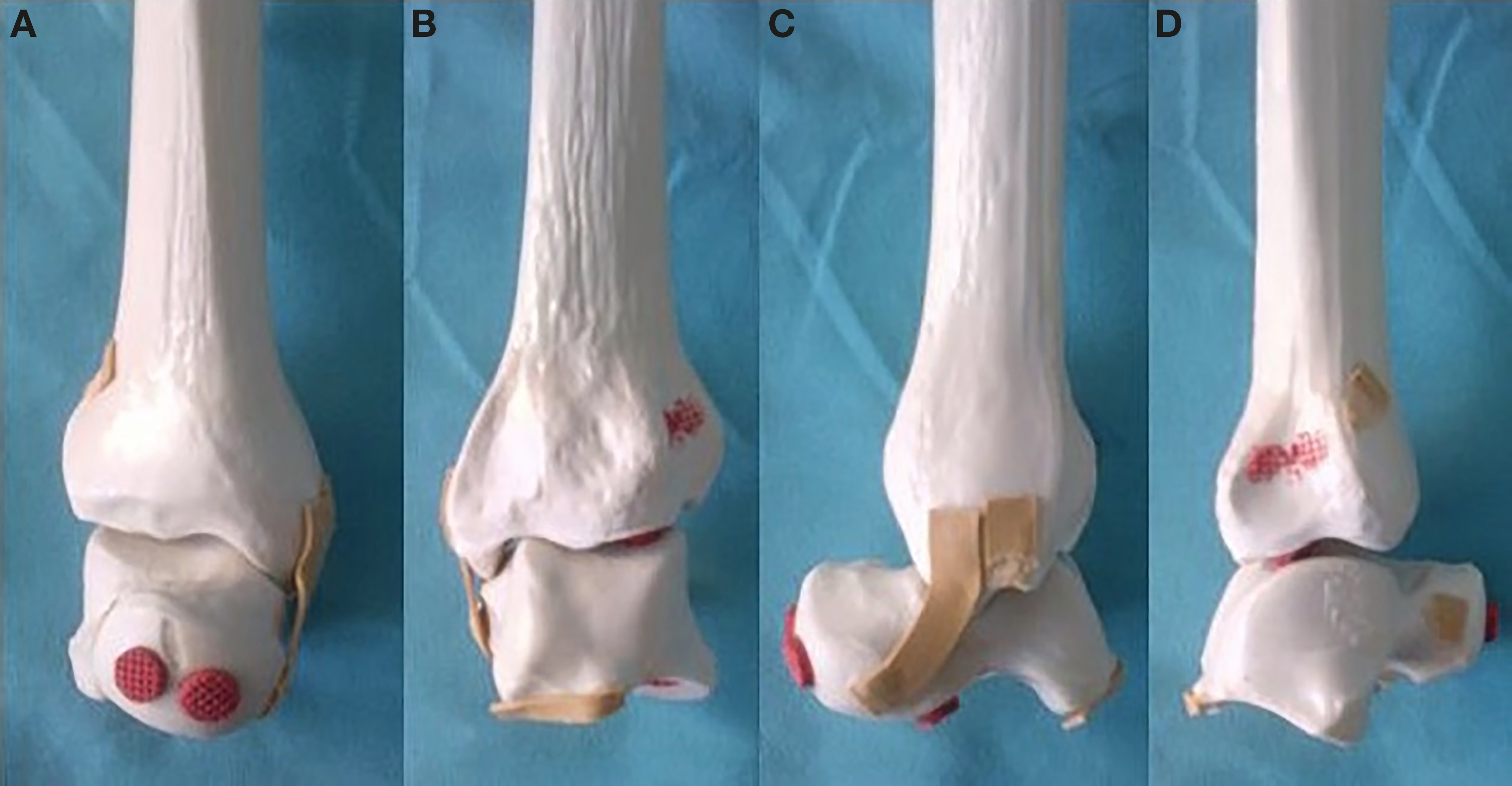
Fig. 1). The models (Synbone 9140; Synbone AG, Malans, Switzerland) were manufactured from particularly formulated polyurethane foam including a cancellous inner core and a harder outer shell that closely simulate anatomical and mechanical properties of the human bone [
19]. In performing ankle arthrodesis, three types of cannulated screws were used: partially threaded cancellous screw (6.5 mm; Tasarımmed, Istanbul, Turkey); fully threaded cancellous screw (6.5 mm; TST Medical Devices, Istanbul, Turkey); and headless, fully threaded compression screws (Acutrak 6/7; Acumed, Beaverton, Oregon).
Figure 1.
Anterior (A), posterior (B), and lateral (C and D) views of the synthetic ankle model (Synbone 9140).
Figure 1.
Anterior (A), posterior (B), and lateral (C and D) views of the synthetic ankle model (Synbone 9140).
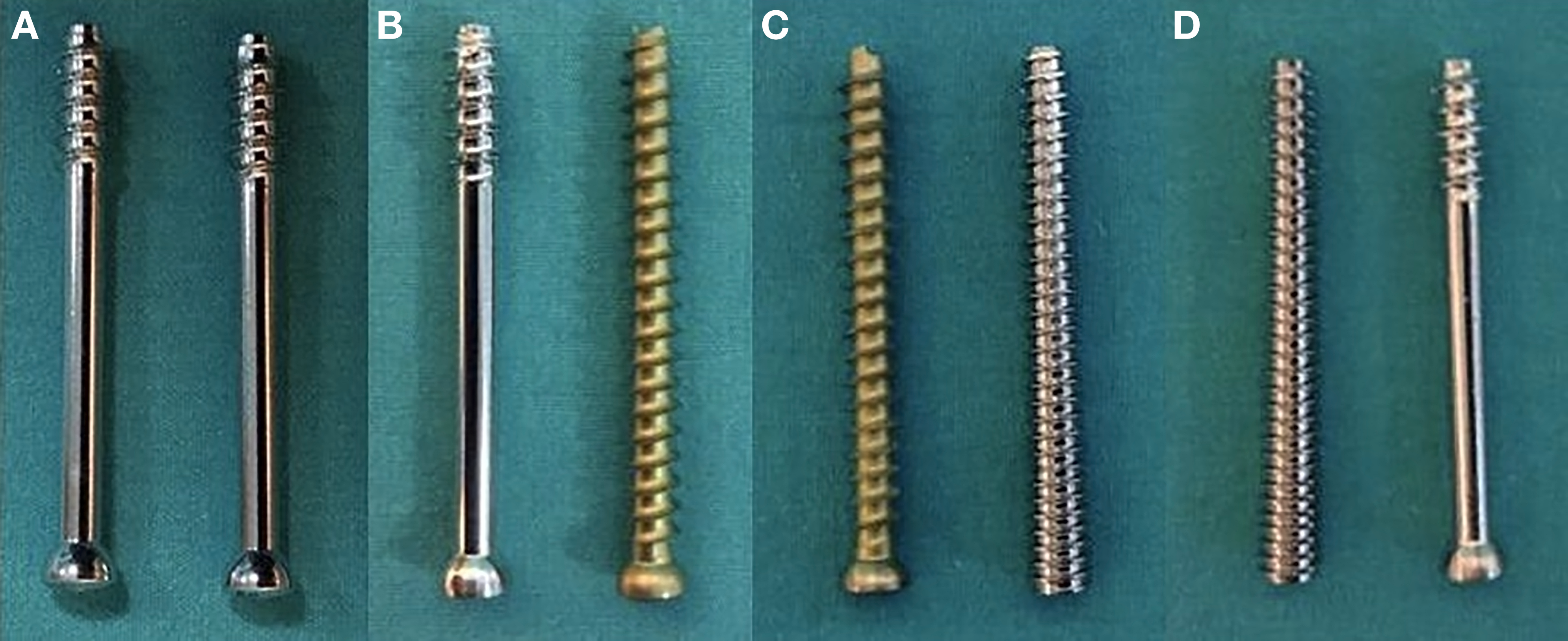
For the experiment, the 28 models were divided into four groups (seven models for each). Group A consisted of arthrodesis models including two partially threaded cancellous screws. Group B consisted of a combination of partially and fully threaded cancellous screws. Group C included the combination of a partially threaded cancellous screw with a headless compression screw. In group D, a fully threaded cancellous screw and a headless compression screw were inserted (
Fig. 2).
Figure 2.
Group A, including two partially threaded cancellous screws (A). Group B, including a combination of partially and fully threaded cancellous screws (B). Group C, consisting of the combination of a partially threaded cancellous screw with a headless compression screw (C). Group D, consisting of a fully threaded cancellous screw and a headless compression screw (D).
Figure 2.
Group A, including two partially threaded cancellous screws (A). Group B, including a combination of partially and fully threaded cancellous screws (B). Group C, consisting of the combination of a partially threaded cancellous screw with a headless compression screw (C). Group D, consisting of a fully threaded cancellous screw and a headless compression screw (D).
To implement our hypotheses, the crossed screw technique was performed in the fixation of ankle arthrodesis, and two screws were inserted according to the method described by Nasson et al. [
18]. First, in an effort to ensure standardization of screw placement, each model was positioned in a custom-made positioning device (
Fig. 3). A 2.5-mm guide pin was then inserted proximal to distal through the medial metaphysis of the tibia beginning 2.5 cm proximal to the arthrodesis site and 7.5 mm anterior to the medial sagittal axis. Likewise, a second guide pin was inserted through the lateral metaphysis of the tibia starting 7.5 mm posterior to the lateral sagittal axis. After both pins were inserted 60 degrees vertical from the horizontal plane and guided without any angulation in the frontal plane, relevant screw holes were reamed over the pins, using a 4.5-mm, cannulated drill bit without using any lag technique. In this stage, as distinct from the partially and fully threaded cancellous screws, for the headless compression screw, an Acutrak 6/7 drill bit, where the diameter increases from 4.5 mm to 6.7 mm from the leading end to the trailing end, was used. Then, both screws were measured 60 mm in length. In the final stage, screws were inserted over the guide pins into the posterior portion of the talus, through the relevant metaphysis of the tibia (
Fig. 4). All procedures were performed by a single surgeon. After forming the models of ankle arthrodesis, each sample was fixed in a polyvinyl chloride pipe (diameter, 50 mm; depth, 50 mm) using polyester paste (Politek, Istanbul, Turkey) and placed in a stable position in a specifically constructed apparatus, holding the tibia on a vertical position and rendering the talus to be fixed in a neutral position (
Fig. 5).
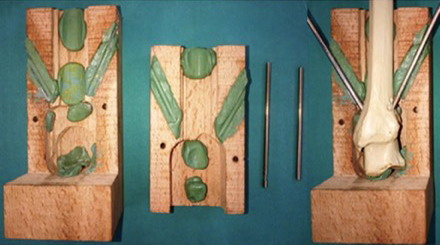
Figure 3.
The custom-made positioning device providing standardization of screw placement.
Figure 3.
The custom-made positioning device providing standardization of screw placement.
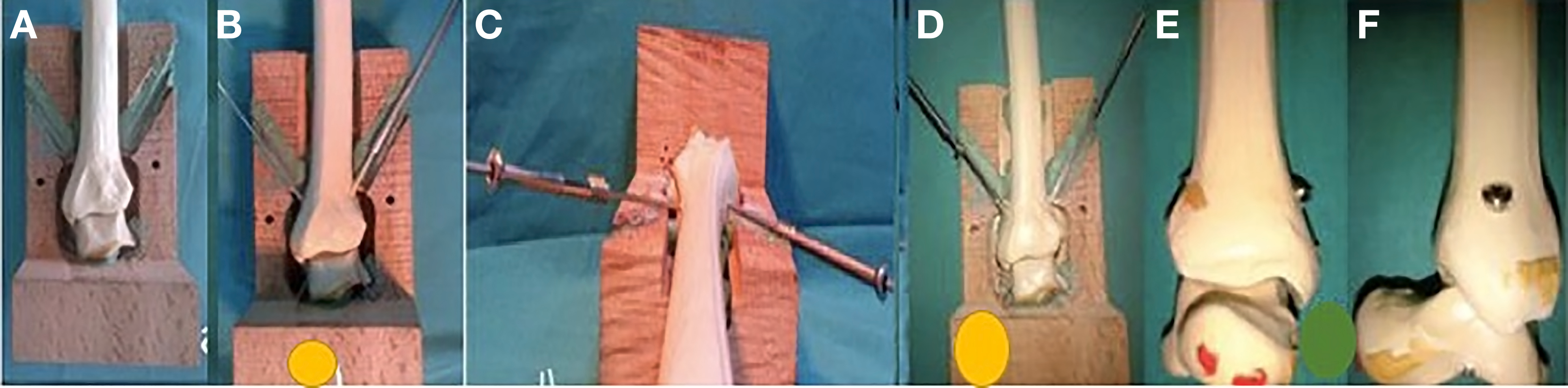
Figure 4.
Placing the model in the custom-made positioning device (A); inserting guide pins through the positioning device to the model and then reaming screw holes over guide pins (B); placing screws over guide pins into the talus (C); final views showing the pretest design of the model (D, E, and F).
Figure 4.
Placing the model in the custom-made positioning device (A); inserting guide pins through the positioning device to the model and then reaming screw holes over guide pins (B); placing screws over guide pins into the talus (C); final views showing the pretest design of the model (D, E, and F).
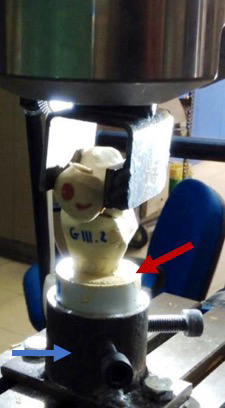
Figure 5.
Fixing the sample in a polyvinyl chloride pipe using polyester paste before torsional cyclic loading tests (red arrow) and placing the sample in a specifically constructed apparatus (blue arrow).
Figure 5.
Fixing the sample in a polyvinyl chloride pipe using polyester paste before torsional cyclic loading tests (red arrow) and placing the sample in a specifically constructed apparatus (blue arrow).
Biomechanical Testing
To analyze the biomechanical properties of different screw combinations, all the models were subjected to torsional cyclic loading and static compression load to failure using a universal testing machine (MTS 858 Mini Bionix II; MTS Systems Corp, Eden Prairie, Minnesota) (
Fig. 6A). Then, data regarding initial stiffness (IS), ultimate stiffness (US), ultimate failure load (UFL), and failure angulation (FA) were recorded, respectively. Furthermore, to conduct a three-dimensional analysis of displacement and fracture patterns that may occur at the arthrodesis site in all planes, a two-camera optical tracking system (Vic3D Digital Imaging Correlation; Correlated Solutions Inc, Irmo, South Carolina) running simultaneously with the testing device was used (
Fig. 6B).
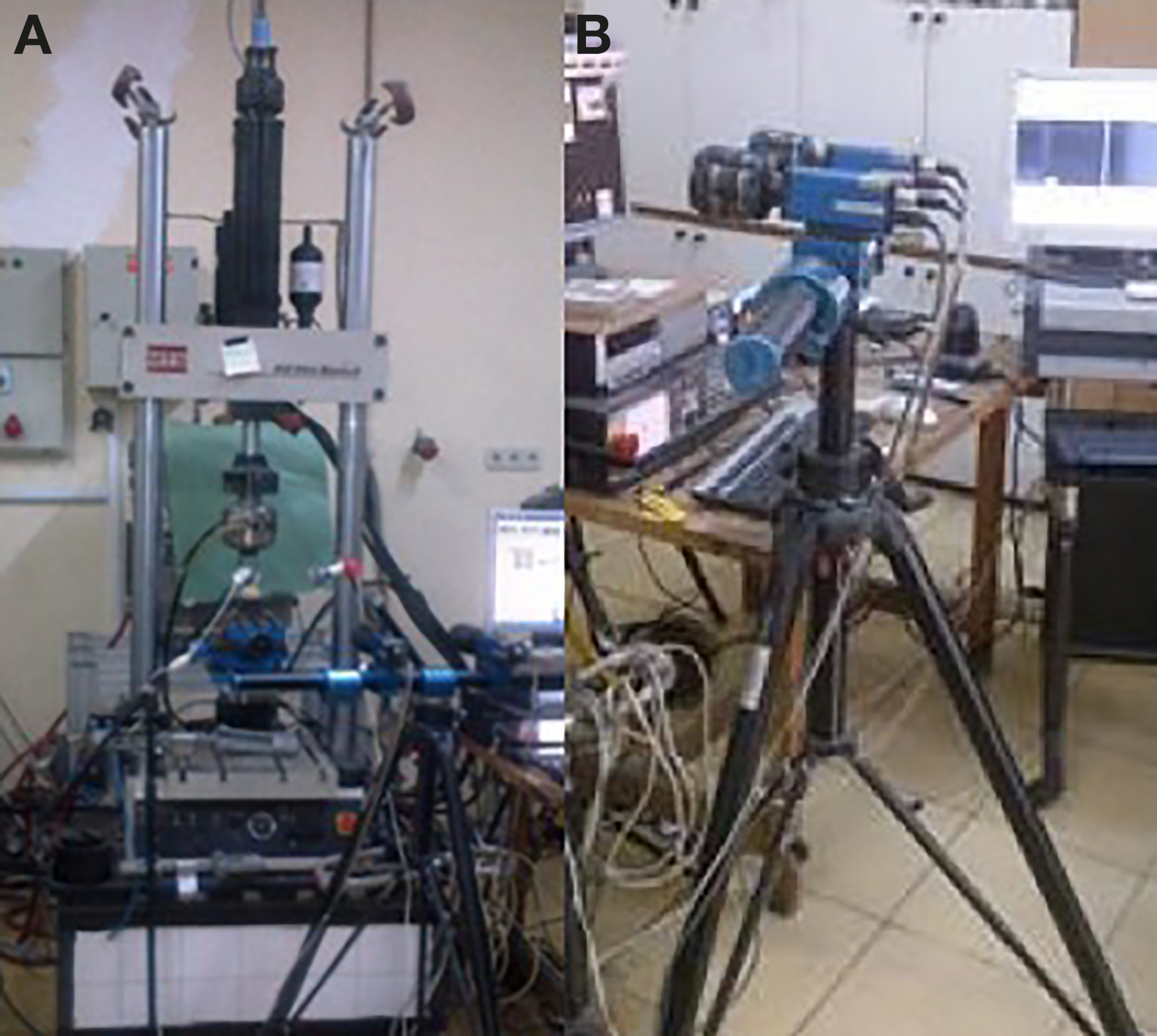
Figure 6.
The universal testing machine (MTS 858 Mini Bionix II) (A) and the two-camera optical tracking system (Vic3D Digital Imaging Correlation) running simultaneously with the testing machine (B).
Figure 6.
The universal testing machine (MTS 858 Mini Bionix II) (A) and the two-camera optical tracking system (Vic3D Digital Imaging Correlation) running simultaneously with the testing machine (B).
Torsional Cyclic Loading (Dynamic Loading)
A load-to-failure test was performed as a preliminary test on a sample from each group to determine the initial cyclical load to failure. The lowest failure load among samples was selected, and two-thirds of this value, 11 N, was established as the upper limit of the cyclical loading. According to these data, cyclic loading tests were performed in four phases:
Preload with 10 cycles at 11 N at a rate of 0.2 mm/min (to stabilize the mechanical properties of the construct).
An additional sequence of 10 cycles from 1 to 11 N with a frequency of 3 Hz.
A further 1,000 cycles from 1 to 11 N with a frequency of 3 Hz (10 times).
Finally, if the construct was intact following the cyclic loading, a load-to-failure test in a compression manner was applied at a rate of 5 mm/min until complete failure.
The number of cycles was determined as 10,000 cycles based on similar studies in the literature [
12,
20,
21]. Load-to-failure criteria for the torsional loading test were defined as follows:
A sudden decrease in the force according to the load-displacement curve.
A fracture occurring in any site of the model.
Displacement of more than 2 mm at the arthrodesis site.
Statistical Analyses
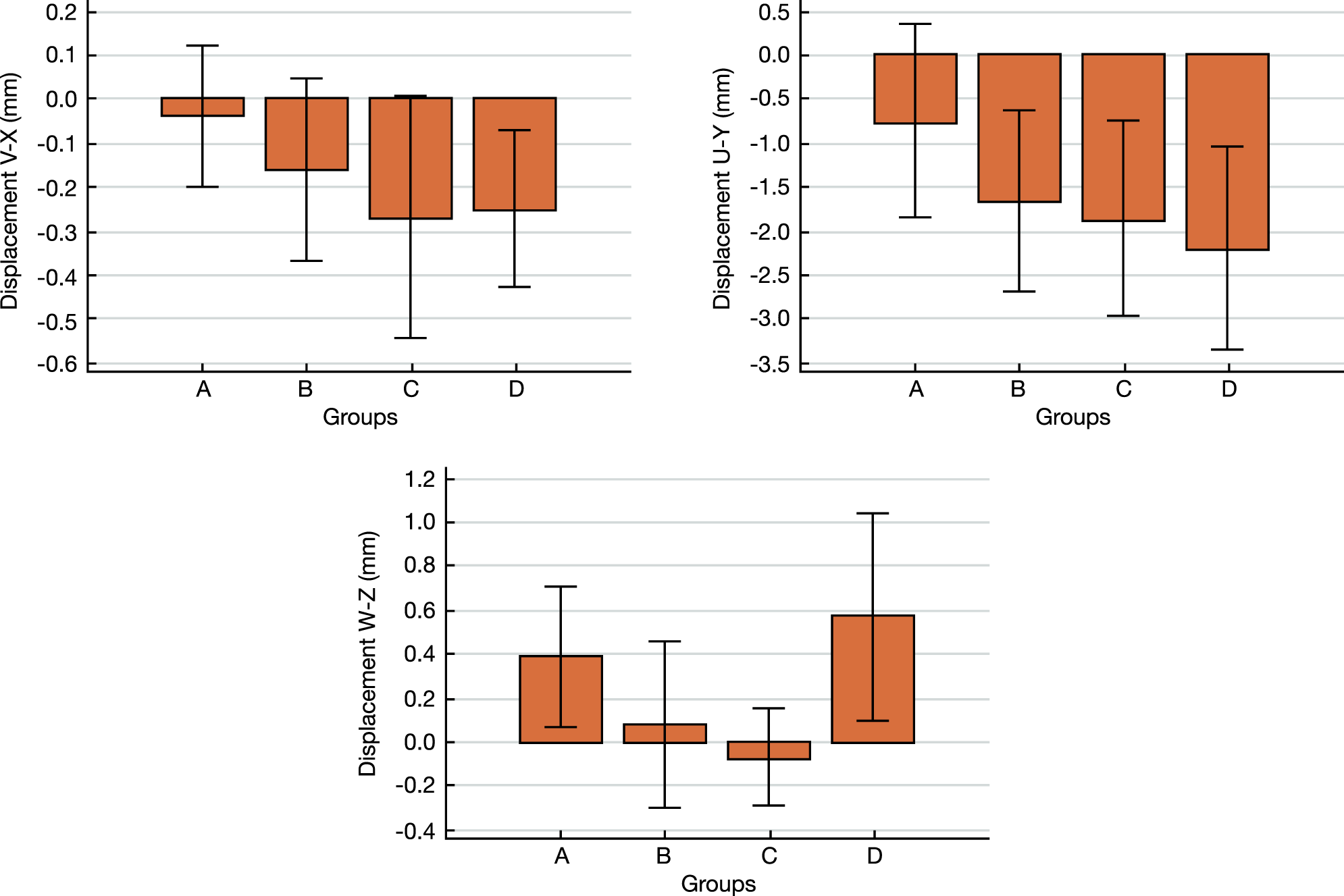
All statistical analyses were undertaken using SPSS Version 20.0 (IBM Corp, Armonk, New York). A value of P < .05 was considered significant. Comparisons between groups were conducted using the Kruskal-Wallis test for nonnormal continuous variables (UFL, FA, IS, and US) and one-way analysis of variance test for normally distributed continuous variables (the amount of displacement).
Discussion
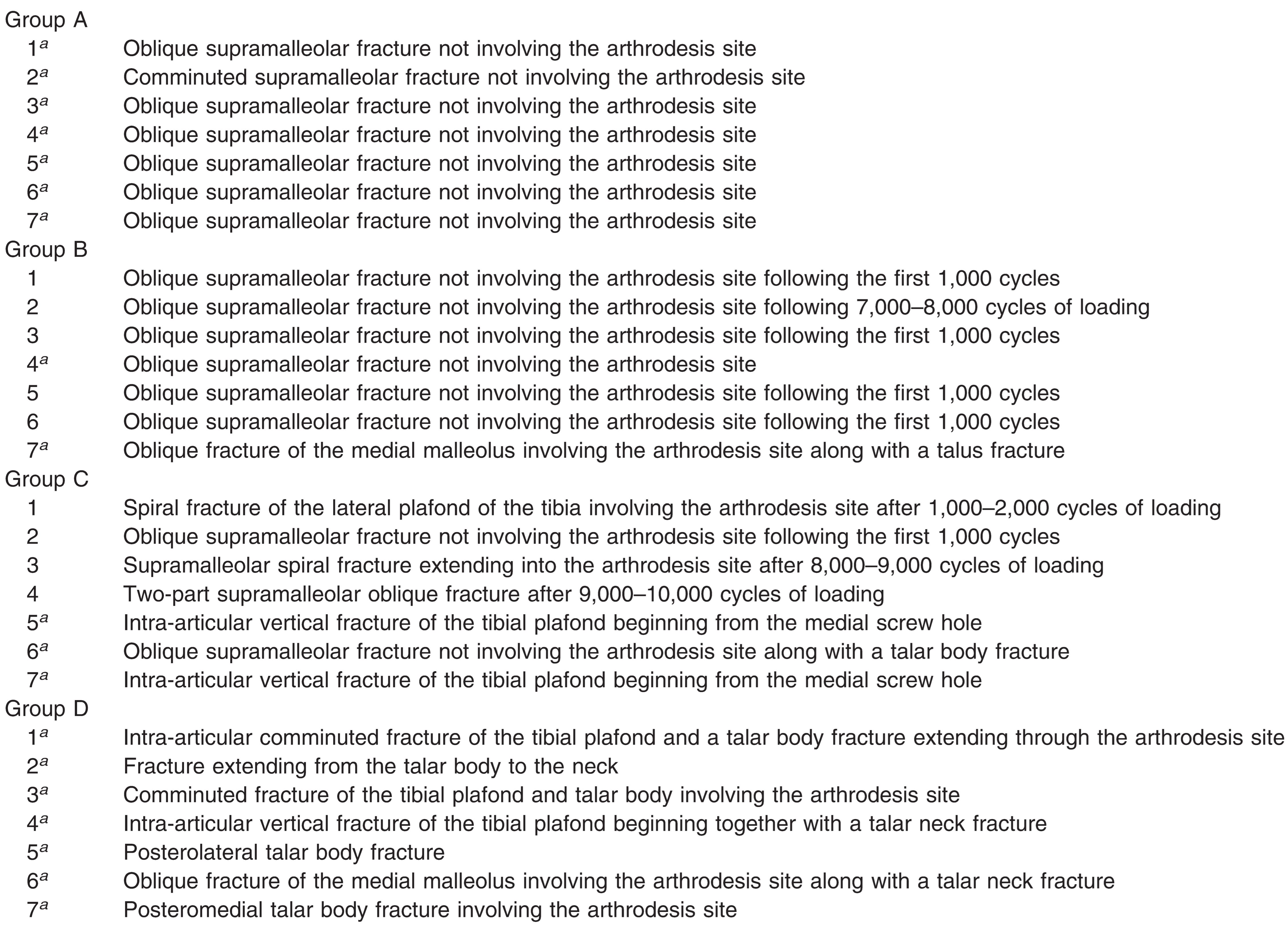
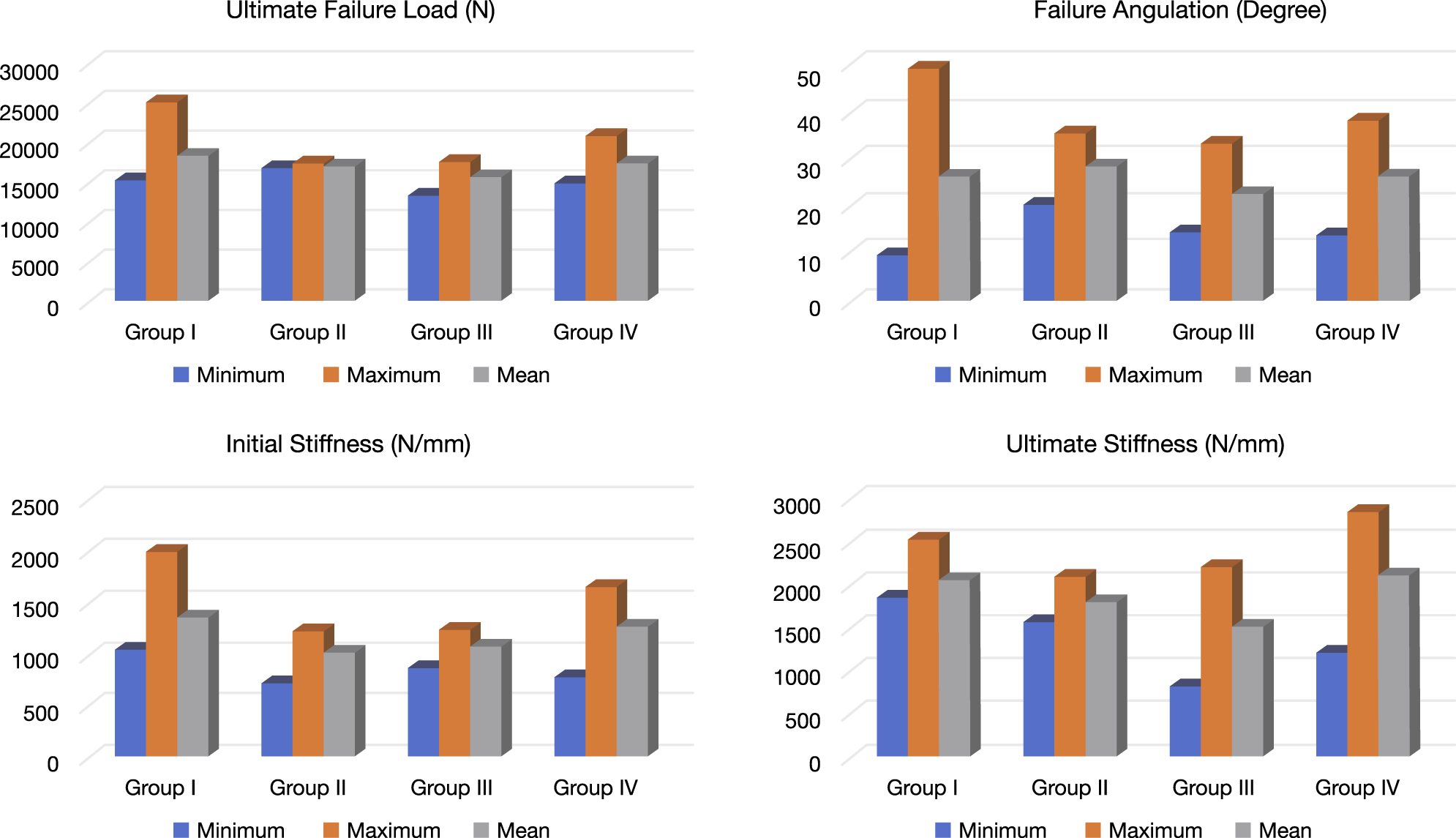
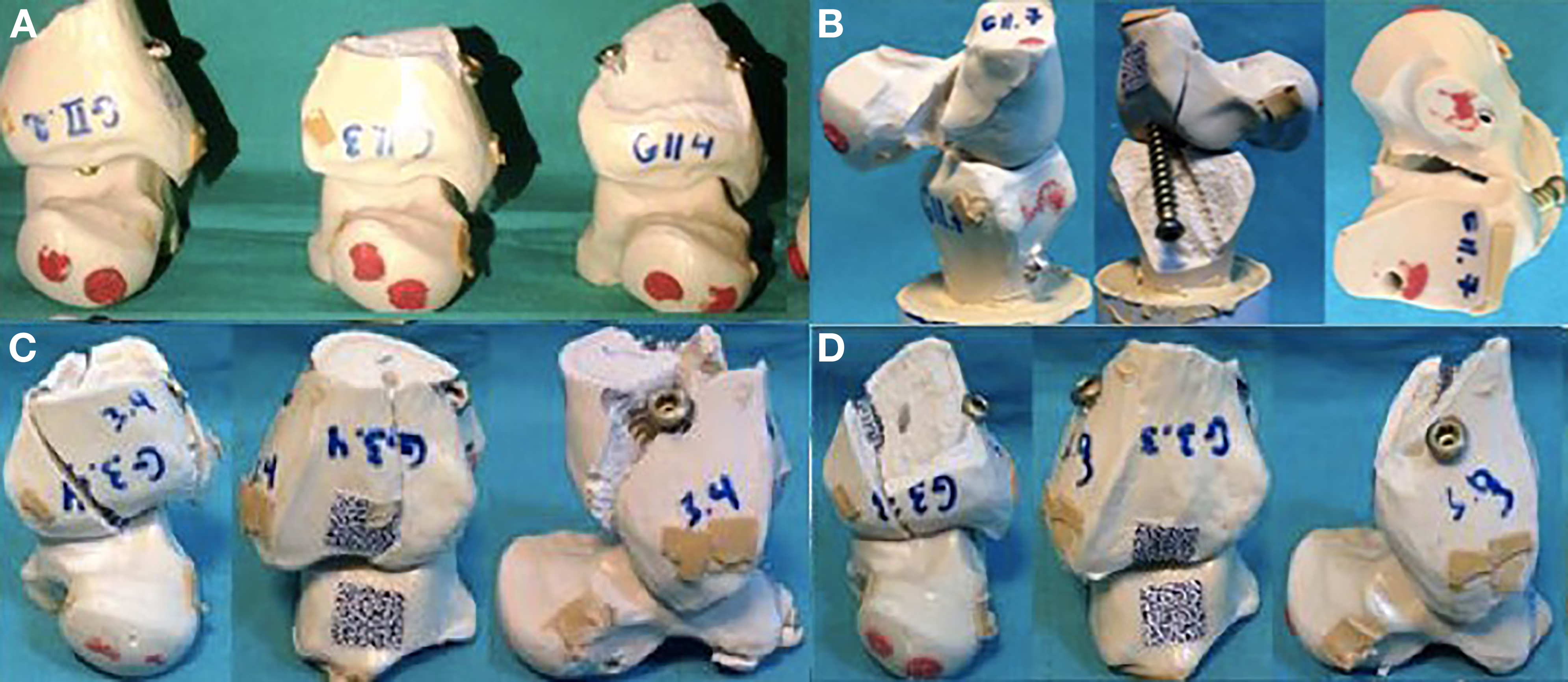
Evidence from this study failed to support the first hypothesis that different screw combinations would have different fixation strengths, as similar biomechanical results were obtained for each screw group in terms of stability and stiffness of the tibiotalar fusion site under cyclic loading. Furthermore, all the models from group A survived during the cyclic loading and developed a similar fracture pattern with an oblique configuration, involving the supramalleolar region, but not extending to the arthrodesis site following the load-to-failure test, unlike the models from other groups. Despite the absence of significant differences in biomechanical properties between screw groups, the aforementioned visual changes, which point out the increased durability of arthrodesis sites in group A compared with that in other groups, may indirectly support the notion that two partially threaded cannulated screws can confer the most stable construct. Therefore, contrary to our expectations, these findings strongly refute the second hypothesis that after achieving compression across the fusion site using a partially threaded screw, the addition of a fully threaded screw increases the stability of ankle arthrodesis.
Although various operative techniques, including internal and external fixation devices, are available today to perform ankle arthrodesis, internal fixation with cancellous screws has gained popularity in recent past decades because of remarkable compression, higher fusion rates, ease of operative procedure, and lower morbidity [
5]. The well-documented principles of a successful bony fusion encompass osseous apposition with a broad contact area, increased compression at the expected fusion site, and primary stiffness formed by rigid fixation [
15]. Consequently, many studies have investigated the ideal number and position of screws and even the order of screw placement [
5,
8,
9,
10,
11]. In contrast, to our knowledge, little attention has been paid to the influence of thread pattern on initial rigid fixation (stability) in tibiotalar arthrodeses. Thus, unlike most studies on the topic of ankle arthrodesis [
5,
8,
9,
10,
11], the primary endpoint of the present study was to examine the biomechanical characteristics of different screw combinations. Furthermore, to test the second hypothesis, we preferred to perform the crossed screw technique for the tibiotalar fusion.
In different areas of orthopedic surgery, it has been widely examined whether thread length has an impact on the stability under static or cyclic loading. In a biomechanical investigation that set out to determine the role of thread surface area in screw performance, Thompson et al [
13] found the total thread surface area to be a useful predictor of screw pullout strength and suggested that thread length should be maximized whenever possible to promote the holding power of screws. In particular, there is a heated debate over the biomechanical characteristics of fully and partially threaded screws for fixation of slipped capital femoral epiphysis. Although the previous belief that an equal number of threads on each side of the physis can maximize the stability for the fixation of slipped capital femoral epiphysis [
22], recent biomechanical studies using an animal model have found no biomechanical advantage in using a fully threaded screw [
23,
24]. Besides, in contrast to previous studies analyzing the effect of screw design on stability, Salduz et al [
12] brought a unique biomechanical standpoint and investigated the influence of screw thread length on initial stability in the fixation of Schatzker type I tibial plateau fracture. Their results indicated that the combined use of one partially and one fully threaded screw may enhance the initial stability of fracture and thereby minimize the displacement at the fracture site at early cyclic loadings. With a similar study design, we discovered no clear influence of thread pattern on the initial stability of ankle arthrodesis.
In modern orthopedic surgery, headless compression screws have been widely used as the new weapons to obtain compression in many applications [
25,
26,
27,
28]. However, to the best of our knowledge, the literature is lacking with regard to the effects of this modern fixation device on the initial stability at the fusion site of ankle arthrodesis, although many studies have been devoted to investigating the role of conventional cancellous screws [
3,
5,
8,
9,
10,
17]. In a recent cadaveric model of ankle arthrodesis, Somberg et al [
28]. explored the biomechanical stability provided by a partially threaded cancellous screw compared with a second-generation headless compression screw. The authors concluded that both screw designs can endow excellent fixation and minimal motion at the arthrodesis site. Importantly, our findings support the results of Somberg et al showing the feasibility of using these novel screws in ankle arthrodesis surgery. Moreover, to our knowledge, this study is one of few studies [
28,
29] comparing this emerging type of screw to the more conventional partially or fully threaded cannulated screws.
Also, it should be highlighted that the majority of samples in groups C and D, including headless compression screws, exhibited a different fracture pattern, with an extension through the arthrodesis site, compared with that observed in groups A and B. We consider that this fracture pattern may be explained by the unique geometry of the headless compression screw. This screw is characterized by a variable thread pitch that ranges from 6.9 mm proximally to 4.5 mm distally. Because of this variable pitch pattern, theoretically, the proximal bone stock may be negatively affected, decreasing the stability of the arthrodesis site.
Finally, a number of important limitations in this study need to be considered. The first limitation was the low number of samples. Second, synthetic models of the ankle were used to evaluate the biomechanical characteristics of different screw designs. Although these models have an ability to closely simulate anatomical and mechanical properties of the human bone, the biomechanical results obtained from the present study should not be used to make recommendations on the ankle arthrodesis in individuals with osteoporosis. Third, 1,000 cycles used in the present study was an arbitrary number and therefore may not reflect the number of cycles to which an ankle is exposed during the actual postoperative period before fusion. The last limitation was that synthetic models were tested by cyclic loading and load to failure in axial compression. However, a load-to-failure mode in distraction would have been allowed to measure pullout strength of each screw. Despite these limitations, we believe that this research extends orthopedic surgeons' knowledge concerning the selection of screw type in ankle arthrodesis.