Antiphospholipid syndrome (APS) is a noninflammatory autoimmune disorder that places patients in a hypercoagulable state. Antiphospholipid syndrome was originally described by Graham Hughes in 1983.[
1,
2] Since then, research has broadened our knowledge regarding this complex disease, and in 1998, the Sapporo criteria were developed to assist with the diagnosis of APS. To be diagnosed, the patient must meet two specific criteria: 1) high presence of specific autoantibody titers in two separate laboratory draws in a 12-week period, and 2) presence of either a vascular thrombosis or pregnancy morbidity.[
2-
6]
Because of the hypercoagulable state it produces, APS is classically associated with venous or arterial thrombosis and appears to have a predilection for affecting the vessels of the lower extremities.[
7,
8] Although the etiology is unclear, it is suspected that APS has multiple contributing factors that cause thrombosis and, eventually, vascular occlusions. It is thought to follow a “two-hit” model of thrombosis. The first hit occurs when the endothelium of the blood vessels is damaged. In most cases, the injury process is unknown but has been associated with tobacco use, infection, and surgery. The second hit is having a high concentration of antiphospholipid antibodies present. The result of this model is thrombus formation.[
9,
10] This mechanism is only partially understood and is beyond the scope of this article.
Antiphospholipid syndrome may occur alone or in the setting of other autoimmune diseases, most commonly, systemic lupus erythematosus.[
11-
13] Certain genetic components are also thought to play a role in APS development.[
14] Despite not knowing the true etiology of the disease, the classic clinical symptoms are well documented. In a follow-up study of 1,000 APS patients, nearly one-third were diagnosed with a deep vein thrombosis, followed by cerebral stroke, superficial thrombophlebitis, pulmonary embolism, transient ischemic attack, myocardial infarction, and fetal loss (
Table 1).[
15,
16] The constellation of symptoms also includes thrombocytopenia, nephropathy, cognitive dysfunction, and cardiac valvular dysfunction.[
9,
11,
17-
19] In nearly half of patients with APS, dermatologic signs manifest initially, such as skin ulcerations or superficial emboli. However, presentations of digital gangrene or blue toe syndrome (BTS) occur only approximately 1.9% of the time.[
15]
Table 1.
Clinical Presentation of 1,000 Patients with Antiphospholipid Syndrome
Table 1.
Clinical Presentation of 1,000 Patients with Antiphospholipid Syndrome
Blue toe syndrome is an umbrella term used to describe the development of one or more blue-purple—colored toes. It does not differentiate between the etiologies that lead to the discoloration, but multiple publications do suggest that any color change caused by trauma or cold-induced injury should be excluded from this diagnosis.[
20-
22] Blue toe syndrome usually occurs secondary to ischemia from microemboli,[
12,
20,
23-
27] but additional diseases may present with a similar clinical picture (
Table 2).[
21,
25,
28] These etiologies are treated very differently, ranging from oral medication to surgical intervention.[
20,
21,
26] This suggests the importance of determining the cause before initiating treatment, which may lead to a more extensive workup.[
20,
21] Antiphospholipid syndrome is one of the possible sources of BTS, and should be included in the differential diagnoses of a discolored digit.[
21,
25,
28]
Table 2.
Causes of Blue Toe Syndrome
Table 2.
Causes of Blue Toe Syndrome
As part of the workup of BTS and APS, multiple laboratory results are used to evaluate the presence of specific antiphospholipid antibodies.[
29] These laboratory tests include the following: lupus anticoagulant, immunoglobulin (Ig) G and IgM anticardiolipin antibodies, and IgG and IgM anti–?2-glycoprotein I.[
10,
29] When there is high suspicion for APS, it is important that all laboratory testing be performed before medical management of the disease, as this may lead to false laboratory values of the lupus anticoagulant, and will lead to an inappropriate anticoagulation course.[
5,
11,
29] To illustrate the unique nature of APS presenting as BTS, we present an unconventional case of a 23-year-old man with an isolated, discolored, painful digit that was initially diagnosed as BTS but later diagnosed to be a sequela of APS.
Case Report
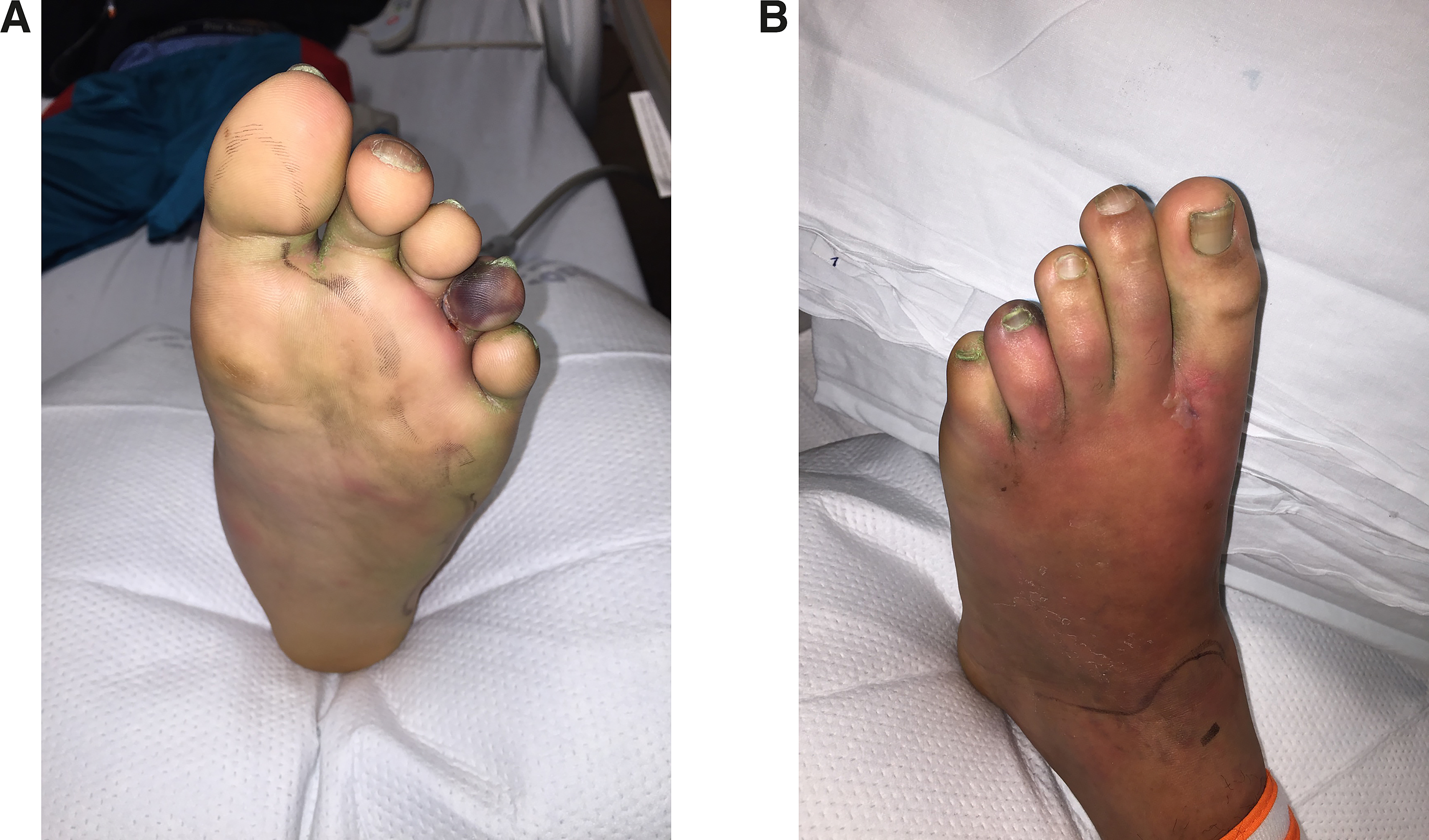
A well-nourished, well-developed 23-year-old man presented to the emergency department with a complaint of a painful, blue left fourth toe (
Fig. 1). He described a 3-month history of slowly progressing cyanosis isolated to the plantar fourth digit. It was accompanied by diffuse erythema and edema to the dorsal foot. As the color deepened, the pain traveled proximally. At the time of presentation, the patient could not ambulate secondary to pain, which was uncontrolled with oral analgesics. The patient could not recall an inciting event that may have caused the color change. With the exception of daily smoking marijuana wrapped in tobacco leaves, the patient had no relevant medical history.
Figure 1.
Initial clinical photograph of the plantar left foot, without other signs of thrombus (A), and with nonspecific erythema and edema to the dorsal left foot (B).
Figure 1.
Initial clinical photograph of the plantar left foot, without other signs of thrombus (A), and with nonspecific erythema and edema to the dorsal left foot (B).
On physical examination, the plantar left fourth digit was dark purple and cool to the touch. The affected skin was thickened compared with the other digits. The dorsal fourth digit was erythematous as far as the midfoot, but was without proximal lymphangitic streaking. There was mild nonpitting edema to the foot and ankle. Pedal pulses were nonpalpable, with biphasic signals of the dorsalis pedis and posterior tibial arteries on portable Doppler ultrasound. The patient was hemodynamically stable, except for a mild tachycardia that resolved with intravenous pain medication.
The patient's initial blood laboratory results revealed a leukocytosis of 14,900 cells/?L, an erythrocyte sedimentation rate of 56 mm/h, and a C-reactive protein value of 68 mg/L, all suggestive of an inflammatory or infectious process. Hemoglobin and hematocrit values were low at 13.4 g/dL and 36.4%, respectively, with a normal platelet count of 330,000/?L. Radiographic images did not demonstrate any osseous structural abnormalities. Initial diagnosis was that of BTS of unknown etiology, but included differentials of cellulitis with associated deep abscess of the fourth digit, embolism, vasculitis, or a coagulopathic disorder leading to thrombus.
Magnetic resonance imaging was performed to further investigate the affected extremity, and the radiology report indicated cellulitis of the dorsal foot. The patient was admitted to the hospital and started on cefazolin because of concern for infection. The internal medicine service evaluated the patient for systemic causes of the blue toe and recommended that the patient be started on prophylactic enoxaparin. A workup for possible coagulopathy versus vasculitis was initiated. All preliminary blood work, including prothrombin time and international normalized ratio, were negative apart from a mildly positive antinuclear antibody titer of 1:40. This suggested that this patient's blue toe was possibly the result of an inflammatory etiology. The rheumatology service screened the patient for other less common causes of the solitary blue toe.
Multiple additional laboratory tests were completed, including ?
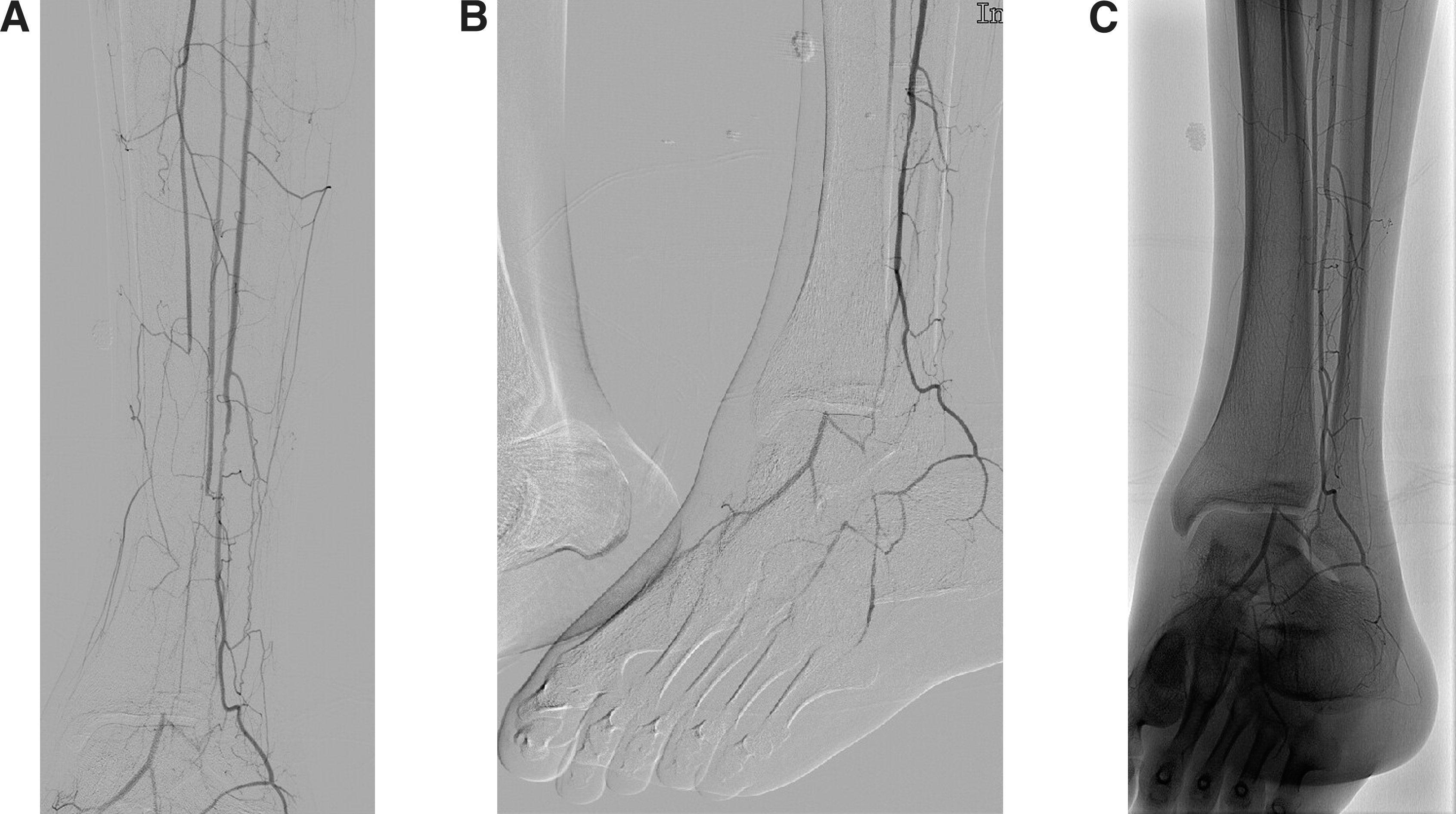
2-microglobulin, direct Coombs, hexagonal phase, a lupus anticoagulant screen, haptoglobin, and CH50 complement, all of which were positive. With these results, the rheumatology team had a high suspicion for APS and recommended that the patient be evaluated by the vascular surgery service for possible occlusion of the blood supply of the left leg. A computed tomographic angiogram of his left lower extremity was obtained and revealed nearly complete occlusions of the posterior and anterior tibial arteries, with only small-caliber patency remaining (
Fig. 2). Duplex ultrasound was then performed because of persistent erythema and edema of the foot, and a thrombus of the left popliteal vein was discovered.
Figure 2.
Computed tomographic angiogram of the left foot demonstrating occlusion of the posterior and anterior tibial arteries.
Figure 2.
Computed tomographic angiogram of the left foot demonstrating occlusion of the posterior and anterior tibial arteries.
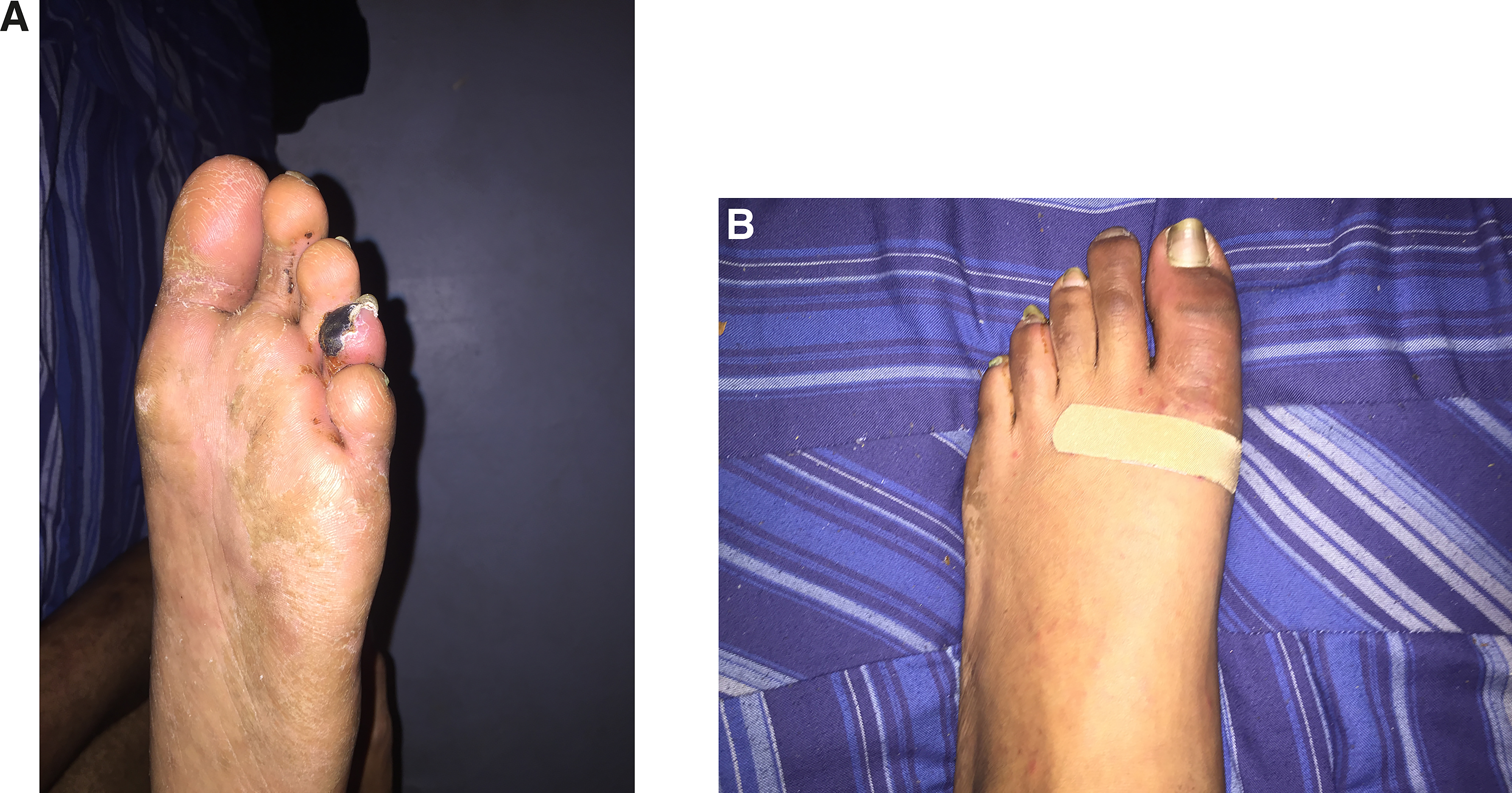
The results of the imaging studies, the positive inflammatory markers, and the clinical symptoms supported the diagnosis of APS. Prophylactic enoxaparin was increased to a therapeutic dose and the patient was bridged to warfarin with an international normalized ratio goal of 2.5 to 3.0. With proper anticoagulation and appropriate pain control, it was determined that the patient could be discharged from the hospital. The patient followed up with multiple specialties after discharge, including rheumatology, vascular surgery, foot and ankle surgery, and internal medicine. After 3 months of anticoagulation therapy, the patient had almost complete resolution of his foot discoloration and avoided amputation this episode (
Fig. 3). He continued therapeutic anticoagulation for 6 months until he was lost to follow-up despite multiple attempts to contact him.
Figure 3.
Ten weeks after initiation of therapeutic warfarin, with stable dried eschar covering the area of local ischemia. Normal capillary refill was noted by change in digital color (A). Complete resolution of localized edema and erythema to the dorsal left foot (B).
Figure 3.
Ten weeks after initiation of therapeutic warfarin, with stable dried eschar covering the area of local ischemia. Normal capillary refill was noted by change in digital color (A). Complete resolution of localized edema and erythema to the dorsal left foot (B).
Discussion
Clinical suspicion of APS should increase when a young patient presents with venous or arterial thromboembolism, cryptogenic stroke, pregnancy loss, or prolonged activated partial thromboplastin time when they are otherwise seemingly healthy.[
4,
29] It is important to understand that APS can also manifest as thrombocytopenia, skin ulcers, nephropathy, cognitive dysfunction, and cardiac valvular disease, and can affect nearly all systems of the human body.[
4,
5,
9,
11,
19,
30,
31]
In this case presentation, our otherwise healthy 23-year-old patient arrived at the emergency department suffering from a painful ischemic toe. However, as an isolated blue toe is not a common presentation of APS, the diagnosis was not immediately apparent. It was only through involving multiple specialties and positive laboratory results, including ?2-microglobulin and the lupus anticoagulant screen, that a high suspicion for APS occurred. Through further diagnostic imaging, multiple arterial thrombi and a deep venous thrombosis were identified. As the constellation of data was gathered, two of the three Sapporo criteria for diagnosis of APS were met, and the final diagnosis was made.
After starting the appropriate treatment, almost complete resolution of clinical symptoms occurred within 3 months and limb salvage was achieved. It is not clear what initially caused damage to this patient's endothelium, but we suspect that the patient's smoking may have played a role, which in the presence of high antiphospholipid antibodies, ultimately could have led to formation of thrombi and tissue ischemia. As these clinical symptoms or positive laboratory results present, APS should be included in the differential diagnosis, and additional laboratory tests should be ordered in the work-up of the clinical symptoms.
As the current literature suggests, this patient's treatment was aimed solely toward the management of the symptoms of APS, rather than the pathologic cause of the symptoms. At present, long-term oral anticoagulation using vitamin K antagonists (eg, warfarin) is the mainstay of treatment.[
4,
8,
13,
18] Even with the proper treatment, this patient will have a lifelong increased risk of recurrent thrombosis, with rates being as high as 7%.[
6,
7,
31,
32] Historically, researchers have suggested that patients who are at a lower risk of recurrence should be assessed to determine whether the benefits of anticoagulation outweigh its complications.[
4-
6] However, more recently, a consensus guideline was established that recommends long-term anticoagulation regardless of risk stratification.[
17]