Within sunlight is ultraviolet B (UV-B), a subtype of ultraviolet radiation (UV-R) that damages DNA by causing pyrimidine dimerization, leading to subsequent mutations and possible carcinogenesis. As sunlight exposure increases, the risk of skin cancer also increases due to the increased UV-B exposure. Skin cancer is the most commonly diagnosed cancer annually, and most nonfamilial cases are preventable with proper prophylactic techniques.[
1-
4] Ideal photoprotection of cutaneous surfaces involves multiple synergistic methods that can reduce the risks of skin cancer, including avoiding outdoor activities during peak sunlight hours, wearing protective clothing, seeking shade, and using adjunctivesunscreen.[
4-
6] However, efforts made to protect the dorsal aspect of the foot are unknown.
Most cases of skin cancer are preventable. Yet, despite these available preventive methods, the incidence of sporadic skin cancer cases has continuously increased in recent years.[
1,
7] Approximately 5 million Americans are treated for skin cancer annually according to an analysis of the Agency for Healthcare Research and Quality's Medical Expenditure Panel Survey.[
8] Current data also suggest that there are more than 73,000 new US cases of malignant melanoma annually.[
8,
9] Using protective behaviors and methods could be key in reducing the incidence of sunburn, an important risk factor for skin cancer, and subsequent skin cancer diagnoses.
Previous University of Texas Medical Branch studies have shown that sunburn causes a significant economic burden for Galveston beachgoers that may exceed
$10 million annually.[
10] These studies also evaluated photoprotective behaviors on other distinct anatomical regions that are frequently unprotected from UV-R, such as the scalp, lips, eyelids, and dorsum of the hands.[
11-
14] However, the dorsum of the foot remains a less-studied area. Furthermore, epidemiologic information that is available groups the feet with the legs as “lower extremity.” For epidemiologic purposes, this may not be accurate because the feet and legs use different articles of clothing and possible different sun protection factor application rates, thus potentially creating distinctive differences in photoprotective methods.
The dorsum of the foot is of particular interest because it can often become unprotected in beachgoers, creating a risk of sunburn and the development of skin cancer. Common cancers of the dorsal foot consist of the three most common skin cancers: squamous cell carcinoma (SCC), basal cell carcinoma, and malignant melanoma. Cancers that occur on the foot dorsum are associated with UV-R exposure and, thus, are preventable. Skin cancer of the foot dorsum can be a locally destructive and disfiguring disease, and occasionally deadly. Although nonmelanoma skin cancers typically have a locally destructive course, some may behave aggressively, leading to metastasis. A recent study suggests that at least 4,000 Americans died of SCC in 2012.[
15] According to the American Podiatric Medical Association, SCC is the most common form of cancer on the skin of the feet.[
16] This is remarkable because basal cell carcinoma is the most common skin cancer for most other anatomical sites, such as the face and trunk.[
17] The incidence of SCC is more common in men than in women, except for the lower legs.[
18] Malignant melanoma is responsible for most of the US skin cancer deaths, totaling almost 9,000 people annually.[
19] These common skin cancers of the dorsal foot are strongly associated with UV-R.[
20-
25]
The primary aim of the study was to determine whether beachgoers protect the dorsal aspect of the foot as frequently as other cutaneous anatomical sites, especially the leg. In addition, respondent demographics and general knowledge about skin cancer were assessed to determine whether these variables were significantly correlated with dorsal foot protection from UV-R injury.
Materials and Methods
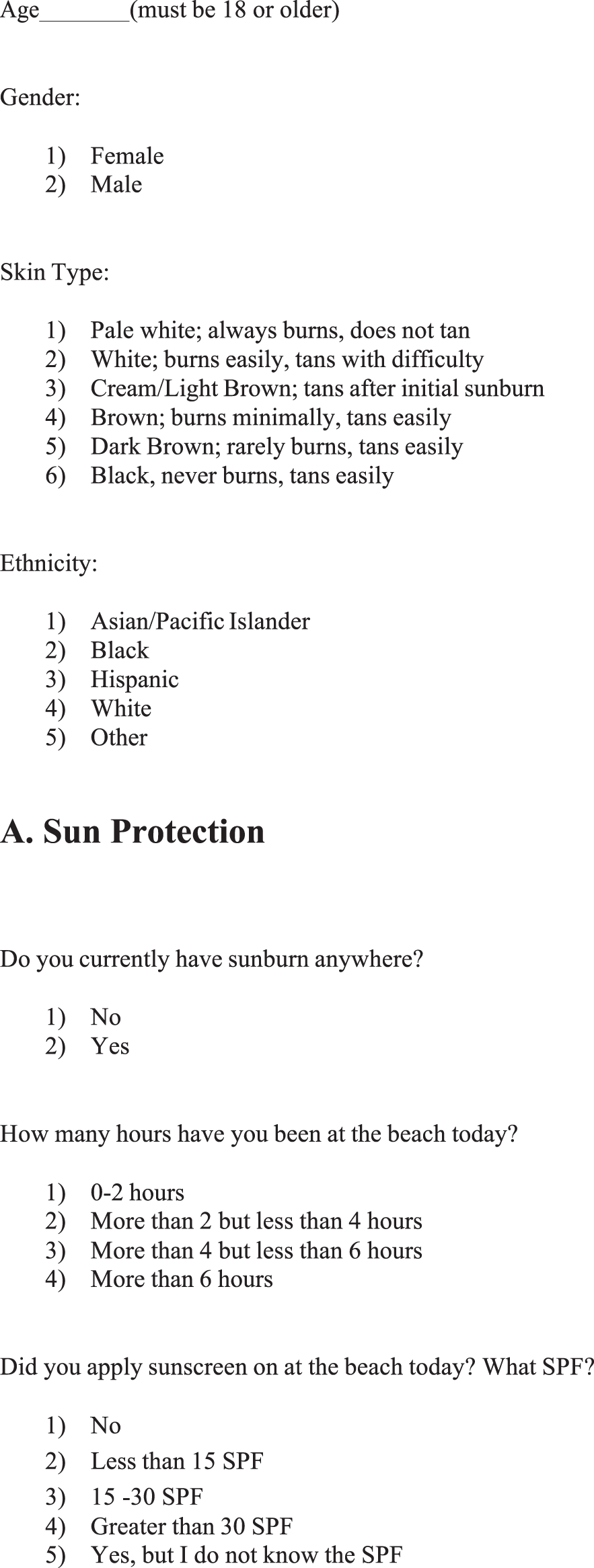
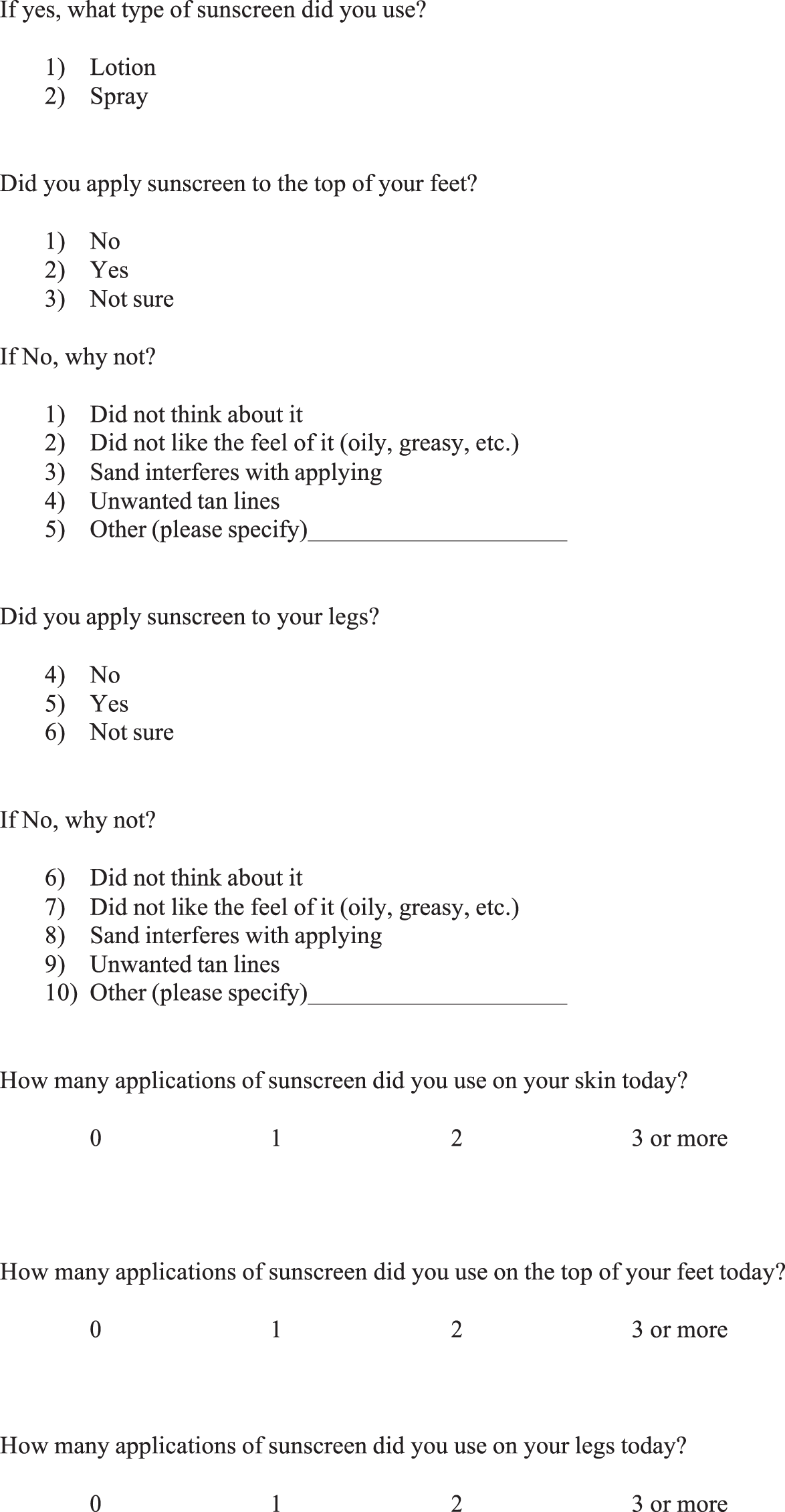
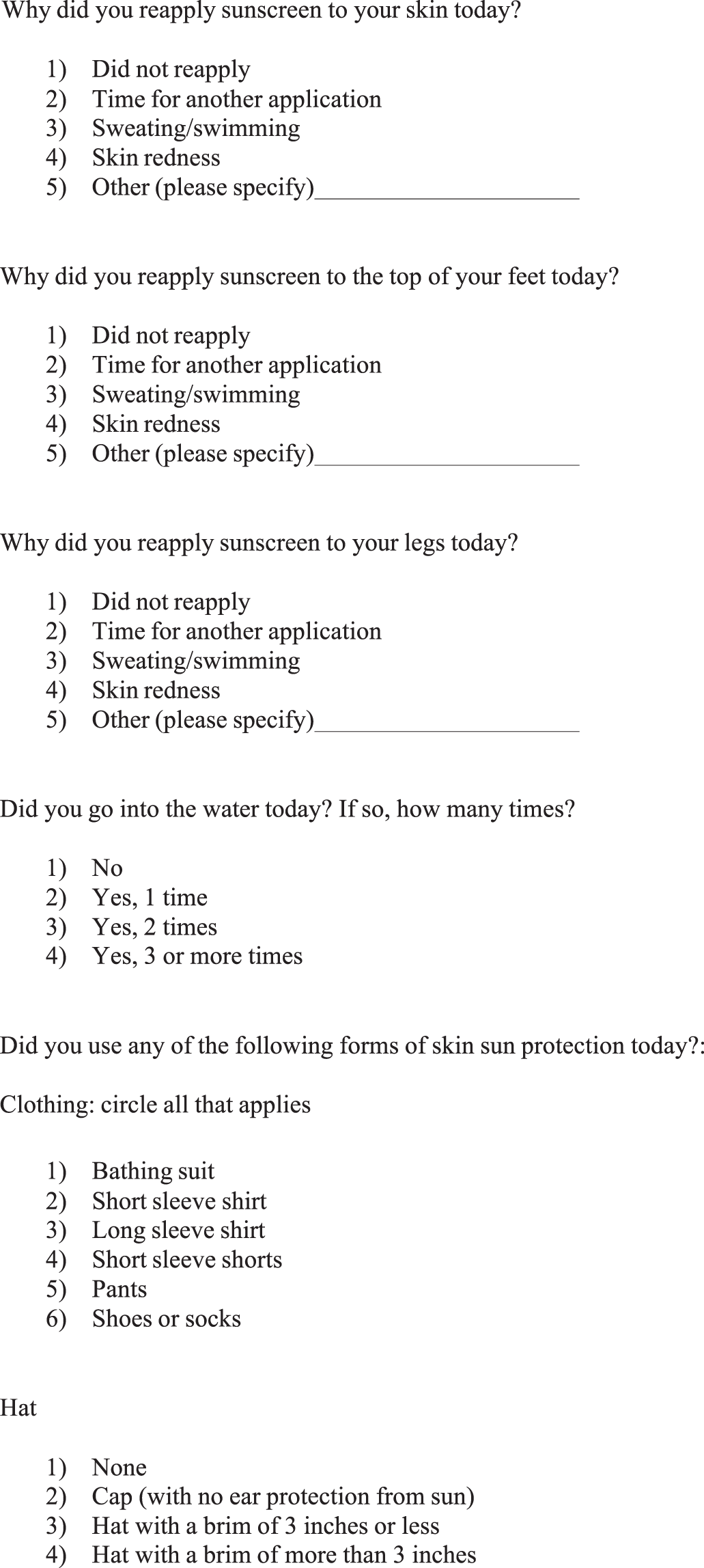
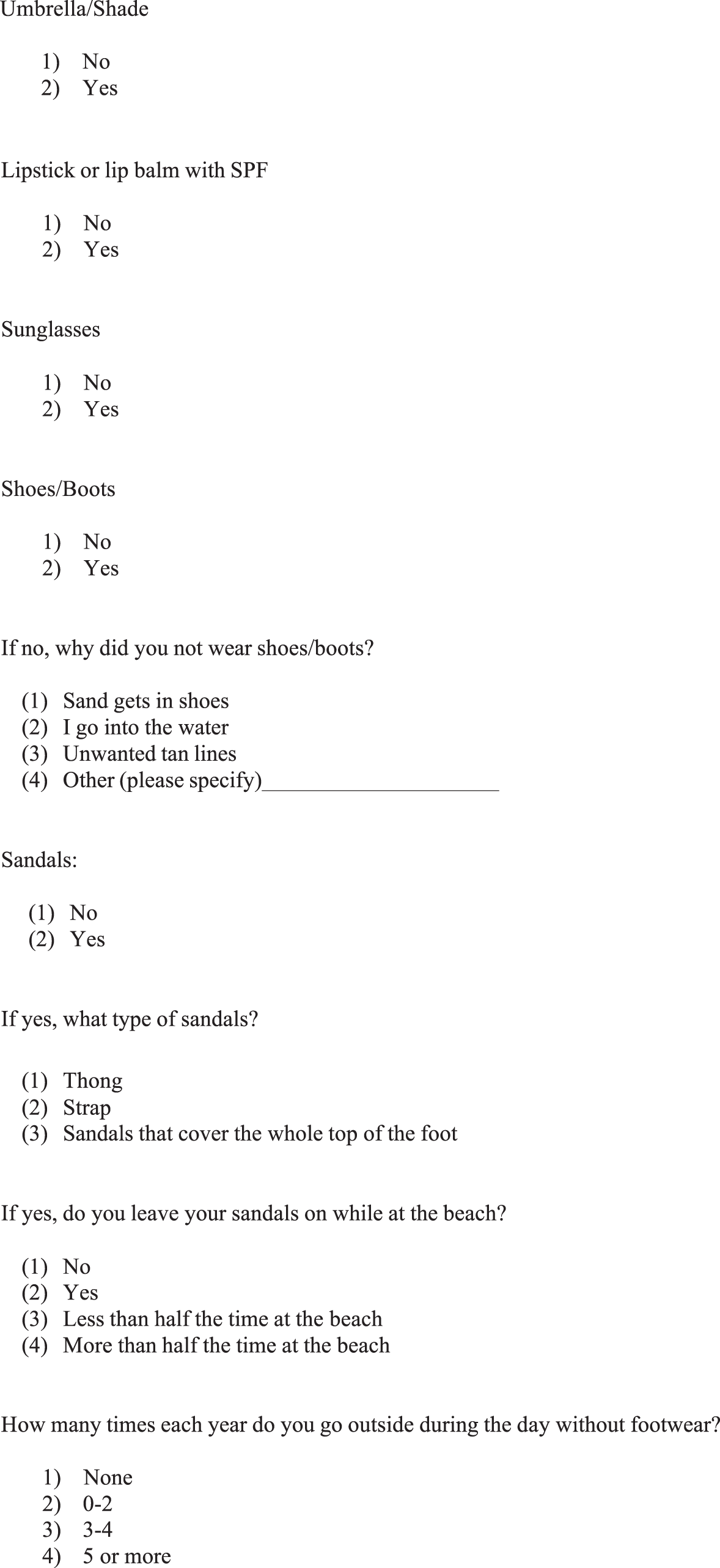
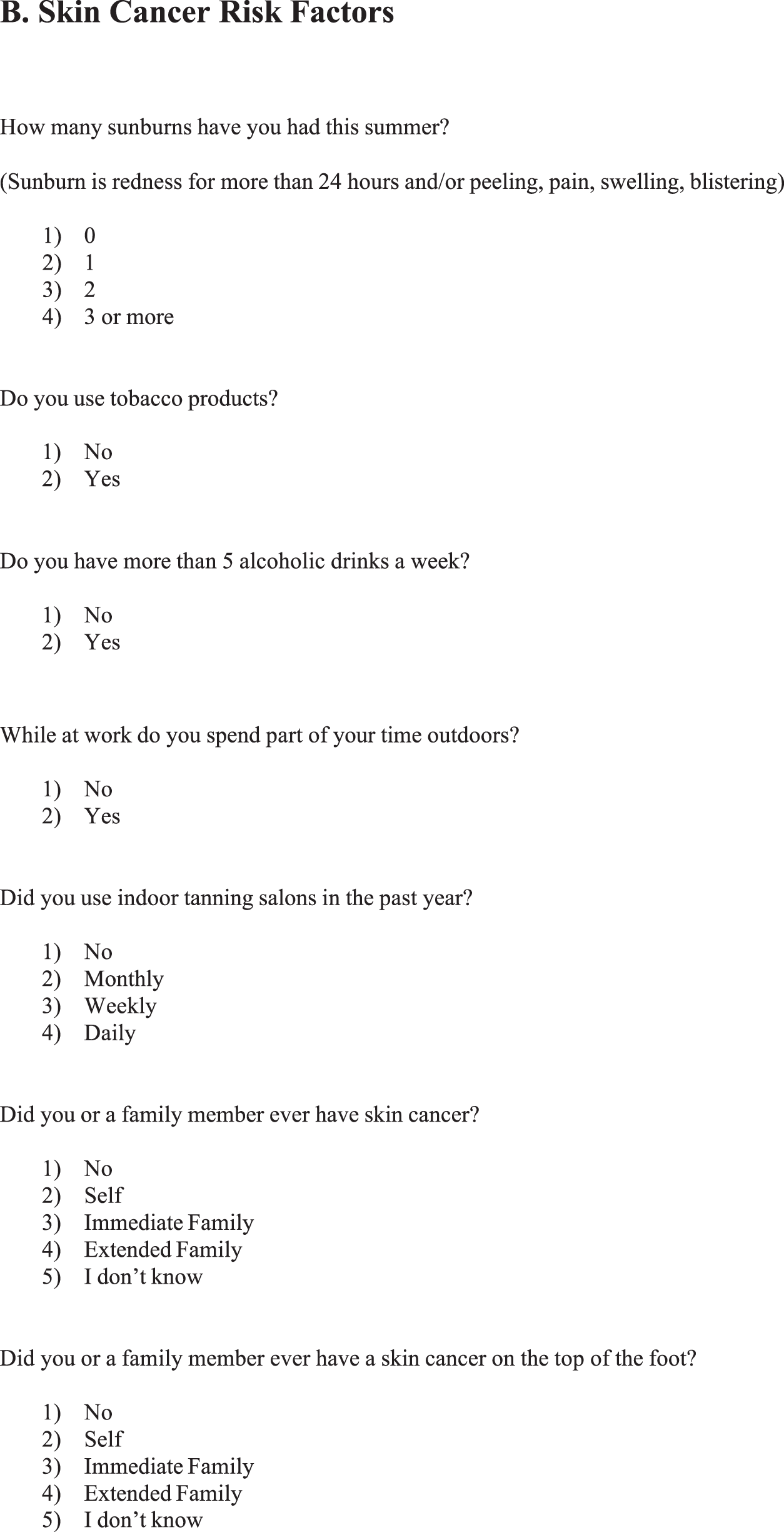
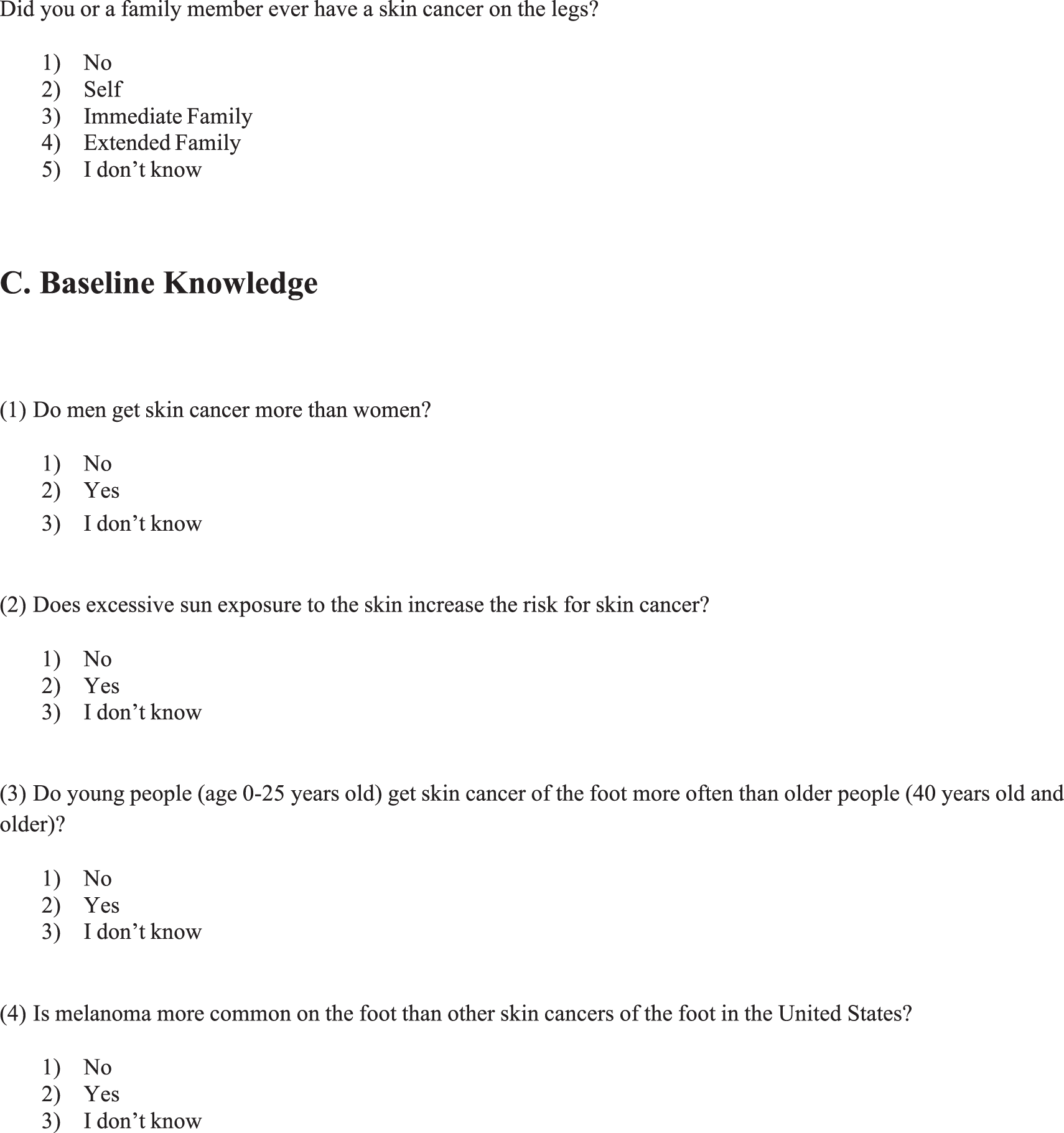
After an exempt approval by The University of Texas institutional review board, two of us (N.J. and T.A.) distributed anonymous questionnaires developed by the authors (
Fig. 1) to a convenience sample of beachgoers who were at least 18 years old on Galveston Island, Texas. The investigators patrolled 5 miles of public beachfront during early and middle summer between 10
am and 5
pm on days with an average temperature greater than 80°F and less than 50% cloud coverage. Data about age, Fitzpatrick skin type (FST), UV-R skin and dorsal foot protection behaviors, duration of time spent at the beach when the survey was performed, other protective behaviors (including hats, umbrellas, clothing protection), and baseline knowledge about UV-R damage to the dorsal foot were collected. The answer “not sure” was combined with the “no” response. Answers to questions about dorsal foot UV-R damage and general knowledge of skin cancer were tabulated as either correct or incorrect. The goal of the first two questions was to assess the participant's knowledge about skin cancer in general, whereas the goal of the second two questions was to assess specific knowledge about dorsal foot UV-R damage. The “I don't know” response was classified as an incorrect answer.
Figure 1.
Anonymous survey.
Figure 1.
Anonymous survey.
Data were examined for missing values and outliers and are presented using descriptive statistics. We excluded from the analyses all of the participants who did not answer the question being analyzed. Bivariate analyses were performed using the Pearson χ
2 test and the Fisher exact test with a 0.05 level of significance. The Mann-Whitney
U test was used for reapplication rates of sunscreen to the dorsal feet and legs. All of the data were analyzed using SAS for Windows, version 9.3 (SAS Institute Inc, Cary, North Carolina).[
26]
Results
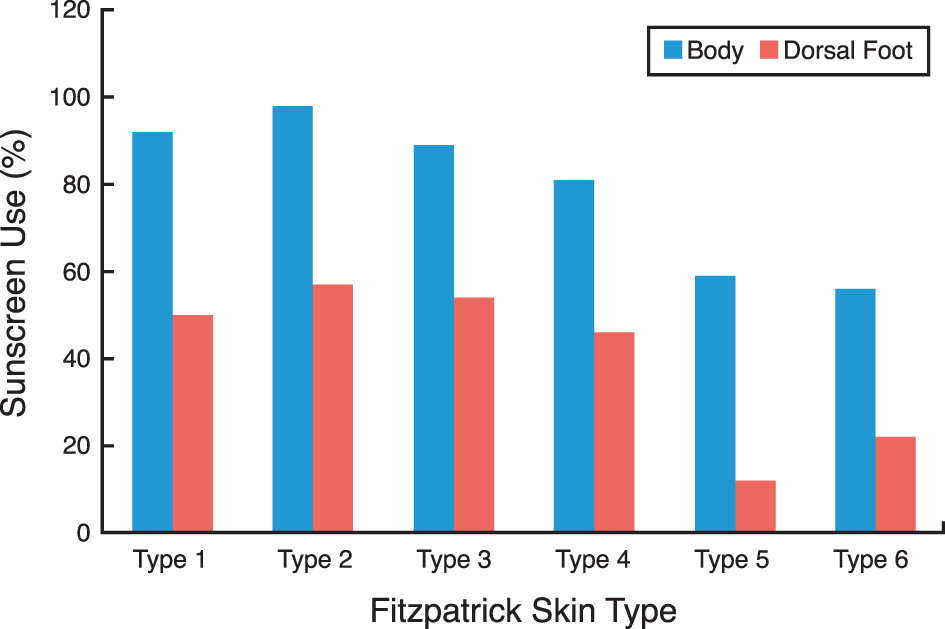
A total of 216 questionnaires were completed and analyzed. The average age of participants was 39 years and ranged from 18 to 80 years. The self-reported FSTs in the study population were type 1, 5.6%; type 2, 19.4%; type 3, 40.7%; type 4, 22.2%; type 5, 7.9%; and type 6, 4.2%. The rates of body and dorsal foot photoprotection decreased with increasing FST, with types 5 and 6 with the lowest protection rates (
Fig. 2). Individuals who characterized themselves as FST 5 or 6 did not apply sunscreen to the body or dorsal foot as regularly as individuals with FST 1 to 4 (84.6% of FSTs 5 and 6 did not apply versus 47.6% of FSTs 1–4;
P = .0001).
Figure 2.
Ultraviolet radiation body and dorsal foot protection in relation to Fitzpatrick skin type.
Figure 2.
Ultraviolet radiation body and dorsal foot protection in relation to Fitzpatrick skin type.
Of the 216 respondents, 183 (84.7%) reported using sunscreen somewhere on their body, and 33 (15.3%) did not apply sunscreen to anywhere on their body. Of those who applied sunscreen, 48.9% applied a lotion, 34.1% applied a spray, and 17.0% used both. The rate of photoprotection to the dorsal foot was significantly higher when applying a spray only versus application of lotion only (P = .017). In addition, the type of sunscreen used affected reapplication rates of sunscreen to the foot. People who used spray sunscreen had a mean number of applications of 0.74 applications per person, which was significantly higher than the group that used lotion only, which had a mean number of applications of 0.50 (P = .0173). Reapplication of sunscreen to the legs was not significantly different between spray-only and lotion-only users (P = .7428).
Of the 216 participants, 113 (52.3%) did not apply sunscreen to their dorsal feet. Of these 113 nonusers 87 (77.0%) explained, “I did not think about it.” There was a significant difference (
P = .017) between males and females in rates of sunscreen application to some part of the body (78.1% of males [75 of 96] versus 89.9% of females [107 of 119]). In addition, females were more likely to apply sunscreen to the dorsal foot (58.0% [69 of 119]) compared with men (36.5% [35 of 96]) (
P = .001) (
Table 1).
Table 1.
Differences in Dorsal Foot Protection by Sex
Table 1.
Differences in Dorsal Foot Protection by Sex
The dorsal foot was the least common anatomical site for beachgoers to apply sunscreen, with only 47.7% applying sunscreen to this area (
Table 2). In addition, of the 142 beachgoers using sunscreen on the lower extremity, 34.5% applied sunscreen to either the legs or the feet, but not to both sites. When the legs received photoprotection, 29.5% of that group (39 of 132) did not protect the dorsal foot. Finally, the application rate to the dorsal foot was lower compared with other anatomical sites. The average number of applications of sunscreen per person to the dorsal feet was 0.58, and the average to the body was 1.19 and to the legs was 0.86 (
P < .001).
Table 2.
Differences in Application Rates of Sunscreen to Individual Anatomical Sites for the 216 Study Particpants
Table 2.
Differences in Application Rates of Sunscreen to Individual Anatomical Sites for the 216 Study Particpants
Length of stay at the beach did not affect rates of overall sunscreen use: 86% of respondents who stayed less than 4 hours applied sunscreen compared with 76% who stayed longer than 4 hours (P = .136). There was also no significance with length of stay at the beach for 4 hours or more and sunscreen application to the dorsal foot (P = .2371). When comparing age groups with the likelihood to protect the dorsal foot with sunscreen, there was no significance among age groups (P = .3075).
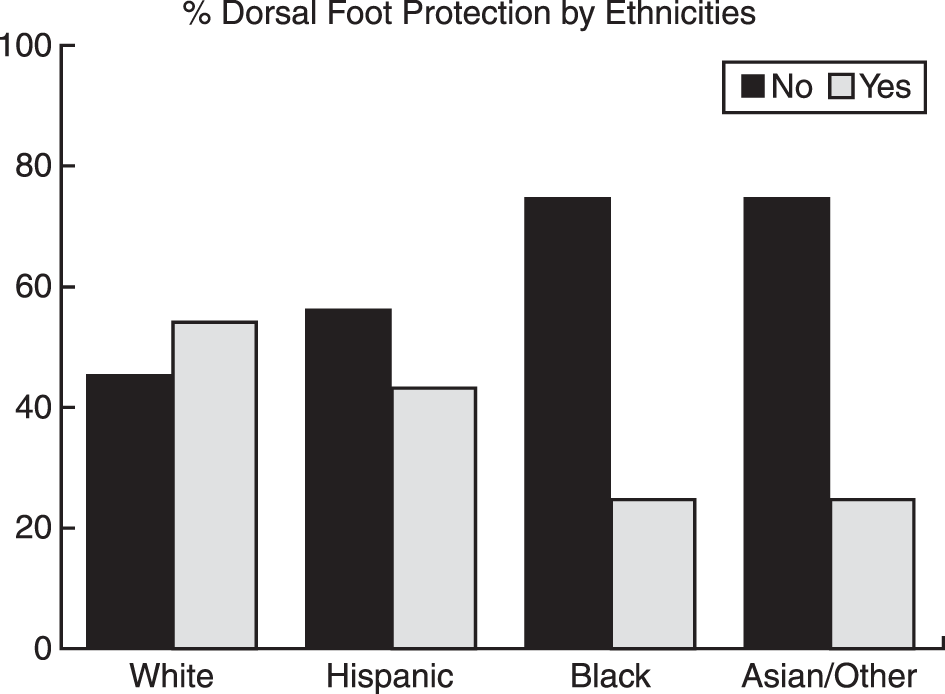
Photoprotection rates for the dorsal foot in self-identified ethnicities were highest among whites (73 of 134; 54.5%), followed by Hispanics (23 of 53; 43.4%), Asians/others (2 of 8) 25.0%, and blacks (5/20; 25.0%) (
Fig. 3). When the number of times in the water was compared against application of sunscreen to the dorsum of the foot, there was no significance found (
P = .8912). In addition, there was no significance when zero times in the water was compared with one or more times in the water regarding application of sunscreen to the dorsum of the foot (
P = .9597).
Figure 3.
Ultraviolet radiation dorsal foot protection in relation to ethnicity.
Figure 3.
Ultraviolet radiation dorsal foot protection in relation to ethnicity.
Several different photoprotective measures were inquired about in the survey, including the use of shoes/boots, sandals, umbrella/shade, lip protection, eyewear, and a cap/hat. Of these, only the use of lip protection significantly correlated with dorsal foot protection (P ≤ .0001). There was no significance found when the application of sunscreen to the dorsum of the foot was compared with the use of shoes/boots (P = .0685) and the use of sandals (P = .3906). In addition, when analyzing individuals who solely wore sandals, there was no significance when the different types of sandals were compared with the application of sunscreen to the dorsum of the foot (P = .5128).
Although alcohol use was not associated with dorsal foot protection (P = .1517), tobacco use did have a high correlation with no sunscreen application to the dorsal foot (P = .0093). Of the individuals who smoked tobacco products, only 25.0% (7 of 28) used sunscreen on the dorsal foot, whereas 51.4% of nonsmokers (95 of 185) used sunscreen on the dorsal foot. Finally, personal as well as familial history of skin cancer did not influence dorsal foot skin protection rates (P = .3131).
Four baseline knowledge questions were conducted during the survey. Questions 1 and 2 were general knowledge questions about skin cancer, and questions 3 and 4 focused on skin cancer of the dorsal foot. Question 1 asked, “Do men get skin cancer more than women?” to which 64 of 216 respondents (29.6%) answered correctly (yes). Question 2 asked, “Does excessive sun exposure to the skin increase the risk of skin cancer?” to which 204 of 216 respondents (94.4%) answered correctly (yes). Question 3 asked, “Do young people (aged 0–25 years old) get skin cancer of the foot more often than older people (≥40 years)?” to which 44 of 216 respondents (20.4%) answered correctly (no). Question 4 asked, “Is melanoma more common on the foot than other skin cancers of the foot in the United States?” to which 20 of 216 respondents (9.3%) answered correctly (no). There was no relationship between the individual baseline question knowledge scores and dorsal foot skin protection. Beachgoers did score significantly higher on general skin cancer questions: 60 of 216 (27.8%) answered the first two questions correctly compared with nine of 216 (4.2%) who answered questions 3 and 4 correctly about foot cancer knowledge (95% confidence interval, 22.3%–34.3% versus 2.2%–7.8%, respectively).
Discussion
In this population of beachgoers, only 47.7% used a topical UV-R barrier on their dorsal feet. Males were less likely to apply sunscreen to the dorsal foot than were females (36.5% versus 58.0%), suggesting that they are a more at-risk population than females for UV-R damage. In addition, respondents with higher FST were less likely to apply sunscreen to their dorsal feet, as rates of body and dorsal foot photoprotection decreased with increasing FST. This could possibly be explained by a lower risk of sunburn. Finally, individuals who classified themselves as white had the highest rate of sunscreen application to the dorsal foot (54.5%), whereas individuals who classified themselves as black or Asian/other had the lowest rate of protection at 25.0%.
Of the 216 participants, 84.7% used sunscreen somewhere on their body, whereas only 47.7% used sunscreen on their feet. The feet were the least likely site to have sunscreen applied as well as having the lowest reapplication rate of the anatomical sites studied. It is interesting that the application method used affected the coverage of the dorsal foot. Comparing individuals who used spray, the initial application and reapplication rates were significantly higher than those for individuals using a lotion. This could possibly be due to the convenience of a spray and its fluidity on application. Reapplication rates to the legs were not different in the lotion-only and spray-only groups.
Of other photoprotective methods analyzed, only the use of lip protection significantly correlated with dorsal foot protection (P ≤ .0001). Shoe/boot use, sandal use, and number of times in the water had no significance regarding application of sunscreen to the dorsum of the foot. Most of the individuals who used lip protection were females, who were also the most likely group to apply sunscreen on the foot dorsum. Other risk factors, such as alcohol use, were not associated with dorsal foot protection, although tobacco use had a high correlation with reduced dorsal foot photoprotection (P = .0093). Of individuals who identified as smokers, 25.0% used sunscreen on the dorsal foot, compared with 51.4% use by nonsmokers. It is possible that people who partake in high-risk behaviors, such as cigarette smoking, will also partake in other high-risk behaviors, such as less photoprotection.
The baseline knowledge of respondents was assessed, and no correlation between individual questions and dorsal foot protection were evident. It is noteworthy that 27.9% answered the first two questions correctly compared with only 4.2% who answered the last two questions correctly. This disparity could show a lack of knowledge about foot cancer compared with skin general knowledge. In addition, 94.4% of participants answered question 2 correctly, which acknowledged that UV-R increases the risk of skin cancer. It is likely that the overwhelming majority of patients who answered this second question correctly accounts for the disparity in knowledge in skin cancer and foot cancer.
One limitation of the study that a convenience sample presents is the inability to calculate a sample size; thus, the power of the study cannot be calculated. We collected 216 surveys, a similar number of study beachgoers as in past studies.[
11-
13] In addition, results may not be representative of the general population because with a convenience sample there is no way to tell whether they are truly representative, as would be with a random probability sample. This is sufficient, as we do not necessarily want the population of individuals to be representative of the general population. The population should represent a group of beachgoers because this group wears different articles of clothing in an environment with a known carcinogen, UV-B. Thus, this group likely demonstrates different protective behaviors than the general population.
Further studies could include a longitudinal study in which beachgoers, at the start of summer, have their initial sunscreen use recorded, are provided with appropriate pamphlets about sun damage, and are contacted 8 weeks later to determine whether their sunscreen use habits have changed. Using this study, we could possibly evaluate the effectiveness of the pamphlets as well as determine whether there is a significant change in UV-B exposure in the beachgoers.
Conclusions
Protective behaviors against injury from UV-R damage to the dorsal foot are not currently being met in this surveyed population of Galveston beachgoers. The dorsal foot was the least common anatomical site on which sunscreen was applied, and protection to the dorsal foot from UV-R injury deserves more emphasis in public health messages about skin cancer prevention.
Current skin cancer epidemiology pairs the feet with the legs as “lower extremity.” For epidemiologic purposes in UV-R research, and because 34.5% of beachgoers using sunscreen on the lower extremity applied sunscreen to either the legs or the feet only, we believe that the feet and legs should be considered distinct areas because they may differ in photoprotection strategies. Further studies including possible interventions to increase sunscreen use are warranted and should be explored.