Percutaneous foot surgery, also known as minimal-incision surgery (MIS), allows surgical interventions through small skin incisions, causing minimal trauma to soft tissues. Current orthopedic surgical techniques favor this minimally invasive or percutaneous approach, which reduces the complications of surgery, in addition to improving and shortening postsurgical recovery. Basic specific instrumental materials, motorized and radiologic control, and refined surgical techniques performed by qualified and experienced personnel are crucial in allowing surgeons to obtain satisfactory results with MIS techniques.[
1]
Innovation, including improvements in the design of surgical instruments, is essential for progress in foot surgery. The goal of these advances should be to obtain more reliable, more reproducible, and safer outcomes.[
2] Surgical techniques for foot disorders have evolved remarkably since Dr. Stephen Isham's first publication,[
3] in which he proposed a range of surgical procedures that, in combination, provide an effective correction for podiatric medical pathologies such as hallux abducto valgus.
The MIS techniques provide a lower rate of complications and more clinical safety because surgical exposure is shorter and causes less tissue damage. The MIS techniques deliver for the patient a shortened recovery and rehabilitation period. These techniques can be used for patients who are medically committed and who do not recover properly.[
4]
Particular skills and a significantly long learning curve seem to be required for MIS techniques. For this reason, the present investigation is aimed at developing an instrument that allows surgeons to perform guided bone osteotomies through minimal-incision foot surgery. This surgical guiding allows hands untrained in MIS to perform such procedures with high accuracy and minimal risks. The accuracy of the surgical guide was tested in three individuals with different surgical experience levels, each of whom performed an Akin osteotomy, a Reverdin osteotomy, and a basal osteotomy of the first metatarsal in resin bone specimens resembling a hallux abducto valgus. Hallux valgus can lead to alteration of the plantar pressure pattern with an overpressure under the hallux, and it can be repaired percutaneously.[
5]
Materials and Methods
Conceptual Basis of the Surgical Foot Guide
The surgical apparatus is a guiding and fastening device for different minimal-incision techniques used in foot surgical interventions, solving several surgical and postoperative problems.[
6] The surgical foot guide reduces the possibility of error related to a surgeon's skill and ability while performing MIS according to what is planned before the surgical act.[
7] The surgical guiding does not require mooring or binding to the foot because this would be incompatible with MIS techniques. It is, thus, fitted as a stocking and is perfectly adapted to the surgical area because the foot has very thin soft-tissue structures.
Three-dimensional Model and Characteristics of the Surgical Foot Guide for Guided Osteotomies
A three-dimensional (3-D) model of the surgical guide is obtained from a preoperative magnetic resonance image or computed tomographic (CT) scan of the patient's foot. By means of OsiriX MD (Pixmeo SARL, Bernex, Switzerland) and Maya (Autodesk Inc, San Rafael, California) software, a 3-D reconstruction of the foot is acquired from the DICOM archives.[
8] Several calculations are recorded based on this 3-D model, including presurgical foot goniometry, and the incisions and the most accurate spatial orientation of the osteotomies are planned to correct the deformity. The surgical guide used for this study was 3-D printed at the AIDIMME Technological Institute of Metallurgy (Valencia, Spain) on NeXt resin (DSM, Heerlen, the Netherlands) with a ±0.3-mm tolerance level using stereolithography.
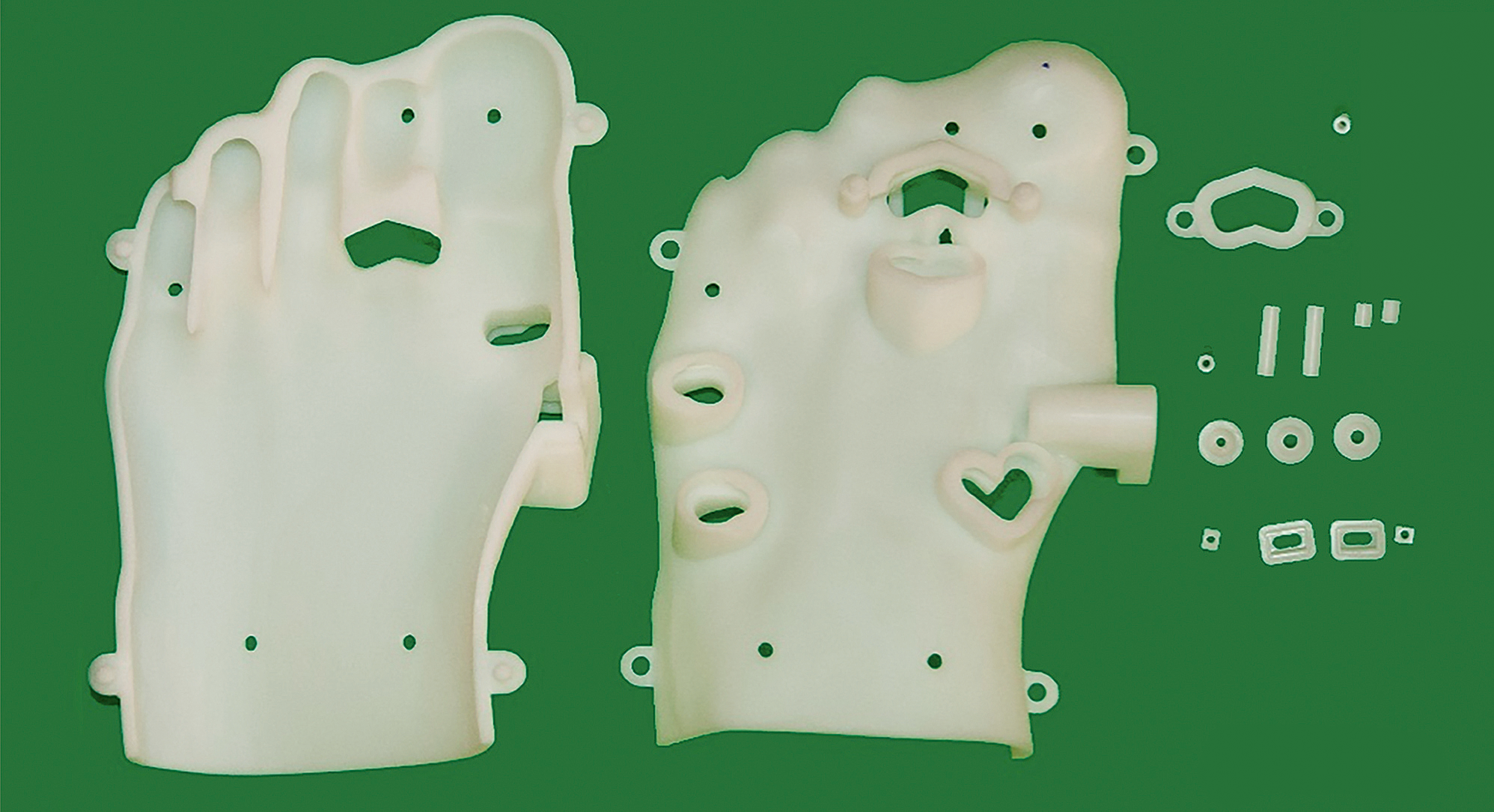
The surgical guide is 2-mm thick and covers the patient's foot, keeping the pathologic position from which the medical image has been obtained. The surgical foot guide has incision areas where guiding pieces can be adjusted to facilitate the performance of osteotomies, tenotomies, and capsulotomies (
Fig. 1).
Figure 1.
Components of the surgical guide.
Figure 1.
Components of the surgical guide.
For surgeons to perform the cutting of soft parts for osteotomies, it is crucial that they have control over the three spatial axes X, Y, and Z. In this way, a surgeon can control the length and direction of an osteotomy. In addition, the depth of osteotomies can be controlled by means of set spacers adapted to surgical drill guides. With these simple steps, we obtain a guide device (a perimeter of the patient's structures) that includes incision and osteotomy guides with precise angulations to allow preprogrammed surgical procedures.
Validation of the Surgical Guide
To validate the surgical foot guide, surgeons used expansive resin skeletons to perform different osteotomies selected for the correction of hallux abducto valgus. The resin models combined the following pathologic conditions: first toe with hallux abducto valgus, second toe with plantarflexed metatarsal and claw toe, third toe with distal hyperostosis, fourth toe with claw toe, and fifth toe with a tailor's bunion.
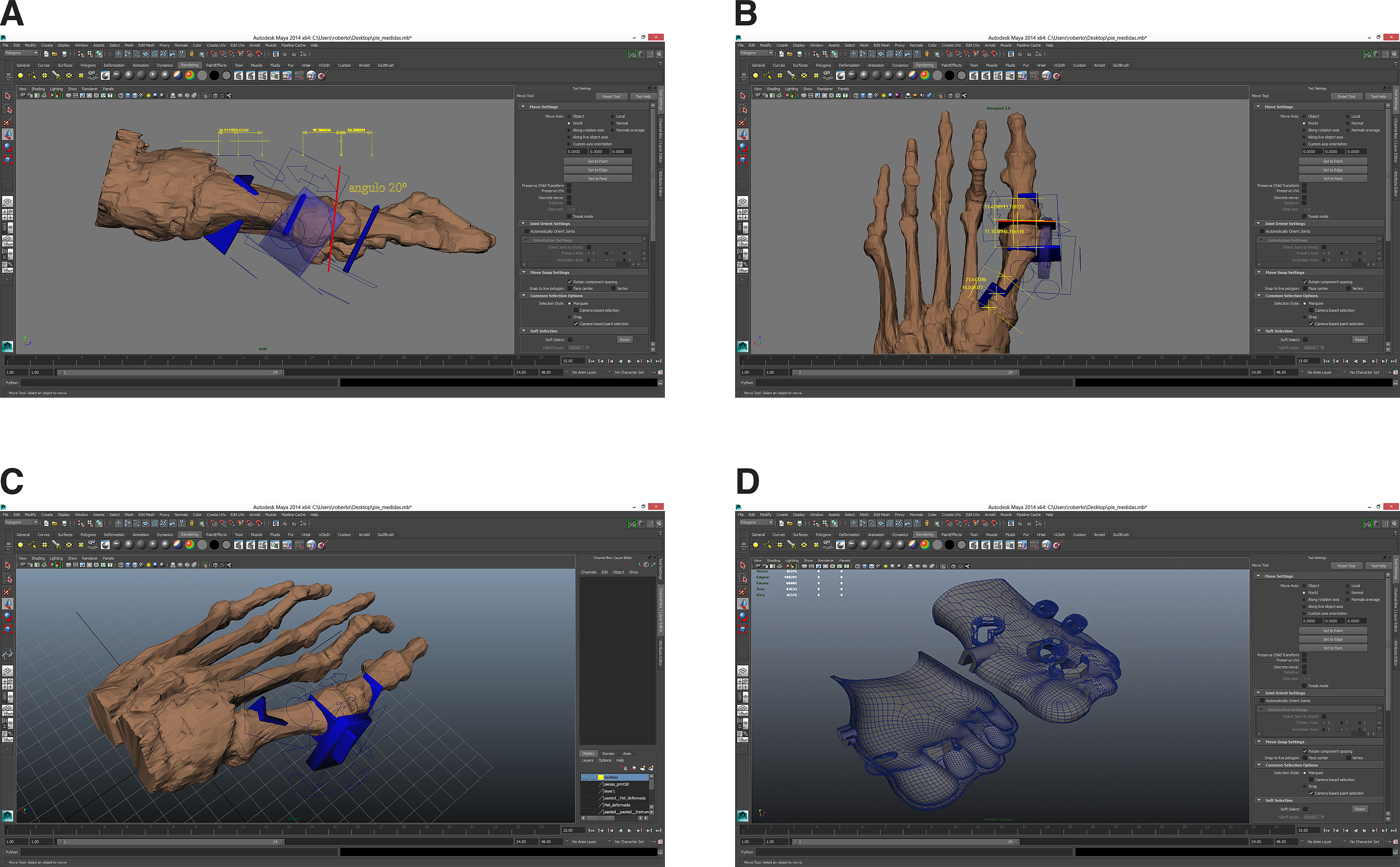
A CT scan was obtained from the skeletal model to prepare the first guide device, and the soft parts of the skeleton were simulated. With OsiriX, a 3-D model was acquired and exported to STL to be imported to Maya (
Fig. 2).
Figure 2.
Design of the osteotomies. A, Lateral projection. B, Plantar projection. C, Oblique projection. D, Surgical foot glove.
Figure 2.
Design of the osteotomies. A, Lateral projection. B, Plantar projection. C, Oblique projection. D, Surgical foot glove.
The surgeries for surgical correction of hallux abducto valgus were designed manually in Maya by calculating the necessary angulations in the three axes for correct foot realignment. Three osteotomies were defined to be performed in combination, namely, a basal osteotomy of the first metatarsal, a Reverdin proximal osteotomy, and an Akin osteotomy at the proximal phalanx. The 3-D guide device model together with the surgical guides were printed using stereolithography, which provides an excellent dimensional and superficial quality. The material used was Osetan resin (DSM).
Three surgeons with different experience levels (a fourth-year undergraduate podiatric medical student, a master's student in minimal-incision foot surgery, and a podiatric physician with more than 5 years' experience) performed the same planned osteotomies independently using the same method on different skeletons. The study included three different individuals with different experience levels to verify that the guide device is effective regardless of surgical experience, and the three different conditions provide data concerning the reproducibility of these surgical procedures. Each clinician performed the same osteotomies on five skeletons.
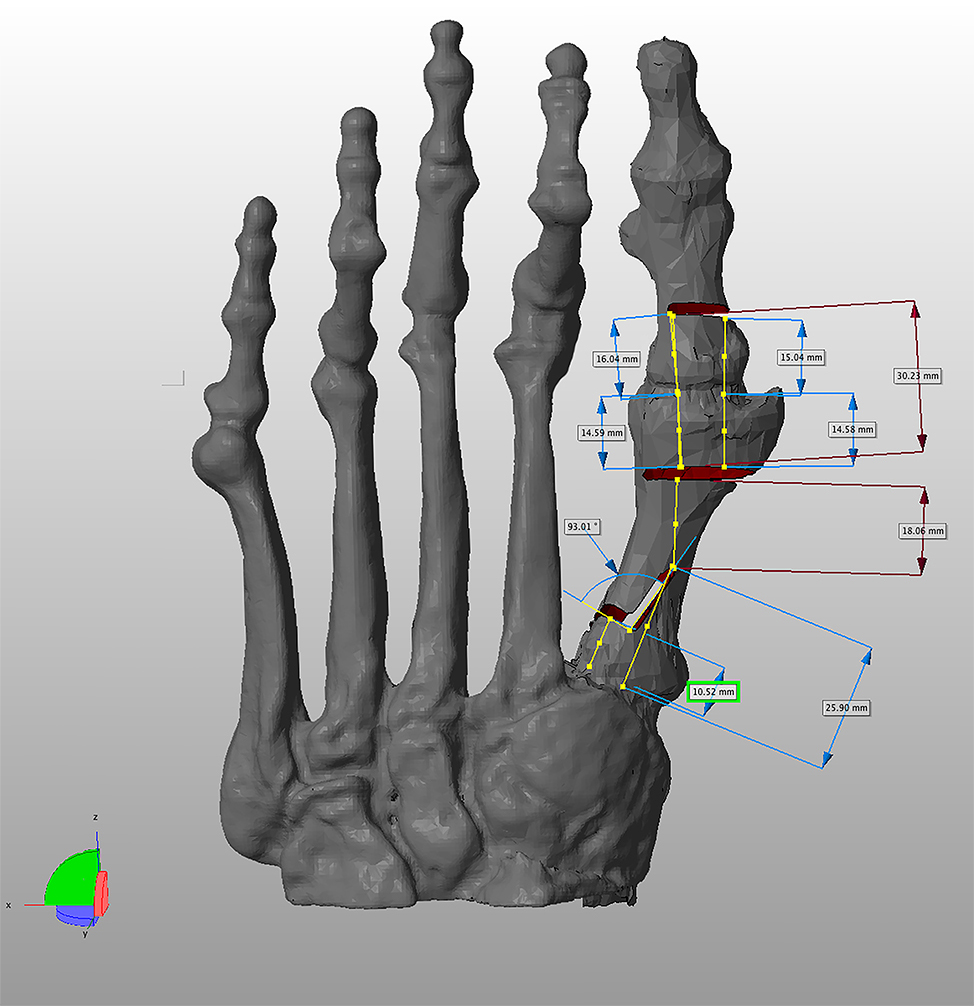
After the clinicians completed the osteotomies, a postsurgical CT scan was performed on the different skeletons to measure each osteotomy. Without knowing to which clinician each skeleton belonged, another researcher measured the feet using Netfabb software (Autodesk Inc). Nine different measurements (Ms) were obtained (
Fig. 3): M1, distance from the proximal medial end of the Akin osteotomy to the first metatarsophalangeal joint interline; M2, distance from the proximal lateral end of the Akin osteotomy to the first metatarsophalangeal joint interline; M3, distance from the proximal medial end of the Reverdin osteotomy to the first metatarsophalangeal joint interline; M4, distance from the proximal lateral end of the Reverdin osteotomy to the first metatarsophalangeal joint interline; M5, distance from the most distal proximal lateral end of the basal osteotomy to the scaphometatarsal joint interline; M6, distance from the most proximal medial end of the basal osteotomy to the scaphometatarsal joint interline; alpha, angle formed by both arms of the basal osteotomy; distance cut 1, distance between the Akin osteotomy in its proximal and lateral edge and the Reverdin osteotomy in its distal and lateral edge; and distance cut 2, distance from the proximal and lateral edge of the Reverdin osteotomy to the distal and medial edge of the basal osteotomy.
Figure 3.
Measurements taken with Netfabb software.
Figure 3.
Measurements taken with Netfabb software.
Statistical Analysis
Data obtained for the different measurements are presented as means and standard deviations together with maximum and minimum values. Because of the small sample size, the nonparametric Kruskal-Wallis test was used for comparison among the three surgeons, and the Mann-Whitney U test was used for comparisons by pairs. Deviations from the presurgical computerized measurements were calculated by subtracting these measurements from those taken after the osteotomies. The presurgical measurements for each variable were as follows: M1, 16.05 mm; M2, 15.04 mm; M3, 14.59 mm; M4, 14.58 mm; M5, 10.52 mm; M6, 25.90 mm; alpha, 93.1°; distance cut 1, 18.06 mm; and distance cut 2, 30.23 mm. All of the analyses were undertaken using IBM SPSS Statistics for Mac, version 21.0 (IBM Corp, Armonk, New York), and P < .05 was considered significant.
Results
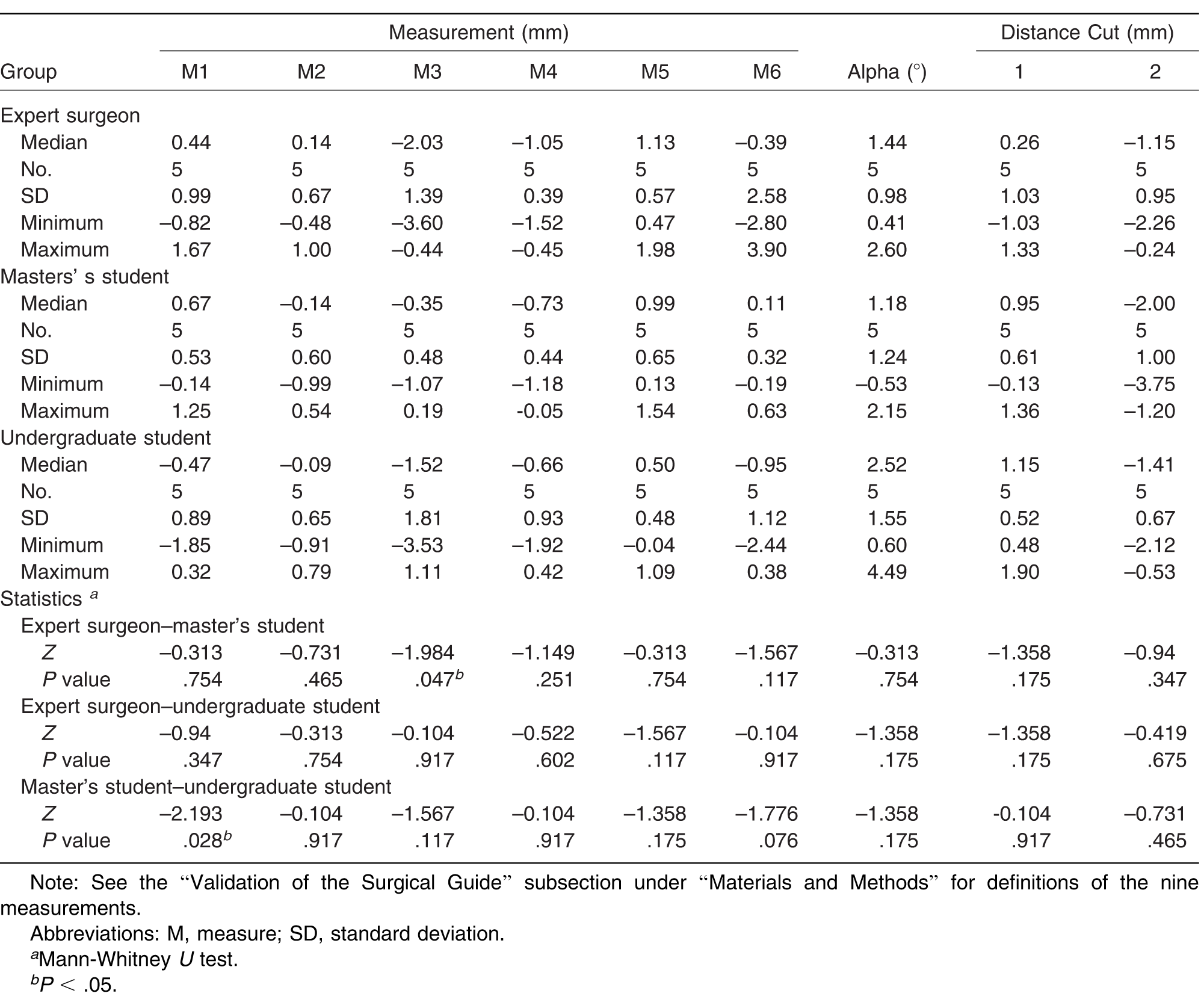
Table 1 shows the nine measurements obtained for the skeletal samples from each participating surgeon. Regarding measurements assessing the Akin osteotomy, M1 and M2, there were no statistically significant differences in the mean values. In the M1 variable, the expert surgeon showed the widest variation of results, as the difference between maximum to minimum values was 2.49 mm. This maximal range was 1.39 mm for the master's student and 2.17 mm for the undergraduate student. On the contrary, the narrowest range from minimum to maximum in M2 lengths was 1.48 mm for the expert surgeon. The master's student obtained almost similar values, 1.53 mm, and the undergraduate student showed the widest results, 1.70 mm.
Table 1.
Descriptive Data of the Osteotomy Measurements for Each Surgeon
Table 1.
Descriptive Data of the Osteotomy Measurements for Each Surgeon
For M3 and M4 assessing the Reverdin osteotomy, there were also no significant differences among the three groups. The mean values differed 1.68 mm for M3 and only 0.39 mm for M4. The proximal or basal osteotomy of the first metatarsal bone was assessed by M5 and M6 distances and alpha angle. As in the previous measurements, there were no significant differences among the three surgeons. In M5 values, the narrowest difference between maximum and minimum values was obtained by the undergraduate student (1.13 mm). The master's student showed a range of 1.41, and the expert 1.51 mm. In the M6 measurements, the expert surgeon showed the widest variability of results, with a 6.70-mm range. The undergraduate student showed a 2.82-mm range. The narrowest range of variation was obtained by the master's student, 0.82 mm. Regarding the alpha measurement, the lowest standard deviation was found for the expert surgeon (0.98°) and the highest for the undergraduate student (1.55°).
When the distance between the Akin and Reverdin osteotomies was measured (distance cuts 1 and 2), no differences were found among the three surgeons. The shortest difference between maximum and minimum values was detected for the undergraduate student (1.42 mm for distance cut 1, 1.59 mm for distance cut 2). The widest difference in distance cut 1 was found for the expert surgeon (2.36 mm) and in distance cut 2 for the master's student (2.55 mm). The standard deviation in the angles measured for the three surgeons taken together was only ±1.39°.
Table 2 shows the difference in each measurement from the presurgical computerized definitions of the osteotomies. A shorter deviation from the planned measurements was observed in variables corresponding to the Akin osteotomies. The maximum deviation was 1.67 mm for M1 measurements and 1.00 mm for M2, both in the osteotomies performed by the expert surgeon. As to the Reverdin osteotomies, the maximum deviations in M3 were 3.60 and 3.53 mm in the expert and undergraduate surgeons, respectively. For M4, the maximum deviation was found in the osteotomies performed by the undergraduate student (1.92 mm). In the analysis of the deviation in the basal osteotomy of the first metatarsal, again the expert surgeon showed the widest variation in both M5 and M6 measurements. However, the deviation in the alpha angle of the metatarsal osteotomy was maximal in surgeries performed by the undergraduate student.
Table 2.
Difference in Each Measurement from the Presurgical Computerized Definitions of the Osteotomies
Table 2.
Difference in Each Measurement from the Presurgical Computerized Definitions of the Osteotomies
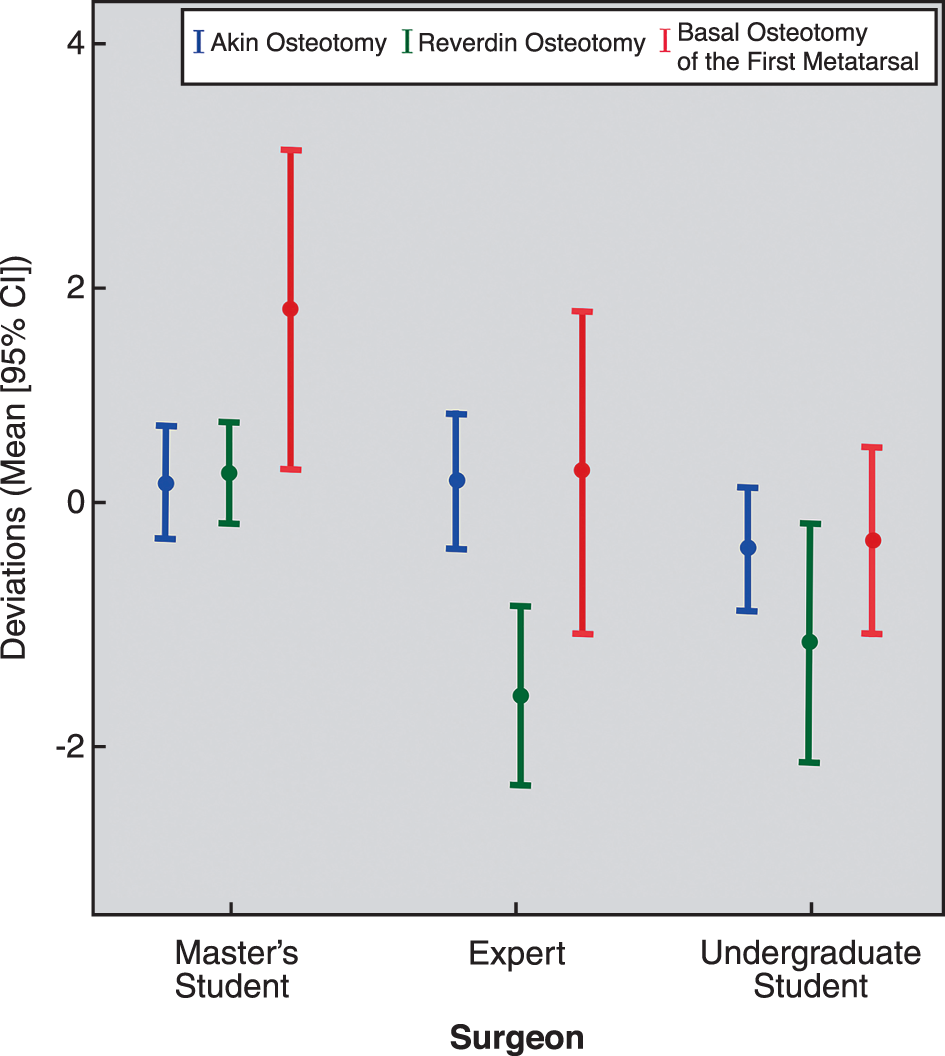
Figure 4 displays the mean values and 95% confidence intervals of the deviations in the osteotomies performed by the three surgeons. The most accurate osteotomy compared with the predefined values was the Akin osteotomy. The only significant differences between deviations among the three surgeons referred to the Reverdin osteotomy (Kruskal-Wallis test: χ
2 = 13,241;
P < .001), with the master's student showing the lowest deviation from predefined computerized measurements. However, when participants were compared by pairs, there were no differences between expert surgeon and undergraduate student in any of the deviations corresponding to the three osteotomies. Compared with the undergraduate participant, both the expert surgeon and the master's student showed increased deviation from predefined surgical measurements in the Reverdin osteotomy (Mann-Whitney
U test:
Z = −3.628 and
P = .000,
Z = −2.495 and
P = .011, respectively).
Figure 4.
Mean values and 95% confidence intervals (CIs) of the deviations found in the different osteotomies performed by the three surgeons.
Figure 4.
Mean values and 95% confidence intervals (CIs) of the deviations found in the different osteotomies performed by the three surgeons.
Discussion
This study tested the accuracy of a 3-D–printed surgical foot guide in allowing surgeons to perform percutaneous osteotomies at the forefoot and metatarsal bone. Three participants with different surgical experience levels performed an Akin osteotomy, a Reverdin osteotomy, and a basal osteotomy of the first metatarsal in five resin bone specimens each. The results showed that there were no significant differences among the three surgeons in any of the defined measurements when performing the guided osteotomies using the 3-D–printed surgical guide. This finding confirms that this 3-D surgical foot guide optimizes the accuracy of minimally invasive foot osteotomies, reducing errors derived from insufficient surgical experience.
Interestingly, the shortest deviation from presurgical computerized definitions was observed in the Akin phalangeal osteotomy. The largest deviations were found in the Reverdin osteotomy and the osteotomy at the first metatarsal. In both cases, the widest deviations were found in the osteotomies performed by the expert surgeon. This finding could be explained by the tendency of the experienced surgeon to execute by default the same preestablished surgical movements that are usually performed without the surgical guide. These previously learned maneuvers prompt the expert surgeon to force the osteotomies within the surgical guiding, resulting in the greatest deviation from the template.
Of note is that the undergraduate participant showed very narrow deviations in both the Akin and first metatarsal osteotomies. The master's student was the most accurate in the Akin and Reverdin osteotomies. These findings prove the utility of the 3-D–printed surgical guide for surgeons with different experience levels, as use of the surgical guide allows high accuracy in predefined osteotomies for surgeons of any level.
Recent literature has described diverse types of cutting guides designed to help surgeons make bone cuttings more accurately during procedures such as total knee arthroplasties,[
9-
13] tibial osteotomies,[
10] and anterior cruciate ligament reconstructions.[
15] However, few studies relate to podiatric surgery. To our knowledge, only a guide to perform the apical angle of an Austin osteotomy exists.[
16] The present study adds a new guiding tool for MIS of the foot. The originality of this new device is based on a customized 3-D–printed foot guide that incorporates guides to percutaneous osteotomies according to predefined osteotomies planned on computerized 3-D foot images obtained in preoperative CT scans. This new tool allows the definition of a variety of forefoot osteotomies, including that of the entire first metatarsal bone. The surgical foot guide ensures higher control during osteotomies and safer postsurgical progress because it allows surgeons to perform more biomechanically stable osteotomies. In addition, this is the first research work focusing on guides for MIS of the foot.
A limitation of the present study is that surgical procedures were performed in vitro on resin specimens instead of on patients. Another weakness of this study is that no osteotomies were performed without the template as a control or as baseline to observe of the ability of the template to improve the results. However, the high reliability of the results from each participating surgeon make this osteotomy guiding device a promising tool for human clinical trials. Once the customized surgical guide is 3-D printed and adapted to patients, no reason exists for surgeons to fail in performing the previously tested osteotomies. A further limitation could be related to the lack of movement of the phalangeal joints in the resin model. The stiffness of the phalanxes could have facilitated the performance of the osteotomies. At the present time, before application in human clinical trials, a cadaveric study is being conducted to confirm the validity and reliability of the surgical guide. In this case, five podiatric and orthopedic surgeons with a special dedication to foot surgery will test the 3-D guiding.
In conclusion, this study described the design of a novel prototype for guiding forefoot and metatarsal osteotomies and the testing of its accuracy on resin models. This 3-D–printed prototype has been proven effective in guiding surgeons to perform different types of osteotomies. The design of the device was validated by means of in vitro tests, and the results confirm that the proposed 3-D–printed geometric components fulfill the function for which they have been designed. In this preclinical study, minimal deviations from the predefined osteotomies were found among the three surgeons. The 3-D surgical guide prototype provided high precision in osteotomies by different surgeons with significantly unequal experience in MIS. The surgical foot guide could, thus, facilitate a fast, simple, and minimally invasive surgical technique.
Use of the customized surgical guide should be considered to promote surgical safety as a result of presurgical planning and to obtain more stable osteotomies. Finally, the achievements and setbacks found throughout this work have shown that 3-D–printed guiding admits multiple engineering solutions in response to each specific surgical technical requirement. Thus, different osteotomies, tenotomies, and capsulotomies can be adapted depending on surgeons' criteria.
Conclusions
The 3-D–printed prototype has been proven effective in guiding surgeons to perform different types of osteotomies. Minimal deviations from the predefined osteotomies were found among the three surgeons.