Levamisole was previously used to treat patients with cancer and rheumatoid arthritis.[
1] The Food and Drug Administration banned the use of levamisole in 2000 due to the adverse effects of agranulocytosis and vasculitis.[
2,
3] The drug is now used in veterinary practice as an antihelminthic and immunoregulatory medication.[
4,
5] Aside from its intended therapeutic effects, levamisole has been used as an additive to cocaine in the United States. Some theories include that levamisole is an active ingredient, versus an inert ingredient, that perpetuates the effects of cocaine while also allowing the producer to dilute their product and increase revenue.[
6,
7,
8] Shawwa et al[
9] reported that 78% of the cocaine in the United States is contaminated with levamisole. Although the exact reason for the increased use of levamisole to dilute cocaine remains unclear (likely for financial gain), there is a notable increase in the incidence of levamisole-induced vasculitis with continued abuse of freebase cocaine.[
2,
3]
Levamisole vasculitis ulcerations can be difficult to diagnose if a clinician has never observed this pathologic condition. Diagnosis can also be challenging if the patient refuses hospital admission or cessation of cocaine abuse. Studies have shown that patients typically present with pruritic and painful rash, necrosis, or bullae on the extremities, chest, face, or ears.[
2,
9-
14]
Currently, levamisole vasculitis is diagnosed by laboratory findings such as leukopenia, positive antinuclear antibodies, positive antineutrophil cytoplasmic antibodies, and positive PR3. Urine toxicology studies positive for cocaine or detection of levamisole in gas chromatography/mass spectrometry are helpful as well.[
15] Although these skin lesions are increasing in prevalence, there is limited literature on these lesions presenting in the lower extremities. We describe a regular cocaine user with a prolific history of levamisole-induced ulcerations of the lower extremity to better help clinicians identify the common presentation of these patients to encourage early treatment and cessation therapy.
Case Report
A 60-year-old woman presented to the emergency department (ED) for multiple bilateral lower-extremity ulcerations. She was screaming and remarkably distressed on presentation, with a pain rating of 10 of 10 regarding her ulcerations, which had been present for several months. Her condition was progressively worsening. The patient noted that the pain was diffuse and sharp, present at all times, but worsened with movement. The ulcerations started initially as “red spots” all over her legs until they became larger and blackened and began to weep drainage. Two weeks before the patient's aforementioned presentation she was evaluated at another facility's ED twice. After her first visit, the patient was discharged with an initial treatment of doxycycline of unknown duration. After returning to the ED a second time several days later, the patient was prescribed a 10-day course of oral cephalexin and was again discharged.
The patient's medical history includes hepatitis C cirrhosis, chronic kidney disease, and intravenous drug use. The patient denied use of intravenous drugs in more than 10 years but actively used freebase cocaine daily.
Evaluation
Clinical Examination
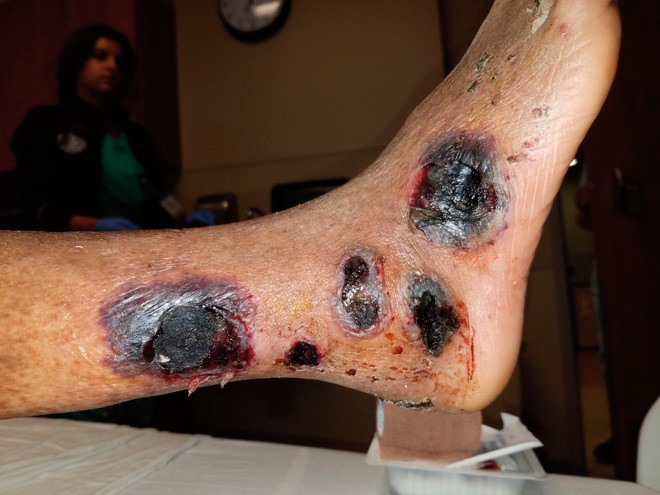
The patient presented with multiple bilateral lower-extremity ulcerations that appeared black and necrotic (
Fig. 1). The ulcerations were dry, with peri-ulcerative erythema. Several of the wounds were draining serous exudate. Her pulses were palpable bilaterally, and neurologic examination was intact to light touch. Probing the ulcerations was deferred because the patient endorsed pain out of proportion with light touch.
Figure 1
.
Right lateral ankle. Although the patient had ulcerations on the medial and lateral bilateral ankles, the right lateral ankle had the most lesions.
Figure 1
.
Right lateral ankle. Although the patient had ulcerations on the medial and lateral bilateral ankles, the right lateral ankle had the most lesions.
Ancillary Studies
Imaging
The chronicity of the ulcerations gave warrant for radiographs to evaluate for osteomyelitis, which were all negative. A previous venous duplex study from 7 months earlier indicated normal bilateral venous patency and compressibility. Normal flow was present. In addition to imaging, laboratory studies and a punch biopsy were performed.
Laboratory Studies
Basic laboratory values, such as complete blood cell count and basic metabolic panel, were obtained, and the results are presented in
Tables 1 and
2. The patient was neutropenic, anemic, and thrombocytopenic. Her chemistry panel was overall unremarkable aside from elevated blood urea nitrogen and creatinine levels.
Table 1
.
Patient's Complete Blood Cell Count on Initial Presentation in the Emergency Department.
Table 1
.
Patient's Complete Blood Cell Count on Initial Presentation in the Emergency Department.
Table 2
.
Patient Basic Metabolic Panel on Initial Presentation in the Emergency Department.
Table 2
.
Patient Basic Metabolic Panel on Initial Presentation in the Emergency Department.
Biopsy
The center of the largest ulceration was biopsied with a 4-mm punch after a local field block was performed (
Figs. 2–
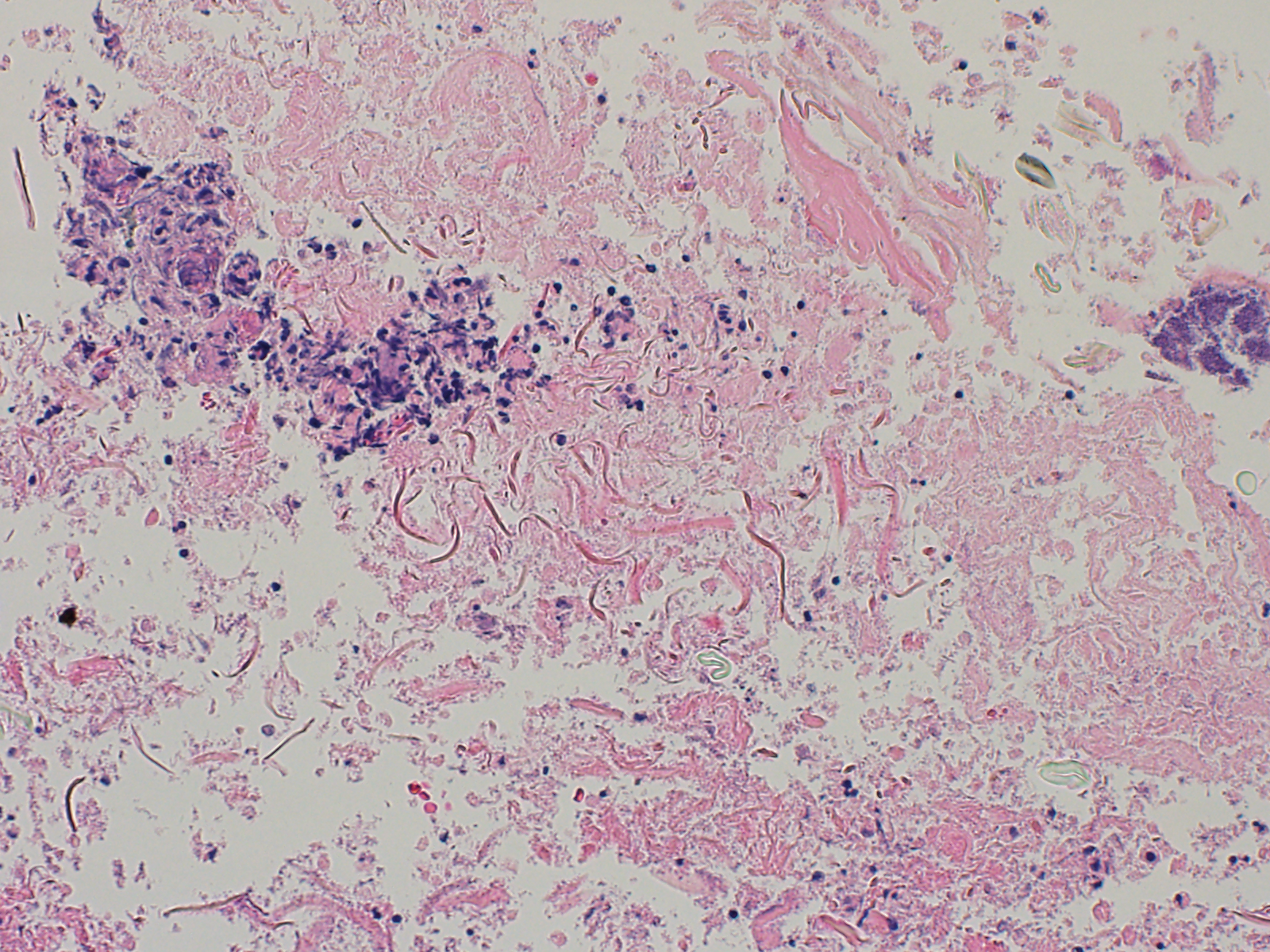
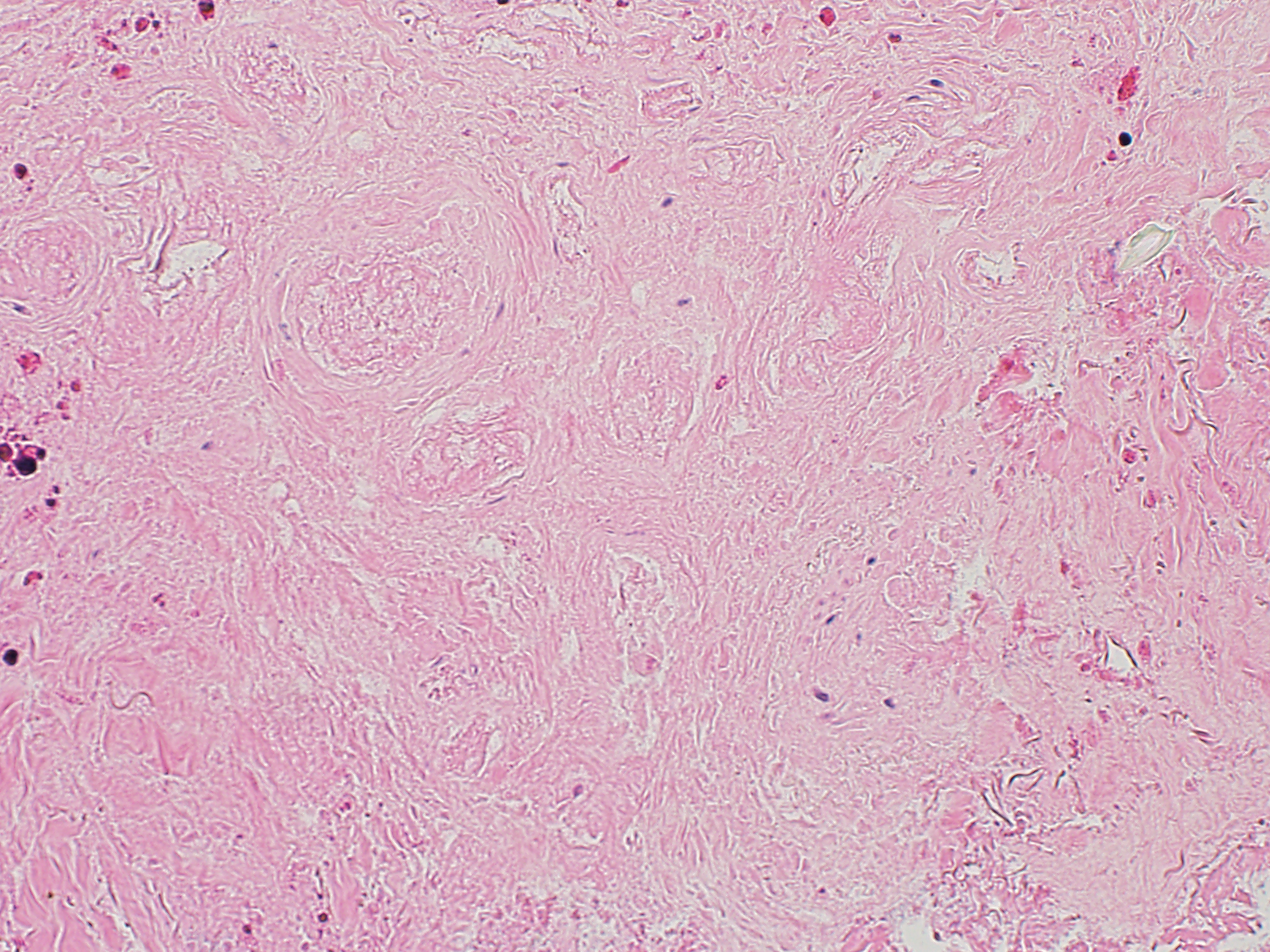
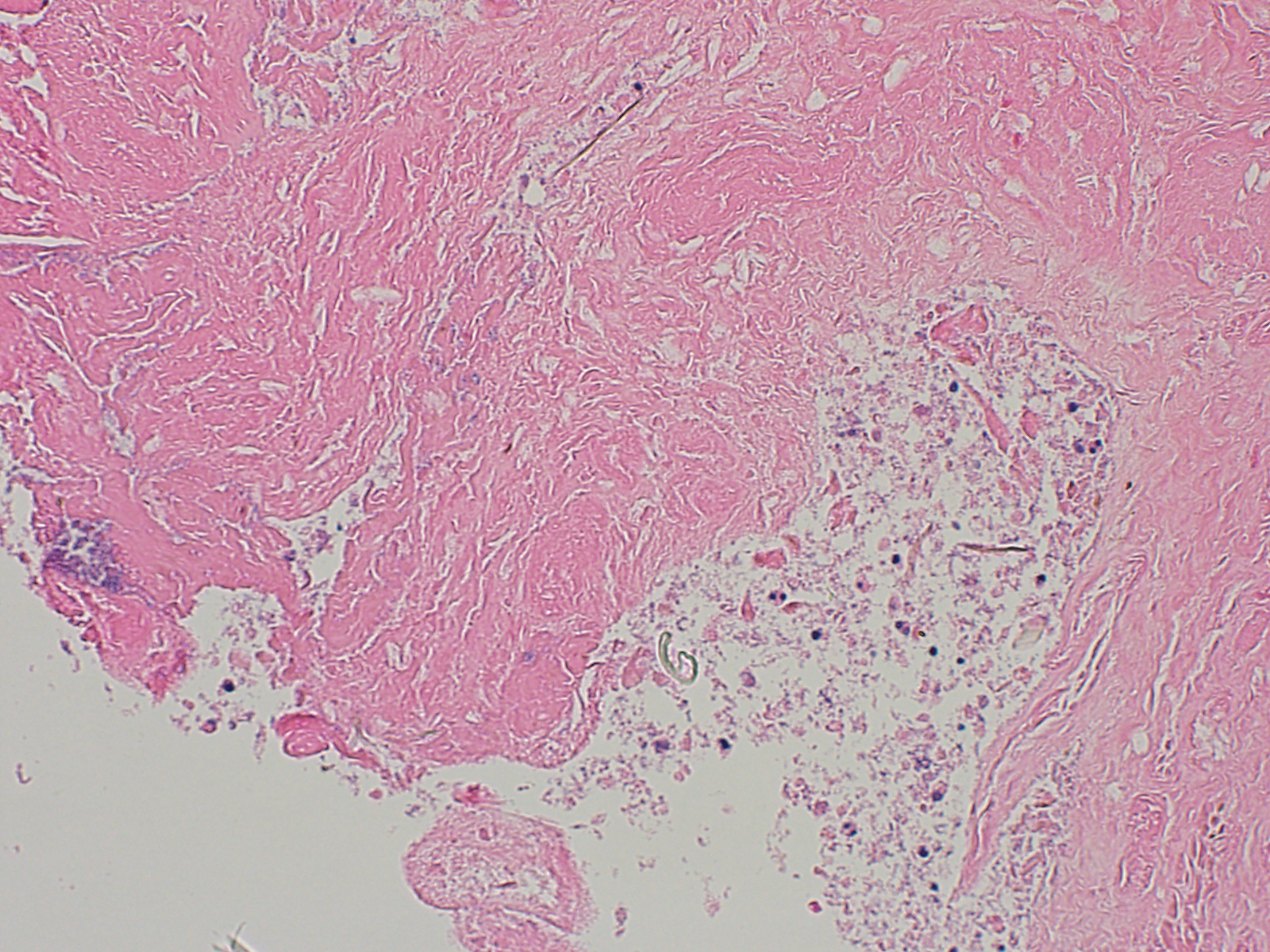
4). Pathology results of the left medial malleolus wound exhibited benign fibrous tissue with inflammatory cells, necrosis and abundant bacterial cocci, and fragments of keratin. No fungal organisms or acid-fast organisms were noted. There was no dysplasia or malignancy present.
Figure 2
.
Biopsy specimen from the left medial malleolar wound showing necrotic fibrous tissue/dermal tissue, foci of inflammation, bacteria, and fragments of keratin from the epidermis. (x400 Periodic-Schiff acid stain and AFB stain)
Figure 2
.
Biopsy specimen from the left medial malleolar wound showing necrotic fibrous tissue/dermal tissue, foci of inflammation, bacteria, and fragments of keratin from the epidermis. (x400 Periodic-Schiff acid stain and AFB stain)
Figure 3
.
Another cross section from the biopsy specimen revealing widespread epidermal and dermal necrosis. (x400 Periodic-Schiff acid stain and AFB stain)
Figure 3
.
Another cross section from the biopsy specimen revealing widespread epidermal and dermal necrosis. (x400 Periodic-Schiff acid stain and AFB stain)
Figure 4
.
Another cross section from the biopsy specimen indicating necrotic fibrinous and dermal tissue with superimposed purulence. (x400 Periodic-Schiff acid stain and AFB stain)
Figure 4
.
Another cross section from the biopsy specimen indicating necrotic fibrinous and dermal tissue with superimposed purulence. (x400 Periodic-Schiff acid stain and AFB stain)
Cultures
Once the patient was comfortably anesthetized, the wound was irrigated with copious amounts of sterile normal saline. A culture swab was performed within a portion of the wound that appeared deeper beyond the dry eschar, also in the left medial malleolar wound. Only a few to moderate mixed skin and fecal flora were found in the microbiology report from the culture swab. Specified organisms were not named, but the Gram's stain finalized rare to occasional polymorphonuclear cells, occasional mononuclear cells, few gram-positive cocci in pairs, and few gram-negative rods.
Treatment and Follow-up
The treatment for levamisole-induced vasculitis ulcerations is cessation of cocaine use and local wound care. After laboratory tests, radiographs, and punch biopsy indicated an absence of acute infection, the patient was started on a local wound care regimen. The ulcers were dressed with provodone iodine, nonadhesive silicon foam dressing, gauze bandage, and cohesive bandage. The patient was admitted to the hospital service for management of her multiple comorbidities.
Dressing changes were performed every other day. Social work services were able to secure a skilled nursing facility for transfer. No antibiotics were prescribed on discharge. The patient was transferred to a skilled nursing facility for wound care and continued rehabilitation after a 3-day hospital stay. The patient's wounds showed improvement while she was in the hospital with local wound care and restriction from cocaine use. Unfortunately, the patient was expelled from the skilled nursing facility for selling and distributing cocaine to the other residents. She was then discharged with home health nursing for continued wound care. Two months later the patient returned to the ED with the same complaint of painful ulcerations. She had not discontinued use of cocaine but her ulcerations appeared mildly improved.
Discussion
The prevalence of levamisole-infused cocaine has increased in the past few years. This article identifies the appearance and clinical presentation of these skin lesions that are unique and pathognomonic to this condition. This case report identifies the importance of the clinical presentation when imaging studies, histopathologic analysis, and laboratory presentations show negative results. The present patient presented to the ED with multiple bilateral lower-extremity ulcerations that appeared black and necrotic, with extreme pain to light touch. However, her radiographs, laboratory results, and biopsy samples showed no signs of an infection. The patient did not have a history of neuropathy or diabetes, which is often the case with lower-extremity wounds. This study presents a unique report that can help physicians identify the clinical presentation of wounds secondary to the use of levamisole-induced cocaine.
The strength of this report is also highlighted by the improvement of the patient's wounds after receiving local wound care. This case report reveals that if local wound care is performed, as with the patient's first admission, symptomatic improvement may be observed. The patient showed mild improvement in her symptoms with local wound care after her first admission, when she was readmitted 2 months afterward. Unfortunately, her continued use of cocaine adulterated with levamisole persists as the primary barrier to complete resolution of her condition. Although studies have reported cases of levamisole-induced lesions, none have followed the patients over the course of multiple admissions. This case report shows that the patient's presentation, dermatologic assessment, basic laboratory values, and patient endorsement of long-term, routine abuse of freebase cocaine may be sufficient in the accurate diagnosis of this condition. No previous modalities have been identified to diagnose and treat the lesions.
The primary method of prevention and treatment for levamisole-induced vasculitis is cessation of cocaine use, and the present patient refused to seek treatment for her addiction. It is crucial to enroll patients in a therapy program and to refer them to social workers so that they can seek the necessary care to stop their addiction. This patient was noncompliant with her therapy. Local wound care performed concomitantly with cocaine cessation can provide patients with relief and prevent ulcerations from recurring. This case report may prove useful for clinicians working in large urban settings or at county hospitals, where drug abuse is more prevalent compared with, perhaps, smaller, rural facilities. More studies of compliant patients can help us further understand the timeline of recovery from levamisole-induced lower-extremity ulcerations.
Conclusions
It is important for clinicians to become familiar with levamisole-induced ulcerations due to the prevalence of cocaine abuse in the United States, and especially when adulterated with levamisole. Podiatric physicians are constantly exposed to a plethora of lower-extremity ulcerations, most of which may be diagnosed immediately from appearance alone. Levamisole-induced vasculitis ulcerations have a distinct and unique appearance. Exposure to the pathologic condition once or twice may be sufficient to leave a lasting impression on health-care providers. The presentation of necrotic ulcerations with concomitant endorsement of freebase cocaine abuse should elicit a very high suspicion that levamisole-induced vasculitis is the accurate diagnosis. Immediate recognition may prove to be advantageous for patient treatment, especially in urban settings, where the practice of regular cocaine abuse is more common.