Onychomycosis is a fungal infection of the nail that accounts for up to 50% of all nail disorders.[
1] Dermatophytes, particularly
Trichophyton rubrum and
Trichophyton mentagrophytes, are the main causative organisms of onychomycosis.[
2] Infections caused by dermatophytes have been estimated to account for up to 90% of the total number of toenail infections reported by patients.[
2,
3] Toenails are more likely than fingernails to develop an infection because they are frequently confined to dark, moist environments.[
4] Furthermore, toenails have a lower blood supply and slower growth rates compared with fingernails, which also increase the susceptibility to infection.[
4] In healthy adult nails, the growth rate is related to the length of the digit to which the nail is attached, such that fingernails grow faster than toenails and the great toenail grows faster than the other toenails.[
5] However, for infected nails, the growth rate is slowed in relation to the area of the nail affected by onychomycosis. Once the infection has been cleared, the normal growth rate of the nail may resume.[
6]
Onychomycosis incidence rates are estimated to be increasing steadily around the world.[
7] In North America, an incidence rate of 13.8% was reported in 2000,[
8] a notable increase compared with a rate of 2.18% reported in 1979.[
9] In addition, onychomycosis is often regarded as an age-related infection, with several studies showing onychomycosis increasing with age.[
10,
11] In fact, it is believed that up to 20% of people aged 40 to 60 years may be affected by onychomycosis; this number rises to approximately 40% in people 65 years and older.[
7,
10] As such, as the average life expectancy increases, the number of patients who develop onychomycosis is also expected to increase, highlighting the need for effective therapies.[
7,
10,
11]
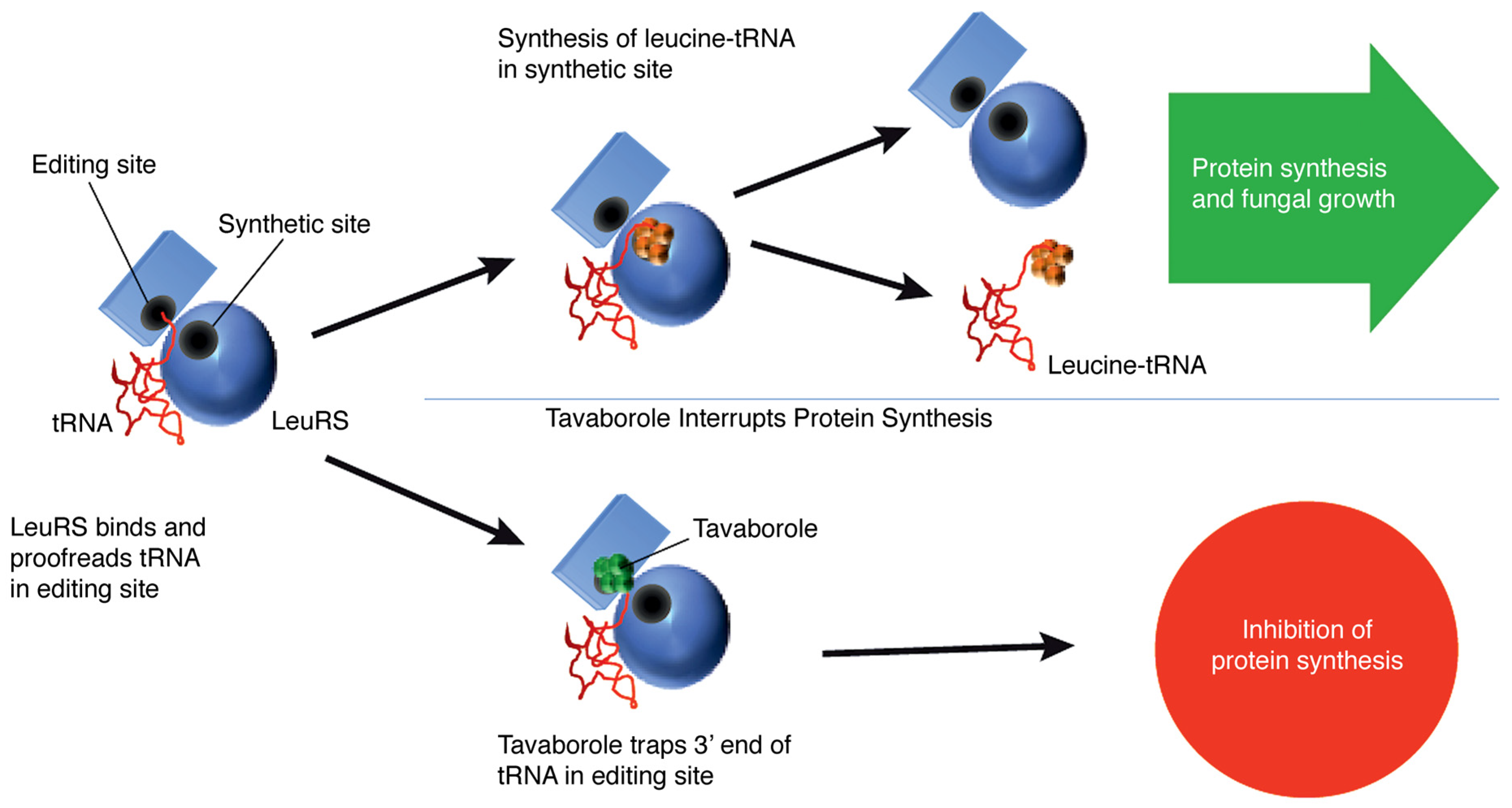
Until recently, topical therapies approved in the United States to treat onychomycosis were limited. In July 2014, tavaborole, a new topical agent, was approved by the US Food and Drug Administration (FDA) for the treatment of onychomycosis. Tavaborole is a fungal protein synthesis inhibitor that uses a boron-containing oxaborole moiety that binds to and inhibits the editing site of fungal leucyl-tRNA synthetase (LeuRS), an enzyme essential for tRNA proofreading and protein synthesis.[
12] The results of the tavaborole clinical program confirmed that tavaborole 5% solution is a safe and effective treatment for toenail onychomycosis owing to its favorable nail penetration and broad-spectrum antifungal properties.
This article describes tavaborole’s unique physicochemical properties, which allow it to effectively penetrate and treat infected nails by way of its novel inhibition of fungal protein synthesis.
The topical treatment of onychomycosis can be challenging because of the difficulty associated with developing therapeutic agents that are able to penetrate the dense nail plate. Tavaborole 5% topical solution was studied in two multicenter, double-blind, randomized, vehicle-controlled trials in individuals with toenail onychomycosis due to
T rubrum or
T mentagrophytes. Adults with 20% to 60% clinical involvement of the target great toenail applied tavaborole 5% solution once daily for 48 weeks. Toenail thickness was less than or equal to 3 mm, without dermatophytoma or lunula involvement.[
12] Tavaborole 5% topical solution is applied to the entire toenail surface and under the tip of each affected toenail, whereby it subsequently penetrates to the nail bed, the site of infection.[
12] Tavaborole’s novel boron-based mechanism of action represents a new class of antifungal agents that is distinct from any commercially available oral or topical agent.[
13]
Boron-Based Therapies
Tavaborole is the first boron-based treatment to receive FDA approval for the treatment of onychomycosis. It is the presence of boron that enables tavaborole to effectively inhibit fungal protein synthesis. Boron is structurally unique in that it is able to adopt two distinct chemical configurations, depending on the pH of its environment.[
14,
15] Recently, pharmaceutical companies have exploited the structural properties of the trivalent metal boron for the development of new therapeutic agents.[
15] Unlike a true metal though, boron has a strong affinity for electrons.[
16] It is able to form covalent bonds that help it bind to and trap the functional groups of biological molecules, such as enzymes.[
14,
17]
In the past, boron-containing molecules had a negative association owing to the fact that boron is commonly found in pesticides in the form of boric acid; in tavaborole, boron is integrated in a safe manner because it does not exist in acid form.[
14,
15] The use of boron in drug molecules has markedly increased in recent years due to various breakthroughs in synthetic chemistry.[
14,
15] However, mixed results have been observed for boron-containing molecules in clinical trials, possibly because of the indication being sought. Bortezomib, the first clinically tested boron-based drug, was approved for the treatment of patients with multiple myeloma after successful phase III clinical trials.[
16] Conversely, phase II investigations of the boron-based drug GSK2251052 for urinary tract infections was terminated due to the emergence of drug resistance in patients.[
18] Yet, positive phase III results were reported at the end of 2016 for crisaborole, a chemical analogue of tavaborole, for the treatment of atopic dermatitis.
Mechanism of Action of Tavaborole
Tavaborole belongs to the benzoxaborole class of boron-based molecules. It is the first of a novel class of inhibitors that bind to the editing domain of aminoacyl-tRNA synthetases.[
3] Leucyl-tRNA synthe-tase is a distinct aminoacyl-tRNA synthetases enzyme responsible for the attachment of leucine to leucine-specific tRNA (tRNA
Leu). As a LeuRS inhibitor, tavaborole, by way of its unique oxaborole chemistry, complexes with tRNA
Leu and binds to the LeuRS editing site (
Figure 1) to prevent catalytic turnover of leucine and subsequent downstream protein synthesis.[
19] The requirement and specificity of boron in tavaborole was confirmed using five different analogues, two of which were analogues that directly substituted carbon for boron. Tavaborole showed approximately 50-fold greater activity than the carbon substitution analogues (minimum inhibitory concentration [MIC] values of 2.1 μM versus > 100 μM), highlighting that boron is critical and cannot be replaced with carbon while still retaining high specificity and antifungal activity. Another feature that enhances the efficacy of tavaborole as an antifungal agent is its ability to preferentially target fungal LeuRS. As a highly specific inhibitor,[
19] tavaborole has approximately 1,000-fold greater selectivity for fungal LeuRS compared with human LeuRS.[
3,
13]
Efficacy Studies for Tavaborole
The antifungal activity and ability of tavaborole to penetrate nail plates was investigated in a range of in vitro and ex vivo studies.[
20,
21,
22] Two in vitro studies were performed to assess the ability of tavaborole compared with the ability of ciclopirox to penetrate nails.[
20] The first study involved applying tavaborole 10.5% or ciclopirox 8% to the nail surface for 14 days. Analysis of the ventral/intermediate layer of the nail revealed that the mean concentration of tavaborole was significantly greater than that of ciclopirox (0.49% to 1.31% versus –0.05% to 0.25%;
P = .003) after 14 days of dosing. The second study used vertical diffusion cells to assess the mean cumulative nail penetration of tavaborole 5% versus ciclopirox 8% nail lacquer. Tavaborole was detected early in the study above the limit of quantitation of 20 ng/mL, starting on day 2 with a mean ± SD cumulative penetration of 0.28 ± 0.74 μg/cm
2. By day 15, the mean ± SD cumulative penetration increased to 524.7 ± 288.6 μg/cm
2 and was 40-fold greater than the concentration of ciclopirox (13.0 ± 4.25 μg/cm
2;
P < .004). Tavaborole’s efficacy and ability to penetrate nails was also shown to be vehicle independent in another in vitro study that examined four different vehicle formulations: 1) 70% ethanol, 20% poly (vinyl methyl ether alt maleic acid monobutyl ester) (wt/wt); 2) 56% ethanol, 14% water, 15% poly (2-hydroxyethyl methacrylate), 5% dibutyl sebacate (wt/wt); 3) 55% ethanol, 15% ethyl acetate, 15% poly (vinyl acetate), 5% dibutyl sebacate (wt/wt); and 4) 20% propylene glycol, 70% ethanol (wt/wt), the commercialized product vehicle with the preservative edetate calcium disodium.[
21] Similar concentrations of tavaborole were found in the lower ventral/intermediate nail layer for all four vehicles.
Nail permeation studies were performed in vitro and ex vivo. An in vitro zone-of-inhibition (ZOI) study was performed using TurChub cells, a proprietary model from MedPharm (Durham, North Carolina) that consists of excised nails suspended and sealed above a fungal culture.[
20] The ZOI studies assess the ability of a drug to penetrate the nail and inhibit the growth of the seeded fungus (hence, ZOI). In this study, tavaborole 10% was shown to be superior to commercial ciclopirox and amorolfine lacquers. Tavaborole had a ZOI ranging from 32.86% to 100% (complete eradication), whereas no ZOI was observed for either ciclopirox or amorolfine. Furthermore, in ex vivo nail permeation studies, tavaborole was found to pass through multiple layers of nail polish, independent of the number of coats (using over-the-counter nail polish) and polish type (over-the-counter polish versus salon typical polish).[
22] Studies using nail polish are important because many patients use nail polish for aesthetic purposes to cover up the appearance of infected nails. Overall, the combined results from the in vitro and ex vivo investigations demonstrate tavaborole’s ability to penetrate the nail plate and reach concentrations (above MIC) that provide antifungal activity.
Clinical Trials for Tavaborole
Tavaborole has been rigorously examined across a wide range of studies. The clinical program for tavaborole enrolled more than 1,500 patients with onychomycosis. In addition, the early phase I/II clinical program explored tavaborole’s unique antifungal properties.
In a phase I/II clinical trial, 15 adult patients with moderate-to-severe onychomycosis on all ten toenails were treated with tavaborole 7.5% (wt/vol ethanol/propylene glycol 4:1) for 28 days.[
23] The results indicated that tavaborole effectively penetrated the nail plate and that therapeutic levels of tavaborole persisted for at least 3 months after the last dose, with an average concentration 161 times higher than the MIC required to inhibit the visible growth of
T rubrum and 20 times higher than the minimum fungicidal concentration at which the number of colony-forming units was zero.[
24]
The efficacy of tavaborole was assessed in three separate phase II dose-ranging studies; 1.0%, 2.5%, 5.0%, and 7.5% solutions of tavaborole were tested on 336 patients.[
25] Tavaborole demonstrated efficacy at all of the doses, but based on the combined safety and efficacy data, tavaborole 5% was deemed to be the optimal concentration for further investigation.[
25]
Subsequently, two identical phase III clinical trials were performed to assess the efficacy and safety of tavaborole 5% compared with vehicle.[
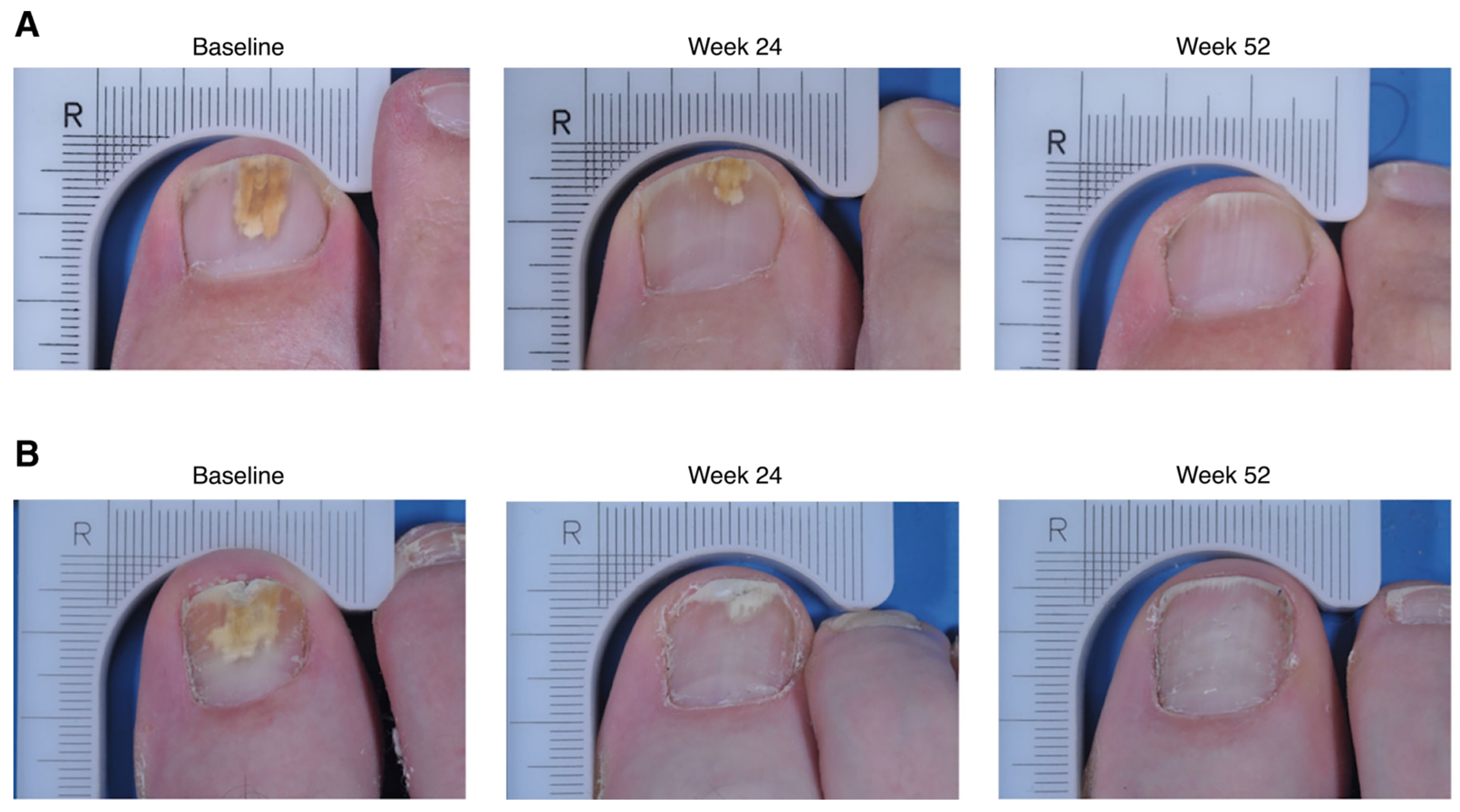
12] The primary end point was complete cure of the target great toenail, which was defined as a completely clear nail (no clinical evidence of onychomycosis, as evidenced by a normal toenail plate, no onycholysis, and no subungual hyperkeratosis) and negative mycologic findings at week 52. Secondary end points included complete or almost complete cure (defined as ≤10% involvement of the affected target great toenail area and negative mycologic findings), negative mycologic findings (defined as negative potassium hydroxide wet mounts and negative fungal culture), and a completely or almost completely clear nail. At 52 weeks, 26% to 28% of patients achieved a completely or almost completely clear nail, 31% to 36% achieved negative mycologic results, 7% to 9% achieved a complete cure, and 15% to 18% achieved a complete or almost complete cure; 86% of patients had a negative fungal culture at 52 weeks (
Figure 2). Altogether, tavaborole 5% solution was shown to be more effective than vehicle for all of the end points evaluated, with a low incidence of treatmentrelated application site reactions.[
12]
T rubrum and T mentagrophytes Do Not Demonstrate Resistance to Tavaborole
Drug resistance is a concern for onychomycosis therapies because of the lengthy treatment regimens[
11,
26] and associated slow regrowth rates of the toenails (1.62 mm/mo for toenails versus 3.47 mm/mo for fingernails in healthy individuals).[
5] Depending on the percentage of nail involvement, patient age, and comorbidities, it can take approximately 6 months to replace a fingernail, and approximately 12 to 18 months to replace a healthy toenail.[
11] In this regard, MIC values are often used to assess the in vitro efficacy of therapeutic agents and their susceptibility to induce drug resistance. The MIC of tavaborole was assessed in an in vitro study against 19 strains of fungi, including
T mentagrophytes and
T rubrum.[
20] Tavaborole exhibited robust antifungal activity against several dermatophytes and nondermatophytes, with MIC values ranging from 0.25 to 2 μg/mL for all of the fungi tested. Furthermore, tavaborole demonstrated fungicidal activity against
T mentagrophytes and
T rubrum, with minimum fungicidal concentration values of 16 and 8 μg/mL observed for the two species, respectively.[
20] Importantly, in phase III clinical studies, fungal isolates of
T mentagrophytes and
T rubrum obtained from individuals in the tavaborole treatment group did not show significantly elevated MIC values (ie, greater than threefold dilution) compared with their respective screening (baseline) MIC values, demonstrating that tavaborole did not induce fungal resistance.[
27]
Physicochemical Properties of Tavaborole that Allow for Effective Nail Penetration
Until recently, agents such as ciclopirox and efinaconazole were the only topical treatments available to treat onychomycosis.[
28,
29] One of the biggest challenges to topical treatment has been the poor penetration of drug molecules through the nail plate and into the nail bed. The nail plate consists of a highly compacted keratin structure with low porosity.[
30] Many patients with onychomycosis also experience thickened nails, or hyperkeratosis.[
3,
21] Therefore, topically applied treatments must penetrate through a dense keratinized nail plate to reach the nail bed, where the infection resides.[
21] Moreover, some antifungal agents actually bind to the keratin of the nail plate rather than passing through it and, therefore, have limited ability to reach the nail bed.[
28] Because of this, topical treatments such as ciclopirox lacquer require mechanical grinding (debridement) of the nail to reduce nail thickness, increase nail surface area, and reduce fungal burden for greater drug penetration and efficacy.
Physicochemical properties such as surface tension (ie, a liquid’s ability to spread on a surface), molecular weight (ie, the size of the drug molecule), and water solubility (ie, the ability of the drug to mix with water) are important factors to consider when developing new topical antifungal agents. Topical solutions with low surface tension allow for greater ease of spreading across the nail plate[
31] and distribution of the treatment after application.
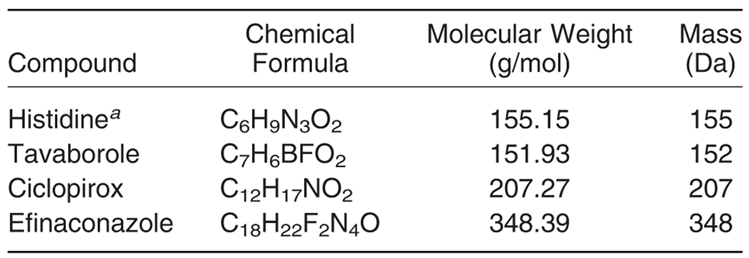
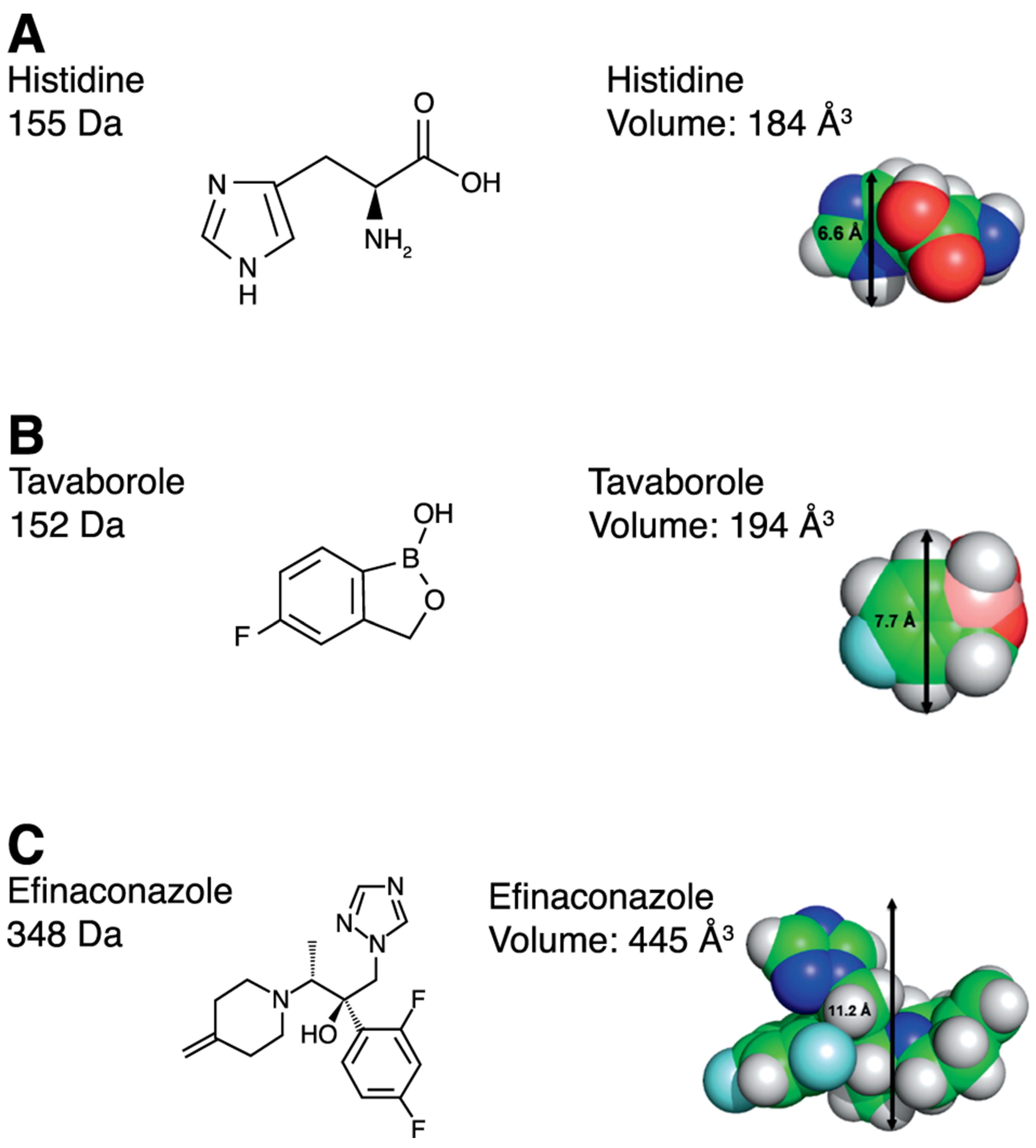
The molecular weight of a drug molecule also influences penetration through the nail plate (
Figure 3 and
Table 1). Molecules of low molecular weight have a greater propensity to traverse the small pores of the compact keratinized nail plate compared with larger molecular weight counterparts.[
21] However, note that for toenail onychomycosis, the relationship between a drug’s molecular weight and its clinical efficacy has not been established.
The nail plate also functions similar to a hydrophilic gel membrane. Molecules that are hydrophilic in nature, and hence water soluble, are able to mix (distribute) in the hydrated nail plate to accompany greater drug concentration and penetration to the inner nail bed.[
32] Conversely, because the lipid content of nails (range, 0.1%–1%)[
33,
34] is much lower than it is in skin (10%),[
35] the nail plate is incapable of accommodating therapeutic agents that have poor water solubility (ie, lipophilic compounds).[
32]
Tavaborole was specifically designed to overcome the nail barrier when applied topically owing to its favorable physicochemical properties. Tavaborole has a low surface tension vehicle (mean ± SD, 37.2 ± 5.0 dyne/cm), low molecular weight (151.93 Da) and volume (194 Å
3), and slight water solubility (1.35 mg/mL).[
36,
37] Altogether, these properties support the favorable outcomes observed for tavaborole in both in vitro and clinical studies.
Conclusions
The treatment of onychomycosis represents a therapeutic challenge with several obstacles to overcome to both eradicate the fungal organisms and achieve a completely clear nail. The principal difficulty associated with effective treatment is the inability of antifungal agents to penetrate the nail and achieve a sustained therapeutic dose at the site of infection, the nail bed. Before the FDA’s approval of tavaborole in July 2014, topical treatment options for patients with onychomycosis were limited. Despite receiving FDA approval, agents such as ciclopirox had low-to-moderate efficacy, and use was tedious, requiring both monthly debridement of the nail and weekly removal of the lacquer with solvent-based agents.
The FDA approval of efinaconazole and tavaborole in mid-2014 represented a significant step forward in the treatment of onychomycosis. Tavaborole, specifically, represented a novel, first-in-class agent with a unique mechanism of action that enabled it to successfully target fungal protein synthesis and inhibit fungal growth, and it is less likely to encounter drug resistance. By matching the physicochemical properties of the antifungal agent at the design stage with the physicochemical properties of the nail plate, tavaborole was able to demonstrate effective nail penetration and efficacy in several clinical studies.
The results of tavaborole clinical trials promise to raise the bar for future onychomycosis therapies. Due to the ever-increasing threat of drug resistance, it is highly desirable to have a distinct class of agents available to treat onychomycosis. The ability to access a larger number of effective treatments is, therefore, highly beneficial to patients and clinicians and is essential for treating the chronic infection that onychomycosis epitomizes. In this respect, tavaborole may serve a role in treating more complex or difficult-to-treat cases of onychomycosis (eg, very thick nails, drug-resistant fungal nails, dermatophytomas), which previously may not have responded to conventional treatments, or in patients unable to take oral medications owing to safety concerns. Tavaborole is the first in a new class of topical antifungal treatments that has demonstrated superior penetration through the nail plate and prolonged duration of efficacy against the pathogenic organisms that cause onychomycosis.