Injury of the extensor hallucis longus (EHL) tendon is uncommon. In one cohort study [
1], the incidence of EHL tendon injury for the general population was 2%, whereas taekwondo athletes had an incidence level of approximately 20%. Closed rupture of the EHL tendon is rare, with most cases caused by either direct penetrating trauma or predisposing factors such as corticosteroid injection and iatrogenic trauma incidences [
2,
3,
4,
5,
6,
7,
8,
9]. Almost all previous reports have been concerned with the rupture of EHL tendon rather than EHL muscle.
We report the case of a taekwondo athlete with EHL muscle rupture secondary to repetitive overuse without any underlying systemic or local predisposing factors or direct trauma. Furthermore, we present the surgical method used to assist in the treatment and recovery of the patient and its actual outcome. To our knowledge, no similar case has been previously reported.
Case Report
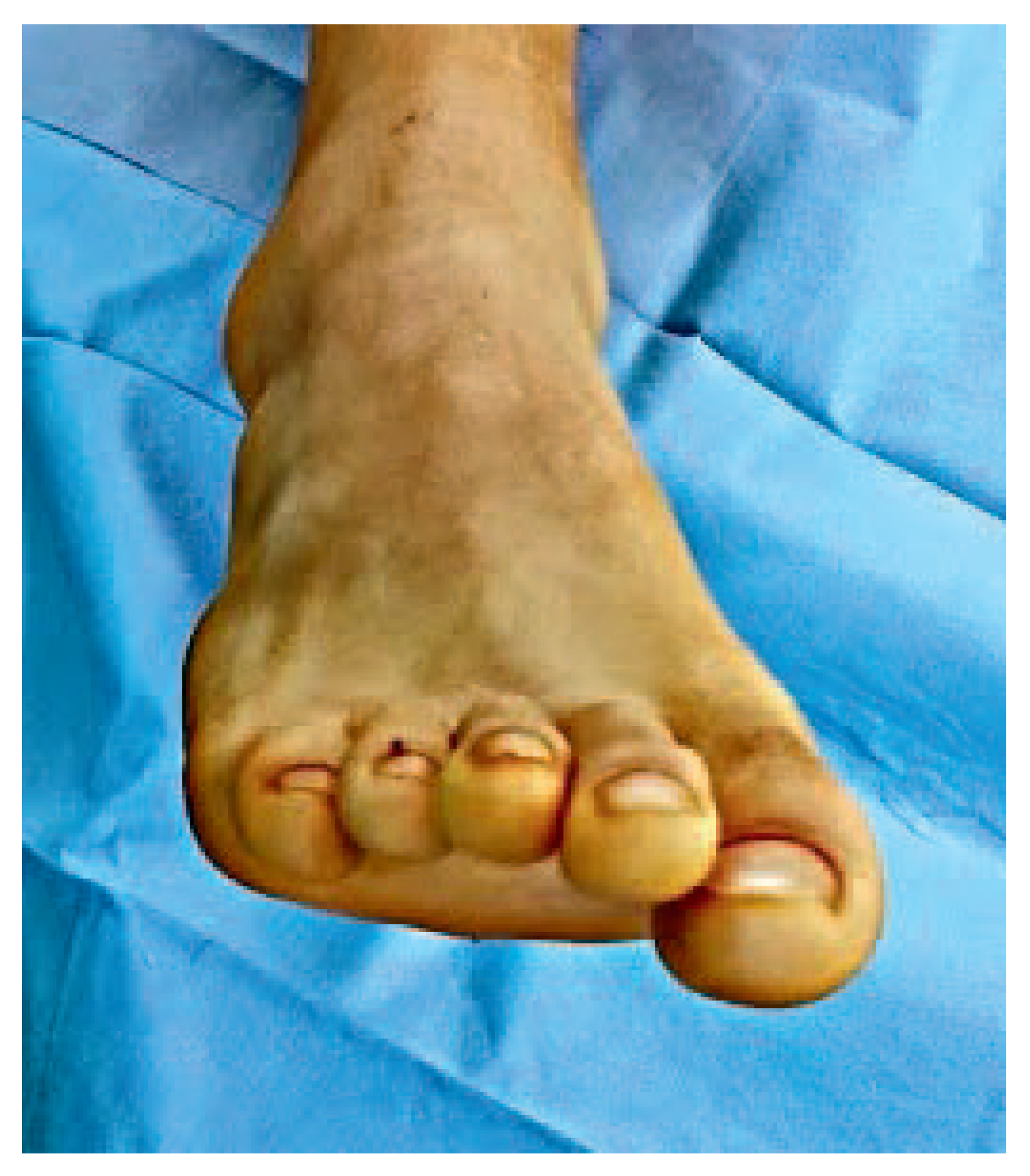
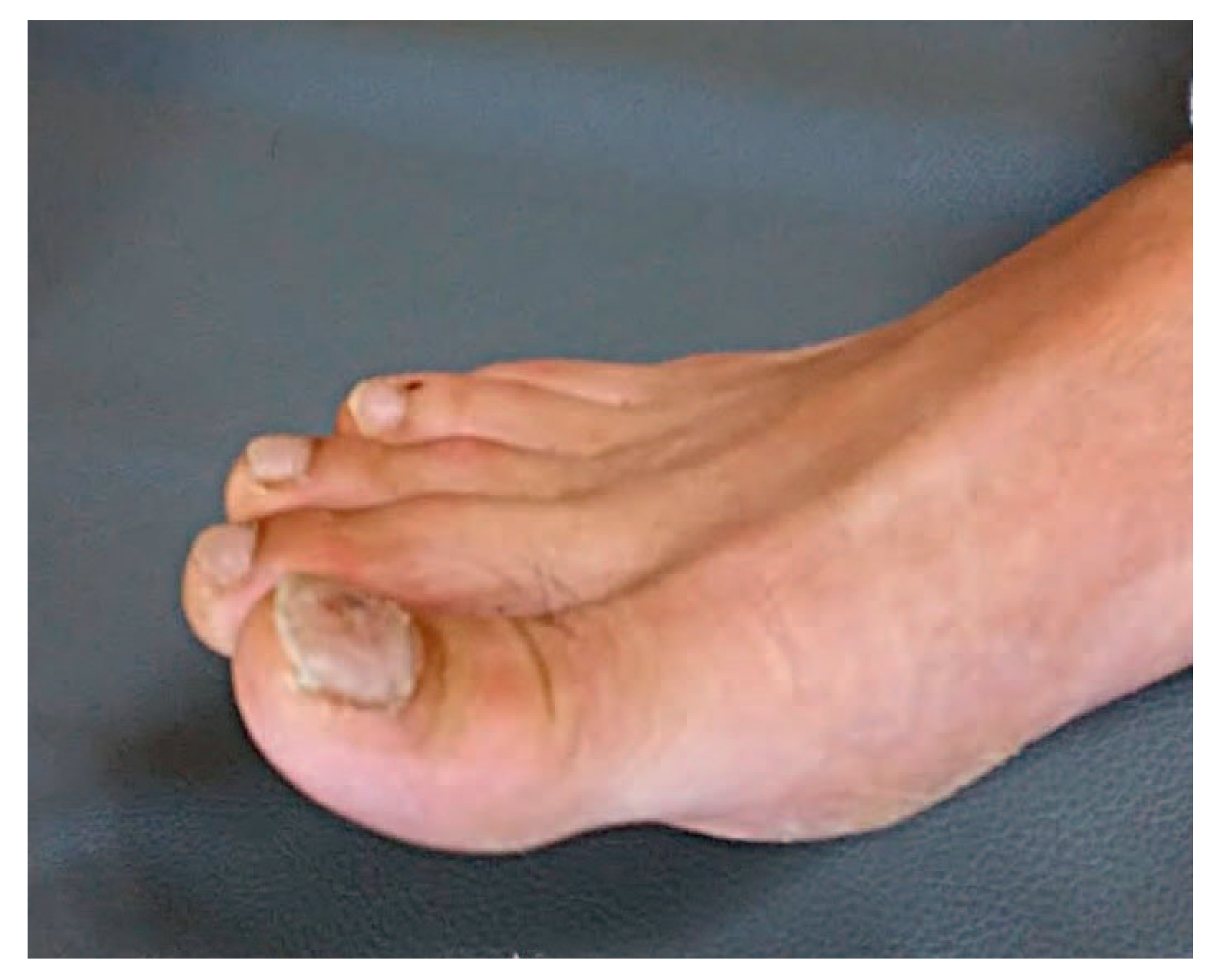
A 20-year-old taekwondo athlete presented with pain in his anterior right lower leg. His right big toe was apparently plantarflexed, with loss of active dorsiflexion (
Fig. 1). During the past 3 months, he had repetitively performed ‘‘Gyorugi’’ exercise with his right lower leg. In taekwondo, Gyorugi is an attacking-orientated exercise using the fist and the feet to hit and stomp, respectively. Furthermore, the stepping motions normally involve barefoot maneuvering. Since then, he had experienced severe pain at the anterior area of his right lower leg, despite the use of over-the-counter nonsteroidal anti-inflammatory drugs. Five days before contact, plantarflexion of the big toe with loss of active dorsiflexion suddenly occurred after his exercise training.
He had no history of medical problems or ankle or foot injuries. More importantly, he had no history of direct trauma to his right lower leg. No relevant family history of diseases such as diabetes mellitus or rheumatoid arthritis was reported. He could stand in a weightbearing position even with leg pain and managed to visit the orthopedic outpatient department.
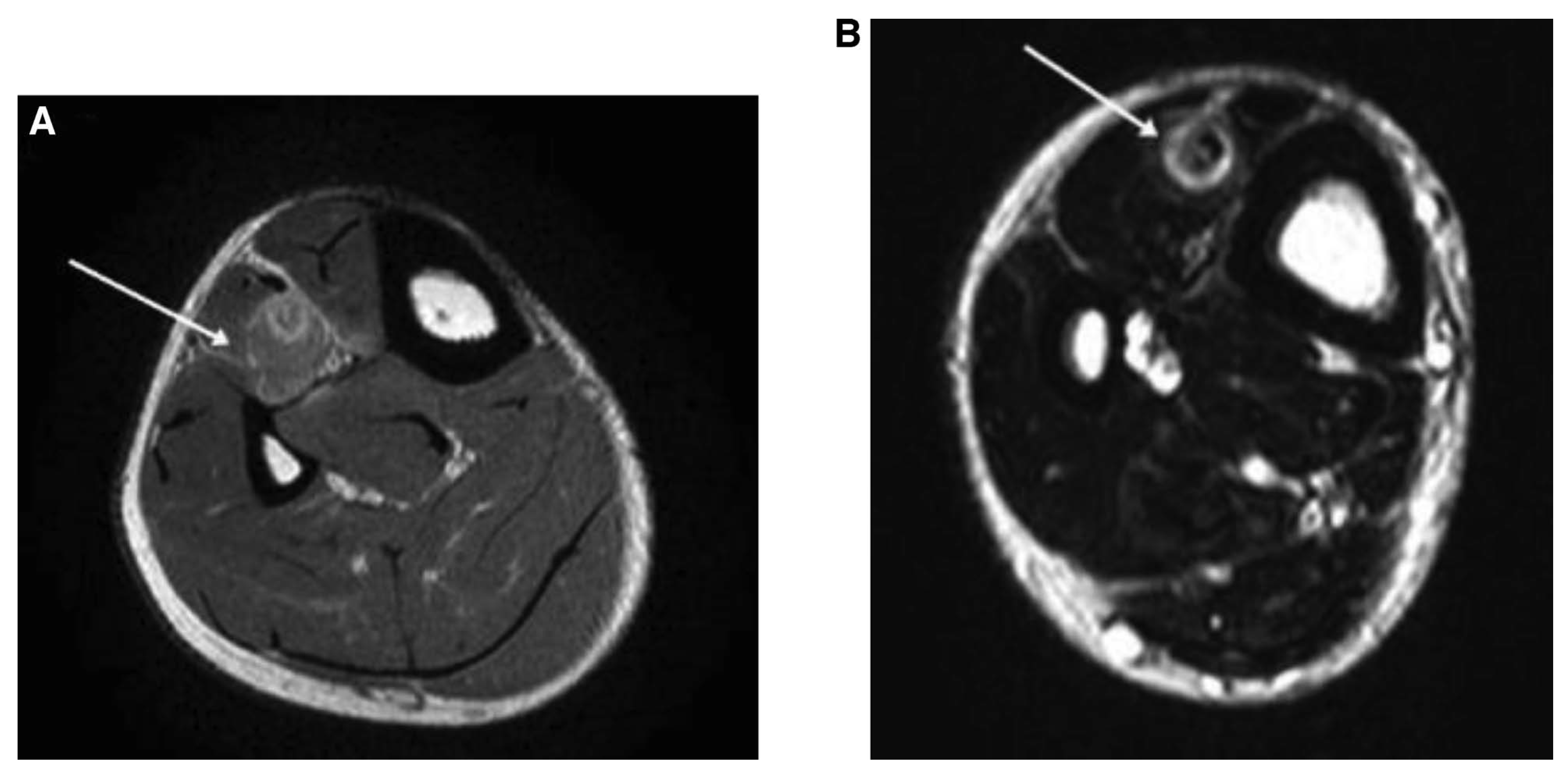
On arrival at the orthopedic outpatient department, a series of assessment and diagnostic tests was performed. Physical examination of the path of the EHL tendon from the right big toe to the musculotendinous junction revealed no tenderness. In addition, no neurologic or vascular injury was found in his right leg. Ultrasound examination was then performed to exclude a possible rupture of the EHL tendon of the entire right leg. The result did not show any definite finding suggesting rupture of the tendon. Radiographs also showed no abnormal finding, whereas magnetic resonance imaging demonstrated exertional EHL muscle injury caused by chronic overuse (
Fig. 2) [
10].
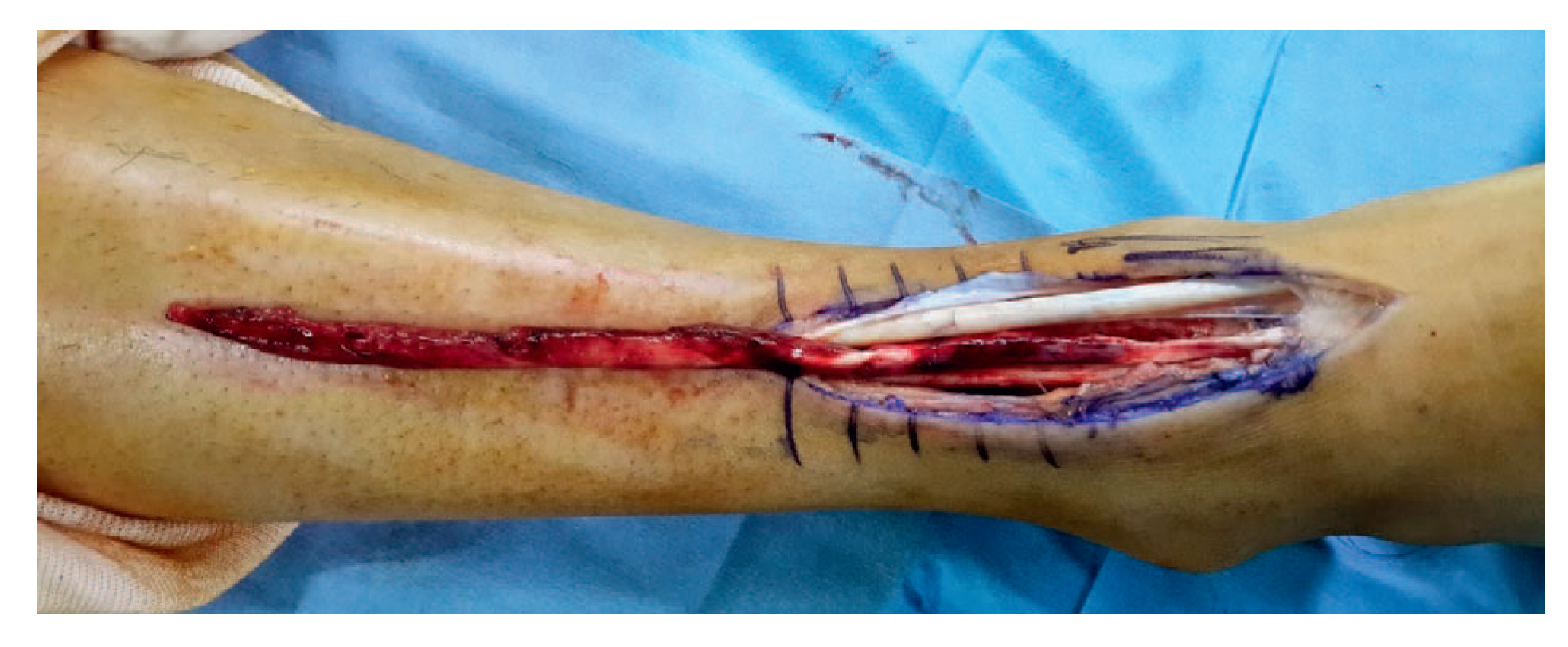
As a management strategy, the patient underwent surgery. Intraoperatively, a longitudinal skin incision from the ankle joint to the musculotendinous junction of the EHL was made, showing that the EHL tendon was intact but loose. When this loose EHL tendon was pulled, the ruptured and avulsed EHL muscle bellied away from its site of attachment to the fibula (
Fig. 3). On observation, the EHL muscle was not bleeding and did not contract on pinching with a pair of forceps and stimulation with an electrocautery device. No other injury in the anterior compartment of the right leg was found.
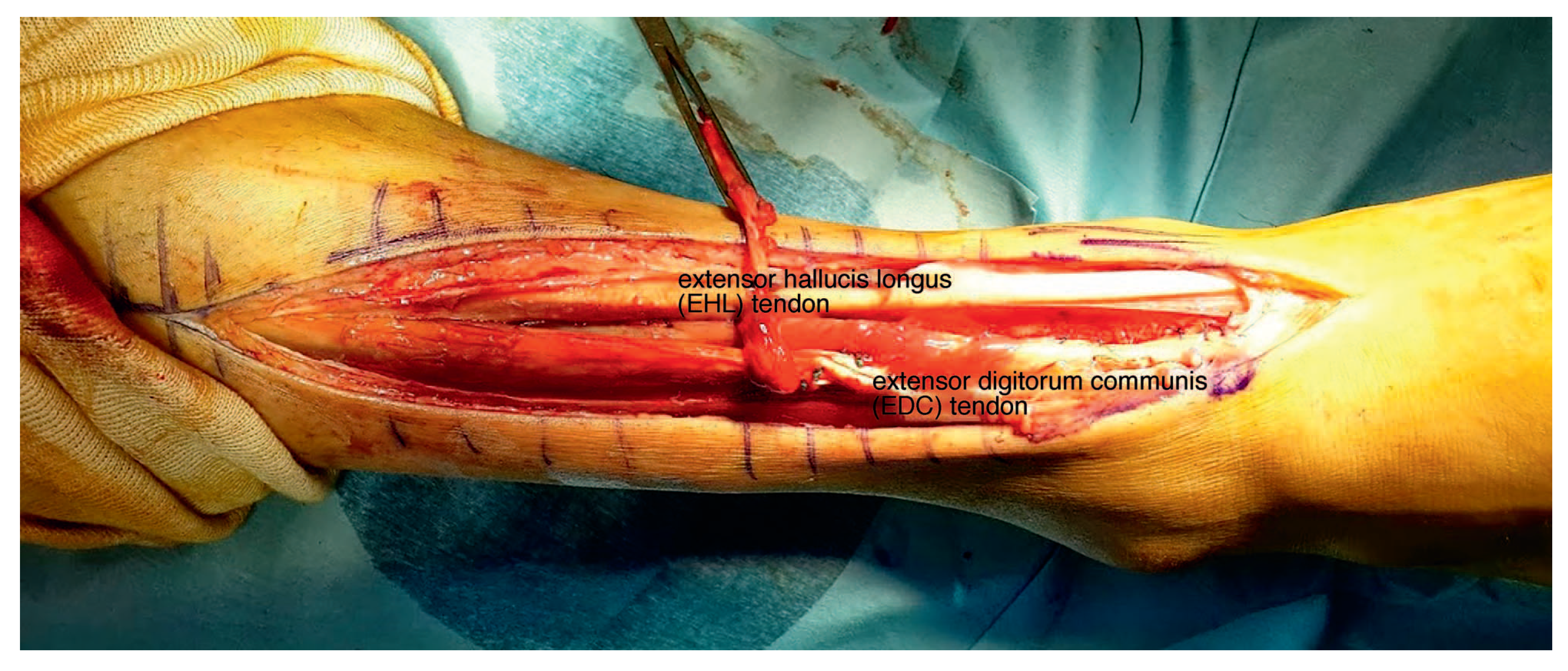
The damage to the muscle fiber was so extensive that the torn muscles could not be repaired by direct suture. The detached muscle was then excised proximal to the musculotendinous junction. The EHL tendon was looped through a longitudinal slit in the main extensor digitorum communis (EDC) tendon and was sutured there using the Pulvertaft technique (
Fig. 4) [
11]. Care was taken during the tenodesis to balance the tension in the distal parts of the EHL and EDC tendons to preserve their function. In addition, the foot was placed in a neutral position at the ankle during the tenodesis.
Postoperatively, a posterior slab was applied to support the foot and ankle while maintaining the toes in slight dorsiflexion. Six weeks after surgery, the back slab was removed and the hallux was noted to maintain a neutral position. Active flexion to 45° and extension to 30° were possible 3 months postoperatively. The patient went back to his athletic activity 4 months after surgery and was pain free. Six months after surgery, he could fully extend the interphalangeal joint of his big toe and could actively dorsiflex his first metatarsophalangeal joint to 60° (
Fig. 5). Compared with the ability of the other foot, the active extension and range of movement of the lesser toes in his right foot were the same, indicating that these were not affected. The patient was then fully functional again as an elite taekwondo athlete 15 months after surgery.
Discussion
Traumatic laceration of the EHL tendon is a fairly common injury, whereas closed traumatic rupture of the same tendon is rare. All of the previous cases reported the presence of predisposing factors such as corticosteroid injection [
7], talar neck osteophyte [
2], iatrogenic trauma after ankle arthroscopy [
9], and post-traumatic ischemic degeneration [
5] leading to a closed rupture of the EHL tendon. In all of these cases, repetitive microtrauma has been suggested as a cause.
In the present patient, repetitive overuse without any underlying systemic or local predisposing factors or direct trauma caused a rupture of the EHL muscle rather than the EHL tendon. Taekwondo, the national martial art of Korea, involves barefoot maneuvering. As a result, taekwondo athletes tend to have injuries involving the lower extremity and the foot [
12]. Of these, injuries involving an extensor to the toes (extensor digitorum longus and EHL) commonly occur.
1 In the history of the present patient, the pain in his lower leg had been present for 3 months. The edema noted on magnetic resonance imaging was solely in the EHL muscle, which occupies the anterior compartment. The EHL muscle was also enlarged, distending the compartment. These findings revealed abnormal changes in the EHL muscle, confirming the muscle damage [
10]. Intraoperatively, the detached EHL muscle, which was not bleeding, did not contract on pinching with a pair of forceps and stimulation with a Bovie. These intraoperative findings also confirmed that there was EHL muscle damage. Based on these findings, we suggest that repetitive movements or excessive exertions in athletes, without enough rest time, may lead to muscle damage, with the subsequent possibility of a tear.
Regarding EHL tendon rupture, various surgeries, such as end-to-end primary repair [
7], peroneus tertius tendon transfer [
5], and side-to-side tenodesis to the EDC tendon [
2], have been attempted to avoid functional deficits of the foot. In the present patient, tenodesis of the EHL tendon end-to-side of the EDC tendon was performed since the EHL tendon was intact and the EHL muscle belly was ruptured and nonviable. The purpose of our technique then was to replace the EDC muscle with the nonviable EHL muscle as an extensor for the big toe. Because this surgical technique prompted an outcome of full recovery to athletic activity, this technique would be a useful method in managing similar injuries in athletes.
Conclusions
Taekwondo athletes, with a high incidence of EHL injury, should be advised that repeated movement in striking can be a cause of EHL muscle damage or rupture. Furthermore, future studies with larger numbers of taekwondo athletes are required to support the present findings, which could aid in exploring ways to prevent EHL muscle damage during athletic training and performance.
Financial Disclosure
None reported.