Next Article in Journal
Clinical Utility of Ultrasound Measurements of Plantar Fascia Width and Cross-Sectional Area. A Novel Technique
Previous Article in Journal
Rupture of the Extensor Hallucis Longus Muscle Secondary to Repetitive Overuse in a Taekwondo Athlete. A Case Report
 
 
Journal of the American Podiatric Medical Association is published by MDPI from Volume 116 Issue 1 (2026). Previous articles were published by another publisher in Open Access under a CC-BY (or CC-BY-NC-ND) licence, and they are hosted by MDPI on mdpi.com as a courtesy and upon agreement with American Podiatric Medical Association.
Article

Isolated Fracture of the Medial Cuneiform. A Case Report

by
Nina S. Babu
1,*,
Gabriel V. Gambardella
2 and
Melinda A. Bowlby
3
1
Department of Podiatry, Kaiser Foundation Hospital, 3925 Old Redwood Hwy, Stein Campus, Mob4, Santa Rosa, CA 95403
2
Department of Podiatry, Yale, Bloomfield, CT
3
Department of Podiatry, Swedish Medical Center, Seattle, WA
*
Author to whom correspondence should be addressed.
J. Am. Podiatr. Med. Assoc. 2017, 107(5), 436-439; https://doi.org/10.7547/16-013
Published: 1 September 2017

Abstract

An isolated medial cuneiform fracture is a rarely encountered injury of the foot. We present a case of an isolated medial cuneiform fracture in a patient after sustaining a fall from a 15-foot height. Treatment consisted of primary arthrodesis of the first tarsometatarsal joint due to a high degree of comminution and intra-articular pain. When radiographs are inconclusive and the index of suspicion remains high for a lesser tarsus fracture, computed tomography is recommended. In patients with minimal displacement, conservative treatment is usually successful in achieving osseous fusion. When the fracture is displaced, intra-articular, or comminuted, surgical intervention, including open reduction with internal fixation and primary arthrodesis, should be considered. (J Am Podiatr Med Assoc 107(5): 436-439, 2017)

Isolated medial cuneiform fractures represent a rare injury to the foot [1,2,3,4]. Cuneiform fractures represent approximately 4.2% of all midfoot fractures [[5], with the medial cuneiform being the most commonly afflicted [[2]. Typically, cuneiform injuries are observed in conjunction with tarsometatarsal joint fracturedislocations and other injuries about the midfoot [1,2,3,4]. The most commonly reported mechanism of injury of isolated cuneiform fractures includes direct trauma [6,7,8], although the fracture has also been attributed to hyperplantarflexion, where compressive forces on the plantar cortex of the bone result in fracture.1
Because of the overlapping anatomy seen on plain radiography, it can be difficult to evaluate the midfoot for pathologic abnormalities, particularly if a fracture is nondisplaced and joints remain congruent [9,10]. A low suspicion coupled with the difficulty in making a radiographic diagnosis may make this injury underreported. Shah and Odgaard9 reported a case of isolated lateral cuneiform fracture where the diagnosis was made only after a third set of radiographs were taken due to unresolving symptoms 4 weeks after the initial injury.
We present a case of an isolated medial cuneiform fracture in a patient after sustaining a fall from a 15-foot height. Given the degree of comminution at the anterior articulating surface, treatment consisted of a primary arthrodesis of the first tarsometatarsal joint.

Case Report

Presentation
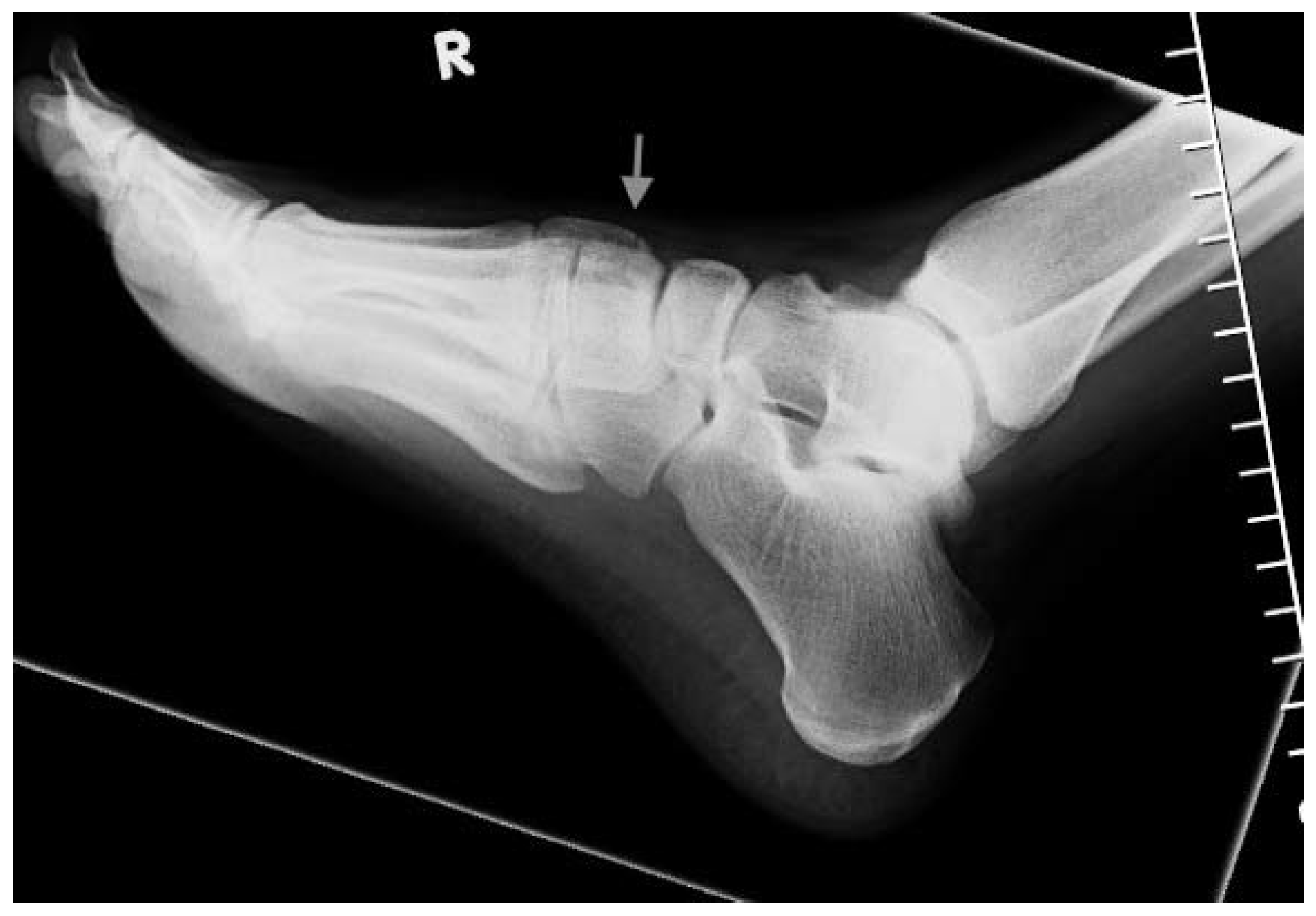
A 42-year-old man presented with right foot pain after falling off of a 15-foot ladder in July 2013. He reportedly had a hyperdorsiflexory mechanism of injury. He was immediately seen in the emergency department, where radiographs of the right foot and ankle revealed an isolated medial cuneiform fracture (Figure 1). While in the emergency department, the patient’s right lower extremity was placed in a posterior/sugar tong splint. The patient was referred to one of us (N.S.B.) for further evaluation. On examination, the patient had severe pain along the medial cuneiform, dorsally and medially, extending into the Lisfranc joint and was tender along the Lisfranc ligament. The patient also had mild ankle pain during passive range of motion, with tenderness along the anterior talofibular ligament.
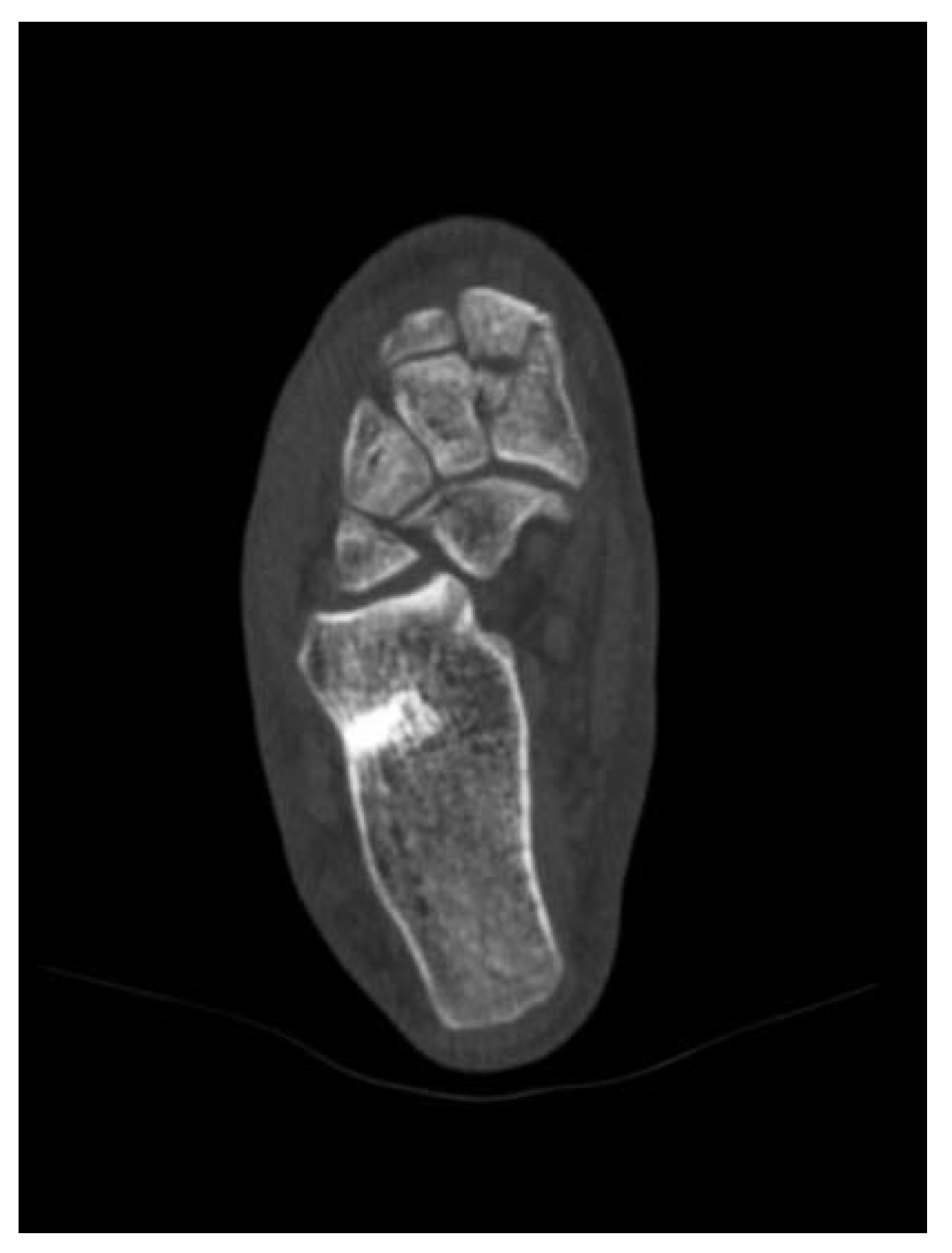
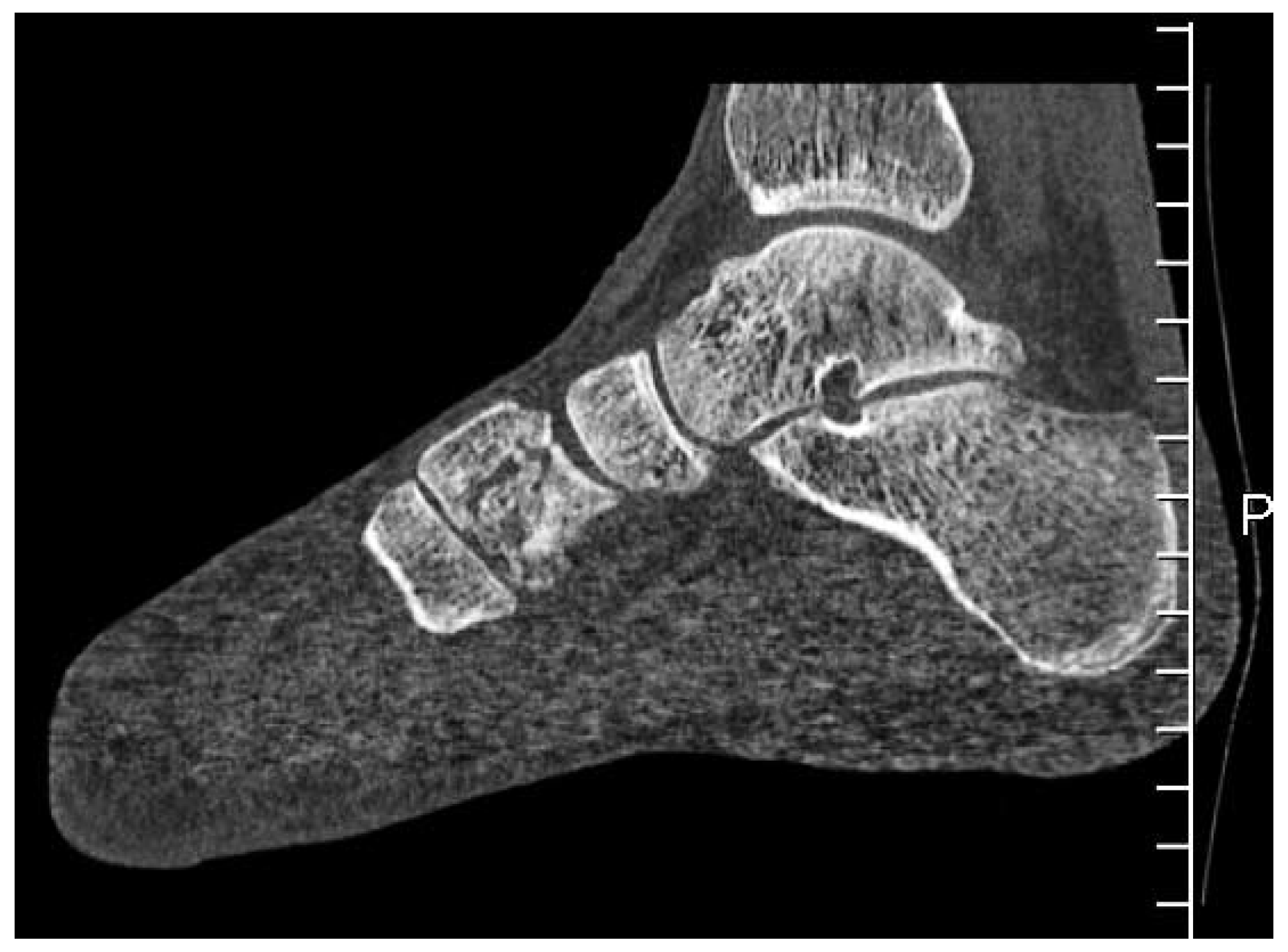
After physical examination, a computed tomography (CT) scan was performed to visualize fracture fragments and determine whether there was a Lisfranc joint disruption. The CT scan revealed no malalignment of the Lisfranc joint (Figure 2 and Figure 3). A comminuted medial cuneiform fracture was noted to extend into all three articular surfaces, with a step off of 1.5 mm. Surgical and nonsurgical treatments were discussed with the patient, and he elected for surgical intervention. The patient was extremely tender at the first tarsometatarsal joint, thus it was determined that a primary arthrodesis would be performed at that joint.
Surgical Intervention and Postoperative Course
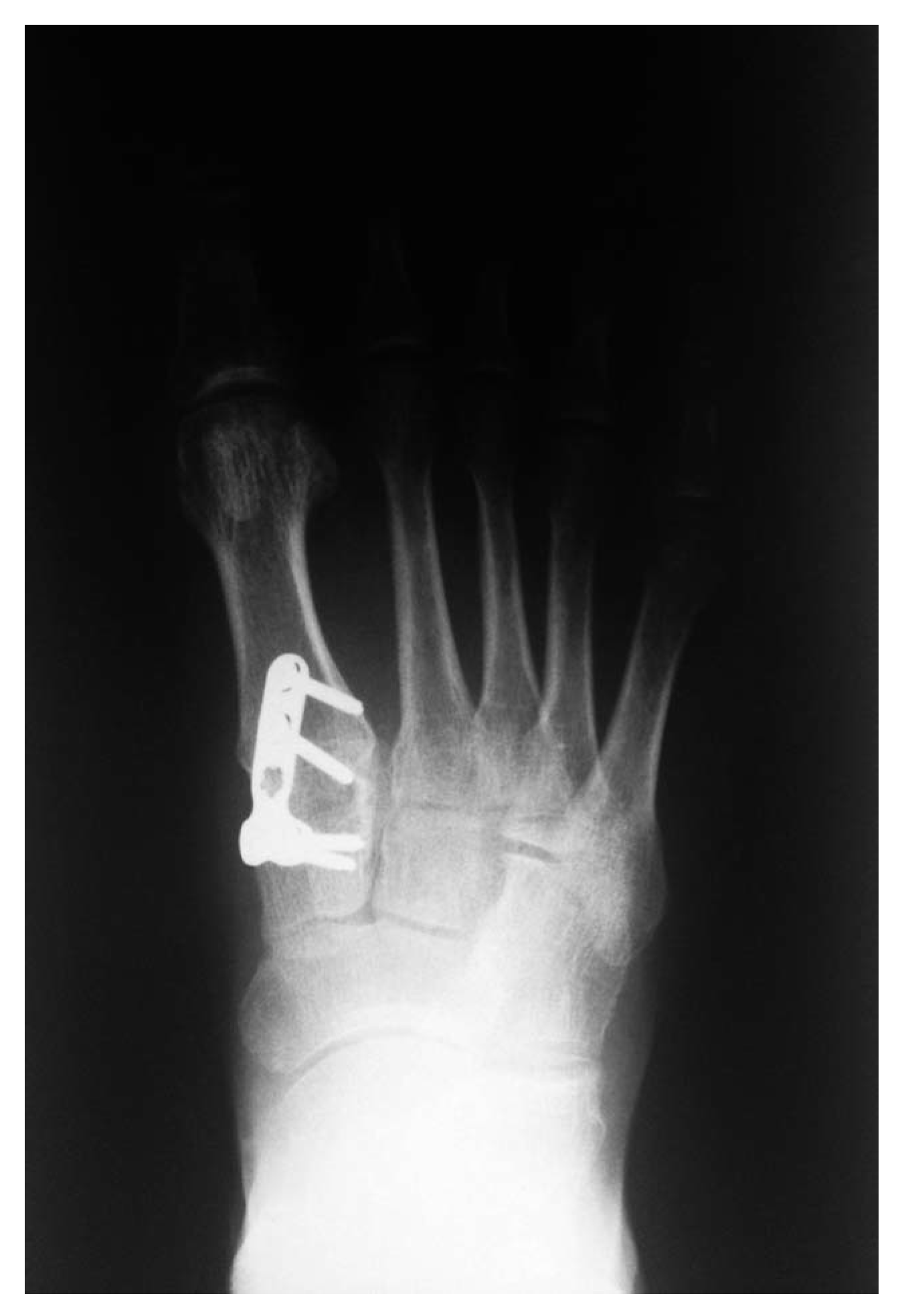
The patient was taken to the operating room for a right foot first tarsometatarsal primary arthrodesis. An approximately 4-cm incision was made over the dorsomedial aspect of the right foot, over the first tarsometatarsal joint. Blunt dissection was used to the level of the capsule, and a linear capsulotomy was made over the joint. The periosteum was then reflected off the base of the first metatarsal and the medial cuneiform. The comminution of the distal articular surface was identified. The joint surfaces were prepared in a standard manner, and a Kirschner wire was used for provisional fixation. There was a notable osseous defect, and Progenix bone graft (BioHorizons, Birmingham, Alabama) was used to fill the void. A Smith & Nephew (Memphis, Tennessee) T-plate was then applied to the dorsal aspect of the joint. Four 2.7-mm screws were inserted through the plate, and excellent stabilization was noted. The wound was closed in layers, and the patient was placed in a well-padded posterior/sugar tong splint and was advised to be nonweightbearing.
The patient’s treatment course was from July 2013 to November 2013. Postoperatively, the patient did very well. His main concern was his ankle and not the surgical site. He underwent magnetic resonance imaging (MRI) to evaluate his ankle pain 7 weeks postoperatively, which showed some thickening to his anterior talofibular ligament. Consolidation of the fusion site was noted at 6 weeks, and by 10 weeks it was completely consolidated (Figure 4). The patient had slight residual diminished sensation along the medial dorsal cutaneous nerve distribution. At his final follow-up visit in November 2013 he had resumed his full-time job as a carpenter and had no major symptoms or limitations aside from aching after long periods of weightbearing.

Discussion

When radiographs are inconclusive and suspicion remains high for a midfoot fracture, advanced imaging modalities, including CT and MRI, can help in making the correct diagnosis [1,8,11,12,13]. Computed tomography has proved to be beneficial when radiographs are equivocal and a high suspicion for occult fracture remains [1,8,12], or as in the present case to determine the extent of comminution for preoperative planning. Also, MRI can demonstrate a cuneiform fracture and corresponding osseous edema when radiographs are inconclusive [11,13], and it offers the benefit of not exposing the patient to radiation. Bipartition of the medial cuneiform is an uncommon developmental variant that may also present symptomatically, or incidentally, and must be differentiated from a fracture in the setting of traumatic foot pain [14,[14-16]. Initial treatment of these injuries varies and primarily depends on the extent of fracture displacement and the degree of comminution. In patients with minimal displacement, conservative treatment is usually successful in achieving osseous union [1,8,9,11,17]. As in the present case, when the fracture is displaced, intra-articular, or comminuted, surgical intervention should be considered [1,7]. In this case, it was felt that the patient would be best served with a primary arthrodesis of the first tarsometatarsal joint. Nonweightbearing immobilization has been reported to be successful in relieving symptoms and achieving fracture healing in most patients [1,8,9,11,17]. However, nonunions of the medial cuneiform have been reported and should be included in the differential diagnosis in a patient with a history of fracture and persistent pain and swelling [6,18]. In patients with displaced and comminuted fractures, surgical intervention is warranted to anatomically maintain the articular surfaces, avoid post-traumatic arthritis, and prevent nonunion and may consist of either open reduction with internal fixation or primary arthrodesis [1,7].

Financial Disclosure

None reported.

Conflict of Interest

None reported.

References

  1. GULER F, BAZ AB, RURAN A, ET AL: Isolated medial cuneiform fractures: report of two cases and review of the literature. Foot Ankle Spec 4: 306, 2011.
  2. PINNEY SJ, SANGEORZAN BJ: Fractures of the tarsal bones. Orthop Clin North Am 32: 21, 2001.
  3. COMPSON JP: An irreducible medial cuneiform fracturedislocation. Injury 23: 501, 1992.
  4. LYNCH JR SR, COOPERSTEIN LA, DIGIOIA AM: Plantar medial subluxation of the medial cuneiform: case report of an uncommon variant of the Lisfranc injury. Foot Ankle Int 16: 299, 1995.
  5. LEE EW, DONATTO KC: Fractures of the midfoot and forefoot. Curr Opin Orthop 10: 2224, 1999.
  6. ALEMDAR C, UCAR BY, RILDIRIM A, ET AL: Nonunion of the medial cuneiform: a rare case. Case Rep Med 2013. Available at: http://www.hindawi.com/journals/ crim/2013/215756/cta. Accessed January 11, 2016.
  7. PATTERSON RH, PETERSEN D, CUNNINGHAM R: Isolated fracture of the medial cuneiform. J Orthop Trauma 7: 94, 1993.
  8. TAYLOR SF, HEIDENREICH D: Isolated medial cuneiform fracture: a special forces soldier with a rare injury. South Med J 101: 848, 2008.
  9. SHAH K, ODGAARD A: Fracture of the lateral cuneiform only: a rare foot injury. JAPMA 97: 483, 2007.
  10. DELLACORTE MP, LIN PJ, GRISAFI PJ: Bilateral bipartite medial cuneiform: a case report. JAPMA 82: 475, 1992.
  11. ERASLAN A, OZYRUK S, EROL B, ET AL: Isolated medial cuneiform fracture: a commonly missed fracture. BMJ Case Rep 2013. Available at: http://casereports.bmj.com/content/2013/bcr-2013-010093.extract. Accessed March 9, 2016.
  12. LISZKA H, GADEK A: Isolated bilateral medial cuneiform fracture: a case report. Przegl Lek 69: 708, 2012.
  13. PREIDLER KW, BROSSMANN J, DAENEN B, ET AL: MR imaging of the tarsometatarsal joint: analysis of injuries in 11 patients. AJR Am J Roentgenol 167: 1217, 1996.
  14. AZURZA K, SAKELLARIOU A: Osteosynthesis of a symptomatic bipartite medial cuneiform. Foot Ankle Int 22: 499, 2001.
  15. CHIODO CP, PARENTIS MA, MYERSON MS: Symptomatic bipartite medial cuneiform in an adult athlete: a case report. Foot Ankle Int 23: 348, 2002.
  16. EVES TB, AHMAD MA, ODDY MJ: Sports injury to a bipartite medial cuneiform in a child. J Foot Ankle Surg 53: 232, 2014.
  17. OLSON RC, MENDICINO SS, ROCKETT MS: Isolated medial cuneiform fracture: review of the literature and report of two cases. Foot Ankle Int 21: 150, 2000.
  18. BRYANT MJ, BAIRD DS: A case of non-union of the medial cuneiform. Injury 24: 207, 1993.
Figure 1. Initial radiographs revealing fracture of the medial cuneiform (arrow).
Japma 107 00436 g001
Figure 2. Computed tomographic scan of the patient’s right foot, sagittal view, revealing a comminuted medial cuneiform fracture that was noted to extend into all three articular surfaces, with a step off of 1.5 mm.
Japma 107 00436 g002
Figure 3. Computed tomographic scan of the patient’s right foot, axial view, revealing a comminuted medial cuneiform fracture.
Japma 107 00436 g003
Figure 4. Radiograph 10 weeks after primary first tarsometatarsal arthrodesis revealing complete consolidation.
Japma 107 00436 g004
Disclaimer/Publisher’s Note: The statements, opinions and data contained in all publications are solely those of the individual author(s) and contributor(s) and not of MDPI and/or the editor(s). MDPI and/or the editor(s) disclaim responsibility for any injury to people or property resulting from any ideas, methods, instructions or products referred to in the content.