Chondroblastoma is a relatively rare, benign primary bone tumor of cartilaginous origin largely arising in an epiphysis or apophysis [
1]. A chondroblastoma is generally a small, sharply demarcated, lobulated lesion that varies in size from 1 to 7 cm. These lesions account for only 1% to 2% of all primary bone tumors, 0.9% of all tumors, and 3.6% of all primary benign bone tumors [
2]. Chondroblastoma is most commonly seen in the first three decades of life, with 50% to 75% of the patients being adolescents and young adults aged 10 to 25 years [
1]. The incidence of chondroblastoma in the lower extremity has been found to be the second most common occurrence, can range from 3% to 23%, and demonstrates a predilection for the male sex [
3]. A chondroblastoma may occur in any secondary center of endochondral ossification, although it is most often seen in the epiphysis of large tubular bones. Sites most commonly affected in the lower extremity include the distal and proximal femur (33%), proximal tibia (18%), and flat tarsal bones of the foot [
3].
Symptoms associated with these lesions are generally nonspecific. The most common symptom is mild pain with insidious onset. Swelling is a less frequent presenting symptom; pain and swelling are commonly referred to the adjacent joint. Joint effusions and limitation of range of motion of the involved joint are also encountered with chondroblastomas [
3]. In addition to standard radiographs, advanced imaging modalities, such as magnetic resonance imaging (MRI) and computed tomography, should be used in differentiating chondroblastoma from other neoplasms, such as epiphyseal enchondroma, giant cell tumor, chondroma, and chondrosarcoma, all of which may seem similar in anatomical location, patient demographics, and radiographic appearance [
3]. The incidence of chondroblastoma in the calcaneus ranges from 7% to 34%, and it is the fifth most common location for this particular bone tumor [
3]. This case report demonstrates the difficulties in the treatment and management of chondroblastoma and describes the management of a postoperative complication with successful resolution of a calcaneal chondroblastoma.
Case Report
On November 30, 2012, a 13-year-old boy presented to an outside emergency department with pain to the left heel after playing soccer. Radiographs were obtained and were negative for fracture. Because of continuing pain noted from the left calcaneus, the patient presented to his primary-care physician (PCP). He was diagnosed as having tendonitis of the left heel and was prescribed ibuprofen. The patient continued to experience pain and maintained a nonweightbearing status to the painful foot. Approximately 2 months after initial presentation to his PCP and failed conservative treatments, the PCP ordered an MRI and requested a referral to the podiatric medicine service.
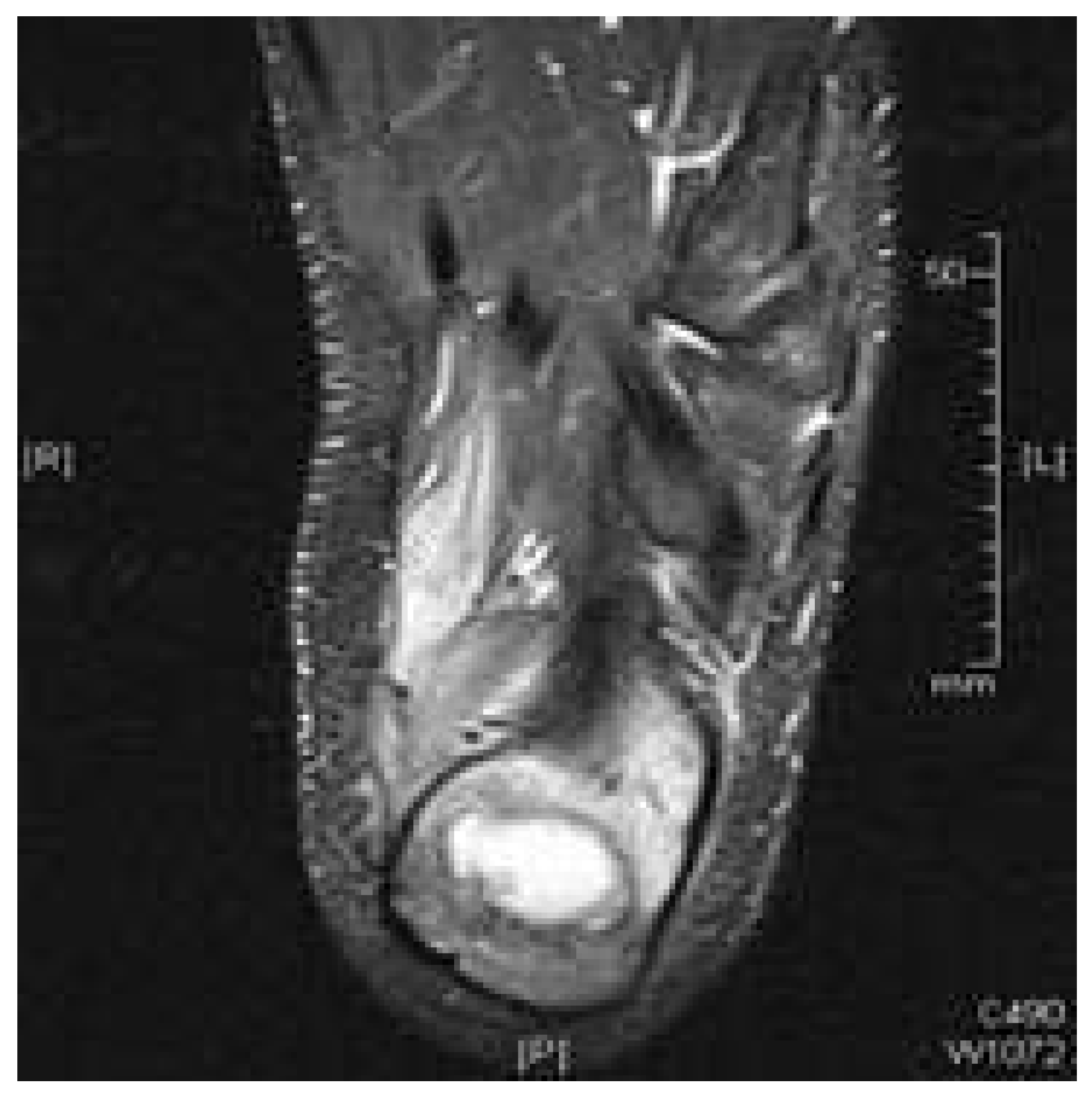
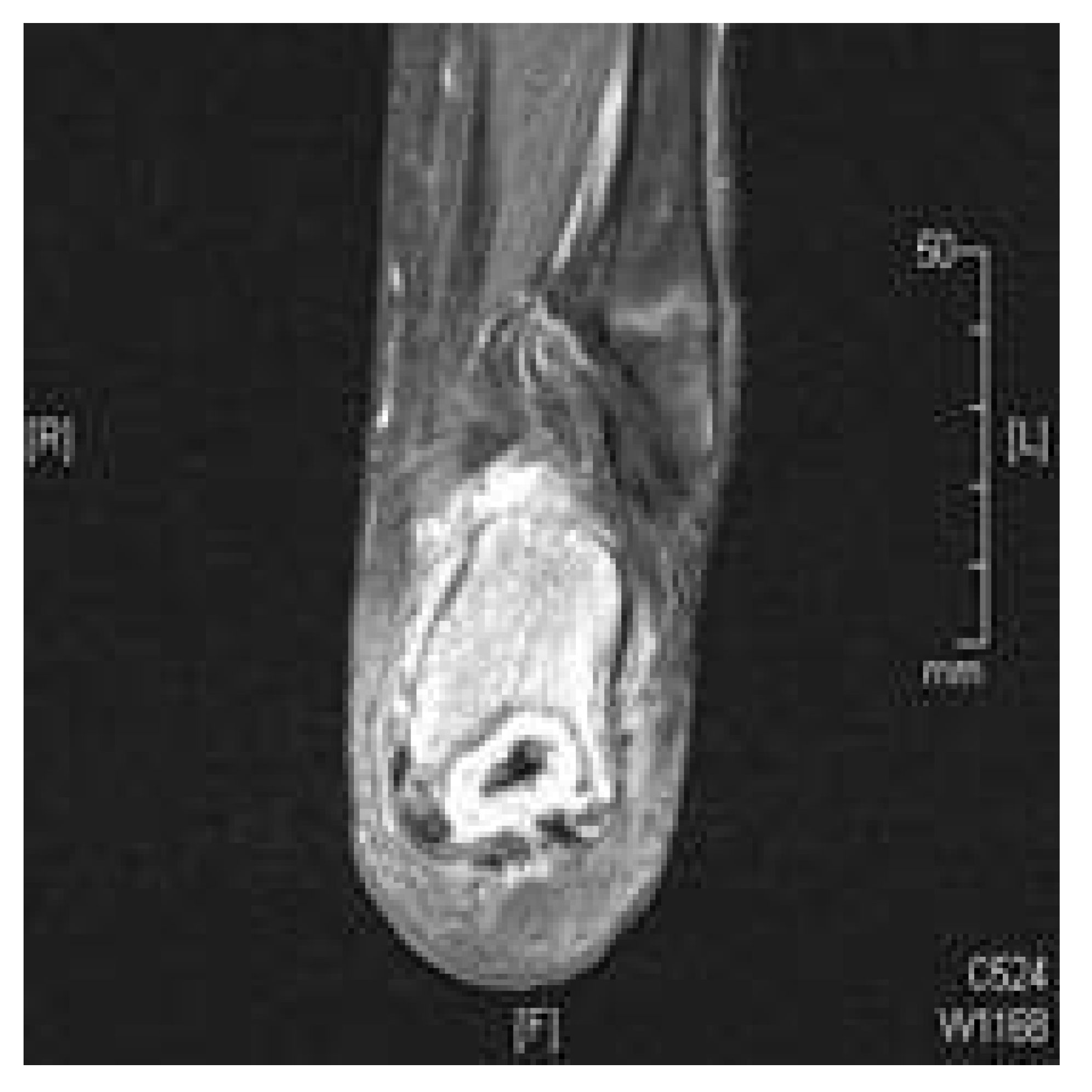
On presentation to the podiatric medical clinic, the patient related no changes since last seen by his PCP. Plain radiographs were obtained to correlate with MRI findings. The patient’s mother added that as a child she had a portion of her ulna removed due to an unknown benign bone mass; however, she did not know the type of lesion, and neither did she have access to those records. The patient’s remaining primary medical history, surgical history, social history, medications, and allergies were noncontributory. The patient rated his pain as mild, and he thought that he had steadily improved during the past few months. However, during the physical examination, the patient reported pain and tenderness with side-to-side compression of the left heel and pain on palpation to the posterior aspect of the left heel. There were no palpable masses, changes in skin color, or changes in temperature in this area. The patient was able to bear weight on his left foot, and all neurologic and motor functions were intact. The MRI showed a fluid-filled cystic lesion with a thick peripheral enhancing rim in the left calcaneus. A disruption of the cortex along the plantar aspect of the calcaneus was also noted along the subadjacent plantar fascia (
Fig. 1).
Initial Operative Procedure
On February 25, 2013, the patient underwent surgical curettage and packing with bone void filler. A popliteal block was administered per anesthesia, a pneumatic tourniquet was placed above the patient’s left ankle, and a saphenous nerve block was administered under intravenous sedation. Fluoroscopic imaging was used to identify the area for incision on the posterior lateral aspect of the left heel. A 3.5-cm linear incision was made over the posterior lateral aspect of the heel just posterior to the peroneal tendon and sural nerve. Sharp and blunt dissection was carried down to the level of the bone, with care taken to identify and retract all vital neurovascular structures. After a periosteal incision was made over the posterior lateral aspect of the left heel, the plantar posterior tubercle of the calcaneus was identified and a 0.062 Kirschner wire was positioned and driven 5 cm proximal to the tubercle. Fluoroscopic imaging confirmed that the 0.062 Kirschner wire was correctly placed in the center of the cyst. After Kirschner wire removal, aspiration of the bone cyst was performed, guided by a trocar and cannula from a bone marrow aspirate kit. Approximately 1.5 mL of a dark, sanguineous type of material, somewhat cystic in consistency, was aspirated and sent for pathologic evaluation and review. The indicated area of the calcaneus bone was curetted, and the cystic lesion was flushed. At this time, 2.5 mL of injectable bone graft material was delivered into the cystic lesion and was noted to fill the void completely, as confirmed with intraoperative fluoroscopy. A molded posterior fiberglass splint was applied to the left lower extremity and secured with compression wrap to immobilize the leg. The patient’s pathology report after the initial surgery of curettage and packing confirmed a bone cyst of the left heel composed of loose fibroconnective tissue with chronic inflammation and calcifications, with no malignancy noted. The patient’s vital signs and blood work values were all within their respective reference ranges.
The patient followed a normal postoperative course until approximately 6 weeks, when, on removal of the cast, an open ulceration on the medial aspect of the heel was noted. This ulceration measured 1 cm in diameter, with hypergranular tissue and minimal serous drainage, with no evidence of infection or bone graft material. This ulceration seemed to be secondary to irritation within the cast. New radiographs demonstrated further bone graft resorption and trabeculation in the calcaneus consistent with healing. Silver sulfadiazine topical cream and a dry sterile dressing were applied to the left foot. A controlled ankle movement walker was dispensed, and the patient was instructed to initiate physical therapy. At the 7-week postoperative visit, the patient reported increased pain to the left heel with full weightbearing. Due to the severity of pain, the patient returned to a nonweightbearing status using crutches and limited physical activity. The patient’s mother related that approximately 4 days after the previous visit, a small hard piece of white material, potentially consistent with bone graft material, extruded from the wound. After helping remove the piece of material, the patient’s mother noted improvement in the wound appearance. On removal of the dressing the open ulceration on the medial aspect of the heel measured 0.8 3 0.7 cm; hypergranular tissue and mild serous drainage were present. The patient was instructed to continue to apply silver sulfadiazine topical cream and dry sterile dressings to the ulcerative area and to walk in the controlled ankle movement walker as tolerated. At this time it was discussed with the patient and his parents that if the ulceration did not improve, potential excision and exploration for extraneous bone graft material with primary closure would have to be considered.
At postoperative week 13, culture, sensitivity, and Gram’s stain were obtained from the wound site due to increased inflammation and drainage. Additional bone graft material was noted at this time. The excision with exploration for extraneous bone graft material with primary closure was discussed in detail with the patient and his parents. After an extensive discussion, the parents desired to refrain from surgical intervention. Fifteen weeks postoperatively, a purulent drainage from the wound, as well as continued pain to the left heel, was noted during a physical therapy appointment. The ulceration was remeasured as 0.1 3 0.1 cm, with a 0.5-cm area of surrounding fluctuance. Incision and drainage was performed in the office per protocol. Purulent drainage was expressed with a sinus tract extending to the plantar posterior heel and deep within the wound. A portion of tissue was sent to the pathology laboratory, and the results revealed a fibrocartilaginous tissue and bone with degenerative changes and no malignancy noted. Culture and Gram’s stain results revealed methicillin-sensitive Staphylococcus aureus (MSSA) and gram-positive cocci. An infectious disease specialist was consulted, and despite normal laboratory values (white blood cell count, 4.8 × 10⁹/L; erythrocyte sedimentation rate, 10 mm/h; and C-reactive protein level, ˂10 mg/L), debridement of the remaining bone graft and bone was recommended along with subsequent Gram’s stain and culture. The patient’s parents elected to proceed with the recommended treatment at that time.
During the revision surgery, the sinus tract was identified and noted to extend into the cystic bone lesion. The sinus tract was then resected. Deep cultures of the cystic lesion were obtained, and a bone biopsy was sent for culture and sensitivity analyses. The surgical area was flushed with 3 L of bacitracin. Demineralized bone matrix sponge human allograft bone was soaked in vancomycinimpregnated saline and packed into the bone cyst.
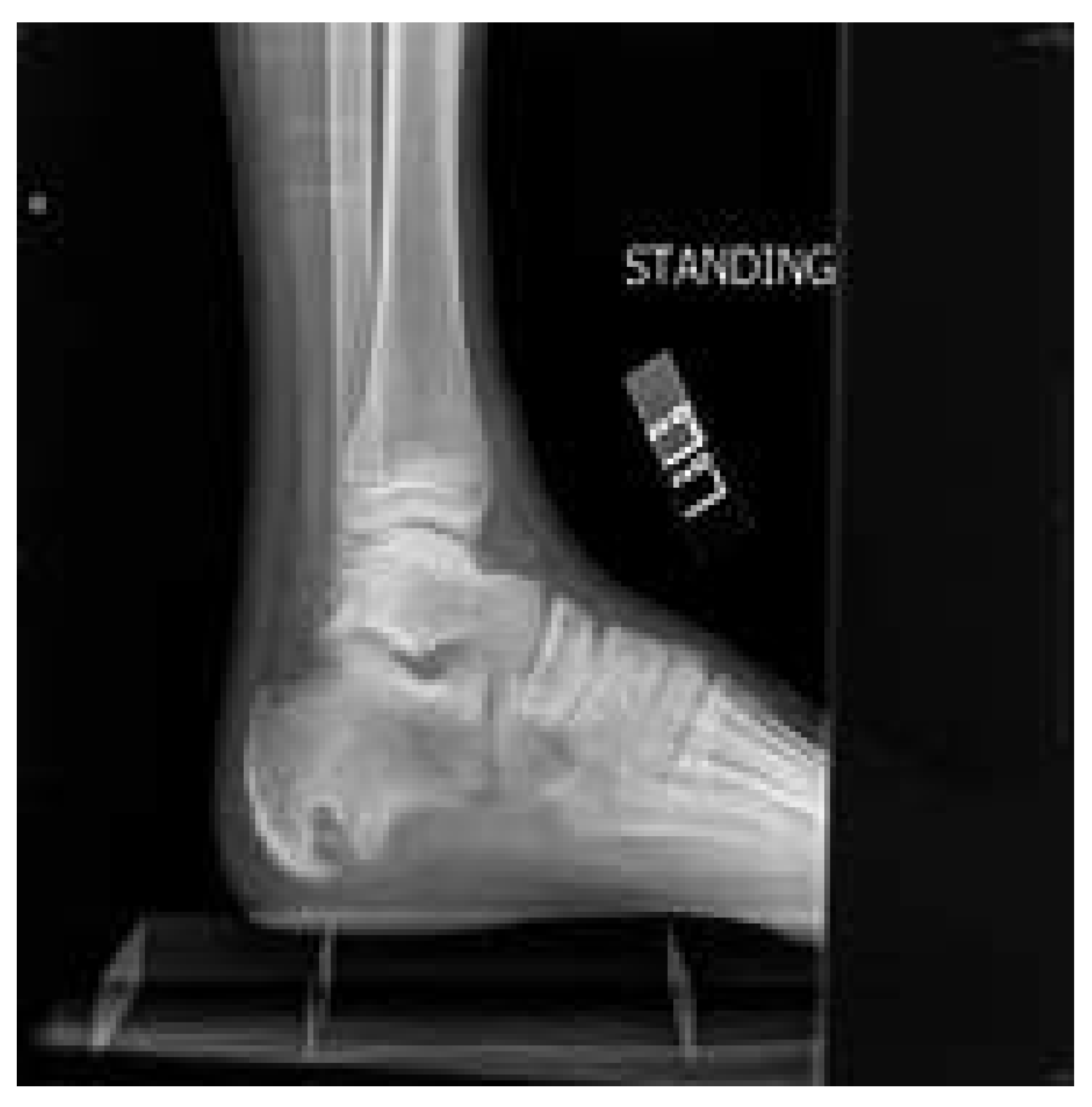
After the revision surgery, the infectious disease specialist started the patient on nafcillin, 12 g intravenously every 24 hours for 6 continuous weeks, because the culture showed MSSA. At the 7-week postoperative visit, a new set of radiographs demonstrated signs of bony consolidation. At the 16-week postoperative visit, the patient and his mother reported that he had returned to full activity and normal shoes. Radiographs were obtained at the patient’s 28-week (January 21, 2014), 9-month (April 22, 2014), and 15-month (October 21, 2014) postoperative visits, which all demonstrated further consolidation of the bone cyst. The patient reported a normal activity level without pain. One and a half years after the initial surgery, the cystic lesion site demonstrated approximately 80% consolidation and the patient had no clinical symptoms (
Fig. 2).
Discussion
Typical radiographic findings for chondroblastoma consist of sharply marginated, predominantly lytic lesions rimmed by sclerotic bone where the cortex usually remains intact. Computed tomographic scans are useful in identifying the extent of the lesion; MRI may show lobular internal architecture with low-to-intermediate signal intensity on T1-weighted images and intermediate-to-high heterogeneous signal intensity on T2-weighted images. Soft-tissue and bone marrow edema may also be seen [
1].
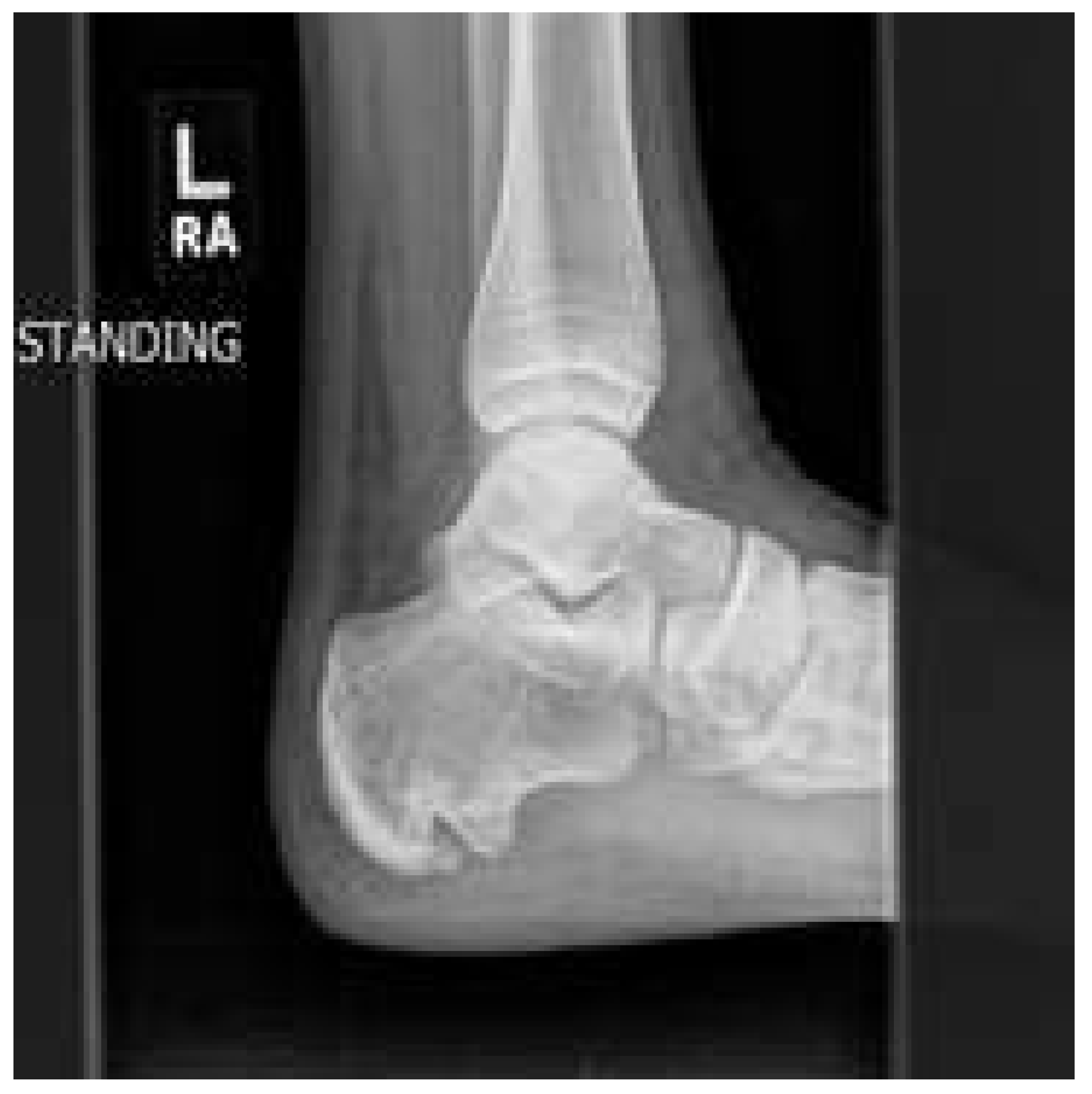
In this case, the lateral radiograph revealed a cystic lesion in the posterior plantar aspect of the left heel that appeared to involve the growth plate (
Fig. 3). Based on the imaging data, the differential considerations included subacute infection such as a Brodie’s abscess, intraosseous ganglion cyst at the site of plantar fascia origin, atypical simple aneurysmal bone cyst, and atypical cystic chondroblastoma.
The MRI examination of the left foot consisted of T1-weighted and short tau inversion recovery sagittal, T1-weighted and proton-density fat-saturated coronal, and T1-weighted and short tau inversion recovery axial images (
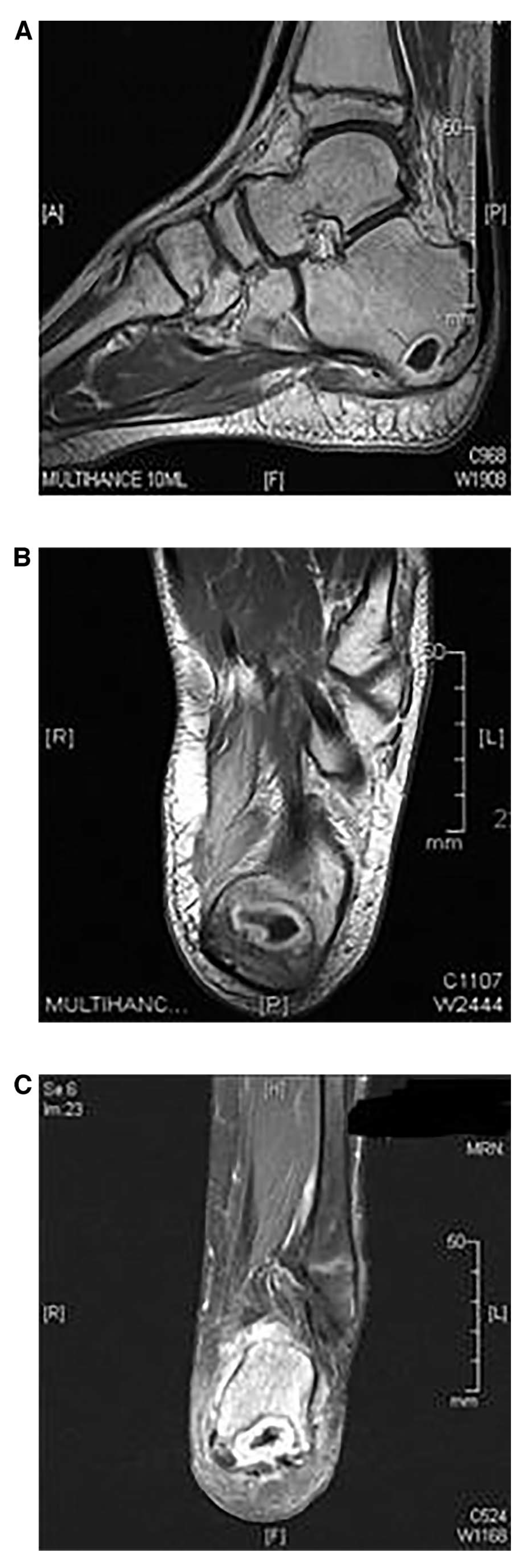
Fig. 1). Repeated T1-weighted sagittal, axial, and coronal images after the administration of 10 mL of gadobenate dimeglumine (MultiHance; Bracco Diagnostics Inc, Princeton, New Jersey) were also obtained (
Fig. 4). This study demonstrated a well-circumscribed and largely cystic-appearing lesion along the posterior plantar aspect of the calcaneus at the site of the plantar fascia origin. The lesion, measuring approximately 2.2 × 1.6 × 1.7 cm, was primarily fluid filled, with a thick peripheral enhancing rim. A small focus of enhancement outside of and just posterior to the lesion was noted. The lesion was located along the apophysis of the posterior calcaneus, with slight extension into the calcaneal apophysis. The cortex along the plantar aspect of the calcaneus was disrupted, with extension into the subadjacent plantar fascia. An incidental finding of marrow edema surrounding the lesion in the calcaneus as well as in the adjacent soft tissues and musculature was noted. A scattered irregular focus of hyperintense signal was seen at the center of the lesion, possibly representing focal calcification. The patient’s pathology report after the initial surgery of curettage and packing confirmed a bone cyst of the left heel composed of loose fibroconnective tissue with chronic inflammation and calcifications; no malignancy was noted.
A second MRI was taken in July 2013, preceding the second surgery, and revealed continuous consolidation and resolution of the cystic lesion (
Fig. 5). At the time of the study, the lesion measured approximately 0.5 × 1.3 × 0.9 cm, with sinus tract within the soft tissue extending to the medial wall of the calcaneus. Bone graft material was noted, and no substantial joint effusion or bursitis was appreciated. After the second surgery, the patient’s pathology report confirmed a bone cyst of the left heel composed of loose fibroconnective tissue with chronic inflammation and calcifications; no malignancy was noted. Pathology specimens of the left heel again confirmed fibrocartilaginous tissue and bone with degenerative changes; no malignancy was noted. A final lateral radiographic view was obtained before discharging the patient from care (
Fig. 2). The radiograph revealed consolidation of the bone lesion site and incorporation of the bone graft. Recent evidence-based literature describes mechanical curettage with bone grafting as the standard surgical treatment for chondroblastoma [
2]. Autologous, allopathic, and synthetic bone grafts are all reliable options for addressing bone voids. Despite being osteogenic, osteoconductive, and osteoinductive and having the ability to express bone morphogenetic proteins, autologous bone graft is ideal for fracture healing but not necessarily for bone void filling [
4]. In addition, autograft harvesting can increase operative time, lead to significant blood loss, and increase donor site morbidity [
5,
6]. Allopathic bone grafts are a good alternative to autografts because they exhibit osteoconductive and sometimes osteoinductive potential [
7]. However, allografts have the potential to induce an immune response and transmit infection, and they may lead to mechanical failure due to delayed osteointegration [
8,
9]. Synthetic osteoconductive bone graft materials are suitable alternatives to previously described grafts. Physicians have successfully treated benign bone lesions with calcium-based bone graft substitutes [
7,
10,
11]. These injectable materials are easy to apply, rapidly absorbable, slowly biodegradable, strong in compression, and capable of rapid osteointegration [
7,
12].
In this case study, an injectable calcium sulfate and calcium phosphate bone graft substitute material was used during the initial surgical intervention. This combined graft was chosen owing to the bone’s ability to replace the faster-resorbing calcium sulfate matrix and allow the slower-resorbing calcium phosphate scaffold to remain intact and provide stability. Compared with autografts and calcium sulfate bone grafts, the literature demonstrates that a combination of calcium sulfate and calcium phosphate provides strength in compression, rapid absorption, and osteointegration [
7,
13]. No clinical evidence supported an infection at the graft surgical site. Although initially considered in our differential diagnosis, osteomyelitis was dismissed after all of the obtained laboratory values were within normal limits. Surgical intervention to remove the bone graft material was performed and resulted in complete resolution of all of the symptoms.
Conclusions
It is important to distinguish chondroblastoma from other neoplasms and manage them properly, understanding the potential risks and complications of treating such lesions. This case report documents the management of a very uncommon ‘‘chondroid’’ neoplasm, appropriate treatment interventions, and the occurrence and successful management of graft rejection of a newer injectable calcium sulfate and calcium phosphate bone graft substitute material. To our knowledge, there are no other documented cases of rejection to this particular biological graft. In the future, practitioners who choose to use the injectable bone graft substitute that was used in this case must also maintain awareness that the patient may experience a rejection to the graft material. Awareness of this case may help in early diagnosis and provide guidance in successful treatment of chondroblastoma.
Financial Disclosure
None reported.