Next Article in Journal
A Rare Case of Chondroblastoma with Revision After Graft Rejection. A Case Report
Previous Article in Journal
Surgical Treatment of Zone 1 Fifth Metatarsal Base Fractures Using the Locking Compression Plate Distal Ulna Hook Plate
 
 
Journal of the American Podiatric Medical Association is published by MDPI from Volume 116 Issue 1 (2026). Previous articles were published by another publisher in Open Access under a CC-BY (or CC-BY-NC-ND) licence, and they are hosted by MDPI on mdpi.com as a courtesy and upon agreement with American Podiatric Medical Association.
Article

Physical and Mechanical Therapies for Lower-Limb Problems in Juvenile Idiopathic Arthritis. A Systematic Review with Meta-Analysis

School of Health Sciences, Faculty of Health and Medicine, University of Newcastle, Central Coast Campus, Ourimbah, NSW 2258, Australia
*
Author to whom correspondence should be addressed.
J. Am. Podiatr. Med. Assoc. 2017, 107(5), 399-412; https://doi.org/10.7547/15-213
Published: 1 September 2017

Abstract

Background: Juvenile idiopathic arthritis (JIA), a chronic, autoimmune, inflammatory joint disease, is the most common arthritis affecting children younger than 16 years. Children with JIA commonly experience lower-limb dysfunction and disability. We systematically reviewed the effectiveness of physical and mechanical therapies for lower-limb problems in JIA. Methods: Randomized controlled trials of physical and mechanical interventions for lower-limb problems in children with JIA were included. Primary outcome was pain. Secondary outcomes included disability, functional ability, and health-related quality of life. Several databases were searched for eligible studies. Authors of included studies and researchers in the field were contacted to identify additional studies. Results: Two studies evaluating the effectiveness of customized/custom foot orthoses in treating foot and ankle pain in children with JIA (N ¼ 100) were included. One study also evaluated simple cushioned inserts. Meta-analyses for comparisons between custom/customized foot orthoses and a control intervention after 3 months were not significant for the outcomes of pain (mean difference, −8.97; 95% confidence interval [CI], −18.01 to 0.07), child-rated health-related quality of life (mean difference, 4.38; 95% CI, −3.68 to 12.44), and parent-rated health-related quality of life (mean difference, 1.77; 95% CI, −6.35 to 9.90). Meta-analyses were supported by sensitivity analyses. Conclusions: There is a paucity of research evaluating physical and mechanical therapies for lower-limb problems in JIA. No physical therapy has been evaluated in randomized controlled trials, and mechanical therapy evaluation is limited to foot orthoses and shoe inserts for foot and ankle pain. The existing research is hampered by small sample sizes. Until further research is conducted, the effectiveness of mechanical and physical therapies for lower-limb problems in JIA remains unclear.

Juvenile idiopathic arthritis (JIA) is the most common form of arthritis in children and adolescents [1]. Research in developed countries reports prevalence rates from 16 to 150 per 100,000 [1]. Typical signs and symptoms of active JIA are swelling, inflammation, pain, and stiffness, most commonly in hip, knee, and ankle joints and in small joints in the hands and feet [1]. If uncontrolled, JIA can cause joint damage and fixed deformities [2]. The International League of Associations for Rheumatology identifies seven subgroups of JIA [3]. Active JIA of any type may cause premature epiphyseal closure and subsequent local growth defects, typically of the knee [4]. Children with JIA may also present with enthesitis at the plantar fascia or Achilles tendon, flexion contractures, synovitis, and muscle atrophy [1].
Juvenile idiopathic arthritis has a substantial financial burden on the families of affected children and the health-care system [5,6,7]. In 2013 to 2014, the Australian government subsidized more than A$7.5 million for biological drug agents alone for children with JIA [8]. Also, JIA has a psychological effect on affected children, with increasing disability being associated with increasing rates of depression [9,10]. At present, there is no drug therapy capable of causing complete remission in all children affected by JIA. As a result, many children with JIA experience disabling lower-limb symptoms despite gold-standard drug treatment. Although the evidence base for mechanical and physical therapies for lower-limb problems in children with JIA is growing, it is still uncoordinated and in some cases difficult for health professionals to access. For children with JIA to achieve their best clinical outcomes, health professionals need access to high-quality summaries of evidence to guide their daily clinical practice. The objective of this study was to systematically review the evidence for physical and mechanical interventions for lower-limb problems in JIA.

Methods

The protocol for this systematic review has been published elsewhere [11] and is registered with the international prospective register of systematic reviews (PROSPERO).

Studies and Participants

All randomized controlled trials (RCTs) and quasi- RCTs of mechanical and physical interventions for lower-limb problems in JIA were included. Physical interventions include but are not limited to stretching, strengthening, and massage. Mechanical interventions include but are not limited to footwear, orthoses, and splints. Studies evaluating invasive (eg, acupuncture), pharmacological, and surgical therapies were excluded, as were studies evaluatingthe effectiveness of interventions for the prevention of lower-limb problems in JIA.
Studies including children diagnosed as having JIA and one or more lower-limb problems were eligible for inclusion. A lower-limb problem was defined as any pathologic disorder of the lower limb, extending from the trunk and including the gluteal region, femoral region, knee, leg, ankle, and foot [12]. Any setting, such as public and community health services, private clinics, preschools, and schools, was included.

Outcomes

The primary outcome was any validated quantifiable measure of pain, for example, the Pediatric Pain Questionnaire [13]. The secondary outcomes were disability, functional ability, or both; health-related quality of life (HRQoL) (eg, the Pediatric Quality of Life Inventory [PedsQL] measurement model) [14]; participant satisfaction with the intervention; and adverse events.

Searches

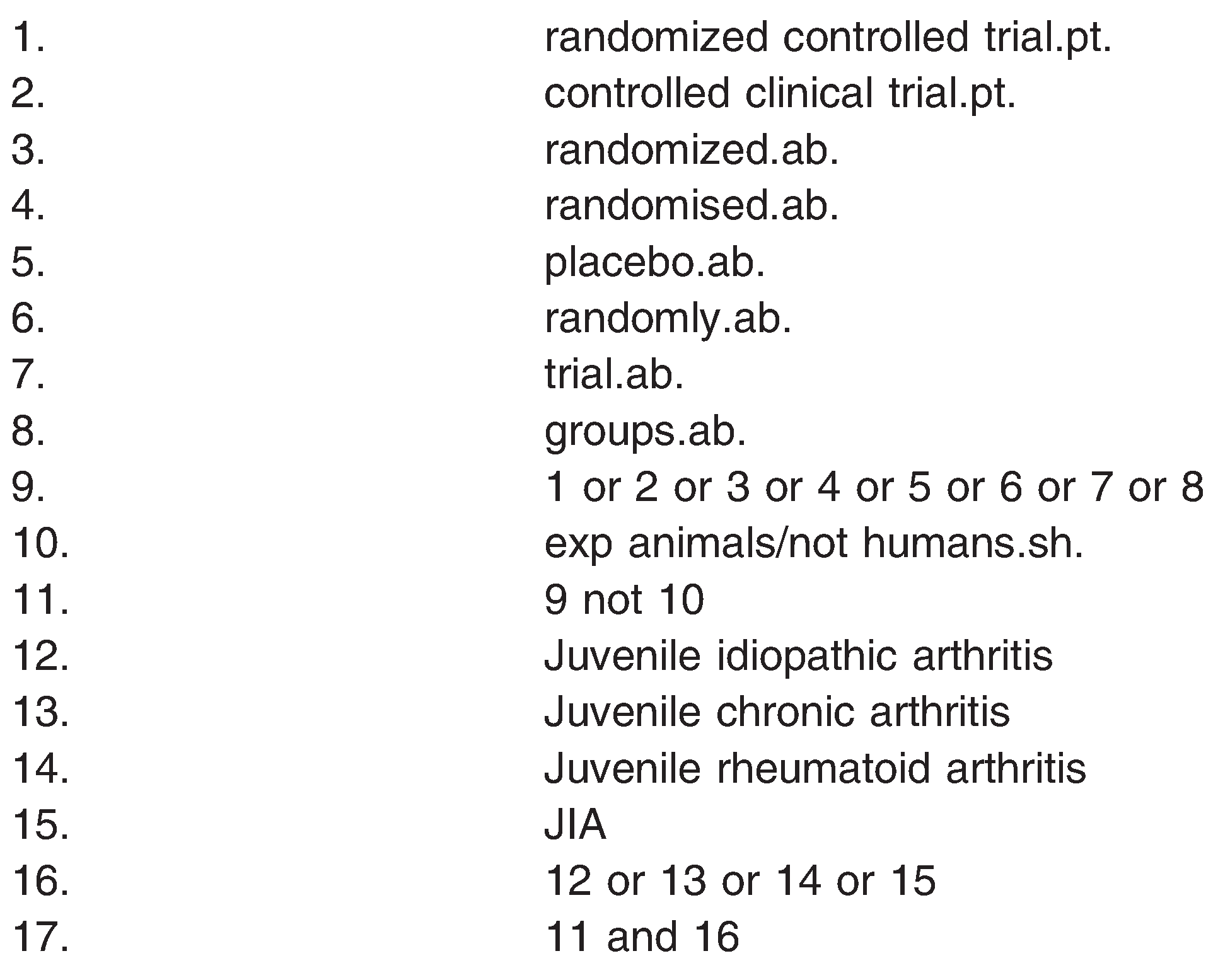
The MEDLINE (January 1966 to June 2015) search strategy is presented in Table 1. This search strategy was adapted for Embase (January 1980 to June 2015), Cochrane Central Register of Controlled Trials (The Cochrane Library, latest issue), PubMed (January 1966 to June 2015), and Cumulative Index to Nursing and Allied Health Literature (1982 to June 2015). No language or publication restrictions were applied. Reference lists of all included studies were checked for other potentially eligible trials. Corresponding authors of included studies and researchers in the field were contacted via e-mail to identify other potentially eligible studies.
Two reviewers (A.F. and A.C.) independently screened the titles and abstracts of all studies identified by the search. Full-text articles of potentially eligible studies were retrieved by one of us (A.F.) and independently screened by two of us (A.F. and A.C.). Authorship and results were not masked. Disagreements between the two authors regarding full-text inclusion were resolved by a third reviewer (F.H.). If disagreements were not resolved successfully by the third reviewer, study authors were to be contacted, although this was never required.
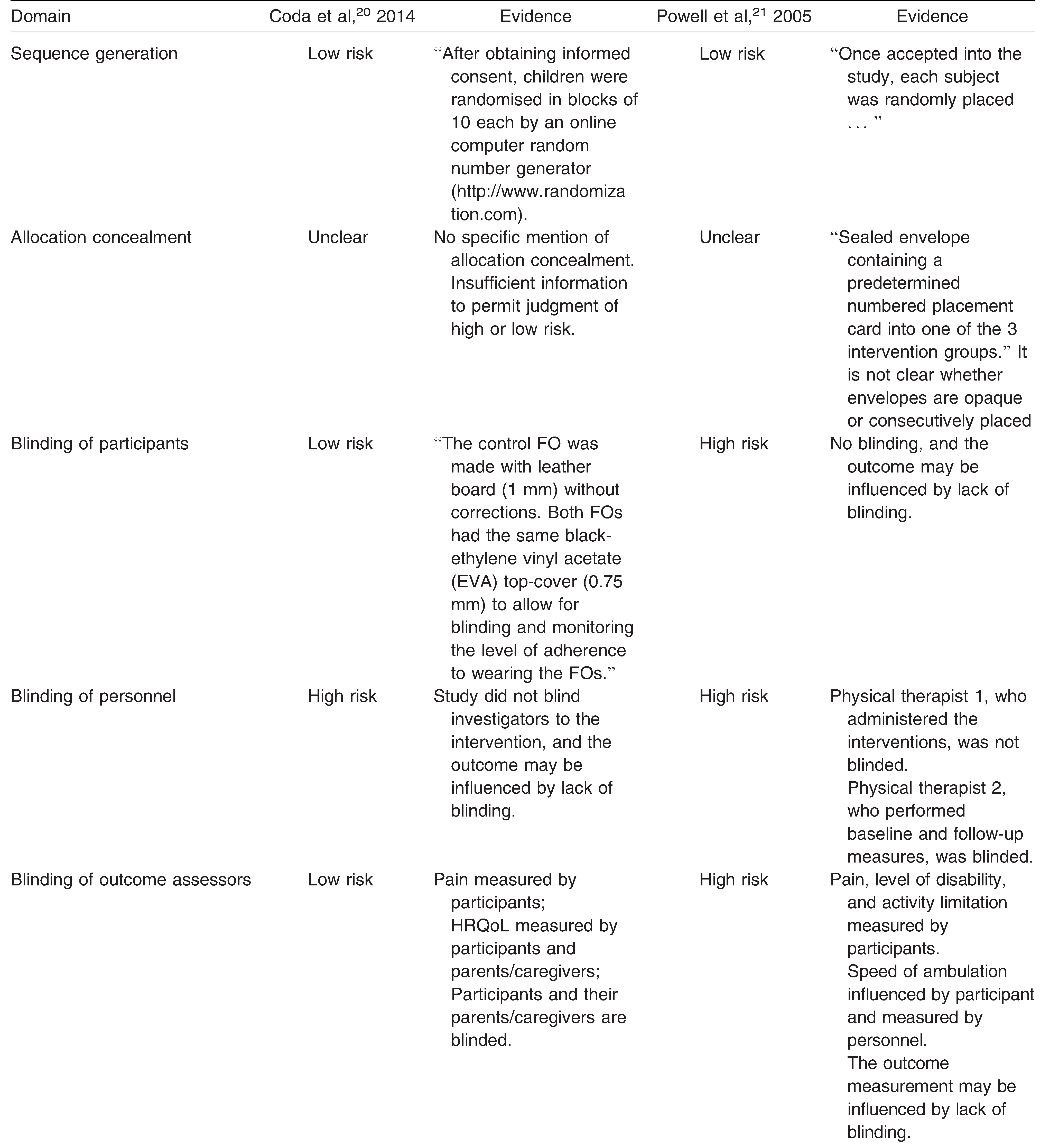
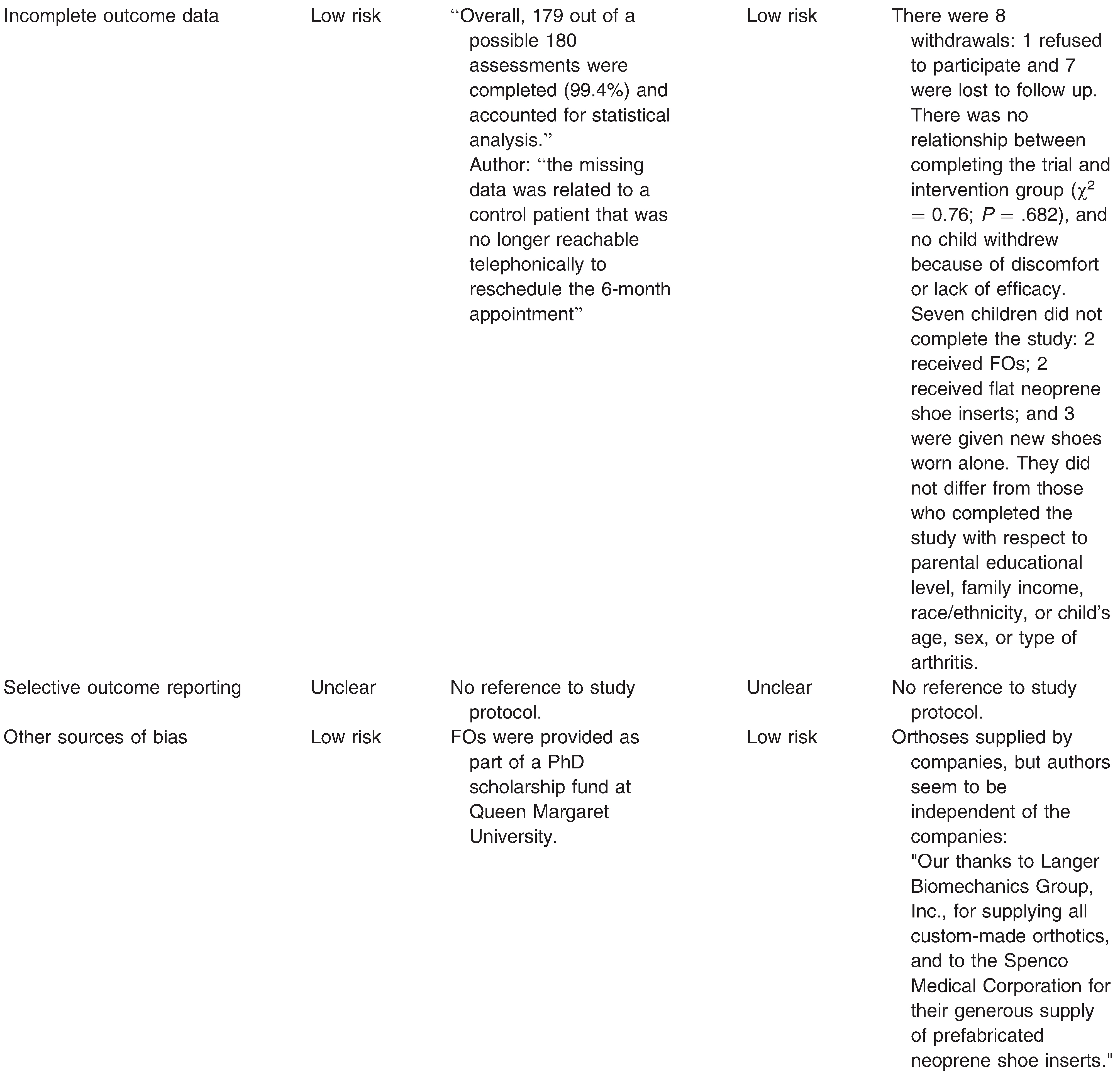
One of us (A.F.) extracted data from included studies using a standardized pilot-tested form, and a second author (A.C.) checked all extracted data. If there was any absent or uncertain information, study authors were contacted. Inconsistencies in data extraction were discussed between A.F. and A.C. and, if needed, through arbitration by F.H. Risk of bias of each included study was rated independently by two of us (A.F. and A.C.) using the following criteria described in the Cochrane Handbook for Systematic Reviews of Interventions [15]: 1) sequence generation; 2) allocation of concealment; 3) blinding of participants, personnel, and outcome assessor; 4) incomplete outcome data; 5) selective outcome reporting; and 6) other sources of data. For each criterion, high indicates a high risk of bias, low indicates a low risk of bias, and unclear identifies an ambiguous or unclear risk of bias.

Statistics

Measures of Treatment Effects. Group means and SDs were analyzed to produce mean differences and 95% confidence intervals (CIs). Standardized mean difference analyses were to be conducted when different measurement scales were used. Different follow-up periods were to be pooled after adjustment if steady rates of change could be demonstrated.
Assessment of Heterogeneity. Different types of interventions for JIA (eg, foot orthoses [FOs] versus splints) and different types of lower-limb problems (eg, foot pain versus gait instability) were analyzed separately. Studies that are consistently clinically homogenous in terms of outcomes, participants, and interventions were pooled in a meta-analysis. Intertrial statistical inconsistency was quantified using I2, which was calculated by the following formula [15]: I2 ¼ 100% [(Q – df)/Q], where Q is Cochran’s heterogeneity, v2 statistic, and df represents degrees of freedom. Cochran’s Q was acquired by summing the squared deviations of each trial’s approximation from the overall meta-analytic estimate and a P value attained by comparing the statistic with a v2 distribution with k – 1 degree of freedom (where k is the number of trials). The subsequent guidelines were used to interpret the I2 values: 0% to 40% might not be important, 30% to 60% may represent moderate heterogeneity, 50% to 90% may represent substantial heterogeneity, and 75% to 100% may represent considerable heterogeneity [15]. A random-effects model to incorporate heterogeneous trials in a meta-analysis was to be used when there was heterogeneity that could not be explained.
Data Synthesis. One of us (F.H.) constructed data analyses in The Cochrane Collaboration’s statistical package Review Manager 5 [16]. Another one of us (A.F.) entered data, which were checked by a third author (A.C.).
Subgroup Analyses. No subgroup analyses were planned as different types of interventions and different presentations of lower-limb pathologies were being analyzed separately in the primary analyses.
Sensitivity Analysis. Sensitivity analyses were performed by eliminating trials that failed to blind participants or conceal allocation. If outliers contributed to heterogeneity and the reason for the discrepancy was evident, analyses with and without the outlying trials were to be performed [15].

Results

Studies

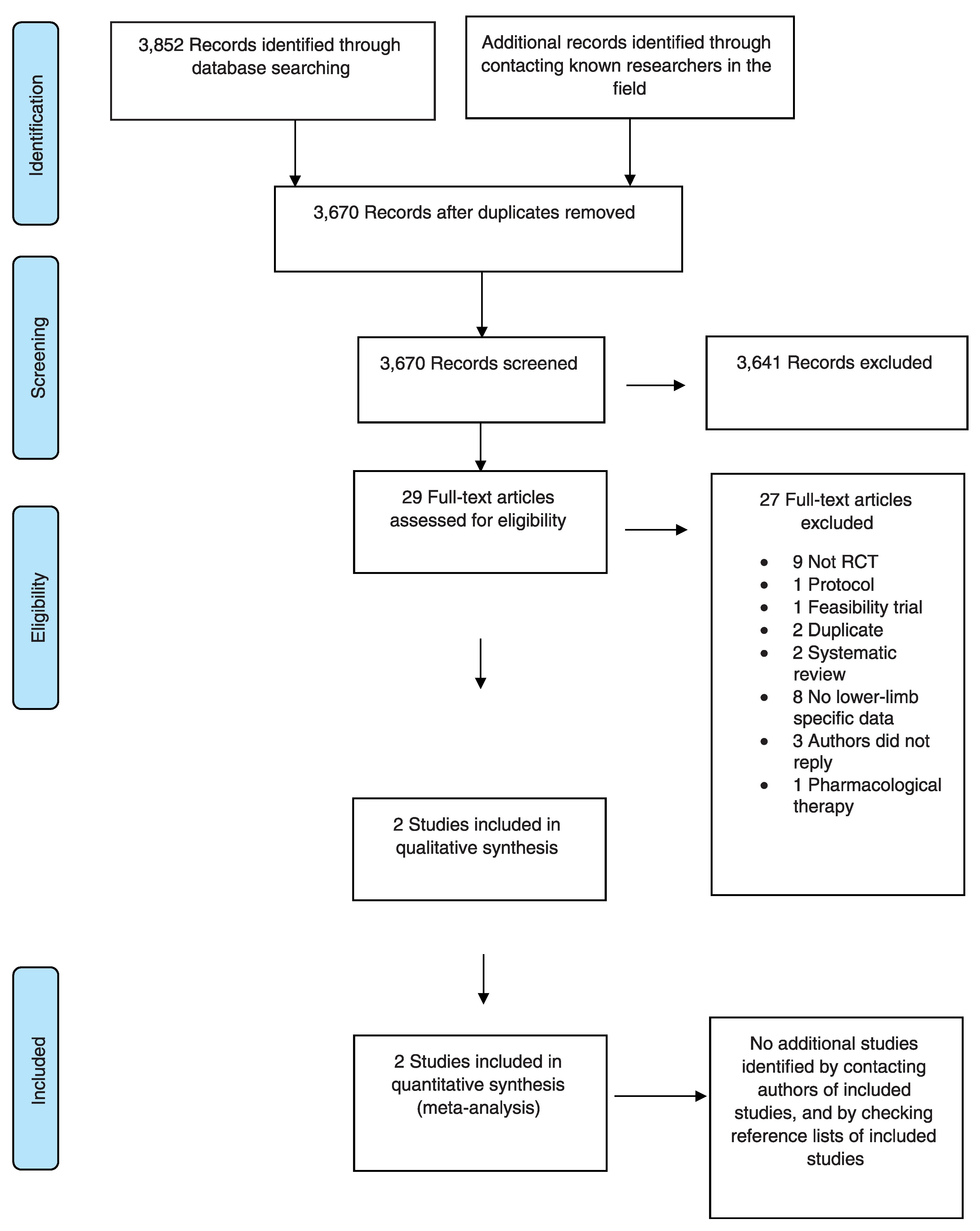
After duplicates were removed, 3,670 studies were retrieved by electronic searches. Screening of titles and abstracts identified 29 potentially eligible studies, for which full texts were retrieved [17,18,19,20,21,22,23,24,25,26,27,28,29,30,31,32,33,34,35,36,37,38,39,40,41,42,43,44,45]. When a potentially eligible paper did not present data specific to lower-limb problems, the corresponding author was contacted via e-mail. Five papers were excluded following author advice that lower-limb–specific follow-up data were not available [19,26,27,28] or that the trial was not an RCT [23]. Three additional papers were excluded because authors failed to reply to at least two e-mail reminders sent over a 1-month period [22,24,29]. Of the 29 potentially eligible studies, 27 were excluded (Fig. 1). Recursive checking of reference lists of included studies and e-mail correspondence with known researchers in the field and corresponding authors of the included studies did not disclose any additional potentially eligible studies.
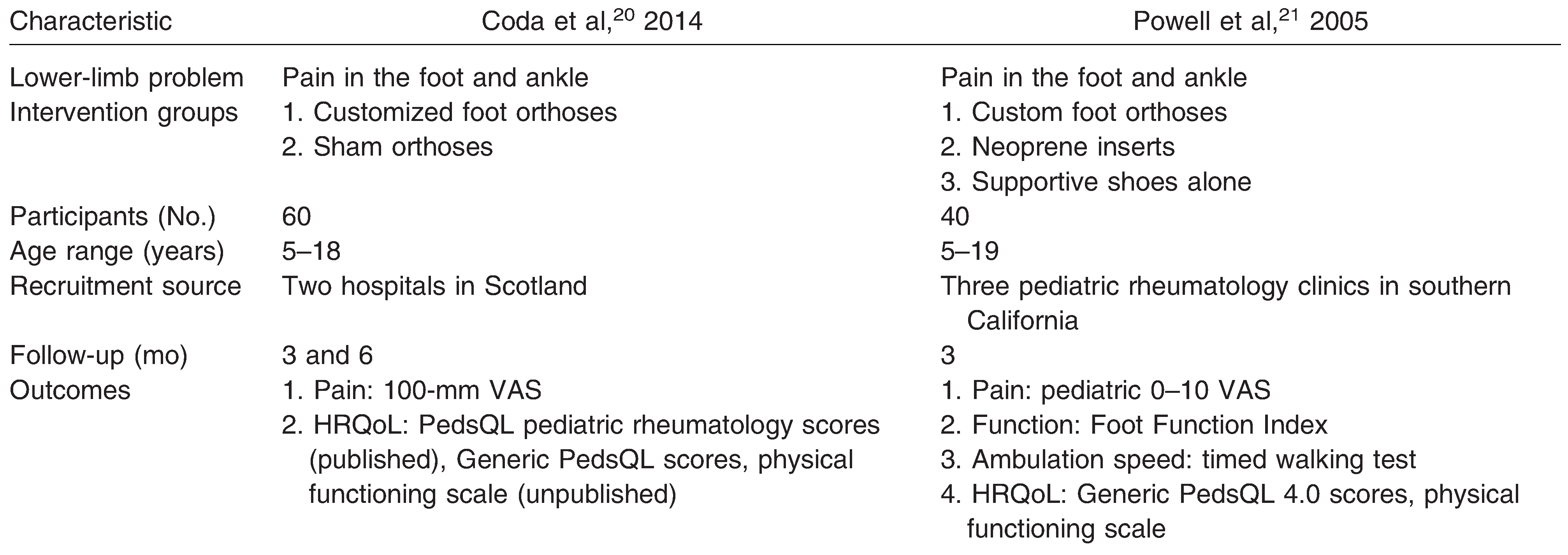
Both included studies were parallel-designed RCTs [20,21] and were published in peer-reviewed journals within the past 12 years (Table 2).

Participants

A total of 100 participants were included from two trials. Coda et al [20] included 60 participants and Powell et al [21] included 40 participants. All of the participants in the two included trials were children diagnosed as having JIA according to the International League of Associations for Rheumatology criteria. The mean ± SD ages of participants in Coda et al’s study was 10.91 ± 3.68 years, and in Powell et al’s it was 12.69 ±3.64 years. Overall, 75 of the participants were girls and 25 were boys. Of the 100 children diagnosed as having JIA, 14 had enthesitis-related JIA, 39 had polyarticular JIA, 39 had oligoarticular JIA, six had systemic JIA, none had psoriatic arthritis, and two had undifferentiated JIA.

Lower-Limb Problems

The lower-limb problem assessed in both trials was foot and ankle pain resulting from active joint disease.

Setting

Coda et al recruited children from a pediatric rheumatology clinic and two hospitals in Scotland between 2011 and 2012. Powell et al recruited from pediatric rheumatology clinics via three southern California children’s hospitals.

Types of Physical and Mechanical Therapies

Mechanical Therapies. Coda et al used a two-arm RCT to compare customized prefabricated FOs with sham orthoses. Powell et al used a three-arm RCT in which all of the participants received supportive footwear. Participants were randomized to one of three groups: shoes alone, custom FOs and shoes, or neoprene inserts and shoes.
Coda et al prescribed preformed semirigid FOs (Slimflex Plus; Algeos, Liverpool, England) that were customized on the day of the initial biomechanical assessment to accommodate the child’s lower-limb functional need. Control group participants were given sham FOs made from 1-mm leather board without any modifications or corrections. Both the FOs and the shams had a top cover of black ethylene vinyl acetate of 0.75-mm thickness [20]. Coda et al gave instructions to gradually wear the FOs in the first few days and then proceed to wear them at all shod times, including when exercising.
Powell et al evaluated custom-made FOs (Langer Biomechanics Inc, Ronkonkoma, New York), in which nonweightbearing casts were taken in a subtalar joint neutral position. The FOs were semirigid devices made from metal particle–reinforced polyolefin with additional shock-absorbing functional posts. The study did not report details of the technique of casting or the FO prescription. At visit 1, Powell et al randomized participants to their allocated interventions and casted participants who were receiving custom FOs. Powell et al provided the shoes and allocated interventions at visit 2 (baseline). The time between casting and fitting was not specified. At the third and final visit, all follow-up outcomes were assessed.
Physical Therapies. No physical therapies were evaluated in either trial.

Risk of Bias

Risk of bias is summarized in Table 3.

Outcomes

Lower-extremity and foot pain was an outcome assessed by both included trials. Coda et al used a 100-mm visual analog scale (VAS). Lower scores on the Foot Function Index (FFI) (pain) and VAS (pain) indicate lower-limb pain. Powell et al used the foot pain domain of the FFI) and a pediatric VAS, scored between 0 and 10. For meta-analysis, 0 to 10 VAS scores were multiplied by 10 to match the 100-mm VAS scores. The minimal important difference (MID) for the 100-mm VAS in children with rheumatic disease is 8 mm [46].
Function was assessed by Powell et al using the activity limitations domain of the FFI and speed of ambulation using the timed walking evaluation test. Lower scores on the FFI (function) and for speed of ambulation indicate better function. Disability was assessed by Powell et al using the disability domain of the FFI. Lower scores on the FFI (disability) indicate lower disability. The MID for the FFI has not been established in children. The MIDs for FFI domains for adults are 12 for pain, 7 for disability, and 0.5 for activity limitation [47].
The HRQoL was assessed in both trials using the PedsQL questionnaire. Both trials assessed HRQoL using the Generic PedsQL 4.0; however, Powell et al used only the physical functioning scale of the Generic PedsQL. Coda et al assessed HRQoL with both the Generic PedsQL and the PedsQL rheumatology questionnaire 3.0. The PedsQL rheumatology score is designed to measure pediatric rheumatology-specific HRQoL [48]. Meta-analysis of HRQoL was achieved by extrapolating only the physical functioning scores of the Generic PedsQL from both included studies. Both PedsQL questionnaires contain child and parent reports subdivided according to the child’s age range. A higher score on the PedsQL is indicative of better HRQoL; the MID for the PedsQL is 5 points [48]. Neither trial reported adverse effects or participant satisfaction with the intervention.

Comparisons

Coda et al and Powell et al compared customized/ custom FOs with a control condition (sham orthoses and no additional intervention, respectively). Powell et al also compared 1) custom FOs with flat neoprene inserts and 2) flat neoprene inserts with no additional intervention (all of the children in this trial received supportive shoes).

Effects of Interventions

Fifty-eight participants were allocated to receive a trial mechanical intervention (either customized/ custom FOs or neoprene inserts) and 42 participants were allocated to receive a standardized or sham therapy. Coda et al reported median and interquartile range scores because data were non-parametric, and Powell et al presented follow-up data using mean ± SD scores. To complete the meta-analysis, Coda et al supplied the follow-up mean ± SD scores for all of the outcomes.

Data and Analysis

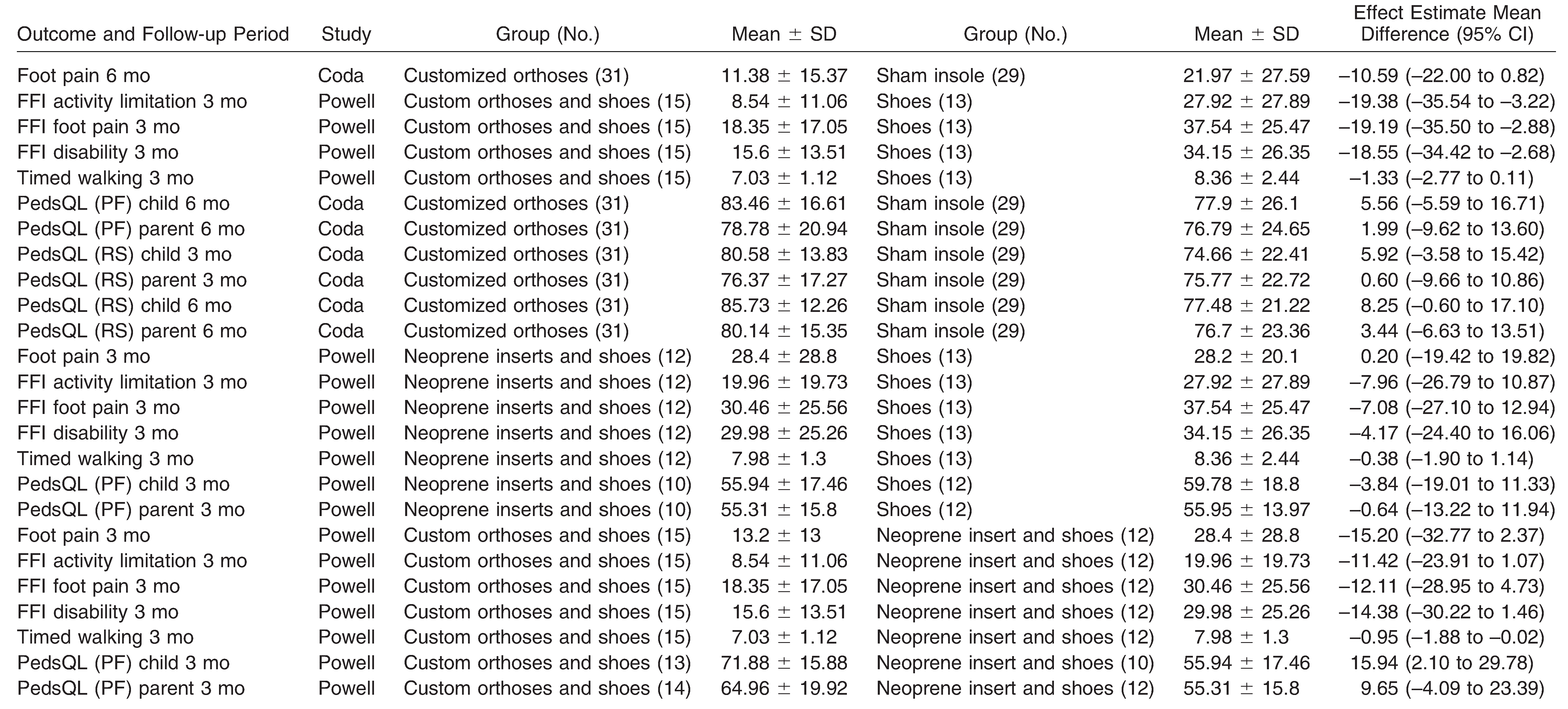
Figure 2, Figure 3 and Figure 4 present all of the meta-analyses performed. Because both studies concealed allocation, sensitivity analyses for meta-analyses were performed by excluding data from the study [21] that did not blind participants to their intervention. Results of sensitivity analyses for comparisons between custom/customized FOs and a control intervention after 3 months of intervention were not significant for the outcomes of pain (mean difference, –2.88; 95% CI, –15.70 to 9.94); child-rated HRQoL (mean difference, 0.30; 95% CI, –9.66 to 10.26); and parent-rated HRQoL (mean difference, – 2.76; 95% CI, –13.12 to 7.60). Table 4 presents analyses each containing data from only one study.

Discussion

Findings and Implications

Pain. Customized/Custom FOs versus Control Intervention. At 3-month follow-up, a meta-analysis of both included trials found no significant difference between customized/custom FOs and a control intervention (either supportive footwear or sham orthoses). This was supported by a sensitivity analysis at the 6-month time point. In all comparisons, however, the mean difference was larger than the MID of 8 mm for the 100-mm VAS. This indicates that customized/custom FOs may have a small, clinically important effect, but at this time the available evidence does not allow for a precise estimate of effect to be made.
Custom FOs versus Neoprene Inserts. Similarly, the difference between customized/custom FOs and neoprene inserts after 3 months was not statistically significant but may have clinical importance.
Foot Function Index. Custom FOs versus Control Intervention. Between-group differences in means for all of the domains after 3 months were significant and clinically important in favor of custom FOs.
Neoprene Inserts versus Control Intervention. Similarly, between-group differences in means for all of the domains after 3 months were statistically significantly in favor of neoprene inserts, but differences were too small to be clinically important, except for activity limitation, which holds potential clinical importance in favor of neoprene inserts.
Custom FOs versus Neoprene Inserts. Between group differences in means for all of the domains after 3 months were not statistically significant, but the effect size was clinically important in favor of custom FOs.
Caution should be taken when applying these findings because the FFI has not been validated in children with rheumatic disease.
Generic PedsQL Physical Functioning Domain. Customized/Custom FOs versus Control Intervention: At 3-month follow-up, a meta-analysis of both included trials found no significant difference between customized/custom FOs and a control intervention (either supportive footwear or sham orthoses) for child- or parent-rated physical functioning as measured with the PedsQL. This was supported by a sensitivity analysis at the 6-month time point. In addition, mean differences for both parent and child scores did not reach a MID of 5 points after 3 months. A small clinically important mean difference in child-rated HRQoL after 6 months is noted.
Neoprene Inserts versus Control Intervention. Between-group differences in means after 3 months were not significant.
Custom FOs versus Neoprene Inserts. Between-group differences in means after 3 months were significant for child-rated HRQoL in favor of custom FOs. For parent-rated HRQoL, difference in means at 3 months was clinically important but not statistically significant.
PedsQL Pediatric Rheumatology Questionnaire. Customized FOs versus Sham Orthoses. Between-group differences in means after 3 and 6 months were not statistically significant, but at both time points, mean differences were clinically important for child-rated HRQoL in favor of customized FOs.
Timed Walking. At 3-month follow-up, mean walking speed was significantly faster in children with custom FOs than in those with neoprene inserts. The MID is unknown, and it is possible that the difference is too small to be clinically important. No significant differences in walking speed were found between children with 1) custom FOs and shoes versus shoes alone or 2) neoprene inserts and shoes versus shoes alone.

Summary of Comparisons

This review detected many between-group differences in means that are not statistically significant but that are larger than the clinically important difference for the scales used. Because the estimate of effect is imprecise (with broad CIs), no final judgment can be made regarding whether potential clinically important differences between interventions exist. Table 5 summarizes outcome significance for customized/custom FOs versus control or alternative interventions.

Limitations

This systematic review is limited to RCTs and quasi-RCTs of physical and mechanical therapies for lower-limb problems in children with JIA and to only journals indexed in the databases searched or known by the researchers we contacted.

Limitations of the Included Trials

Only two RCTs were included in this systematic review, in which only one lower-limb problem (foot and ankle pain) was explored. In addition, both included studies evaluated the same mechanical intervention (FOs).
Powell et al had a small sample size. It is unclear whether power calculations were performed. Compounding the issue of the small sample, the attrition rate was high (eight of 48 patients). This may have affected the ability of analyses to detect significant and clinically important effects. In addition, because nonparametric data from Coda et al could not be pooled with data from Powell et al in Review Manager, parametric data were obtained and used in the analyses. This may have contributed to broad CIs.
Powell et al assessed HRQoL with a generic pediatric quality of life questionnaire, which is not specific to pediatric rheumatology. The PedsQL pediatric rheumatology 3.0 questionnaire was already available at the time of the study, which may have better reflected the HRQoL of this specific pediatric population. Custom FOs, as evaluated by Powell et al, require a manufacture period, which delays provision of the intervention, sometimes by weeks. Where research evidence is inconclusive and when no clear clinical benefit exists for prescribing custom-made over customized prefabricated devices, clinicians with their patients may select to use prefabricated devices to achieve earlier intervention, which is the gold standard in pediatric rheumatology [49,50]. Clinicians may also consider the cost of the interventions. At the time of the study, the cost of the customized (prefabricated) FOs used by Coda et al was estimated to be £10 to £15 (A$21–A$32, October 2015 currency rate); and the cost of custom-made FOs used by Powell et al were $200 to $350 per pair (approximately A$275–A$481, October 2015 currency rate). Although customized prefabricated orthoses are less expensive than custom-made devices, both are considerably cheaper compared with drug therapy for JIA.

Recommendations for Clinical Practice

Until more conclusive research of the effectiveness of FOs is available, health professionals may use FOs with care when managing foot and ankle pain in children with JIA. Health professionals should consider FOs as part of a holistic therapeutic approach and consider the potential risks and benefits of alternative interventions.

Recommendations for Future Research

At present, only two RCTs of the effectiveness of mechanical therapies for lower-limb problems in JIA were found [20,21]. We did not find an RCT that evaluates the effectiveness of physical therapies for lower-limb problems in children with JIA. Physical therapies that may be effective for specific lowerlimb problems in JIA are massage, specific muscle and stretching exercise programs, and hydrotherapy. Methodologically rigorous RCTs of long duration with adequate sample sizes determined by a priori power calculations are required.

Conclusions

The effectiveness of FOs for foot and ankle pain in children with JIA is unclear. Existing research demonstrates inconsistent and nonsignificant differences that potentially hold clinical benefit. Currently, there are no RCTs that evaluate the effectiveness of physical therapies for lower-limb problems in children with JIA, and evaluation of mechanical therapies is limited to FOs and shoe inserts for foot and ankle pain. Future research should focus on methodologically rigorous RCTs that explore physical and mechanical therapies for a range of specific lower-limb problems in JIA.

Financial Disclosure

None reported.

Conflict of Interest

Dr. Coda is an author of a trial included in this review.

References

  1. RAVELLI A, MARTINI A: Juvenile idiopathic arthritis. Lancet 2007, 369, 767. [CrossRef]
  2. HA¨ FNER, R.; TRUCKENBRODT, H.; SPAMER, M. Rehabilitation in children with juvenile chronic arthritis. Baillie`res Clin Rheumatol 1998, 12, 329. [Google Scholar] [CrossRef]
  3. PETTY, R.E.; SOUTHWOOD, T.R.; MANNERS, P. ET AL: International League of Associations for Rheumatology classification of juvenile idiopathic arthritis: second revision, Edmonton, 2001. J Rheumatol 2004, 31, 390. [Google Scholar]
  4. PACKHAM, J. HALL M: Long-term follow-up of 246 adults with juvenile idiopathic arthritis: functional outcome. Rheumatology 2002, 41, 1428. [Google Scholar] [CrossRef]
  5. MINDEN, K.; NIEWERTH, M.; LISTING, J. ET AL: Burden and cost of illness in patients with juvenile idiopathic arthritis. Ann Rheum Dis 2004, 63, 836. [Google Scholar] [CrossRef]
  6. MINDEN, K.; NIEWERTH, M.; LISTING, J. ET AL: The economic burden of juvenile idiopathic arthritis: results from the German paediatric rheumatologic database. Clin Exp Rheumatol 2009, 27, 863. [Google Scholar] [PubMed]
  7. BERNATSKY, S.; DUFFY, C.; MALLESON, P. ET AL: Economic impact of juvenile idiopathic arthritis. Arthritis Care Res 2007, 57, 44. [Google Scholar] [CrossRef]
  8. What is juvenile arthritis? Australian Institute of Health and Welfare Web site. Available online: http://www.aihw.gov.au/juvenile-arthritis/what-is/#table3 (accessed on 28 July 2015).
  9. DAVID, J.; COOPER, C.; HICKEY, L. ET AL: The functional and psychological outcomes of juvenile chronic arthritis in young adulthood. Rheumatology 1994, 33, 876. [Google Scholar] [CrossRef] [PubMed]
  10. TARAKCI, E.; YELDAN, I.; KAYA MUTLU, E. ET AL: The relationship between physical activity level, anxiety, depression, and functional ability in children and adolescents with juvenile idiopathic arthritis. Clin Rheumatol 2011, 30, 1415. [Google Scholar] [CrossRef] [PubMed]
  11. FELLAS, A.; CODA, A.; HAWKE, F. Physical and mechanical therapies for lower limb problems in juvenile idiopathic arthritis: a systematic review (protocol). Appl Clin Res Clin Trials Regul Aff 2015, 2. [Google Scholar] [CrossRef]
  12. MOORE, K.L.; DALLEY, A.F.; AGUR, A.M. Clinically Oriented Anatomy; Lippincott Williams & Wilkins: Philadelphia, 2013. [Google Scholar]
  13. GRAGG, R.A.; RAPOFF, M.A.; DANOVSKY, M.B.; et al. Assessing chronic musculoskeletal pain associated with rheumat- ic disease: further validation of the pediatric pain questionnaire. J Pediatr Psychol 1996, 21, 237. [Google Scholar] [CrossRef]
  14. VARNI, J.W.; SEID, M.; RODE, C.A. The PedsQL: measurement model for the pediatric quality of life inventory. Med Care 1999, 37, 126. [Google Scholar] [CrossRef] [PubMed]
  15. Cochrane Handbook for Systematic Reviews of Interventions, Wiley Online Library Web site; HIGGINS, J.P., GREEN, S., Eds.; 2008; Available online: http://onlineli brary.wiley.com/book/10.1002/9780470712184 (accessed on 15 June 2017).
  16. MONDAL, R.; SARKAR, S.; DAS, N.K. ET AL: Growth of children with juvenile idiopathic arthritis. Indian Pediatr 2014, 51, 199. [Google Scholar] [CrossRef] [PubMed]
  17. HAWKE, F.; BURNS, J.; RADFORD, J.A. ET AL: Custom-made foot orthoses for the treatment of foot pain. Cochrane Database Syst Rev 2008, 3, CD006801. [Google Scholar]
  18. TAKKEN, T.; VAN BRUSSEL, M.; ENGELBERT, R.H.H. ET AL: Exercise therapy in juvenile idiopathic arthritis: a Cochrane Review. Eur J Phys Rehabil Med 2008, 44, 287. [Google Scholar]
  19. TAKKEN, T.; VAN DER NET, J.; KUIS, W. ET AL: Aquatic fitness training for children with juvenile idiopathic arthritis. Rheumatology (Oxford) 2003, 42, 1408. [Google Scholar] [CrossRef]
  20. CODA, A.; FOWLIE, P.W.; DAVIDSON, J.E. ET AL: Foot orthoses in children with juvenile idiopathic arthritis: a randomised controlled trial. Arch Dis Child 2014, 99, 649. [Google Scholar] [CrossRef] [PubMed]
  21. POWELL, M.; SEID, M.; SZER, I.S. Efficacy of custom foot orthotics in improving pain and functional status in children with juvenile idiopathic arthritis: a randomized trial. J Rheumatol 2005, 32, 943. [Google Scholar]
  22. TARAKCI, E.; YELDAN, I.; BAYDOGAN, S.; ET, A.L. The efficacy of land-based home exercise program in patients with juvenile idiopathic arthritis: a randomized-controlled, single-blind study. Ann Rheum Dis 2013, 71 (Suppl 3), 750. [Google Scholar] [CrossRef]
  23. STERN, S.M.; BLITZ, J.R.; RICHARDS, A. ET AL: A family based pedometer walking program in an adolescent population with juvenile idiopathic arthritis. Arthritis Rheum 2012, 64 (suppl), S1. [Google Scholar]
  24. SANDSTEDT, E.; FASTH, A.; EEK, M.N.; ET, A.L. Muscle strength, physical fitness and well-being in children and adolescents with juvenile idiopathic arthritis and the effect of an exercise programme: a randomized controlled trial. Pediatr Rheumatol Online J 2013, 11, 7. [Google Scholar] [CrossRef] [PubMed]
  25. HENDRY, G.J.; WATT, G.F.; BRANDON, M.; et al. The effectiveness of a multidisciplinary foot care program for children and adolescents with juvenile idiopathic arthritis: an explor- atory trial. J Rehabil Med 2013, 45, 467. [Google Scholar] [CrossRef]
  26. FIELD, T.; HERNANDEZ-REIF, M.; SELIGMAN, S. ET AL: Juvenile rheumatoid arthritis: benefits from massage therapy. J Pediatr Psychol 1997, 22, 607. [Google Scholar] [CrossRef]
  27. MENDONCA, T.M.; TERRERI, M.T.; SILVA, C.H.; et al. Effects of Pilates exercises on health-related quality of life in individuals with juvenile idiopathic arthritis. Arch Phys Med Rehabil 2013, 94, 2093. [Google Scholar] [CrossRef]
  28. Singh-Grewal, D.; Schneiderman-Walker, J.; Wright, V.; et al. The effects of vigorous exercise training on physical function in children with arthritis: a randomized, controlled, single-blinded trial. Arthritis Rheum 2007, 57, 1202. [Google Scholar] [CrossRef] [PubMed]
  29. EPPS, H.; GINNELLY, L.; UTLEY, M. ET AL: Is hydrotherapy cost-effective? A randomised controlled trial of combined hydrotherapy programmes compared with physiotherapy land techniques in children with juvenile idiopathic arthritis. Health Technol Assess 2005, 9, iii. [Google Scholar] [CrossRef] [PubMed]
  30. BALDWIN J: The physiotherapist and juvenile rheumatoid arthritis. J Can Physiother Assoc 1971, 23, 106.
  31. BALDWIN J: Pool therapy compared with individual home exercise therapy for juvenile rheumatoid arthritic patients. Physiotherapy 1972, 58, 230.
  32. EBERHARD, B.A.; SYLVESTER, K.L.; ANSELL, B.M. A comparative study of orthoplast cock-up splints versus ready-made Droitwich work splints in juvenile chronic arthritis. Disabil Rehabil 1993, 15, 41. [Google Scholar] [CrossRef]
  33. FARPOUR-LAMBERT, N.J.; KELLER-MARCHAND, L.; RIZZOLI, R.; et al. Physical exercise and bone development in chronically ill children [in French]. Rev Med Suisse Romande 2004, 124, 73. [Google Scholar]
  34. FINGERHUTOVA, S.; SAIFRIDOVA, M.; VRANOVA, M. ET AL: Is there an evidence for the role of multidisciplinary team in the management of active juvenile idiopathic arthritis? Pediatr Rheumatol 2014, 12, P177. [Google Scholar] [CrossRef]
  35. FREDRIKSEN, B.; MENGSHOEL, A.M. The effect of static traction and orthoses in the treatment of knee contractures in preschool children with juvenile chronic arthritis: a single-subject design. Arthritis Care Res 2000, 13, 352. [Google Scholar] [CrossRef] [PubMed]
  36. GIANNINI, M.J. PROTAS EJ: Exercise response in children with and without juvenile rheumatoid arthritis: a case- comparison study. Phys Ther 1992, 72, 365. [Google Scholar] [PubMed]
  37. HENDRY, G.J.; TURNER, D.E.; MCCOLL, J. ET AL: Protocol for the Foot in Juvenile Idiopathic Arthritis trial (FiJIA): a randomised controlled trial of an integrated foot care programme for foot problems in JIA. J Foot Ankle Res 2009, 2, 21. [Google Scholar]
  38. HENDRY, G.; WATT, G.; BRANDON, M. ET AL: A feasibility trial of multidisciplinary foot care for children and adolescents with juvenile idiopathic arthritis. Intern Med J 2012, 42 (suppl 1), 7. [Google Scholar] [CrossRef]
  39. HENDRY, G.J.; WATT, G.F.; BRANDON, M.; ET, A.L. Clinical and cost effectiveness of a multidisciplinary foot care programme for children and adolescents with juvenile idiopathic arthritis: an exploratory trial. Rheumatology (Oxford) 2013, 52, i36. [Google Scholar]
  40. KLEPPER SE: Effects of an eight-week physical conditioning program on disease signs and symptoms in children with chronic arthritis. Arthritis Care Res 1999, 12, 52. [CrossRef]
  41. LELIEVELD, O.T.; ARMBRUST, W.; GEERTZEN, J.H. ET AL: Promoting physical activity in children with juvenile idiopathic arthritis through an internet-based program: results of a pilot randomized controlled trial. Arthritis Care Res 2010, 62, 697. [Google Scholar] [CrossRef]
  42. MENDONCA, T.M.S.; LEN, C.A.; TERRERI, M. ET AL: Does standard phisiotherapy influence the health-related quality of life of JIA patients? 18th Pediatric Rheumatology European Society Congress, Bruges, Be´lgica, 2011. [Google Scholar]
  43. SAARINEN, J.; LEHTONEN, K.; MALKIA, E. ET AL: Lower extremity isometric strength in children with juvenile idiopathic arthritis. Clin Exp Rheumatol 2008, 26, 947. [Google Scholar]
  44. SANDSTEDT, E.; FASTH, A.; FORS, H. ET AL: Bone health in children and adolescents with juvenile idiopathic arthritis and the influence of short-term physical exercise. Pediatr Phys Ther 2012, 24, 155. [Google Scholar]
  45. VAN BRUSSEL M: Promoting physical activity in children with juvenile idiopathic arthritis through an Internet-based program: results of a pilot randomized controlled trial [in Dutch]. Nederlands Tijdschrift Voor Fysiother 2010, 120, 169.
  46. DHANANI, S.; QUENNEVILLE, J.; PERRON, M. ET AL: Minimal difference in pain associated with change in quality of life in children with rheumatic disease. Arthritis Care Res 2002, 47, 501. [Google Scholar] [CrossRef] [PubMed]
  47. LANDORF, K.B.; RADFORD, J.A. Minimal important difference: values for the foot health status questionnaire, foot function index and visual analogue scale. The Foot 2008, 18, 15. [Google Scholar] [CrossRef]
  48. VARNI, J.W.; SEID, M.; SMITH KNIGHT, T.; ET, A.L. The PedsQL in pediatric rheumatology: reliability, validity, and responsiveness of the Pediatric Quality of Life Inventory Generic Core Scales and Rheumatology Module. Arthri- tis Rheum 2002, 46, 714. [Google Scholar] [CrossRef]
  49. FOSTER, H.E.; ELTRINGHAM, M.S.; KAY, L.J. ET AL: Delay in access to appropriate care for children presenting with musculoskeletal symptoms and ultimately diagnosed with juvenile idiopathic arthritis. Arthritis Care Res 2007, 57, 921. [Google Scholar] [CrossRef]
  50. RAVELLI, A.; MARTINI, A. Early predictors of outcome in juvenile idiopathic arthritis. Clin Exp Rheumatol 2003, 21 (suppl 31), S89. [Google Scholar]
Figure 1. Preferred Reporting Items for Systematic Reviews and Meta-Analyses flowchart depicting the number of studies identified by the search and listed as potentially eligible. Reasons for excluding potentially eligible studies can be seen with a final count of studies included in the systematic review. RCT, randomized controlled trial.
Japma 107 00399 g001
Figure 2. Meta-analysis of the effectiveness of custom/customized foot orthoses versus a control (sham orthoses or supportive footwear alone) in treating foot pain after 3 months in children with juvenile idiopathic arthritis. CI, confidence interval; IV, inverse variance.
Japma 107 00399 g002
Figure 3. Meta-analysis of the effectiveness of custom/customized foot orthoses versus a control (sham orthoses or supportive footwear alone) in improving health-related quality of life in children with juvenile idiopathic arthritis. This figure represents the child-rated scores of the physical functioning subscale of the Pediatric Quality of Life Inventory. CI, confidence interval; IV, inverse variance.
Japma 107 00399 g003
Figure 4. Meta-analysis of the effectiveness of custom/customized foot orthoses versus a control (sham orthoses or supportive footwear alone) in improving health-related quality of life in children with juvenile idiopathic arthritis. This figure represents the parent-rated scores of the physical functioning subscale of the Pediatric Quality of Life Inventory. CI, confidence interval; IV, inverse variance.
Japma 107 00399 g004
Table 1. OvidSP MEDLINE Search Strategy
Japma 107 00399 i001
Abbreviations: ab, abstract; JIA, juvenile idiopathic arthritis; pt, publication type; sh, subject heading.
Table 2. Summarized Characteristics of the Two Included Studies
Japma 107 00399 i002
Abbreviations: HRQoL, health-related quality of life; PedsQL, Pediatric Quality of Life Inventory; VAS, visual analog scale.
Table 3. Risk of Bias
Japma 107 00399 i003aJapma 107 00399 i003b
Abbreviations: FO, foot orthoses; HRQoL, health-related quality of life.
Table 4. Analyses Containing Data from One Study: Coda et al, [20] 2014, and Powell et al, [21] 2005
Japma 107 00399 i004
Note: Lower scores on an outcome measure represent a better result, except for PedsQL. Abbreviations: CI, confidence interval; FFI, Foot Function Index; PedsQL, Pediatric Quality of Life Inventory; PF, physical functioning; RS, rheumatology score.
Table 5. Summary of Outcome Significance for Customized/Custom Foot Orthoses versus Control or Alternative Interventions
Japma 107 00399 i005
Abbreviations: HRQoL, health-related quality of life; PedsQL, Pediatric Quality of Life Inventory. aNone represents no statistical significance or clinical importance. bPossible represents possible or incomplete statistical significance or clinical importance.