Next Article in Journal
Motor-Evoked Potentials of the Abductor Hallucis Muscle and Their Relationship with Foot Arch Functional Anatomy
Previous Article in Journal
Clinical Utility of Ultrasound Measurements of Plantar Fascia Width and Cross-Sectional Area. A Novel Technique
 
 
Journal of the American Podiatric Medical Association is published by MDPI from Volume 116 Issue 1 (2026). Previous articles were published by another publisher in Open Access under a CC-BY (or CC-BY-NC-ND) licence, and they are hosted by MDPI on mdpi.com as a courtesy and upon agreement with American Podiatric Medical Association.
Review

Management of Plantar Keratodermas. Lessons from Pachyonychia Congenita

by
Rebecca M. Porter
1,
Albert A. Bravo
2 and
Frances J.D. Smith
3,*
1
Private practice, Dorchester, United Kingdom
2
Podiatric Medicine and Surgery, Pittsfield, MA
3
Pachyonychia Congenita Project, School of Life Sciences, University of Dundee, Dundee DD1 5EH, Scotland
*
Author to whom correspondence should be addressed.
J. Am. Podiatr. Med. Assoc. 2017, 107(5), 428-435; https://doi.org/10.7547/16-043
Published: 1 September 2017

Abstract

Plantar keratodermas can arise due to a variety of genetically inherited mutations. The need to distinguish between different plantar keratoderma disorders is becoming increasingly apparent because there is evidence that they do not respond identically to treatment. Diagnosis can be aided by observation of other clinical manifestations, such as palmar keratoderma, more widespread hyperkeratosis of the epidermis, hair and nail dystrophies, or erythroderma. However, there are frequent cases of plantar keratoderma that occur in isolation. This review focuses on the rare autosomal dominant keratin disorder pachyonychia congenita, which presents with particularly painful plantar keratoderma for which there is no specific treatment. Typically, patients regularly trim/ pare/file/grind their calluses and file/grind/clip their nails. Topical agents, including keratolytics (eg, salicylic acid, urea) and moisturizers, can provide limited benefit by softening the skin. For some patients, retinoids help to thin calluses but may lead to increased pain. This finding has stimulated a drive for alternative treatment options, from gene therapy to alternative nongenetic methods that focus on novel findings regarding the pathogenesis of pachyonychia congenita and the function of the underlying genes. (J Am Podiatr Med Assoc 107(5): 428-435, 2017)

The epidermis is a stratified epithelium that undergoes cornification (or keratinization), a process that is necessary for barrier formation, protecting the body from the environment and from dehydration [1]. Keratinocytes proliferate in the basal layer and start the cornification process once they leave this layer and are committed to differentiation. As the cells move upward they change shape and start to express some of the components of the barrier in the spinous layer. They flatten out in the granular layer and then die to form the squames of the cornified layer with a fully formed barrier. The epidermal barrier consists of intercellular lipid lamellae and a lipid layer that replaces the cell membrane in the latter stages of cornification that is bound to specialized proteins on the inside to form the cornified envelope. The basal proliferative layer is a single layer of cells, but the spinous, granular, and cornified layers vary in the number of cells, with plantar epidermis being the thickest. Hyperkeratosis leading to the thick calluses associated with palmoplantar keratodermas (PPKs) can arise by a variety of mechanisms that cause hyperproliferation or interfere with the cornification/ desquamation equilibrium. Genes implicated in PPKs encode proteins with a wide range of functions, including structural proteins (responsible for cellular/tissue integrity and barrier function), cell signaling and communication, and proteases and their inhibitors [2] (Table 1). Palmoplantar keratoderma is defined clinically by the extent of the hyperkeratosis and is classified as diffuse when the whole plantar epidermis is affected, as focal when the affected area is confined to pressure points, and as striate when a linear pattern of hyperkeratosis is observed, particularly on the fingers. These observations can help narrow down the underlying gene but should be used with caution as a diagnostic feature because the degree of keratoderma can be highly variable. Also, PPK can be subdivided histologically as epidermolytic or nonepidermolytic, depending on whether the biopsies show histologic evidence of cytolysis, and as acanthotic when there is evidence of cells pulling apart. Other cutaneous symptoms can be important in diagnosis and can alert to life-threatening extracutaneous manifestations, such as heart disease and esophageal cancer, because the underlying genes are not always restricted to skin [3].

Clinical Presentation

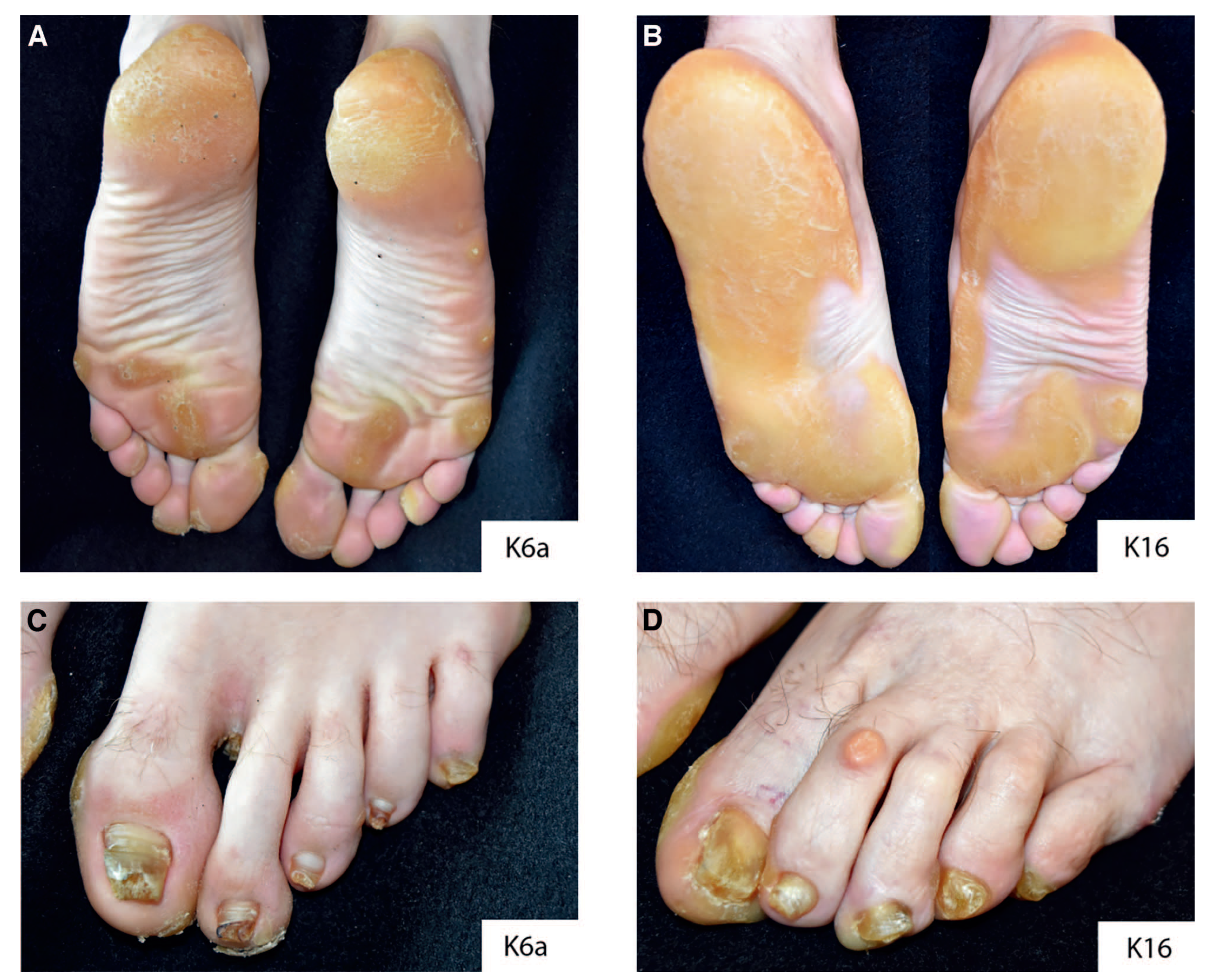
The name pachyonychia was coined to reflect the nail dystrophy associated with this disorder [4,5]. However, now that more cases have been reported with mutations in pachyonychia congenita (PC) keratin (K) genes, it is clear that painful plantar keratoderma is a more prominent clinical manifestation, associated with 97% of patients with PC (Figure 1). [6] This is the most debilitating feature of the disorder, and often patients resort to using a wheelchair, crutches, canes, or other ambulatory aids. Some patients present with only plantar keratoderma and are originally misdiagnosed as having a non-PC disorder until the underlying genetic mutations are found to be in common PC genes and, therefore, likely to represent a clinical spectrum [7,8]. Hypertrophic nail dystrophy is variable and can affect all or just some fingernails and toenails (Figure 1). Patients with PC also present with a range of other clinical symptoms, which can help with diagnosis, although these are of more variable occurrence [6]. These symptoms include cysts of various types, leukokeratosis, follicular hyperkeratosis, and palmar keratoderma. In PC, keratoderma is usually focal, but the area involved is highly variable, and the whole plantar surface can be affected [9].

Genetics

Pachyonychia congenita is one of a family of disorders caused by mutations in keratin genes [10]. Some keratins are found throughout the epidermis regardless of body site, but others are more restricted [11]. In PC, the mutations that lead to painful plantar keratoderma are in any one of five keratin genes (KRT6A, KRT6B, KRT6C, KRT16, and KRT17) encoding the corresponding keratins (K6a, K6b, K6c, K16, and K17) [12,13]. These proteins are normally confined to the hair follicles, nail bed, and oral cavity and are absent from the epidermis of most regions of the body except palmoplantar sites [14].

Pathogenesis

Keratins form the intermediate filaments, the part of the cytoskeleton that provides strength to the keratinocytes in the living layers of the epidermis. In the upper granular layers, these filaments become bundled and cross-linked to the cornified envelope of the corneocyte in the cornified layer [15]. Thus, keratin filaments play two important roles in epidermal structure: providing strength in the living layers and barrier function in the stratum corneum. Keratin gene mutations in other keratinization disorders have been shown to disrupt the intermediate filaments and to lead to cytolysis. It seemed reasonable to assume that all mutations lead to aberrant network structure [10]. However, PPK associated with PC is classified as nonepidermolytic due to limited evidence of cytolysis that can be observed histologically as cellular damage. So, the reason for the pain associated with the keratoderma needed explanation. Recent evidence from ultrasound of the plantar epidermis has identified blisters of fluid below the calluses, between the epidermis and dermis, in PC [16].
Pachyonychia congenita keratins may also be involved in barrier function. K16 knockout mice have a barrier defect. In addition, these mice show changes in expression of alarmins, the first signals of barrier breach that stimulate the innate immune response [17]. When this was also investigated in PC, plantar epidermis showed increases in alarmins regardless of whether it was a mutation in KRT16 or one of the other PC keratin genes [18].

Treatment of PC

The treatment of PC is problematic because currently there are no specific treatments. Similar to other cases of PPK, thinning of the calluses is required, but it is vital, regardless of whether this is performed by physical means or by treatment with oral retinoids, that the ‘‘not too thick–not too thin’’ rule is observed. Before retinoids are used, diagnosis of the type of keratoderma should be confirmed, preferably by genetic sequencing. Genetic testing for PC is pertinent particularly where plantar keratoderma is painful and associated with toenail thickening, and it is available free of charge for patients enrolling in the International Pachyonychia Congenita Research Registry (IPCRR) from the PC Project (www.pachyonychia.org/patient-registry/).
Japma 107 00428 i001
Japma 107 00428 i002Japma 107 00428 i003
Retinoids inhibit cornification, hence their effect on calluses [19]. Retinoid treatment has been used routinely for the treatment of defects in cornification, such as ichthyoses and psoriasis, with good patient outcomes. In PC, retinoids are also effective at reducing plantar calluses. However, they also reduce the expression of some epidermal keratins, including K16 [20]. So, as well as reducing the callus, they also potentially reduce the integrity of the keratin filament network and, hence, may enhance the blistering effect, resulting in increased pain and sensitivity [21]. Therefore, if retinoids are used they should be administered with caution because lower doses are likely to be required to prevent adverse pain [21].
Although thorough mechanical debridement of keratoses can be beneficial to many patients without PC, those with PC frequently find that aggressive debridement of the lesions increases the pain. One of the most common problems for those with PC is the effort by the practitioner (podiatrist/ chiropodist) to remove the callus. Paring must be performed in a limited manner. Often, neurovascular bundles are growing in the callus, appearing as red dots, and regular trimming of calluses causes bleeding and increased pain. Practitioners usually find less aggressive debridement/limited debridement of keratoses, coupled with off-loading modalities, such as insole or orthotic device modifications, shoe adjustments, bracing, etc, to be of value. Patients with severe involvement may rely on crutches or a wheelchair due to the severity of the pain from the plantar keratoses. Many patients rely on some form of pain medication for pain relief.
Patients with PC sometimes experience hyperhidrosis, which may result in increased blistering of painful calluses. Several small studies have shown that plantar injections of botulinum toxin type A (BTX-A) leads to an improvement in the painful plantar keratoderma. Botulinum toxin type A suppresses eccrine sweat glands, inhibiting sweatinduced maceration of the epidermis and reducing plantar blistering and pain. Swartling and Vahlquist [22] reported treatment of three patients with PC with BTX-A in 2006. All three patients reported dryness and a reduction in pain in the plantar pressure sites. This relief lasted from 6 weeks to 6 months. Injections were repeated over 2 years confirming these results, and there were no adverse effects. Two further studies [23,24], although using different doses of BTX-A and methods of anesthesia also resulted in a reduction in painful plantar blisters and calluses, patients were more mobile, and less pain medication was required. Treatment with BTX-A is well tolerated and lasts several months. Although not a cure, BTX-A should be considered as a treatment to reduce the painful plantar keratoderma and improve the quality of life for patients with PC.

The Future Management of Keratoderma in PC

We are clearly in need of alternative therapies not just for PC but for all PPKs. Even within the PC clinical spectrum there is the potential for future therapies being gene specific. The IPCRR is coordinating patients, physicians, and researchers to collate data on this rare disorder and to facilitate the development of novel treatments. Mutant gene– specific knockdown is the ideal option, and some success has been achieved with small interfering RNA for a mutation in KRT6A [25], but with more than 100 different mutations in five different genes [26], this could be expensive and time-consuming unless a way to knockout mutant alleles less specifically can be developed. One possibility is to knockdown K6a completely in patients with KRT6A mutations. The KRT6 genes are very similar, and there may be functional redundancy, particularly in the palmoplantar epidermis, where all three KRT6 genes are expressed [13]; this hypothesis is supported by the lack of keratoderma in KRT6 knockout mice [27]. RNA interference-based therapy might, therefore, have potential for patients with KRT6A mutations, who represent approximately 40% of cases so far examined [26]. Total knockdown is unlikely to work for keratoderma keratins other than KRT6 genes [28,29]. However, the main hurdle is a need to develop ways of delivering the therapy because injection into the plantar epidermis proved very painful [25]. Dissolvable microneedle devices are being developed for this purpose, which will allow self-delivery of small interfering RNA [29].
Nongenetic methods for reducing the plantar keratoderma are also pending clinical trial because emerging nonstructural roles of the PC/woundhealing keratins may also be a target for treatment. Keratins form intermediate filaments through association of the central a-helical domains, which are flanked by nonhelical head and tail domains of mostly unknown function. Keratin 17, through interaction with 14-3-3r via its amino-terminal head domain, can stimulate mammalian target of rapamycin (mTOR) signaling, which is important for protein synthesis and cell growth [30]. Rapamycin inhibition of mTOR might be a therapeutic option in PC, particularly because it inhibits K6a expression [31]. Systemic rapamycin (sirolimus) treatment showed some positive effect in three patients with PC, particularly regarding painful keratoderma, but had to be stopped due to adverse effects, including gastrointestinal distress, aphthous ulcers, and acneiform follicular eruption [31]. Topical treatment is an alternative possibility that is being investigated for a clinical trial in PC because it has been shown to be effective in tuberous sclerosis without systemic absorption or toxic adverse effects [32]. Rapamycin may also be effective in other hyperproliferative disorders, such as psoriasis, where K17 expression is induced.

Conclusions

Pachyonychia congenita is one of several disorders associated with PPK. Unlike patients with some other keratodermas, patients with PC experience considerable pain that can lead to wheelchair use. There was no explanation for this symptom until a recent study discovered blistering at the dermoepidermal junction using ultrasound. The pain sometimes experienced with retinoid treatment might be due to the fact that it will not only lead to reduced callusing but also reduce keratin expression and enhance the likelihood of blistering at the dermoepidermal junction. Ultimately, gene therapy may be the best recourse for genetic disorders of this kind but, as knowledge of specific roles for individual keratins comes to light, there may be more immediate methods to alleviate symptoms. Physicians and patients enrolling in the IPCRR will be kept informed of future directions for the management of keratoderma in PC.

Acknowledgments

Holly Evans of the PC Project for all her help with data preparation, and Mary Schwartz of the PC Project for useful discussions and critical reading of the manuscript.

Financial Disclosure

None reported.

Conflicts of Interest

None reported.

References

  1. CANDI, E.; SCHMIDT, R.; MELINO, G. The cornified envelope: a model of cell death in the skin. Nat Rev Mol Cell Biol 2005, 6, 328. [Google Scholar] [CrossRef] [PubMed]
  2. CAO, Y.A.; HICKERSON, R.P.; SEEGMILLER, B.L. ET AL: Gene expression profiling in pachyonychia congenita skin. J Dermatol Sci 2015, 77, 156. [Google Scholar] [CrossRef]
  3. HAS C, TECHNAU-HAFSI K: Palmoplantar keratodermas: clinical and genetic aspects. J Dtsch Dermatol Ges 2016, 14, 123. [CrossRef] [PubMed]
  4. JADASSOHN, J.; LEWANDOWSKI, P. ‘Pachyonychia Congenita: Keratosis Disseminata Circumscripts (Follicularis). Tylomata: Leukokeratosis Linguae,’’ in Ikonographia Dermatologica; edited by A Neisser, E Jacobi, p 29, Urban and Schwarzenberg: Berlin, 1906. [Google Scholar]
  5. JACKSON, A.D.; LAWLER, S.D. Pachyonychia congenita; a report of six cases in one family, with a note on linkage data. Ann Eugen 1951, 16, 142. [Google Scholar] [CrossRef]
  6. ELIASON, M.J.; LEACHMAN, S.A.; FENG, B.J. ET AL: A review of the clinical phenotype of 254 patients with genetically confirmed pachyonychia congenita. J Am Acad Dermatol 2012, 67, 680. [Google Scholar] [CrossRef]
  7. SHAMSHER, M.K.; NAVSARIA, H.A.; STEVENS, H.P. ET AL: Novel mutations in keratin 16 gene underly focal nonepidermolytic palmoplantar keratoderma (NEPPK) in two families. Hum Mol Genet 1995, 4, 1875. [Google Scholar] [CrossRef]
  8. SMITH, F.J.; FISHER, M.P.; HEALY, E.; et al. Novel keratin 16 mutations and protein expression studies in pachyonychia congenita type 1 and focal palmoplantar keratoderma. Exp Dermatol 2000, 9, 170. [Google Scholar] [CrossRef] [PubMed]
  9. LEACHMAN, S.A.; KASPAR, R.L.; FLECKMAN, P.; et al. Clinical and pathological features of pachyonychia congenita. J Investig Dermatol Symp Proc 2005, 10, 3. [Google Scholar] [CrossRef] [PubMed]
  10. LANE, E.B.; MCLEAN, W.H. Keratins and skin disorders. J Pathol 2004, 204, 355. [Google Scholar] [CrossRef]
  11. MOLL, R.; FRANKE, W.W.; SCHILLER, D.L.; ET, A.L. The catalog of human cytokeratins: patterns of expression in normal epithelia, tumors and cultured cells. Cell 1982, 31, 11. [Google Scholar] [CrossRef]
  12. WILSON, N.J.; LEACHMAN, S.A.; HANSEN, C.D. ET AL: A large mutational study in pachyonychia congenita. J Invest Dermatol 2011, 131, 1018. [Google Scholar] [CrossRef]
  13. WILSON, N.J.; MESSENGER, A.G.; LEACHMAN, S.A. ET AL: Keratin K6c mutations cause focal palmoplantar keratoderma. J Invest Dermatol 2010, 130, 425. [Google Scholar] [CrossRef]
  14. SWENSSON, O.; LANGBEIN, L.; MCMILLAN, J.R. ET AL: Specialized keratin expression pattern in human ridged skin as an adaptation to high physical stress. Br J Dermatol 1998, 139, 767. [Google Scholar] [CrossRef] [PubMed]
  15. STEINERT, P.M.; MAREKOV, L.N. The proteins elafin, filaggrin, keratin intermediate filaments, loricrin, and small proline-rich proteins 1 and 2 are isodipeptide crosslinked components of the human epidermal cornified cell envelope. J Biol Chem 1995, 270, 17702. [Google Scholar] [CrossRef]
  16. GOLDBERG, I.; SPRECHER, E.; SCHWARTZ, M.E.; et al. Comparative study of high-resolution multifrequency ultrasound of the plantar skin in patients with various types of hereditary palmoplantar keratoderma. Dermatology 2013, 226, 365. [Google Scholar] [CrossRef]
  17. LESSARD, J.C.; COULOMBE, P.A. Keratin 16-null mice develop palmoplantar keratoderma, a hallmark feature of pachyonychia congenita and related disorders. J Invest Dermatol 2012, 132, 1384. [Google Scholar] [CrossRef]
  18. LESSARD, J.C.; PINA-PAZ, S.; ROTTY, J.D. ET AL: Keratin 16 regulates innate immunity in response to epidermal barrier breach. Proc Natl Acad Sci U S A 2013, 110, 19537. [Google Scholar] [CrossRef]
  19. YUSPA, S.H.; HARRIS, C.C. Altered differentiation of mouse epidermal cells treated with retinyl acetate in vitro. Exp Cell Res 1974, 86, 95. [Google Scholar] [CrossRef]
  20. BLUMENBERG, M.; CONNOLLY, D.M.; FREEDBERG, I.M. Regulation of keratin gene expression: the role of the nuclear receptors for retinoic acid, thyroid hormone, and vitamin D3. J Invest Dermatol 1992, 98 (suppl), 42S. [Google Scholar] [CrossRef] [PubMed]
  21. GRUBER, R.; EDLINGER, M.; KASPAR, R.L.; et al. An appraisal of oral retinoids in the treatment of pachyonychia congenita. J Am Acad Dermatol 2012, 66, e193. [Google Scholar] [CrossRef]
  22. SWARTLING C, VAHLQUIST A: Treatment of pachyonychia congenita with plantar injections of botulinum toxin. Br J Dermatol 2006, 154, 763. [CrossRef] [PubMed]
  23. SWARTLING, C.; KARLQVIST, M.; HYMNELIUS, K. ET AL: Botulinum toxin in the treatment of sweat-worsened foot problems in patients with epidermolysis bullosa simplex and pachyonychia congenita. Br J Dermatol 2010, 163, 1072. [Google Scholar] [CrossRef]
  24. Gonzalez-Ramos J, Sendagorta-Cudos E, Gonzalez-Lopez G. ET AL: Efficacy of botulinum toxin in pachyonychia congenita type 1: report of two new cases. Dermatol Ther 2016, 29, 32. [Google Scholar] [CrossRef]
  25. LEACHMAN, S.A.; HICKERSON, R.P.; SCHWARTZ, M.E. ET AL: First-inhuman mutation-targeted siRNA phase Ib trial of an inherited skin disorder. Mol Ther 2010, 18, 442. [Google Scholar] [CrossRef]
  26. WILSON, N.J.; O’TOOLE, E.; MILSTONE, L.M.; et al. The molecular genetic analysis of the expanding pachyonychia congenita case collection. Br J Dermatol 2014, 171, 343. [Google Scholar] [CrossRef]
  27. WONG, P.; COLUCCI-GUYON, E.; TAKAHASHI, K.; ET, A.L. Introducing a null mutation in the mouse K6alpha and K6beta genes reveals their essential structural role in the oral mucosa. J Cell Biol 2000, 150, 921. [Google Scholar] [CrossRef]
  28. FU, D.J.; THOMSON, C.; LUNNY, D.P. ET AL: Keratin 9 is required for the structural integrity and terminal differentiation of the palmoplantar epidermis. J Invest Dermatol 2014, 134, 754. [Google Scholar] [CrossRef]
  29. VAN STEENSEL, M.A.; COULOMBE, P.A.; KASPAR, R.L. ET AL: Report of the 10th Annual International Pachyonychia Congenita Consortium Meeting. J Invest Dermatol 2014, 134, 588. [Google Scholar] [CrossRef]
  30. KIM, S.; WONG, P. COULOMBE PA: A keratin cytoskeletal protein regulates protein synthesis and epithelial cell growth. Nature 2006, 441, 362. [Google Scholar] [CrossRef]
  31. HICKERSON, R.P.; LEAKE, D.; PHO, L.N.; ET, A.L. Rapamycin selectively inhibits expression of an inducible keratin (K6a) in human keratinocytes and improves symptoms in pachyonychia congenita patients. J Dermatol Sci 2009, 56, 82. [Google Scholar] [CrossRef]
  32. HAEMEL, A.K.; O’BRIAN, A.L.; TENG, J.M. Topical rapamycin: a novel approach to facial angiofibromas in tuberous sclerosis. Arch Dermatol 2010, 146, 715. [Google Scholar] [CrossRef] [PubMed]
Figure 1. Clinical features of pachyonychia congenita. Palmoplantar keratoderma and nail dystrophy due to mutations in keratin (K) 6a and K16.
Japma 107 00428 g001
Table 1. Genetically Inherited Disorders Associated with Keratoderma.
Japma 107 00428 i001
Japma 107 00428 i002
Japma 107 00428 i003