In April 2003, the human genome was discovered, initiating the medical genomics revolution. The Human Genome Project, which was led at the National Institutes of Health (NIH) by the National Human Genome Research Institute (NHGRI), produced a very high-quality version of the human genome sequence.[
1] This sequence is not that of one person but is a composite derived from several individuals. Therefore, it is a “representative” or genetic sequence. One of the uses of the Human Genome Project is the ability to look for the genetic variations that increase the risk of specific diseases, such as cancer, diabetes, and heart disease, or to look for the type of genetic mutations frequently seen in cancerous cells. Virtually every human ailment has some genetic basis. Until recently, the study of genes, or genetics, was considered only in cases of birth defects and a limited set of other diseases. These were conditions such as sickle cell anemia, with very simple, predictable inheritance patterns because each is caused by a change in a single gene.
The Human Genome
An organism's complete set of DNA is called its genome. Virtually every single cell in the body contains a complete copy of the approximately 3 billion DNA base pairs, or letters, that make up the human genome, a genetic blueprint. Deviations in the base pairs occur approximately once in every 1,000 letters, generating small genetic variants (polymorphisms). Some of these variants are associated with particular traits or chances of developing a specific disease. Medical genomics is the study of all genes in the human genome and their interactions with each other and the environment, including the influence of psychosocial and cultural factors. Medical genetics, on the other hand, is the study of individual genes and how they affect relatively rare single-gene disorders (eg, hemophilia and sickle cell anemia). Variation from one individual to another in the sequence of the 3 billion bases or nucleotides of DNA residing on the chromosomes can occur even at the level of a single nucleotide polymorphism. Single nucleotide polymorphisms are variations in a single base in DNA. They are the most common variants in a genome, with more than 50 million identified. A predictive genetic test for a complex disease (eg, diabetes) would likely consist of multiple single nucleotide polymorphisms combined with other genomic and clinical information.[
2]
The data about human DNA generated by the Human Genome Project and other genomic research provide biomedical scientists with powerful tools to study the role that multiple genetic factors acting together and with the environment play in much more complex diseases. These diseases, such as cancer, diabetes, and cardiovascular disease, constitute most health problems in the United States. Genome-based research is enabling medical researchers to develop improved diagnostics, more effective therapeutic strategies, evidence-based approaches for demonstrating clinical efficacy, and better decision-making tools for patients and providers. It seems inevitable that treatments will be tailored to a patient's particular genomic makeup. The role of genetics in health care is changing profoundly, leading to the era of genomic medicine.
Current examples are genomic screening and diagnostic tests. Rapid progress is also being made in the emerging field of pharmacogenomics, which involves using information about a patient's genetic makeup to better tailor drug therapy to his or her individual needs. Genomics has become a major factor in determining the risk of developing the most common diseases. Diet, lifestyle, and environmental exposures come into play for many conditions, including many types of cancer. It is expected that genomics will shed light on more than just hereditary risks by revealing the basic components of cells and, ultimately, explaining how all of the various elements work together to affect the human body in both health and disease.
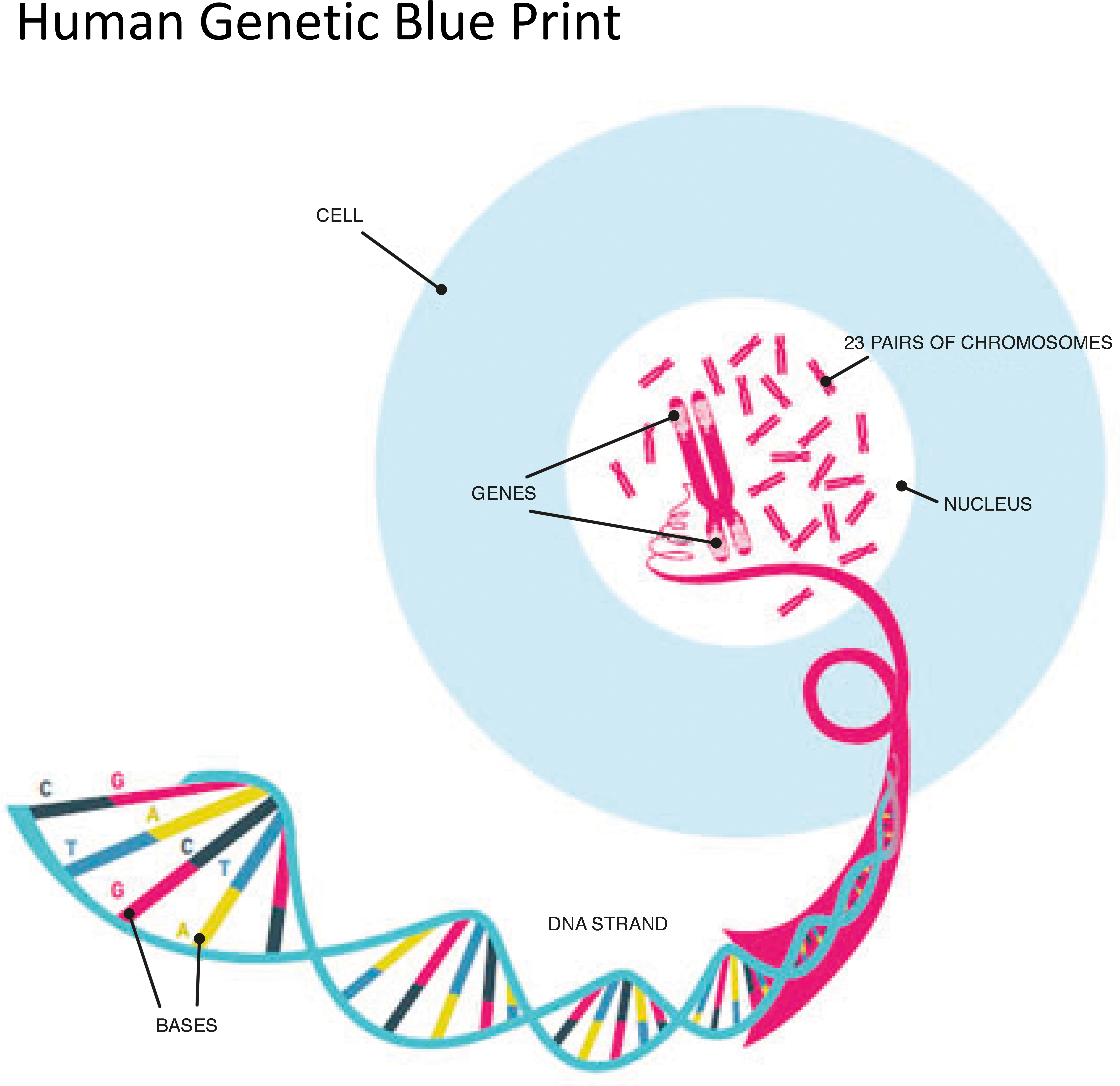
Deoxyribonucleic acid (DNA) is the chemical compound that contains the instructions needed to develop and direct the activities of nearly all living organisms. DNA molecules are made of two twisting, paired strands, often referred to as a double helix. Each DNA strand is made of four chemical units, called nucleotide bases, which comprise the genetic “alphabet.” The bases are adenine (A), thymine (T), guanine (G), and cytosine (C). Bases on opposite strands pair specifically: an A always pairs with a T; a C always pairs with a G. The order of the As, Ts, Cs and Gs determines the meaning of the information encoded in that part of the DNA molecule just as the order of letters determines the meaning of a word.
With its four-letter language, DNA contains the information needed to build the entire human body. A gene traditionally refers to the unit of DNA that carries the instructions for making a specific protein or set of proteins. Each of the estimated 20,000 to 25,000 genes in the human genome codes for an average of three proteins (
Figure 1).
Figure 1.
Human genetic blueprint: the genome. (From the National Human Genome Research Institute; Bear KA, Wolfsberg TG: Clinical Genomic Database. Proc Natl Acad Sci U S A, May 21, 2013.) Guanine (G) pairs with Cystosine (C); Adenine (A) pairs with Thymine (T).
Figure 1.
Human genetic blueprint: the genome. (From the National Human Genome Research Institute; Bear KA, Wolfsberg TG: Clinical Genomic Database. Proc Natl Acad Sci U S A, May 21, 2013.) Guanine (G) pairs with Cystosine (C); Adenine (A) pairs with Thymine (T).
Located on 23 pairs of chromosomes packed into the nucleus of a human cell, genes direct the production of proteins with the assistance of enzymes and messenger molecules. Specifically, an enzyme copies the information in a gene's DNA into a molecule called messenger ribonucleic acid (mRNA). The mRNA travels out of the nucleus and into the cell's cytoplasm, where the mRNA is read by a tiny molecular machine called a ribosome, and the information is used to link together small molecules called amino acids in the right order to form a specific protein. If a cell's DNA is mutated, an abnormal protein may be produced, which can disrupt the body's usual processes and lead to a disease such as cancer.[
3]
Health and disease states can be characterized by their molecular fingerprints. These fingerprints elucidate mechanistic pathways on genome-wide data leading to the development of new preventive, diagnostic, and therapeutic strategies that may shift the focus of care. Such genomic information will guide medical decision making. Examining a person's entire genome (or at least a large fraction of it) to make individualized risk predictions and treatment decisions is now within reach. DNA contains the instructions for building and maintaining all parts of the body. This DNA in our cells is wrapped around proteins called histones, which are covered with chemical tags. This second layer is called the epigenome, a multitude of chemical compounds that can tell the genome what to do. The epigenome is made up of chemical compounds and proteins that can attach to DNA and direct such actions as turning genes on or off, controlling the production of proteins in particular cells. When epigenomic compounds attach to DNA and modify its function, they are said to have “marked” the genome. These marks do not change the sequence of the DNA. Rather, they change the way cells use the DNA's instructions. The marks are sometimes passed on from cell to cell as cells divide. They also can be passed down from one generation to the next. Epigenomes are chemical modifications of DNA or proteins that interact with DNA. They are affected by the environment (including lifestyle) and shape the physical structure of the genome. Most epigenetic changes are harmless, but some cause or increase the risk of a disease. It is the epigenome that shapes the physical structure of the genome. The DNA code remains fixed for life, but the epigenome is flexible. Factors from the environment interact with the epigenome, affecting gene expressions. Among these factors are diet, toxins, physical activity, and stress.
Effect of Genomics on Medical and Podiatric Medical Education
Medical genomics will change how health care is provided, shifting from intervention to prevention. To date, the podiatric medical profession has been relatively silent about this phenomenon, perhaps because many in the discipline may believe that it has little relevance to podiatric medical practice. However, all physicians, including those in podiatric medicine, must be trained to incorporate medical genomics into clinical practice. This includes incorporation of medical genomics into podiatric medical education at all levels: predoctoral, residency training, and continuing education. However, as recommended by the NHGRI of the NIH, this should not be done in the form of isolated courses in the curriculum at all of these levels but as a thread that runs through all parts of clinical education and training. The Johns Hopkins University School of Medicine recently made its most dramatic curriculum change in 100 years. It changed its curriculum so that it is genomics based, with genomics running like a thread integrated into the program and its courses. Referred to as the Johns Hopkins Genes to Society curriculum, it presents a new model of health and disease based on the principles of adaptation to the environment, variability of the genotype, and stratification of risk rather than simply on a view of “normal human biology (health)” in the first 2 years and “abnormal physiology (disease)” in the final 2 years that up to now has been the curricular model for medical and podiatric medical education.
The Johns Hopkins curriculum focuses on the patient as an individual. Students are asked to conceptualize the individual in the context of a continuum from normal to predisease to disease states. This format provides a framework to analyze the array of factors, including individual genetic, environmental, and socioeconomic characteristics (ie, genomics), that would influence disease presentation in patients.
The Johns Hopkins Genes to Society curriculum prepares students to look at a patient's biology down to the cellular level— in other words, not just organs but tissues, cells, proteins, and DNA—and to dovetail that with external environmental and societal factors to truly come up with an accurate differential diagnosis and effective treatment plan. This is especially important for patients with chronic illnesses, an area of medicine long overlooked.[
4]
Complex disease expressions are influenced by products of multiple genes interacting with environmental factors throughout aging, maturation, or development (ie, genomics). In podiatric medicine, for example, hallux valgus is a disorder identified by the NHGRI as one of many affecting the foot that can be genomic in origin. On the other hand, genetic disorders are attributable to a single gene, which may be expressed regardless of the environment (eg, sickle cell anemia and hemophilia). Other single-gene disorders require specific stimuli (eg, phenylalanine in phenylketonuria, or many agents for the hemolytic anemia of glucose-6-phosphate dehydrogenase deficiency). Common genomic disorders, such as hallux valgus, generally are more amenable to treatment than are single-gene disorders (eg, surgical correction of hallux valgus deformities). In single-gene disorders, damage often occurs early in development and often is treatment resistant because of the severity and pervasiveness of the effects.
Although the effect of common diseases may be quite severe, such diseases generally develop gradually, throughout the life span, often presenting in middle age. An example is the potential devastating effect of peripheral artery disease, such as the need for amputation due to gangrene. The practitioner often can improve and sometimes even prevent symptoms of many common genomic diseases by modifying contributing environmental factors (eg, diet, exercise, smoking cessation, shoe type, medication, surgery, or counseling). Some common podiatric medical diseases may be amenable to early intervention, such as the prevention of or reduction in the severity of deformity resulting from hallux valgus or even the prevention of osteoarthritis affecting the foot that may be due to years of minimal trauma to joints as a result of improper shoes or abnormal foot structure (eg, pronation).
By understanding environmental contributions to complex disease, through education we can begin to eliminate them or dilute their effect. An environment can be created where the remaining major contributions to disease are those resulting from variants in the human genome.
All of the genes that carry instructions for producing proteins and other functional gene products are called exomes. By sequencing an affected individual's entire exome, critical genes can be revealed that when mutated cause inherited disorders. Sequencing simply means determining the exact order of the bases in a strand of DNA. Because bases exist as pairs, and the identity of one of the bases in the pair determines the other member of the pair, researchers do not have to report both bases of the pair. Although just a small part of the genome, mutations in the exome harbor 85% of disease-causing mutations. Of the 3 billion nucleotides or “letters” of DNA, only a small percentage (1.5%) are actually translated into proteins, the functional players in the body. Exome sequencing offers a look into the genome that large-scale studies of common variations cannot provide. The exome consists of all the genome's exons, the coding portions of genes. The term exon was derived from “EXpressed regiON,” because these are the regions that get translated, or expressed as proteins.
Just a few years ago, the cost of sequencing just the portion that encodes protein, the “functional” part of the genome, became low enough that biomedical scientists are using it to search for genetic elements underlying traits and diseases. The clinical availability of personal genome analysis through sequencing the whole exome allows ordering a single test. This provides information on all genes, including ones known to be linked to breast cancer, diabetes, and other common diseases. Complex diseases such as cancer, heart disease, diabetes, and hallux valgus are major contributors to morbidity, disability, and mortality in developed and developing countries alike. Single-gene disorders are generally rare and even in the aggregate constitute a much smaller burden of disease and death than do complex diseases. The sequencing of the human genome and the introduction of new technologies have made it possible to analyze multiple genes simultaneously rather than one at a time.
Genomics and the Potential Role of the Podiatric Physician
Clinical and Ethical Issues
With the current and continuing shortage of medical geneticists and genetic counselors, clinicians have an important role in genomics. Acquisition and interpretation of a multigenerational family history can be performed at the initial patient visit. Practitioners should be able to integrate genomics into their approach to health and illness as part of the process of prevention, diagnosis, and care (eg, foot complications of diabetes, pedal manifestations of cardiovascular disease, foot deformities). Podiatric physicians can provide advice on how genetics and genomics affect health in general and foot health specifically. This includes advice on issues regarding diet, environment, lifestyle, and shoe type. They should be able to identify genetic risks from relatives, particularly regarding manifestations in the foot and ankle.
Whole genome sequencing will enable specialists to identify variations in people's genetic code that increase their genetic risk of developing such conditions as Alzheimer's disease, cancer, diabetes, schizophrenia, and certain foot conditions. It may reveal the cause of undiagnosed symptoms, provide possible preventive actions, and determine the likely effect of medication on conditions such as asthma and cardiovascular disease (and possibly certain foot conditions).[
5]
An important procedure that health-care providers will need to perform is the acquisition of a three-generation family history. For common, complex diseases, family history has been shown to be a major risk factor for many chronic diseases, such as diabetes, cardiovascular disease, cancer, mental illness, asthma, and, yes, certain foot conditions (eg, hallux valgus). This includes determination of a patient's first-, second-, and third-degree relatives to see to what degree, if any, they are at risk. However, it is important to make clear to patients that a genetic predisposition to a disease does not mean that they will necessarily acquire that disease or deformity.
Podiatric physicians will need to address ethical issues involved in genetics/genomics. Note that 5%, or approximately
$7 million, of the
$140 million annual budget of the NHGRI is dedicated to the development of specific recommendations regarding ethical, legal, and social implications, providing guidance to physicians, the public, and policy makers. A focus on the genetic, developmental, and environmental components of disease, and their unique combination in a given individual (ie, genomics), will require and facilitate health care's increased emphasis on prevention. By establishing a genetic susceptibility to a complex disease, providers will have the alternative of prevention to help patients avoid environmental factors that can provoke disease or adopt regimens of self- examination to detect early indications of illness, including diseases and disorders affecting the pedal extremity.[
6]
Podiatric physicians will be able to assess whole genome sequence results and create preventive care plans for conditions that individuals are at risk for as part of the care they provide from birth to old age. The goals of genomics in podiatric medicine will be to take advantage of a molecular understanding of disease to optimize preventive, medical, and surgical care perhaps before people have a foot condition or are in the early stages of disease. By doing a three-generation family tree, the podiatric physician will be able to identify not only patients who have a high probability of developing certain foot disorders but also patients who also have a high probability of acquiring other diseases, such as diabetes, and refer them to their primary-care physician. The results of personal genome analysis acquired by the podiatric physician may have a meaningful effect on this patient's care and management. However, it needs to be asked whether the patient can opt out of knowing particular results (eg, genes associated with an increased risk of Alzheimer's disease). In addition, it needs to be determined how this patient's data will be stored (including privacy issues). Also to be addressed are the uncertainties and ethical concerns about whole genome sequencing that need to be resolved before becoming a standard procedure used by physicians.
There still are no guidelines regarding which findings from whole genome sequencing should be passed on to patients. Who should have access to the findings, such as a patient's employer? What access (if any) should be given to relatives who share some of the same genes? The answers will alter the way we care for people. Some patients may want to see results for all of the genes that could affect their health. It needs to be made clear to patients that a genetic predisposition to a disease does not mean that they will necessarily acquire that disease. Another alternative is for the podiatric physician to tell patients that there is a high probability that the disease can be prevented. However, part of the care that the patient receives at that visit or a subsequent visit should include a three-generation multifamily history. If it is determined from the history provided by the patient that there is a 75% probability of acquiring hallux valgus, the patient should be advised and care should be provided, with a plan to prevent the deformity. This plan may include the prescription of orthotic devices, exercises, and appropriate shoes. In addition, if the podiatric physician or primary-care physician determines that there is a high probability that the patient may develop diabetes, intervention by the primary-care physician may delay or even prevent this condition while simultaneously the podiatric physician may provide care designed to prevent pedal complications associated with diabetes (eg, advice about proper footwear, orthotic devices for the prevention of foot ulcers, and a regular regimen for foot examination).
Podiatric Physicians and Personalized Medicine
An emerging approach to health care called personalized or precision medicine seeks to tailor medical care to individual differences. A person diagnosed as having hallux valgus, for example, is generally treated according to guidelines designed for the “average” person. Very few people, however, are average. It is their unique genes, the environment they live in, and lifestyle choices that interact to determine their individual susceptibility to disease and how they respond to treatment. Personalized medicine will help identify subgroups of patients who are poorly served by generic treatments for diseases and disorders. From information podiatric physicians receive, they will use the whole genome sequencing results to develop personalized podiatric preventive care plans for patients. Creating personalized treatment plans that target factors such as shoe type, biomechanical disorders, and smoking cessation may allow doctors to keep the symptoms of many conditions from appearing.
Advantages that personalized medicine may offer include more informed medical decisions, higher probability of desired outcomes, reduced probability of adverse effects (eg, drug interactions, allergic reactions), focus on prevention and prediction of disease rather than reaction to it, earlier disease intervention, and reduced health-care costs.
American Medical Association policy says that genome-based personalized medicine will play an increasingly important role in patient care. The American Medical Association is developing educational resources and point-of-care tools to help doctors implement genome-based medicine. It is important for the health-care community to keep patients' whole genome sequencing results private. Patients will probably need to tell relatives about genetic variations that could affect those family members.
Pharmacogenomics
Pharmacogenomics is the study of how variations in the human genome affect the response to medications. It describes such large-scale, often genome-wide approaches. Pharmacogenomics may permit identifying drugs tailored for individuals and adapted to each person's own genetic makeup. Environment, diet, age, lifestyle, and state of health all can influence a person's response to medicines, but understanding an individual's genetic makeup is thought to be the key to creating personalized drugs with greater efficacy and safety. Pharmacogenomics will make it easy to identify a potential adverse effect of a drug. Every common drug will have genomic data, and every developing drug that looks like it is going to wind up in clinical use will incorporate a genome-embedded program so that we know who the drug works on and whether there may be serious adverse effects. We should be able to predict when to preempt the use of a drug so that we do not use it through trial and error, which does not work very well.
Where Is Genomics Today? Where Will It Be Tomorrow?
Primary-care physicians and podiatric physicians should know that genomics is coming. It will be part of practice beginning today and continuing tomorrow.
Today
The Human Genome Project has already fueled the discovery of more than 1,800 disease genes. As a result, today's researchers can find a gene suspected of causing an inherited disease in days, not the years it took before finding the genome sequence. There are now more than 2,000 genetic tests for human conditions. These tests enable patients to learn their genetic disease risks and help health-care professionals to diagnose disease. At least 350 biotechnology-based products resulting from the Human Genome Project are in clinical trials. Having the complete sequence of the human genome is like having a manual needed to make the human body. Now we need to determine and understand how all of these complex parts work together in human health and disease. Impressive results already yielded finding genetic factors involved in conditions ranging from age-related blindness to obesity. Despite many important genetic discoveries, the genetics of complex diseases such as heart disease are still far from clear. Pharmacogenomics is defined as how genetic variation affects an individual's response to a drug. Pharmacogenomic tests can already identify whether a patient with breast cancer will respond to the drug Herceptin, whether a patient with acquired immunodeficiency syndrome should take the drug abacavir, or what the correct dose of the anticoagulant warfarin should be.
Tomorrow
The Cancer Genome Atlas (
http://cancergenome.nih.gov) aims to identify the genetic abnormalities in 50 major types of cancer. Based on a deeper understanding of disease at the genomic level, a whole new generation of targeted interventions will result. Included will be more effective drugs with fewer adverse effects. The NIH-supported access to small molecule libraries will provide academic researchers powerful new research probes to explore the hundreds of thousands of proteins believed to be encoded by the approximately 25,000 genes in the human genome, providing innovative techniques to spur the discovery of new, more effective types of drugs. The NIH is striving to cut the cost of sequencing an individual's genome to less than
$1,000, facilitating disease diagnosis, management, and treatment. Individualized analysis of a person's genome will lead to a powerful form of preventive, personalized, and preemptive medicine. Tailoring to each person's DNA, health-care professionals will be able to focus on specific strategies (eg, diet, high-tech medical surveillance, etc) to maintain an individual's health. The increasing ability to connect DNA variation with nonmedical conditions, such as intelligence and personality traits, makes the role of ethical, legal, and social implications research more important than ever.[
7]
Conclusions
Francis Collins, MD, PhD, director of the NHGRI when the genome was mapped (now director of the NIH), indicated, “It's one of the major landmarks that rank up there with going to the moon. Obviously people think I could be a little biased, but I think historians will agree with me.”[
8] Podiatric physicians should begin to prepare for the new genomics revolution. This includes those in community practice as well as in the curriculum of podiatric medical schools. Genomics is destined to change the way health care is provided by all members of the health-care team. It is not an understatement that genomics represents a paradigm shift in the entire field of medicine, and physicians, including those in podiatric medicine, will need to be responsive to this phenomenon.