Musculoskeletal pain is generally a subjective symptom, but it can lead to substantial disability in men and women.[
1,
2,
3,
4,
5,
6] Defining and grading pain continues to be a challenge in clinical patients and population-based studies as the scientific community continues to search for causes and effects of pain.
Foot pain is common,[
7,
8] presents as a frequent symptom in patients, and is often associated with other lower-extremity pathologic abnormalities.[
9,
10,
11] Before assigning causality of one joint pain to another, it is important to first document a significant association with foot pain and other joints. The foot is the first structure in the kinetic chain to make contact with the ground during weightbearing activities. If the foot is exhibiting pain, antalgic response could affect movement patterns of the proximal structures (knee, hip, and low back). Whether the aberrant movement patterns are primary or secondary, pain may be associated with or referred from (eg, radicular symptoms) any site in the kinetic chain.
Previous work from the Framingham Foot Study suggested that pronated foot function contributes to low-back symptoms in women.[
12] Ipsilateral and contralateral foot pain may be differentially associated with pain at other sites. Studies have shown knee function and strength to be associated with pain in the contralateral knee[
13,
14,
15] and hip disease to be associated with ipsilateral knee pain,[
16] but the association between foot pain and contralateral or ipsilateral knee and hip pain remains unknown.
With a focus on the relation between foot pain and knee and hip pain, our overall goal was to provide practitioners with evidence-based guidance for evaluation and options for treatment for their patients. A significant association between foot pain and other lower-extremity joint pain would direct the physician to query patients presenting with such symptoms in other areas of the lower extremity, encouraging a broader treatment strategy. The purpose of this study was to evaluate whether knee and hip pain are more prevalent with contralateral foot pain than with ipsilateral foot pain in a population-based sample of men and women.
Materials and Methods
Population
The Framingham Foot Study, an ancillary study of the Framingham Heart Study, occurred between 2002 and 2008 and included members of the Framingham Offspring Cohort and a community sample. The Framingham Offspring Cohort, formed in 1971, comprised the adult offspring (and their spouses) of the original Framingham Heart Study cohort members (a population-based sample of the town of Framingham, Massachusetts, enrolled in 1948–1951).[
17,
18] The community sample was derived from census-based, random-digit dialing in the Framingham community, selecting individuals who were 50 years old and ambulatory.[
7]
Members of the Framingham Foot Study received a validated foot examination[
19] evaluating specific foot disorders, pain, pain location (including side of pain), and pain severity. All of the participants were ambulatory, cognitively intact, and able to give informed consent for the study. Of the 2,188 Framingham Foot Study participants, seven were excluded due to missing information on covariates, leaving data from 2,181 people for the present analysis. The institutional review boards of Hebrew SeniorLife and Boston University Medical Center (Boston, Massachusetts) approved this study, and all of the participants provided signed informed consent.
Covariates
Age, height, and weight were collected at the foot examination. Weight was measured to the nearest half pound using a standardized balance beam scale, and height (without shoes) was measured using a calibrated stadiometer to the nearest one-quarter inch. Body mass index (BMI) was calculated as weight in kilograms divided by height in meters squared.[
2] Depressive symptoms were assessed using the Center for Epidemiologic Studies Depression Scale. Smoking status (current, former, never) and self-rated health (excellent, good, fair, poor) were also recorded at the foot examination.
Statistical Analyses
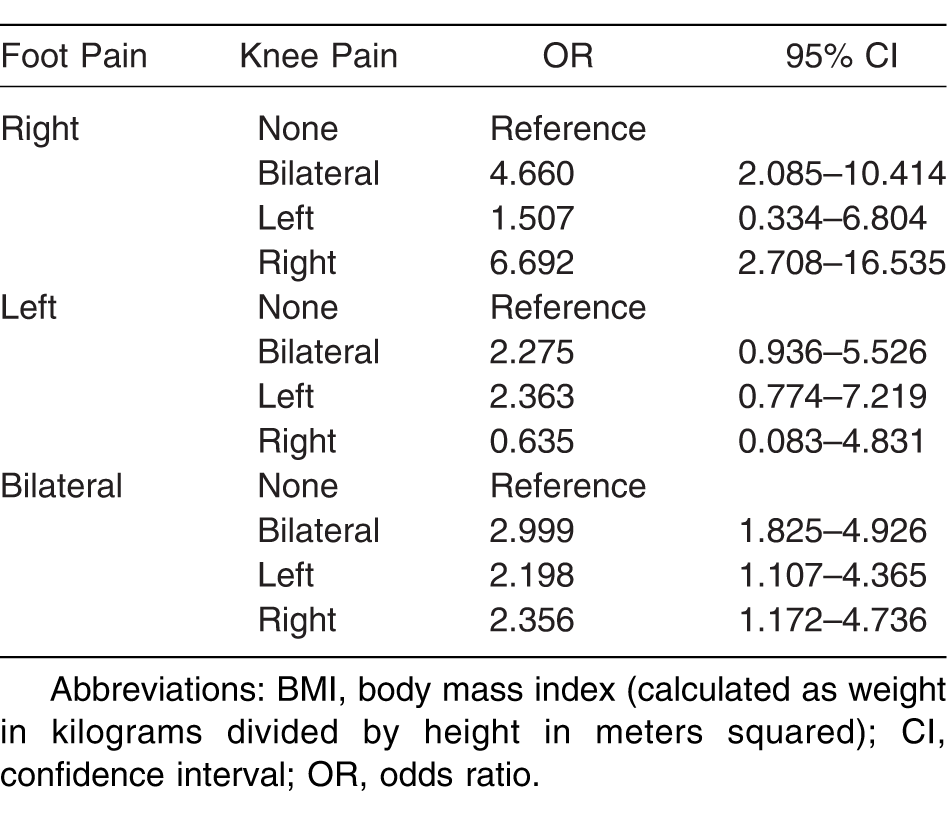
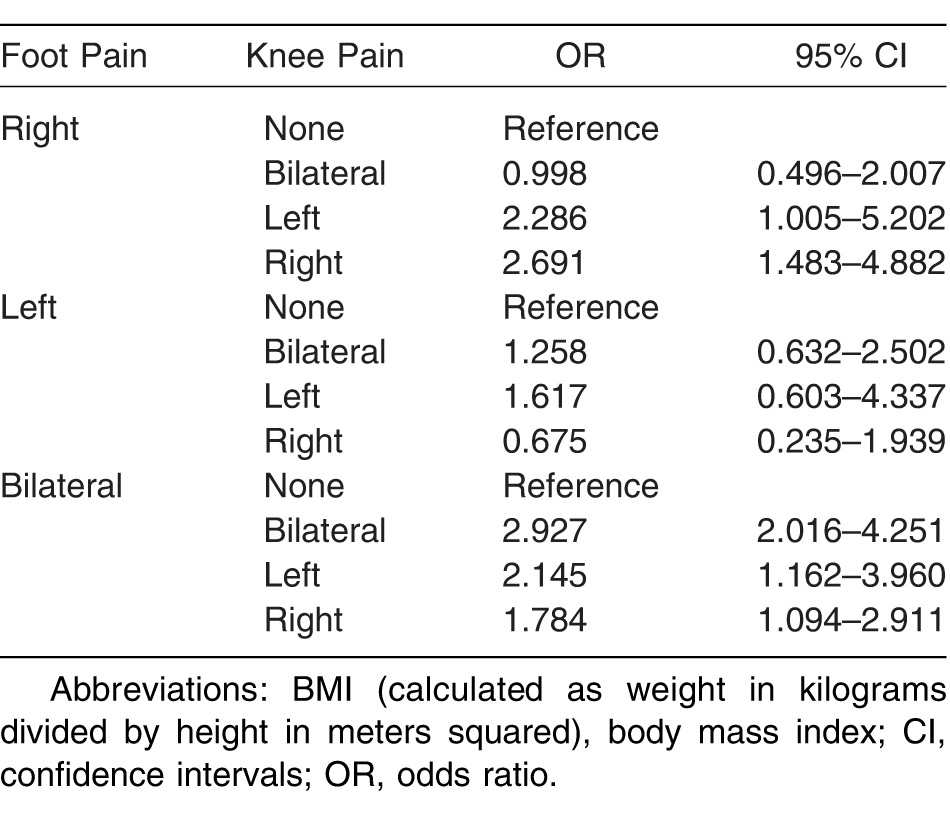
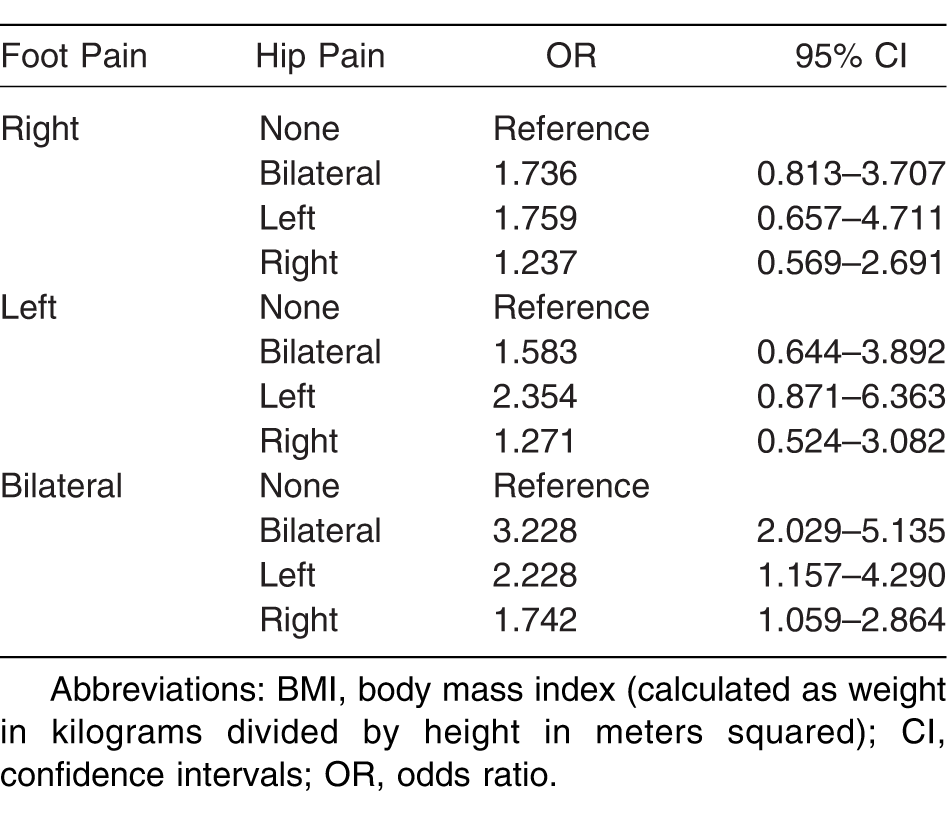
Descriptive statistics were generated for study variables using means and standard deviations or percentages where appropriate. Differences between men and women were assessed using the Student t test and the χ2 test. Sex-specific multinomial logistic regression was used to calculate odds ratios and 95% confidence intervals for the association between the four-category foot pain variable (no foot pain, bilateral foot pain, left foot pain only, right foot pain only) and the four-category knee and hip pain variables (no pain, bilateral pain, left-sided pain only, right-sided pain), adjusting for age and BMI, both considered as continuous variables in the models. These multinomial logistic regression models allowed us to examine the association between contralateral pain (foot pain on the opposite side as the hip or knee pain) and ipsilateral pain (foot pain on the same side as the hip or knee pain). Crude models were also examined, but results were similar to those of the adjusted models. In addition, adding depressive symptoms to the models did not change the results. Thus, age- and BMI-adjusted results are presented. All of the analyses were performed with the SAS statistical analysis package (version 9.3; SAS Institute Inc, Cary, North Carolina).
Results
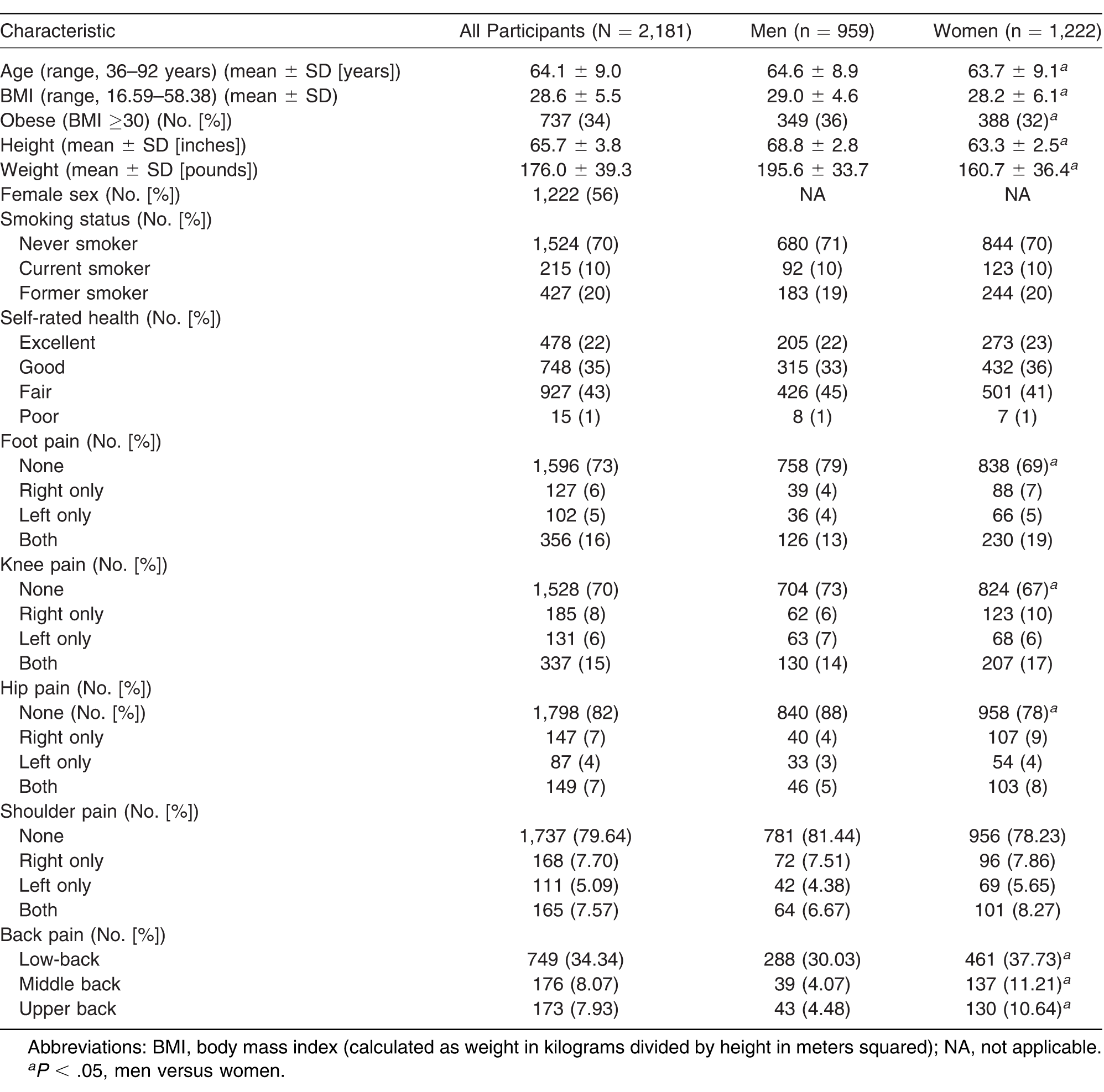
In the 2,181 participants in this study, the mean ± SD age was 64.1 ± 9 years; 56% were women, and the mean ± SD BMI was 28.6 ± 5.5 (
Table 1). Seventy percent of the participants were never smokers, and approximately 57% rated their health as good or excellent. Men were slightly older and had a higher BMI compared with women, as expected in a population-based sample. Although most of the sample did not report foot pain, 16% reported bilateral foot pain, 6% right foot pain only, and 5% left foot pain only. Slightly more women reported foot pain than men. Although most of the participants did not report knee pain, 15% reported bilateral knee pain, 8% right knee pain only, and 6% left knee pain only. Similar to foot pain, women reported more knee pain than men. Hip pain reporting was similar, with 7% of participants reporting bilateral hip pain, 7% right hip pain only, and 4% left hip pain only. Again, women reported more hip pain than men.
Table 1.
Description of Framingham Foot Study Participants, 2002–2008
Table 1.
Description of Framingham Foot Study Participants, 2002–2008
Discussion
We found that foot pain was associated with bilateral and ipsilateral knee pain in men and women. Foot pain was also associated with ipsilateral hip pain in men, whereas in women bilateral foot pain was associated with ipsilateral, contralateral, and bilateral hip pain. To our knowledge, this is the first report of a population-based study that considered sidedness of lower-extremity pain in relation to reporting of foot pain.
Clinicians note that patients with foot problems often present with contralateral pain at other lower-extremity sites and that few patients report bilateral pain. Yet, this study provides population-based evidence that most participants reporting pain are reporting bilateral pain, with up to 16% of older adults reporting bilateral lower-extremity pain.
A theory that may explain these results examines the correlated and compensatory postures and movements of an individual.[
20] The basic premise is that pathologic abnormalities of structures in the neuromusculoskeletal system can result from skeletal malalignment (ie, abnormal joint alignment or bone deformity). These skeletal malalignments manifest themselves in correlated and compensatory postures and movements. For example, an individual with primary genu varum and medial compartment knee osteoarthritis may have a correlated posture and movement of hip abduction with a compensatory posture and movement pattern of foot pronation. When the foot pronates it can reduce the varus thrust at the end of the contact phase and partially off-load the medial compartment of the knee, hence reducing pain. If this same individual had a rigid cavus foot posture, this could actually increase the varus thrust and exacerbate the knee pain. The clinical challenge is to identify the primary, correlated, and compensatory sites in the lower extremity that are associated with a patient's pain and to devise a treatment plan that is cognizant of these relationships and, therefore, effective for managing the patient's pain and underlying pathologic disorder. The correlated and compensatory posture and movement theory may explain how multijoint osteoarthritis develops, as well as other pathologic abnormalities and associated pains that can result from overuse or trauma to one or more structures in the kinetic chain.
These findings advocate for a change in the paradigm of how patients with lower-extremity pain should be evaluated clinically. Typically, patients are told to “take off everything but your shoes and socks” when they come into a medical clinic. Clinicians should inquire about pain and examine patients' feet. For clinicians who provide foot-related care, asking patients about hip or knee pain may provide further insights. Clinicians who provide care for hips and knees may benefit their patients by asking them about their foot pain. If a patient presents with multilevel pain, it is possible that these pains are completely independent in etiology but it is also possible that they are related through lower-limb malalignments that have invoked correlated postures and movements. In a world where medical imaging has come to the forefront of patient diagnoses and care, these results remind health-care providers that the basic physical examination and patient history remains important in identifying pain and related patterns in patients.
The results of this study should be interpreted acknowledging several important limitations. First, this was a cross-sectional study, thus we cannot determine temporality between the onset of foot pain and hip or knee pain. Future longitudinal studies are needed to determine whether the foot pain is causing the pain in higher joints of the body or whether pain in the higher extremities may be causing different loading patterns in the foot, thus causing pain. In addition, we do not have any information on the cause or severity of the hip, knee, or foot pain.
This study also has several strengths. We have large numbers of men and women, with sufficient power to examine sex-specific results. This is a population-based community sample of older adults rather than a report from a clinical sample. We also used robust statistical methods to examine sidedness of pain across the lower extremities, as well as the ability to take the effects of age and BMI into account when examining the patterns of pain reported in these participants.
In conclusion, we found that bilateral foot pain was associated with increased odds of knee and hip pain in men and women. For ipsilateral foot and hip pain, men had a stronger effect compared with women.