


Abstract
Background: Turnout in ballet is produced through summation of the joint structure characteristics and ranges of motion at the hip, knee, ankle, and foot. Contributions of the hip joint to functional turnout in dancers have received extensive examination, whereas little is known about contributions from the knee, ankle, and foot. The aim of this study was to explore the nonhip components of turnout to dancers’ functional turnout in first position by assessing passive external tibiofemoral rotation and active measures of foot pronation, ie, navicular drop and Foot Posture Index. Methods: Nineteen female university-level dance students aged 16 to 19 years participated in this descriptive correlational study. External tibiofemoral rotation, navicular drop, Foot Posture Index, and functional turnout were measured for the participants’ right and left legs. Results: Regression analyses revealed a weak relationship between passive external tibiofemoral rotation and functional turnout. Correlation analysis revealed a moderate negative relationship between passive tibiofemoral external rotation and the Foot Posture Index in functional turnout. Conclusions: These findings suggest that the lower leg does contribute to dancers’ overall position of functional turnout. However, current methods are not useful in predicting a dancer’s lower-leg contribution and alignment in functional turnout in first position.
Functional turnout in ballet involves maximal external rotation through the lower-limb kinetic chain. Hip external rotation is considered the primary contributor to functional turnout. [1] However, dancers tend to increase their functional turnout angle through additional external tibiofemoral rotation and pronation of the foot/ankle complex. [2] Dance medicine specialists routinely conduct screenings with dancers by assessing joint ranges of motion such as hip external rotation. These tests are assumed to represent a dancer’s functional capability and assist in identifying potential intrinsic risk factors for injury. [3] Much attention from the dance science community has been directed to measures of hip external rotation, [1,4,5,6] functional levels of turnout, [7,8,9] and injury [10,11,12,13,14,15] in ballet dancers. However, the relationship between the available below-the-hip ranges of motion and active measures of foot pronation with functional turnout is poorly understood.
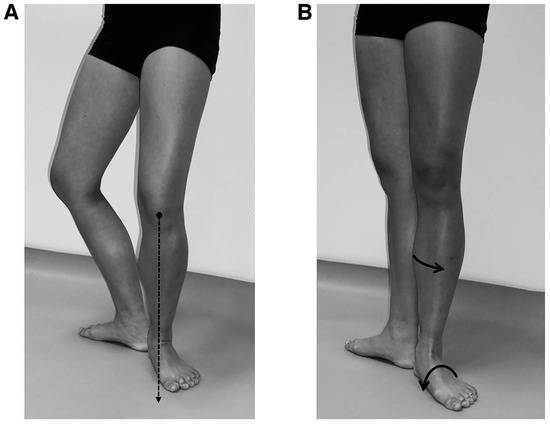
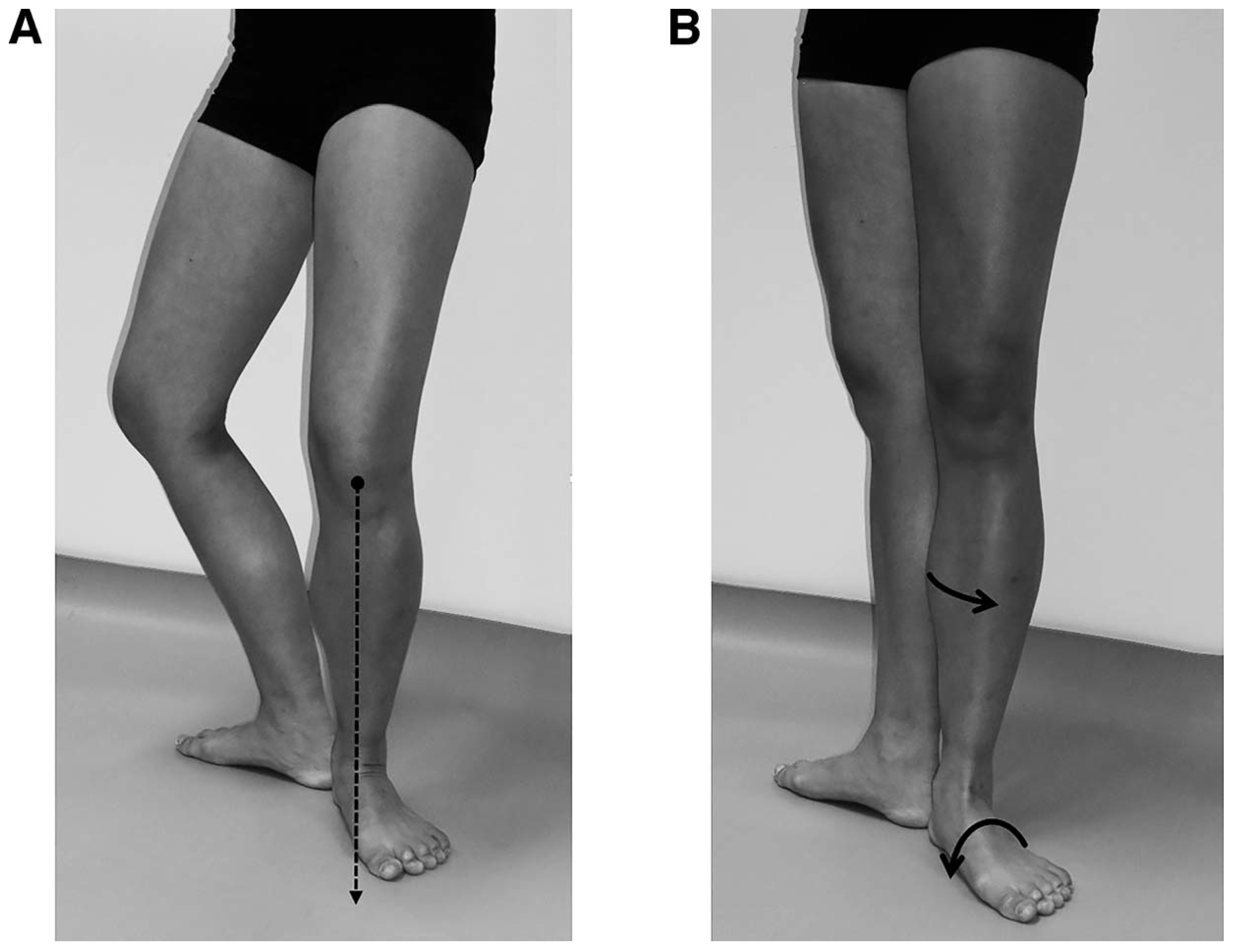
A high degree of functional turnout is an essential trait for ballet dancers. [2] A turned-out ballet first position involves maximum external rotation of the lower limb, the knees extended and heels touching, with the longitudinal axes of the feet pointing away from each other. [6] Correct leg alignment in first position requires the patella to be aligned with the second metatarsal. [6] Dancers with low functional hip external rotation will often increase turnout by positioning their feet in the desired angle in demiplie´ (flexed hip and knee with the feet in turnout) (Figure 1A). This leg posture allows greater external rotation about the knee. The dancer then maintains the forced externally rotated tibia, through knee extension into first position, via the available passive external tibiofemoral rotation and compensational pronation through the foot through the friction between the foot and the floor (Figure 1B). [2] In this position, the pronated foot allows greater forefoot abduction, giving the illusion of a larger turnout angle. [2] A pronated foot is an unstable structure because of the unlocked subtalar and midtarsal joints, and this places large demands on the foot muscles for stabilization. [16] Dancers with an excessively pronated normal stance also have an increased risk of developing a lower-limb injury. [14,17,18] Poor knee-foot alignment has also been suggested to create excessive torsional stress at the tibiofemoral joint, thereby increasing the risk of damaging the medial collateral ligament and medial meniscus. [13] Poor alignment in turnout increases risk of injury, yet the efficacy of current practices used to assess the lower-leg and foot contribution to functional turnout is unknown. There is a growing need in dance medicine to validate current screening programs, to refine and modify procedures, and to ultimately have better health outcomes for dancers. [3]
Figure 1.
A, Forced turnout in demi-plie´, with the plumb line (dotted line) demonstrating poor knee-foot alignment (the knee is medial to the second metatarsal). B, Forced turnout in the first position with an excessively externally rotated tibia and pronation through the foot.
Anatomical predictors of functional turnout in classical ballet are an important focus of dance research. Passive hip external rotation may not be useful in determining a dancer’s functional turnout in first position. [5,6] However, active hip external rotation measurement has been shown to be a mild predictor (17%–19% variance) [6] and supine passive turnout a strong predictor (48% variance) of functional turnout. [4] Below-the-hip measurements are not routinely performed, [1] although it has been reported that 42% of turnout can occur below the knee. [19] Few researchers have investigated the nonhip components of turnout, ie, passive external tibiofemoral rotation (pTFR) [6,19] and foot pronation in turnout. [14] Khoo-Summers et al [6] reported that excessive pTFR was a significant predictor of turnout in first position and highlighted the importance of measuring pTFR. Active foot pronation in functional turnout has been investigated only by Cimelli and Curran [14] using the Foot Posture Index (FPI) version 6, an ordinal measure. However, no study has evaluated these assessments of the foot/ ankle complex in relation to total functional turnout.
In dance research, foot pronation in normal stance is often reported as categorical observations rather than as a continuous measure. [14,18,20,21] There are various techniques and measurement protocols for determining and classifying foot pronation. [22] Using a continuous measurement such as navicular drop, rather than an ordinal measure, to quantify the lowering of the medial longitudinal arch (pronation) may provide further information in relation to foot compensation in turnout with greater sensitivity. [23]
The primary purpose of this study was to compare the lower-leg assessments of pTFR, navicular drop, and FPI with functional turnout angles in a group of female university dancers. We hypothesized that pTFR and foot pronation will be positively correlated to functional turnout and that the foot will assume a more pronated position in functional turnout compared with normal stance.
Methods
Study Design and Participants
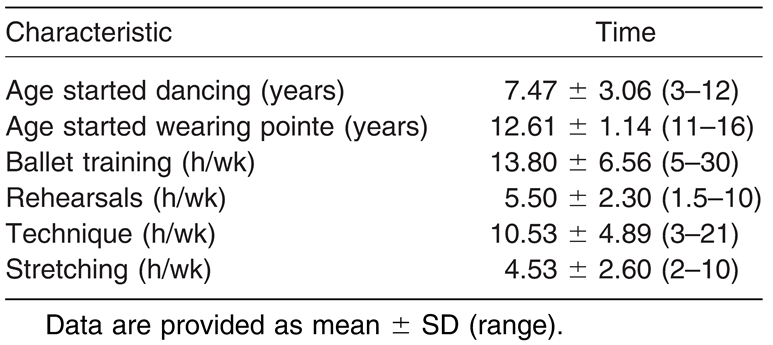
A descriptive correlational study of university-level classical ballet and modern dancers was conducted. Nineteen female university-level classical ballet and modern dance students (mean ± SD: age, 17.9 ± 0.9 years; height, 1.7 ± 0.1 m; body mass, 56.8 ± 4.9 kg) were recruited from the Advanced Diploma of Dance program at the Western Australian Academy of Performing Arts at Edith Cowan University. All of the dancers were in good health and injury free at the time of data collection. Descriptive statistics for the participants’ dance history are shown in Table 1. All of the participants signed a consent form before data collection and were allowed to withdraw from the study at any time. This study was approved by the Edith Cowan University and The University of Western Australia research ethics committees.
Table 1.
Dance History Characteristics of 19 University-Level Ballet Dancers.
Procedure
Participants were asked to complete a dance demographic questionnaire before data collection. All of the measurements were conducted in the afternoon, after class, by the chief investigator (S.L.C.) using the same equipment and procedures. Intrarater reliability for pTFR, FPI, and navicular drop was determined from data collected on five podiatric medicine students (four women and one man; mean ± SD age, 26.2 ± 2.5 years; age range, 24–30 years) on three different occasions, 1 week apart. Intraclass correlation coefficients (3,k) demonstrated excellent reliability: pTFR, 0.93; FPI, 0.92; and navicular drop, 0.90.
Functional Turnout. Dancers were asked to stand in first position turnout after performing a demi-plie´ as per Cimelli and Curran, [14] and no attempt was made to alter or adjust their position. The bisection of the heel and the second toe of each foot was marked on A3 graph paper with a black pen. Functional turnout angle was measured using a goniometer aligned with the bisection of the longitudinal lines of the feet.
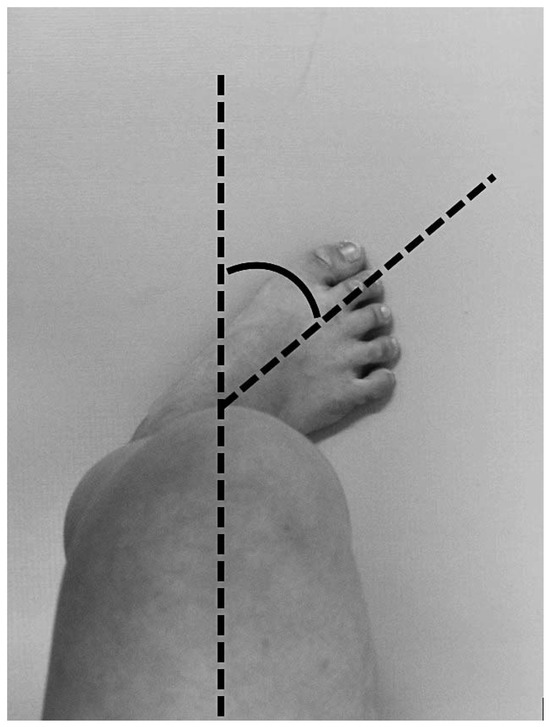
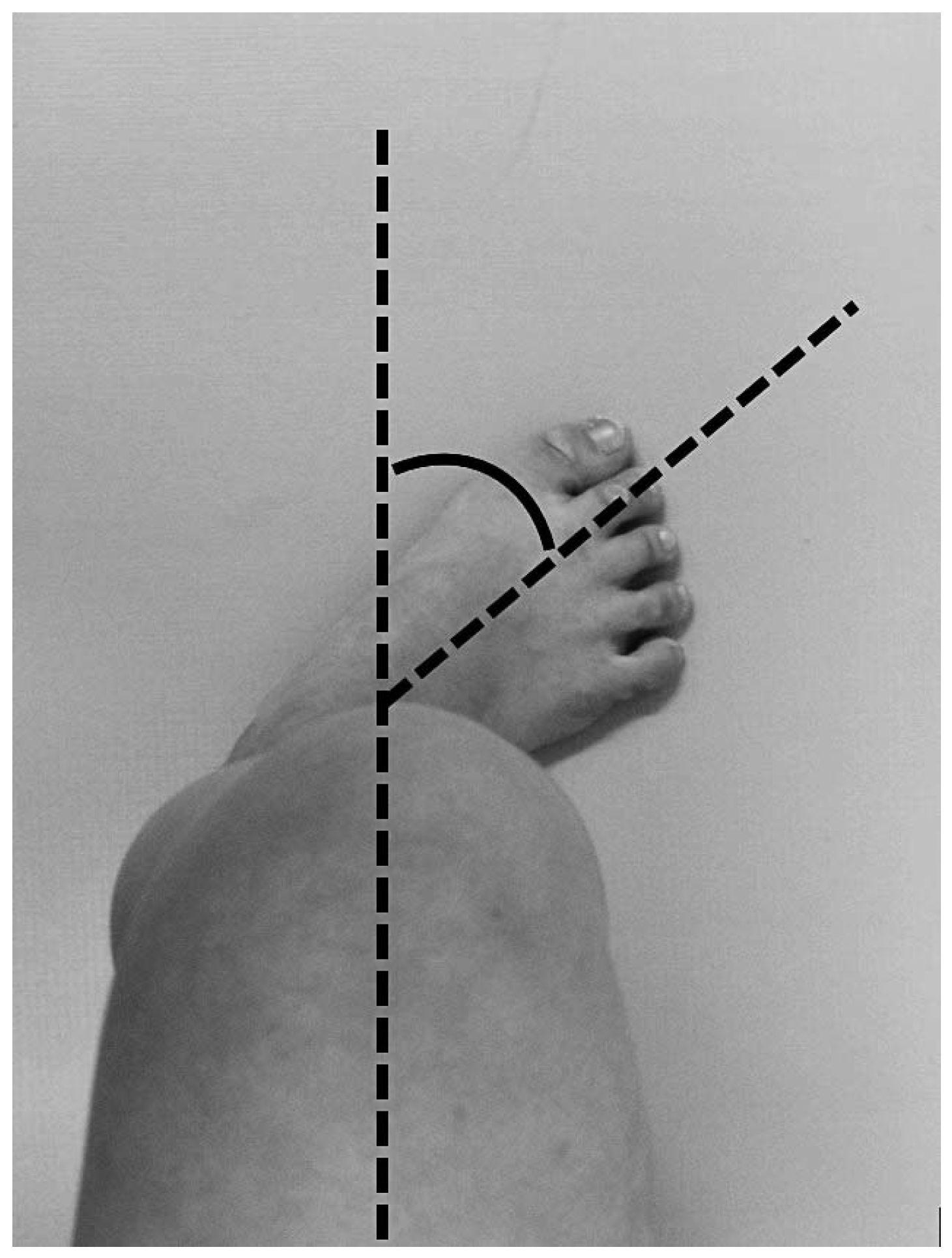
Passive TFR in Sitting. Passive TFR was measured with the same protocol used by Khoo-Summers et al. [6] Participants were seated with the hip in neutral relative to the frontal and transverse planes. The examiner passively externally rotated the lower leg while manually stabilizing the thigh. When the point of resistance was felt, the foot was placed on the ground. The stationary arm of a goniometer was positioned in line with the tibial tuberosity, and the mobile arm was aligned with the second metatarsal (Figure 2).
Figure 2.
Measurement technique to assess the passive external tibiofemoral rotation angle.
Foot Pronation. Two methods for measuring foot pronation in normal stance and functional turnout were used: the navicular drop test [23] and FPI version 6. Both methods were performed with the participant standing on a 0.40-m platform. In method 1, the navicular tuberosity was palpated and marked using a black pen. The researcher grasped the subtalar joint and manually moved it through the range of motion required until the depressions on either side of the tibiotalar joint were equally palpable and congruent. The participant was asked to hold the neutral calcaneal stance position while the navicular height was measured using a metal ruler with 1.0-mm increments. Participants were then asked to relax, and the navicular height was remeasured. The navicular drop is calculated by subtracting the second measure from the neutral calcaneal stance position height. The navicular drop in functional turnout was calculated by subtracting the navicular height in functional turnout from the navicular height in the neutral calcaneal stance position. In method 2, FPI was assessed with the participant standing in normal stance and functional turnout using six observational tests in all three planes. The total sum is an ordinal score used to define foot type: highly supinated (–5 to –12), supinated (–1 to –4), neutral (0 to 5), pronated (6 to 9), and highly pronated (≥10).
Statistical Analysis
Statistical analysis was performed using IBM SPSS Statistics for Windows, Version 21.0 (IBM Corp, Armonk, New York). Left and right paired data were resolved to a single value by taking the mean of the two measurements. [24] Descriptive statistics were calculated for participant demographics and the test variables. A stepwise multiple linear regression model was used to estimate the amount of variance in functional turnout, which can be explained by the measured variables pTFR, navicular drop, and FPI in functional turnout. A paired t test was used to measure the change in foot position from normal stance to functional turnout. A nonparametric Spearman correlation analysis was used to determine relationships among navicular drop and pTFR with FPI, an ordinal measure. A P < .05 was used to determine significance for all of the statistical tests performed.
Results
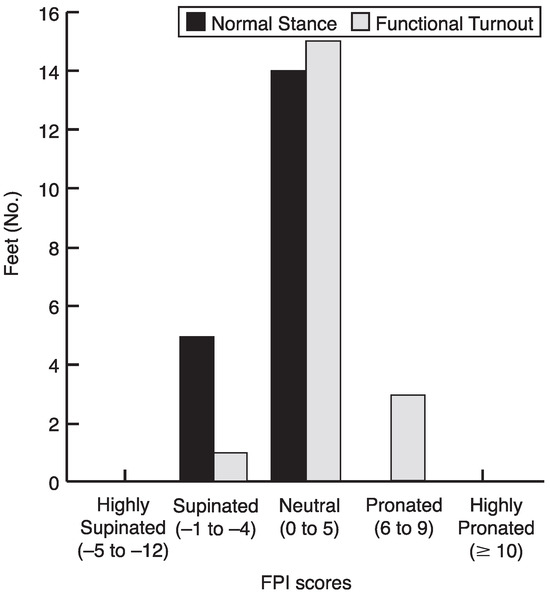
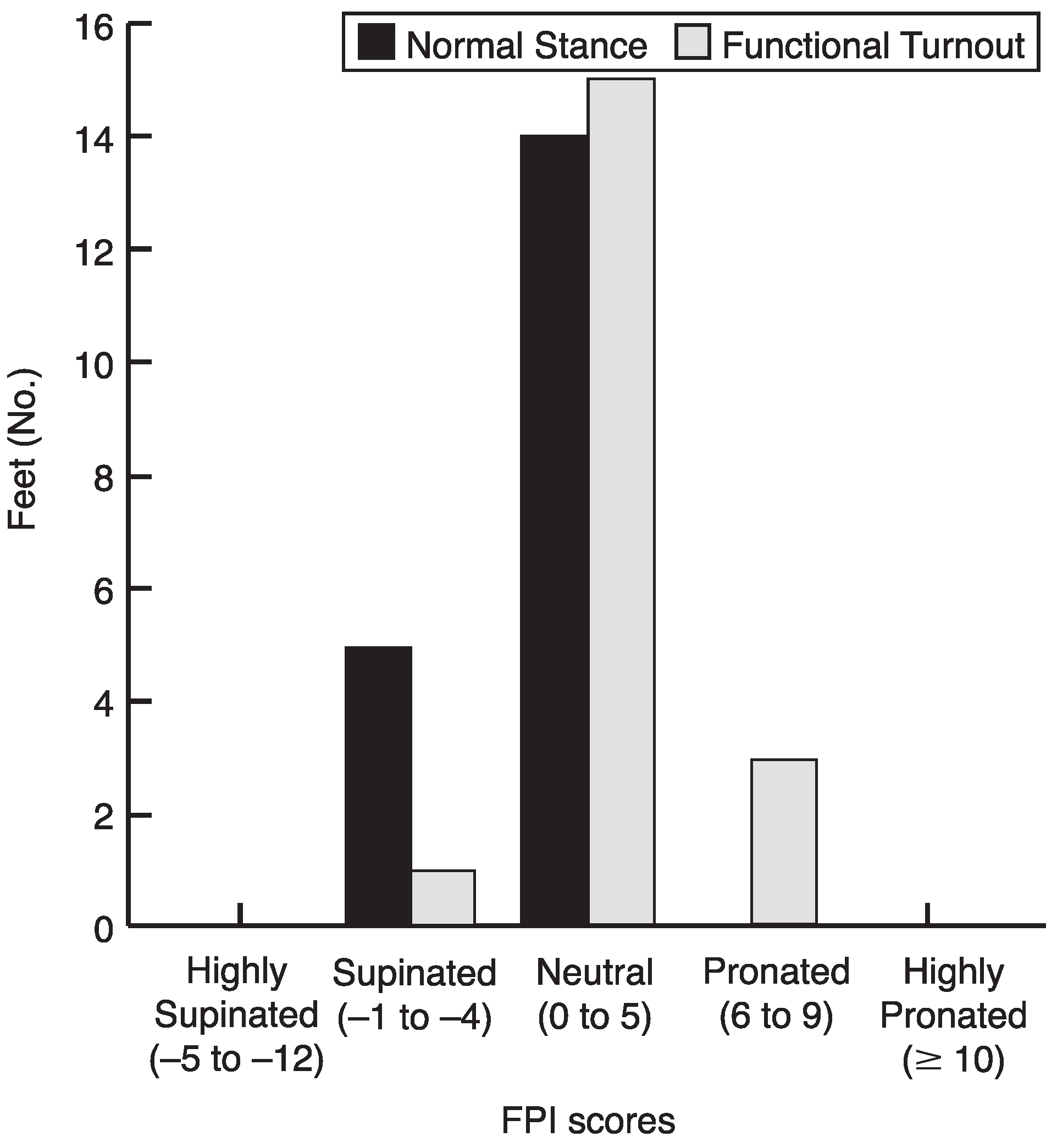
The stepwise prediction model for functional turnout (F1,17 = 5.21; P = .036) eliminated the active measures of foot pronation, with pTFR accounting for approximately 19.0% variance of functional turnout (R2 = 0.24; adjusted R2 = 0.19). Foot Posture Index and navicular drop measurements revealed that dancers stood with significantly more pronation in functional turnout than in the parallel position (FPI: t = 4.55; P < .001; navicular drop: t = 2.86; P = .01) (Table 2 and Figure 3).
Table 2.
Descriptive Statistics for the Measured Variables (N = 19).
Figure 3.
Foot Posture Index (FPI) scores in normal stance and functional turnout in first position (N = 19). Scores are the mean of the right and left foot measurements.
Spearman rho correlation analysis revealed a moderate negative relationship between pTFR and FPI in functional turnout (p = –0.47; P = .043). Pearson product moment correlation analysis results demonstrated a nonsignificant negative relationship between pTFR and navicular drop in functional turnout (Table 3). A strong relationship was found between FPI and navicular drop in normal stance, but a moderate relationship was found between navicular drop and FPI in functional turnout (Table 3).
Table 3.
Correlations (N = 19).
Discussion
Dancers with a greater pTFR demonstrated a larger functional turnout angle. This suggests that passive external rotation about the tibiofemoral joint was a major lower-leg contributor to functional turnout in the dancers. It is evident that the dancers tended to use external TFR to increase their functional turnout angle regardless of the recommended knee-foot alignment. [10] This would explain why Gilbert et al [5] reported one of the lowest turnout angles, as the dancers were adjusted into correct knee-foot alignment in first position, thereby removing the pTFR contribution to the functional turnout angle. The regression analysis demonstrated that measures of pTFR are a weak predictor of functional turnout. This finding supports the previous findings by Khoo-Summers et al, [6] who also reported that pTFR explained 30% of the variance for functional turnout on the left lower limb, with no relationship found on the right lower limb. Therefore, static measurements of pTFR should be used with caution in predicting a dancer’s knee-foot alignment in functional turnout.
This rotatory knee malalignment increases the risk of dancers developing injuries associated with patellofemoral pathomechanics, retropatellar chondropathy, jumper’s knee, patellofemoral syndrome, and nonspecific knee pain. [17] Forcing turnout from the tibiofemoral joint alters the pull of the iliotibial band, which promotes lateral deviation of the patella and, therefore, predisposes the chondral surface to injury. [25]
Dancers with less pTFR used more pronation about the foot/ankle complex to achieve greater turnout and vice versa. Therefore, the dancers used variable amounts of motion at the anatomical locations depending on their functional and anatomical capability. Dancers in this study with limited TFR recruited pronation about the foot/ ankle complex to further increase their functional turnout angle. [26] It is possible that foot pronation in turnout is a consequence of limited passive tibial external rotation, where the dancer is unable to maintain the externally rotated position of the knees in demi-plie´ when extending into turnout in first position. Consequently, to preserve an upright posture and forced turnout, the feet must pronate to maintain balance.
In a pronated position, greater functional demand is placed on the muscles; decreased mechanical advantage and prolonged eccentric control increase the tensile forces in the muscle tendons, predisposing them to injury. [26] The maneuver can increase a dancer’s risk of developing overuse lower-limb injuries such as plantar fasciitis, flexor hallucis longus tendinopathy, and posteromedial tibial stress syndrome [17,27,28] as a result of an excessively mobile midfoot (unlocked midtarsal joint). [29]
Dancers assumed a more pronated position in functional turnout compared with normal stance. The two measures of active foot pronation in normal stance demonstrated a strong relationship; however, in functional turnout this relationship weakened. The use of sagittal plane (navicular drop) and triplanar (FPI) observational measurements may explain the variation found in functional turnout between the two assessments. In forced turnout the tibia is externally rotated relative to the femur and internally rotated relative to the talus. This closed chain movement of the tibia produces eversion of the hindfoot (a frontal plane motion) and abduction of the forefoot (a transverse plane motion). [29]
These findings suggest that use of the navicular drop test, a measure of sagittal plane displacement of the navicular, as a composite measure of pronation in functional turnout has limited sensitivity that may be the result of the frontal plane motion of the foot in functional turnout.
This study endeavored to assess the foot/ankle complex contribution to functional turnout using active measures of pronation, FPI, and navicular drop. No relationship was found between FPI and navicular drop with functional turnout. Further research is required to investigate the relationship between the foot/ankle complex and the tibiofemoral joint with functional turnout using methods that can measure dynamic in situ leg postures, such as modern three-dimensional motion capture. This approach would demonstrate the true ranges of motion adopted by dancers in achieving turnout and aid in validating screening measures for dancers.
Conclusions
These findings suggest that dancers do use the lower leg to contribute to functional turnout. However, current assessments of lower-leg contributions to functional turnout in first position in university-level female ballet dancers are not useful in predicting the degree of turnout. Ongoing research would benefit from in situ measures of dancers’ lower-leg contributions to functional turnout, such as that provided by modern threedimensional biomechanical evaluations.
Acknowledgments
The first- and second-year dancers from the Advanced Diploma of Dance program at the Western Australian Academy of Performing Arts at Edith Cowan University who participated in this study and the second- and third-year podiatric medicine students for their assistance during data collection.
Financial Disclosure
This study was supported in part by the Australian Postgraduate Award scholarship awarded to Sarah L. Carter, MSc.
Conflicts of Interest
None reported.
References
- CHAMPION, L.M.; CHATFIELD, S.J. Measurement of turnout in dance research: a critical review. J Dance Med Sci 2008, 12, 121. [Google Scholar] [CrossRef] [Scilit]
- HOWSE, J.; MCCORMACK, M. Technical Faults and Anatomical Variations: Their Cause, Conquences and Treatment. In Anatomy Dance Technique and Injury Prevention, 4th Ed ed; Methuen Drama, London, 2009; p. 202. [Google Scholar]
- CLARK, T.; GUPTA, A. HO CH: Developing a dancer wellness program employing developmental evaluation. Front Psychol 2014, 5, 731. [Google Scholar] [CrossRef] [Scilit]
- SUTTON-TRAINA, K.; SMITH, J.A.; JARVIS, D.N.; et al. Exploring active and passive contributors to turnout in dancers and non-dancers. Med Probl Perform Art 2015, 30, 78. [Google Scholar] [CrossRef] [Scilit]
- GILBERT, C.B.; GROSS, M.T.; KLUG, K.B. Relationship between hip external rotation and turnout angle for the five classical ballet positions. J Orthop Sports Phys Ther 1998, 27, 339. [Google Scholar] [CrossRef] [Scilit]
- KHOO-SUMMERS, L.C.; PRATHER, H.; HUNT, D.M.; et al. Predictors of first position turnout in collegiate dancers: the role of tibiofemoral external rotation and hip external rotation. Am J Phys Med Rehabil 2013, 92, 136. [Google Scholar] [CrossRef] [Scilit]
- WELSH, T.M.; RODRIGUEZ, M.; BEARE, L.W.; et al. Assessing turnout in university dancers. J Dance Med Sci 2008, 12, 136. [Google Scholar] [CrossRef] [Scilit]
- GROSSMAN G: Measuring dancer’s active and passive turnout. J Dance Med Sci 2003, 7, 49. [CrossRef] [Scilit]
- SHERMAN, A.J.; MAYALL, E.; TASKER, S.L. Can a prescribed turnout conditioning program reduce the differential between passive and active turnout in pre-professional dancers? J Dance Med Sci 2014, 18, 159. [Google Scholar] [CrossRef] [Scilit]
- Watkins, A.; Woodhull-McNeal, A.P.; Clarkson, P.M.; et al. Lower extremity alignment and injury in young, preprofessional, college and professional ballet dancers: part 1. Turnout and knee-foot alignment. Med Probl Perform Art 1989, 4, 148. [Google Scholar]
- NEGUS, V.; HOPPER, D. BRIFFA NK: Associations between turnout and lower extremity injuries in classical ballet dancers. J Orthop Sports Phys Ther 2005, 35, 307. [Google Scholar] [CrossRef] [Scilit]
- JENKINS, J.B.; WYON, M.; NEVILL, A. Can turnout measurements be used to predict physiotherapist-reported injury rates in dancers? Med Probl Perform Art 2013, 28, 230. [Google Scholar] [CrossRef] [Scilit]
- COPLAN JA: Ballet dancer’s turnout and its relationship to self-reported injury. J Orthop Sports Phys Ther 2002, 32, 579. [CrossRef] [Scilit]
- CIMELLI, S.N.; CURRAN, S.A. Influence of turnout on foot posture and its relationship to overuse musculoskeletal injury in professional contemporary dancers: a preliminary investigation. JAPMA 2012, 102, 25. [Google Scholar] [CrossRef] [Scilit]
- VAN MERKENSTEIJN GG, QUIN E: Assessment of compensated turnout characteristics and their relationship to injuries in university level modern dancers. J Dance Med Sci 2015, 19, 57. [CrossRef] [Scilit]
- CONNERS JF: ‘‘Walking and Running,’’ in Athletic Footwear and Orthoses in Sports Medicine, edited by MB Werd, EL Knight, p 349; Springer: New York, 2010.
- NOWACKI, R.; AIR, M.E. RIETVELD ABM: Hyperpronation in dancers: incidence and relation to calcaneal angle. J Dance Med Sci 2012, 16, 126. [Google Scholar] [CrossRef] [Scilit]
- GAMBOA, J.M.; ROBERTS, L.A.; MARING, J.; et al. Injury patterns in elite preprofessional ballet dancers and the utility of screening program to identify risk characteristics. J Orthop Sports Phys Ther 2008, 38, 126. [Google Scholar] [CrossRef] [Scilit]
- HAMILTON, W.G.; HAMILTON, L.H.; MARSHALL, P.; et al. A profile of the musculoskeletal characteristics of elite professional ballet dancers. Am J Sports Med 1992, 20, 267. [Google Scholar] [CrossRef] [Scilit]
- STEINBERG, N.; SIEV-NER, I.; PELEG, S.; et al. Extrinsic and intrinsic risk factors associated with injuries in dancers aged 8-16 years. J Sports Sci 2012, 30, 485. [Google Scholar] [CrossRef] [Scilit]
- STEINBERG, N.; HERSHKOVITZ, I.; PELEG, S.; et al. Paratenonitis of the foot and ankle in young female dancers. Foot Ankle Int 2011, 32, 1115. [Google Scholar] [CrossRef] [Scilit]
- TONG, J.W.K.; KONG, P.W. Association between foot type and lower extremity injuries: systematic literature review with meta-analysis. J Ortho Sports Phys 2013, 43, 700. [Google Scholar] [CrossRef] [Scilit]
- BRODY DM: Techniques in the evaluation and treatment of the injured runner. Orthop Clin North Am 1982, 13, 541. [CrossRef] [Scilit]
- MENZ HB: Two feet, or one person? Problems associated with statistical analysis of paired data in foot and ankle medicine. The Foot 2004, 14, 2. [CrossRef] [Scilit]
- WINSLOW, J.; YODER, E. Patellofemoral pain in female ballet dancers: correlation with iliotibial band tightness and tibial external rotation. J Orthop Sports Phys Ther 1995, 22, 18. [Google Scholar] [CrossRef] [Scilit] [PubMed]
- TIBERIO D: Pathomechanics of structural foot deformities. Phys Ther 1988, 68, 1840. [CrossRef] [Scilit]
- MACINTYRE, J.; JOY, E. Foot and ankle injuries in dance. Clin Sports Med 2000, 19, 351. [Google Scholar] [CrossRef] [Scilit]
- MORTON J: The virtuoso foot. Clin Rheumatol 2013, 32, 439. [CrossRef] [Scilit]
- AHONEN J: Biomechanics of the foot in dance: a literature review. J Dance Med Sci 2008, 12, 99. [CrossRef] [Scilit]

© 2017 American Podiatric Medical Association