Hallux abducto valgus (HAV) is an irreversible condition in which the first metatarsal is medially deviated and the hallux is laterally deviated [
1]. This progressive deformation occurs in approximately 23% of the population [
2] and is associated with female sex, older age, and pain in other bodily regions [
3]. Although some authors suggest footwear and high heels as a big promoter of HAV [
4], Nix et al [
4] found insufficient data to draw this conclusion. Other clinical factors include first-ray mobility, ligamentous laxity, and tightness of the triceps surae [
5-
7]. Overpronation and flat feet have also been associated with this condition [
8].
In mild cases, the problem may be only cosmetic, but in more advanced stages there can be pathologic changes in gait and plantar pressure, limitations of range of motion in foot joints, pain during movement and walking, and problems with choosing comfortable shoes [
5]. Also, HAV has been associated with impaired gait and balance and an increased risk of falls in elderly patients [
9]. Limited conservative treatment options exist, making surgery the only treatment option for a mild-to-moderate deformity. A problem arises if the patient is not a surgical candidate owing to comorbidities, noncompliance, or personal reasons, such as work or family obligations [
10].
However, although more than 130 operations have been described in the literature for the treatment of hallux valgus, no single operation is perfect, and none addresses all cases [
5]. The literature reports conflicting results regarding surgical outcomes and recurrence rates, with good results reported in some studies and other studies reporting high patient dissatisfaction. A Cochrane review concluded that the quality of studies remains poor [
11]. There has been a trend toward higher levels of evidence in the foot and ankle surgery literature during the past decade, but the differences among different surgical procedures did not reach statistical significance. The complication rate in hallux valgus surgery ranges from 10% to 55% [
12]. Although hallux valgus surgery is common, several common complications can occur that necessitate revision [
12].
Hallux valgus also leads to deterioration in the health status and quality of life of patients. Patients with major pain or deformity from this condition frequently resort to surgery. Taping is an alternative method used to treat hallux valgus. Only a few studies have considered conservative treatments [
11]. Results from these studies suggest that orthoses and night splints did not seem to be any more beneficial in improving outcomes than no treatment. Surgery (chevron osteotomy) was shown to be beneficial compared with orthoses or no treatment, but compared with other osteotomies, no technique was shown to be superior to any other [
5].
Patients presenting with HAV are common in podiatric medical practices; however, there is a lack of good-quality studies on conservative treatments for HAV [
11]. The aims of this study were to determine the effectiveness of nonelastic zinc oxide tape in the management of HAV and to determine the quality of life in patients with this condition before and after this specific treatment. More research into the use of taping therapies is warranted to provide practitioners and patients with an alternative conservative treatment option for HAV deformity, especially when surgery is not a treatment option in specific client groups.
Materials and Methods
A time series, quasi-experimental, same-subject design was conducted with 35 patients living with HAV. This study was approved by the University of Malta research ethics committee (Msida, Malta); all of the participants were provided with trial information sheets, and written informed consent was obtained before data collection. The first 35 patients who presented to the clinic, fit the inclusion/exclusion criteria described herein, and accepted the invitation to participate were recruited to this study. All of the investigations were performed in accordance with the principles of the Declaration of Helsinki as revised in 2000.
Patients were eligible for study entry if they were older than 18 years and presented with HAV grade 1 to 4; were willing to participate in the study and were capable of applying strapping and maintaining application of strapping daily; and were independently mobile and had a Barthel Index score of +10. Patients were excluded from the study if they presented with osteoarthritis or rheumatoid arthritis, had poor eyesight, were already undergoing treatment for HAV, presented with an inflammation at the area, had a compromised vascular or neurologic system, were living with diabetes, or presented with an active previous ulcer or hyperhidrosis. Participants reporting any allergy to any strapping material were excluded from the study.
Clinical Diagnosis
Diagnosis was delineated into HAV grades 1 to 4 based on the Manchester Scale [
13]. This scale is a noninvasive tool used to classify HAV. This tool grades HAV against standardized photographs. There are four grades of HAV: grade 1 (no deformity), grade 2 (mild deformity), grade 3 (moderate deformity), and grade 4 (severe deformity). The advantages of using this tool are that it requires minimum skill and, thus, is easy to use; it is valid and reliable; and it has a reliable interobserver reliability [
13]. Menz and Munteanu [
14] also studied the validity of this clinical assessment tool and concluded that it gives an applicable representation of the degree of the deformity.
Outcome Measure
Health status and health-related quality of life were measured using the Foot Health Status Questionnaire (FHSQ) [
15]. This measure has been previously validated (content, criterion, and construct validity) across a wide spectrum of pathologic abnormalities, including skin, nail, and musculoskeletal disorders. It has high test-retest reliability (intraclass correlation coefficient = 0.74–0.92) and a high degree of internal consistency (Cronbach α = 0.85–0.88) [
15]. The FHSQ has four domains covering foot pain, foot function, shoe fit (footwear), and general foot health. Each domain is rated on a scale from 0 to 100, with higher scores indicating better foot health. Participants were asked to complete the FHSQ at the time of recruitment. The FHSQ was rated the highest in quality (methodological and clinical utility) of the 25 available foot and ankle measures [
15].
Study Protocol
Participants diagnosed as having HAV who fulfilled the inclusion/exclusion criteria were included in this study. The participants were seen three times during this study. During the first visit (time 0), the participants were asked to remove their shoes and hosiery, and the grade of HAV was recorded by a podiatric physician with a minimum of 10 years’ experience using the Manchester Scale [
13]. This assessment consists of comparison with standardized photographs of feet with four grades of HAV: no deformity and mild, moderate, and severe deformity. After this, the participants were asked to complete the FHSQ [
15].
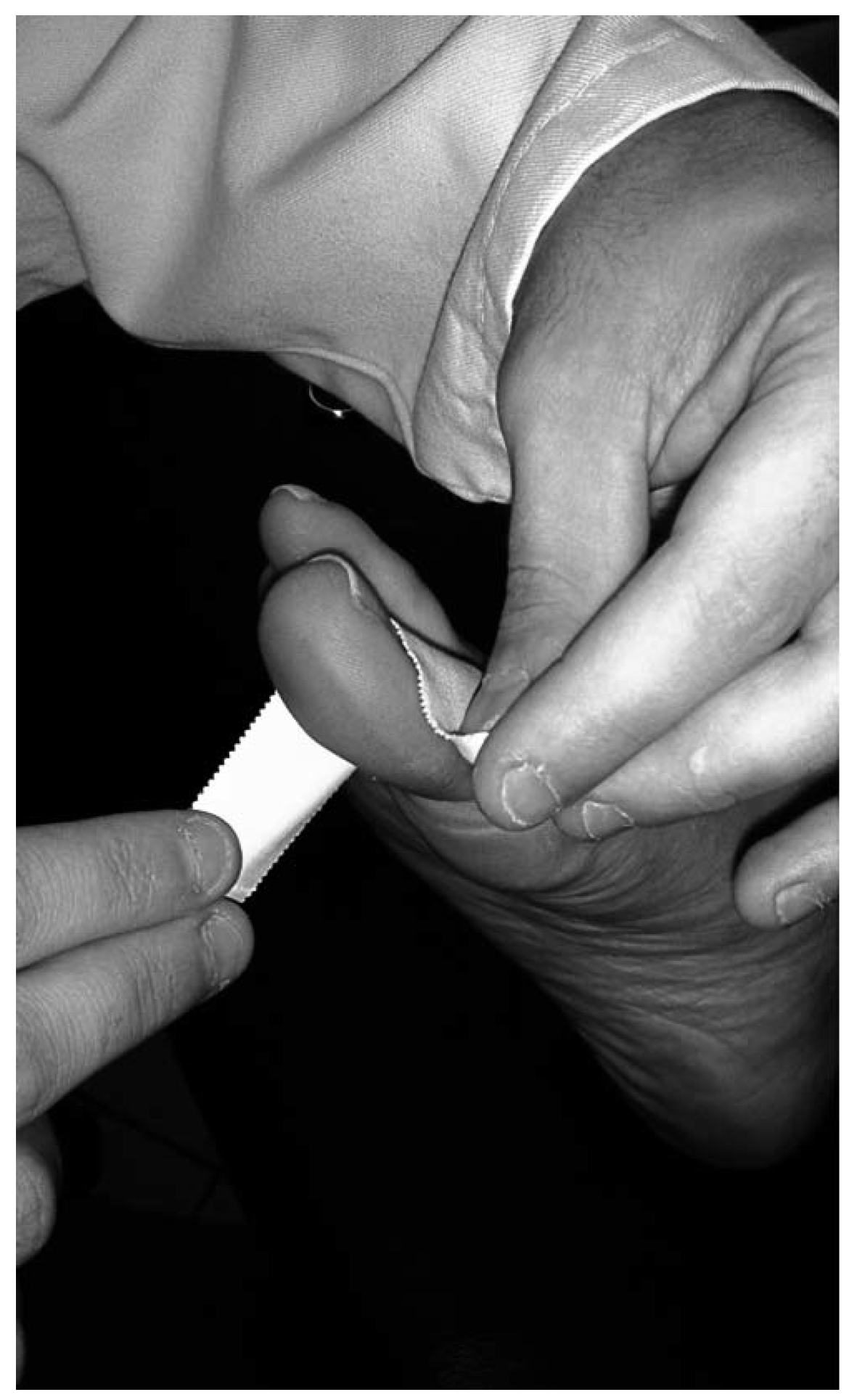
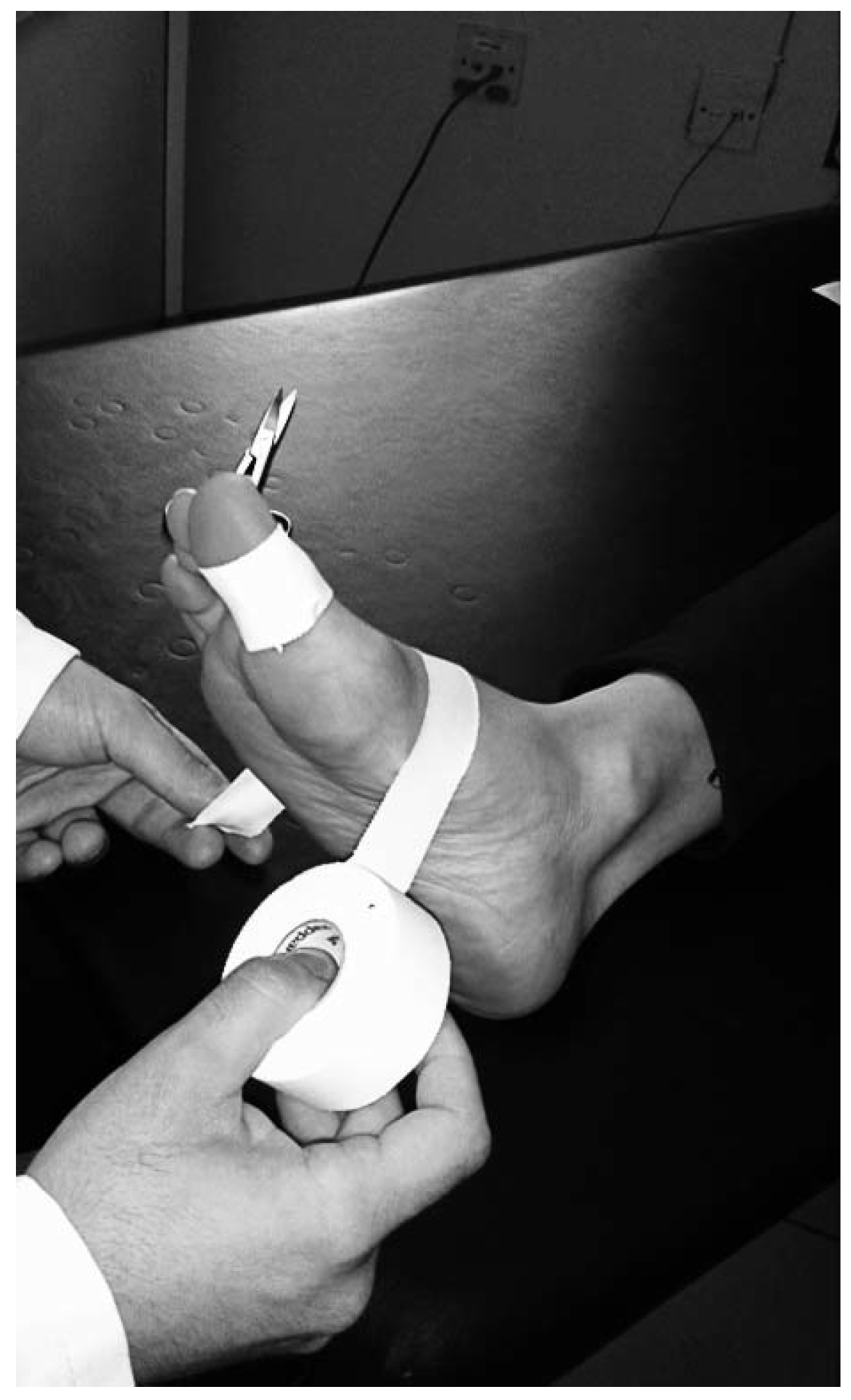
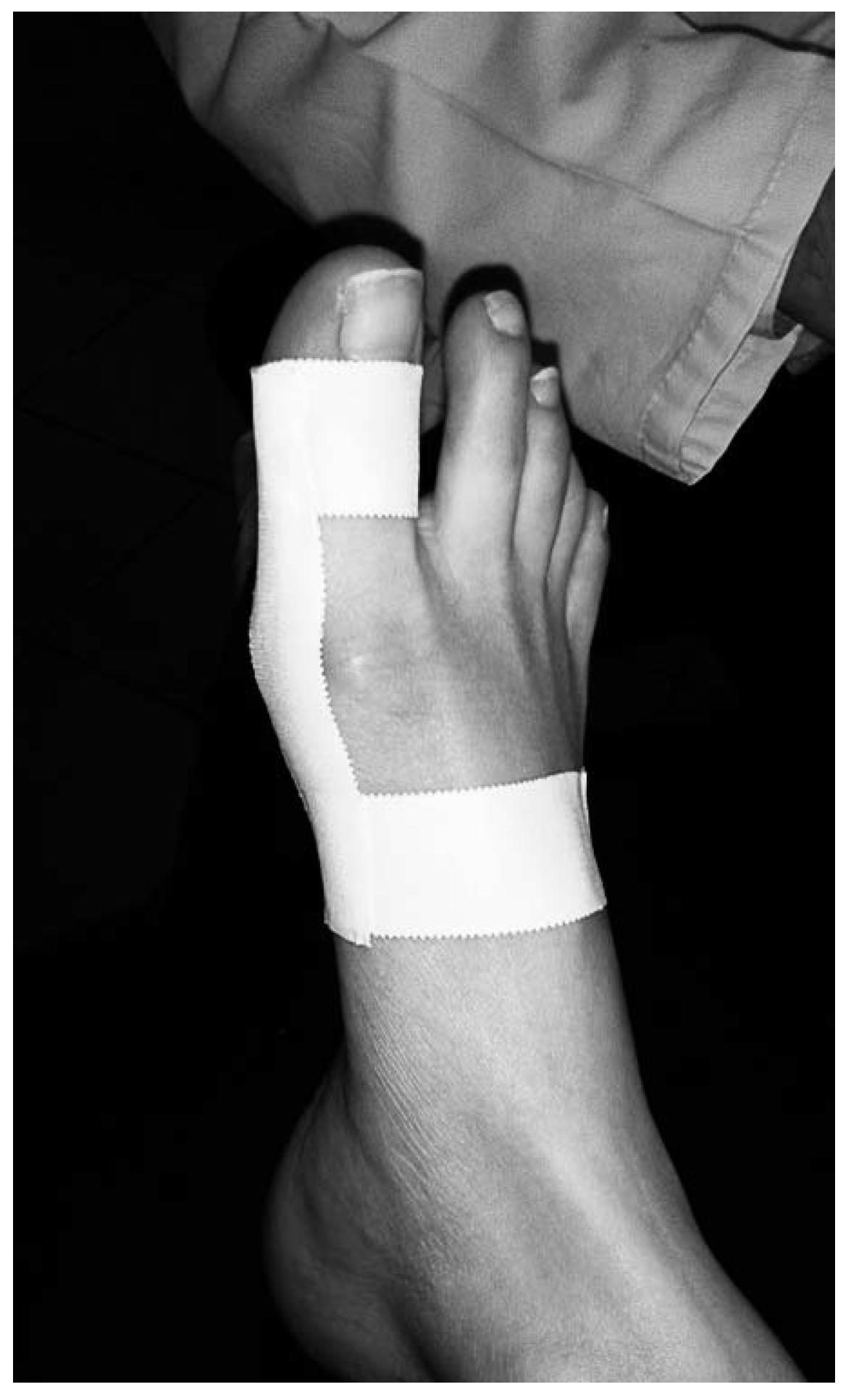
Nonelastic zinc oxide taping was then applied by a state-registered physiotherapist. As the taping was applied, an explanation of how to do this was provided to the participant. The following method was used when strapping the patients’ feet: first, an anchor strip, 2 cm wide, was applied around the distal toe at the base of the toenail, and a 3.8-cm-wide strip was attached around the instep and arch of the foot. Another strip, 2 cm wide, was attached parallel to the midline of the medial aspect of the foot, from the distal to the proximal anchor, keeping the hallux in a midline position (
Figs. 1–
3). The sites covering the original anchors were covered with light circumferential strips. The participants were then taught how to apply this taping technique for the following 4 weeks, during which the taping had to be kept on for 10 hours per day. The participants were also given a leaflet demonstrating how to apply the taping in case of difficulty. A contact number was also provided in case the participants had further queries during the study period. After 2 weeks (time 1), the participants were seen again to ensure that the taping was being applied correctly. After 4 weeks (time 2), each participant was asked to return to the same clinic to complete the FHSQ.
Figure 1.
An anchor strip is applied to the distal end of the toenail.
Figure 1.
An anchor strip is applied to the distal end of the toenail.
Figure 2.
A strip is applied at the instep of the arch.
Figure 2.
A strip is applied at the instep of the arch.
Figure 3.
A strip is applied parallel to the midline of the medial aspect of the foot, from the distal to the proximal anchor.
Figure 3.
A strip is applied parallel to the midline of the medial aspect of the foot, from the distal to the proximal anchor.
Results
The study population comprised 30 women (85.7%) and five men (14.3%) with a mean age of 44 years (age range, 18–79 years). Most of the participants (40.0%) had grade 1 HAV, 31.4% had grade 2, 17.1% had grade 3, and 11.4% had grade 4.
Because the Kolmogorov-Smirnov test confirmed normality of data, the paired samples
t test was used to analyze the data. Strapping significantly decreased foot pain (
P < .0001) and improved foot function (
P < .0001) and general foot health (
P < .0001). Strapping positively influenced, although not statistically significantly, the other subscales of the FHSQ: shoes, general health, physical activity, social activity, and vigor.
Table 1 illustrates the mean scores before and after applying strapping for each domain of the FHSQ. The
P values are also highlighted in this table.
Table 1.
Paired Samples t Test for All of the Subscales of the Foot Health Status Questionnaire
Table 1.
Paired Samples t Test for All of the Subscales of the Foot Health Status Questionnaire
When comparing the grade of the deformity, foot pain decreased significantly in grade 1 (P < .0001), grade 2 (P = .002), and grade 3 (P < .0001). In grade 4, strapping had little effect on foot pain (P = .101). Foot function increased significantly in all grades of hallux valgus deformity (P < .0001, .001, .020, and .039, respectively).
Discussion
The aim of this study was to determine whether strapping has an effect on the foot health status (health-related quality of life) of patients living with HAV. Although there is little published material on the use of nonelastic zinc oxide taping in the management of HAV to achieve changes in quality of life, this study demonstrated that after applying strapping for 4 weeks for 10 hours per day, the 35 participants reported decreased foot pain, increased foot function, and improved general foot health (
P < .0001 for all). The FHSQ was shown to be a sensitive measure to distinguish these changes in the study group. Although the other subscales of the FHSQ, including general health, shoe, physical activity, social activity, and vigor, demonstrated no statistically significant differences after a 4-week period applying zinc oxide taping, mean scores had a positive outcome. This is congruent with other similar studies [
16-
18].
There are several limitations that need to be acknowledged in this study. The sample size (N = 35) used may be considered relatively small. Ideally, larger cohorts should be recruited to increase the statistical power of the study results, with longer treatment interventions that compare this with alternative conservative approaches. Second, the diagnosis of participants in this study depended on a clinical diagnosis. To reduce the margin of error, the same experienced podiatric physician diagnosed the participants’ eligibility for this study. A third possible limitation in this study is that a control group was not included and the results are the responses of the participants themselves after the 4-week intervention. Therefore, the participants in this study acted as their own control.
We suggest that strapping should be included as a management option for HAV in conjunction with the treatment program for patients living with this deformity as a conservative treatment modality before considering any surgical options. In this study, treatment with nonelastic zinc oxide tape led to a reduction in the severity of the condition and improved quality of life in the study group, proving it to be a safe, easy-to-use method with minimal adverse effects. Health-care professionals need to be provided with specific training about the mechanisms of action and benefits of taping, and evidence of its use. Documentation of its efficacy should also be noted. This will assist future researchers in correlating more findings and generating a better understanding of its use in the treatment of this common chronic condition that clearly affects the quality of life of patients.
Conclusions
Pain and disability controlled by taping implementation in patients with hallux valgus may be an effective option in the management of HAV. The quality of life of patients also improved significantly after this treatment modality. Future studies should evaluate this method in larger sample groups and for longer treatment periods and should compare this intervention with alternative treatment approaches, such as exercise or orthotic devices.