Skin and skin structure infections are a significant problem in clinical practice. These infections are among the most common infections treated in hospitals,[
1] and rates of ambulatory visits to the emergency department because of skin and soft-tissue infections, particularly cellulitis and abscess, have also increased.[
2,
3,
4] Classifications of complicated skin and skin structure infections have evolved over the years. Infections were considered complicated if they involved soft tissue, required surgical intervention, or occurred concomitantly with significant underlying comorbidity; this classification included diabetic foot infections.[
5] A 2013 regulatory guidance from the US Food and Drug Administration (FDA) introduced a new classification for skin infections termed
acute bacterial skin and skin structure infections (ABSSSI).[
6] ABSSSI include cellulitis/erysipelas, acute wound infections, and major cutaneous abscess; infections such as diabetic foot infections, chronic cutaneous ulcers, and burns are excluded from this classification because of their chronic nature or underlying disease states, which make them difficult to treat and require other therapeutic approaches.[
6] As a result of this exclusion, approvals of new antibiotics for ABSSSI will not have an indication for diabetic foot infection.
ABSSSI are often caused by gram-positive pathogens, in particular
Staphylococcus aureus and β-hemolytic streptococci. Methicillin-resistant
S aureus (MRSA) is increasingly the predominant cause of purulent skin and soft-tissue infections.[
7,
8,
9,
10] The involvement of MRSA in skin infections is associated with worse patient outcomes[
1,
11,
12,
13,
14,
15,
16] and higher management costs.[
1,
16,
17] Antibiotic resistance among pathogens has made skin infections more difficult to treat.[
1,
18,
19] Despite the recent approval of several anti-MRSA agents, treatment options for serious MRSA skin infections in the outpatient setting are limited because of a paucity of oral formulations, inconvenient and/or lengthy dosing, safety issues, need for drug level monitoring, drug-drug interactions, and development of resistance.[
18]
Tedizolid phosphate, the prodrug of the novel oxazolidinone tedizolid, has been approved for the treatment of ABSSSI in a number of countries, including the United States, those in the European Union, and Canada.[
20,
21,
22] The only other currently marketed oxazolidinone antibacterial for the treatment of gram-positive infections is linezolid. Tedizolid phosphate is rapidly and extensively converted by phosphatases to its active moiety tedizolid after administration.[
23,
24] Tedizolid is generally at least 4-fold more potent in vitro than linezolid against staphylococci, including MRSA, streptococci, and enterococci, including vancomycin-nonsusceptible strains.[
24,
25,
26] Tedizolid is a bacterial protein synthesis inhibitor, and its pharmacokinetics allows for once-daily administration, either orally or intravenously (IV) at equivalent doses, without the need to adjust dose for age, weight, and hepatic or renal function.[
23,
27]
Two noninferiority phase 3 trials, ESTABLISH-1 and ESTABLISH-2, demonstrated that tedizolid (200 mg once daily for 6 days) was well tolerated and noninferior to linezolid (600 mg twice daily for 10 days) for treating patients with ABSSSI.[
28,
29,
30] These trials were conducted and analyzed according to the 2013 guidance from the FDA.[
6,
31] A new primary end point, change in lesion size at 48 to 72 hours, as defined in the guidance, was used in the trials.
Lower-extremity (thigh, knee, leg, ankle, and foot) ABSSSI, distinct from diabetic foot infections, are commonly thought to present a particular treatment challenge because of the possibility of decreased vascular perfusion and their unique anatomic location. Due to these challenges, therapeutic options that are effective against lower-extremity ABSSSI would be of value to podiatric clinical practice. To evaluate the safety and efficacy of tedizolid and linezolid in the treatment of lower-extremity versus non–lower-extremity ABSSSI, we analyzed pooled data from two phase 3 trials.
Methods
Study Design
The studies were conducted in accordance with the 2008 Declaration of Helsinki and all relevant international, European Union, national, and local rules and legislation. Institutional review board or ethics committee approval was obtained at each participating center. All participants provided written informed consent.
This post hoc analysis used pooled data from patients with lower-extremity ABSSSI (defined as those on the thigh, knee, leg, ankle, or foot [dorsal and plantar surfaces and toes]) in the ESTABLISH-1 (NCT01170221) and ESTABLISH-2 (NCT01421511) trials.[
28,
29] These were randomized, double-blind, double-dummy, multicenter, multinational, phase 3 noninferiority trials. Power calculations were performed to ensure that the sample size was large enough to declare noninferiority. Detailed descriptions of the statistical analyses for both ESTABLISH-1 and ESTABLISH-2 have been published.[
28,
29]
Patients were randomly assigned 1:1 to receive tedizolid or linezolid, with randomization stratified by presence or absence of fever (ESTABLISH-1 only), clinical syndrome, and geographic region. Patients in ESTABLISH-1 were treated orally with 200 mg of tedizolid phosphate once daily for 6 days or 600 mg of linezolid twice daily for 10 days. In ESTABLISH-2, patients received 2 or more IV doses of active treatment and could be switched to oral drug at the investigator's discretion if they met two or more of the following criteria: no increase from baseline in primary lesion area, temperature less than 37.7°C, and no worsening or improvement of local signs and symptoms at the primary infection site. Aztreonam or metronidazole were allowed for additional coverage of wound infections for pathogens not covered by tedizolid or linezolid. Patients were evaluated for efficacy end points at 48 to 72 hours (early clinical response; primary efficacy end point), days 7 to 9, days 11 to 13 (end of therapy ([EOT] visit), and days 18 to 25 (post-therapy evaluation [PTE], 7 to 14 days after EOT); a late follow-up visit 18 to 25 days after the EOT visit was also included to evaluate for relapse. Safety evaluations were conducted through 25 days after the EOT visit.
Microbiological samples were obtained from the primary ABSSSI site at baseline. All samples were collected via valid sampling techniques (eg, aspirate, biopsy, deep swab); superficial swabs were not accepted. Specimens were gram-stained, cultured locally, and tested for susceptibility; isolates were also sent to a central laboratory (Eurofins Medinet, Inc, Chantilly, Virginia) for confirmatory identification and susceptibility testing.
Patient Selection
The trials enrolled patients older than 18 years (ESTABLISH-1) or older than 12 years (ESTABLISH-2) with ABSSSI (cellulitis/erysipelas, wound infection, or major cutaneous abscess). Full patient description and eligibility criteria have been previously published.[
28,
29]
End Points
The primary end point was early clinical response 48 to 72 hours after the start of treatment (this was the FDA-approved primary end point).[
6] In ESTABLISH-1, the early clinical response was defined as no increase in lesion surface area from baseline and oral temperature ≤37.6°C at the 48- to 72-hour assessment, confirmed within 24 hours. In ESTABLISH-2, early clinical response was defined as ≥20% reduction in lesion area from baseline. Patients were classified as responders if they had ≥20% reduction from baseline in area of the primary lesion, did not receive any concomitant systemic antibiotics with gram-positive activity, and did not die of any cause within 72 hours of the first dose. Patients with missing data for any component of the primary end point were classified as indeterminate. A key secondary end point was the investigator-assessed clinical response 7 to 14 days after the end of therapy (PTE); this was considered the primary outcome for regulatory decisions by the European Medicines Agency.[
32] Safety evaluations included assessment of treatment-emergent adverse events (TEAEs).
Statistical Analyses
Efficacy analyses were based on the intent-to-treat population, which included all randomly assigned patients. Safety analyses were performed in the safety population, which included all patients who received at least one dose of the study drug. Patients with missing data who were classified as indeterminate were considered treatment nonresponders for the primary efficacy outcome. For both primary and secondary outcomes, 2-sided 95% confidence intervals (CIs) were constructed for the differences in response rates between the tedizolid and linezolid treatment arms and between lower-extremity ABSSSI and non–lower-extremity ABSSSI. Safety data were summarized by treatment group, using the numbers and percentages of patients. All statistical analyses were performed using SAS version 9.3 (SAS Institute, Inc, Cary, North Carolina).
Results
Patient Characteristics
Overall, 270/664 patients (40.7%) in the tedizolid group and 282/669 patients (42.2%) in the linezolid group had lower-extremity ABSSSI. The baseline demographics of patients with lower-extremity ABSSSI were similar between treatment groups (
Table 1). Types of ABSSSI at baseline were also comparable between the tedizolid and linezolid groups: 60.0% (162/270) and 56.0% (158/282) had cellulitis/erysipelas, 22.6% (61/270) and 29.1% (82/282) had wound infections, and 17.4% (47/270) and 14.9% (42/282) had major cutaneous abscesses, respectively. The leg was the most frequent location of lower-extremity ABSSSI (57.4% for tedizolid; 55.0% for linezolid). The foot accounted for 15.2% (tedizolid) and 16.0% (linezolid) of all lower- extremity ABSSSI (
Table 2).
Table 1
.
Demographic and Clinical Characteristics of Patients with Lower-Extremity ABSSSI (Intent-to-Treat Population)
Table 1
.
Demographic and Clinical Characteristics of Patients with Lower-Extremity ABSSSI (Intent-to-Treat Population)
Table 2
.
Anatomic Location of Lower-Extremity Infection
Table 2
.
Anatomic Location of Lower-Extremity Infection
Causative Pathogens
A causative pathogen (gram-positive or gram-negative organism) was isolated at baseline from 129/270 (47.8%) tedizolid-treated and 145/282 (51.4%) linezolid-treated patients with lower-extremity ABSSSI (
Table 3). The majority of pathogens in both treatment groups were gram-positive aerobes, with the most common being
S aureus (228/267; 85.4%) and
Streptococcus pyogenes (21/267; 7.9%). Among the 228 patients with
S aureus isolated at baseline, MRSA infection was present in 95/228 patients (41.7%;
Table 3).
Table 3
.
Causative Pathogens in Patients with Lower-Extremity ABSSSI
Table 3
.
Causative Pathogens in Patients with Lower-Extremity ABSSSI
Efficacy
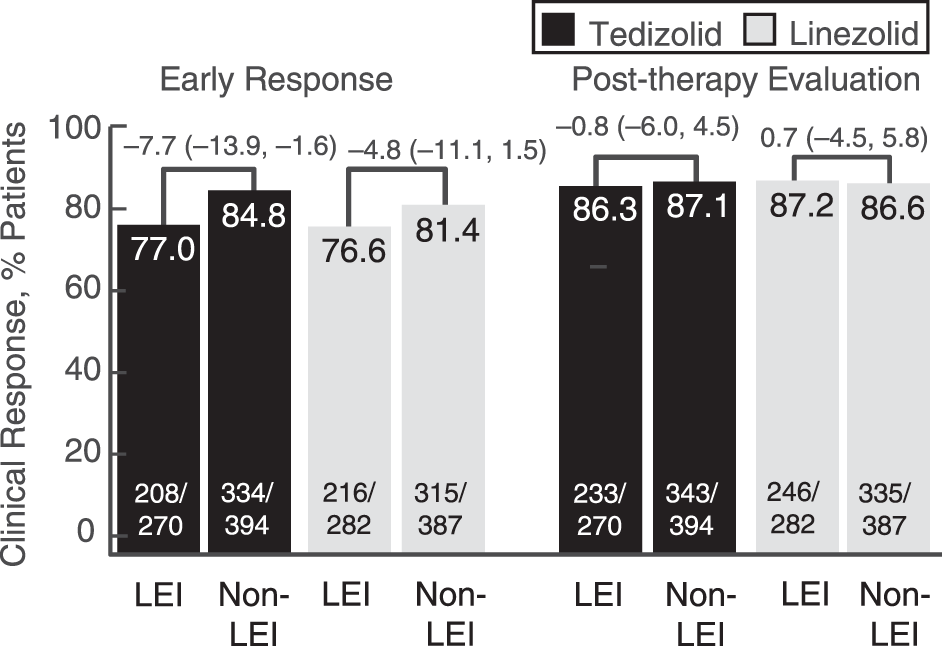
In both treatment groups, early clinical response rates in patients with lower-extremity ABSSSI were lower than those in patients who had non–lower-extremity ABSSSI (difference of –7.7% [95% CI, −13.9 to –1.6] with tedizolid and –4.8% [95% CI, –11.1 to 1.5] with linezolid;
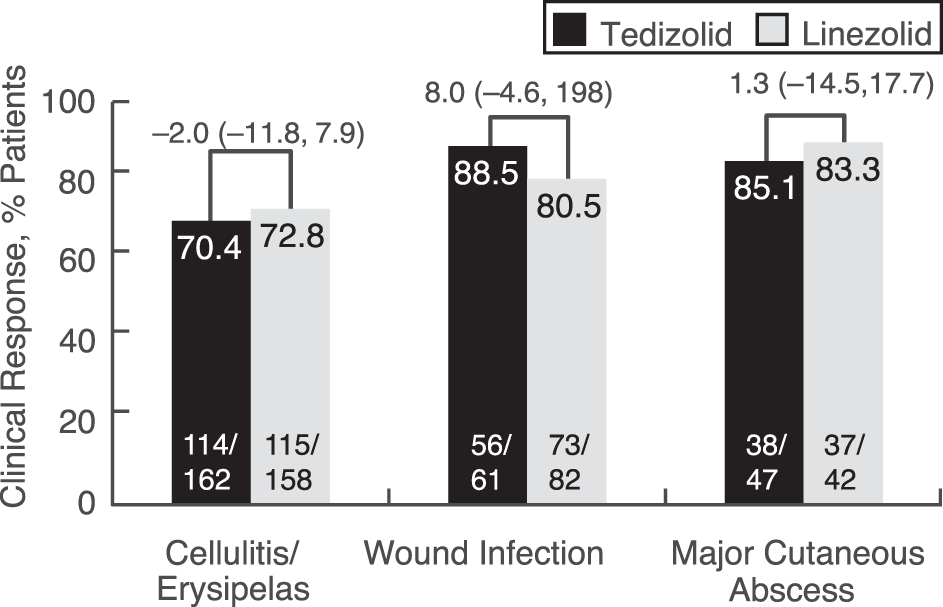
Figure 1). Clinical response rates were similar between the two treatment groups across all types of lower-extremity ABSSSI (
Figure 2). Response rates for patients with cellulitis were lower (70.4% and 72.8% for patients with tedizolid and linezolid, respectively) compared with rates for wound infection (88.5% and 80.5%, respectively) and major cutaneous abscess (85.1% and 83.3%, respectively). Early clinical response rates for patients treated with only oral therapy were 72.3% (102/141) for tedizolid and 74.1% (109/147) for linezolid. In patients who were initiated on IV therapy, the response rate was 82.2% (106/129) for tedizolid and 79.3% (107/135) for linezolid (data not shown).
Figure 1
.
Comparison of treatment outcomes in patients with lower-extremity ABSSSI and those with ABSSSI in non–lower-extremity locations. Early clinical response was lower in patients with lower-extremity ABSSSI in both treatment groups. However, at the post-therapy evaluation, both lower-extremity and non–lower-extremity infections had comparable clinical response. ABSSSI, acute bacterial skin and skin structure infections; LEI, lower-extremity infection. Values above brackets indicate treatment difference (95% confidence interval).
Figure 1
.
Comparison of treatment outcomes in patients with lower-extremity ABSSSI and those with ABSSSI in non–lower-extremity locations. Early clinical response was lower in patients with lower-extremity ABSSSI in both treatment groups. However, at the post-therapy evaluation, both lower-extremity and non–lower-extremity infections had comparable clinical response. ABSSSI, acute bacterial skin and skin structure infections; LEI, lower-extremity infection. Values above brackets indicate treatment difference (95% confidence interval).
Figure 2
.
Early clinical response of cellulitis/erysipelas infection was slightly lower than that for wound infection and major cutaneous abscess. The early clinical responses for wound infection and major cutaneous abscess were comparable. All clinical responses were similar for both treatment groups. Values above brackets indicate treatment difference (95% confidence interval).
Figure 2
.
Early clinical response of cellulitis/erysipelas infection was slightly lower than that for wound infection and major cutaneous abscess. The early clinical responses for wound infection and major cutaneous abscess were comparable. All clinical responses were similar for both treatment groups. Values above brackets indicate treatment difference (95% confidence interval).
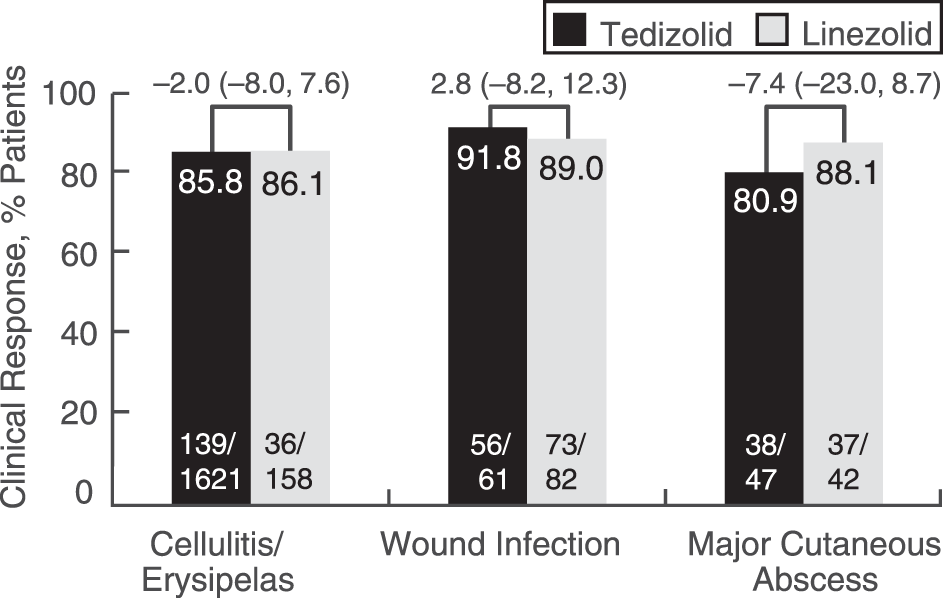
At the PTE visit, there was no difference in investigator-assessed clinical outcomes between patients with lower-extremity and non–lower-extremity ABSSSI with tedizolid or linezolid treatment. With both treatments, the response at PTE was higher than the early clinical response in patients with cellulitis/erysipelas (tedizolid: 85.8% at PTE versus 70.4% early; linezolid: 86.1% at PTE versus 72.8% early) and wound infection (tedizolid: 91.8% at PTE versus 88.5% early; linezolid: 89.0% at PTE versus 80.5% early;
Figure 3). In patients who were treated with only oral tedizolid or linezolid therapy, clinical response at the PTE was 85.1% (120/141) or 87.1% (128/147), respectively; in patients who were initiated on IV therapy, the response rate was 87.6% (113/129) or 87.4% (118/135), respectively (data not shown).
Figure 3
.
Clinical response at post-therapy evaluation by type of lower-extremity infection. At the post-therapy evaluation, clinical response was similar for all infection types and treatment groups. Values above brackets indicate treatment difference (95% confidence interval).
Figure 3
.
Clinical response at post-therapy evaluation by type of lower-extremity infection. At the post-therapy evaluation, clinical response was similar for all infection types and treatment groups. Values above brackets indicate treatment difference (95% confidence interval).
Safety
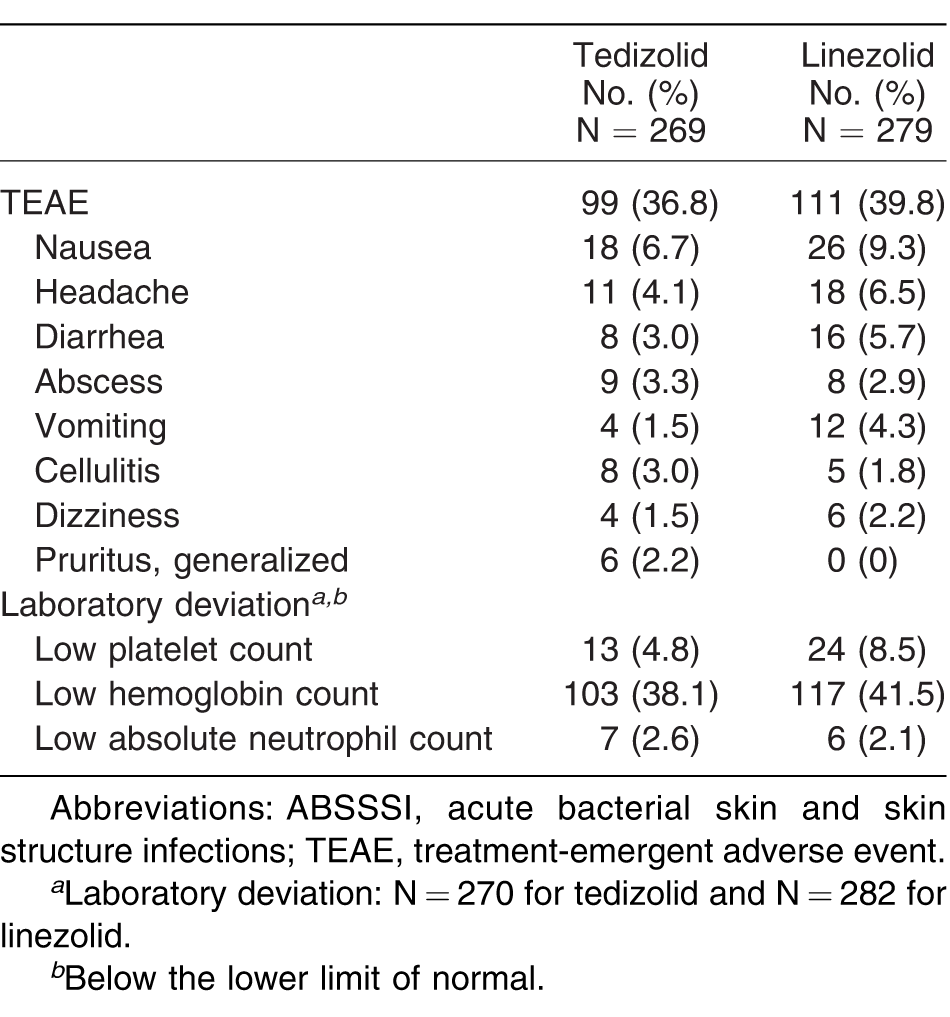
Treatment-emergent adverse events were reported in 36.8% (99/269) of patients with lower-extremity ABSSSI in the tedizolid group and 39.8% (111/279) in the linezolid arm (
Table 4). Gastrointestinal adverse events (nausea, diarrhea, and vomiting) were observed more frequently with linezolid than with tedizolid. Abnormal laboratory parameters were also observed with tedizolid and linezolid treatment. Low platelet counts (<150 × 10
9/L) were reported more frequently with linezolid than with tedizolid (8.5% vs 4.8%, respectively) in patients with lower-extremity ABSSSI (Table 4). The proportion of patients with low hemoglobin (38.1% for tedizolid; 41.5% for linezolid) and low neutrophil (2.6% for tedizolid; 2.1% for linezolid) counts were similar between both treatment groups (Table 4). Only 0.7% of patients with lower-extremity ABSSSI and 0.6% of patients with non–lower-extremity ABSSSI discontinued treatment because of a TEAE.
Table 4
.
Most Common TEAEs (≥2%) and Laboratory Deviations in Patients With Lower Extremity ABSSSI
Table 4
.
Most Common TEAEs (≥2%) and Laboratory Deviations in Patients With Lower Extremity ABSSSI
Discussion
This analysis showed that tedizolid and linezolid were as effective in treating lower-extremity ABSSSI as they were in treating non–lower-extremity ABSSSI. Although early clinical responses were lower with both agents in patients with lower-extremity compared with non–lower-extremity ABSSSI (∼5%–8% difference), clinical response rates at PTE were similar for both treatment groups. Both early clinical response rates and investigator-assessed clinical success rates at PTE were high for tedizolid and linezolid, regardless of the type of lower-extremity infection.
The frequencies and types of baseline causative pathogens isolated from patients with lower-extremity ABSSSI were similar to those isolated from the larger trial populations. Among patients with lower-extremity ABSSSI, MRSA infection was present in 35.6% of patients in whom a gram-positive pathogen was isolated; this proportion is similar to the proportion of MRSA infections (35.1%) for the overall trial population with a baseline gram-positive pathogen.[
30] Similarly, 41.7% of
S aureus ABSSSI of the lower extremity were due to MRSA, which is comparable to the proportion of MRSA in
S aureus ABSSSI in patients with non–lower-extremity infection (43.3%). The incidence of
S pyogenes infections in lower-extremity ABSSSI (7.7% of patients with a gram-positive pathogen) was also reflective of the incidence in the larger trial populations (6.5%).[
30]
Podiatric clinicians frequently treat patients for wound infections of the lower extremities. In this study, treatment with tedizolid and linezolid showed high clinical success rates both at early clinical response (88.5% and 80.5%, respectively) and at PTE (91.8% and 89.0%, respectively) in patients with wound infections. Thus, a shorter course of therapy offered by tedizolid (200 mg once daily for 6 days) was equally as effective as a longer linezolid treatment (600 mg twice daily for 10 days). These results are consistent with antimicrobial stewardship in reducing the length of antibacterial therapy. Moreover, the option to effectively treat wound infections with oral therapy would be beneficial in the outpatient setting, where most of these infection types are treated.
Both drugs were well tolerated; however, gastrointestinal events and low platelet counts were reported less frequently in the tedizolid group. These findings in the lower-extremity ABSSSI subgroup were consistent with those reported previously for the larger phase 3 ABSSSI patient population.[
30,
33] Myelosuppression is a known risk associated with extended use of linezolid and is potentially related to oxazolidinone-induced impairment of mitochondrial protein synthesis.[
34,
35,
36] Tedizolid has reduced potential for mitochondrial toxicity owing to a more favorable pharmacokinetic profile, lower overall drug exposure, and once-daily administration compared with linezolid.[
37]
The current study had some limitations. This was a post hoc analysis of a patient subpopulation and may have lacked sufficient power to detect differences. Similarly, the two treatment groups may not have been balanced with respect to prognostic factors. The small sample size of some ABSSSI types (for example, major cutaneous abscess) may not have allowed for accurate interpretations of outcomes.
In conclusion, lower-extremity and non–lower-extremity ABSSSI were effectively treated by a short 6-day course of once-daily tedizolid and 10 days of twice-daily linezolid. Although a small difference in response rates between patients with lower-extremity infections and those with ABSSSI in other anatomic locations was observed at the early assessment, response rates were similar at the PTE visit. Tedizolid is an effective and well-tolerated therapeutic option for lower-extremity ABSSSI and might warrant additional prospective clinical study specifically for the treatment of these types of infections.
Acknowledgments
The authors would like to thank Benjamin Miller, PharmD, of Merck & Co, Inc, Kenilworth, NJ, for his contributions to the manuscript. Dominik Wolf, MSc, an employee of Merck & Co, Inc, Kenilworth, NJ, critically reviewed the manuscript and was involved in data analysis and interpretation. Medical writing and editorial assistance was provided by Norma I. Padilla, PhD, and Tracy T. Cao, PhD, of ApotheCom, Yardley, PA.
Dual Publication
These data were partially presented at the 25th Annual European Congress of Microbiology and Infectious Diseases (ECCMID) meeting; April 25–28, 2015; Copenhagen, Denmark.
Financial Disclosure
Funding for this research was provided by Merck & Co, Inc, Kenilworth, NJ. Employees of the study sponsor and the authors were involved in the design and conduct of the study; in the collection, analysis, and interpretation of the data; and in the preparation, review, or approval of the manuscript.
Conflicts of Interest
Warren S. Joseph, DPM, has received speaker bureau fees from Merck & Co and Pfizer, outside of the submitted work. Darren Culshaw, PharmD, Steven Anuskiewicz, MS, Carisa De Anda, PharmD, and Philippe Prokocimer, MD are employees of Merck Sharp & Dohme Corp, a subsidiary of Merck & Co, Inc, who may potentially own stock and/or hold stock options in the Company.
Dr. Joseph was not involved in the peer-review or acceptance of this article.
References
- Edelsberg JTaneja CZervos M Trends in US hospital admissions for skin and soft tissue infections. Emerg Infect Dis15 1516 2009
- Hersh ALChambers HFMaselli JH National trends in ambulatory visits and antibiotic prescribing for skin and soft-tissue infections. Arch Intern Med168 1585 2008
- Taira BRSinger AJThode HCJr, National epidemiology of cutaneous abscesses: 1996 to 2005. Am J Emerg Med27 289 2009
- Pallin DJEgan DJPelletier AJ Increased US emergency department visits for skin and soft tissue infections, and changes in antibiotic choices, during the emergence of community-associated methicillin-resistant Staphylococcus aureus. Ann Emerg Med51 291 2008
- US Department of Health and Human Services: Guidance for industry uncomplicated and complicated skin and skin structure infections — developing antimicrobial drugs for treatment. Available at: http://www.fda.gov/ohrms/dockets/98fr/2566dft.pdf. Accessed May 2, 2016
- US Department of Health and Human Services: Guidance for industry acute bacterial skin and skin structure infections: developing drugs for treatment. Available at: http://www.fda.gov/downloads/Drugs/GuidanceComplianceRegulatoryInformation/Guidances/UCM071185.pdf. Accessed September 16, 2015
- Moran GJKrishnadasan AGorwitz RJet al: Methicillin-resistant S. aureus infections among patients in the emergency department. N Engl J Med355 666 2006
- King MDHumphrey BJWang YF Emergence of community-acquired methicillin-resistant Staphylococcus aureus USA 300 clone as the predominant cause of skin and soft-tissue infections. Ann Intern Med144 309 2006
- Talan DAKrishnadasan AGorwitz RJ Comparison of Staphylococcus aureus from skin and soft-tissue infections in US emergency department patients, 2004 and 2008. Clin Infect Dis53 144 2011
- Zervos MJFreeman KVo L Epidemiology and outcomes of complicated skin and soft tissue infections in hospitalized patients. J Clin Med50 238 2012
- Davis SLPerri MBDonabedian SM Epidemiology and outcomes of community-associated methicillin-resistant Staphylococcus aureus infection. J Clin Microbiol45 1705 2007
- Labreche MJLee GCAttridge RT Treatment failure and costs in patients with methicillin-resistant Staphylococcus aureus (MRSA) skin and soft tissue infections: a South Texas Ambulatory Research Network (STARNet) study. J Am Board Fam Pract26 508 2013
- Tattevin PSchwartz BSGraber CJ Concurrent epidemics of skin and soft tissue infection and bloodstream infection due to community-associated methicillin-resistant Staphylococcus aureus. Clin Infect Dis55 781 2012
- Engemann JJCarmeli YCosgrove SE Adverse clinical and economic outcomes attributable to methicillin resistance among patients with Staphylococcus aureus surgical site infection. Clin Infect Dis36 592 2003
- Itani KMMerchant SLin SJ Outcomes and management costs in patients hospitalized for skin and skin-structure infections. Am J Infect Control39 42 2011
- Lipsky BAWeigelt JAGupta V Skin, soft tissue, bone, and joint infections in hospitalized patients: epidemiology and microbiological, clinical, and economic outcomes. Infect Control Hosp Epidemiol28 1290 2007
- Ostermann HBlasi FMedina J Resource use in patients hospitalized with complicated skin and soft tissue infections in Europe and analysis of vulnerable groups: the REACH study. J Med Econ17 719 2014
- Liu CBayer ACosgrove SE Clinical practice guidelines by the Infectious Diseases Society of America for the treatment of methicillin-resistant Staphylococcus aureus infections in adults and children. Clin Infect Dis52 e18 2011
- Hawser SPBouchillon SKHoban DJ Rising incidence of Staphylococcus aureus with reduced susceptibility to vancomycin and susceptibility to antibiotics: a global analysis 2004-2009. Int J Antimicrob Agents37 219 2011
- [No author listed.]Sivextro [package insert]. Whitehouse Station, NJ: Merck & Co, 2015
- [No author listed.]Sivextro [package insert]. Surrey, United Kingdom: Cubist UK Ltd, 2015
- [No author listed.]Health Canada. Available at: http://www.hc-sc.gc.ca/dhp-mps/prodpharma/sbd-smd/drug-med/sbd_smd_2015_sivextro_173603-eng.php. Updated November 19, 2015. Accessed May 2,2016
- Flanagan SFang EMunoz KA Single- and multiple-dose pharmacokinetics and absolute bioavailability of tedizolid. Pharmacotherapy34 891 2014
- Schaadt RSweeney DShinabarger D In vitro activity of TR-700, the active ingredient of the antibacterial prodrug TR-701, a novel oxazolidinone antibacterial agent. Antimicrob Agents Chemother53 3236 2009
- Brown SDTraczewski MM: Comparative in vitro antimicrobial activities of torezolid (TR-700), the active moiety of a new oxazolidinone, torezolid phosphate (TR-701), determination of tentative disk diffusion interpretive criteria, and quality control ranges. Antimicrob Agents Chemother54 2063 2010
- Thomson KSGoering RV: Activity of tedizolid (TR-700) against well-characterized methicillin-resistant Staphylococcus aureus strains of diverse epidemiological origins. Antimicrob Agents Chemother57 2892 2013
- Flanagan SMinassian SLMorris Det al: Pharmacokinetics of tedizolid in subjects with renal or hepatic impairment. Antimicrob Agents Chemother58 6471 2014
- Prokocimer PDe Anda CFang E Tedizolid phosphate vs linezolid for treatment of acute bacterial skin and skin structure infections: the ESTABLISH-1 randomized trial. JAMA309 559 2013
- Moran GJFang ECorey GR Tedizolid for 6 days versus linezolid for 10 days for acute bacterial skin and skin-structure infections (ESTABLISH-2): a randomised, double-blind, phase 3, non-inferiority trial. Lancet Infect Dis14 696 2014
- Shorr AFLodise TPCorey GRet al.: Analysis of the Phase 3 ESTABLISH Trials: Tedizolid versus linezolid in acute bacterial skin and skin structure infection. Antimicrob Agents Chemother59 864 2014
- Itani KMShorr AF: FDA guidance for ABSSSI trials: implications for conducting and interpreting clinical trials. Clin Infect Dis58(suppl 1): S4 2014
- European Medicines Agency: Addendum to the guideline on the evaluation of medicinal products indicated for treatment of bacterial infections. Available at: http://www.ema.europa.eu/ema/pages/includes/document/open_document.jsp?webContentId=WC500153953. Accessed May 2, 2016
- Lodise TPFang EMinassian SL Platelet profile in patients with acute bacterial skin and skin structure infections receiving tedizolid or linezolid: findings from the phase 3 ESTABLISH Clinical Trials. Antimicrob Agents Chemother58 7198 2014
- Shaw KJBarbachyn MR: The oxazolidinones: past, present, and future. Ann N Y Acad Sci1241 48 2011
- De Vriese ASCoster RVSmet J Linezolid-induced inhibition of mitochondrial protein synthesis. Clin Infect Dis42 1111 2006
- [No author listed.]Zyvox [package insert]. New York, NY. Pfizer, Inc, 2015
- Flanagan SMcKee EEDas D Nonclinical and pharmacokinetic assessments to evaluate the potential of tedizolid and linezolid to affect mitochondrial function. Antimicrob Agents Chemother59 178 2015
© 2017 American Podiatric Medical Association