


Abstract
Background: We sought to determine patient and ulcer characteristics that predict wound healing in patients living with diabetes. Methods: A prospective observational study was conducted on 99 patients presenting with diabetic foot ulceration. Patient and ulcer characteristics were recorded. Patients were followed up for a maximum of 1 year. Results: After 1 year of follow-up, ulcer characteristics were more predictive of ulcer healing than were patient characteristics. Seventy-seven percent of ulcers had healed and 23% had not healed. Independent predictors of nonhealing were ulcer stage (P = .003), presence of biofilm (P = .020), and ulcer depth (P = .028). Although this study demonstrated that the baseline hemoglobin A1c reading at the start of the study was not a significant predictor of foot ulcer outcome (P = .603, resolved versus amputated), on further statistical analyses, when hemoglobin A1c was compared with the time taken for complete ulcer healing (n = 77), it proved to be significant (P = .009). Conclusions: The factors influencing healing are ulcer stage, presence of biofilm, and ulcer depth. These findings have important implications for clinical practice, especially in an outpatient setting. Prediction of outcome may be helpful for health-care professionals in individualizing and optimizing clinical assessment and management of patients. Identification of determinants of outcome could result in improved health outcomes, improved quality of life, and fewer diabetes-related foot complications.
Diabetic foot complications are common in people living with diabetes [1]. Foot ulcerations are one of the most feared complications for both people with diabetes and health-care providers owing to their negative effect on lives, resulting in overall poor prognosis of the disease, leading to long periods of hospitalization and substantial health-care costs [2].
Approximately 1% to 4% of people living with type 2 diabetes develop foot ulceration annually [3]. Furthermore, approximately 15% of those living with diabetes will develop at least one foot ulcer during their lifetime. Only half of all ulcers are said to heal within 6 months, and two-thirds take up to a year [4].
The literature suggests that diabetes complications, including foot ulcerations, could be ameliorated and even prevented if this condition is managed correctly [1]. However, although several countries and organizations, such as the World Health Organization [5], the International Working Group on the Diabetic Foot [6], and the International Diabetes Federation [7], have set goals and guidelines to define standards of care using evidence-based interventions to reduce the rate of amputations by up to 50%, studies have reported variations in care. Data on outcomes and determinants of outcomes in individuals living with diabetic foot ulcerations are either limited [8] or varied [9]. Studies that have looked at foot ulcer outcome in people living with diabetes have reported conflicting results, with several patient and ulcer characteristics, including age, sex, cross-sectional area of ulcer, peripheral arterial disease, infection, ulcer site, duration of diabetes, and comorbidity, reported as possible factors that could influence ulcer healing [1,8].
In a study by Ince et al [10], increased duration of diabetes, increased ulcer area, and peripheral arterial disease (PAD) were found to be associated with a reduced likelihood of ulcer healing. Studies by Sheenan et al [11] and Pham et al [12] highlighted the fact that a 50% reduction in foot ulcer area at 4 weeks of observation is a robust predictor of ulcer healing at 12 weeks. However, the previously mentioned findings are not congruent with findings from other studies [13], in which it was demonstrated that half of all diabetic foot ulcers with early healing progress (≥50% area reduction by 4 weeks) do not heal by 12 weeks.
Another ulcer characteristic that could influence ulcer healing is ulcer site. Ince et al [10] reported that ulcers of the midfoot and hindfoot were less likely to heal than those of the forefoot. The association between ulcer site and probability of healing is supported further in a study by Beckert et al [14] in which toe ulcers were seen to heal faster compared with ulcers in the midfoot and hindfoot. In contrast to the previous findings [10], a study by Apelqvist et al [15] reported a weak association between ulcer site and healing time, whereas Oyibo et al [16] found no association at all.
Gershater et al [8] suggest that factors such as age, sex, and duration of diabetes did not have such an evident influence on ulcer healing compared with other studies that found no significant association between these variables and ulcer healing [14]. Age is known to be an important factor related to the progress of PAD, neuropathy, and lower-leg amputation [17] and to the probability of healing [18], but these were not congruent with the findings from Beckert et al [14].
As discussed previously herein, data regarding factors that could influence ulcer healing are varied [9]. The ability to predict whether a diabetic foot ulcer is following versus not following a healing trajectory could dramatically alter patient outcomes by reassessing the wound condition and considering an alternative treatment regimen [19].
A fuller understanding of the factors that contribute to ulceration is important if improvements in diabetes outcomes are to be achieved. This has prompted us to conduct a study in a population with a high prevalence rate of diabetes to identify specific patient and ulcer characteristics that could influence ulcer healing. Ten percent of the Maltese population has diabetes, compared with 2% to 5% of the population in its neighboring European countries [20]. As expected, foot ulceration, and ulcer recurrence, is common in the Maltese population with diabetes [21].
The aim of this study was to obtain prospective data across 1 year on foot ulcer outcome (healing versus nonhealing) and determinants of outcomes in patients living with diabetes in this specific Maltese population. The research question for this study was as follows: Is there an association between baseline patient and ulcer characteristics and diabetic foot ulcer healing time? The null hypothesis postulated for this study was that there is no association between patient and ulcer characteristics and diabetic foot ulcer healing time. The alternative hypothesis suggested that there is an association between patient and ulcer characteristics and diabetic foot ulcer healing time. The results of this study were later compared with the results of similar studies conducted abroad to determine whether determinants of outcome are congruent or otherwise among different countries. Local data will undoubtedly go a long way toward alleviating, to some extent, the burden and costs related to diabetic foot complications in this country and in countries that share similar cultures.
Methods
Participant Selection
Individuals were recruited from the diabetes podiatric medical clinic of a local general hospital. An average of 5,000 people attend the clinic annually, with approximately 500 experiencing ulceration. A convenience cohort of the first 101 patients was enrolled for this investigation. A priori power analysis was calculated. This study was approved by the University of Malta research ethics committee, and all of the participants provided informed consent before any data collection. All of the investigations were performed in accordance with the principles of the Declaration of Helsinki as revised in 2000. Participants eligible for this study were Maltese individuals older than 18 years living with diabetes according to the World Health Organization diagnostic criteria [22]. Patients who presented for the first time with new foot ulceration during a 1-year period at an outpatient hospital clinic were enrolled into this observational study. Patients were excluded if they presented with venous ulcers, had a history of foot ulceration or amputation, underwent revascularization procedures of the lower limb, or were either unable to participate in the study due to cognitive impairments or showed unwillingness to participate and follow the study protocol.
Methodological Rigor
A prospective observational study was conducted. The clinical tools used during this research were based on validated and previously published methods [23] following a thorough review of the literature on international guidelines and recommendations. A database was constructed to record all of the information.
Study Methods
A total of 101 patients were recruited in this prospective observational study and were followed and treated until healing was achieved or up to a maximum of 12 months according to a standardized protocol described later herein based on the International Consensus on the Diabetic Foot [6]. A maximum of 1 year was included because a literature search, as discussed at the beginning of this article, found that most studies followed their participants for up to 1 year [1]. Two participants died during the study period, leaving 99 recruited patients. Assessment of the neurologic and vascular status, regular wound debridement, diagnosis and treatment of infection, dressing of ulcers, and off-loading were conducted.
The participants were asked to visit the diabetes foot clinic once every 4 weeks after recruitment and were observed for a maximum of 12 months. The primary outcome measure was ulcer healing. Healing was defined as complete epithelialization without discharge and without amputation. Time to healing was calculated from the date of first clinic attendance to the date at which the foot ulcer was first confirmed as healed in the clinic. Those who had an ulcer-related amputation (major/minor) or who died during the year of study were censored at the date of amputation or death. Specific patient and ulcer characteristics were selected to cover a wide range of previously identified predictive factors for ulcer healing, as highlighted at the beginning of this article [1,9-12].
Patient Characteristics
After informed consent was received, patients' characteristics were gathered using a self-designed data collection sheet structured for the purpose of gathering data from participants, including sex, age, type and duration of diabetes, and weight. In addition to the latter, details concerning date of diabetes diagnosis, medication regimen for diabetes and other medications, renal function, heart failure, history of coronary artery bypass graft, hypertension, hypercholesterolemia, and neurologic disorders were recorded from patients' medical history notes. Additional information, including vision, symptoms of PAD such as intermittent claudication and rest pain, and smoking habits, were recorded. Participants were also asked whether they are able to stand or walk without help. Any foot disorders, the type of shoe worn, and off-loading devices used were also recorded. The type of wound dressing and patients' ability to change the dressing were noted. Each participant's present occupation was also recorded. Clinical measurements, including hemoglobin A1c (HbA1c) level, creatinine level, and estimated glomerular filtration rate, were measured every 4 months as part of the patients' routine at the Diabetes and Endocrinology Centre, Mater Dei Hospital, Malta. All of the patients underwent a standardized ulcer examination every 4 weeks for up to 1 year using the PEDIS (perfusion, extent/size, depth/tissue loss, infection, and sensation) classification tool [9].
Ulcer Characteristics
To classify patients in this study, an examination of the foot following the PEDIS system as recommended by the International Consensus on the Diabetic Foot [6] was conducted. Foot ulcerations were classified according to five categories: perfusion, extent, depth, infection, and sensation. The testing modalities and examination methods were performed by the same investigator (L.V.) to ensure uniformity. Testing was performed at the outpatient clinic. Room temperature was kept at 21°C to 23°C (70°F–73°F) during the assessments to avoid vasoconstriction of digital arteries from the cold. The screening process involved review of the patient's medical history and a lower-extremity physical examination. Individual assessments took approximately 45 min.
Peripheral Sensory Neuropathy
Ten-gram Semmes-Weinstein monofilaments were used to identify peripheral sensory neuropathy. The five-point test was used. The plantar aspect of the hallux and third digit together with the first, third, and fifth metatarsal heads were used for testing. With eyes closed, the patient related to the investigator when he or she could feel the monofilament. Participants with triphasic waveforms, those with normal ankle-brachial pressure index (ABPI) values (reference range, 0.9–1.2), and those who were unable to feel the 10-g monofilament at any of the five points were considered neuropathic.
Peripheral Arterial Disease
Documentation of history of intermittent claudication, rest pain, and palpation of peripheral pulses were used to assess PAD. Palpation of pulses was conducted by an experienced clinician (L.V.). Dorsalis pedis and posterior tibial pulses were recorded. Cyanosis, cold feet, skin thinning, and hair anomalies were also recorded. Claudication was evaluated from information supplied by the patient regarding exercise-induced calf, thigh, or buttock pain.
Measurement of ABPI was performed using a portable handheld Doppler device and blood pressure cuffs. Apart from ABPI assessment, quantitative pedal waveform analysis was obtained from all recruited individuals using continuous wave Doppler. The Doppler waveforms and ABPI were obtained using the Huntleigh Dopplex Assist vascular package (Huntleigh, Cardiff, England) as the principal study tool. The Huntleigh handheld continuous wave Doppler device with an 8-MHz probe, part of the Dopplex Assist vascular package, was used to measure the waveforms of the dorsalis pedis and the posterior tibial arteries. The probe was held steadily on the anatomical artery location at an angle of 45° to 60° against the flow of arterial blood. Interpretation of arterial pressure waveform results was based on standards from the literature. Waveforms were classified as triphasic, biphasic, monophasic discontinuous, and monophasic continuous. The triphasic and biphasic waveforms were considered normal, whereas the monophasic discontinuous and monophasic continuous waveforms were interpreted as abnormal and indicative of PAD. Measurements were performed after a 5-min rest in the supine position with the upper body as flat as possible. Patients were also asked to undo all tight clothing around the waist and arm. The Huntleigh Dopplex Assist series was used to measure the resting ABPI. The series used for this study included an electric pump to deflate the pressure cuffs, requiring the investigator to simply press a button. An optimum Doppler signal is achieved at an angle of 45° to 60°. When measured, the systolic blood pressures are automatically saved to the system's software, with the saved results then used to calculate the ABPI ratios by the system.
A blood pressure cuff was applied to the arm to measure brachial systolic pressure and the ankle to measure dorsalis pedis and posterior tibial pressures. The cuff was inflated to occlude the arterial pressure. Systolic pressure was obtained by listening and noting the pressure on the manometer. The higher values of the brachial and the ankle pressures were used to calculate the ABPI. Values were interpreted according to the criteria proposed by the American Heart Association and the American Diabetes Association [24]. An ABPI of 0.9 to 1.29 was interpreted as normal, lower-extremity vascular disease was defined as an ABPI less than 0.90 in either foot, and an ABPI of 1.3 or greater was considered significantly elevated and indicative of vascular calcification.
Extent and Depth
Ulcer extent was recorded using the acetate method, which involved tracing the circumference of the wound onto a two-layered, 1-mm2, preprinted acetate tracing. The contact layer was discarded, and the area of the wound was calculated by counting each square that is more than half within the border of the wound as 1 mm2 [25]. Ulcer depth was measured by inserting a sterile probe into the deepest part of the wound, placing a gloved forefinger at the level of the surrounding skin, and measuring the length of the probe within the wound against a paper ruler.
Infection
Infection was diagnosed when two or more of the following signs were present: frank purulence, local warmth, erythema, lymphangitis, edema, pain, fever, and foul smell.
Ulcer site was documented and categorized as the toe, metatarsophalangeal joint, midfoot, or hindfoot. Other ulcer characteristics that were recorded included whether the ulcer base was wet, moist, or dry. The presence of slough, necrotic/eschar, granulating, or epithelializing tissue and biofilm was recorded. Biofilm was diagnosed when a grayish, thick, slimy barrier was observed [26]. An attempt was also made to estimate the number of days that elapsed between ulcer onset and first attendance at the clinic.
Ulcers were also categorized according to their type. Patients whose ABPI was found to be less than 0.9 and whose peripheral sensation was poor were diagnosed as having a neuroischemic ulcer. The typical characteristics of a neuroischemic ulcer are a base of sparse pale granulation tissue and a yellowish, closely adherent slough, and it is usually found on the margins of the foot, especially on the medial surface of the first metatarsophalangeal joint and over the lateral aspect of the fifth metatarsophalangeal joint [27]. Patients with an ABPI of 0.9 to 1.3 but poor peripheral sensation were diagnosed as having a neuropathic ulcer. The characteristics of a typical neuropathic ulcer are a punched out appearance; the presence of granulation tissue; a sloughy appearance; being surrounded by hyperkeratosis; and the presence of whitish, macerated, moist tissue [28]. Neuropathic ulcers were usually found on the plantar aspect of the foot under the metatarsal heads or the apices of digits and heels. Patients with an ABPI less than 0.9 but good peripheral sensation were diagnosed as having an ischemic ulcer. If a patient happened to have multiple ulcers, the first, or the clinically most important (highest grades for area, depth, or arteriopathy at presentation), was selected as the index lesion for the study. Ulcer area and depth, presence of infection, and state of the ulcer base were all recorded every 4 weeks for a maximum of 12 months. The previously mentioned independent variables were chosen after a thorough literature search on factors that could influence diabetic foot ulcer healing, as discussed at the beginning of this article.
Statistical Analysis
All of the data were recorded on a spreadsheet designed in Microsoft Excel (Microsoft Corp, Redmond, Washington) to group together the information required for interpretation of the results. Statistical analyses were performed using a software program (SPSS for Windows, version 14; SPSS Inc, Chicago, Illinois). One-way analysis of variance or the χ2 test was performed for all of the potential predictor variables of wound healing, with values presented with their respective 95% confidence intervals. Second, all significant predictors found in the univariate analyses were entered simultaneously into a logistic regression analysis model. This model yielded a set of variables that can be regarded as independent predictors of foot ulcer outcome, as described in the “Results” section.
Results
Patient Demographics and Ulcer Characteristics
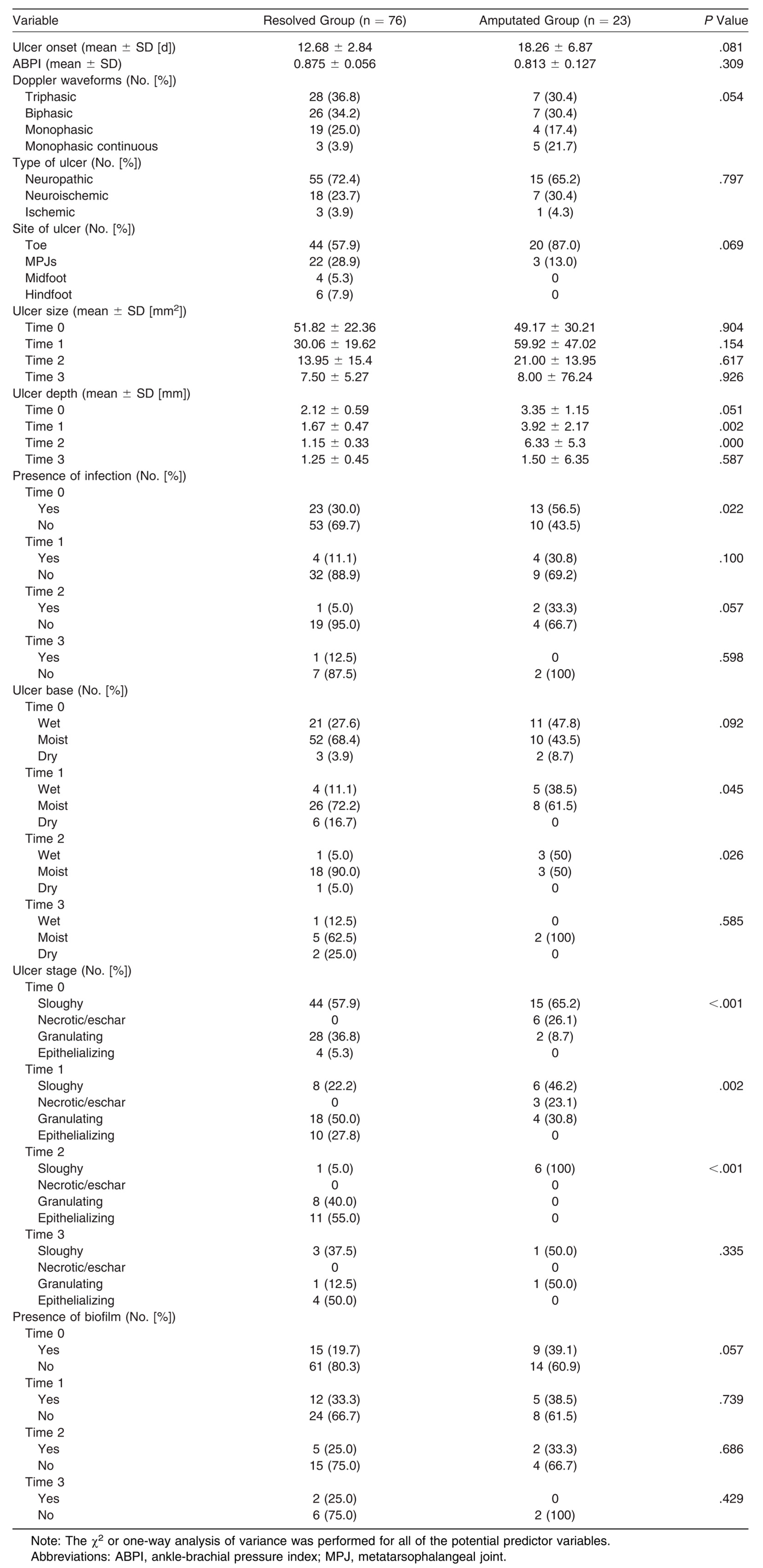
A total of 99 patients (69 men and 30 women) presenting with a new foot ulcer were recruited to this study. Five participants were living with type 1 diabetes and 94 with type 2 diabetes. The mean ± SD age of the study group and the duration of diabetes were 62.8 ± 9.5 and 14.8 ± 9.0 years, respectively. Seventy percent of the ulcers were neuropathic, 25.3% were neuroischemic, and 4% were ischemic. Most ulcers presented with slough (59.6%), necrotic/eschar (6.1%), granulating (30.3%), or epithelializing (4%) tissue. Furthermore, 25.2% of the patients presented with biofilm. In addition, 36.4% of all ulcers showed clinical evidence of infection at presentation (Table 1 and Table 2).
Table 1.
Patient Characteristics for the Resolved versus Amputated Groups: Univariate Analysis
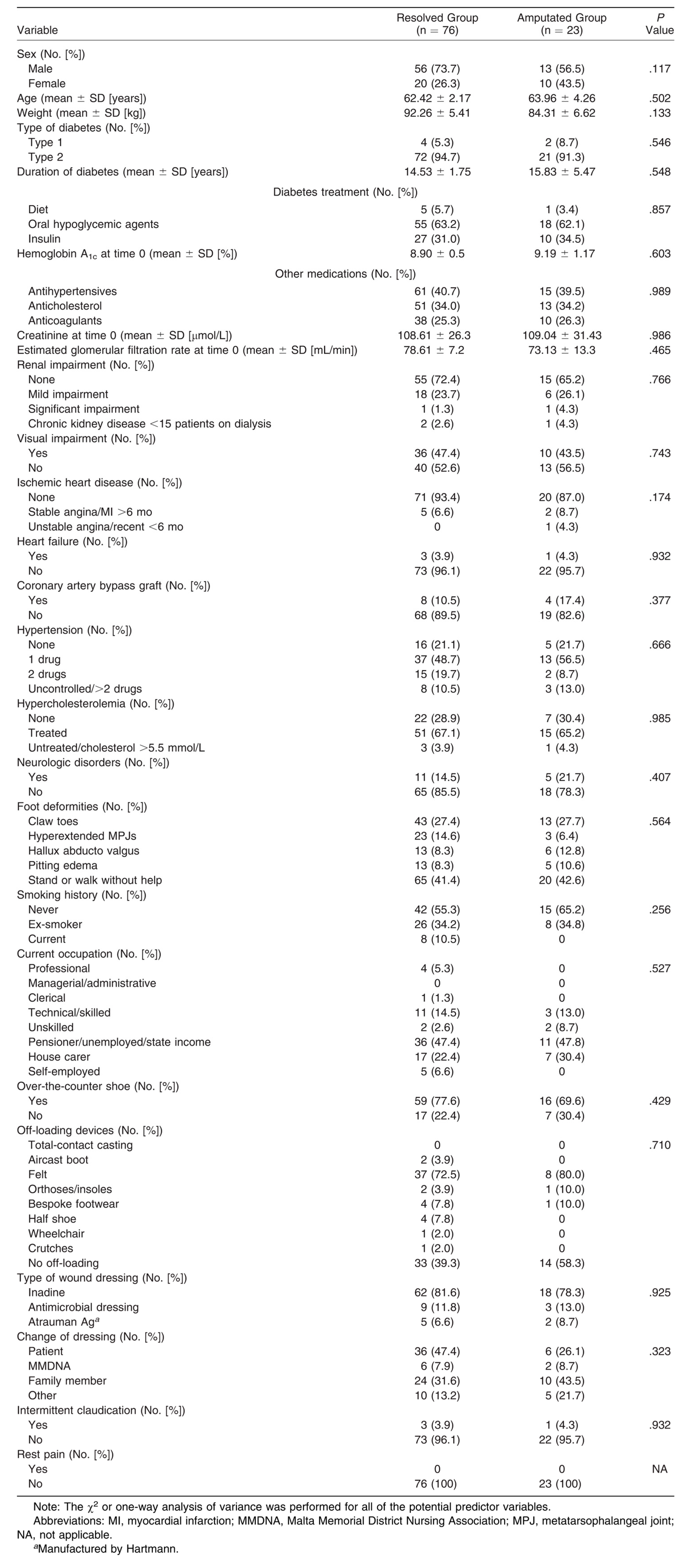
Table 2.
Ulcer Characteristics for the Resolved versus Amputated Groups: Univariate Analysis
Outcome
The primary outcome measure was ulcer healing. Participants who had an amputation were classified as unhealed. At termination of the study, 77% of ulcers had healed/resolved completely and 23% resulted in lower-limb amputation during a maximum of 1 year.
Patient Characteristics and Foot Ulcer Outcome: Univariate Analysis
Table 1 illustrates the univariate relationships between patient characteristics and foot ulcer outcome (resolved versus amputated). The results demonstrated no significant predictors of wound healing among the patient characteristics recorded; however, on further statistical analysis, when HbA1c level was associated with time to healing it proved to be a significant predictor (P = .009).
Ulcer Characteristics and Foot Ulcer Outcome
At baseline, the mean ± SD ulcer area was 51.82 ± 22.36 mm2 in the resolved ulcer group (n = 77) and 49.17 ± 30.21 mm2 in the amputated group (n = 23). There was no significant difference in ulcer area between the two groups (P = .904).
In the resolved ulcer group, 72.4% were neuropathic, 23.7% were neuroischemic, and 3.9% were ischemic. In the amputated group, 65.2% were neuropathic, 30.4% were neuroischemic, and 4.3% were ischemic. The mean ± SD duration between estimated ulcer onset and first assessment was 12.68 ± 2.84 years for the resolved group and 18.26 ± 6.87 years for the amputated group (P = .081).
In terms of ulcer characteristics, toes were most affected in both groups (44 in the resolved group versus 20 in the amputated group). Other commonly affected areas included the metatarsophalangeal joints, midfoot, and hindfoot. Table 2 illustrates the univariate relationships between ulcer characteristics and foot ulcer outcome (resolved versus amputated) in the study group.
Logistic Regression Model and Odds Ratio
All of the identified potential predictors from the univariate analysis, including ulcer stage, ulcer depth, ulcer base, presence of infection, presence of biofilm, and Doppler waveforms, all measured at time 0 (at the beginning of the study), were further analyzed using a logistic regression analysis model to identify independent predictors of outcome. These predictors were selected because their P values were either less than the 0.05 level of significance or slightly greater than the 0.05 criterion when conducting univariate analysis. The six-predictor logistic regression model illustrated in Table 3 and Table 4 explains 48% of the total variation in the outcomes using the Nagelkerke pseudo R2 value. This model identifies three significant independent predictors: ulcer stage (P = .003), presence of biofilm (P = .020), and ulcer depth (P = .028), all at time 0. Doppler waveforms, infection, and ulcer base were not found to be significant.
Table 3.
The 6 Predictor Logistic Regression Model
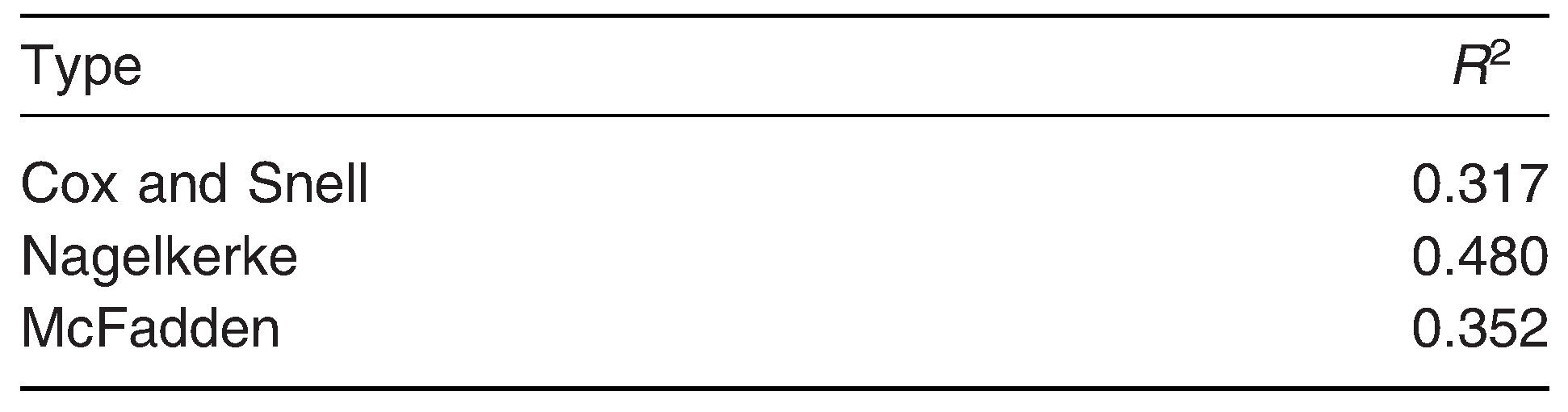
Table 4.
Potential Predictors from the Predictor Logistic Regression Model
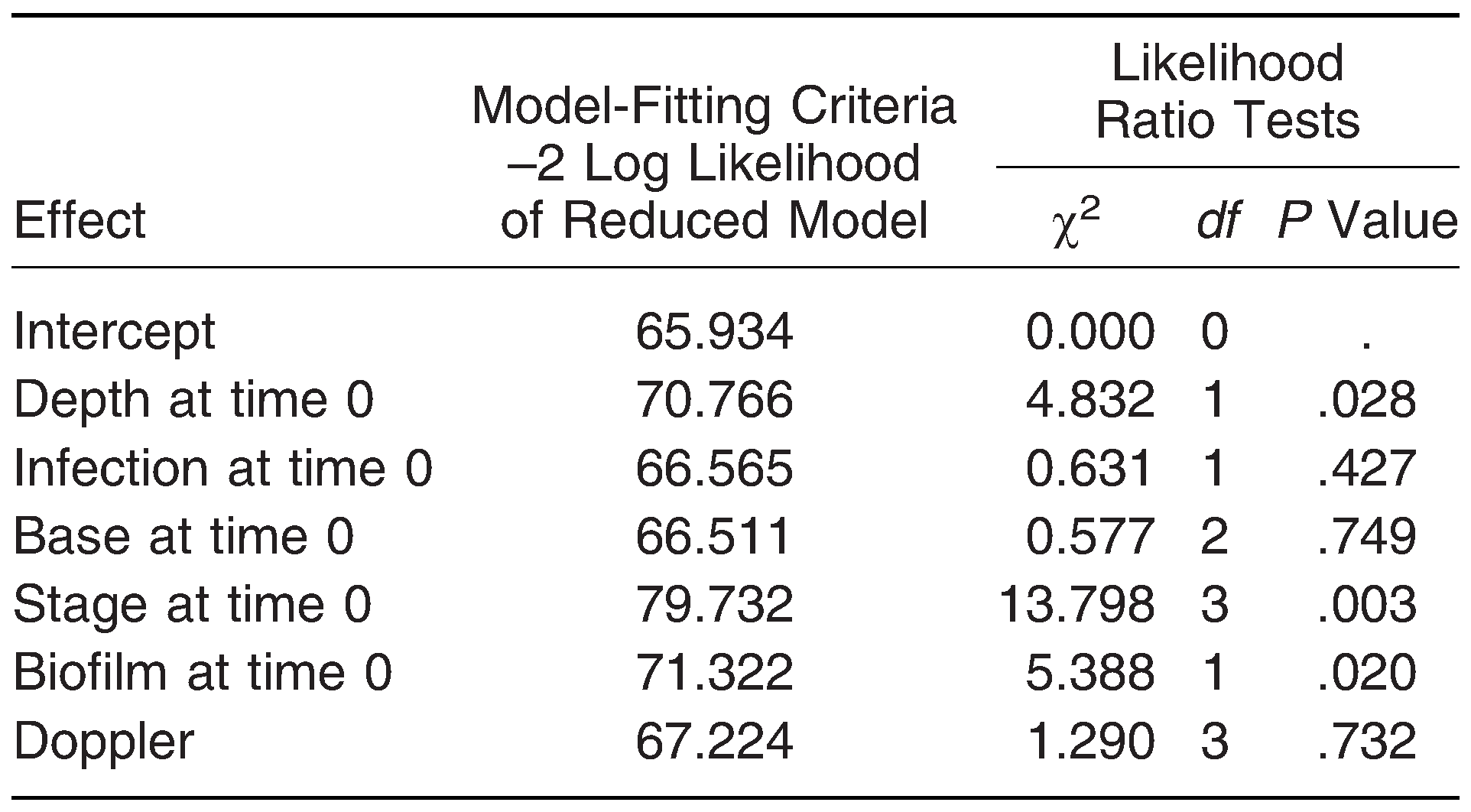
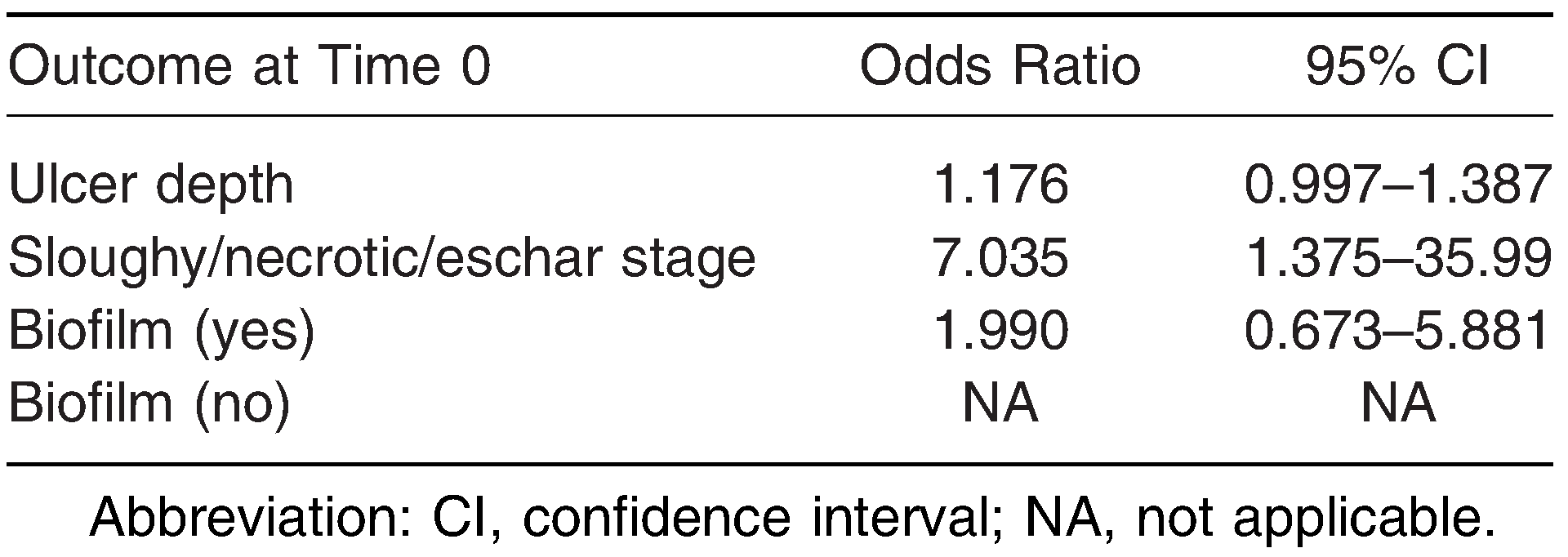
Table 5 explains that the odds ratio for depth of wound at time 0 (1.176) indicates that for every 1-mm increase in depth the odds of amputation rather than healing increases by 17.6%. The odds ratio for presence of biofilm at time 0 (1.990) indicates that the odds of amputation is 1.99 times higher in the presence of biofilm at time 0 compared with its absence. The odds ratio for the presence of slough, necrosis, and eschar (ulcer stage), at time 0 (7.035) indicates that the odds of amputation is 7.035 times greater in the presence of slough, necrosis, and eschar compared with the granulating and epithelializing stage at time 0.
Table 5.
Odds Ratios and Corresponding 95% CIs for the Depth, Stage of Wound, and Presence of Biofilm at Time 0
Discussion
The aim of this study was to determine which patient or ulcer characteristics are most likely to determine or predict ulcer healing during a 1-year period in people living with diabetes. A key reason for identifying factors that prolong healing is to modify these factors and improve outcomes. This study identified that ulcer characteristics are more predictive of wound healing than are patient characteristics. Three potential variables—ulcer stage (P = .003), presence of biofilm (P = .02), and ulcer depth (P = .028)—were identified as important factors related to wound healing. This study reported that 77% of ulcers healed completely and 23% resulted in lower-limb amputation during the study period. In previous studies, similar primary healing rates of 60% to 74% and amputation rates of 8% to 23% have been reported [8].
These findings are congruent with similar studies conducted abroad. In an observational study, Yesil et al [28] examined the possibility of predicting the foot ulcer outcome of patients living with diabetes. They concluded that ulcers of Wagner grades 4 and 5, which denote the presence of local or diffused gangrene, were very strongly associated with amputation (P < .001). These results are similar to the findings of the present study, in which all participants who presented with necroses/eschar at baseline (time 0) underwent amputation (26.1%). We also confirmed that ulcer depth is a significant predictor of wound healing. We concluded that deep wounds are at higher risk for amputation (P < .001). In a prospective study conducted by Zubair et al [29], risk factors for amputation in patients living with diabetic foot ulceration were investigated. This study highlighted that the presence of biofilm is a significant predictor of lower-limb amputation (odds ratio = 4.52).
These findings are important to health-care professionals caring for people with diabetic foot ulcerations in that these are simple risk factors that can easily be measured and identified during routine clinical assessment, and early treatment should be initiated to address these factors accordingly. This can only result in improved clinical and patient-centered outcomes.
This study did not show any associations between patient characteristics—including sex, age, type of diabetes, duration of diabetes, diabetes medication, weight, HbA1c level, creatinine level, renal function, visual impairment, ischemic heart disease, and foot deformities—and wound healing. Although this finding is also congruent with those of similar studies [10,30], other previous studies have reported conflicting results regarding these determinants of outcome [31]. One possible reason for this discrepancy could be the sample size (n = 99) compared with similar studies, which have used larger sample sizes; however, the sample size was small owing to the very strict inclusion and exclusion criteria used in this study in an attempt to control for all confounding variables known to affect wound healing. Furthermore, laboratory data were recorded at the start of the study only, and, thus, patients might have had various complications during the course of the ulcer episode, which might have affected wound healing. Antibiotic drugs were given according to the suggestion of the diabetologist, and no single treatment was used.
Although this study demonstrated that the baseline HbA1c reading at the start of the study was not a significant predictor of foot ulcer outcome (P = .603, resolved versus amputated), on further statistical analyses, when HbA1c level was compared with the time taken for complete ulcer healing (n = 77), it proved to be significant (P = .009). This finding is congruent with that of a study by Christman et al [32] in which the authors concluded that individuals with a lower HbA1c level had significantly faster healing rates (P = .027).
As highlighted by the EURODIALE study [1], because outcome data on people living with diabetic foot ulcerations are scarce, and, furthermore, studies evaluating this outcome have reported different patient or ulcer characteristics that could predict wound healing in this specific population, this evidence supports the need for further studies in this field to explore the relationship between patient baseline characteristics and ulcer characteristics and their outcome on ulcer healing to add to the current body of knowledge. Other factors that have been previously reported to affect healing, including biochemical characteristics, fluid balance, patient nutrition, and psychosocial factors and physical activity [33,34], were not taken into consideration in the present study. All of these factors could be included if such a study is to be replicated. The identification and modification of predictive risk factors could mean fewer long-term complications, such as amputations, and less expenditure from health budgets while at the same time improving patients' quality of life.
Conclusions
After 1 year of follow-up, ulcer characteristics were more predictive of ulcer healing than were patient characteristics in this study group. The factors influencing healing are ulcer stage, presence of biofilm, and ulcer depth. These findings have important implications for clinical practice, especially in an outpatient setting. Early recognition of factors that influence healing together with appropriate management of ulcerations is essential for a successful outcome [35]. Prediction of outcome may be helpful for health-care professionals in individualizing and optimizing clinical assessment and management of patients. Identification of determinants of outcome could result in improved health outcomes, improved quality of life, and fewer diabetes-related foot complications.
Acknowledgments
We thank all of the participants who consented to participate in this study and Liberato Camilleri (University of Malta) for his help with statistical advice.
Financial Disclosure
None reported.
Conflict of Interest
None reported.
References
- Prompers L, Schaper N, Apelqvist J, et al: Prediction of outcome in individuals with diabetic foot ulcers: focus on the differences between individuals with or without peripheral arterial disease: the EURODIALE study. Diabetologia 5: 747, 2008.
- Boulton AJM, Vileikyte L, Ragnarson-Tennvall G, et al: The global burden of diabetic foot disease. Lancet 366: 1721, 2005.
- Karlock L: Examining the evidence for preventing diabetic foot ulcers. Podiatry Today 21: 37, 2008.
- Jeffcoate WJ, Chipchase SY, Ince P, et al: Assessing the outcome of the management of diabetic foot ulcers using ulcer-related and person-related measures. Diabetes Care 29: 1784, 2006.
- Diabetes. World Health Organization Web site. Available at: http://www.who.int/mediacentre/factsheets/fs312/en. Accessed September 20, 2012.
- Diabetes. International Working Group on the Diabetic Foot Web site. Available at: http://www.iwgdf.org. Accessed September 5, 2012.
- Diabetes and foot care: put feet first: prevent amputations. International Diabetes Federation Web site. Available at: http://www.idf.org/idf-wpr-bangkok. Accessed September 10, 2012.
- Gershater MA, Londahl M, Nyberg P, et al: Complexity of factors related to outcome of neuropathic and neuroischaemic/ischaemic diabetic foot ulcers: a cohort study. Diabetologia 52: 398, 2009.
- Apelqvist J, Bakker K, Van Houtum WH, et al: Practical guidelines on the management and prevention of the diabetic foot: based upon the International Consensus on the Diabetic Foot. Diabetes Metab Res Rev 24: S181, 2008.
- Ince P, Kendrick D, Game F, et al: The association between baseline characteristics and the outcome of foot lesions in a UK population with diabetes. Diabet Med 24: 977, 2007.
- Sheenan P, Jones P, Caselli A, et al: Percent change in wound area of diabetic foot ulcers over a 4-week period is a robust predictor of complete healing in a 12-week prospective trial. Diabetes Care 26: 1879, 2003.
- Pham H, Falanga V, Sabolonski ML, et al: Healing rate measurement can predict complete wound healing rate in chronic diabetic foot ulceration. Diabetologia 43: 197, 2000.
- Warriner RA, Snyder RJ, Cardinal MH: Differentiating diabetic foot ulcers that are unlikely to heal by 12 weeks following achieving 50% percent area reduction at 4 weeks. Int Wound J 8: 632, 2011.
- Beckert S, Witte M, Wicke C, et al: New wound-based severities score for diabetic foot ulcers: a prospective analysis of 1,000 patients. Diabetes Care 29: 988, 2006.
- Apelqvist J, Castenfors J, Larsson J, et al: Wound classification is more important than site of ulceration in the outcome of diabetic foot ulcers. Diabet Med 6: 526, 1989.
- Oyibo SO, Jude EB, Tarawneh I, et al: The effects of ulcer size and site, patient's age, sex and type and duration of diabetes on the outcome of diabetic foot ulcers. Diabet Med 18: 133, 2001.
- Larsson J, Agardh CD, Apelqvist J, et al: Long-term prognosis after healed amputation in patients with diabetes. Clin Orthop Relat Res 350: 149, 1998.
- Apelqvist J, Agardh CD: The association between clinical risk factors and outcome of diabetic foot ulcers. Diabetes Res Clin Pract 18: 43, 1992.
- Boulton AJ, Kirsner RS, Vileikyte L: Clinical practice: neuropathic diabetic foot ulcers. N Engl J Med 351: 48, 2004.
- Rocchiccioli JT, O'Donoghue CR, Buttigieg S: Diabetes in Malta: current findings and future trends. Malta Med J 17: 16, 2005.
- Galea AM, Springett K, Bungay H, et al: Incidence and location of diabetic foot ulcer recurrence. Diabet Foot J 12: 181, 2009.
- Use of glycated haemoglobin (HbA1c) in the diagnosis of diabetes mellitus. World Health Organization Web site. Available at: http://www.who.int/diabetes/publications/report-hba1c_2011.pdf. Accessed February 20, 2013.
- Pham H, Armstrong DG, Harvey C: Screening techniques to identify people at high risk for diabetic foot ulceration. Diabetes Care 23: 606, 2000.
- American Diabetes Association: Peripheral arterial disease in people with diabetes. Diabetes Care 26: 3333, 2003.
- Gethin GT, Cowman S: Wound measurement: the contribution to practice. Eur Wound Manage Assoc J 7: 26, 2007.
- Keast DH, Bowering K, Evans W, et al: Measure: a proposed assessment framework for developing best practice recommendations for wound assessment. Wound Repair Regen 12: S1, 2004.
- Merriman LM, Turner W, eds:Assessment of the Lower Limb,2nd Ed, Elsevier Science Ltd, Edinburgh, 2002.
- Yesil S, Akinci B, Yener S, et al: Predictors of amputation in diabetics with foot ulcer: single center experience in a large Turkish cohort. Hormones 8: 286, 2009.
- Zubair M, Malik A, Ahmad J: Incidence, risk factors for amputation among patients with diabetic foot ulcer in a North Indian tertiary care hospital. Foot 22: 24, 2012.
- Moffatt CJ, Doherty DC, Smithdale R, et al: Clinical predictors of leg ulcer healing. Br J Dermatol 162: 51, 2010.
- Apelqvist J, Elgzyri T, Larsson J, et al: Factors related to outcome of neuroischemic/ischemic foot ulcer in diabetic patients. J Vasc Surg 53: 1582, 2011.
- Christman AL, Selvin E, Margolis DJ, et al: Hemoglobin A1c predicts healing rate in diabetic wounds. J Invest Dermatol 131: 2121, 2011.
- Vowden P, Apelqvist J, Moffat C: “Wound Complexity and Healing,”inPosition Document: Hard-to-Heal Wounds: A Holistic Approach, EWMA,edited byS Calne, p 2, Medical Education Partnership, London, 2008.
- Harding KG, Moore K, Phillips TJ: Wound chronicity and fibroblast senescence-implications for treatment. Int Wound J 2: 364, 2005.
- Van Damme H, Limet R: The diabetic foot [in French]. Rev Med Liege 60: 516, 2005.
© 2017 American Podiatric Medical Association