The effectiveness of a total-contact cast (TCC) in the treatment of diabetic foot ulcerations and acute Charcot's neuroarthropathy is irrefutable because off-loading excessive pressure is fundamental [
1]. A weightbearing TCC redistributes pressure on the plantar foot, reducing pressure to an ulceration on the forefoot or midfoot by 80% [
2]. Despite TCC being the gold standard in the treatment of these conditions, TCC is underused in most clinical practices [
2,
3]. Reportedly, only 1.7% of podiatric medical clinics in the United States use TCCs routinely [
4]. Potential deterrents to using TCC include expense, materials, application time, claustrophobia, patient lower-extremity weakness or balance difficulties, cast technician trained in proper TCC application, the presence of contraindicating factors (such as an ischemic wound or infection), and iatrogenic complications [
3].
The iatrogenic complications of TCC are well documented in the literature and include new ulcer formation, blisters, abrasions, infection, ulcer worsening, and amputation [
5]. There are several theoretical methods to minimize iatrogenic complications, including meticulous technique, an appropriately trained cast technician, and an effective method of application. Although there is no universally accepted method of application, a TCC should minimize areas of irritation and increased pressure to prevent iatrogenic pedal morbidity.
The purpose of this study was to evaluate the TCC iatrogenic complication rate in the Cleveland Clinic Healthcare System. To date, this is the largest retrospective study evaluating iatrogenic complication rates in diabetic patients. The intention of this study was to review the trends observed on TCC iatrogenic complications and to make recommendations in its clinical use to employ this treatment effectively and safely for future clinical applications.
Patients and Methods
After approval by the Cleveland Clinic Institutional Review Board, the medical records of patients receiving a TCC between January 1, 2005, and December 31, 2012, in the Cleveland Clinic Healthcare System were retrospectively reviewed. An initial patient list was generated based on billing records using the Current Procedural Terminology code for a TCC (code 29445). Data were stored and analyzed in a password-protected database. Patients with diabetes mellitus who were treated with TCC for a pathologic foot abnormality were included. Patients who were lost to follow-up after their initial casting were excluded from the analysis. The data extracted from the medical records included age, sex, presence of neuropathy, diagnosis indication that required TCC treatment, total number of casts applied, outcome after final cast removal, iatrogenic complications, and the outcomes of the iatrogenic complications. Iatrogenic complications were classified as maceration (wet soggy white tissue), blisters (fluid-filled wheals), abrasions (superficial breaks in the skin without ulcer formation), ulceration (erosion of the skin), skin irritation (increased erythema to an area without a break in the skin), and nail avulsion (any traumatic avulsion of the toenail).
Cast Application
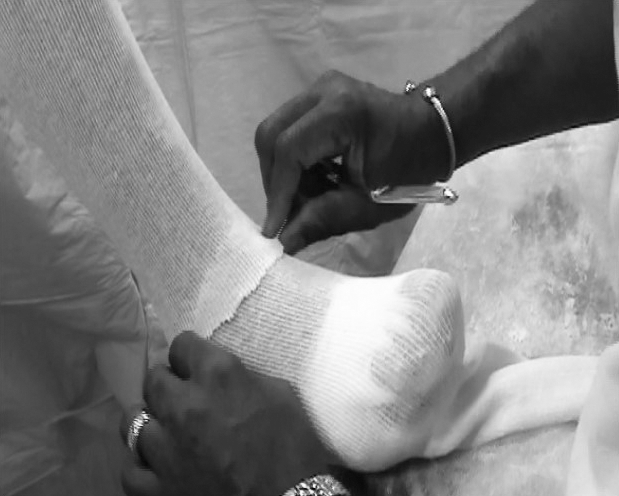
Casting occurred with the patient in a seated position on the examination table. Ulcers, if present, were dressed with various dressings depending on the type and stage of the ulceration, and the dressing was secured to the foot with paper tape. A stockinette was applied to the lower leg and extended from the knee to approximately 2 to 4 inches past the digits (
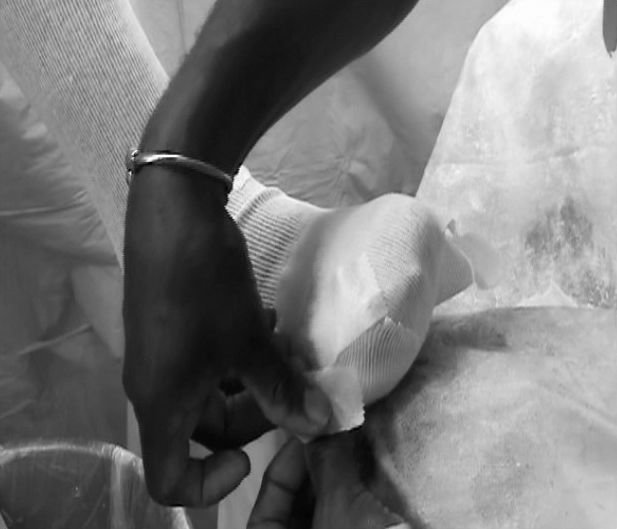
Figure 1). The excess stockinette distal to the digits was folded over the dorsum of the foot and secured with plastic tape (
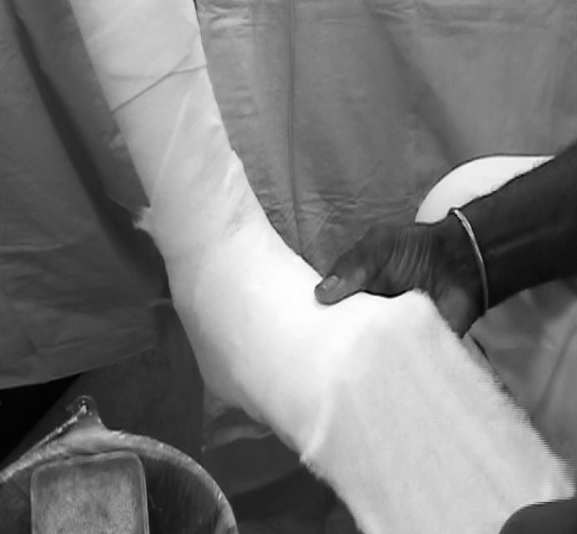
Figure 2). Stockinette overlap at the ankle was cut to avoid excessive pressure. A 4-inch Webril cotton undercast padding (Covidien; Mansfield, Massachusetts) was uniformly applied to the region of the foot and leg distal to the fibular head (
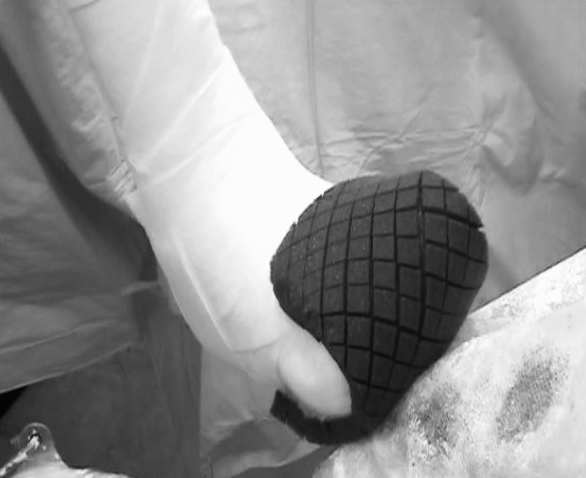
Figure 3). Sifoam cast interface material (Sifoam; Sylmar, California) was applied to the forefoot and to any ulceration sites, followed by a second layer of 4-inch cotton undercast padding (
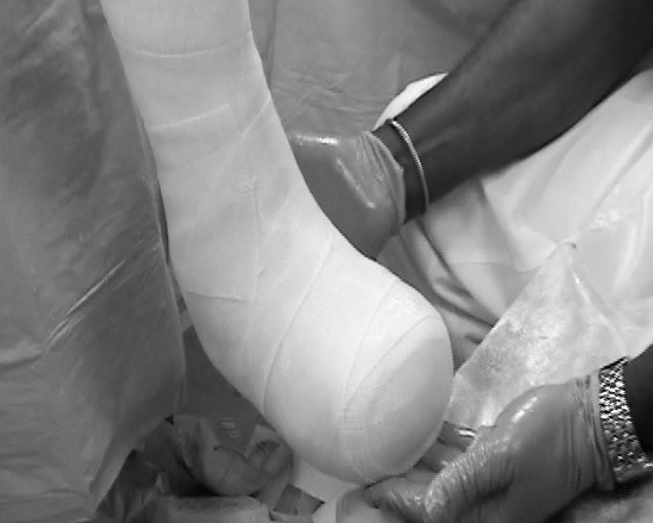
Figure 4). Next, the foot was placed in a neutral position, with the ankle as close to 90° as possible. One-eighth-inch felt strips were applied to cover the anterior crest, the malleoli, and the Achilles tendon (
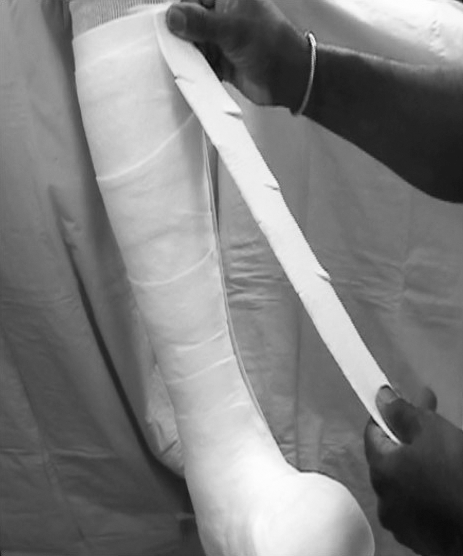
Figure 5). Finally, multiple layers of 4-inch fiberglass plaster were applied (generally five rolls of fiberglass were used) (
Figure 6). For patients with ulcerations that required daily dressing changes, cast windowing was performed by cutting an appropriate-sized hole in the cast, depending on the size of the ulceration, using a cast saw. In most cases, patients were instructed to be nonweightbearing in the initial cast until the cast was changed 1 to 2 weeks after application.
Figure 1.
A stockinette was applied to the lower leg and extended from the knee to approximately 2 to 4 inches past the digits. Stockinette overlap at the ankle was cut to avoid excessive pressure.
Figure 1.
A stockinette was applied to the lower leg and extended from the knee to approximately 2 to 4 inches past the digits. Stockinette overlap at the ankle was cut to avoid excessive pressure.
Figure 2.
The excess stockinette distal to the digits was folded over the dorsum of the foot and secured with plastic tape.
Figure 2.
The excess stockinette distal to the digits was folded over the dorsum of the foot and secured with plastic tape.
Figure 3.
A 4-inch cotton undercast padding was uniformly applied to the region of the foot and leg distal to the fibular head.
Figure 3.
A 4-inch cotton undercast padding was uniformly applied to the region of the foot and leg distal to the fibular head.
Figure 4.
Sifoam cast interface material was applied to the forefoot and to ulceration sites.
Figure 4.
Sifoam cast interface material was applied to the forefoot and to ulceration sites.
Figure 5.
One-eighth-inch felt strips were applied to cover the anterior crest, the malleoli, and the Achilles tendon.
Figure 5.
One-eighth-inch felt strips were applied to cover the anterior crest, the malleoli, and the Achilles tendon.
Figure 6.
Multiple layers of 4-inch fiberglass plaster were applied (generally five rolls of fiberglass were used).
Figure 6.
Multiple layers of 4-inch fiberglass plaster were applied (generally five rolls of fiberglass were used).
Data Analysis
A quantitative approach was used to determine the frequency of variable occurrences in the patient population. The total number of patients and casts applied were tallied, and the following factor sums were calculated as a percentage of these totals: average age, sex, peripheral neuropathy, diagnosis requiring TCC treatment, number of patients with TCC iatrogenic complications, number of TCC iatrogenic complications associated with each diagnosis indication, and the outcomes of iatrogenic complications.
Results
A total of 401 patients with diabetes (mean ± SD age, 57.7 ± 11.3 years; 62% male) underwent treatment with a TCC between January 1, 2005, and December 31, 2012, at Cleveland Clinic. Peripheral neuropathy was present in 95.8% of the patients. The total number of TCCs applied during this period was 3,097, with a mean of four casts per patient. Of the 3,097 TCC treatment indications, 65.2% were for ulceration (n = 2,020), 20.5% were for Charcot's neuroarthropathy or fracture (n = 635), 13.0% were postsurgical (n = 403), and 1.3% were for other indications, such as heel pain, Achilles tendon rupture, and osteoarthritis (n = 39) (
Table 1).
Table 1.
TCC Iatrogenic Complications by Indication
Table 1.
TCC Iatrogenic Complications by Indication
Approximately 23% of patients (n = 92) and 4% of casts (n = 125) had an iatrogenic complication associated with the TCC (
Table 1). Of these complications per indication, 5.4% (34 of 635) occurred in the treatment of Charcot's neuroarthropathy or other fracture, 4.1% in the treatment of ulceration (82 of 2020), 2.0% (eight of 403) in postsurgical treatment, and 2.6% (1 of 39) in the treatment of other pathologic disorders.
There were 140 documented TCC iatrogenic complications, with the most common being the development of a new ulceration (n = 54) (
Table 2). The development of ulcerations was seen most commonly in the heel (n = 11), followed by the malleolus (n = 8) and the digits (n = 8). Other complications included blisters (n = 25), skin maceration (n = 24), abrasions (n = 23), skin irritation (n = 12), and nail avulsion (n = 2). Maceration occurred nonspecifically to any site on the foot (n = 20) but most commonly on the plantar foot. Abrasions and skin irritations most commonly occurred on the anterior leg (n = 8 and n = 5, respectively). Six complications occurred on the contralateral leg consisting of new ulcerations on the anterior leg (n = 3), malleolus (n = 2), and calf (n = 1). Nineteen complications occurred as a consequence of the patient getting the cast wet.
Table 2.
Total-Contact Cast Iatrogenic Complications by Location
Table 2.
Total-Contact Cast Iatrogenic Complications by Location
Of the 140 TCC iatrogenic complications, 129 resolved, nine were lost to follow-up, and two required surgical intervention. The iatrogenic complications that required surgical treatment included a plantar first metatarsal blister that progressed into an infected ulceration and resulted in a partial first-ray resection and digital blisters that progressed into digital gangrene as a consequence of a wet cast and resulted in a transmetatarsal amputation. The mean length of time between cast changes was 10.3 days for patients who developed a TCC iatrogenic complication.
Mean length of time in a series of TCCs was 6 weeks (four casts), with a range from less than 1 to 40 weeks (
Table 3). Patients with Charcot's neuroarthropathy averaged 14 days between TCCs, with 17% of the patients averaging less than 10 days between TCC changes. Patients with a fracture averaged 17 days between TCCs, with 2% averaging less than 10 days between TCC changes. Postsurgical patients averaged 13 days between TCCs, with 25% averaging less than 10 days between TCCs. Patients with an ulcer averaged 11 days between TCCs, with 46% averaging less than 10 days between TCCs. Patients who were treated with a TCC for other reasons averaged 14 days between TCCs, with 15% averaging less than 10 days between TCCs.
Table 3.
Mean Length of Time Between TCC Changes by Indication
Table 3.
Mean Length of Time Between TCC Changes by Indication
Discussion
The results of this study indicate that the frequency of iatrogenic complications with casting is low (approximately 4% of casts) and occur in approximately one in four patients throughout their course of treatment. Of these complications, 92.1% resolved and 1.4% resulted in amputation. Iatrogenic complication rates did not seem to vary with the diagnosis or indication for application of the TCC.
The development of new ulcerations was the most frequent iatrogenic complication observed. A weightbearing TCC, although reducing pressure to the forefoot and midfoot, increases pressure to the heel by 37% [
6]. This was consistent with the present study because the most common site of new ulceration development was the heel. Adequate off-loading in the cast is stressed, and patients with a heel ulceration should be treated with a nonweightbearing TCC, or a TCC may not be indicated in the treatment of heel ulcerations.
The low complication rate may be secondary to a variety of consistent factors across this study, including a standard training program for Cleveland Clinic cast technicians, the application of a meticulous and effective TCC, and the frequency of cast changes. Although there is no universally accepted method of TCC application, the method used at Cleveland Clinic ensured that the TCC did not have spaces or gaps, unlike a standard plaster cast. Less “wiggle room” in the cast reduces rubbing, irritation, and potential complications in patients who lack sensation. Sifoam cast interface material was used to reduce pressure to the forefoot. Shaw et al [
7] demonstrated that a cavity of soft foam in the TCC forefoot reduces load-bearing pressure under the metatarsal heads. Felt was also applied for this reason over any bony prominences. More frequent cast applications were emphasized for skin checks to help avoid complications during the ulcer-healing process, but, generally, casts were changed every two weeks. Thus, these practices are recommended to lower the complication rate.
It is also recommended that patients be actively involved in monitoring the condition of their cast and be educated on what would constitute an early cast change. These results revealed that 19 patients had iatrogenic complications as a result of getting their cast wet and waiting until their next available visit for a cast change. Patients should be instructed to alert their physician as necessary about potential complications. The clinical and administrative support staff should be alerted that such patients need to be seen urgently for cast change rather than waiting for the next available or scheduled appointment. This etiology of TCC iatrogenic complications is preventable with effective communication and flexibility between physician and patient and is highly recommended.
There are several deterrents to using a TCC. Although cost and materials is a questionable limitation, TCC treatment is less expensive than the cost of a single day as an inpatient in the hospital for a diabetic foot complication [
8]. The availability of adequately trained and experienced cast technicians or physicians is sparse in many health-care settings. In addition, the time of application for a TCC may be hindered by a physician's schedule, if no technician is available. Use of a TCC is also contraindicated in patients with an ischemic wound because the etiology of the ulceration is not pressure based. Elderly patients with balance difficulties may be at increased risk for fall with the added weight of a TCC. Therefore, the choice of TCC treatment is mainly limited by patient selection and physician or technician availability.
Limitations of this study included exclusions through incomplete and missing records, the possibility of a nonuniform TCC application method secondary to application by different cast technicians, the nonuniform frequency of TCC changes secondary to patient availability, and whether the patient was weightbearing in the TCC. This was a retrospective study, and it may be useful in the future to delineate these specific factors to eliminate potential bias.
Conclusions
Total-contact casting is a relatively safe and effective modality in the treatment of diabetic neuropathic plantar forefoot and midfoot ulcerations and in acute Charcot's neuroarthropathy, and in treating the patient with diabetes and complications in the foot and ankle secondary to peripheral neuropathy. Iatrogenic complications can be minimized through a meticulous and effective method of cast application and through patient education.