Next Article in Journal
Pathologic Disorders of the Foot in Professional Female Flamenco Dancers
Previous Article in Journal
Evaluating Iatrogenic Complications of the Total-Contact Cast. An 8-Year Retrospective Review at Cleveland Clinic
 
 
Journal of the American Podiatric Medical Association is published by MDPI from Volume 116 Issue 1 (2026). Previous articles were published by another publisher in Open Access under a CC-BY (or CC-BY-NC-ND) licence, and they are hosted by MDPI on mdpi.com as a courtesy and upon agreement with American Podiatric Medical Association.
Review

Azole Resistance in Dermatophytes. Prevalence and Mechanism of Action

Department of Dermatology, Case Western Reserve University, 11100 Euclid Ave, Cleveland, OH 44106, USA
J. Am. Podiatr. Med. Assoc. 2016, 106(1), 79-86; https://doi.org/10.7547/14-109
Published: 1 January 2016

Abstract

Azole antifungal agents (eg, fluconazole and itraconazole) have been widely used to treat superficial fungal infections caused by dermatophytes and, unlike the allylamines (such as terbinafine and naftifine), have been associated with resistance development. Although many published manuscripts describe resistance to azoles among yeast and molds, reports describing resistance of dermatophytes are starting to appear. In this review, I discuss the mode of action of azole antifungals and mechanisms underlying their resistance compared with the allylamine class of compounds. Data from published and original studies were compared and summarized, and their clinical implications are discussed. In contrast to the cidal allylamines, static drugs such as azoles permit the occurrence of mutations in enzymes involved in ergosterol biosynthesis, and the ergosterol precursors accumulating as a consequence of azole action are not toxic. Azole antifungals, unlike allylamines, potentiate resistance development in dermatophytes.

Antifungals Used to Treat Superficial Fungal Infections

Imidazole and triazole antifungals have been used to treat dermatophytoses for many decades. In this review, I discuss their history and use in various applications and examine the incidence of azole resistance in dermatophytes. Their mode of action and the underlying mechanisms of resistance are discussed and compared with the allylamine class of compounds.

History of Therapeutic Agents

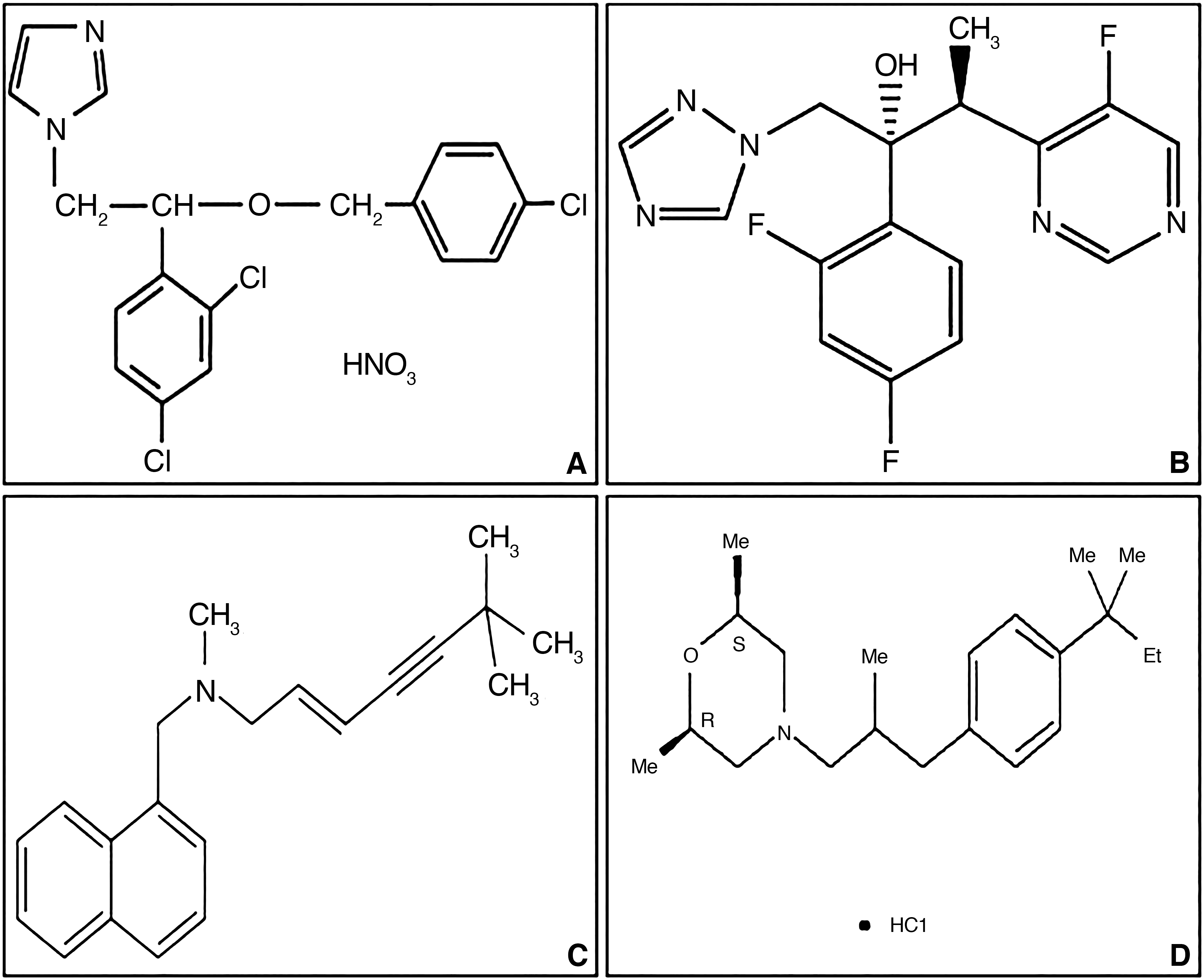
There are two main classes of antifungal agents for the treatment of dermatophytosis: azoles and allylamines, along with griseofulvin, ciclopirox, and tolnaftate. These agents are available in oral and topical forms. The azole class of antifungal drugs includes imidazoles (such as bifonazole, clotrimazole, econazole, ketoconazole, luliconazole, miconazole, sertaconazole, and tioconazole) and triazoles (such as fluconazole, isavuconazole, itraconazole, posaconazole, ravuconazole, voriconazole, luliconazole, and lanoconazole). Allylamine antifungals include amorolfine, butenafine, naftifine, and terbinafine (Figure 1).
Figure 1. Structures of antifungal agents: econazole (an imidazole) (A), voriconazole (a triazole) (B), terbinafine (an allylamine) (C), and amorolfine (an allylamine) (D).
Japma 106 00079 g001
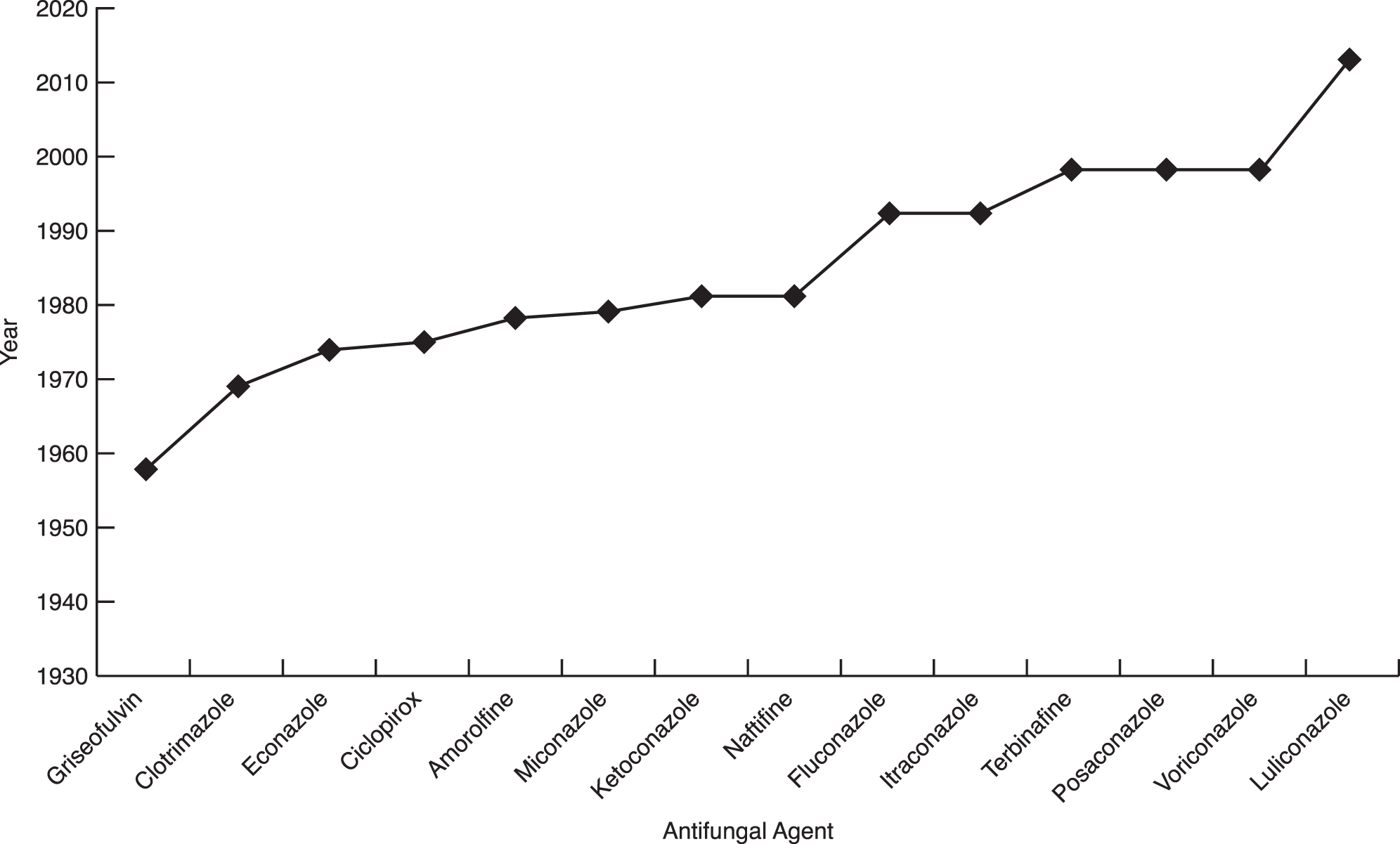
The development of antifungal agents lagged behind that of antibacterial drugs due, in part, to the relatively low incidence of serious fungal diseases. Moreover, because fungi are eukaryotic, similar to human cells, finding agents with selective toxicity that target the fungus and not the host is difficult. In 1958, oral griseofulvin was the first antifungal agent to become available for clinical use, and it is still used to treat tinea capitis. This was followed by the introduction of three topical agents—clotrimazole, econazole, and miconazole—all of which are still mainstays of topical therapy [1]. Shortly thereafter, ketoconazole, the first oral drug with broad-spectrum antifungal activity, was approved for the treatment of systemic fungal infections [2,3].
In the 1990s, fluconazole and itraconazole were approved for the treatment of superficial and systemic infections, followed by terbinafine for the treatment of onychomycosis and other superficial dermatophytoses [1,4]. Current treatment options for dermatophyte infections include topical formulations and systemic drugs for more difficult-to-treat infections. For example, systemic treatment by griseofulvin, itraconazole, fluconazole, or terbinafine is necessary for the treatment of tinea capitis, and options for the treatment of onychomycosis include continuous or pulsed oral dosing or combination topical agents [4,5]. Today, newer azoles and allylamines have increased the size of the armamentarium available for the treatment of dermatophyte infections (Figure 2).
Figure 2. Timeline of the development of antifungal agents to treat dermatophytoses.
Japma 106 00079 g002

Mechanism of Action of the Azole Class of Antifungals

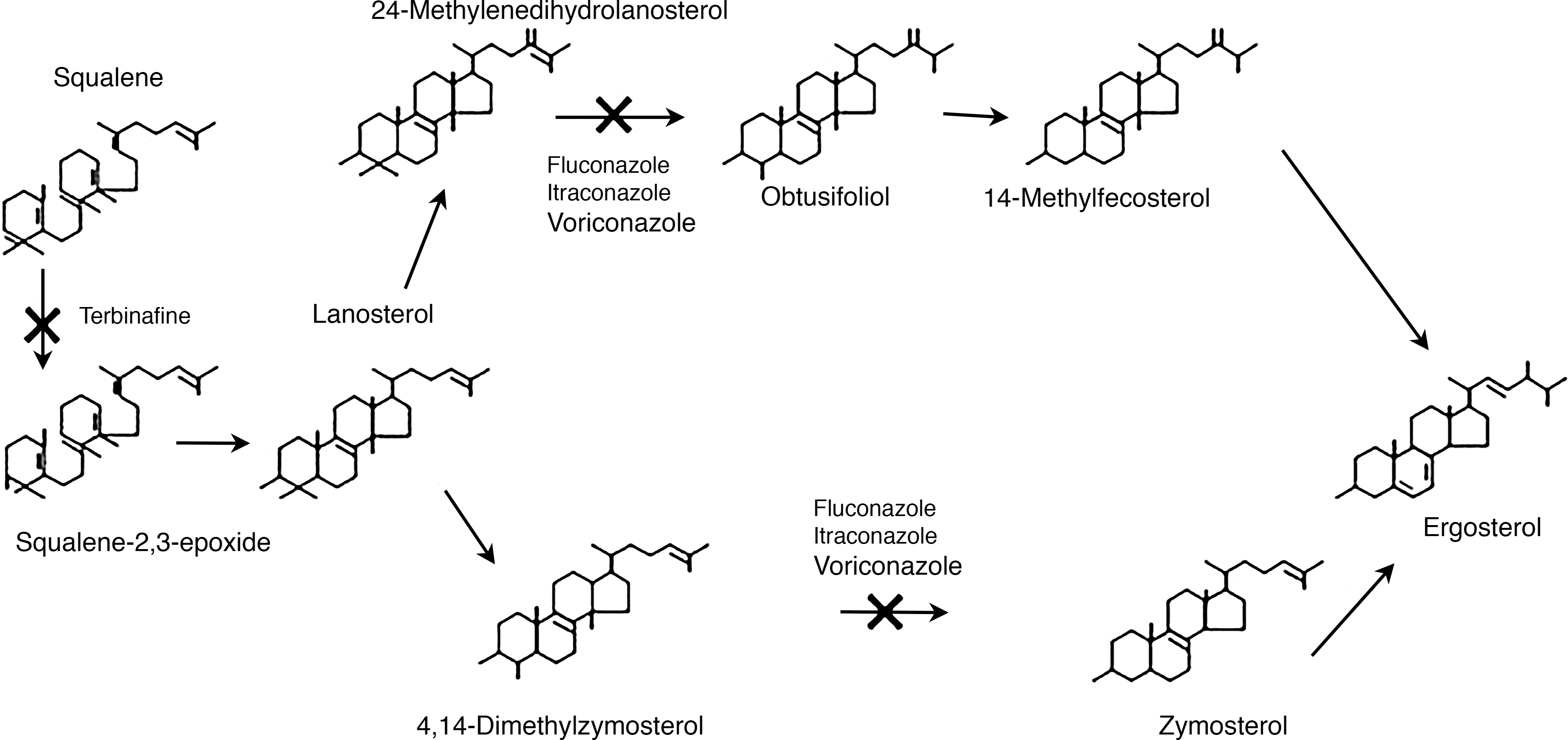
With some exceptions, including griseofulvin and ciclopiroxolamine, antifungal agents commonly used to treat dermatophytoses target the ergosterol biosynthetic pathway (Figure 3). Ergosterol is the major sterol component of the fungal plasma membrane and is essential for the proper functioning of several membrane-bound enzymes. One such enzyme is chitin synthase, which is crucial for cell growth and division [6,7]. The earlier imidazoles, such as miconazole, econazole, and ketoconazole, have a complex mode of action, inhibiting cell membrane lipid biosynthesis and several membrane-bound enzymes [1,8]. Imidazoles, and, in part, the more recent triazoles fluconazole, itraconazole, voriconazole, and luliconazole, share a common mechanism of ergosterol depletion and accumulation of sterol precursors [9]. The accumulation of these precursors, including 14α-methylated sterols (lanosterol, 4,14-dimethylzymosterol, and 24-methylenedihydrolanosterol), results in altered plasma membrane structure and function [10]. It is thought that the primary target of azoles is the heme protein, which co-catalyzes cytochrome P450–dependent 14α-demethylation of lanosterol [11]. In 2010, Zhang et al [12] identified a critical virulence requirement for ergosterol in vacuolar H+-ATPase function. The authors' ability to reverse growth inhibition by fluconazole with the addition of exogenous ergosterol confirms that azole antifungal activity is due to depletion of ergosterol [12]. Mazabrey et al [13] used transmission and scanning electron microscopy to study the effects of imidazoles against dermatophytes, from which they suggest that the mitochondria are the first structures to be damaged, with retraction of cytoplasm and cell wall collapse as secondary alterations. In addition to inhibition of the 14α-demethylase, the triazoles also affect the reduction of obtusifolione to obtusifoliol, resulting in the accumulation of methylated sterol precursors [14,15].
Figure 3. Ergosterol pathway and sites of action. (Adapted from Ghannoum and Rice [10]; used with permission from the American Society for Microbiology.)
Japma 106 00079 g003
In contrast, the allylamines are potent inhibitors of squalene epoxidase, an enzyme involved in the biosynthesis of ergosterol (inhibition of sterol-Δ14-reductase and sterol-Δ78. isomerase) [16]. This inhibition affects early steps in sterol synthesis and results in the accumulation of squalene, which is toxic to the fungal cells. This cell toxicity accounts for the cidal activity of allylamines compared with that of azoles, which are static agents.

Incidence of Azole Resistance in Nondermatophyte Fungal Strains

The increase in Candida-related bloodstream infections worldwide has been widely publicized, and although most Candida species remain susceptible to azoles, Pfaller et al [17] identified an emergence of azole-resistant Candida glabrata strains from the SENTRY Antimicrobial Surveillance Program (fluconazole, 7.7%; posaconazole, 5.1%; and voriconazole, 6.4% of C glabrata strains tested). Other studies report similar azole resistance in non-albicans Candida bloodstream infections [18,19 ]. Candida strains isolated from other clinical sources have also demonstrated increases in azole resistance. For example, Marchaim et al [20] reported an emergence of fluconazole-resistant Candida albicans in patients taking daily doses of fluconazole for recurrent vaginitis. In addition, Candida strains from patients with acquired immunodeficiency syndrome in Ethiopia treated for multiple episodes of oropharyngeal candidiasis demonstrated resistance to fluconazole (12.2%), ketoconazole (7.7%), and itraconazole (4.7%) [21]. Taken together, the results of these reports suggest that frequent exposure to azole drugs is a risk factor for the development of resistance.
Similarly, an increase in the incidence of azole resistance in molds such as Aspergillus fumigatus has recently been recognized. Although widespread, the frequency of itraconazole resistance varies from 7% in the Netherlands to 50% in two US laboratories [22]. The exact frequency of azole resistance in Aspergillus isolates is difficult to determine because of low culture positivity in patients with aspergillosis [23]. Regardless, molecular assays have made it possible to trace the geographic spread throughout Europe and India of voriconazole-resistant A fumigatus strains by identifying a new cyp51A-mediated resistance mechanism [24,25,26]. An alarming discovery from testing soil and other environmental samples showed cross-resistance to six widely used triazole fungicides and to voriconazole, posaconazole, and itraconazole, raising concerns that exposure to these products will produce airborne A fumigatus spores that are highly resistant to the medical triazoles [27].

Incidence of Azole Resistance in Dermatophyte Fungal Strains

Although azole resistance in dermatophyte strains has been reported in the literature, resistance to allylamines has been published in only one report, which showed resistance development in one patient treated with terbinafine [28]. No reports documenting naftifine resistance have been published. In a retrospective study analyzing in vitro resistance in Trichophyton rubrum strains from 18 patients with recalcitrant onychomycosis, Gupta and Kohli [29] reported that most sequential isolates were susceptible to ciclopirox, itraconazole, ketoconazole, and terbinafine. However, a T rubrum strain obtained from one patient (6% of those studied) whose initial itraconazole and ketoconazole minimal inhibitory concentration (MIC) values were 0.125 μg/mL demonstrated an increase in itraconazole and ketoconazole MIC values (32 and 4 μg/mL, respectively) after 15 months of antifungal therapy. This increase in azole MICs, which reached a 256-fold increase after drug exposure, may be indicative of the development of azole resistance in dermatophytes after repeated exposure.
A similar study in a major Mexican hospital analyzed in vitro data from 36 patients who failed treatment for dermatophytoses. Three strains each of T rubrum and Trichophyton mentagrophytes and one strain of Trichophyton tonsurans isolated from these patients demonstrated increased resistance to azoles using the E-test method. All seven dermatophyte strains (19.4% of those tested) were resistant to fluconazole (MIC ≥64 μg/mL), with one T rubrum strain also resistant to ketoconazole and itraconazole (MIC ≥8 μg/mL). The authors in this study did not analyze sequential isolates obtained from the same patient at baseline and after treatment; therefore, it is impossible to determine whether this represents innate resistance or resistance acquired after repeated drug exposure [30].
On the other hand, Goh et al [31] studied 100 dermatophyte strains collected from patients in Singapore who had not previously undergone systemic or topical antifungal therapy. Patients presented with various clinical manifestations, with the most prevalent being tinea corporis (36%), tinea cruris (22%), tinea pedis (19%), and onychomycosis (11%). The MICs of ketoconazole and itraconazole were tested against all dermatophyte strains isolated using a microdilution assay, resulting in 10% of ketoconazole and 15% of itraconazole with elevated MICs (≥8 μg/mL). This indicates a fairly high incidence of innate azole resistance in wild-type dermatophyte strains.
Finally, from a worldwide tinea capitis clinical trial with participants from the United States, Central and South America, and India, 817 dermatophyte strains were collected at baseline for MIC testing. Species isolated included T tonsurans (n = 718), Trichophyton violaceum (n = 13), T mentagrophytes (n = 1), Microsporum canis (n = 83), and Microsporum gypseum (n = 2). All strains were tested against voriconazole and fluconazole using the Clinical and Laboratory Standards Institutes M38-A2 microdilution assay. The MIC ranges were 0.002 to 0.06 μg/mL for voriconazole and 0.25 to 32 μg/mL for fluconazole. Of these, 29 strains (3.5%) had fluconazole MICs of 16 μg/mL or greater. Although no resistance was found against voriconazole among these isolates, innate resistance to fluconazole is suggested by these findings [32].
In contrast, an increase in the MIC values has not been reported for drugs in the allylamine class of antifungals. In a recent study, we evaluated the in vitro antifungal activity of naftifine against dermatophytes as measured by MIC and minimum fungicidal concentrations and determined whether exposure to this antifungal agent induces resistance development. Our data showed that naftifine possesses potent antifungal activity against dermatophytes (including T rubrum, T mentagrophytes, T tonsurans, Epidermophyton floccosum, and M canis) and is fungicidal against these fungi. The MIC range against the dermatophyte isolates tested was 0.015 to 1.0 μg/mL, with naftifine hydrochloride being fungicidal against 85% of the Trichophyton species. Moreover, our data showed that there was no increase in MIC for any of the six strains tested after repeated exposure to naftifine hydrochloride [33].

Mechanism of Azole Drug Resistance in Dermatophytes

Resistance to a particular drug can be characterized by more than one mechanism of action and may be activated simultaneously. Some of the most frequent resistance mechanisms found in fungal strains involve a decrease in drug uptake, structural alterations in the target site, or an increase in drug efflux [34]. Efflux transporters are proteins found in the cell membrane that bind to compounds, including antifungal drugs, and actively extrude them from the cell [35]. Several authors have reported that increased drug efflux is the resistance mechanism of azoles, including fluconazole, itraconazole, ketoconazole, and tioconazole [36,37]. Although the mechanism of dermatophyte azole resistance in vivo has yet to be determined, the T rubrum TruMDR1 gene was cloned by polymerase chain reaction using degenerate primers and was identified as encoding an ATP-binding cassette transporter. This gene is overexpressed in the presence of several different antifungals, including fluconazole, ketoconazole, and itraconazole, suggesting a role in drug efflux in this dermatophyte species [36]. Sequence analysis of the TruMDR1 gene revealed 1511 amino acids with homology to several other ATP-binding cassette transporters identified in other fungal strains, including CDR1 and CDR2 of C albicans. The proteins encoded by these genes, Cdr1p and Cdr2p, have been shown to confer resistance to azoles [38,39].
Subsequent to the identification of TruMDR1, Fachin et al [37] described a single-copy gene, TruMDR2, in T rubrum that also encoded an ATP-binding cassette transporter. Sequencing of its amino acids showed high homology with known ATP-binding cassette transporters present in other fungi that are responsible for drug efflux. Northern blot analysis showed an increased level of transcription of this TruMDR2 gene after exposure of fungal hyphae to antifungals, including fluconazole, itraconazole, ketoconazole, and tioconazole. Further evidence that the transporter encoded by TruMDR2 is involved in modulating drug susceptibility is the fact that disruption of this gene in T rubrum increased its sensitivity to terbinafine.
In contrast, modification of the target enzyme squalene epoxidase by gene mutation (substitution of a single amino acid in the squalene epoxidase gene) is considered to be the resistance mechanism in the allylamine terbinafine [40,41]. These mutations lead to substitutions in amino acids, which are likely involved in the binding of terbinafine to squalene epoxidase. For example, single amino acid exchanges in the region of the protein Erg1 resulted in high terbinafine resistance in filamentous fungi and yeast [40,41,42].

Discussion

The incidence of fungal infections has increased during the past two decades due to the increase in the number of immunocompromised patients and the way we practice medicine. Advances such as increased use of medical devices enable patients to live longer while at the same time increasing their risk of superficial and systemic fungal infections. Unfortunately, widespread use of the limited numbers of antifungal agents, particularly the azoles, to treat these infections has led to the development of drug resistance. Thus, drug resistance in pathogenic fungi, including the dermatophytes, is of increasing importance. Although a plethora of published literature describes the incidence of azole resistance in systemic infections, studies in dermatophytes have been limited. However, it is clear that azoles have a high potential for inducing resistance in these pathogenic fungi. The prevalence of azole resistance in dermatophytes has been reported to be as high as 19% in certain areas worldwide. In contrast, the potential of allylamines (terbinafine or naftifine) to potentiate resistance is very low.
The difference in the inability of dermatophyte strains to adapt to stress exerted by different classes of antifungals may be due to the differences in their primary mechanisms of action. For example, the primary mode of action of allylamines is the inhibition of squalene epoxidase. As discussed previously herein, inhibition of this enzyme leads to accumulation of the ergosterol precursor squalene (Figure 3), which is known to be toxic to the fungal cells and explains the allylamine mechanism of cidality. Because allylamines are cidal drugs, their ability to potentiate resistance is greatly reduced, as shown by our recent study with naftifine [33]. This situation is similar to the cidal antifungal amphotericin B, a member of the polyene class of antifungals, in which resistance is rare despite more than 60 years of use. Another reason for the lack of resistance to allylamines is the accumulation of squalene, the first precursor to ergosterol. This compound has been shown to be toxic to the fungal cell. In contrast, static drugs such as azoles inhibit only the growth of the organism, permitting the occurrence of mutations in enzymes involved in ergosterol biosynthesis, which serves as the drug target. In addition, the ergosterol precursors accumulating as a consequence of azole action are not toxic.
Based on our understanding of the mechanisms of drug resistance as a template, Alexander and Perfect [43] identified several strategies to overcome resistance, including improvement of host immune function, development of new drug delivery systems for currently available drugs, and development of new classes of antifungal agents. Furthermore, molecular studies of the total dermatophyte genome may guide the future development of new drugs that have mechanisms of action that will prohibit resistance development in the wild-type dermatophyte population.
In this regard, two new topical agents have recently been approved by the Food and Drug Administration for the treatment of onychomycosis. Efinaconazole may be expected to demonstrate resistance potential because it shares a mechanism of action with other triazoles (inhibition of sterol 14α-demethylase) [44]. Tavaborole, a novel boron-containing compound, possesses a different mechanism of action wherein protein synthesis is blocked through the inhibition of tRNA synthesis [45]. Thus, it is too early to determine whether wild-type dermatophyte strains will develop resistance to this topical agent after repeated exposure.
In addition, two novel topical agents are currently in development that address the challenge of nail penetration. TDT-067, a carrier-based dosage form of terbinafine in Transfersome (1.5%) (Celtic Pharma, Hamilton, Bermuda,), is an allylamine and, thus, most likely will not have the potential for drug resistance [46]. ME1111 (Meiji Seika Pharma, Tokyo Japan), a small molecular weight antifungal, also shows low potential for the induction of resistance in T rubrum and T mentagrophytes strains [47].
In conclusion, azole antifungal agents, unlike terbinafine and naftifine, potentiate resistance development in dermatophytes. This resistance affects not only superficial fungal infections but also systemic disease. Importantly, azole resistance has been encountered in strains present in the environment, which may eventually cause human infections.

Financial Disclosure

None reported.

Conflict of Interest

Dr. Ghannoum receives contracts, serves on the advisory boards, and acts as a consultant for Merz Pharmaceuticals, Meiji Seika Pharma, Anacor Pharmaceuticals, Novartis Pharmaceuticals, and Viamet Pharmaceuticals.

References

  1. Sheehan DJ, Hitchcock CA, Sibley CM: Current and emerging azole antifungal agents. Clin Microbiol Rev12: 40, 1999.
  2. Kauffman CA, Carver PL: Antifungal agents in the 1990s: current status and future developments. Drugs53: 539, 1997.
  3. Elewski BE: Tinea capitis: a current perspective. J Am Acad Dermatol42: 1, 2000.
  4. Lesher JL: Oral therapy of common superficial fungal infections of the skin. J Am Dermatol40: S31, 1999.
  5. Ghannoum M, Isham N: Fungal nail infections (onychomycosis): a never-ending story?PLoS Pathog10: e1004105, 2014.
  6. Vanden Bossche H: Mechanisms of antifungal resistance. Rev Iberoam Micol14: 44, 1997.
  7. Joseph-Horne T, Hollomon D, Loeffler RS, et al: Altered P450 activity associated with direct selection for fungal azole resistance. FEBS Lett374: 174, 1995.
  8. Hitchcock C, Whittle PT: “Chemistry and Mode of Action of Fluconazole,” inCutaneous Antifungal Agents: Selected Compounds in Clinical Practice and Development, edited byRippon, JWFromtling, RAp 183, Marcel Dekker Inc, New York,1993.
  9. Sanati H, Belanger P, Fratti R, et al: A new triazole, voriconazole (UK-109, 496), blocks sterol biosynthesis in Candida albicans and Candida krusei. Antimicrob Agents Chemother41: 2492, 1997.
  10. Ghannoum MA, Rice LB: Antifungal agents: mode of action, mechanisms of resistance, and correlation of these mechanisms with bacterial resistance. Clin Microbiol Rev12: 501, 1999.
  11. Hitchcock C, Dickinson K, Brown SB, et al: Interaction of azole antifungal antibiotics with cytochrome P450-dependent 14 alpha-sterol demethylase purified from Candida albicans. Biochem J266: 475, 1990.
  12. Zhang YQ, Gamarra S, Garcia-Effron G, et al: Requirement for ergosterol in V-ATPase function underlies antifungal activity of azole drugs. PLoS Pathog6: e1000939, 2010.
  13. Mazabrey D, Nadal J, Seguela JP, et al: Scanning and transmission electron microscopy: study of effects of econazole on Microsporum canis. Mycopathologia91: 151, 1985.
  14. Ghannoum M, Spellberg BJ, Ibrahim A, et al: Sterol composition of Cryptococcus neoformans in the presence and absence of fluconazole. Antimicrob Agents Chemother38: 2029, 1994.
  15. Vanden Bossche H, Marichal HP, Le Jeune L, et al: Effects of itraconazole on cytochrome P-450-dependent 14 α-demethylation and reduction of 3-ketosteroids in Cryptococcus neoformans. Antimicrob Agents Chemother37: 2101, 1993.
  16. Ghelardi E, Celandroni F, Gueye SA, et al: Potential of ergosterol synthesis inhibitors to cause resistance or cross-resistance in Trichophyton rubrum. Antimicrob Agents Chemother58: 2825, 2014.
  17. Pfaller MA, Moet GJ, Messer SA, et al: Candida bloodstream infections: comparison of species distributions and antifungal resistance patterns in community-onset and nosocomial isolates in the SENTRY Antimicrobial Surveillance Program, 2008-2009. Antimicrob Agents Chemother55: 561, 2011.
  18. Iatta R, Caggiano G, Cuna T, et al: Antifungal susceptibility testing of a 10-year collection of Candida spp. isolated from patients with candidemia. J Chemother23: 92, 2011.
  19. Shigemura K, Osawa K, Jikimoto T, et al: Comparison of the clinical risk factors between Candida albicans and Candida non-albicans species for bloodstream infection. J Antibiot (Tokyo)67: 311, 2014.
  20. Marchaim D, Lemanek L, Bheemreddy S, et al: Fluconazole-resistant Candida albicans vulvovaginitis. Obstet Gynecol120: 1407, 2012.
  21. Mulu A, Kassu A, Anagaw B, et al: Frequent detection of “azole” resistant Candida species among late presenting AIDS patients in northwest Ethiopia. BMC Infect Dis13: 82, 2013.
  22. Denning DW, Perlin DS. Azole resistance in Aspergillus: a growing public health menace. Future Microbiol6: 1229, 2011.
  23. Georgiadou SP, Kontoyiannis DP: The impact of azole resistance on aspergillosis guidelines. Ann N Y Acad Sci1272: 15, 2012.
  24. Van der Linden JW, Camps SM, Kampinga GA, et al: Aspergillosis due to voriconazole highly resistant Aspergillus fumigatus and recovery of genetically related resistant isolates from domiciles. Clin Infect Dis57: 513, 2013.
  25. Fischer J, van Koningsbruggen-Rietschel S, Rietschel E, et al: Prevalence and molecular characterization of azole resistance in Aspergillus pp. isolates from German cystic fibrosis patients. J Antimicrob Chemother69: 1533, 2014.
  26. Hayes GE, Denning DW: Frequency, diagnosis and management of fungal respiratory infections. Curr Opin Pulm Med9: 259, 2013.
  27. Chowdhary A, Kathuria S, Xu J, et al: Clonal expansion and emergence of environmental multiple-triazole-resistant Aspergillus fumigatus strains carrying the TR34/L98H mutations in the cyp51A gene in India. PLoS One7: e52871, 2012.
  28. Mukherjee PK, Leidich SD, Isham N, et al: Clinical Trichophyton rubrum strain exhibiting primary resistance to terbinafine. Antimicrob Agents Chemother47: 82, 2003.
  29. Gupta AK, Kohli Y: Evaluation of in vitro resistance in patients with onychomycosis who fail antifungal therapy. Dermatology207: 375, 2003.
  30. Manzano-Gayosso P, Mendez-Tovar LJ, Hernandez-Hernandez F, et al: Antifungal resistance: an emerging problem in Mexico. Gac Med Mex144: 23, 2008.
  31. Goh CL, Tay YK, Bin Ali K, et al: In vitro evaluation of griseofulvin, ketoconazole, and itraconazole against various dermatophytes in Singapore. Int J Dermatol33: 733, 1994.
  32. Ghannoum M, Isham N, Sheehan D: Voriconazole susceptibilities of dermatophyte isolates obtained from a worldwide tinea capitis clinical trial. J Clin Microbiol44: 2579, 2006.
  33. Ghannoum M, Isham N, Verma A, et al: In vitro antifungal activity of naftifine hydrochloride against dermatophytes. Antimicrob Agents Chemother57: 4369, 2013.
  34. Martinez-Rossi NM, Peres NT, Rossi A: Antifungal resistance mechanisms in dermatophytes. Mycopathologia166: 369, 2008.
  35. Neyfakh AA: Mystery of multidrug transporters: the answer can be simple. Mol Microbiol44: 1123, 2002.
  36. Cervelatti EP, Fachin AL, Ferreira-Nozawa MS, et al: Molecular cloning and characterization of a novel ABC transporter gene in the human pathogen Trichophyton rubrum. Med Mycol44: 141, 2006.
  37. Fachin AL, Ferreira-Nozawa MS, Maccheroni WJr, et al: Role of the ABS transporter TruM-DR2 in terbinafine, 4-nitroquinoline N-oxide and ethidium bromide susceptibility in Trichophyton rubrum. J Med Microbiol55: 1093, 2006.
  38. Prasad R, De Wergifosse P, Goffeau A, et al: Molecular cloning and characterization of a novel gene of Candida albicans, CDR1, conferring multiple resistance to drugs and antifungals. Curr Genet27: 320, 1995.
  39. Sanglard D, Ischer F, Monod M, et al: Cloning of Candida albicans genes conferring resistance to azole antifungal agents: characterization of CDR2, a new multidrug ABC transporter gene. Microbiology143: 405, 1997.
  40. Osborne CS, Leitner I, Favre B, et al: Amino acid substitution in Trichophyton rubrum squalene epoxidase associated with resistance to terbinafine. Antimicrob Agents Chemother49: 2840, 2005.
  41. Osborne CS, Leitner I, Hofbauer B, et al: Biological, biochemical, and molecular characterization of a new clinical Trichophyton rubrum isolate resistant to terbinafine. Antimicrob Agents Chemother50: 2234, 2006.
  42. Rocha EM, Gardiner RE, Park S, et al: A Phe389Leu substitution in ErgA confers terbinafine resistance in Aspergillus fumigatus. Antimicrob Agents Chemother50: 2533, 2006.
  43. Alexander BD, Perfect JR: Antifungal resistance trends towards the year 2000: implications for therapy and new approaches. Drugs54: 657, 1997.
  44. Tatsumi Y, Nagashima M, Shibanushi T, et al: Mechanism of action of efinaconazole, a novel triazole antifungal agent. Antimicrob Agents Chemother57: 2405, 2013.
  45. Del Rosso JQ, Plattner JJ: From the test tube to the treatment room: fundamentals of boron-containing compounds and their relevance to dermatology. J Clin Aesthet Dermatol7: 13, 2014.
  46. Ghannoum M, Isham N, Herbert J, et al: Activity of TDT 067 (terbinafine in Transfersome) against agents of onychomycosis, as determined by minimum inhibitory and fungicidal concentrations. J Clin Microbiol49: 1716, 2011.
  47. Takei-Masuda N, Takahata S, Tabata Y, et al: In vitro antifungal activity of and assessment of resistance to ME1111, a new antifungal agent for topical treatment of onychomycosis. Paper presented at:the 54th Interscience Conference on Antimicrobial Agents and Chemotherapy,September2014, Washington, DC.