Cutaneous verrucae (warts) are caused by an infection of the epidermal tissue with certain strains of the human papillomavirus.[
1,
2,
3] Studies investigating the prevalence of cutaneous warts have achieved variable results influenced by different study designs and participant demographic characteristics, particularly age.[
1] The overall prevalence of cutaneous warts in the general population is reported to be 7% to 10%.[
4]
A Cochrane systematic review of topical treatments for cutaneous warts published in 2009 reported little evidence to support any one wart treatment over another.[
1] A randomized controlled trial by Cockayne et al[
5] comparing self-administered 50% salicylic acid and liquid nitrogen cryotherapy (LNC) found that both treatments obtained complete clearance of plantar warts in 14% of patients over a 12-week period. This study concluded that there is no evidence to suggest that LNC is more effective than self-administered 50% salicylic acid for the treatment of plantar warts.[
5] In 2001, a prospective trial by Ahmed et al[
6] compared the effectiveness of cryospray and cotton wool bud application of LNC. The trial concluded that there was no significant difference between the application methods.
Falknor[
7] first described the treatment of warts by way of needling in 1969. Falknor aimed to destroy all of the papillae composing the papilloma with a 25-gauge needle and hypothesized that in doing so the wart was physically destroyed. The results of Falknor’s study were significant, with just two recurrences in 126 warts treated over 8 months. In 2013, a retrospective review by Longhurst and Bristow[
8] found that 69% of patients had complete wart resolution using Falknor’s needling method.
Parton and Sommerville[
9] conducted a study in 1994 to compare the effectiveness of an abrasive treatment to induce a cell-mediated immune response (CMIR) against the human papillomavirus of plantar warts with a standard treatment (salicylic acid). The aim of the abrasive treatment was to break down the basement membrane, thereby allowing T lymphocytes to access the site and locate the virus antigen, resulting in an immune response (a process termed “autoimmunization”). Parton and Sommerville reported that the abrasive treatment was effective against plantar warts in 94% of participants aged 4 to 14 years. Chapman and Visaya[
10] further explored the hypothesis of Parton and Sommerville[
9] of a CMIR against the human papillomavirus by demonstrating that abrasion of one pedal wart resulted in the regression of other pedal warts in 55% of participants.
Consistent with Falknor’s[
7] treatment method and Parton and Sommerville’s[
9] hypothesis of a CMIR against the human papillomavirus, we hypothesized that needling of a pedal wart would create local inflammation and a subsequent CMIR against human papillomavirus. We believe that the CMIR, as a result of needling, is created by 1) migration of immune cells to the local area due to an inflammatory response to injury[
11]; 2) manual lysing of infected epidermal cells to release the contained human papillomavirus (thereby exposing them to the immune cells); 3) translocation of the virus in closer proximity to the papillary skin layer, where there is a higher concentration of resident T lymphocytes[
12]; and 4) sensitization of the immune system to human papillomavirus antigen, resulting in a CMIR against the human papillomavirus.[
9] In addition, we propose a secondary hypothesis, consistent with the study by Chapman and Visaya,[
10] that the sensitization of the immune system to human papillomavirus antigen may result in a CMIR against untreated satellite pedal warts owing to the systemic nature of the CMIR.
In view of varying clinical outcomes reported in the literature for traditional pedal wart treatment, we undertook a randomized controlled pilot study to compare the effectiveness of LNC with that of needling.
Methods
This randomized controlled trial was conducted at the University of Western Australia Podiatry Clinic (Crawley, Australia) between May 1, 2012, and October 31, 2012, with approval from the University of Western Australia Human Research Ethics Committee.
Study Population
Eligible participants had one or more correctly diagnosed pedal cutaneous warts and were 18 years or older. A registered podiatric physician confirmed the diagnosis when the pedal wart exhibited both the characteristic pinpoint bleeding with debridement and pain on lateral compression. Participants were excluded from the study if they were prone to impaired healing (peripheral vascular disease, keloid scarring, anticoagulant drug therapy, hemophilia), were immunosuppressed or taking immunosuppressant drugs, were pregnant during the treatment period, had any previous adverse reactions to local anaesthetics, had suspected bacterial infection at the treatment site, were unable to give informed consent, were currently in a trial evaluating other treatments for their warts, were intending to treat their warts by other means during the trial period, had a primary pedal wart that was larger than 20 mm in diameter, were receiving renal dialysis, had neuropathy, or were otherwise deemed not fit for treatment.
Recruitment and Randomization of Participants
Participants were recruited between May 1, 2012, and November 31, 2012, from the University of Western Australia Podiatry Clinic. Randomization to receive either needling or LNC was performed by a member of the research team using a “randometer” in Microsoft Office Excel (Microsoft Corp, Redmond, Washington). This randometer allocated participants to receive either needling or LNC with 50:50 odds.
Clinical Protocol
The treatment process was applied only to the largest pedal wart in both the needling and LNC groups to test the secondary hypothesis: treatment of one pedal wart will result in a CMIR against satellite pedal warts. Up to three treatments were delivered at least 2 weeks apart, and the same dry dressing was applied after each treatment. Participants were advised to keep the dressing dry for the first 12 hours and to apply a simple dry dressing for 4 days after treatment. Participants had a final wart assessment approximately 12 weeks after initial treatment.
Liquid Nitrogen Cryotherapy. The primary pedal wart was debrided before the application of LNC until pinpoint bleeding occurred. A cotton wool swab was soaked in a foam cup of liquid nitrogen before being applied for 5 sec (continuously) over the entire primary pedal wart. The freezing process was repeated twice. When an adequate freeze was not achievable owing to discomfort, the primary wart was anaesthetized with an injection of plain 1% lidocaine hydrochloride. To avoid penetrating the wart with the needle, a regional block was performed.
Needling. The primary pedal wart was debrided and anaesthetized before treatment with a local or regional injection of either plain 1% lidocaine hydrochloride or 0.5% bupivacaine hydrochloride with adrenaline diluted 1:200,000. With a 25-gauge needle, the primary wart was punctured (perpendicular to the surface) past the basement membrane into the subcutaneous fat. This needling method was repeated, starting at the periphery and working in a circular motion toward the center of the primary wart, until all of the papillae were lysed (approximately 90 penetrations for an 8-mm-diameter wart). The needling process was deemed complete when the needle would enter through the epidermis to the subcutaneous fat with no resistance.
Outcome Measurements
Primary Outcome. The primary outcome of this study was complete regression of the treated primary wart 12 weeks after initial treatment. Regression was clinically defined as the return of normal skin striae.[
1,
9] High-resolution digital photographs were taken of the primary pedal wart at baseline and 12 weeks after initial treatment. A panel of two registered podiatric physicians, each with more than 20 years’ experience, assessed the photographs. The panel members were blinded to the intervention and independently assessed whether the primary pedal wart had regressed. If the panel members’ outcomes conflicted, a third assessor was called on to make the final decision.
Secondary Outcomes. The Relative Cosmetic Outcome of the Primary Pedal Wart. The blinded panel members determined this outcome using a numerical rating scale of cosmetic improvement or deterioration. A review of the published literature yielded no simple numerical rating scales relating to a wart’s cosmetic outcome after treatment. A numerical rating scale was constructed for the purpose of this outcome (
Fig. 1). The blinded panel compared the final and baseline photographs and judged the relative cosmetic improvement or deterioration of the primary pedal wart. If there were any discrepancies between the results of the two assessors, an average was taken of the two.
Figure 1.
Numerical rating scale developed to provide the study assessors with a quantifiable scale to determine change in the primary wart after treatment.
Figure 1.
Numerical rating scale developed to provide the study assessors with a quantifiable scale to determine change in the primary wart after treatment.
The Regression of Any Satellite Pedal Warts at the Outcome Assessment. Participants with single warts were excluded from this analysis. The blinded panel independently assessed only satellite pedal warts in the field of view of the photograph, indicating how many satellite pedal warts were present before and after treatment. The satellite pedal warts had the same diagnostic outcome assessment parameters as the primary pedal wart. If the panel members disagreed it was referred to a third assessor. A positive outcome was recorded if there was a regression of one or more satellite pedal warts in the final photograph.
Complete Pedal Wart Regression. A positive result for this outcome was determined if the panel deemed both the primary pedal wart and all of the satellite pedal warts in the photographs to be regressed. Participants without satellite pedal warts at baseline were included in the analysis.
Participant-Centered Outcomes. Participants were asked to rate the pain from their pedal warts on a 10-point verbal rating scale (10 being “worst pain imaginable” and 1 being “no pain”) before receiving treatment at the initial, second, and final visits. Participant satisfaction with the treatment at the final follow-up visit was recorded on a 10-point verbal rating scale (10 being “very happy” and 1 being “very unhappy”). At the final visit, participants ranked their opinion of the cosmetic outcome of the treatment on a 10-point verbal rating scale (10 being “much better” and 1 being “much worse”).
Adverse Events. Occurrences of adverse events arising from the treatment were documented at each follow-up visit.
Statistical Analysis
Statistical analysis was conducted with IBM SPSS Statistics version 20 (IBM Corp, Armonk, New York), with the significance level set at P = 0.05 for all of the outcome measures. The Fisher exact test was used for the primary and secondary outcomes: regression of satellite pedal warts and complete pedal wart regression. The cosmetic outcome of the primary pedal wart outcome data were analyzed with the U test. Participant pain, satisfaction levels, and opinions of cosmetic outcomes were analyzed using descriptive statistics. Adverse events from treatment were documented on a case-by-case basis.
Results
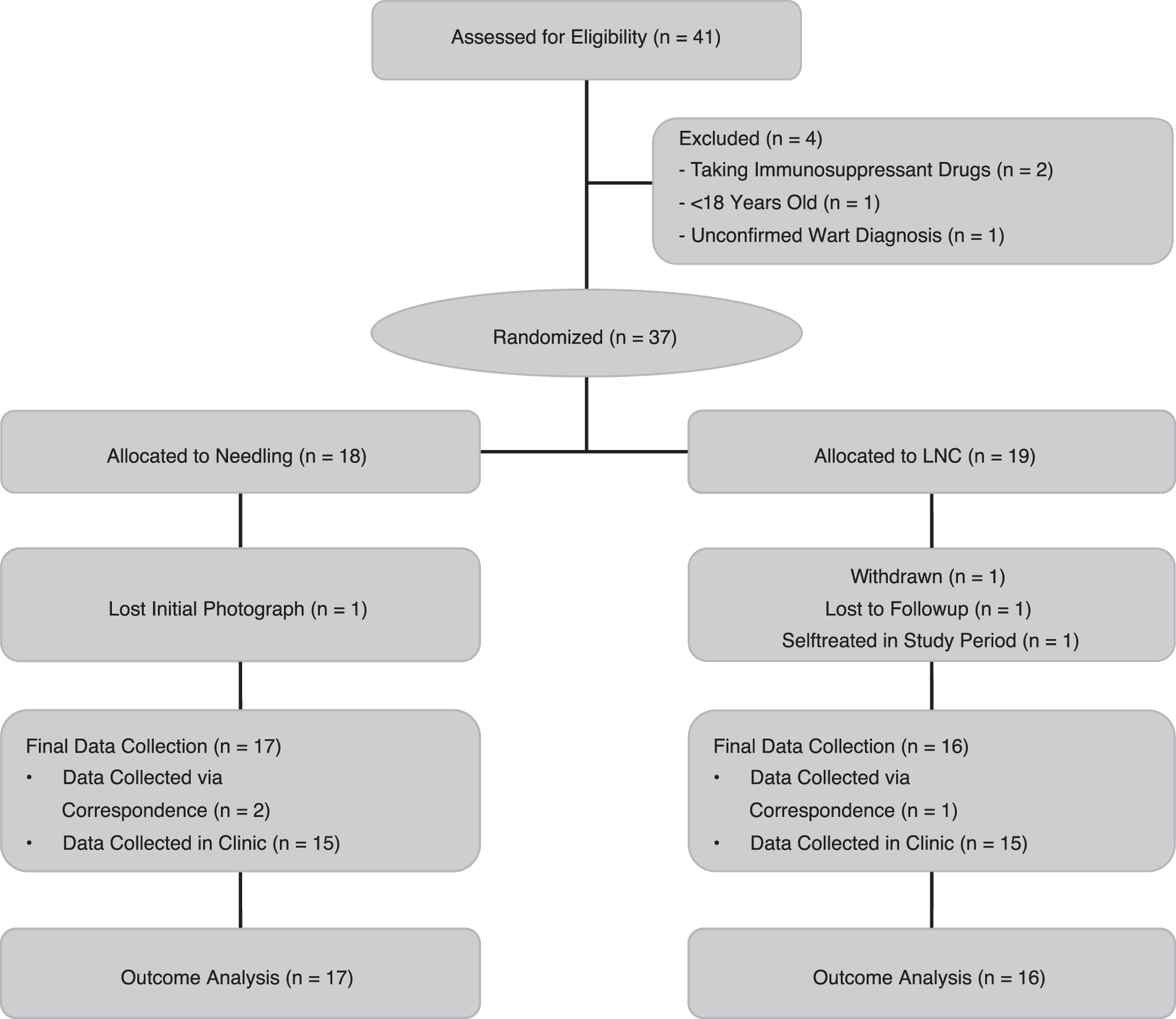
Forty-one individuals were assessed for eligibility during the 4-month trial period, and 37 (90%) were admitted into the trial and randomized to a treatment group. Eighteen participants were randomized to the needling group and 19 to the LNC group.
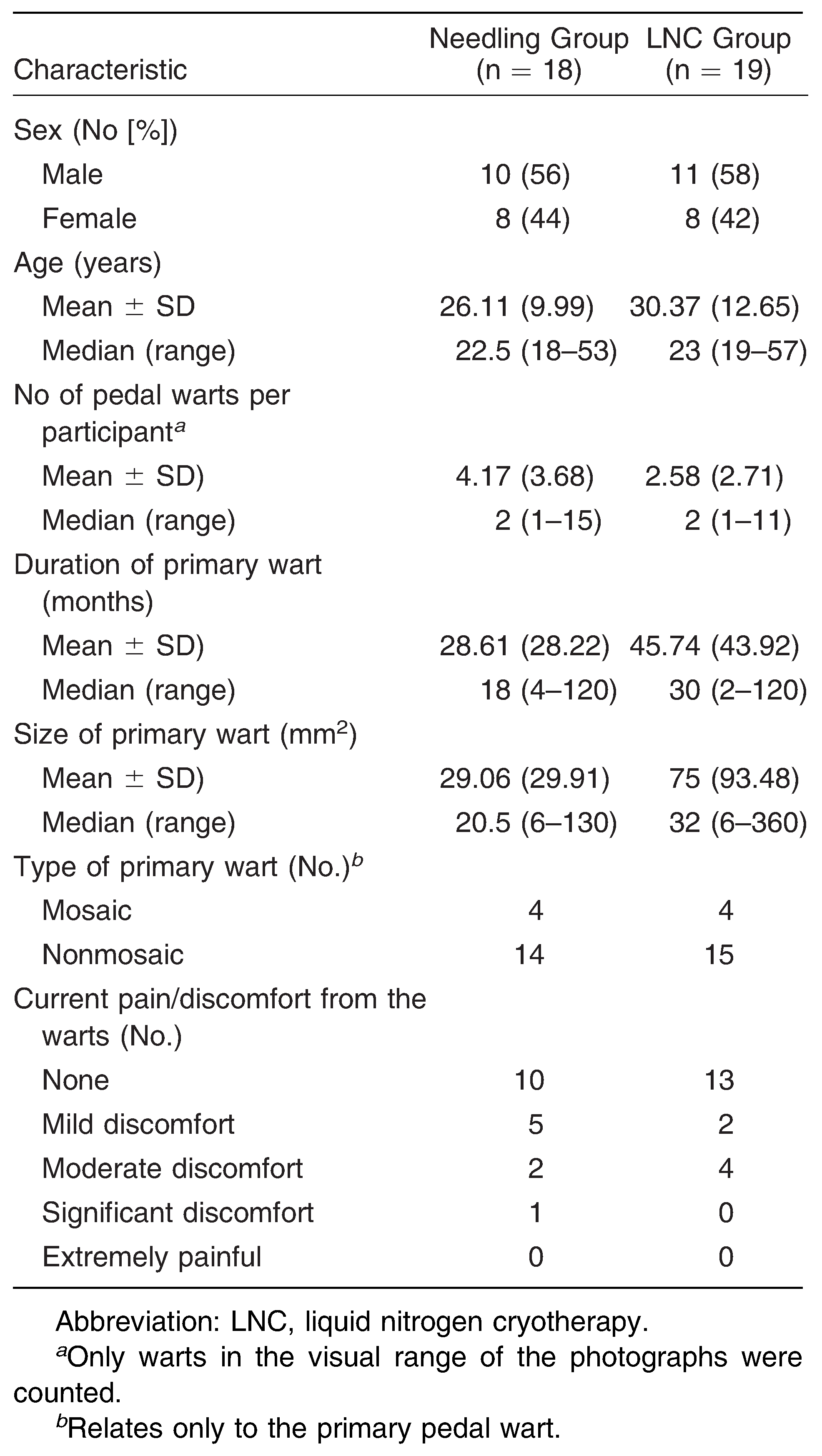
Figure 2 illustrates the management of participants through the trial and the inclusion and exclusion processes. Participant demographic and clinical characteristics at baseline are presented in
Table 1.
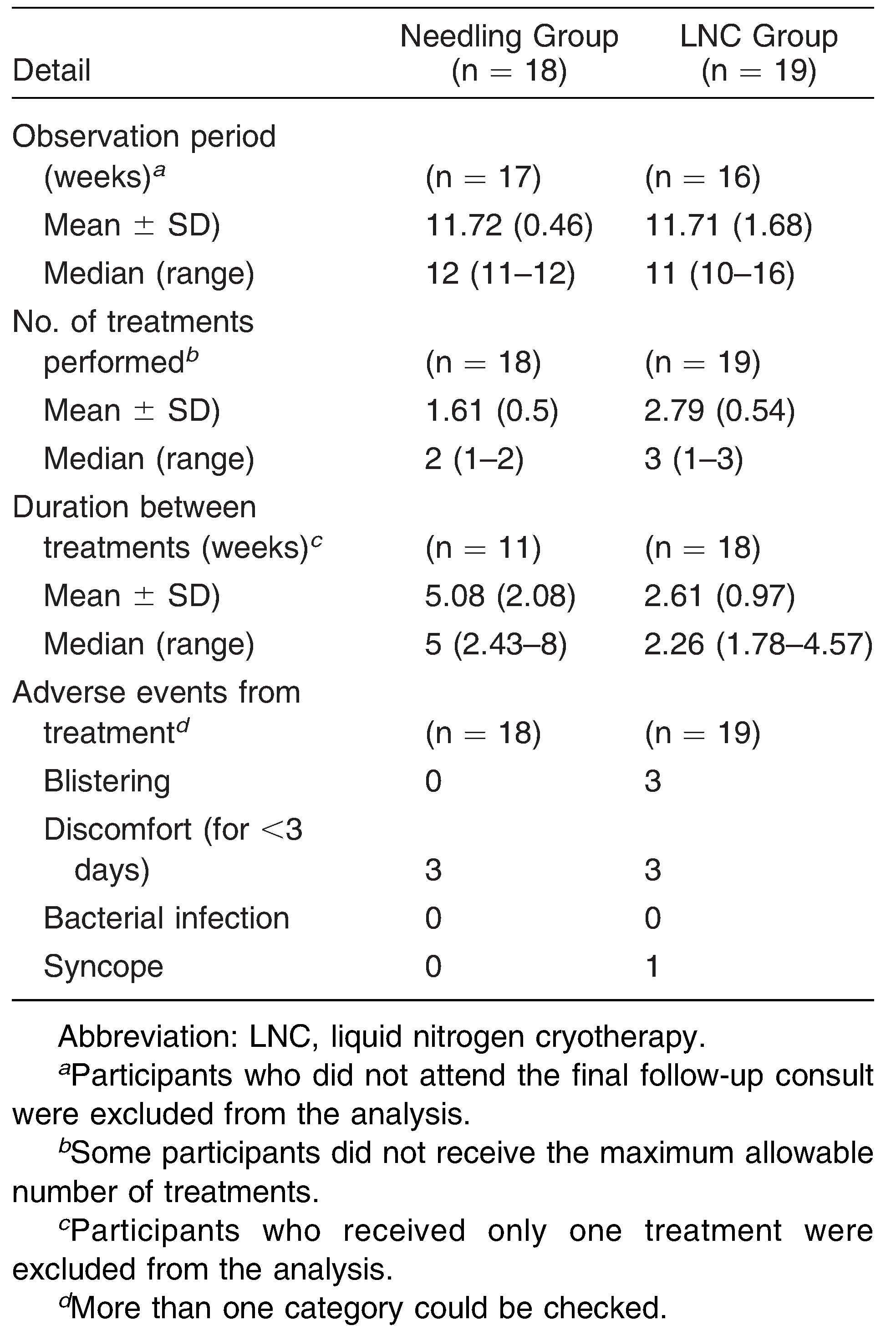
Table 2 presents the treatment details during the trial.
Figure 2.
Flowchart describing the review process for the study.
Figure 2.
Flowchart describing the review process for the study.
Table 1.
Demographic and Clinical Characteristics of the 37 Participants Assigned to Receive Needling or LNC Treatment.
Table 1.
Demographic and Clinical Characteristics of the 37 Participants Assigned to Receive Needling or LNC Treatment.
Table 2.
Treatment Details of the 37 Participants Assigned to Receive Needling or LNC Treatment.
Table 2.
Treatment Details of the 37 Participants Assigned to Receive Needling or LNC Treatment.
Primary Outcome
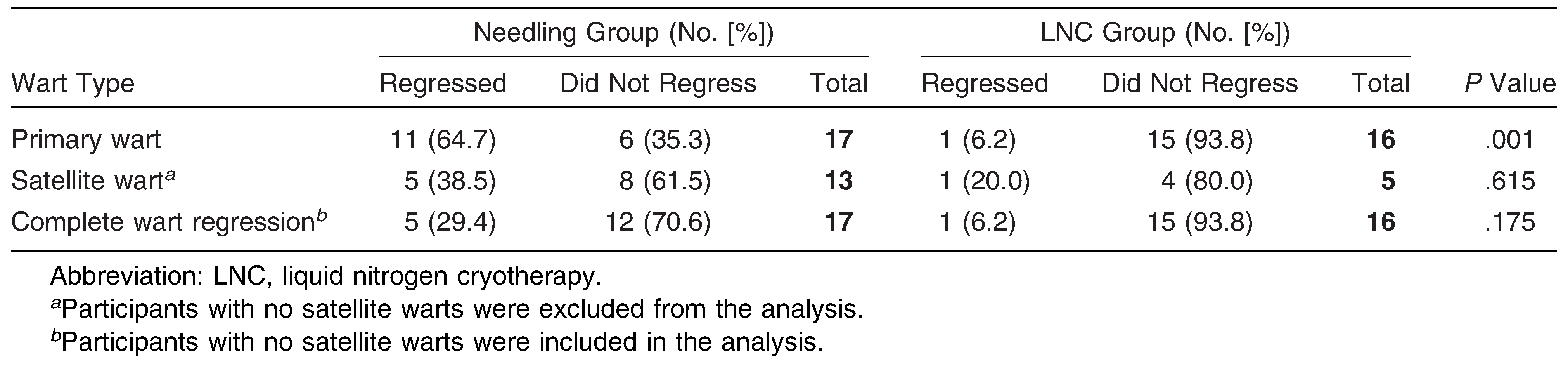
Regression of the Primary Pedal Wart. Thirty-three participants’ photographs were assessed for regression of the primary pedal wart (17 from the needling group and 16 from the LNC group). In the needling group, 64.7% of participants (11 of 17) had regression of the primary pedal wart over a mean ± SD of 11.72 ± 0.46 weeks. In the LNC group, 6.2% of participants (1 of 16) in the LNC group had regression of the primary pedal wart over a mean ± SD of 11.71 ± 1.68 weeks. There was a significant difference in primary pedal wart regression between the needling and LNC groups (
P = .001), as presented in the primary wart outcome in
Table 3.
Table 3.
Wart Regression Outcome Analysis Comparing Needling and LNC Therapy.
Table 3.
Wart Regression Outcome Analysis Comparing Needling and LNC Therapy.
Secondary Outcomes
Relative Cosmetic Outcome of the Primary Pedal Wart. The mean reported numerical rating scale score in the needling group after the intervention was 48% improved (SD = 37.138). In the LNC group, the mean reported numerical rating scale after treatment was 31% improved (SD = 35.07). There was no significant difference between needling (median = 50.00) and LNC (median = 25.00) (U = 98.5, z = −1.382, P = .179).
Regression of Satellite Pedal Warts. In the needling group, 38.5% of the participants (5 of 13) had regression of one or more satellite pedal warts over the trial period compared with 20% of participants (1 of 5) in the LNC group. There was no significant difference in satellite pedal wart regression between the two groups (
P = .615), as presented in the satellite wart outcome in
Table 3.
Complete Pedal Wart Regression. Six of the 33 participants who made it to the final outcome assessment had complete regression of their pedal warts. All six of these participants had satellite pedal warts. In the needling group, 29.4% of the participants (5 of 17) had complete pedal wart regression. Just 6.2% of participants (1 of 16) in the LNC group had complete pedal wart regression. The difference between the two groups was found to be nonsignificant (
P = .175), as presented in the complete wart regression outcome in
Table 3.
Participant-Centered Outcomes. Participants in both groups had little or no pain from their pedal warts initially (needling: mean = 2.33 versus LNC: mean = 1.938), and these pain levels were observed to decline in both groups by the end of the trial (needling: mean = 1.20 versus LNC: mean = 1.125). At the final follow-up visit, participants in the needling group were, on average, marginally more satisfied with their treatment (needling: mean = 7.2 versus LNC: mean = 7.1) and thought that they had a better cosmetic outcome (needling: mean = 8.11 versus LNC: mean = 7.18).
Adverse Events. Adverse events encountered during the trial period are presented in
Table 2. In the needling group, three participants had a single occurrence of discomfort for less than 3 days after treatment. In the LNC group, three participants experienced blistering and discomfort of the primary pedal wart after the intervention. Although the blistering persisted for several weeks, the participants had only mild discomfort for less than 3 days. One participant in the LNC group experienced syncope during the delivery of LNC.
Discussion
Key Findings
This study compared the effectiveness of needling versus LNC in the treatment of pedal warts. The results of this trial suggest that needling is more effective in treating the primary pedal wart compared with LNC. The needling group displayed significantly higher rates of primary pedal wart regression; however, there was no significant evidence that needling of the primary pedal wart resulted in a systemic CMIR against satellite pedal warts during the trial, despite the complete clearance rate of pedal warts in the needling group being 474% greater than that seen in the LNC group. There was little difference in participant pain, satisfaction, and opinion of cosmesis between the two groups.
Comparison with Other Studies
The lack of primary pedal wart regression seen in the LNC group is consistent with findings from previous studies. The results of the randomized controlled trial conducted by Cockayne et al[
5] in 2011 found the effectiveness of LNC and salicylic acid to be 14% for complete clearance of plantar warts. The difference between the present results and those of Cockayne et al for the LNC group may be due to our smaller sample size, application of LNC to just the primary pedal wart, inclusion of warts on the entire foot, and one less course of treatment. Other studies investigating the effectiveness of LNC had markedly different participant demographic characteristics, which is the result of strict inclusion and exclusion criteria relating to participant age, wart size, wart type, and previous treatments.[
12,
13] The selection criteria of Steele and Irwin[
13] included warts with a diameter of 3 to 9 mm, excluded mosaic warts, and excluded participants with more than five warts. In contrast, the present study included mosaic warts (which accounted for 22% of primary pedal warts), warts up to 20 mm in diameter, and participants aged 18 years and older. The mean participant age of the LNC group in the present study was 30.4 years versus 8.7 years in the study by Focht et al.[
14] The participant demographic features in this study may explain the lower reported cure rate in the LNC group given that participant age, type of wart, age of the wart, and previous treatment are shown to affect the outcome.[
1]
Previous studies have reported that initial pain from warts was usually minimal, which suggests that participants are motivated to seek treatment for reasons other than pain.[
1] This study broadened the data collection to include participant-orientated outcomes that interpreted not only the clinical outcome of pedal wart regression but also participant perception of the cosmetic outcome after treatment. This measure gave valuable insight into determining whether the participant had a cosmetically pleasing outcome, irrespective of the clinical result.
The cure rate of the primary pedal warts in this study’s needling group differs from that in the study by Falknor[
7]; Falknor noted just two recurrences in 126 warts treated over 8 months, in contrast to the present study, which reported six recurrences in 17 treated primary warts. The difference in results may be due to the use of a blinded outcome assessment, longer follow-up (12 weeks versus 5 weeks), treatment application to just the primary pedal wart, and our exclusion of participants younger than 18 years. The needling treatment method for the primary pedal wart in the present study remained identical to that used by Falknor in 1969.[
7]
Strengths and Limitations
To minimize bias, this study included intention-to-treat analysis, randomized allocation to interventions, a strict treatment regimen, and blinded outcome assessment. The sample size of this pilot study is considered adequate to provide statistically significant results and a scope for future research. A further strength of this study was that all 37 participants were treated in the same clinic, allowing greater control and consistency over the treatment protocol undertaken.
The complete clearance rate of pedal warts was noticeably higher in the needling group compared with the LNC group (29.4% versus 6.2%); however, the results were found to be nonsignificant. This may be due to the small sample size or the exclusion of participants younger than 18 years. Note that treatment of the primary pedal wart by needling to induce a CMIR against satellite pedal warts assumes that the satellite pedal warts are of the same viral strain as the primary pedal wart. If the satellite pedal warts are of a different strain as the treated primary pedal wart, the subsequent systemic CMIR from treating the primary pedal wart will not be sensitized to the alternative viral strain. This may account for the lower rate of complete pedal wart regression compared with primary pedal wart regression in the needling group. Outcome assessment through the use of a photograph has led to some warts outside of the field of view not being observable by the assessors (such as those between the toes or pedal warts on the contralateral foot). This limitation resulted in the exclusion of two patients in the needling group whereby untreated pedal warts on the contralateral foot had regressed during the trial period.
This study used an unvalidated numerical rating scale to measure primary wart cosmesis and unvalidated verbal rating scales to measure participant perceptions of pain, satisfaction, and cosmesis. Being unvalidated scales, the reliability and validity of these scales is yet to be confirmed. These scales were used because they were quick and simple to perform under the time constraints of short participant consultations.
A Cochrane review of topical treatments for cutaneous warts published in 2009 suggested that 6 months is an ideal treatment and review window because it gives adequate time to assess whether the wart has returned.[
1] We are inclined to agree with the comment by Cockayne et al[
5] that a 6-month treatment window allows too much time for spontaneous regression given that most warts regress without treatment within 2 years.[
15] We believe that the 12-week window used in this study allows adequate time to assess the effectiveness of the treatment given. We do, however, concur with the recommendation by Cockayne et al[
5] to follow up with participants 6 months later to assess for recurrence.
Conclusions
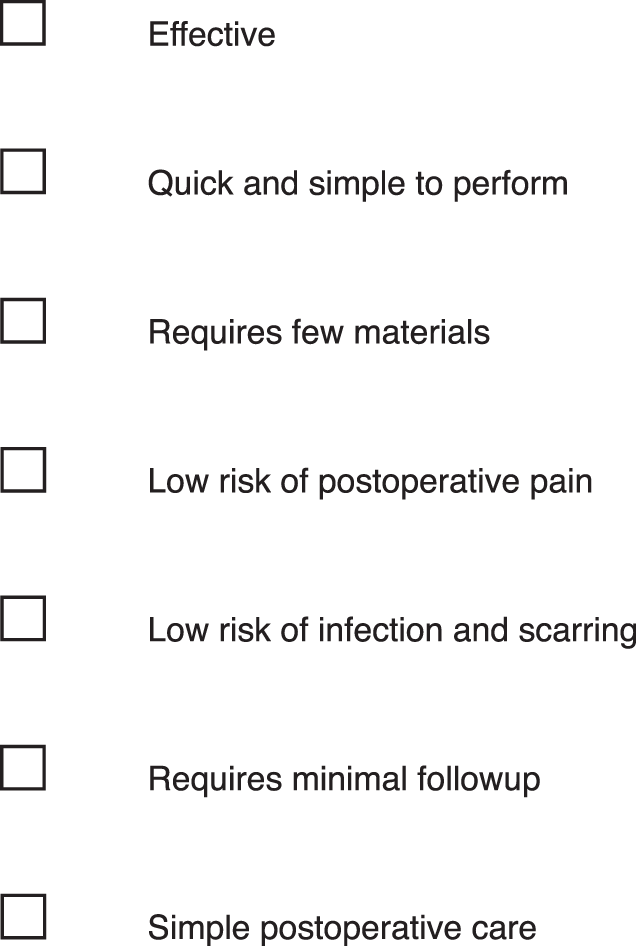
We believe that the needling treatment offers many of the characteristics of an ideal treatment that were called for in the Cochrane review.[
1] The needling treatment fulfils all of the criteria illustrated in
Figure 3. When delivering the needling treatment, we recommend a 6-week follow-up after initial treatment to assess for wart regression and re-treatment, if necessary. We believe that more frequent follow-up would be excessive and unnecessary. For future studies, we recommend that participants should be recruited from a more demographically diverse population to increase the generalizability of the study findings. In addition, we recommend that participants be treated over a 12-week period, with a final follow-up to occur 6 months later to assess for any incidence of recurrence. Given the strong evidence reported in this study for the effectiveness of needling against the primary pedal wart, we recommend that further research be undertaken to test the effectiveness of needling applied to all of the pedal warts compared with LNC or salicylic acid.
Figure 3.
List of properties describing the ideal treatment protocol for wart therapy against which needling therapy and cryotherapy were assessed.
Figure 3.
List of properties describing the ideal treatment protocol for wart therapy against which needling therapy and cryotherapy were assessed.
R.N. and V.B. were paid a salary from the University of Western Australia as Podiatric Medicine Unit supervisors.