Next Article in Journal
Podiatric Medicine and Disaster Response. A Survey of the Professional Leadership
Previous Article in Journal
Aggressive Early Reconstruction in Open Foot Trauma. A Case Report
 
 
Journal of the American Podiatric Medical Association is published by MDPI from Volume 116 Issue 1 (2026). Previous articles were published by another publisher in Open Access under a CC-BY (or CC-BY-NC-ND) licence, and they are hosted by MDPI on mdpi.com as a courtesy and upon agreement with American Podiatric Medical Association.
Article

Mosaicplasty for Osteochondral Lesions of the Talus. A Report of Two Cases

Department of Orthopedic Surgery, Cheng-Hsin General Hospital, No. 45 Cheng-Hsin St Pei-Tou, Taipei 112, Taiwan
*
Author to whom correspondence should be addressed.
J. Am. Podiatr. Med. Assoc. 2013, 103(1), 81-86; https://doi.org/10.7547/1030081
Published: 1 January 2013

Abstract

Two women (24 and 27 years old) noted pain in the affected ankle of several years’ duration. Radiography and magnetic resonance imaging revealed osteochondral lesions of the talus in both patients. The lesion sites measured 1.3 × 1.0 × 0.4 cm (0.52 cm3) and 2.0 × 1.9 × 0.5 cm (1.9 cm3). Each patient received a medial malleolar osteotomy with mosaicplasty. Donor plugs were obtained from the ipsilateral knee in both patients. Surgery was performed successfully in both patients without complications. At 2-year follow-up, both patients had recovered good ankle function, with no donor site morbidity. American Orthopedic Foot and Ankle Society ankle/hindfoot scores improved in the affected ankles from 16 to 84 in case 1 and from 43 to 87 in case 2. Mosaicplasty is effective in treating stage III or IV osteochondral lesions of the talus and results in good-to-excellent recovery of function.

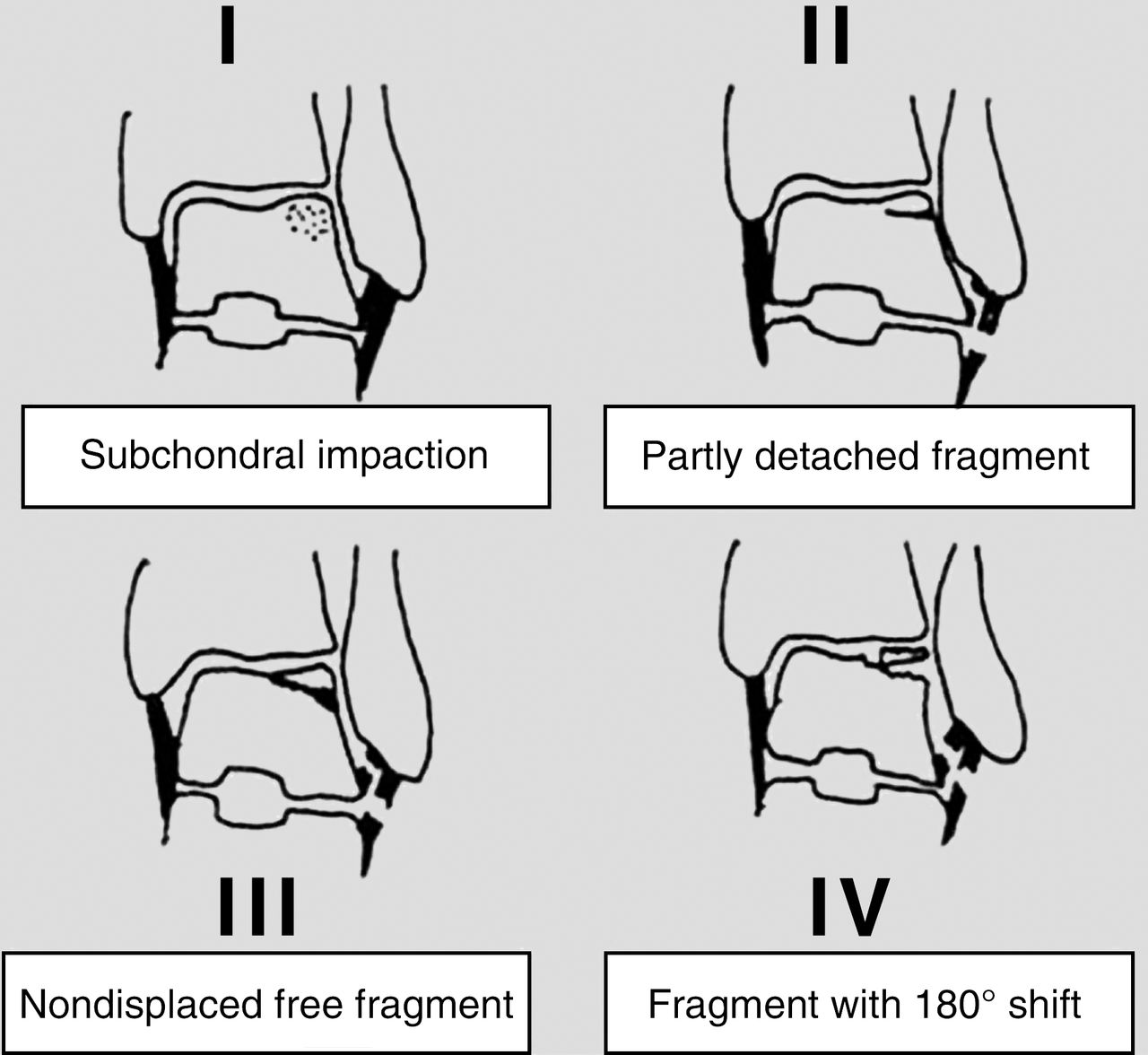
Osteochondral lesions of the talus (OLTs) are symptomatic lesions that cause pain, recurrent synovitis, and altered biomechanics [1]. With advances in diagnostic imaging and the advent of ankle arthroscopy, the Berndt and Harty lesion classification has become standardized, allowing for comparison of treatment options [2]. Other classifications using magnetic resonance imaging (MRI) and computed tomography [3,4] have been developed based on the Berndt and Harty scale (Table 1 and Fig. 1) [35]. Arthroscopic procedures (eg, debridement, retrograde drilling, bone grafting, and marrow stimulation), by nature of their minimally invasive approach, have a great advantage in treating small defects and stable OLTs compared with open methods [1,6].
Autogenous osteochondral grafting is among the most popular of the new techniques for promoting hyaline-type resurfacing of the larger damaged area [1]. Mosaicplasty is a technique for creating an osteochondral autograft by harvesting and transplanting many small cylindrical osteochondral plugs from the less weightbearing peripheral patellofemoral region and inserting them into drilled tunnels in the defective cartilage section [7]. Since the introduction of mosaicplasty, authors have generally reported promising results [812]. Kiliç et al [11] performed open mosaicplasty for the treatment of OLTs in eight patients. American Orthopedic Foot and Ankle Society (AOFAS) scores improved from a mean of 58 preoperatively to 89 postoperatively, pain scores decreased from a mean of 8 to 2, and all of the patients returned to preoperative levels of activity. Hangody and Fules [13] indicated that mosaicplasty was associated with more favorable clinical outcomes in the long term than were Pridie drilling, abrasion arthroplasty, and microfracture in the treatment of articular defects of the knee and ankle. Whereas most authors have reported good outcomes, Valderrabano et al [14] reported that donor site knee pain was present in six of 12 patients and that recurrent lesions were found in ten patients at mean follow-up of 72 months after mosaicplasty for OLTs.
Herein, we report two cases of large osteochondral defects of the medial talus that were treated successfully with mosaicplasty. Both patients regained full function, and no donor site morbidity was noted. The study was approved by the institutional review board of Cheng-Hsin General Hospital, Taipei, Taiwan, and was conducted according to the principles of the Declaration of Helsinki; both patients provided written informed consent.

Surgical Procedure

A medial malleolar osteotomy with mosaicplasty was performed as per the method outlined by Hangody et al [7]. The affected areas were prepared and draped, and the medial lesion of the talus was exposed through an anterior medial capsular incision. A medial malleolar osteotomy was performed with the posterior tibial tendon, flexor digitalis longus tendon, flexor hallucis longus tendon, and neurovascular bundle protected by a Homan retractor. Loose fragments were removed, scar tissue and necrotic bone were cleaned from the crater bed, and the lesion edges were trimmed back to the normal articular cartilage. The mosaicplasty instruments (Osteochondral Autograft Transfer System; Arthrex, Naples, Florida) were applied in the recipient socket to a depth of 12 mm, and the drill was placed perpendicular to the lesion. Four receptor sites were prepared for case 1 and eight for case 2. Donor grafts were obtained through a mini-arthrotomy of the ipsilateral knee joint. In case 1, four 6-mm plug grafts were carefully pushed into the talus receptor sites, and the joint was tested for range of motion. In case 2, eight 7-mm plugs were used. After placement of the graft plugs, the medial malleolar fragment was restored and fixed with one 4-mm Bio screw (ConMed Linvatec, Largo, Florida), and a short-leg splint was applied.
Postoperatively, both patients wore a short-leg splint for 2 months and were encouraged to actively move the ankle joint. A protective, removable, weightbearing walker was applied in the third month postoperatively, and patients were allowed partial weightbearing. Rehabilitation during this period included range-of-motion exercises. As osseous union was observed, greater weightbearing was permitted.

Case Report

Case 1

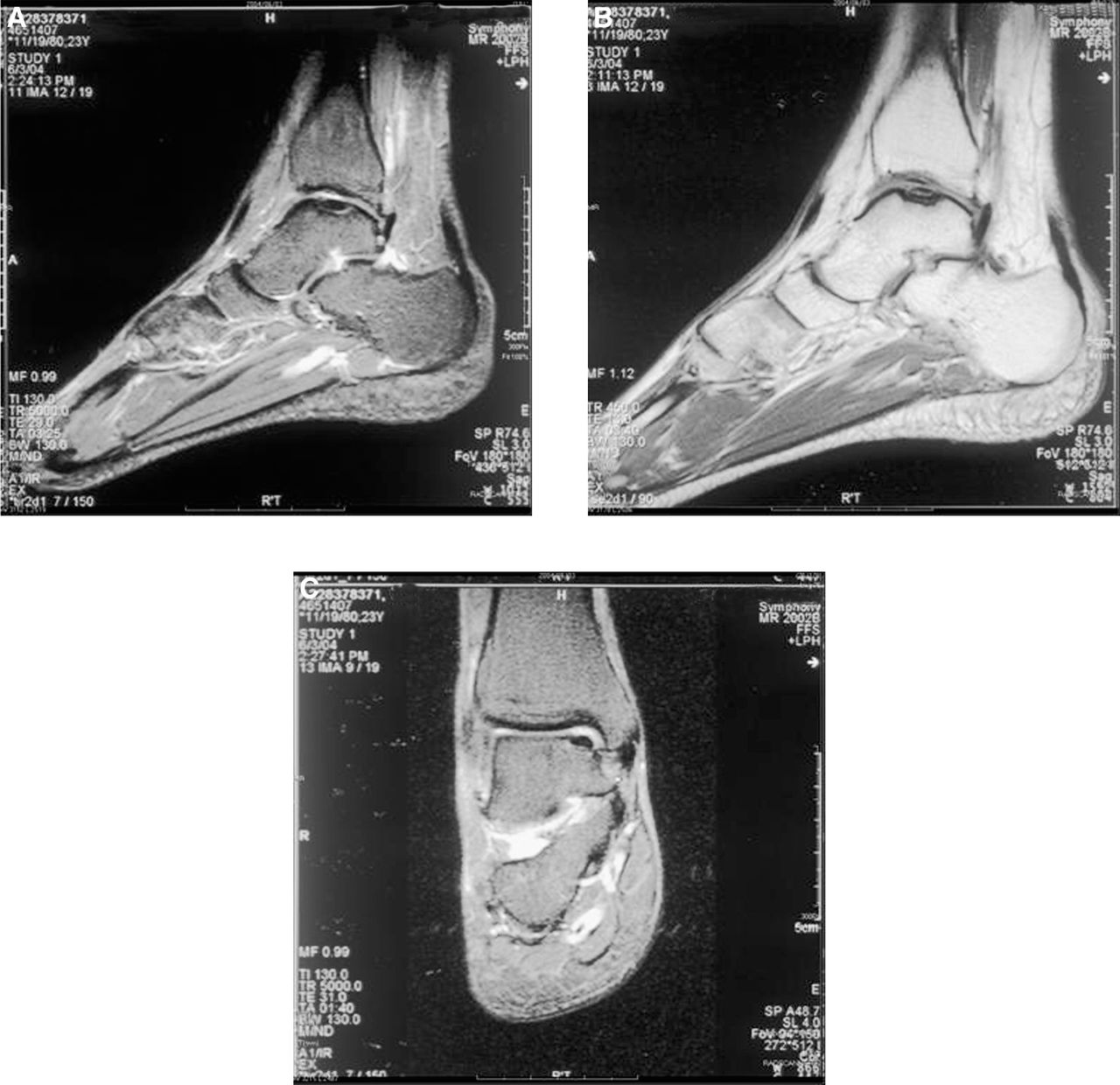
A 24-year-old woman noted right ankle pain of 3 years’ duration. Her AOFAS ankle/hindfoot score was 16 in the affected ankle [15]. A diagnosis of OLT was based on preoperative radiography and MRI (Fig. 2), and the OLT measured 1.3 × 1.0 × 0.4 cm (0.52 cm3).
Mosaicplasty was performed without complication, and her postoperative course and recovery were uneventful. The patient was observed for 2 years postoperatively, the AOFAS score in the affected joint was 84, and no donor site morbidity or ankle arthrosis was observed.

Case 2

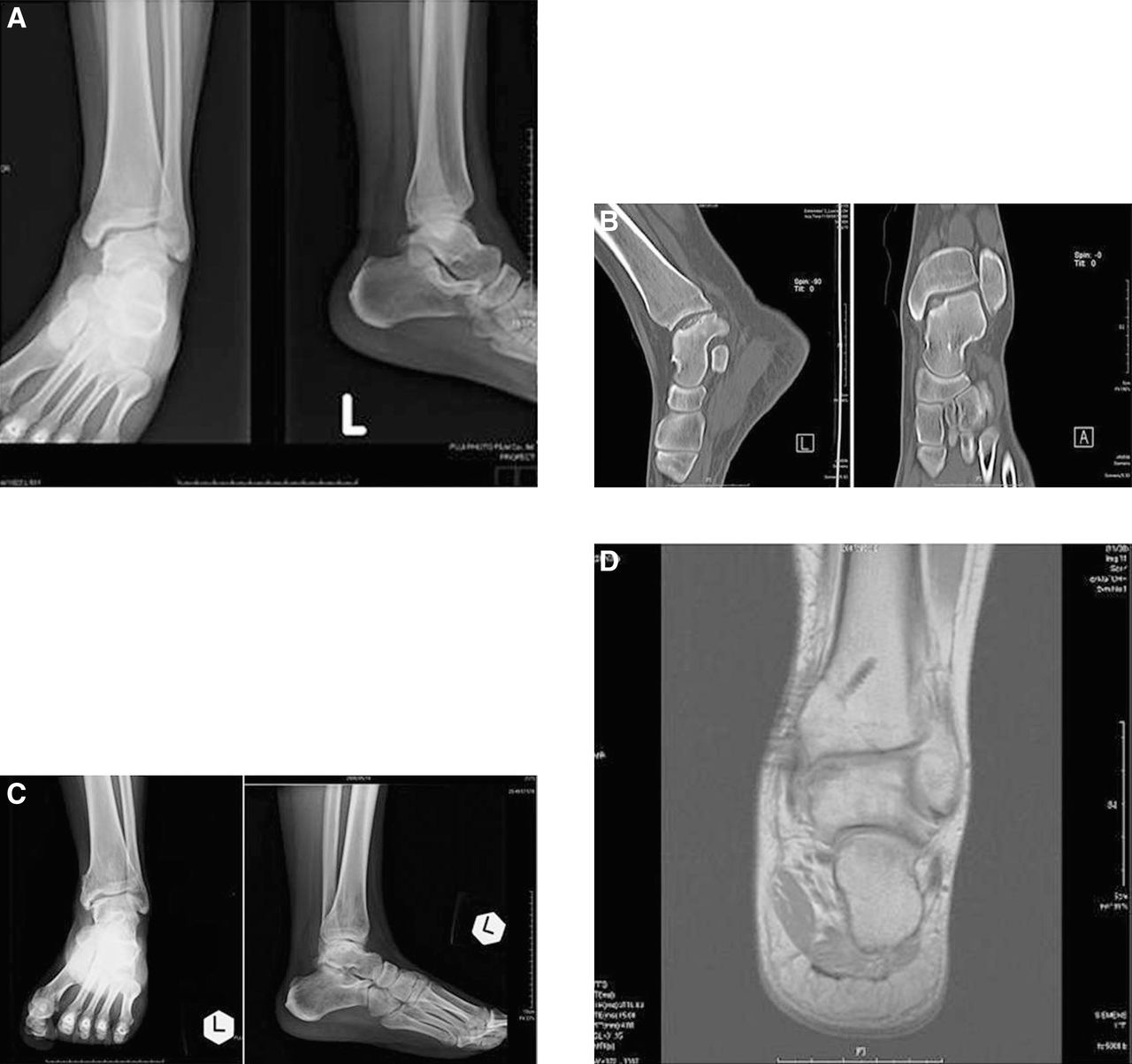
A 27-year-old woman noted pain in her left ankle of 2 years’ duration. Her AOFAS score in the affected ankle was 43. A diagnosis of OLT was made based on preoperative radiography (Fig. 3A) and MRI (Fig. 3B), and the OLT measured 2.0 × 1.9 × 0.5 cm (1.9 cm3).
Mosaicplasty was performed without complication, and the patient’s postoperative course and recovery were uneventful. Radiography and MRI 3 months postoperatively revealed good integration of the graft (Fig. 3C and D). The patient was observed for 2 years postoperatively, the AOFAS score in the affected joint was 87, and no donor site morbidity or ankle arthrosis was observed.

Discussion

Initial treatment for OLTs includes various surgical procedures, such as debridement, subchondral drilling, abrasion, and microfractures [1]. As the region has a limited ability to repair itself, various grafting measures are used to encourage regrowth in the area, including autologous osteochondral grafts (mosaicplasty), autologous chrondocyte transplantations, and osteochondral allografts [1]. In 1997, Hangody et al [7] described a mosaicplasty technique that provided good repair of weightbearing surfaces, and the technique has been successfully used in the talus, knee, elbow, and shoulder [10,13,16]. Midterm and long-term results have been encouraging, as seen in the two cases presented herein.
Hangody and Fules [13] completed a multicentric, comparative, prospective evaluation of 413 arthroscopic resurfacing procedures (mosaicplasty, Pridie drilling, abrasion arthroplasty, and microfracture) that demonstrated that mosaicplasty resulted in favorable long-term clinical outcomes compared with the other three techniques. Haklar et al [10] reported good outcomes of mosaicplasty for the repair of weightbearing surfaces of the lateral and medial femoral condyles in 24 patients. Lysholm knee scores increased from a mean of 46 preoperatively to 86 postoperatively, and all of the patients returned to preinjury activity levels.
In the present patients, AOFAS scores increased to 84 and 87, and these results are consistent with those of large studies of mosaicplasty that found that most patients recovered good-to-excellent function after the procedure [17,18]. However, many of these studies did not use AOFAS scores to record improvement; in fact, more used self-developed scoring systems (18 studies) than used AOFAS scores (16 studies) [19] .Other articles have challenged the efficacy of AOFAS scores alone in measuring patient postoperative progress. Richter et al [20] developed a questionnaire-based design that depended on patient-centered subjective categories. The three different question categories included assessments of pain, function, and other complaints comparable with the AOFAS score.
Although most reports of mosaicplasty are encouraging, Valderrabano et al [14] reported that donor site knee pain was present in six of 12 patients and that recurrent lesions were found in ten patients at mean follow-up of 72 months after mosaicplasty for OLTs. Lee et al [21] sought to determine factors that may affect cartilage repair after autologous chondrocyte implantation for the treatment of OLTs by second-look arthroscopy and found that larger lesion size and older patient age were associated with poorer outcomes and that sex, depth and location of the lesion, and preoperative AOFAS score were not associated with outcomes. Rădulescu et al [22] also performed second-look arthroscopies on 32 patients who received mosaicplasty for cartilaginous lesions of the knee. The authors reported that by 2 years postoperatively, the limits of the autografts were no longer visible, and microscopic examination of biopsy specimens revealed that the lesion has been replaced by viable hyaline cartilage and that fibrous cartilage was present in the spaces between the grafts. In another study by Lee et al [23], the authors reported that MRI findings were correlated with second-look arthroscopy findings, leading the authors to conclude that MRI is sufficient to evaluate repaired talar cartilage during postoperative follow-up. In a review of the literature, Kordas [12] stressed the importance of primary stability, ie, steadfastness of the inserted plugs, for obtaining good outcomes with mosaicplasty.
Although some reports have indicated significant donor site morbidity [14], we did not experience this with the present patients. There may be multiple reasons for this outcome. The present patients were young (24 and 27 years of age) and did not have additional comorbid medical conditions (eg, hypertension or diabetes). Also, the donor tissue transplanted into the talus was from a less weightbearing peripheral area (patellofemoral region), which also may have decreased the possibility of donor site pain.
A meta-analysis by Zengerink et al [19] reported a median age of patients with OLTs of 31 years, demonstrating a greater occurrence of OLTs in younger populations, and that patients typically had symptoms for several years before surgery, similar to the patients described herein. The reasons for the increased incidence in younger populations and the relatively long time until diagnosis remain unclear. However, studies on related conditions (eg, osteochondral diseases) may provide some insight. Weaver et al [24] believed that acute subluxation or rotational joint injuries seen in active younger populations led to cartilaginous shearing and early osteochondral degenerative disease. Seijas et al [25] also documented that early degenerative osteochondral changes are evident in younger individuals with a history of sports-related injuries. Both of these studies showed that repetitive actions on a joint over an extended period may be required before conditions such as OLT can be diagnosed [24,25].
Very recently, OLTs had been treated with complete cystic filling (calcium sulfate) instead of bone grafts. The graft is rapidly resorbed (≤8 weeks) and replaced by host cancellous bone, allowing for weightbearing as early as 1 month postoperatively [26]. Although the procedure shows promise, it is too early to assess long-term outcomes.
In summary, the cases presented herein indicate that mosaicplasty is effective for the treatment of OLTs and is associated with good functional outcomes in the midterm and with minimal donor site morbidity. Further studies are required to determine the long-term outcomes of the procedure.

Funding

None reported.

Conflicts of Interest

None reported.

References

  1. McGahan, PJ; Pinney, SJ. Current concept review: osteochondral lesions of the talus. Foot Ankle Int 2010, 31, 90. [Google Scholar]
  2. Berndt, AL; Harty, M. Transchondral fractures (osteochondritis dissecans) of the talus. J Bone Joint Surg Am 2004, 86, 1336. [Google Scholar]
  3. Ferkel, RD. Articular Surface Defects, Loose Bodies, and Osteophytes. In Arthroscopic Surgery: The Foot and Ankle; Lippincott-Raven; Philadelphia, Pa; 1996; p. 145. [Google Scholar]
  4. Mintz, DN; Tashjian, GS; Connell, DA; et al. Osteochondral lesions of the talus: a new magnetic resonance grading system with arthroscopic correlation. Arthroscopy 2003, 19, 353. [Google Scholar]
  5. Laffenetre, O. Osteochondral lesions of the talus: current concept. Orthop Traumatol Surg Res 2010, 96, 554. [Google Scholar]
  6. Choi, WJ; Park, KK; Kim, BS; et al. Osteochondral lesion of the talus: is there a critical defect size for poor outcome? Am J Sports Med 1974, 37. [Google Scholar]
  7. Hangody, L; Kish, G; Kárpáti, Z; et al. Treatment of osteochondritis dissecans of the talus: use of the mosaicplasty technique: a preliminary report. Foot Ankle Int 1997, 18, 628. [Google Scholar]
  8. Hangody, L; Feczkó, P; Bartha, L; et al. Mosaicplasty for the treatment of articular defects of the knee and ankle. Clin Orthop Relat Res 2001, 391(suppl), S328. [Google Scholar]
  9. Mendicino, RW; Catanzariti, AR; Hallivis, R. Mosaicplasty for the treatment of osteochondral defects of the ankle joint. Clin Podiatr Med Surg 2001, 18, 495. [Google Scholar]
  10. Haklar, U; Tüzüner, T; Kocaoğlu, B; et al. Mosaicplasty technique in the treatment of osteochondral lesions of the knee [in Turkish]. Acta Orthop Traumatol Turc 2008, 42, 344. [Google Scholar]
  11. Kiliç, A; Kabukçuoğlu, Y; Gül, M; et al. Early results of open mosaicplasty in osteochondral lesions of the talus [in Turkish]. Acta Orthop Traumatol Turc 2009, 43, 235. [Google Scholar]
  12. Kordas, G. The role of primary stability in mosaicplasty: a review of the literature. Joint Dis Rel Surg 2007, 18, 150. [Google Scholar]
  13. Hangody, L; Fules, P. Autologous osteochondral mosaicplasty for the treatment of full-thickness defects of weight-bearing joints: ten years of experimental and clinical experience. J Bone Joint Surg Am 2003, 85, 25. [Google Scholar]
  14. Valderrabano, V; Leumann, A; Rasch, H; et al. Knee-to-ankle mosaicplasty for the treatment of osteochondral lesions of the ankle joint. Am J Sports Med 2009, 37 suppl 1, 105S. [Google Scholar]
  15. Kitaoka, HB; Alexander, IJ; Adelaar, RS; et al. Clinical rating systems for the ankle-hindfoot, midfoot, hallux, and lesser toes. Foot Ankle Int 1994, 15, 349. [Google Scholar]
  16. Bentley, G; Biant, LC; Carrington, RWJ; et al. A prospective, randomised comparison of autologous chondrocyte implantation versus mosaicplasty for osteochondral defects in the knee. J Bone Joint Surg Br 2003, 85, 223. [Google Scholar]
  17. Iwasaki, N; Kato, H; Kamishima, T; et al. Donor site evaluation after autologous osteochondral mosaicplasty for cartilaginous lesions of the elbow joint. Am J Sports Med 2007, 35, 2096. [Google Scholar]
  18. Hangody, L; Vásárhelyi, G; Hangody, LR; et al. Autologous osteochondral grafting: technique and long-term results. Injury 2008, 39, S32. [Google Scholar]
  19. Zengerink, M; Struijs, PA; Tol, JL; et al. Treatment of osteochondral lesions of the talus: a systematic review. Knee Surg Sports Traumatol Arthrosc 2010, 18, 238. [Google Scholar]
  20. Richter, M; Zech, S; Geerl, J; et al. A new foot and ankle outcome score: questionnaire-based, subjective, visual-analogue scale, validated and computerized. Foot Ankle Surg 2006, 12, 191. [Google Scholar]
  21. Lee, KT; Lee, YK; Young, KW; et al. Factors influencing result of autologous chondrocyte implantation in osteochondral lesion of the talus using second look arthroscopy. Scand J Med Sci Sports 2012, 22, 510. [Google Scholar]
  22. Rădulescu, RA; Cirstoiu, CF; Bădilă, AE. Arthroscopical and histological study of cartilaginous lesions treated by mosaicplasty. J Med Life 2010, 3, 407. [Google Scholar]
  23. Lee, KT; Choi, YS; Lee, YK; et al. Comparison of MRI and arthroscopy after autologous chondrocyte implantation in patients with osteochondral lesion of the talus. Orthopedics. [Published online ahead of print August 11, 2010]. [CrossRef]
  24. Weaver, CJ; Major, NM; Garrett, WE; et al. Femoral head osteochondral lesions in painful hips of athletes: MR imaging findings. AJR Am J Roentgenol 2002, 178, 973. [Google Scholar]
  25. Seijas, R; Álvarez, P; Ares, O; et al. Osteocartilaginous lesions of the talus in soccer players. Arch Orthop Trauma Surg 2010, 130, 329. [Google Scholar]
  26. Kennedy, JG; Suero, EM; O’Loughlin, PF; et al. Clinical tips: retrograde drilling of talar osteochondral defects. Foot Ankle Int 2008, 29, 616. [Google Scholar]
Figure 1. A visual representation of the Berndt and Harty scale. This classification has been subsequently updated and modified, thus providing the basis for magnetic resonance imaging and computed tomography diagnostic imaging scales. (Adapted from Laffenetre [5]).
Japma 103 00081 g001
Figure 2. Case 1. Preoperative magnetic resonance images revealed an osteolytic lesion in the medial talus. A, Sagittal T2; B, Sagittal T1; C, Coronal T-2 weighted.
Japma 103 00081 g002
Figure 3. Case 2. Preoperatively, radiography revealed an osteolytic lesion in the medial talus (A) and T1-weighted magnetic resonance imaging showed a low-intensity area in the anteromedial talus (B). Radiography (C) and magnetic resonance imaging (D) 3 months postoperatively showed good integration of the grafts into the surrounding area.
Japma 103 00081 g003
Table 1. Comparison of Diagnostic Imaging Scales for Osteochondral Lesions of the Talus
Japma 103 00081 i001