Open fractures with associated soft-tissue trauma present a serious risk to the patient and a complicated scenario for the treating surgeon. Owing to the innate anatomy and decreased subcutaneous tissue of the distal lower extremity, open fracture-dislocation is rather common [
1]. This injury often results in direct exposure of neurovascular, ligamentous, tendinous, and bony structures. No definitive guidelines or protocols exist to determine which wounds are amenable to primary closure [
2]. Many times, the experience of the surgeon dictates the timing of closure. Several options are available for closure depending on the extent of the soft-tissue deficit. The reconstructive ladder is a tenet of plastic surgery in which soft-tissue coverage techniques are arranged in a hierarchical system [
3]. These techniques can range from bioengineered tissues or skin grafts to pedicle flaps and free tissue transfers.
Irrigation with aggressive debridement, treatment with local/systemic antibiotics, and skeletal stabilization to prevent further soft-tissue insult are of the utmost importance. All of the treatment strategies are geared toward preventing infection and maintaining a functional limb. It is well accepted that the Gustilo and Anderson classification system correlates with infectious complications after extremity trauma [
4]. The percentage of patients developing infection is approximately 0% to 2% in type I, 2% to 5% in type II, 5% to 10% in type IIIa, 10% to 50% in type IIIb, and 25% to 50% in type IIIc [
5]. Early soft-tissue coverage can reduce infection rates and provide increased local nutrition to the healing zone of injury. The management of high-energy open fractures by external fixation has the advantages of indirect reduction through ligamentotaxis, minimal invasive surgery with less soft-tissue dissection, and a stable construct [
6].
We present our treatment approach and results of an open fracture-dislocation of the distal first metatarsal with associated soft-tissue trauma. Mechanism of injury, early presentation to the emergency department, immediate institution of intravenous antibiotics, status of the wound, and fracture pattern allowed for aggressive surgical intervention in this specific patient population. Several factors allowed immediate soft-tissue reconstruction, prompt transition to oral antibiotic drug therapy, and early hospital discharge. This concept of immediate or early fracture stabilization and soft-tissue coverage is often referred to as “fix and flap,” which is becoming increasingly more common with today’s trend toward an orthoplastic approach [
7–
10].
Case Report
A 24-year-old man presented to the emergency department with a large laceration involving the left foot. The injury was the result of chainsaw versus foot trauma. At the time of injury, the patient was wearing work boots with rubber soles. Once he arrived at the emergency department, the podiatric foot/ankle surgical service was immediately consulted.
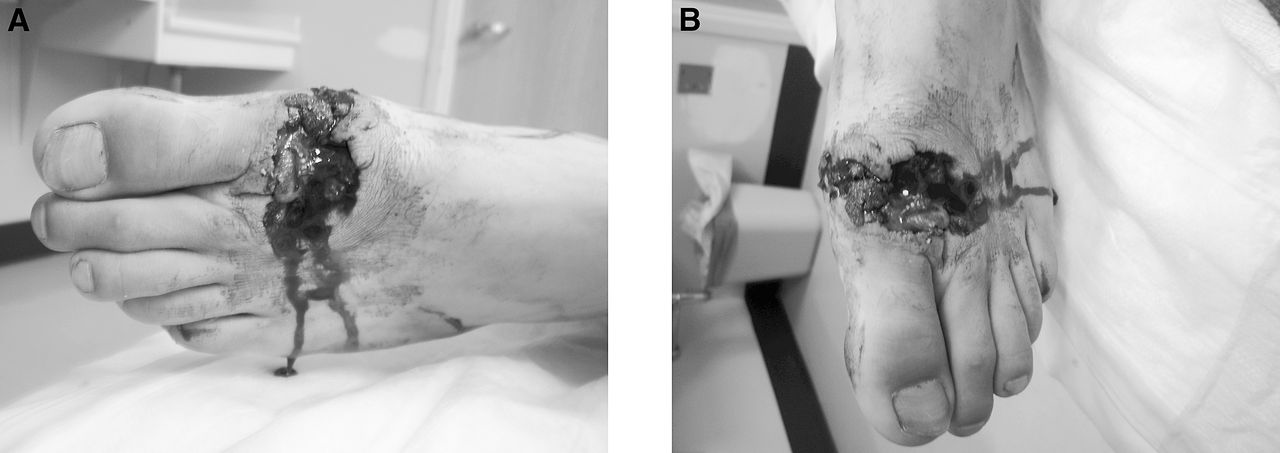
At initial examination, the patient was noted to be stable. Wound culture and sensitivity were obtained by deep tissue swab immediately, 4.5 g of piperacillin/tazobactam was administered intravenously, and the initial Gram’s stain was negative. A thorough history and physical examination followed; the patient had no medical history. His tetanus status was up to date, and surgical clearance was obtained. His neurovascular status was intact. Clinically, a large laceration was noted at the dorsomedial aspect of the left first ray, with obvious extension to bone (
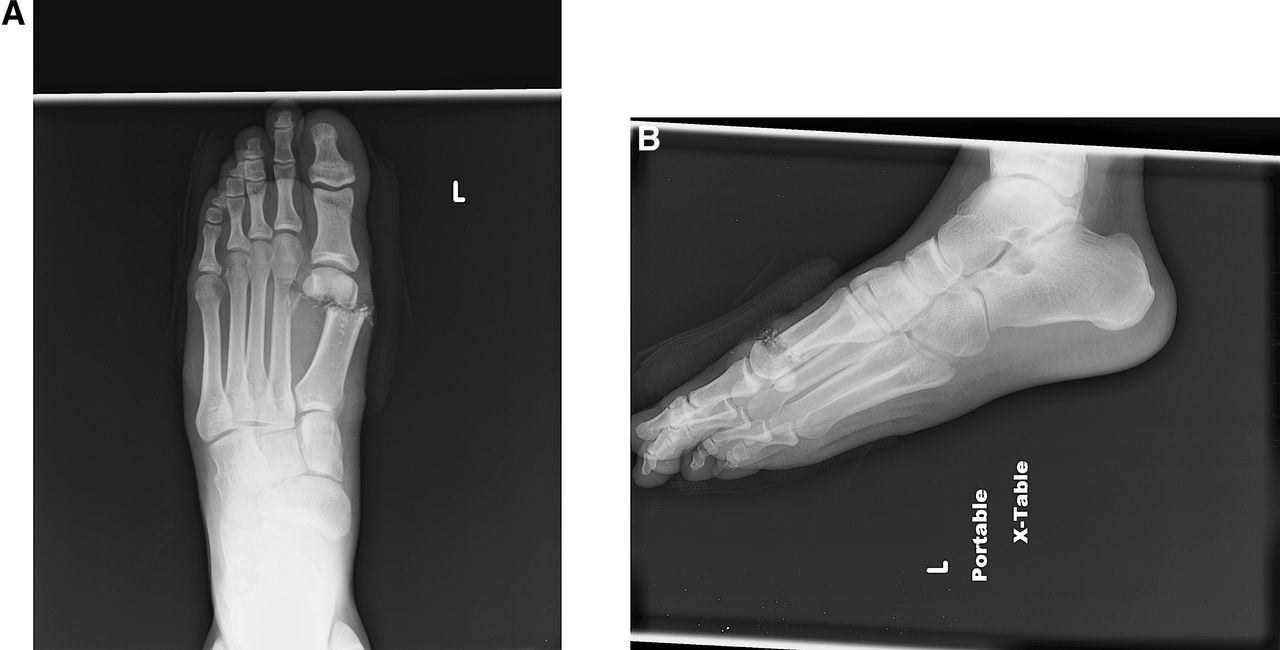
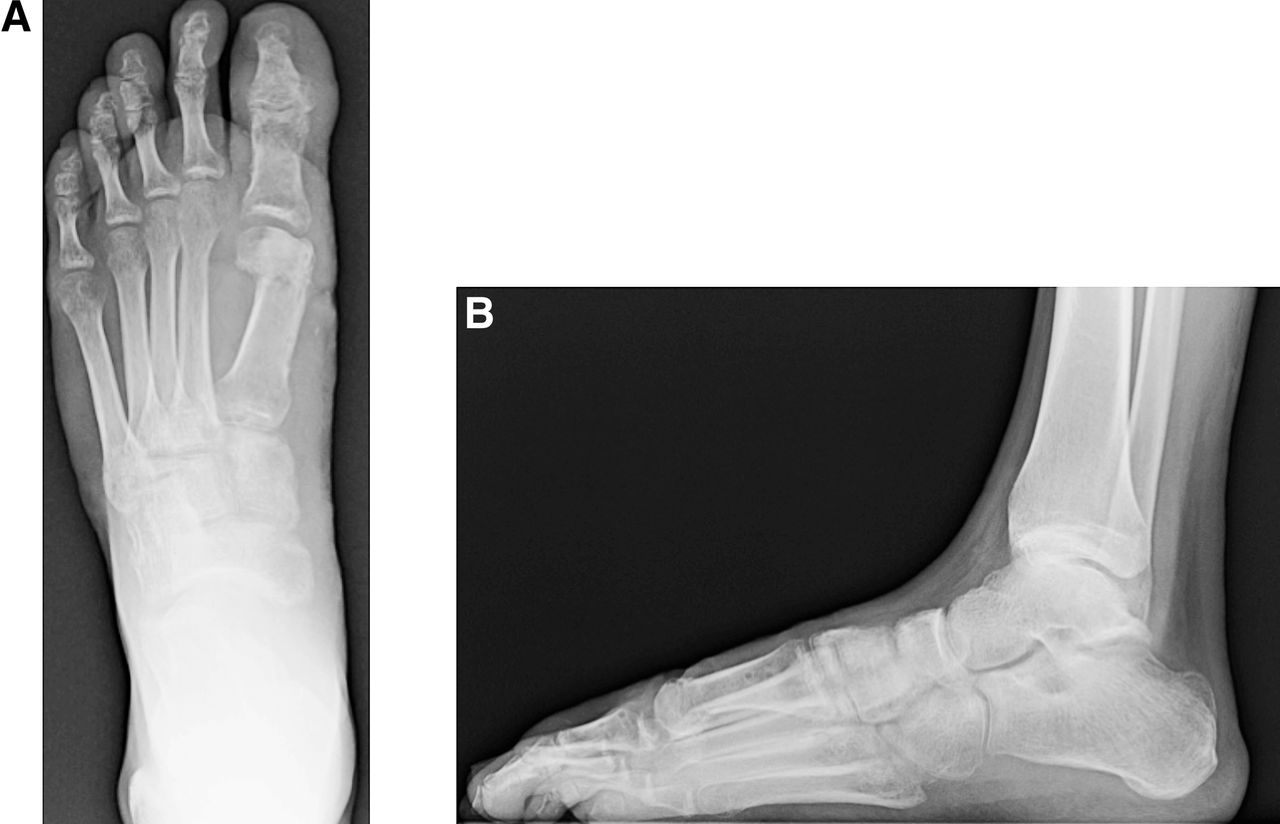
Fig. 1). There was no gross contamination visible. Radiographs demonstrated a fracture-dislocation at the distal first metatarsal (
Fig. 2). Minimal involvement of the second metatarsal was also noted.
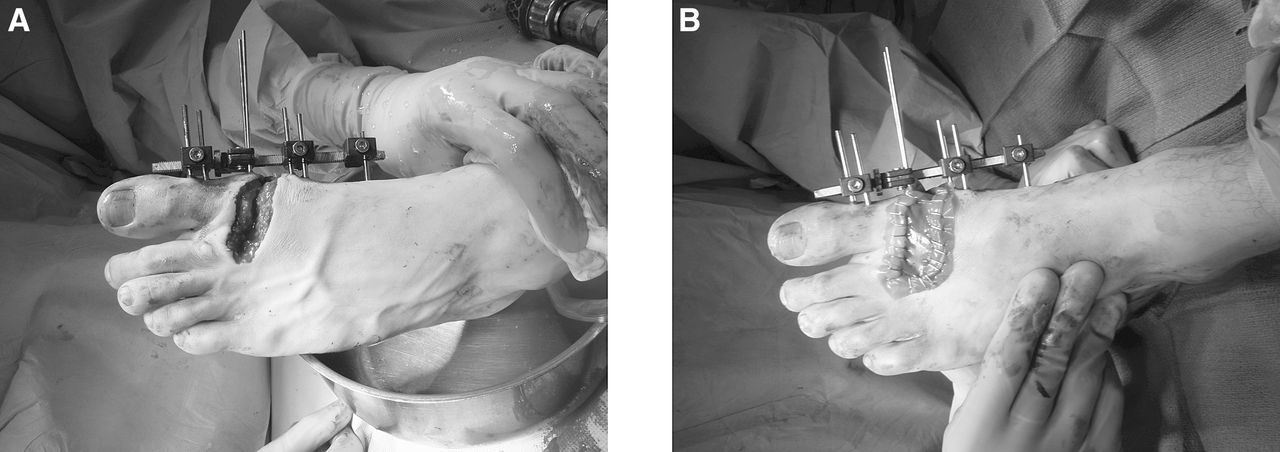
The patient was brought to the operating room and placed under general anesthesia. Perioperative antibiotics were not given because the patient had received 4.5 g of piperacillin/tazobactam intravenously in the emergency department. A thigh tourniquet was applied, and the left lower extremity was then prepped/draped in the standard manner. Debridement was then undertaken about the open wound at the left foot, with removal of all of the nonviable soft tissue/bone and free fracture fragments. There was no evidence of foreign debris or frank contamination. The extensibility and capillary refill of the immediate surrounding tissue and digits was adequate, with a small zone of injury evident. The wound was then irrigated with approximately 6 L of sterile normal saline using a low-pressure pulsatile system. Postdebridement cultures were obtained. Osseous skeletal stabilization was undertaken with a monolateral external fixation device (
Figs. 3 and
4). The frame was secured with 3-mm pins placed in the medial/intermediate cuneiform, the base of the first metatarsal, and the proximal phalanx. Then, 2-mm pins were placed in the free fracture fragment of the first metatarsal head, followed by axial compression of this free piece onto the distal first metatarsal shaft. The clean nature of the wound and the readily bleeding tissues allowed immediate soft-tissue closure with a collagen-glycosaminoglycan monolayer allograft (
Fig. 3). The graft was secured with stainless steel surgical staples and a bolster-style dressing to reduce hematoma/seroma. The allograft was chosen primarily to act as a biological dressing to provide temporary coverage until cultures were negative and adequate granulation tissue was present. Finally, a below-the-knee posterior splint was applied with the ankle maintained at 90° of dorsiflexion to promote a nonweightbearing status.
After surgery, the patient was admitted to the hospital for observation, intravenous antibiotic administration, and pain control. On postoperative day 1, the patient’s pain was controlled and the intraoperative postdebridement cultures showed no growth of organisms. He was subsequently discharged. The patient was given clear instructions to remain nonweightbearing to the left lower extremity, take oral pain medication as needed, and complete the 10-day course of oral amoxicillin/clavulanate therapy.
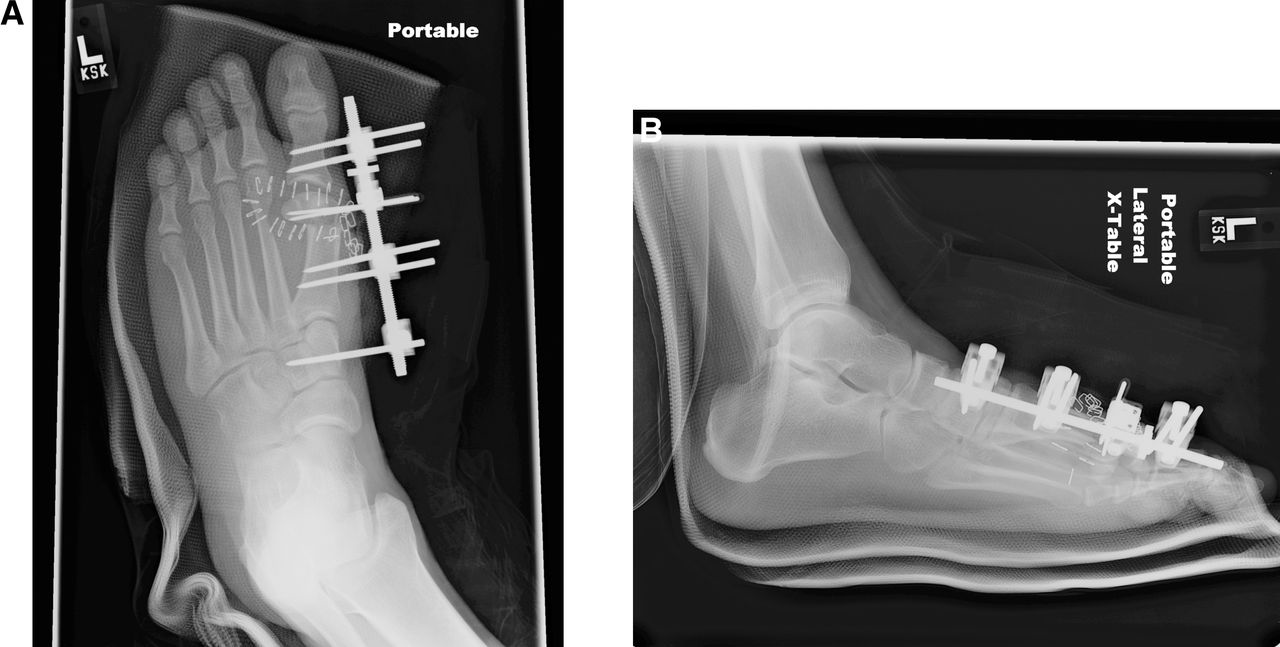
After the first dressing change, the patient was placed into a surgical shoe for protection and continued nonweightbearing. Radiographs were taken immediately after surgery and then at 2-week intervals. The collagen-glycosaminoglycan monolayer allograft healed in approximately 2 weeks with adequate production of granulation tissue, followed by split-thickness skin grafting. Six weeks postoperatively, radiographic consolidation was evident, without pain or signs of nonunion clinically (
Fig. 5). The monolateral external fixator was removed, and the patient was placed in a below-the-knee walking cast for 2 additional weeks.
Approximately 8 weeks after initial surgery, the patient was given full weightbearing status in a CAM walker boot. The patient had no concerns at that time other than some stiffness with end range of motion about the first metatarsophalangeal joint. After his 12-week postoperative visit, the patient was lost to follow-up.
Discussion
Many authors and surgeons would argue that immediate soft-tissue reconstruction or closure is considered far too aggressive treatment in the setting of open fracture-dislocation [
5,
11,
12]. These surgeons would advocate the time-honored practice of complete debridement, insertion of antibiotic cement spacers to maintain length, application of skeletal stabilization, and negative pressure wound therapy or partial closure. We were convinced that owing to the status of the wound, the absence of organisms on initial Gram’s stain, the immediate institution of intravenous antibiotics, and the mechanism of injury, same-day soft-tissue reconstruction was acceptable.
Oftentimes the true zone of injury will not be evident on initial clinical examination or surgical intervention. However, we were confident that due to the nature of the injury and the lack of a crush-type mechanism, extension of the zone of injury beyond the obvious trauma was minimal. Also, traditionally, split-thickness skin grafts are used to cover tissue loss across joints where contraction could lead to deformity or angulation and where epithelialization alone would produce unstable coverage [
13]. This further guided our decision to use a collagen-glycosaminoglycan monolayer allograft primarily, knowing we would ultimately apply a split-thickness skin graft to the site. We knew that the skin substitute would decrease the development of joint contractures and would function as a sort of “allograft skin” until application of the patient’s own native tissue. This immediate coverage also decreases infection rates, minimizes wound contraction, encourages a granular wound bed, and reduces postoperative pain by covering exposed nerve endings. Prompt wound closure, if possible, is recommended because it often requires a less complex procedure on the reconstructive ladder [
3,
9,
10]. What constitutes early closure was recently addressed in an article stating that complications increase after 72 hours with respect to soft-tissue and bone infection rates, nonunion/malunion, and repeated surgical procedures [
7,
8]. This interval has even been pushed to within 6 to 8 hours of injury, with excellent results in soft-tissue reconstruction and fracture stabilization [
7,
8]. Single-stage reconstruction overall may translate into lower patient morbidity, fewer surgical procedures, a reduced hospital stay, and quicker recovery. The results from Gopal et al [
8], suggest that immediate soft-tissue coverage achieves excellent union and low rates of infection, supporting the concept that delay is not necessary if healthy tissue can be imported into the zone of injury.
Classically, the foot and ankle abide by the rule of thirds regarding the tibia. That is, soft-tissue defects in the proximal third of the tibia require gastrocnemius muscle flaps, in the middle third require soleus muscle flaps, and in the distal third necessitate free tissue transfer [
14]. Sir Harold Gilles, considered by most to be the father of modern reconstructive plastic surgery, made famous the phrase “replace like with like” tissue. Adhering to this tenet, it is no longer acceptable to just free “flap” a foot or ankle wound, creating a bulky result and difficulty with shoes and reasonable ambulation [
10]. This further supports a regionalized approach to soft-tissue coverage of the foot and ankle, with less complex reconstructive techniques used first.
Conclusions
The aggressive, single-stage reconstruction we used for this open fracture-dislocation has yielded acceptable results thus far. We recognize that this is not a common or readily practiced approach for this type of traumatic injury. However, we believed that the specific clinical presentation permitted immediate reconstruction. Review of the current literature also eludes toward a more aggressive treatment for open fracture-dislocations with soft-tissue injuries. These patients will benefit from a team-oriented approach at a well-established academic or university setting, preferably a level 1 trauma center. This allows continuity of care between all surgical specialties and access to ample resources and state-of-the-art techniques.